
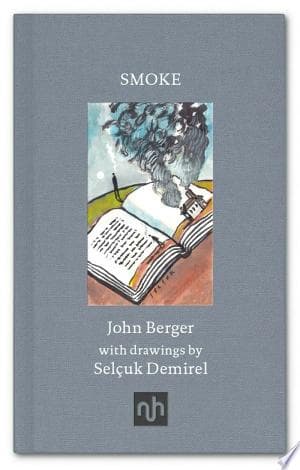
Core Idea
- Difficulty
- Medium
Key Takeaways from Smoke
The Parenthetical Pause
Smoking as a deliberate act of creating a temporal and social interlude.
Berger's most striking idea in 'Smoke' is that smoking is not just a habit, but a conscious way to create a 'parenthesis' in the constant flow of time. It is not about nicotine addiction; it is about intentionally making a moment for thought, observation, or private conversation. In a world that always demands productivity and connection, lighting a cigarette becomes an almost rebellious act of disengagement, a deliberate break. The book's illustrations often show people in quiet thought or deep conversation, highlighting this shared, in-between space. This idea challenges the purely negative health view of smoking by pointing out its historical social and psychological roles, suggesting that these 'parenthetical' moments are missing in modern life.
“A cigarette is a breathing space. It makes a parenthesis. The time of a cigarette is a parenthesis, and if it is shared you are both in that parenthesis. It's like a proscenium arch for a dialogue.”
In the book: Berger's direct quote from an interview, which forms the thematic core of the book, is constantly reinforced by Demirel's illustrations showing individuals or pairs in moments of stillness, often with smoke swirling around them, creating a visual 'parenthesis'.
Try this: Recognize the human need for deliberate pauses and moments of shared, unhurried reflection. Seek out or create 'parenthetical' spaces in daily life, whether through a shared coffee, a walk, or simply silent contemplation, to foster deeper connection and introspection, without resorting to detrimental habits.
The Outlaw's Community
The shared experience of smoking transforms into a bond among the socially ostracized.
Berger and Demirel show the modern smoker as an 'outlaw,' pushed to the edges of society. This exclusion, however, unintentionally creates a new kind of community. When smokers gather outside buildings, enduring the weather, a unique bond forms. They share not just a habit, but a status, a quiet understanding of being outside the norm. This shared experience crosses typical social lines, making unexpected connections. The book hints that while society aims to isolate smokers for health reasons, it accidentally creates a subculture with its own unspoken rules and unity. This is a powerful, if sad, look at human connection.
“Smokers, banished from public places, must encounter one another as outlaws.”
In the book: The summary explicitly states: 'Smokers, banished from public places, must encounter one another as outlaws.' Demirel's illustrations often show groups of figures huddled together in exterior spaces, often under a shared umbrella or near an ash bin, visually reinforcing this 'outlaw' gathering.
Try this: Observe how shared experiences, even those born from marginalization, can forge unexpected bonds and communities. Consider the social dynamics at play in groups defined by exclusion, and how understanding these dynamics can offer insights into human connection.
Paradox of Pollution
Society's selective condemnation of smoke highlights a hypocrisy in environmental concern.
Berger and Demirel criticize society's conflicting view on smoke. While individual smokers are strongly condemned and banned for their 'pollution,' the much larger, systemic pollution from factories, power plants, and car exhaust often goes unaddressed with the same intensity. The book places the small wisp from a cigarette next to tall plumes from chimneys, visually showing this contradiction. This is not an argument for smoking's safety, but a strong call to examine the biased application of moral and environmental outrage. It makes the reader face how easily society demonizes individual actions while often ignoring or excusing larger, more widespread environmental threats. This reveals a significant blind spot in public awareness.
“Meanwhile, car exhausts and factory chimneys continue to pollute the atmosphere.”
In the book: The book's description explicitly points out the contrast: 'Meanwhile, car exhausts and factory chimneys continue to pollute the atmosphere.' Demirel's illustrations would likely feature this visual juxtaposition of small and large smoke sources.
Try this: Critically examine societal narratives around environmental responsibility. Question why certain forms of pollution or personal habits are demonized while larger, systemic issues receive less public condemnation. Advocate for a more holistic and less hypocritical approach to environmental protection.
Smoke as a Visual Metaphor
The ephemeral nature of smoke reflects memory, contemplation, and the passage of time.
Beyond its literal presence, smoke in Berger's work is a strong visual symbol. Its temporary, swirling shapes suggest the elusive nature of memory, the vague process of thought, and the endless movement of time. Demirel's illustrations often show smoke not just as an emission, but as an active part of the scene—a frame, a thought bubble, a veil. It is never still, always changing, reflecting the inner worlds of the characters. This artistic choice makes 'Smoke' more than a simple comment on smoking; it becomes a deeper reflection on human existence, suggesting that some of life's most important aspects are as fleeting and hard to grasp as a wisp of smoke.
“This charming illustrated work reflects on the cultural implications of smoking...”
In the book: The 'brilliantly inventive illustrations' by Demirel, as described in the summary, are key here. The visual language of smoke in the book goes beyond mere depiction to symbolic representation.
Try this: Consider how ephemeral elements in daily life—like clouds, shadows, or even conversations—can serve as metaphors for deeper truths. Cultivate an appreciation for the transient and the symbolic in art and everyday observation.
Nostalgia for a Lost Ritual
The book evokes a sense of longing for a bygone era when smoking was socially integrated.
The first line, 'Once upon a time, men, women and (secretly) children smoked,' immediately sets a nostalgic tone, presenting smoking as something from the past. The book does not argue for a return to widespread smoking, but rather laments the loss of the social rituals and cultural spaces connected to it. It subtly suggests that something valuable—a certain unhurried pace, a particular type of social interaction, a quiet defiance—has been lost in the effort to get rid of smoking entirely. This nostalgia is not for the substance itself, but for the cultural fabric it once created. It offers a critical view on how social progress, though necessary, can also lead to the erosion of certain communal practices, even flawed ones.
“Once upon a time, men, women and (secretly) children smoked.”
In the book: The 'Once upon a time...' opening line directly establishes this nostalgic framing. The overall tone and subject matter reflect a longing for a past cultural context.
Try this: Reflect on how societal changes, even those driven by positive intentions, can inadvertently diminish certain cultural rituals or social dynamics. Consider what aspects of past communal life, beyond specific habits, might be worth preserving or reinterpreting in modern contexts.
The Freedom of the Margins
Being outside the mainstream can foster a unique sense of personal liberty and observation.
Following the 'outlaw' idea, Berger suggests that pushing smokers to the edges of society paradoxically gives them a certain kind of freedom. Away from the watchful eye of the mainstream, in their designated 'smoking areas' or hidden spots, smokers become observers rather than participants in the main social scene. This marginalization can lead to a greater awareness of their surroundings, a unique view of the busy world they are temporarily excluded from. The book implies that true freedom might sometimes be found not in conformity, but in the quiet outside spaces, where one can reflect and connect on different terms. This argument has limits, as it romanticizes a behavior with serious health effects, but it offers a compelling look into the psychology of being marginalized.
“It portrays a world in which smokers, banished from public places, must encounter one another as outlaws.”
In the book: The explicit statement about smokers encountering each other as 'outlaws' and being 'banished from public places' sets the stage for this interpretation. The illustrations often show smokers observing the main action from a distance.
Try this: Consider how stepping away from mainstream activities or perspectives can offer new insights and a sense of personal freedom. Explore the benefits of solitary observation and how it can inform one's understanding of society and self.
The Act of Lighting Up
The ritual of preparing and lighting a cigarette as a symbolic act of intention and transition.
Berger and Demirel implicitly show the ritualistic side of smoking, especially the act of lighting up. This is not just about consumption; it is a small, deliberate ceremony that marks a change. The flick of the lighter, the first drag, the exhale—each step signals a shift in mental state, a conscious choice to enter that 'parenthetical' space. This ritual provides a solid anchor for intention, a moment to gather thoughts or prepare for conversation. In a fast-paced world, such small, deliberate rituals are often lost, replaced by instant satisfaction. The book suggests that losing smoking also means losing a widely understood, though problematic, ritual for marking personal time and space.
“A cigarette is a breathing space. It makes a parenthesis.”
In the book: While not explicitly quoted, the idea of a 'parenthesis' implies a beginning and an end, and the act of lighting up is the clear beginning of this temporal pause. Demirel's illustrations often focus on hands and faces during this precise moment.
Try this: Identify and cultivate small, intentional rituals in your daily life—whether it's making tea, journaling, or a short walk—to create pauses, mark transitions, and foster mindfulness, independent of any harmful habits.
Beauty in the Banned
The book finds aesthetic and contemplative beauty in an activity now deemed ugly and harmful.
One of the most thought-provoking parts of 'Smoke' is its willingness to find beauty and philosophical depth in an activity that modern society has largely condemned. Berger, a long-time smoker, and Demirel, through his inventive illustrations, raise the act of smoking beyond its health effects to explore its aesthetic, social, and psychological dimensions. The swirling patterns of smoke, the focused expressions of smokers, the shared silence—these elements are shown with an artistic eye, urging the viewer to look past immediate condemnation. This is not an endorsement of smoking, but an exercise in finding beauty and meaning even in what is 'banned,' reminding us that art can reveal complex truths from unexpected angles, even if those truths are uncomfortable or morally unclear.
“Smoke is a beautifully illustrated prose poem that lingers in the mind.”
In the book: The description of the book as a 'beautifully illustrated prose poem' that 'lingers in the mind' directly supports the idea of finding aesthetic value. Demirel's art itself is the primary evidence.
Try this: Practice looking for beauty and deeper meaning in subjects or situations that are conventionally dismissed or condemned. Challenge preconceived notions and allow art or observation to broaden your perspective on complex issues.
The Unspoken Language of Smoke
Smoke as a non-verbal communicator of mood, thought, and social interaction.
Beyond spoken words, smoke itself, in Berger's view, becomes a form of unspoken language. The way it drifts, curls, or disappears can reflect the smoker's mood—a thoughtful puff, a nervous flick, a relaxed exhale. When shared, the intertwining plumes can symbolize a conversation, a shared understanding, or even a comfortable silence between people, as suggested by the 'proscenium arch' metaphor. This non-verbal communication adds a layer of subtlety to human interaction, a visual poetry that complements spoken words or fills their absence. The book, through its quiet observations and evocative illustrations, invites us to consider the richness of these often-overlooked forms of communication, showing how even something as temporary as smoke can carry significant meaning.
“It's like a proscenium arch for a dialogue.”
In the book: The 'proscenium arch for a dialogue' quote hints at smoke's role in framing and facilitating interaction. Demirel's illustrations often depict smoke interacting with faces and gestures, suggesting unspoken narratives.
Try this: Pay closer attention to non-verbal cues in interactions—body language, expressions, and even environmental elements—to gain a deeper understanding of human communication beyond spoken words.
A 'Prose Poem' of Contradictions
The book itself embodies the paradoxes it explores, being both evocative and unsettling.
The description of 'Smoke' as a 'prose poem' is fitting, as the book itself reflects the contradictions it explores. It is beautiful yet addresses a habit now widely seen as ugly; it is nostalgic for a past that included a harmful practice; it criticizes societal hypocrisy while acknowledging the appeal of the very thing being critiqued. This tension makes the book 'linger in the mind'—it offers no easy answers or moral judgments, but instead invites thought on the complexities of human behavior, cultural changes, and societal values. Its strength is its ability to hold these contradictions in balance, prompting the reader to engage with uncomfortable truths rather than simply accepting common beliefs. This sophisticated approach is a mark of Berger's critical skill.
“Smoke is a beautifully illustrated prose poem that lingers in the mind.”
In the book: The summary's characterization of the book as a 'beautifully illustrated prose poem that lingers in the mind' and its exploration of society's 'paradoxical and intolerant' attitude directly points to the book's contradictory nature.
Try this: Embrace complexity and nuance in your own thinking and discussions. Avoid simplistic black-and-white judgments, and instead, strive to understand and articulate the inherent contradictions present in many social and personal issues.
Quiz
10 questions on the main ideas. Each answer comes with a short explanation.
Question 1
What is the primary theme explored in John Berger's book 'Smoke'?
- The history of tobacco farming
- The cultural implications and societal attitudes towards smoking
- The health risks associated with smoking
- The economic impact of the tobacco industry
Show answer
B. The cultural implications and societal attitudes towards smoking The book focuses on how society views and treats smoking, and the cultural significance of the act.
Question 2
Who is the illustrator and co-creator of 'Smoke'?
- John Berger
- Selçuk Demirel
- An unknown artist
- A famous photographer
Show answer
B. Selçuk Demirel The book is described as a pictorial essay by John Berger and Turkish writer and illustrator Selçuk Demirel.
Question 3
According to the description, how does society's attitude towards smoking appear to be?
- Universally accepting
- Consistently supportive
- Paradoxical and intolerant
- Completely indifferent
Show answer
C. Paradoxical and intolerant The text explicitly states that society's attitude is 'both paradoxical and intolerant'.
Question 4
The book suggests that smokers, banished from public places, are portrayed as what?
- Celebrities
- Outlaws
- Business leaders
- Health advocates
Show answer
B. Outlaws The description mentions that smokers are 'banished from public places, must encounter one another as outlaws'.
Question 5
What does John Berger compare the time of a cigarette to, especially when shared?
- A long journey
- A fleeting moment
- A parenthesis or a breathing space
- A significant historical event
Show answer
C. A parenthesis or a breathing space Berger states, 'A cigarette is a breathing space. It makes a parenthesis. The time of a cigarette is a parenthesis, and if it is shared you are both in that parenthesis.'
Question 6
The text contrasts the societal banishment of smokers with what other form of pollution?
- Noise pollution
- Light pollution
- Plastic pollution
- Pollution from car exhausts and factory chimneys
Show answer
D. Pollution from car exhausts and factory chimneys The description highlights the paradox: 'Meanwhile, car exhausts and factory chimneys continue to pollute the atmosphere.'
Question 7
What term is used to describe the book 'Smoke' in the provided text?
- A factual report
- A scientific study
- A prose poem
- A historical novel
Show answer
C. A prose poem The description calls 'Smoke' a 'beautifully illustrated prose poem'.
Question 8
The phrase 'a proscenium arch for a dialogue' is used by Berger to illustrate what aspect of sharing a cigarette?
- The visual spectacle of smoke
- The isolation of the smokers
- The creation of a shared, enclosed space for conversation
- The dramatic tension of the act
Show answer
C. The creation of a shared, enclosed space for conversation Berger implies that the shared 'parenthesis' of a cigarette creates a special, defined space, like a stage, for interaction.
Question 9
Considering the book's focus and the description, what might be an underlying critique Berger is making about modern society?
- That society is too lenient on pollution
- That society selectively targets certain behaviors while ignoring others of equal or greater impact
- That art has lost its cultural relevance
- That communication between people is becoming obsolete
Show answer
B. That society selectively targets certain behaviors while ignoring others of equal or greater impact The contrast between the strictness towards smokers and the continued pollution from industry and vehicles suggests a critique of society's selective intolerance and focus.
Question 10
The description of 'Smoke' as a 'pictorial essay' and 'beautifully illustrated prose poem' suggests that the book prioritizes:
- Rigorous academic research and data
- A direct, factual, and objective account
- Artistic expression, imagery, and evocative language
- A step-by-step guide to quitting smoking
Show answer
C. Artistic expression, imagery, and evocative language The terms 'pictorial essay', 'illustrated', and 'prose poem' all point towards an emphasis on visual and literary artistry rather than a dry, factual presentation.
Smoke FAQ
What is the book 'Smoke' about?
The book 'Smoke' by John Berger and Selçuk Demirel is a pictorial essay that explores the cultural significance of smoking. It uses illustrations and prose to reflect on society's paradoxical and often intolerant attitude towards smokers, portraying them as outlaws in public spaces while industrial pollution continues unabated.
Who wrote and illustrated 'Smoke'?
'Smoke' is a collaboration between the renowned art critic, novelist, and former smoker John Berger, and the Turkish writer and illustrator Selçuk Demirel.
What is the central theme of 'Smoke'?
The central theme revolves around the societal perception of smoking. It highlights the banishment of smokers from public life and contrasts this with the ongoing pollution from cars and factories, questioning society's selective intolerance.
How does the book portray the experience of smokers?
The book portrays smokers as outlaws, banished from public places. It suggests that their shared act of smoking creates a private, parenthesis-like space for connection and dialogue, separate from the outside world.
What is the significance of the illustrations in 'Smoke'?
The illustrations by Selçuk Demirel are described as brilliantly inventive. They visually support and expand upon Berger's reflections, offering a unique and engaging way to understand the complex cultural implications of smoking.
What does John Berger mean by a cigarette being a 'breathing space' or 'parenthesis'?
Berger uses these metaphors to describe the temporary pause a cigarette offers in one's day. It creates a moment of reflection or shared experience, a brief enclosure in time that can foster dialogue and connection between smokers.
Is 'Smoke' a factual book or more artistic?
'Smoke' is best described as an illustrated prose poem. While it touches on societal attitudes and cultural observations, it is primarily an artistic and reflective work rather than a factual account or a how-to guide.
What is the relationship between smoking and pollution in the book?
The book draws a parallel between the individual act of smoking and industrial pollution. It critiques society's focus on banning smokers while overlooking the larger environmental impact of car exhausts and factory chimneys, suggesting a hypocrisy in its intolerance.
Who would enjoy reading 'Smoke'?
Readers who appreciate art criticism, thoughtful prose, and unique visual essays would likely enjoy 'Smoke'. It's for those interested in cultural commentary, the nuances of social attitudes, and the artistic interpretation of everyday habits.
What kind of insights does 'Smoke' offer about society?
The book offers insights into societal hypocrisy, the demonization of certain behaviors, and the creation of social outcasts. It prompts reflection on how we collectively judge and regulate individual actions versus larger systemic issues.
About the author
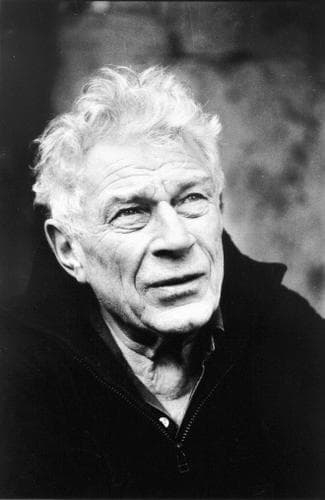
John Berger was a British art critic, novelist, and painter known for his influential ideas on visual culture. His notable works include "Ways of Seeing," which critiques traditional art criticism and explores the impact of mass media on perception, and "Smoke," a collection of essays reflecting on art and society. Berger's writings often blend art theory with personal reflection, making significant contributions to contemporary thought.
Similar books
- Ways of Seeing
John Berger
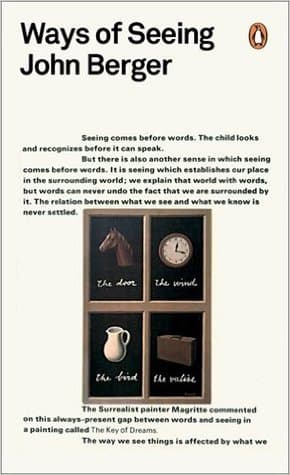
3.9 (251k) average on GoodreadsHistoryComparing "Smoke" to Berger's own seminal work, "Ways of Seeing," highlights a significant evolution in his style and thematic emphasis. "Ways of Seeing" is a direct, polemical, and highly analytical critique of art, media, and power dynamics, designed to dismantle traditional perceptions. It's overtly didactic and structured with clear arguments. "Smoke," on the other hand, is far more subtle, introspective, and lyrical. While both share Berger's keen observational eye and underlying political awareness, "Smoke" prioritizes emotional resonance and philosophical reflection over explicit argument. It's less about telling the reader 'how to see' and more about inviting them to 'feel and reflect' on what has been seen and lost.
- The Diary of a Young Girl
Anne Frank
4.2 (2.7M) average on GoodreadsBiographyDuring the Nazi occupation, a teenage girl's diary, written from a secret annex, shares observations on humanity, hope, and the wait for freedom.
- Twisted 1. Twisted love
Ana Huang
3.7 (1.7M) average on GoodreadsA quiet billionaire with a difficult past finds his guarded heart opening to the woman he must protect, but their growing passion uncovers dangerous secrets and a shared, traumatic history.
- Eat, Pray, Love
Elizabeth Gilbert
3.6 (1.5M) average on GoodreadsLifestyleA heartbroken writer leaves her conventional life for a year-long global search for pleasure in Italy, spiritual devotion in India, and unexpected love and balance in Bali.
- Night
Elie Wiesel
4.3 (970k) average on GoodreadsBiographyIn the darkness of Auschwitz and Buchenwald, a teenage Elie Wiesel faces the extermination of his family, the loss of his faith, and the lasting scars of humanity's deepest cruelty.
- Steve Jobs
Walter Isaacson
4.1 (957k) average on GoodreadsBusinessSteve Jobs was a visionary who fused creativity and technology to revolutionize six industries and shape our digital world.





Enjoyed the summary?
A summary gives you the shape of the book. The book itself has the detail, the examples and the voice.
Find Smoke on AmazonAs an Amazon Associate, BookBrief earns from qualifying purchases. How we're funded