
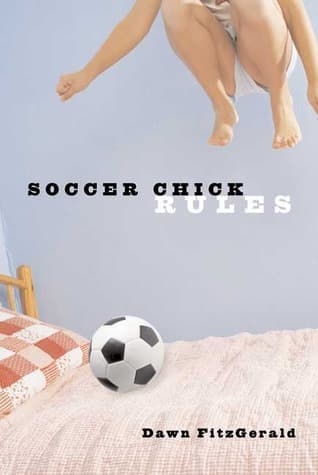
Core Idea
- Difficulty
- Easy
- Read it if
- You're a young athlete (or a parent of one) looking for inspiration, life lessons through sports, or a celebration of girls' sports and community.
- Skip it if
- You're looking for advanced soccer strategy, a purely academic analysis of sports sociology, or a book that doesn't center on a youth sports narrative.
Key Takeaways from Soccer Chick Rules
Community Over Competition
The importance of collective action in safeguarding shared passions.
FitzGerald shows how the future of individual passions, like playing soccer, often depends on community support and resources. The threat of budget cuts, shown by the levy's possible failure, reminds us that even dedicated individual effort can fail without community agreement. This is not just about money; it is about the community valuing and investing in youth activities. The book suggests that a good local sports scene needs more than just enthusiastic players; it needs engaged citizens willing to support and fund these programs. Tess's journey shows that sometimes the biggest battles are fought off the field, within the community's political and financial systems, highlighting the role of civic engagement in keeping what we care about.
“If the levy doesn't pass, there will be no buses for away-games, no uniforms, no teams.”
In the book: The central conflict revolves around the school levy's potential failure, which directly threatens the existence of the soccer teams due to a lack of funding for buses, uniforms, and general team operations.
Try this: Actively participate in local school board meetings, parent-teacher associations, or community initiatives that support youth sports and extracurricular activities. Advocate for funding and resources that ensure access for all students, recognizing that these programs are crucial for development beyond academics.
Related ideas: community-support, civic-engagement, youth-sports-funding
The Unofficial Rules of Life
Navigating reality often requires adapting personal codes to unforeseen challenges.
Tess's 'Soccer Chick Rules' offer a way to look at how personal beliefs, while good, can conflict with real-world situations. Her initial belief in clear rules for success and teamwork is admirable, yet the story suggests that life rarely offers the 'slam-dunk ending' expected from such strict rules. This takeaway highlights the skill of adaptability—understanding when to change, break, or rethink one's personal rules. It is a coming-of-age realization that while ideals are important, practical flexibility is often the way to handle personal drama, team dynamics, and unexpected problems. The book supports the idea that true growth comes not from just following rules, but from learning when and how to adjust them.
“Tess plans to follow her own rules for soccer chicks.”
In the book: Tess's internal monologue and actions are guided by her 'Soccer Chick Rules,' but the 'off-the-field drama' and the levy's uncertainty force her to confront situations that don't neatly fit into her established framework.
Try this: Regularly reflect on your personal guiding principles and assess their effectiveness in current situations. Be open to revising or creating new 'rules' as you encounter new experiences and challenges, prioritizing adaptability over rigid adherence.
Related ideas: adaptability, personal-ethics, coming-of-age, flexibility
The Power of Unwavering Support
True teamwork extends beyond the field, fostering loyalty and resilience.
FitzGerald shows that 'support' in a team is more than just passing the ball or cheering. It includes empathy, loyalty, and standing by others, even during personal disagreements or outside pressures. Tess's commitment to Rule #3 is tested by 'off-the-field drama,' meaning that the strongest teams are those where players extend their support systems into their personal lives, understanding that individual well-being affects team performance. This takeaway highlights how real friendship builds a strong team culture that can handle internal conflicts and outside threats, reinforcing the idea that a united group, built on mutual respect and support, is essential for both sports and personal success. It is about creating a sense of belonging and shared responsibility.
“Soccer Chick Rule Number 3--Always support your teammates!”
In the book: Rule #3 is explicitly stated, and the narrative showcases 'off-the-field drama' which tests Tess's and her teammates' ability to uphold this rule amidst personal conflicts and challenges.
Try this: Actively listen to and empathize with your teammates or colleagues, offering assistance and encouragement beyond your direct responsibilities. Prioritize building strong interpersonal relationships within your team, recognizing that emotional support is as crucial as task-oriented collaboration.
Related ideas: teamwork, camaraderie, interpersonal-support, loyalty
Resilience in the Face of Adversity
Embracing persistence as the ultimate strategy for overcoming obstacles.
The book supports the importance of resilience, especially through 'Soccer Chick Rule Number 7: Never, ever give up!' This is not just about continuing to play when losing a game; it is about staying determined when facing challenges like the levy's possible failure, or personal problems in 'off-the-field drama.' FitzGerald suggests that true strength is shown not just in big competitions, but in the ongoing effort to find solutions, motivate others, and keep hope when things look bad. Tess's realization shows that persistence is a skill learned through experience, and it is often the deciding factor between success and failure in both sports and life. The story supports a growth mindset, where setbacks are not endings but chances to try harder.
“Tess realizes there may be something to learn from Soccer Chick Rule Number 7--Never, ever give up!”
In the book: Rule #7 is highlighted as a key lesson Tess learns, particularly in the context of the levy's threat and the 'real life' challenges that don't offer easy solutions.
Try this: When facing a difficult challenge, break it down into smaller, manageable steps. Focus on consistent effort and learning from setbacks rather than dwelling on failures. Seek support from others and maintain a belief in your ability to find a solution, even when progress is slow.
Related ideas: resilience, persistence, grit, growth-mindset
Beyond the Scoreboard
The true measure of success lies in personal growth and life lessons learned.
FitzGerald uses competitive soccer to explore a deeper truth: the most valuable results of sports are often found outside the win-loss record. The 'action-packed sports scenes' are exciting, but the 'off-the-field drama' and the uncertainty of the levy push Tess toward personal development. The book argues that character-building, learning resilience, understanding teamwork, and managing social dynamics are the real 'trophies' earned through participation. The realization that 'real life doesn't offer a slam-dunk ending' is a key moment, moving Tess from a results-focused mindset to one that values the journey, the lessons, and personal change. This takeaway emphasizes that sports are a setting for developing essential life skills, beyond athletic ability.
“real life doesn't offer a slam-dunk ending, Tess realizes there may be something to learn from Soccer Chick Rule Number 7”
In the book: The narrative balances 'action-packed sports scenes' with 'off-the-field drama,' and Tess's ultimate realization about Rule #7 comes from grappling with these broader life challenges, not just game outcomes.
Try this: When participating in competitive activities, focus equally on the skills you're developing, the relationships you're building, and the lessons you're learning about yourself and others. Define success not just by external achievements, but by your personal growth and ability to overcome challenges.
Related ideas: character-development, life-lessons, sportsmanship, personal-growth
The Intersection of Personal and Political
Individual aspirations are frequently shaped by broader societal and political decisions.
The book shows how seemingly distant political decisions, like a local school levy, can have immediate and bad effects on individual lives and passions. For Tess and her teammates, the levy is not an abstract idea; it directly threatens their ability to play soccer. This link between the personal desire to play sports and the political process of community funding is a key insight. FitzGerald shows that ignoring civic duties can lead to the loss of valued community resources. The story reminds us that our individual goals are often helped or limited by the collective choices made within our communities, urging readers to recognize and engage with the political forces that shape their daily lives. It is a call to understand how local government works.
“If the levy doesn't pass, there will be no buses for away-games, no uniforms, no teams.”
In the book: The entire premise of the book's central conflict is the direct link between the levy's passage (a political decision) and the continuation of the soccer program (a personal passion for Tess).
Try this: Research and understand how local government decisions, budgets, and policies impact your community and personal interests. Participate in local elections, attend public meetings, and advocate for issues that directly affect the resources and opportunities available to you and your community.
Related ideas: local-politics, community-funding, civic-responsibility, public-policy
The Evolution of Leadership
True leadership emerges from navigating complex challenges, not just excelling in a role.
While Tess starts with a personal rulebook, her journey through 'action-packed sports scenes and off-the-field drama' reveals a more detailed understanding of leadership. It is not just about being the best player or having a strong personal code; it is about inspiring others, making hard decisions, and uniting a team when facing internal and external pressures. Her initial 'rules' might guide her, but true leadership is shown when she must adapt those rules, resolve conflicts, and motivate her teammates to fight for the team's survival, both on and off the field. This takeaway suggests that effective leadership is less about inherent authority and more about earned influence, developed through facing difficulty and showing honesty and resolve when it matters most. It is about serving the common good.
“Tess plans to follow her own rules for soccer chicks.”
In the book: Tess's adherence to her rules is contrasted with the need to navigate 'off-the-field drama' and the existential threat to the team, pushing her to take on a more active, influential role beyond just playing.
Try this: Seek opportunities to lead by example, demonstrating integrity and a willingness to tackle difficult problems. Focus on fostering collaboration and empowering others, rather than solely dictating actions. Be adaptable in your leadership style, adjusting to the specific needs of your team or group.
Related ideas: leadership-development, team-management, influence, problem-solving
The Unpredictability of 'Real Life'
Expectations of simple resolutions often clash with the messy reality of human experience.
FitzGerald's story is based on the idea that 'real life doesn't offer a slam-dunk ending.' This phrase captures a basic truth: unlike fictional stories or perfect sports scenarios, life's challenges are rarely solved neatly or predictably. The 'off-the-field drama' and the uncertainty around the levy are good examples of this messiness. This takeaway highlights the importance of developing ways to cope with uncertainty and disappointment, rather than expecting immediate or perfect solutions. It is a call to accept the journey, even when it is full of uncertainty, and to find meaning and growth in the process itself, rather than only in the result. The book suggests that maturity comes from accepting this unpredictability and learning to succeed within it.
“when real life doesn't offer a slam-dunk ending”
In the book: The explicit statement that 'real life doesn't offer a slam-dunk ending' is a key thematic declaration, reinforced by the ongoing challenges of the levy and interpersonal conflicts.
Try this: Cultivate a mindset that embraces uncertainty and views unexpected obstacles as opportunities for learning. Practice mindfulness and adaptability to navigate unpredictable situations, understanding that not every problem will have a clear or immediate solution.
Related ideas: uncertainty-management, adaptability, real-life-challenges, coping-mechanisms
The Enduring Value of Girls' Sports
Beyond competition, sports foster critical life skills and female empowerment.
FitzGerald's novel, by focusing on a female main character and her soccer team, shows the value of girls' sports. It is not just about physical activity; it is a setting for developing leadership, teamwork, resilience, and managing social dynamics, all within a supportive, competitive environment. The 'action-packed sports scenes' provide excitement, but the 'off-the-field drama' shows how sports act as a small version of life, teaching girls lessons about friendship, conflict resolution, and self-advocacy. This takeaway emphasizes that investing in and supporting girls' sports is important for empowering young women, building their confidence, and giving them skills that go beyond the playing field, ultimately leading to well-rounded individuals and stronger communities.
“Action-packed sports scenes and off-the-field drama guarantee success with girls and sports fans.”
In the book: The entire book is centered around Tess, a 'Soccer Chick,' and her experiences within her girls' soccer team, showcasing both athletic and personal challenges unique to this context.
Try this: Actively support and advocate for girls' and women's sports programs in your community and schools. Encourage young girls to participate in sports, highlighting the benefits of physical activity, teamwork, and leadership development.
Related ideas: girls-sports, female-empowerment, youth-development, gender-equality-in-sports
Soccer Chick Rules Quotes
“Every time I step onto that field, I feel like I'm exactly where I'm supposed to be.”
“It's not just about winning; it's about playing with your whole heart.”
“Sometimes the biggest challenges aren't on the field, but in your own head.”
“True friends are the ones who cheer you on, even when you trip.”
“You can't score if you don't take the shot.”
“Being a girl doesn't make you any less of an athlete.”
“Practice isn't just about getting better; it's about building trust.”
“The best defense is often a good offense, both in soccer and in life.”
“Don't let anyone tell you what you can't do.”
“Every mistake is a chance to learn, not a reason to quit.”
“The roar of the crowd is nothing compared to the quiet confidence inside you.”
“Soccer isn't just a game; it's a language we all speak.”
“Sometimes you have to pass the ball to get it back even stronger.”
“Being a 'soccer chick' means being fierce, focused, and totally unstoppable.”
Quiz
10 questions on the main ideas. Each answer comes with a short explanation.
Question 1
What is the primary consequence if the levy mentioned in the book does not pass?
- The school will close down.
- There will be no buses for away-games, no uniforms, and no teams.
- Tess will have to transfer to a different school.
- The soccer field will be renovated.
Show answer
B. There will be no buses for away-games, no uniforms, and no teams. The book explicitly states that if the levy doesn't pass, there will be no buses for away-games, no uniforms, and no teams, indicating a significant impact on sports programs.
Question 2
What is 'Soccer Chick Rule Number 3' that Tess initially plans to follow?
- Always put yourself first.
- Always support your teammates!
- Never give up on your dreams.
- Win at all costs.
Show answer
B. Always support your teammates! The description directly quotes Tess's 'Soccer Chick Rule Number 3' as 'Always support your teammates!'.
Question 3
Which character is the protagonist of 'Soccer Chick Rules'?
- Dawn FitzGerald
- A unnamed 'soccer chick'
- Tess
- The coach
Show answer
C. Tess The synopsis clearly states, 'Tess plans to follow her own rules for soccer chicks,' identifying her as the main character.
Question 4
What does Tess realize she may need to learn from 'Soccer Chick Rule Number 7'?
- How to score a slam-dunk.
- That some endings are not slam-dunks, and to never, ever give up!
- The importance of winning every game.
- How to create her own rules.
Show answer
B. That some endings are not slam-dunks, and to never, ever give up! The text states, 'But when real life doesn't offer a slam-dunk ending, Tess realizes there may be something to learn from Soccer Chick Rule Number 7--Never, ever give up!'
Question 5
The book description promises 'action-packed sports scenes and off-the-field drama'. What does this suggest about the book's scope?
- It focuses exclusively on soccer matches.
- It balances athletic competition with personal challenges and relationships.
- The 'drama' primarily involves arguments with referees.
- It is a purely instructional guide for playing soccer.
Show answer
B. It balances athletic competition with personal challenges and relationships. The phrase 'off-the-field drama' indicates that the narrative extends beyond just the sports action to include personal and social conflicts.
Question 6
What does the phrase 'slam-dunk ending' imply in the context of Tess's realization?
- A basketball victory.
- An easy, straightforward, and overwhelmingly positive resolution.
- A surprising and unexpected twist.
- A difficult and hard-fought success.
Show answer
B. An easy, straightforward, and overwhelmingly positive resolution. A 'slam-dunk' is a term for an easy, definitive win in basketball. In this context, it refers to an ideal, problem-free resolution that Tess realizes real life doesn't always provide.
Question 7
The description suggests the book will be successful with 'girls and sports fans'. What common interests does this target audience share that the book likely addresses?
- A love for fashion and professional sports statistics.
- An interest in both competitive sports and relatable personal/social narratives.
- A preference for non-fiction and historical accounts of sports.
- An appreciation for complex political plots and extreme sports.
Show answer
B. An interest in both competitive sports and relatable personal/social narratives. By appealing to 'girls' (implying personal drama, relationships, character development) and 'sports fans' (implying action, competition, strategy), the book aims to combine both elements effectively.
Question 8
How does the conflict regarding the levy passing or not passing contribute to the overall tension in the story?
- It creates a personal rivalry between Tess and another player.
- It introduces an external, high-stakes threat to the very existence of the soccer program, forcing characters to fight for more than just a game.
- It is a minor subplot that is quickly resolved.
- It primarily affects the coaches, not the players.
Show answer
B. It introduces an external, high-stakes threat to the very existence of the soccer program, forcing characters to fight for more than just a game. The levy's failure would mean 'no buses for away-games, no uniforms, no teams,' which is an existential threat to the soccer program and creates significant pressure and a larger goal for the characters.
Question 9
The book's title, 'Soccer Chick Rules', combined with Tess's initial plan to 'follow her own rules', suggests what about her character arc?
- She will ultimately abandon all rules and play chaotically.
- She starts with a strong personal code but learns the importance of adapting or deepening her understanding of rules in the face of real-life challenges.
- She is a rebellious character who never conforms to any rules.
- Her rules are perfect and never need to be adjusted.
Show answer
B. She starts with a strong personal code but learns the importance of adapting or deepening her understanding of rules in the face of real-life challenges. Tess 'plans to follow her own rules' but then 'realizes there may be something to learn' from another rule, indicating a journey where her initial understanding of 'rules' evolves.
Question 10
How does the contrast between 'Soccer Chick Rule Number 3' ('Always support your teammates!') and 'Soccer Chick Rule Number 7' ('Never, ever give up!') likely contribute to Tess's development?
- Rule 3 is about individual skill, while Rule 7 is about team strategy.
- Rule 3 focuses on interpersonal relationships within the team, while Rule 7 emphasizes resilience and perseverance in the face of adversity, suggesting Tess learns to balance both aspects for success.
- Rule 3 is for on-field play, and Rule 7 is for off-field drama.
- These rules are contradictory, and Tess must choose one over the other.
Show answer
B. Rule 3 focuses on interpersonal relationships within the team, while Rule 7 emphasizes resilience and perseverance in the face of adversity, suggesting Tess learns to balance both aspects for success. Rule 3 highlights teamwork and solidarity, while Rule 7 emphasizes individual determination, especially when things are tough. Tess learning from both suggests a holistic development that combines team spirit with personal grit.
Soccer Chick Rules FAQ
What is 'Soccer Chick Rules' about?
'Soccer Chick Rules' follows Tess, a passionate soccer player whose team faces the threat of being disbanded due to a failed levy. She navigates on-field challenges and off-field drama, learning the importance of teamwork and perseverance.
Who is the main character in 'Soccer Chick Rules'?
The main character is Tess, a determined soccer player who believes in her own set of 'Soccer Chick Rules' but learns valuable life lessons when reality doesn't go as planned.
Does Tess's team get to play their away games and wear uniforms?
Initially, the future of away games, uniforms, and even the team itself is jeopardized by a failed levy. The book explores how Tess and her teammates confront this challenge.
What is Soccer Chick Rule Number 3?
Soccer Chick Rule Number 3 is 'Always support your teammates!' It's a core principle Tess believes in, though she faces situations that test her ability to uphold it.
What is the significance of Soccer Chick Rule Number 7?
Soccer Chick Rule Number 7 is 'Never, ever give up!' This rule becomes particularly important for Tess as she encounters real-life difficulties that don't offer easy solutions, teaching her resilience.
Is 'Soccer Chick Rules' suitable for all ages?
Yes, the book is designed to appeal to girls and sports fans, featuring action-packed sports scenes and relatable off-the-field drama, making it suitable for a wide range of young readers.
Does 'Soccer Chick Rules' focus only on soccer?
While soccer is central to the story, the book also delves into off-the-field drama, personal growth, and the challenges Tess faces in her daily life, making it more than just a sports book.
How does 'Soccer Chick Rules' differ from other sports books for girls?
'Soccer Chick Rules' stands out by integrating practical challenges like funding issues with personal development and the impact of team dynamics, offering a blend of sports action and coming-of-age drama.
Will 'Soccer Chick Rules' appeal to readers who aren't necessarily sports fans?
Yes, while featuring exciting sports scenes, the book's strong focus on themes like friendship, perseverance, and overcoming obstacles means it will also resonate with readers who enjoy character-driven stories and relatable drama.
Similar books
- The Diary of a Young Girl
Anne Frank
4.2 (2.7M) average on GoodreadsBiographyDuring the Nazi occupation, a teenage girl's diary, written from a secret annex, shares observations on humanity, hope, and the wait for freedom.
- Twisted 1. Twisted love
Ana Huang
3.7 (1.7M) average on GoodreadsA quiet billionaire with a difficult past finds his guarded heart opening to the woman he must protect, but their growing passion uncovers dangerous secrets and a shared, traumatic history.
- Eat, Pray, Love
Elizabeth Gilbert
3.6 (1.5M) average on GoodreadsLifestyleA heartbroken writer leaves her conventional life for a year-long global search for pleasure in Italy, spiritual devotion in India, and unexpected love and balance in Bali.
- Night
Elie Wiesel
4.3 (970k) average on GoodreadsBiographyIn the darkness of Auschwitz and Buchenwald, a teenage Elie Wiesel faces the extermination of his family, the loss of his faith, and the lasting scars of humanity's deepest cruelty.
- Steve Jobs
Walter Isaacson
4.1 (957k) average on GoodreadsBusinessSteve Jobs was a visionary who fused creativity and technology to revolutionize six industries and shape our digital world.
- The Glass Castle
Jeannette Walls
4.3 (903k) average on GoodreadsBiographyJeannette Walls's memoir describes her unusual childhood with brilliant, free-spirited parents whose poverty-stricken life shaped her independence and love despite family problems.






Enjoyed the summary?
A summary gives you the shape of the book. The book itself has the detail, the examples and the voice.
Find Soccer Chick Rules on AmazonAs an Amazon Associate, BookBrief earns from qualifying purchases. How we're funded