
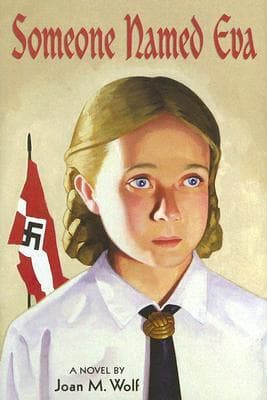
Synopsis
Covers the whole plot, including the ending.
- Difficulty
- Medium
- Pacing
- Moderate
- Mood
- Somber, Reflective, Hopeful, Historical
- Read it if
- You're interested in a poignant, historically accurate story about identity, resilience, and the human cost of war from a child's perspective.
- Skip it if
- You prefer light-hearted reads or are sensitive to themes of forced assimilation and childhood trauma.
Someone Named Eva Plot Summary
Covers the whole plot, including the ending.
Life in Lidice
Eleven-year-old Milada lives with her parents, older sister Hanka, and younger brother Jirka in the small, close-knit village of Lidice, Czechoslovakia, in 1942. Life is simple, with school, chores, and playing with friends like Karel. Despite the war, its direct impact on Lidice feels distant, though German soldiers are a common sight and their presence creates an underlying tension. Milada's father, a shoemaker, occasionally works for the Germans, a necessity for survival. The family is deeply connected to their Czech heritage, which will soon become a source of both pride and danger. Milada cherishes her family and the familiar routines of her village life.
The Attack on Lidice
One night, German soldiers storm Lidice, forcing all residents from their homes. Milada and her family are herded into the village square. The men are separated from the women and children. Milada sees the terror as her father and other men are taken away, never to be seen again. The women and younger children, including Jirka, are loaded onto trucks and taken to a different location, a concentration camp. Milada, along with other children deemed racially suitable for Germanization, is separated from her mother and sister Hanka. This brutal separation marks the end of her life in Lidice and the beginning of her forced transformation.
Arrival at the Lebensborn Center
Milada and the other selected children, mostly blond and blue-eyed, are transported to a Lebensborn center in Puszczykowo, Poland. There, they are stripped of their clothing, their heads are shaved, and they are given new clothes and new names. Milada is given the name 'Eva'. The children are subjected to strict discipline and forced to speak only German. Any attempt to speak Czech or remember their past is met with severe punishment. Milada clings to the memory of her real name and her family, whispering 'Milada' to herself as a form of rebellion and a desperate attempt to retain her identity.
The Germanization Process
At the Lebensborn center, the children undergo training to erase their Czech heritage and instill German values. They are taught German history, culture, and propaganda, and are constantly told their previous lives were inferior. Physical appearance is emphasized, and they are taught proper German manners and hygiene. 'Eva' struggles with the language, but her intelligence helps her adapt quickly. She learns to hide her true feelings and memories behind a mask of compliance. Despite the harsh environment, she finds small acts of quiet defiance, like secretly practicing Czech words or recalling details of her family, to maintain a connection to her past self.
Friendship and Loss
During her time at the center, 'Eva' forms a friendship with another girl, Irma, who also struggles with her forced identity. They share moments of quiet understanding and support each other through the difficult training. However, the harsh conditions and emotional toll affect some children. 'Eva' sees her younger friend, Marta, become frail and succumb to illness and psychological strain, eventually dying. This loss deeply affects 'Eva', reinforcing the brutality of their situation and solidifying her resolve to survive and remember, not just for herself, but for those who couldn't.
Adoption by the Hartmanns
After months of training, 'Eva' is deemed ready for adoption. She is chosen by the Hartmann family, a childless couple living in Munich. Frau Hartmann is kind but stern, dedicated to raising 'Eva' as a perfect German daughter. Herr Hartmann is often away on war-related duties. 'Eva' moves into their comfortable home, a stark contrast to the barracks of the Lebensborn center. She learns to navigate the expectations of her new family, striving to be the 'Eva' they want while secretly battling to keep Milada alive inside. The fear of being discovered as 'not German enough' is a constant anxiety.
Life in Munich
In Munich, 'Eva' attends school, where she excels, further cementing her 'German' identity in the eyes of others. She learns about German history and culture, always filtering it through her suppressed Czech memories. The war, which felt distant in Lidice, is a reality in Munich, with air raids and rationing becoming part of daily life. 'Eva' experiences the fear of bombs and the disruption they cause, further complicating her sense of belonging. She observes Frau Hartmann's patriotism and commitment to Germany, creating an internal conflict as 'Eva' tries to reconcile her past with her present.
Whispers of the Past
Despite her outward conformity, 'Eva' finds her memories of Lidice resurfacing. A scent, a song, a phrase, or a familiar type of food can trigger a vivid recollection of her former life. These moments are both painful and precious, serving as anchors to her true self. She secretly writes her real name, Milada, on scraps of paper and hides them, a silent act of defiance and a way to ensure she never forgets. She also remembers the faces of her parents, Hanka, and Jirka, clinging to these images as proof of her original identity. These internal battles intensify as the war progresses.
The War's End and Changing Tides
As the war turns against Germany, the atmosphere in Munich shifts. Air raids become more frequent and devastating. News of German defeats spreads, and the initial enthusiasm for the Nazi regime wanes. 'Eva' observes the fear and disillusionment among the German population, including the Hartmanns. With the collapse of the Third Reich, the truth about programs like Lebensborn begins to surface. The secrecy and propaganda that once shrouded 'Eva's' origins start to unravel, creating uncertainty about her future and potentially offering a path back to her past, if one still exists.
The Search for Identity
After Germany's surrender, Allied forces begin the task of identifying and reuniting children displaced by the war. 'Eva' is taken to a camp for displaced children, where officials try to ascertain her true identity. She is questioned about her past, and for the first time in years, she is encouraged to speak Czech and recall her original name. The process is difficult, as years of suppression have made her memories fragile. She must actively fight to recall the details of Lidice, her family, and her true name, Milada, to prove who she is.
Reunion and Remembrance
Through diligent efforts and 'Eva's' resolve to remember, her true identity as Milada Horáková from Lidice is confirmed. She is eventually reunited with her mother and sister, Hanka, who survived the concentration camp. The reunion is bittersweet; while joyous, it is also tinged with the loss of her father and Jirka, and the devastation of Lidice itself. Milada returns to Czechoslovakia, to a land scarred by war and a village that no longer exists in its original form. She carries the trauma of her experiences but also the strength of her survival and the enduring love for her family and heritage.
Principal Figures
Milada Horáková / Eva
Protagonist
An eleven-year-old Czech girl abducted and forced into Germanization.
Milada is a bright, observant, and resilient eleven-year-old girl from Lidice. She is deeply connected to her family and Czech heritage. When she is forcibly renamed 'Eva' and trained to be German, she outwardly conforms to survive, but inwardly fights fiercely to retain her true identity. She is intelligent, quickly learning German, but her inner world is a constant battleground between her memories of Milada and the persona of Eva. Her determination to remember her past is her most defining trait.
Relationships: Mother (Deeply loving and familial bond, source of her identity); Father (Loving and protective, a symbol of her lost home); Hanka (Older sister, a source of comfort and shared history); Jirka (Younger brother, represents innocence and loss); Frau Hartmann (Adoptive German mother, initially kind but demanding, later a figure of ambiguous attachment); Irma (Fellow Lebensborn child, a source of shared understanding and friendship)
Milada's Mother
Supporting
Milada's loving mother, separated from her during the Lidice massacre.
Milada's mother is a strong, nurturing woman who instills a sense of Czech pride and family values in her children. She represents the warmth and security of Milada's early life in Lidice. Her separation from Milada is a profound trauma for both. Despite being sent to a concentration camp, she survives, clinging to the hope of finding her children. Her resilience and enduring love are crucial to Milada's eventual reunion and healing.
Relationships: Milada (Mother-daughter bond, a driving force for both their survival); Father (Husband, shared loss and family foundation); Hanka (Daughter, a companion in suffering and survival); Jirka (Son, a profound loss)
Hanka
Supporting
Milada's older sister, who endures the concentration camp.
Hanka is Milada's older sister, initially a typical sibling figure. She is separated from Milada during the Lidice massacre and sent to a concentration camp with their mother. Her survival, alongside their mother, is a testament to her strength and resilience in the face of unimaginable horror. She represents a direct link to Milada's past and shared family memories, making their reunion particularly significant.
Relationships: Milada (Sisterly bond, shared childhood and trauma); Mother (Daughter, a source of mutual support in the camp)
Milada's Father
Supporting
A shoemaker from Lidice, executed during the massacre.
Milada's father is a hardworking and loving shoemaker, a pillar of the family and community in Lidice. He embodies the simple, traditional life of the Czech village. His execution by the Germans during the Lidice massacre is a defining traumatic event for Milada, symbolizing the destruction of her home and family. His memory serves as a powerful motivator for Milada to remember her true identity and heritage.
Relationships: Milada (Father-daughter bond, a loving and protective figure); Mother (Husband, head of the family); Hanka (Daughter); Jirka (Son)
Jirka
Mentioned
Milada's younger brother, who perishes in the concentration camp.
Jirka is Milada's innocent younger brother, a symbol of the vulnerability and purity of childhood lost during the war. He is separated from Milada and sent to a concentration camp with his mother and Hanka, where he eventually succumbs to the harsh conditions. His death is another profound loss for the family and fuels Milada's determination to remember her original life and the injustices committed.
Relationships: Milada (Brother-sister bond, a cherished memory); Mother (Son, a source of grief)
Frau Hartmann
Supporting
Milada's adoptive German mother in Munich.
Frau Hartmann is a childless German woman who adopts 'Eva' from the Lebensborn program. She is initially kind and provides 'Eva' with a comfortable home, but she is also stern, patriotic, and dedicated to raising 'Eva' as a perfect German daughter. She represents the German ideal 'Eva' is forced to conform to, and her expectations create internal conflict for 'Eva'. While not overtly cruel, her adherence to Nazi ideology and her ignorance of 'Eva's' true origins contribute to Milada's struggle.
Relationships: Milada / Eva (Adoptive mother-daughter, a complex and conflicted relationship)
Irma
Supporting
A fellow child at the Lebensborn center, who befriends 'Eva'.
Irma is another girl at the Lebensborn center, also taken from her family and forced into Germanization. She forms a quiet bond with 'Eva', offering a sense of shared understanding and solidarity in their harsh environment. Her presence provides 'Eva' with a rare moment of connection and reassurance that she is not alone in her struggle to remember her past. Irma's friendship highlights the human need for connection even in the most dehumanizing circumstances.
Relationships: Milada / Eva (Friendship, shared experience of trauma and forced identity)
Marta
Mentioned
A younger child at the Lebensborn center, who succumbs to illness.
Marta is a younger child at the Lebensborn center, symbolizing the extreme vulnerability of the children and the devastating toll the program takes. She is frail and eventually dies due to illness and the psychological strain of her situation. Her death profoundly affects 'Eva', reinforcing the brutality of their circumstances and strengthening 'Eva's' resolve to survive and remember for those who cannot.
Relationships: Milada / Eva (Fellow Lebensborn child, her death impacts Eva deeply)
Themes & Insights
Loss of Identity and the Struggle for Self
The central theme is Milada's forced erasure of her Czech identity and her fight to retain her true self. From the moment she is renamed 'Eva' and forbidden to speak Czech, her identity is under attack. She clings to memories of her family, her name, and her village as lifelines. This theme is evident in her secret whispers of 'Milada' and her attempts to recall details of Lidice, even as she outwardly conforms to her German persona. The story explores the psychological impact of having one's identity stolen and the resilience required to reclaim it.
“I will not forget. I am Milada. I am Milada. I am Milada.”
The Horrors of War and Genocide
The novel shows the impact of World War II and the Nazi regime's policies, particularly the destruction of Lidice and the Lebensborn program. The peace of Lidice is shattered by violence, leading to the murder of men, the imprisonment of women, and the abduction of children. The Lebensborn center, though presented as a 're-education' facility, is a horror of cultural genocide. The constant fear, separation from family, and the death of innocent children like Marta show the cruelty of war and ideological extremism.
“Lidice was gone. The village of Lidice no longer existed. It was as if it had never been.”
Resilience and Survival
Despite trauma and loss, Milada shows incredible resilience. She adapts to the harsh conditions of the Lebensborn center, learns a new language, and navigates her new life with the Hartmanns, all while secretly preserving her true self. Her survival is not just physical but also psychological, as she refuses to let her memories be erased. This theme is also evident in the survival of her mother and sister, Hanka, who endure concentration camps. Their ability to persevere through adversity highlights the strength of the human spirit and the will to live and remember.
“She would not cry. Crying was for babies. She was Milada. She would remember.”
The Power of Memory and Heritage
Memory is Milada's most potent weapon against the forces attempting to erase her identity. Her ability to recall details of Lidice, her family's faces, and Czech words is what keeps 'Milada' alive within 'Eva'. The novel emphasizes the importance of cultural heritage and personal history in defining who we are. The desperate efforts to make the children forget their past show its power. Ultimately, Milada's fragmented but persistent memories enable her to be identified and reunited with her surviving family, proving that heritage and memory can endure even the most brutal attempts at annihilation.
“Every time she whispered 'Milada,' a small part of her old self came back, like a tiny spark in the dark.”
Plot Devices & Literary Techniques
Forced Renaming and Language
The act of giving Milada a new name ('Eva') and forbidding her native language.
This device is central to the theme of identity loss. By stripping Milada of her name and forcing her to speak German, the Nazis aim to systematically dismantle her Czech identity. The name 'Eva' represents the desired German persona, while 'Milada' symbolizes her true self and heritage. Milada's secret practice of her old name and Czech words becomes a powerful act of resistance, highlighting the connection between language, name, and identity. It creates an internal conflict that drives much of her character development and the plot.
The Lebensborn Program
A real-life Nazi program for 'racially pure' children.
The Lebensborn program serves as the primary setting for Milada's transformation and a chilling representation of Nazi ideology. It is a historical plot device that grounds the fiction in reality, making the atrocities more impactful. The program's goal of creating a 'master race' through abduction and re-education directly drives Milada's journey. It functions as the instrument of her identity theft and the crucible of her resilience, providing the specific historical context for her ordeal and the narrative's central conflict.
Flashbacks and Internal Monologue
Milada's recurring memories of Lidice and her inner thoughts.
As Milada is forced to become 'Eva', her internal monologues and fragmented flashbacks to her life in Lidice are crucial for the reader to understand her struggle. These devices allow the reader access to Milada's true self, contrasting it with the compliant 'Eva' she presents to the world. They serve to reinforce her original identity and heritage, providing emotional depth and demonstrating her unwavering resolve to remember. Without these internal glimpses, the profound loss and the fight for self would be less apparent.
Symbolism of Lidice
The village of Lidice as a symbol of lost innocence and national identity.
Lidice is not just a place; it's a powerful symbol. Its complete destruction by the Nazis represents the brutality of war, the attempted erasure of a people's history, and the loss of innocence. For Milada, Lidice embodies her entire past, her family, her culture, and her true self. The memory of Lidice becomes her anchor, a physical manifestation of everything she is fighting to remember. Its destruction reinforces the scale of the tragedy and the profound meaning of her eventual return to her homeland, albeit to a place irrevocably changed.
Someone Named Eva Quotes
“The wind carried the smell of pine and something else, something she couldn't quite name, but it made her shiver.”
“They told her she wasn't Milada anymore. She was Eva. A new name for a new life, they said.”
“The mirror showed her a stranger. A girl with braids and a smile that didn't quite reach her eyes.”
“Every night, she whispered her real name into the darkness, a secret prayer against forgetting.”
“The German language was a rough blanket, scratchy and unfamiliar, but she learned to wrap herself in it.”
“She learned to walk with her chin up, to smile when expected, to bury the small girl named Milada deep inside.”
“Sometimes, when she closed her eyes, she could still hear the chickens clucking, the sound of her mother's lullabies.”
“The truth was a fragile thing, easily broken, easily lost, but she held onto it with all her might.”
“A tiny act of defiance, a stolen moment of her true self, was sometimes all she had.”
“The uniforms, the rules, the constant watch—they were meant to erase who she was, but they couldn't erase what she felt.”
“Hope was a tiny ember, flickering in the dark, but it was enough to keep her warm.”
“The war had taken so much, but it couldn't take away the memories, not entirely.”
“She was Milada, and she was Eva. Two parts of the same girl, forever changed, but still whole.”
“The hardest part wasn't forgetting; it was remembering enough to know what had been lost.”
Quiz
10 questions on the plot and the characters. Each answer comes with a short explanation.
Question 1
What is Milada's original hometown in Czechoslovakia?
- Prague
- Brno
- Lidice
- Ostrava
Show answer
C. Lidice Milada is taken from her home in Lidice, Czechoslovakia, which is specifically mentioned in the book's premise as the village destroyed by the Nazis.
Question 2
What new name is Milada given at the Lebensborn center?
- Helga
- Eva
- Greta
- Ilse
Show answer
B. Eva At the Lebensborn center, Milada is renamed Eva, which is also the central theme of the book's title, 'Someone Named Eva'.
Question 3
What specific physical traits made Milada and other children from Lidice desirable for the Lebensborn program?
- Tall and strong
- Blond hair and blue eyes
- Fair skin and small stature
- Straight hair and light eyes
Show answer
B. Blond hair and blue eyes The children chosen for the Lebensborn program were specifically selected for their 'Aryan' features, described as blond hair and blue eyes, which the Nazis considered ideal.
Question 4
What is the primary purpose of the Lebensborn center as described in the book?
- To provide education for gifted children
- To re-educate children into 'proper Germans' for adoption
- To house orphans displaced by the war
- To train children for military service
Show answer
B. To re-educate children into 'proper Germans' for adoption The Lebensborn center's goal was to Germanize children deemed racially suitable, erasing their original identities and preparing them for adoption into German families, making them 'proper Germans'.
Question 5
How does Milada try to preserve her memory of her true identity while at the center?
- By secretly writing her real name on her clothes
- By repeating her original name and family members' names to herself
- By drawing pictures of her home and family
- By speaking Czech with other children when no one is listening
Show answer
B. By repeating her original name and family members' names to herself Milada's struggle to remember her true identity is a central theme. She often recites her original name, her parents' names, and other details of her life in Lidice to herself, especially at night, as a way to hold onto who she is.
Question 6
What happens to the village of Lidice, Milada's home, shortly after the children are taken?
- It is converted into a military base.
- It is rebuilt as a German settlement.
- It is completely destroyed and erased from maps.
- It becomes a refugee camp for displaced families.
Show answer
C. It is completely destroyed and erased from maps. The destruction of Lidice is a key historical event that forms the backdrop of the story. The Nazis completely razed the village, executed the men, and sent the women to concentration camps, attempting to erase its existence.
Question 7
Who is Frau Schmidt, and what is her role in Milada's new life?
- A kind teacher who secretly helps Milada.
- The strict headmistress of the Lebensborn center.
- Milada's adoptive mother in Germany.
- A nurse who cares for the children's health.
Show answer
B. The strict headmistress of the Lebensborn center. Frau Schmidt is the stern and unforgiving head of the Lebensborn center, responsible for enforcing the Germanization process and punishing any child who resists or remembers their past.
Question 8
What is the significance of the book's title, 'Someone Named Eva'?
- It refers to Milada's mother, whose name was Eva.
- It highlights Milada's forced new identity and the loss of her original self.
- It is the name of the German woman who eventually adopts Milada.
- It signifies the code name for the Lebensborn project.
Show answer
B. It highlights Milada's forced new identity and the loss of her original self. The title 'Someone Named Eva' directly reflects Milada's struggle to hold onto her true self while being forced to become 'Eva,' emphasizing the theme of lost identity and the dehumanizing process of the Lebensborn program.
Question 9
What is the emotional impact on Milada when she finally sees a photograph of her original family after the war?
- Confusion, as she barely recognizes them.
- Relief, as she confirms her memories are real.
- Anger, for being taken from them.
- Indifference, as she has fully assimilated.
Show answer
B. Relief, as she confirms her memories are real. After years of being told her past was a lie, seeing the photograph provides Milada (Eva) with profound relief and validation, confirming that her memories and her original identity were real, which is a powerful moment of reclaiming her self.
Question 10
What broader historical concept does Milada's story primarily illustrate?
- The economic impact of World War II on European families.
- The resistance movements against Nazi occupation.
- The Nazi policy of racial purity and the attempt to 'Germanize' non-German children.
- The role of women in wartime industries.
Show answer
C. The Nazi policy of racial purity and the attempt to 'Germanize' non-German children. Milada's story is a direct example of the Nazi regime's brutal policies of racial purity, specifically the Lebensborn program's aim to 'Germanize' children from occupied territories who fit the 'Aryan' ideal, illustrating the attempt to erase their cultural and national identities.
Someone Named Eva FAQ
What is the central premise of 'Someone Named Eva'?
The book follows eleven-year-old Milada, a Czech girl from Lidice, who is abducted by Nazis due to her 'Aryan' features. She is then taken to a Lebensborn center in Poland, where she is forcibly re-educated and renamed Eva, in preparation for adoption by a German family, all while fighting to retain her true identity and memories.
Who is Milada and what happens to her family?
Milada is the protagonist, an eleven-year-old girl from Lidice, Czechoslovakia. Her father is killed by the Nazis during the Lidice massacre, and her mother and younger sister, Tereza, are separated from her and sent to concentration camps, though their ultimate fate remains unknown to Milada.
What is a Lebensborn center, and how does it function in the story?
A Lebensborn center was a Nazi program designed to increase the 'Aryan' population. In the story, it's a re-education facility where Milada and other children are stripped of their identities, taught German language and culture, and indoctrinated with Nazi ideology to prepare them for adoption into German families.
Who are Mama and Papa in Milada's new German life?
Mama and Papa are the German couple, Herr and Frau Schmidt, who adopt Milada (now Eva) from the Lebensborn center. They are a childless couple who genuinely believe they are giving a 'German orphan' a loving home, unaware of the forced assimilation behind it, and they show her affection in their own way.
What role does the 'truth' about Lidice play in the narrative?
The truth about the Lidice massacre, where all men were killed and the village razed, is a crucial historical backdrop that Milada gradually uncovers. Her memories of Lidice and her family are what she clings to, providing the internal resistance against her forced German identity.
How does Milada initially resist her new identity as Eva?
Milada resists by secretly practicing Czech songs, recalling specific memories of her family and home, and clinging to personal mementos like a small wooden bird. She also struggles with the German language and deliberately makes mistakes in her lessons, though she eventually must adapt to survive.
What is the significance of the wooden bird Milada keeps?
The wooden bird is a symbol of Milada's true identity and her connection to her past. It's a small, tangible link to her father and her life in Lidice, serving as a constant reminder of who she truly is, even when she is forced to deny it.
Are there any other children at the Lebensborn center who share Milada's experience?
Yes, Milada encounters other children at the Lebensborn center, such as the quiet and withdrawn Jiri (renamed Hans), who also struggles with his lost identity. Their shared silent understanding highlights the collective trauma of the abducted children.
How does Milada's relationship with her German 'brother,' Peter, develop?
Peter, the Schmidts' nephew, initially views 'Eva' with suspicion and even cruelty, reflecting the prevailing Nazi propaganda. Over time, however, a more complex relationship emerges where he eventually shows her small acts of kindness and a growing, albeit hesitant, understanding.
How does Milada cope with the psychological trauma of identity stripping?
Milada copes by creating an internal sanctuary of her memories, often retreating into her mind to recall Lidice and her family. She uses mental exercises, like reciting Czech phrases and visualizing her home, to maintain a core sense of self amidst the overwhelming pressure to conform.
What role does memory play in Milada's psychological survival?
Memory is Milada's most potent weapon against psychological annihilation. By actively recalling her past, her family, and her language, she prevents the complete erasure of her original identity, maintaining a vital link to her authentic self despite external pressures.
How does Milada's experience reflect the concept of 'learned helplessness' and her eventual resistance?
Initially, Milada exhibits signs of learned helplessness, passively accepting her situation to survive. However, her internal resistance, fueled by memory and a deep sense of injustice, prevents full capitulation, demonstrating a powerful will to reclaim agency even under extreme duress.
What are the psychological effects of being forced to speak a different language?
Being forced to speak German profoundly impacts Milada, as it severs her connection to her past and her emotional language. It creates a linguistic barrier to her true self, making her feel alienated and constantly on guard, while also forcing her mind to adapt and compartmentalize.
Is the ending of the book optimistic or ambiguous regarding Milada's future?
The ending is largely ambiguous, reflecting the harsh realities of the time. While Milada is liberated from her German family and reunited with Czech officials, her future is uncertain, as she doesn't know the fate of her mother or sister, and she carries the indelible scars of her trauma.
Does Milada ever fully reconcile her two identities, Milada and Eva?
The book suggests that Milada never fully reconciles them; rather, her experience as 'Eva' becomes an unerasable part of her. She reclaims Milada, but the trauma and lessons learned as Eva will likely forever shape her perspective, creating a complex, layered identity.
What is the book's message about the power of cultural identity?
The book powerfully conveys that cultural identity is deeply ingrained and resilient, even when violently suppressed. Milada's unwavering connection to her Czech heritage, language, and memories demonstrates that true identity is not easily erased by force or indoctrination.
How does the author use the perspective of a child to tell such a dark historical story?
The author uses Milada's child's perspective to make the horrific events more accessible and emotionally resonant for young readers. Her innocent observations, struggles, and hopes provide a relatable entry point into the complexities of war crimes and identity theft, focusing on personal impact rather than grand political schemes.
What ethical dilemmas are raised by the actions of Herr and Frau Schmidt?
The Schmidts raise ethical questions about complicity and willful ignorance. While they genuinely love 'Eva,' their adoption is a direct result of Nazi atrocities, highlighting how ordinary people could become unwitting participants in a genocidal system, blinded by propaganda and personal desire for a child.
About the author

Joan M. Wolf is an author known for her fiction, including the book "Someone Named Eva." Her works often explore themes of identity and history, engaging readers with compelling narratives. Wolf's writing has garnered attention for its emotional depth and historical context.
Similar books
- The Book Thief
Markus Zusak
4.4 (1.8M) average on GoodreadsHistorical FictionExplores World War II from a child's perspective with themes of loss and resilience.
- Number the Stars
Lois Lowry
4.2 (448k) average on GoodreadsChildren'sFeatures a young girl's bravery and the impact of WWII on civilian lives.
- When My Name Was Keoko
Linda Sue Park
4.1 (5k) average on GoodreadsChildren'sDeals with forced cultural assimilation and the struggle to retain identity during wartime.
- Harry Potter and the Sorcerer's Stone
J.K. Rowling
4.5 (7M) average on GoodreadsFantasyRescued from a miserable life under the stairs, an orphaned boy discovers he's a wizard destined for a magical school, where he uncovers a dangerous secret tied to the dark wizard who murdered his parents.
- The Hobbit, or There and Back Again
J.R.R. Tolkien
4.3 (2.9M) average on GoodreadsFantasyA comfort-loving hobbit named Bilbo Baggins is whisked away by a mischievous wizard and a band of dwarves on an unexpected journey to reclaim stolen treasure from a fearsome dragon, discovering courage and a magical ring along the way.
- Harry Potter and the Goblet of Fire
J.K. Rowling
4.6 (2.6M) average on GoodreadsFantasyA bewildered Harry Potter, underage and thrust into a deadly Triwizard Tournament, must brave dragons, mermaids, and a resurgent dark magic to survive a year that will forever alter the wizarding world.




Enjoyed the summary?
A summary gives you the shape of the book. The book itself has the detail, the examples and the voice.
Find Someone Named Eva on AmazonAs an Amazon Associate, BookBrief earns from qualifying purchases. How we're funded