
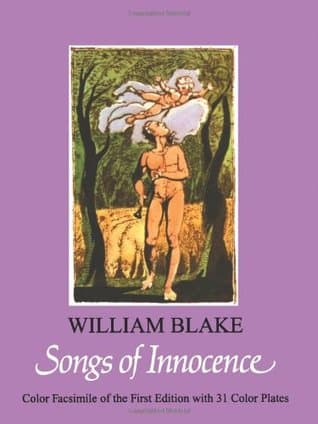
Synopsis
Covers the whole plot, including the ending.
- Difficulty
- Medium
- Pacing
- Slow
- Mood
- Contemplative, Gentle, Spiritual, Reflective, Pastoral
- Read it if
- You are interested in classic poetry, the Romantic era, or the intersection of visual art and literature, particularly with themes of childhood and spirituality.
- Skip it if
- You prefer modern, narrative-driven fiction or find allegorical, lyrical poetry difficult to engage with.
Songs of Innocence Plot Summary
Covers the whole plot, including the ending.
Introduction: The Piper and the Child
The collection begins with the 'Introduction.' A piper, resting by a stream, meets a child on a cloud. The child cries with joy as the piper plays a happy tune. The child then asks the piper to play the song again, and then to sing it. Finally, the child asks the piper to write down his songs in a book so that 'every child may joy to hear.' The piper, using a 'hollow reed' for a pen and 'water clear' for ink, writes the songs. This symbolizes the natural origin of the poems and their wide appeal. This sets the mood for the whole collection, focusing on childlike wonder, joy, and nature's pure voice.
The Lamb
In 'The Lamb,' a speaker, likely a child, talks to a lamb. The child asks about its origin and gentle nature. The child admires the lamb's soft wool, its tender voice, and how it feeds by the stream and in the meadow. The child then answers its own question, saying the lamb was made by one who calls himself a lamb, and is also called a child — referring to Jesus Christ. The poem shows the shared innocence and purity between the lamb, the child, and Christ. It connects the divine with gentleness and creation. It celebrates God's kind presence in nature and in an innocent heart.
The Chimney Sweeper (Innocence)
This poem introduces Tom Dacre, a young chimney sweeper whose head was shaved by his father after his mother died. Another, older sweeper comforts him. Tom dreams that an angel unlocks the coffins (chimneys) of thousands of sweepers, freeing them to play in a green field and wash in a river, their sooty bodies becoming bright. The angel tells Tom that if he is a good boy, God will be his father and he will always have joy. Waking up, the children rise early, feeling warm and happy. They believe that if they do their duty, they 'need not fear harm.' This poem contrasts the harsh reality of child labor with the comfort of faith and hope for a better afterlife.
The Little Black Boy
A little black boy tells of his mother's lessons about the sun, which stands for God's love. His mother explains that their dark skin is just a cloud that will be shed in heaven. There, their souls will shine equally bright, bathed in God's love. The boy wants to shield his white friend from the heat of God's love until the white child is strong enough. This shows deep selflessness and spiritual understanding. He believes that in eternity, they will both stand before God, equal in love and understanding, leaving behind their earthly differences.
The Divine Image
This poem states that God lives within the human virtues of Mercy, Pity, Peace, and Love. It says these virtues are found in all people, no matter their race or religion. Praying to these virtues is like praying to God. The poem highlights the inherent goodness and divinity in every person. Blake suggests that these qualities are not just God's traits but are God's essence shown in humanity. By practicing these virtues, humans embody the divine. It is a core statement on Blake's spiritual humanism.
Holy Thursday (Innocence)
The poem describes a parade of thousands of poor children, dressed in 'red & blue & green,' walking to St. Paul's Cathedral on Holy Thursday. 'Beadles' with 'wands as white as snow' lead them. The sight is shown as innocent beauty and grace. The children's voices, singing hymns, are compared to 'multitudes of lambs,' creating a strong, harmonious sound that 'raise your head, you guardians of the poor.' The poem at first seems to celebrate charity and the children's joy. However, it subtly hints at the social structures that make such charity necessary. This sets the stage for the later, more critical 'Songs of Experience' version.
Nurse's Song (Innocence)
In 'Nurse's Song,' a nurse calls her charges inside as the sun sets. But the children ask to stay out and play longer, their laughter filling the valley. The nurse, moved by their joy and innocent wish, lets them continue playing. She says that 'your hearts are at rest' and 'no harm can come to you.' This poem celebrates the freedom and joy of childhood. It shows the kind, understanding nurse who puts the children's happiness before strict rules, reflecting a world where innocence is valued and protected.
Infant Joy
'Infant Joy' is a short poem, a conversation between a mother and her two-day-old baby. The mother asks the baby what it wants to be called, and the baby answers, 'Joy is my name.' The mother then confirms this name, showing her own joy and blessing the infant with happiness. The poem is a pure celebration of new life, innocent happiness, and the simple bond between a mother and child. It captures the essence of pure bliss and the simple, inherent goodness of existence at its start.
A Dream
The speaker tells of a dream where a 'wandering ant' is lost, crying and missing its 'pained heart' (its family). A 'glow-worm' then offers light to guide the ant, and a 'field-mouse' advises the ant to ask a 'friendly Emmet' (another ant) for directions. The dream shows how nature connects creatures and how they help each other. The speaker wakes up realizing that 'We are all alike, no matter what we say.' This highlights a universal bond among all creatures. It suggests that even small beings share common struggles and the ability to feel compassion.
On Anothers Sorrow
This poem looks at empathy and divine compassion. The speaker asks if a human can see another's sorrow without feeling pity, or hear a sigh without sighing back. It then extends this to God, asking if God, who made humanity, can see suffering without sharing it. The poem concludes that God does share in human grief, becoming 'a man of sorrows' and 'a weeping eye' for humanity. This shows God's presence and His deep, personal connection to the pain of His creation. It portrays a compassionate God.
The Little Boy Lost
A young boy, lost in a 'lonely fen,' cries for his father who has disappeared. His father, distracted, had walked away, leaving the boy separated and scared. The boy's cries are heard, not by his earthly father, but by a divine figure. God, shown as a 'kindly light' or an 'old man white,' appears to the boy, takes his hand, and leads him back to his mother. This poem shows how vulnerable children are and how divine love is always there to protect when earthly support fails. It shows God as a kind guide and comforter.
The Little Boy Found
This poem is the continuation of 'The Little Boy Lost.' It describes the mother's frantic search for her lost son, crying and upset. Meanwhile, the 'old man white' (God) leads the little boy directly to his weeping mother. The reunion is joyful, with the mother embracing her child. The poem strengthens the theme of divine care and comfort. It shows that even in despair, a higher power steps in to bring back peace and happiness. It ends the story with a sense of security and renewed family love under God's watch.
Principal Figures
The Piper
Narrator/Initiator
The musician inspired to create the Songs of Innocence.
The Piper is the initial speaker and catalyst for the collection, introduced in the 'Introduction.' He is a figure of natural inspiration, playing happy tunes on his pipe. His encounter with the child on a cloud leads him to transcribe his songs, becoming the instrument through which the innocent perspective is voiced. He represents the uncorrupted artist, drawing directly from divine and childlike inspiration, emphasizing spontaneity and natural expression in art. He is a conduit for the pure, unadulterated voice of innocence.
Relationships: The Child (on a cloud) (Source of inspiration and audience)
The Child (on a cloud)
Divine inspiration/Audience
The celestial child who prompts the Piper to write his songs.
This child appears to the Piper in the 'Introduction,' weeping with joy and requesting the songs be written down. The child embodies pure, unadulterated joy and spiritual innocence, acting as a direct link to the divine. This figure is not an earthly child but a symbolic representation of the eternal, uncorrupted spirit that guides and appreciates the songs. The child's presence validates the inherent goodness and universal appeal of the themes explored in 'Songs of Innocence.'
Relationships: The Piper (Inspires and directs the Piper's creative act)
The Lamb
Symbol of innocence/Christ figure
A gentle creature symbolizing divine innocence and creation.
The Lamb is both a literal animal addressed in its eponymous poem and a profound symbol. It represents the purest form of innocence, gentleness, and the uncorrupted natural world. More significantly, it is explicitly linked to Jesus Christ, who is also called 'Lamb of God' and a 'little child.' This dual symbolism highlights the divine presence within the simplest and most vulnerable of creatures, emphasizing Christ's humility and the benevolent aspect of God's creation. The Lamb embodies the core spiritual message of innocence.
Relationships: The Child (speaker in poem) (Object of the child's inquiry and revelation)
Tom Dacre
Child laborer/Protagonist of 'The Chimney Sweeper'
A young chimney sweeper who finds solace in dreams and faith.
Tom Dacre is one of the central figures in 'The Chimney Sweeper' (Innocence). He is a young boy, forced into the dangerous and grim life of a chimney sweeper after his mother's death. Despite his harsh reality, Tom maintains a spirit of hope and faith, particularly after experiencing a comforting dream of liberation and divine care. His character embodies the resilience of innocence in the face of suffering, finding solace in the promise of a benevolent God and a better future, even while enduring present hardship.
Relationships: Other chimney sweepers (Fellow sufferers and companions in hardship); The Angel (in dream) (Messenger of hope and divine promise)
The Little Black Boy
Child protagonist
A black child who understands divine love transcends earthly distinctions.
The Little Black Boy is the speaker of the poem by the same name. He recounts his mother's teachings about the spiritual equality of all people, regardless of skin color. He possesses a profound understanding of divine love and anticipates a future where racial distinctions will dissolve in the presence of God. His character demonstrates a selfless love and a deep spiritual maturity, showing compassion for his white friend and a firm belief in a universal, unifying divine love that transcends superficial differences.
Relationships: Mother (his) (Teacher of spiritual wisdom); White Boy (his friend) (Recipient of his compassion and spiritual guidance)
The Nurse (Innocence)
Supporting character/Caretaker
A benevolent caretaker who allows children to prolong their play.
The Nurse in 'Nurse's Song' (Innocence) is a figure of gentle authority and empathy. While she initially calls the children in as evening falls, she is persuaded by their joyful pleas to let them continue playing. Her decision reflects a nurturing and understanding approach to childhood, prioritizing the children's happiness and freedom within a safe environment. She represents a benevolent adult influence, characteristic of the innocent world where joy and natural instincts are respected and protected.
Relationships: The Children (her charges) (Caretaker and benevolent guardian)
God (as Father/Shepherd/Old Man)
Divine presence/Protector
The benevolent and empathetic divine being who watches over creation.
God appears in various forms throughout 'Songs of Innocence,' often as a loving father, a gentle shepherd, or an 'old man white.' This divine figure is consistently portrayed as benevolent, protective, and deeply empathetic to human suffering, particularly that of children. In 'The Little Boy Lost' and 'Found,' God directly intervenes to guide a lost child home. In 'On Anothers Sorrow,' God is shown to share in human grief. This portrayal emphasizes a comforting, accessible, and compassionate deity who is intimately involved in the well-being of His creation, especially the innocent.
Relationships: Humanity/Children (Creator, protector, and comforter); The Lamb (Creator and symbolic representation)
The Lost Boy
Child protagonist
A child who becomes separated from his father and is guided by divine intervention.
The 'Little Boy Lost' is a vulnerable child who becomes separated from his father in a 'lonely fen.' His distress and fear highlight the fragility of childhood and the need for protection. His experience, however, becomes a testament to divine care, as he is found and guided by a benevolent 'old man white' (God) back to his mother. He represents the innocent soul's reliance on higher power when earthly guidance falters, demonstrating that even in moments of profound fear, divine comfort is present.
Relationships: Father (his) (Initially negligent, causing separation); Mother (his) (Anxious searcher and recipient of reunion); God (Old Man White) (Divine guide and protector)
Themes & Insights
Innocence and Childhood
The main theme of 'Songs of Innocence' is the celebration and protection of childhood innocence. Blake shows children as pure, uncorrupted beings, closer to God and having natural wisdom and joy. This theme appears in poems like 'The Lamb,' where a child's questions lead to a deep spiritual truth, and 'Infant Joy,' which delights in a newborn's happiness. Even when facing hardship, as in 'The Chimney Sweeper,' children's hope and faith remain. This suggests that innocence is a strong state of being that can find comfort and meaning despite outside suffering. The collection supports the free and natural goodness of childhood.
“And I made a rural pen, / And I stained the water clear, / And I wrote my happy songs / Every child may joy to hear.”
Divine Benevolence and Presence
Blake consistently shows a kind and ever-present God in 'Songs of Innocence.' This God is not distant or critical but a loving, comforting, and empathetic figure. God is often shown as a father, shepherd, or a 'man of sorrows' who shares in human pain. In 'The Divine Image,' God is linked to the human virtues of Mercy, Pity, Peace, and Love. This makes the divine accessible and present within humanity. God's direct help in 'The Little Boy Lost' and 'Found' further highlights this theme, showing a protective deity who actively guides and comforts the vulnerable. This theme gives a deep sense of security and spiritual comfort.
“And he is called by thy name, / For he calls himself a Lamb: / He is meek & he is mild, / He became a little child.”
Empathy and Compassion
A strong idea throughout the collection is the importance of empathy and compassion, both human and divine. 'On Anothers Sorrow' directly addresses this, asking how one can see suffering without feeling pity. It concludes that God Himself shares in human grief. The Little Black Boy's wish to shield his white friend from the 'heat' of God's love shows a selfless compassion that goes beyond race. Even the Nurse in 'Nurse's Song' shows empathy by letting the children continue their joyful play. This theme highlights how all beings are connected and the moral need to share and lessen suffering, reflecting God's compassionate example.
“Can a mother sit and hear / An infant groan an infant fear? / No, no! never can it be! / Never, never can it be!”
Social Critique (Subtle)
While mainly about innocence, the collection subtly hints at social criticism. These hints become clearer in 'Songs of Experience.' 'The Chimney Sweeper' is the most direct example, showing the harsh reality of child labor despite the child's hopeful view. The poem 'Holy Thursday' (Innocence) presents a beautiful image of charity children. However, the sheer 'multitudes' and their supervised procession subtly question the social conditions that require such widespread poverty and charity, instead of fixing the root causes. These poems, though framed with innocent hope, prepare for a deeper look at social injustices and the exploitation of innocence. They suggest that the innocent world is not entirely separate from the world of experience.
“When my mother died I was very young, / And my father sold me while yet my tongue / Could scarcely cry 'weep! 'weep! 'weep! 'weep!”
Plot Devices & Literary Techniques
Pastoral Setting
The use of idyllic natural landscapes to symbolize innocence and purity.
Blake frequently employs pastoral settings—green fields, streams, meadows, and clouds—to evoke a sense of untouched beauty and harmony. This device is crucial in establishing the innocent world. For example, the Piper sits by a 'water clear' in the 'Introduction,' and the freed chimney sweepers dream of playing on a 'green plain.' These natural landscapes symbolize a paradise-like state, free from the corruption and complexities of urban or industrialized society, reinforcing the idea of a pure, unblemished existence where joy and spiritual connection thrive.
Child as Speaker/Narrator
Presenting the world through the perspective of a child to convey innocence and simple truth.
Many poems in 'Songs of Innocence' are narrated by or feature a child as the primary speaker, such as in 'The Lamb,' 'The Chimney Sweeper,' and 'The Little Black Boy.' This device allows Blake to express profound spiritual and moral truths through a voice that is unburdened by adult cynicism or societal conditioning. The child's perspective offers a direct, unmediated view of the world, highlighting inherent goodness, simple faith, and an intuitive understanding of divine love and justice. It underscores the idea that fundamental truths are often most accessible through an innocent gaze.
Symbolism of Animals
Using animals, particularly lambs, to represent purity, gentleness, and divine connection.
Animals, especially the lamb, are potent symbols in 'Songs of Innocence.' The lamb, in its eponymous poem, is a direct symbol of purity, gentleness, and is explicitly linked to Christ, embodying divine innocence and sacrifice. Other animals like the 'glow-worm' and 'field-mouse' in 'A Dream' represent interconnectedness and mutual aid in nature. These animal symbols serve to connect the natural world with spiritual truths, suggesting that divine qualities are manifest in all of God's creation, particularly in its most vulnerable and gentle forms. They reinforce the harmonious and benevolent aspect of the innocent world.
Dream Vision
The use of dreams to reveal spiritual truths and offer solace or hope.
The dream vision is a significant device, notably in 'The Chimney Sweeper.' Tom Dacre's dream provides him with a powerful vision of liberation and divine comfort, transforming his grim reality into one of hope and reassurance. Similarly, 'A Dream' explores themes of universal connection through a symbolic dream narrative. Dreams in Blake's work often serve as a bridge between the physical world and the spiritual realm, allowing characters (and readers) to glimpse profound truths, receive divine messages, or find solace that transcends their waking circumstances. They are a means of accessing deeper, often subconscious, spiritual understanding.
Songs of Innocence Quotes
“Little lamb, who made thee? / Dost thou know who made thee?”
“And I made a rural pen, / And I stained the water clear, / And I wrote my happy songs, / Every child may joy to hear.”
“When the voices of children are heard on the green, / And laughing is heard on the hill,”
“For Mercy has a human heart, / Pity a human face, / And Love, the human form divine, / And Peace, the human dress.”
“How can a bird that is born for joy, / Sit in a cage and sing?”
“And I am black, but O! my soul is white; / White as an angel is the English child,”
“He is meek & he is mild, / He became a little child.”
“When the green woods laugh with the voice of joy, / And the dimpling stream runs laughing by;”
“I have no mother and my father is dead; / And I am sold to sweep in the dark.”
“And wash all my white hair clean, / And I rise up and away.”
“For many a child / Of the friendly wild, / Was fed with milk, and fed with bread.”
“Then come home my children, the sun is gone down, / And the dews of night arise;”
“Sweet joy befall thee! / I sing the songs of joy / And so may you.”
Quiz
10 questions on the plot and the characters. Each answer comes with a short explanation.
Question 1
What artistic innovation is William Blake credited with that led to his 'Illuminated Books'?
- Oil painting
- Sculpture
- Engraving techniques
- Photography
Show answer
C. Engraving techniques The text states that 'William Blake's innovations in engraving techniques brought about his brilliant synthesis of visual and poetic art and signaled the beginning of his famous 'Illuminated Books.'
Question 2
Which of Blake's 'Illuminated Books' is described as the 'first and most popular'?
- The Book of Thel
- Songs of Experience
- Songs of Innocence
- Milton a Poem
Show answer
C. Songs of Innocence The passage identifies 'Songs of Innocence' as 'the first and most popular' of his Illuminated Books.
Question 3
Why is Blake's vision generally known in an 'amputated form' to the world?
- Blake intentionally separated text and visuals.
- His original works were lost over time.
- Difficulty and expense of reproducing his original conception.
- Publishers preferred text-only editions.
Show answer
C. Difficulty and expense of reproducing his original conception. The text explicitly states: 'because of the difficulty and expense of reproducing his original conception, most editions of Blake's work offer only the printed text, with no trace of the visual counterpart.'
Question 4
What is considered 'essential to his 'System'' and crucial to a total understanding of Blake's mind and art?
- Blake's personal diaries
- The visual counterpart of his poetry
- Interpretations by literary critics
- The historical context of his era
Show answer
B. The visual counterpart of his poetry The passage highlights that the 'visual counterpart so essential to his 'System'' and the 'symbiotic union of poem and picture that is crucial to a total understating of Blake's mind and art.'
Question 5
How many plates are included in the new facsimile edition of 'Songs of Innocence'?
- 20
- 31
- 45
- 50
Show answer
B. 31 The text specifies: 'The 31 plates — printed on facing pages which are the same size of Blake's own first edition — offer one of the more brightly colored versions of this significant volume.'
Question 6
What characteristic of Blake's original editions of 'Songs of Innocence' is mentioned regarding their appearance?
- They were all identical in color and design.
- No two copies were the same.
- They were only available in black and white.
- The colors faded quickly over time.
Show answer
B. No two copies were the same. The passage notes that the new edition offers 'one of the more brightly colored versions of this significant volume, no two copies of which are the same,' referring to Blake's original works.
Question 7
What additional aid is provided to readers in this new facsimile edition, following the plates?
- An author biography
- Critical essays
- A typographical reprint of the text of poems
- An index of characters
Show answer
C. A typographical reprint of the text of poems The text states: 'As a special aid to readers, a typographical reprint of the text of poems follows the plates.'
Question 8
The description emphasizes the importance of the 'symbiotic union of poem and picture' for understanding Blake's work. This directly relates to which broader theme or concept mentioned in the introduction?
- The economic challenges of publishing art.
- The separation of visual and poetic art.
- Blake's synthesis of visual and poetic art.
- The popularity of his individual poems.
Show answer
C. Blake's synthesis of visual and poetic art. The introduction states Blake's innovations 'brought about his brilliant synthesis of visual and poetic art,' which directly aligns with the 'symbiotic union of poem and picture' mentioned later as crucial for understanding his art.
Question 9
What does the phrase 'Blake's vision is generally known to the world in amputated form' imply about typical reproductions of his work?
- They are incomplete, lacking the visual component.
- They are physically damaged or torn.
- They are censored versions of his original writings.
- They only include a selection of his poems.
Show answer
A. They are incomplete, lacking the visual component. The text clarifies that 'amputated form' means 'most editions of Blake's work offer only the printed text, with no trace of the visual counterpart so essential to his 'System.'
Question 10
The new facsimile edition aims to reproduce Blake's color plates in a fashion the artist 'himself would have approved.' This suggests a focus on:
- Modernizing Blake's aesthetic for contemporary audiences.
- Historical accuracy and fidelity to Blake's original artistic intent.
- Making the artwork more accessible to those with visual impairments.
- Creating new interpretations of Blake's original designs.
Show answer
B. Historical accuracy and fidelity to Blake's original artistic intent. The approval of Blake himself, along with the detailed description of reproducing the plates at the 'same size of Blake's own first edition' and in 'brightly colored versions,' indicates a strong emphasis on historical accuracy and preserving his original artistic vision.
Songs of Innocence FAQ
What is 'Songs of Innocence' and why is this edition significant?
'Songs of Innocence' is William Blake's first and most popular 'Illuminated Book,' a revolutionary synthesis of visual art and poetry. This facsimile edition is significant because it reproduces Blake's original color plates, which are essential to understanding his 'System' and are often missing from other editions due to reproduction difficulties.
How does Blake's innovative engraving technique contribute to the 'Songs of Innocence'?
Blake's innovative engraving techniques allowed him to create 'Illuminated Books,' where text and image were created together on the same plate. This method ensured a seamless integration of his poetry and visual art, forming a 'symbiotic union' that was crucial to his artistic and spiritual vision.
What is the primary theme explored in poems like 'The Lamb' within 'Songs of Innocence'?
In 'The Lamb,' Blake explores themes of innocence, divine creation, and the gentle aspects of spirituality. The poem, often accompanied by pastoral imagery, presents a tender and benevolent view of God as a loving creator, mirroring the innocence of a child.
How does 'The Chimney Sweeper' from 'Songs of Innocence' contrast with the overall tone of innocence?
'The Chimney Sweeper' introduces a darker, more critical perspective, highlighting the harsh realities faced by exploited children. While still framed within the 'Songs of Innocence,' it subtly critiques societal injustices, showing how innocence is threatened and corrupted by the adult world, even if the children find solace in dreams.
Why is the visual component so crucial to a 'total understanding of Blake's mind and art' in 'Songs of Innocence'?
Blake's 'System' relies on the 'symbiotic union' of poem and picture; the images are not mere illustrations but integral parts of the meaning. They often provide additional layers of symbolism, emotional context, or even ironic commentary that cannot be fully grasped from the text alone, making the visual art indispensable.
What 'hidden details' might readers discover by examining the color plates alongside 'The Lamb'?
Alongside 'The Lamb,' the color plates often depict idyllic pastoral scenes with a child and a lamb, sometimes with a gentle shepherd figure. These visuals reinforce the themes of purity and divine love, subtly suggesting a harmonious, uncorrupted natural world where innocence flourishes under benevolent care, deepening the poem's spiritual message.
How do the visual elements in 'The Chimney Sweeper' (Innocence) add to its meaning beyond the text?
The visual elements in 'The Chimney Sweeper' often depict the children in bleak, confined spaces, sometimes with angelic figures above, offering a glimmer of hope. These images starkly contrast the children's suffering with a vision of spiritual liberation, suggesting that while their earthly lives are harsh, their souls are cared for by divine intervention, even in death.
Are there recurring visual motifs or symbols across different plates in 'Songs of Innocence' that connect the poems?
Yes, recurring visual motifs include children, lambs, flowers, trees, and often gentle, flowing lines and soft colors. These elements consistently evoke a sense of purity, nature's harmony, and a benevolent spiritual presence, unifying the collection under the overarching theme of uncorrupted innocence and divine grace.
What psychological state does Blake's 'Songs of Innocence' primarily explore?
Blake's 'Songs of Innocence' primarily explores the psychological state of uncorrupted childhood, characterized by trust, joy, and a direct, intuitive connection to the divine. It delves into the nascent stages of human consciousness, where wonder and empathy are paramount, before the complexities and corruptions of the adult world set in.
How does the 'voice of the Piper' in the introductory poem psychologically set the stage for the collection?
The 'voice of the Piper' sets a tone of playful creativity and spontaneous joy, inviting the reader into a world of simple beauty and song. Psychologically, it establishes a state of receptivity and openness, mirroring the innocent mind that is unburdened by cynicism and ready to engage with the natural, spiritual world through imagination.
In what ways do the children depicted in 'Songs of Innocence' represent a specific psychological archetype?
The children in 'Songs of Innocence' represent the archetype of the 'Divine Child,' symbolizing purity, potential, and an unmediated connection to the spiritual. They embody an uncorrupted self, guided by instinct and a natural sense of goodness, before societal influences or personal experience introduce doubt or despair.
How does Blake's portrayal of nature in 'Songs of Innocence' reflect a psychological projection of the innocent mind?
Blake's nature in 'Songs of Innocence' is often idyllic and nurturing, a direct psychological projection of the innocent mind's perception of the world. It is a safe, benevolent space, reflecting the child's trust and belief in a harmonious universe, where even potential threats are softened by faith and divine presence.
Is 'Songs of Innocence' purely optimistic, or are there underlying hints of the 'Songs of Experience' to come?
While largely optimistic, 'Songs of Innocence' contains subtle hints of the 'Songs of Experience,' particularly in poems like 'The Chimney Sweeper.' These poems, though often ending with spiritual solace, expose the vulnerability of innocence to societal cruelty, foreshadowing the darker realities explored in the later collection.
How might one interpret the 'brightly colored versions' of Blake's plates in this edition in terms of Blake's spiritual message?
The 'brightly colored versions' can be interpreted as reflecting Blake's vision of a vibrant, living spirituality inherent in creation and the innocent soul. The vivid hues symbolize divine joy, energy, and the unblemished beauty of the world as perceived by an uncorrupted mind, reinforcing the spiritual optimism of the collection.
What debate surrounds the relationship between the 'Songs of Innocence' and 'Songs of Experience'?
The primary debate centers on whether the two collections are opposing forces, a dialectical progression, or two complementary perspectives on the same reality. Some argue 'Innocence' is naive, while 'Experience' is enlightened; others see them as necessary stages or dual aspects of human understanding, with true wisdom lying in their synthesis.
To what extent can 'Songs of Innocence' be considered a critique of society, despite its focus on purity?
Even with its focus on purity, 'Songs of Innocence' offers an implicit critique of society by presenting an idealized state that is often contrasted with the harsh realities faced by children, as seen in 'The Chimney Sweeper.' It highlights what society often fails to protect, suggesting that corruption and suffering stem from human institutions rather than divine will.
How does Blake's use of simple, lyrical language contribute to the overall 'innocent' effect of the poems?
Blake's use of simple, lyrical language, often resembling nursery rhymes or folk songs, contributes significantly to the 'innocent' effect by making the poems accessible and memorable. This simplicity mirrors the direct, uncomplicated understanding of a child, allowing complex spiritual ideas to be conveyed with clarity and emotional resonance.
What is the significance of 'no two copies' of Blake's original editions being the same?
The fact that 'no two copies' were the same underscores Blake's artisanal approach and his belief in unique creation, resisting industrial replication. It implies that each illuminated book was a distinct artistic endeavor, imbued with the artist's personal touch and perhaps reflecting subtle variations in his spiritual or artistic state at the time of coloring.
About the author
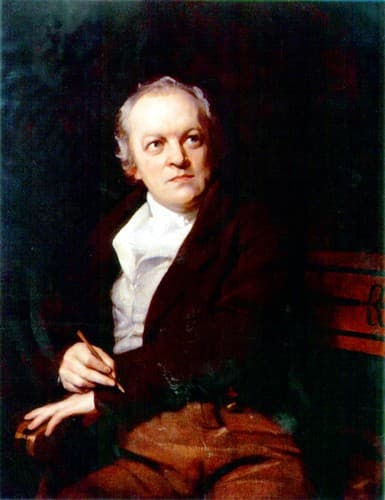
William Blake was an English poet, painter, and printmaker. Largely unrecognised during his life, Blake is now considered a seminal figure in the history of the poetry and visual art of the Romantic Age. What he called his "prophetic works" were said by 20th-century critic Northrop Frye to form "what is in proportion to its merits the least read body of poetry in the English language". His visual artistry led 21st-century critic Jonathan Jones to proclaim him "far and away the greatest artist Britain has ever produced". In 2002, Blake was placed at number 38 in the BBC's poll of the 100 Greatest Britons. While he lived in London his entire life, except for three years spent in Felpham, he produced a diverse and symbolically rich collection of works, which embraced the imagination as "the body of God" or "human existence itself".
Similar books
- Lyrical Ballads
Samuel Taylor Coleridge
3.9 (11k) average on GoodreadsFictionA foundational work of the Romantic movement, exploring nature, childhood, and the common person with lyrical beauty.
- Eat, Pray, Love
Elizabeth Gilbert
3.6 (1.5M) average on GoodreadsLifestyleA heartbroken writer leaves her conventional life for a year-long global search for pleasure in Italy, spiritual devotion in India, and unexpected love and balance in Bali.
- Educated
Tara Westover
4.5 (796k) average on GoodreadsBiographyRaised in the Idaho mountains by fundamentalist survivalists, a young woman forges her own path to education, battling fierce family loyalty and personal demons to discover a world beyond her isolated upbringing.
- The Poisonwood Bible
Barbara Kingsolver
4.1 (659k) average on GoodreadsLiterary FictionA zealous missionary's rigid faith clashes with the Belgian Congo's wilderness and people, unraveling his family through the eyes of his five unforgettable women.
- Siddhartha
Hermann Hesse
4.0 (583k) average on GoodreadsHistorical FictionSiddhartha leaves a life of privilege and piety, embracing asceticism, wealth, and love to find enlightenment not in dogma, but in the whispers of a river and the unity of all existence.
- The Five People You Meet in Heaven
Mitch Albom
3.9 (578k) average on GoodreadsFantasyAn amusement park mechanic, Eddie, dies saving a child and awakens in an afterlife where five souls, some familiar, some strangers, reveal the meaning of his ordinary life.





Enjoyed the summary?
A summary gives you the shape of the book. The book itself has the detail, the examples and the voice.
Find Songs of Innocence on AmazonAs an Amazon Associate, BookBrief earns from qualifying purchases. How we're funded