

Synopsis
Covers the whole plot, including the ending.
- Difficulty
- Medium
- Pacing
- Moderate
- Mood
- Inspiring, Ambitious, Informative, Reflective
- Read it if
- You want an epic, character-driven historical saga that delves into the origins and evolution of the American space program, from its early days to the Space Shuttle era.
- Skip it if
- You prefer fast-paced, action-oriented science fiction or are not interested in detailed historical accounts of scientific and political endeavors.
Space Plot Summary
Covers the whole plot, including the ending.
The Seeds of Ambition
The novel opens after World War II, introducing key figures like Stanley Mott, a driven engineer, and Norman Grant, a war hero and future senator. Mott, along with German rocket scientists like Dieter Kolff (who worked under Hitler), are brought to America to contribute to early rocketry programs. Their initial efforts are secret, focusing on adapting V-2 rocket technology. Mott's pursuit of knowledge and his ability to inspire those around him become central to the American space program, even as he deals with the ethics of working alongside former Nazi scientists. Grant moves from military heroics to a political career, positioning himself to champion the space race in Washington.
The Sputnik Shock
The Soviet Union's launch of Sputnik shocks the world and creates urgency in America. This event is a turning point, galvanizing public and political will to accelerate the American space program. Stanley Mott and his team, though already working hard, feel immense pressure to catch up. Norman Grant, now a U.S. Senator, uses the Sputnik crisis to advocate for more funding and national focus on space, fighting political inertia and skepticism. The race is no longer just scientific; it is a matter of national pride and security, setting the stage for the Mercury program and the selection of America's first astronauts.
Project Mercury and the First Astronauts
The story moves to the selection and training of the Mercury Seven astronauts, including Randy Claggett, a skilled test pilot. These men, embodying the ideal of the American hero, prepare intensely, facing the dangers of early rocket technology and media scrutiny. Cynthia Rhee, a tenacious reporter, begins her career covering these events, giving an outside view of the human drama. Stanley Mott's engineering expertise is key to developing the spacecraft and mission profiles, while Norman Grant continues to get the necessary political and financial backing, navigating the complex interplay of science, politics, and public opinion.
Gemini: Bridging to the Moon
After Mercury, the Gemini program takes center stage, focusing on developing skills for a moon landing, such as rendezvous, docking, and spacewalks. Astronauts like Randy Claggett participate in these complex and dangerous missions, pushing the boundaries of human endurance and technology. Public fascination with space grows, fueled by Cynthia Rhee's reports, which highlight the personal sacrifices and courage of the astronauts and their families. Stanley Mott's teams constantly innovate, refining spacecraft designs and mission protocols, learning from both successes and failures, as the goal of reaching the moon nears.
Apollo: The Lunar Dream
The Apollo program is the culmination of years of effort and sacrifice, with the goal of landing humans on the Moon. The novel details the scale of this undertaking, from the development of the Saturn V rocket to the planning of lunar modules and command service modules. Randy Claggett is selected for an Apollo mission, showing his skill and bravery. Stanley Mott's leadership is important, overseeing thousands of engineers and scientists, while Norman Grant ensures continued political support amid national tragedies and shifting priorities. Cynthia Rhee's reporting reaches its peak, capturing the global excitement and tension surrounding each Apollo launch and mission, bringing the human story of exploration to millions.
Tragedy and Triumph
The path to the moon is dangerous, including the Apollo 1 fire that kills three astronauts during a launch rehearsal. This tragedy forces a re-evaluation of safety protocols and spacecraft design, highlighting the risks. Despite this setback, the program continues. The narrative builds to the successful Apollo 11 mission, where Neil Armstrong becomes the first human to walk on the Moon, a moment of global triumph. Randy Claggett, though not on Apollo 11, continues to play a role in later missions, contributing to the scientific exploration of the lunar surface. Stanley Mott, Dieter Kolff, and their teams see their years of labor culminate in this historic achievement.
The Decline of Public Interest and Skylab
After the euphoria of the Moon landings, public and political interest in space exploration begins to fade. The Skylab program, America's first space station, is launched as a transitional phase, demonstrating long-duration spaceflight and scientific research in orbit. Randy Claggett is among the astronauts who crew Skylab missions, pushing the boundaries of scientific inquiry in space. However, funding becomes difficult to get, and Norman Grant faces an uphill battle in Congress to maintain the program's momentum. Stanley Mott and his engineers deal with the challenges of repurposing Apollo hardware for new missions, while Cynthia Rhee observes the shift in national priorities, reflecting on the transient nature of public enthusiasm.
The Space Shuttle Era
The Space Shuttle program is introduced as the next step, promising reusable spacecraft and more routine access to Earth orbit. This new technology brings its own challenges and opportunities. Randy Claggett, now a veteran astronaut, adapts to the new system, participating in early Shuttle missions that show its capabilities. Stanley Mott's expertise is important in the design and engineering of the complex Shuttle system, aiming to make spaceflight more economical and accessible. Norman Grant, though nearing the end of his political career, remains a strong advocate for the program, while Cynthia Rhee continues to report on the evolution of space travel, highlighting both the technological marvels and the ongoing human risks.
International Collaboration and Future Visions
As the Space Shuttle program matures, the emphasis shifts towards international collaboration, especially with the Soviet Union (and later Russia), leading to joint missions like Apollo-Soyuz and the foundation for the International Space Station. Dieter Kolff, having contributed to American rocketry, reflects on the journey from wartime rockets to peaceful international cooperation. Stanley Mott begins to envision future deep-space missions, even as he considers retirement. Randy Claggett, having experienced the full arc of American space exploration, becomes a mentor for a new generation of astronauts. Cynthia Rhee continues to chronicle these developments, emphasizing the human desire to explore beyond Earth.
The Challenger Disaster and Legacy
The novel addresses the Challenger disaster, a moment that deeply impacts the Space Shuttle program and the nation. This event reminds readers of the dangers of space exploration and the sacrifices made for knowledge. The characters, including Stanley Mott and Randy Claggett, deal with the emotional and professional fallout. The disaster prompts a re-evaluation of safety protocols and the balance between ambition and risk. The novel concludes with a reflection on the legacy of the space program, its achievements, its human cost, and the drive to push the boundaries of the unknown, leaving the reader with a sense of awe and the ongoing challenges of space exploration.
Principal Figures
Stanley Mott
Protagonist
The brilliant and driven engineer at the heart of the American space program.
Stanley Mott is a visionary engineer whose tireless dedication and intellectual prowess are the driving force behind many of America's space achievements. He possesses an insatiable curiosity and an ability to inspire his teams, often working behind the scenes to solve complex technical challenges. Mott is pragmatic but also deeply committed to the ideals of exploration, often mediating between scientific ambition and political realities. His character embodies the scientific and engineering spirit of the space race, constantly pushing for innovation and overcoming obstacles with ingenuity.
Relationships: Norman Grant (professional colleague and political ally, often needing to bridge the gap between science and politics); Dieter Kolff (professional colleague, initially with a strained relationship due to Kolff's past, but evolving into mutual respect); Randy Claggett (professional relationship as engineer to astronaut, with mutual respect for each other's roles)
Norman Grant
Supporting
A decorated war hero turned U.S. Senator, a staunch advocate for space.
Norman Grant is a charismatic and politically astute individual who uses his influence and war hero status to champion the American space program. He is a master of navigating the political landscape, securing funding, and rallying public support. Grant understands the strategic importance of space exploration for national prestige and security, often clashing with skeptical colleagues. While not a scientist, his dedication to the cause is unwavering, providing the political muscle necessary for the ambitious endeavors of Mott and his teams. He represents the political will and public face of the space race.
Relationships: Stanley Mott (professional colleague and political ally, often needing to bridge the gap between science and politics); Cynthia Rhee (professional relationship as a public figure being reported on)
Dieter Kolff
Supporting
A German rocket scientist with a controversial past, crucial to American rocketry.
Dieter Kolff is a brilliant but morally complex German rocket scientist who worked for the Nazi regime before being brought to America. He is a pragmatic and highly skilled engineer, whose knowledge of rocketry is invaluable to the nascent American program. Kolff is driven by scientific curiosity and the pursuit of technological advancement, often compartmentalizing his past. He represents the ethical ambiguities inherent in leveraging wartime scientific talent for peacetime endeavors, gradually earning respect through his contributions despite his controversial origins.
Relationships: Stanley Mott (professional colleague, initially with a strained relationship due to Kolff's past, but evolving into mutual respect)
Randy Claggett
Protagonist
A daring and skilled test pilot turned astronaut, experiencing the full arc of human spaceflight.
Randy Claggett embodies the archetypal astronaut: courageous, highly skilled, and unflappable under pressure. He is a decorated test pilot who transitions into the Mercury, Gemini, Apollo, and Space Shuttle programs, experiencing firsthand the evolution of human spaceflight. Claggett is not just a pilot but also a meticulous professional, dedicated to the success of each mission. His personal life often takes a backseat to his professional commitments, highlighting the sacrifices made by astronauts and their families. He represents the human face of space exploration, the daring individual who actually journeys into the cosmos.
Relationships: Stanley Mott (professional relationship as engineer to astronaut, with mutual respect for each other's roles); Cynthia Rhee (professional relationship as an astronaut being reported on, sometimes adversarial but often respectful)
Cynthia Rhee
Supporting
A tenacious and insightful reporter who chronicles the space race for the world.
Cynthia Rhee is a determined and intelligent journalist who becomes a prominent voice in reporting on the American space program. She possesses a keen eye for detail and a talent for translating complex scientific and political events into compelling narratives for the public. Rhee is driven by a desire to convey the human drama and significance of space exploration, often challenging official narratives and seeking deeper truths. She represents the public's perspective and the media's role in shaping the narrative of the space race, bringing the story to a global audience.
Relationships: Norman Grant (professional relationship as a public figure being reported on); Randy Claggett (professional relationship as an astronaut being reported on, sometimes adversarial but often respectful)
General Glenn
Supporting
A high-ranking military officer who oversees early rocket programs.
General Glenn is a pragmatic and authoritative military figure who plays a crucial role in the early development of American rocketry. He is responsible for managing the integration of German scientists like Kolff into the U.S. program and ensuring the strategic goals of the military are met. Glenn often acts as a gatekeeper, balancing resources and priorities, and navigating the political sensitivities of post-war military-scientific collaboration. He represents the military's foundational role in the origins of the space program, providing the initial structure and security for the scientific endeavors.
Relationships: Stanley Mott (superior officer to Mott in early programs, later a key liaison); Dieter Kolff (oversees Kolff's work and integration into the American program)
Senator Ted Harrison
Supporting
A skeptical senator who often questions the cost and necessity of the space program.
Senator Ted Harrison serves as a foil to Norman Grant, representing the political opposition and public skepticism towards the immense cost and perceived impracticality of space exploration. He frequently raises concerns about diverting funds from social programs and questions the tangible benefits of reaching the moon. Harrison's arguments highlight the constant battle for resources and public opinion that the space program faced throughout its history. He embodies the forces of fiscal conservatism and human-centric priorities, providing a necessary counterpoint to the space advocates.
Relationships: Norman Grant (political adversary, often debating space funding and priorities)
Mrs. Claggett (Randy's Wife)
Supporting
The supportive but anxious wife of astronaut Randy Claggett.
Mrs. Claggett, Randy's wife, represents the spouses and families of the astronauts, who bear the immense emotional burden and public scrutiny of the space race. She is portrayed as supportive of Randy's ambitions but also constantly worried about the inherent dangers of his profession. Her character provides a glimpse into the personal sacrifices and anxieties behind the public spectacle of spaceflight, humanizing the astronauts and their families. Her quiet strength and resilience are a testament to the emotional toll of living on the frontier of human exploration.
Relationships: Randy Claggett (wife, supportive and loving but also deeply anxious)
Themes & Insights
The Human Drive to Explore
This theme is central to the entire novel, appearing as an urge to push boundaries and discover the unknown. Stanley Mott's scientific curiosity and Randy Claggett's daring as a pilot both show this drive. It is not just about national competition, but an intrinsic human desire to look beyond the horizon, whether it is the next scientific breakthrough or the next celestial body. The narrative consistently portrays this drive as a powerful, unifying force, often transcending political and personal differences, as seen in the collaboration between former adversaries like Mott and Kolff in pursuit of a common goal.
“Man was not meant to stay on Earth. He was meant to reach for the stars.”
The Intersection of Science, Politics, and Public Opinion
The novel shows how the space program was not solely a scientific endeavor but a complex mix of scientific ambition, political maneuvering, and changing public sentiment. Norman Grant's constant battle for funding in Congress, often against skeptics like Senator Harrison, highlights the political challenges. The impact of events like Sputnik on public opinion and the later decline of interest after Apollo show how public support can change. Cynthia Rhee's reporting acts as a bridge, translating complex technical achievements into stories that resonate with the public, showing the need for public buy-in for such massive undertakings.
“We can build the rockets, but if the politicians don’t fund them, they’ll sit on the pad.”
The Cost of Progress and Sacrifice
Michener shows the human and financial costs of space exploration. The Apollo 1 fire and the Challenger disaster remind readers of the sacrifices made by astronauts. The long hours, personal toll on families like Randy Claggett's, and the vast sums of taxpayer money invested are consistently addressed. The novel presents progress as something earned through dedication, risk, and sometimes, tragedy. These sacrifices, while painful, are often framed as necessary steps in the grand narrative of human advancement, forcing characters and readers to weigh the value of exploration against its inherent dangers.
“Every great leap forward is paved with the courage of those who risk everything, and sometimes, the lives of those who fall.”
Redemption and Second Chances
The character of Dieter Kolff best shows this theme. His past as a rocket scientist for Nazi Germany presents a moral dilemma, yet his expertise is important to the American space program. The novel explores whether scientific contribution can make up for past transgressions, or at least provide a path towards a new identity and purpose. Kolff's journey, from a figure of suspicion to a respected (if still complex) contributor, suggests that even those with tainted pasts can find a form of redemption through their work, especially when that work serves a greater, peaceful human endeavor like space exploration.
“Perhaps the stars offered a canvas large enough for even the most burdened soul to paint a new future.”
Plot Devices & Literary Techniques
Historical Interweaving
Fictional characters and narratives are seamlessly integrated into real historical events.
Michener masterfully blends the fictional lives and careers of characters like Stanley Mott, Norman Grant, and Randy Claggett with actual historical milestones of the space race, such as the launch of Sputnik, the Apollo missions, and the Challenger disaster. This device grounds the narrative in authenticity, making the fictional stories feel more impactful and real, while simultaneously humanizing the well-known historical events. It allows the reader to experience the broader historical context through the personal struggles and triumphs of the protagonists, providing an intimate perspective on an epic period.
Multiple Perspectives
The story is told through the viewpoints of diverse characters representing different facets of the space program.
The novel employs multiple perspectives, shifting between the engineers (Stanley Mott, Dieter Kolff), the politicians (Norman Grant), the astronauts (Randy Claggett), and the journalists (Cynthia Rhee). This allows for a comprehensive and multi-layered understanding of the space race, showcasing the technical challenges, political battles, personal sacrifices, and public reception. Each character's viewpoint enriches the narrative, providing insights into their specific roles and the broader impact of the space program, preventing a monolithic or one-sided account.
Foreshadowing of Tragedy
Subtle hints and discussions of risk prepare the reader for devastating events.
Throughout the narrative, there are recurring discussions about the inherent dangers of spaceflight, the experimental nature of the technology, and the potential for catastrophic failure. These discussions, often in the form of engineers debating safety protocols or astronauts acknowledging the risks, subtly foreshadow actual tragedies like the Apollo 1 fire and the Challenger disaster. This device builds tension and emotional resonance, making the eventual losses more impactful, as the reader has been conditioned to understand the fragility and high stakes involved in pushing the boundaries of human endurance and technological limits.
The Unseen Hand of Bureaucracy
The constant struggle against administrative hurdles and funding battles.
While not a physical object, the 'unseen hand of bureaucracy' functions as a persistent antagonist. Stanley Mott and his engineers frequently battle against budgetary constraints, political infighting, and red tape, often personified by skeptical politicians or administrative delays. Norman Grant's entire career is a testament to this struggle, as he constantly fights to secure funding and political will. This device highlights that scientific and technological progress is not solely about innovation but also about navigating complex organizational and political structures, demonstrating that the biggest challenges are often human-made rather than purely technical.
Space Quotes
“The greatest adventure of man on earth was not to conquer the land or the sea, but to reach for the stars.”
“There was no way to predict the future, but there were ways to prepare for it, and the best way was with education.”
“In space, there are no countries, no religions. There is only humanity, and the universe.”
“Every rocket launch was a gamble, a magnificent, terrifying gamble against the laws of physics and the caprice of fate.”
“The moon was not a destination; it was a stepping stone, a proof of concept for journeys far beyond.”
“Fear was a constant companion in the early days of spaceflight, but it was a fear tempered by an even greater desire to know.”
“History does not repeat itself, but it often rhymes.”
“The stars do not care what flags we fly, only that we reach for them.”
“Genius without application is a beautiful, but useless, dream.”
“To conquer space, one must first conquer oneself.”
“The only thing more dangerous than ignorance is arrogance.”
“We are all passengers on Spaceship Earth, whether we know it or not.”
“The silence of space was not empty; it was filled with the echoes of creation and the whispers of the unknown.”
“Progress is not a straight line; it is a series of fits and starts, triumphs and setbacks.”
Quiz
10 questions on the plot and the characters. Each answer comes with a short explanation.
Question 1
Which character is described as an engineer whose drive for knowledge places him at the center of the American exploration effort?
- Norman Grant
- Stanley Mott
- Dieter Kolff
- Randy Claggett
Show answer
B. Stanley Mott Stanley Mott is explicitly identified as the engineer whose irrepressible drive for knowledge places him at the center of the American exploration effort.
Question 2
What is Dieter Kolff's specialty, making him a rare commodity in the new era of space exploration?
- Astronaut training
- Propulsion systems
- Rocket science, having worked for Hitler
- Space medicine
Show answer
C. Rocket science, having worked for Hitler Dieter Kolff is described as 'Hitler’s rocket scientist, whose specialty is a rare commodity in this new era,' indicating his expertise in rocket science.
Question 3
Who is the reporter whose determined crusade brings the story of space exploration to the world?
- Cynthia Rhee
- Jane Smith
- Sarah Jenkins
- Maria Rodriguez
Show answer
A. Cynthia Rhee Cynthia Rhee is identified as 'the reporter whose determined crusade brings their story to a breathless world.'
Question 4
What kind of historical figure is Norman Grant portrayed as before his involvement in space, according to the description?
- A renowned scientist
- A war hero and U.S. senator
- A leading industrialist
- A famous educator
Show answer
B. A war hero and U.S. senator Norman Grant is described as 'the war hero and U.S. senator who takes his personal battle not only to a nation, but to the heavens.'
Question 5
What is the 'last great frontier' that James A. Michener tackles in this novel?
- The deep ocean
- The Amazon rainforest
- Space
- The Arctic circle
Show answer
C. Space The book description clearly states Michener 'tackles the most ambitious subject of his career: space, the last great frontier.'
Question 6
According to the description, what is Randy Claggett's destiny in the novel?
- Becoming the head of NASA
- Meeting his destiny on a mission to the far side of the moon
- Discovering new life on Mars
- Designing the next generation of spacecraft
Show answer
B. Meeting his destiny on a mission to the far side of the moon Randy Claggett is introduced as 'the astronaut who meets his destiny on a mission to the far side of the moon.'
Question 7
The review from The New York Times Book Review praises the novel for its 'sympathetic, historically sound treatment of an important human endeavor.' What specific aspect of the space program does this refer to?
- The political rivalries between nations
- The scientific breakthroughs in physics
- The human endeavor of space exploration, 'that someday could be the stuff of myth'
- The economic impact of the space industry
Show answer
C. The human endeavor of space exploration, 'that someday could be the stuff of myth' The New York Times Book Review states: 'a sympathetic, historically sound treatment of an important human endeavor that someday could be the stuff of myth, told here with gripping effect.' This directly refers to the human effort in space exploration.
Question 8
Given Michener's reputation as a 'renowned chronicler of the epic events of world history,' what can be inferred about the narrative style of 'Space'?
- It focuses solely on the personal lives of a few individuals without broader context.
- It employs a highly technical and scientific jargon, making it inaccessible to general readers.
- It likely weaves personal stories within a meticulously researched, broad historical tapestry of the space program.
- It is a purely fictional account with no basis in actual historical events.
Show answer
C. It likely weaves personal stories within a meticulously researched, broad historical tapestry of the space program. Michener's reputation as a 'renowned chronicler of the epic events of world history' and the book being 'historical fiction' strongly suggest a narrative style that integrates personal stories with a broad, well-researched historical context.
Question 9
The New York Times praises Michener for being 'eloquent in describing the actual flights into space, as well as the blazing, apocalyptic re-entry of the shuttle into earth’s atmosphere.' What does this suggest about the book's depiction of space travel?
- It avoids detailed descriptions of the technical aspects of spaceflight.
- It emphasizes the thrilling and dramatic sensory experiences of space missions.
- It focuses primarily on the psychological toll of space travel.
- It downplays the dangers and excitement of returning to Earth.
Show answer
B. It emphasizes the thrilling and dramatic sensory experiences of space missions. The words 'eloquent,' 'blazing,' and 'apocalyptic' used to describe flights and re-entry suggest a focus on the vivid, dramatic, and sensory experiences of space travel.
Question 10
Considering the diverse backgrounds of the main characters mentioned (engineer, senator/war hero, rocket scientist, astronaut, reporter), what overarching theme is Michener likely exploring in 'Space'?
- The isolation of scientific genius.
- The clash between military and civilian leadership.
- The multifaceted human effort—spanning science, politics, media, and daring—required for grand endeavors like space exploration.
- The inherent dangers of technological advancement.
Show answer
C. The multifaceted human effort—spanning science, politics, media, and daring—required for grand endeavors like space exploration. The inclusion of characters from engineering, politics, science, astronautics, and journalism indicates Michener's intention to show the broad, collaborative, and diverse human effort behind the space program, rather than focusing on a single aspect.
Space FAQ
What is the central premise of James A. Michener's 'Space'?
'Space' chronicles the early decades of the American space program, from its post-WWII origins with German rocket scientists to the Apollo missions and the Space Shuttle era. It explores the scientific, political, and personal dramas of the individuals who shaped humanity's reach for the stars, blending historical events with fictionalized character journeys.
Who is Stanley Mott and what is his primary role in the narrative?
Stanley Mott is a brilliant and driven engineer, a central figure in the American space exploration effort. His relentless pursuit of knowledge and his technical expertise are crucial to overcoming the engineering challenges of rocketry and spaceflight, making him a foundational character in the program's development.
How does Norman Grant contribute to the space program, given his background?
Norman Grant, a decorated war hero and later a U.S. Senator, plays a vital political role, advocating for funding and public support for the ambitious space program. His personal battles and political influence are instrumental in securing the national commitment and resources needed to propel America into space.
What is the significance of Dieter Kolff's character, considering his past?
Dieter Kolff is a former Nazi rocket scientist, whose expertise, though tainted by his past, is invaluable to the nascent American space program. His presence highlights the moral complexities and pragmatic compromises made in the pursuit of scientific advancement, as his knowledge of rocketry is a rare commodity in the new era.
What is Randy Claggett's ultimate destiny in the story?
Randy Claggett is an astronaut who embodies the daring and risks inherent in space exploration. His ultimate destiny is met on a perilous mission to the far side of the Moon, a poignant event that underscores the high stakes and sacrifices involved in pushing humanity's boundaries.
How does Cynthia Rhee impact the public perception of the space program?
Cynthia Rhee is a determined reporter whose crusade brings the story of the space program to a breathless world. Her journalistic efforts are crucial in shaping public opinion, communicating the triumphs and tragedies, and making the complex endeavors of space exploration accessible and compelling to a global audience.
Are there any subtle allusions to real-life historical figures through characters like Stanley Mott or Norman Grant?
While Michener uses fictional characters, Stanley Mott can be seen as an amalgamation of brilliant engineers like Wernher von Braun (without the full Nazi association) and early NASA technical leaders, while Norman Grant likely draws inspiration from powerful political figures and military heroes who championed the space race, such as Lyndon B. Johnson or John Glenn.
How does the novel subtly address the ethical dilemmas of incorporating former Nazi scientists like Dieter Kolff into the American program?
The novel subtly addresses these dilemmas by showcasing the pragmatic necessity of Kolff's expertise while not shying away from the moral discomfort felt by some characters or the lingering shadow of his past. It highlights the 'Operation Paperclip' reality where scientific advancement was prioritized, creating a complex ethical landscape.
What hidden connections exist between the various character storylines that aren't immediately obvious?
Beyond direct interactions, the characters' lives are often interconnected by their shared purpose in the space program, even if they don't directly meet. For example, Senator Grant's political maneuvering directly enables the missions engineered by Mott and flown by Claggett, all while their stories are brought to light by Rhee.
How does the character of Stanley Mott represent the psychological drive for human advancement?
Stanley Mott embodies the unyielding human drive for knowledge and technological mastery, often at personal cost. His single-minded dedication to solving complex engineering problems reflects a deep psychological need to push boundaries and achieve the seemingly impossible, making him a symbol of human ingenuity and ambition.
What psychological toll does the constant pressure and danger of space exploration take on astronauts like Randy Claggett?
Randy Claggett's character explores the immense psychological toll of being an astronaut, including the extreme pressure of public scrutiny, the constant threat of death, and the isolation of being on the frontier of human experience. His journey reveals the mental fortitude required, but also the vulnerability to stress and the deep sense of destiny that drives these individuals.
How does Cynthia Rhee's journalistic pursuit reflect a psychological need for truth and storytelling in the face of grand narratives?
Cynthia Rhee's relentless pursuit of the story reflects a fundamental psychological need to bear witness and disseminate truth, even amidst the grand, often sanitized, narratives presented by government agencies. Her determination highlights the human desire to connect with events on a personal level and to understand the reality behind the spectacle.
What psychological impact does the Cold War rivalry have on the characters' motivations and decisions?
The Cold War rivalry significantly amplifies the psychological pressure on all characters, from engineers to politicians and astronauts. It fuels a sense of urgency, national pride, and fear of falling behind, driving intense competition and sometimes risky decisions in the race against the Soviet Union.
Is 'Space' ultimately an optimistic or cautionary tale about human ambition?
'Space' presents a complex view; it is largely optimistic about human ambition, celebrating the triumphs of ingenuity and courage. However, it also offers cautionary notes through the immense sacrifices, ethical compromises, and the ever-present danger, suggesting that while ambition can lead to greatness, it also carries significant costs.
How does the novel balance the scientific accuracy with the demands of fictional storytelling?
Michener masterfully balances scientific accuracy with fiction by grounding his narrative in extensive historical research and technical details, making the spaceflights feel authentic. He then weaves compelling personal dramas and character arcs around these factual backbones, allowing the human element to drive the story while respecting scientific realities.
What is the novel's stance on the role of individual heroism versus collective effort in grand endeavors like the space program?
The novel suggests that while individual heroism, embodied by astronauts like Randy Claggett, captures public imagination, the space program is fundamentally a testament to collective effort. It highlights the countless unseen contributions of engineers like Mott, politicians like Grant, and even the media through Rhee, emphasizing that grand endeavors are built on the collaboration of many.
Could the character of Dieter Kolff be interpreted as a critique of scientific ethics, or simply a reflection of historical pragmatism?
Dieter Kolff can be interpreted both ways. He serves as a reflection of historical pragmatism, demonstrating how nations prioritized scientific knowledge regardless of its source. However, his character also implicitly critiques scientific ethics by forcing readers to confront the uncomfortable reality of benefiting from the work of individuals with morally compromised pasts.
How does Michener use the setting of 'space' itself to explore broader themes of humanity?
Michener uses the vastness and danger of 'space' as a profound backdrop to explore universal human themes: ambition, sacrifice, the pursuit of knowledge, political rivalries, and the quest for meaning. The extreme environment magnifies human strengths and weaknesses, making the characters' struggles and triumphs resonate on a grander, almost existential, scale.
About the author
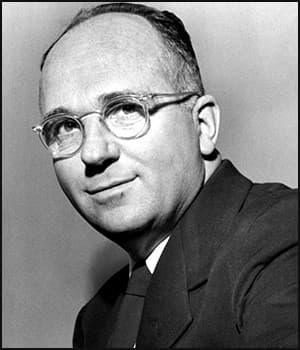
James A. Michener was an American author known for his historical fiction. His notable works include Hawaii, Chesapeake, Alaska, The Source, Poland, and Space, which often explore the history and culture of specific regions. Michener's storytelling is characterized by extensive research and a focus on the human experience within historical contexts.
Similar books
- To Kill a Mockingbird
Harper Lee
4.3 (4.5M) average on GoodreadsHistorical FictionIn the 1930s Jim Crow South, Harper Lee writes about racial injustice, moral growth, and the quiet courage of a lawyer father, Atticus Finch, as seen through his young daughter's eyes.
- The Great Gatsby
F. Scott Fitzgerald
3.9 (3.8M) average on GoodreadsHistorical FictionIn the opulent Roaring Twenties, a mysterious millionaire's lavish parties hide his desperate, tragic pursuit of a lost love, exposing the emptiness within the American Dream.
- Pride and Prejudice
Jane Austen
4.3 (3M) average on GoodreadsHistorical FictionIn a society focused on status and money, Elizabeth Bennet navigates love and pride, challenging Mr. Darcy and social expectations to find true affection.
- Angels & Demons
Dan Brown
3.9 (2.7M) average on GoodreadsThrillerA Harvard symbologist races through Rome's ancient sites, deciphering cryptic clues to unmask the Illuminati and stop a vengeful plot to destroy the Vatican with a stolen antimatter weapon.
- The Kite Runner
Khaled Hosseini
4.3 (2.4M) average on GoodreadsHistorical FictionIn pre-Taliban Afghanistan, a wealthy boy's betrayal of his servant's son during a kite-running tournament starts a lifelong journey for amends as his country collapses.
- The Help
Kathryn Stockett
4.5 (2.2M) average on GoodreadsHistorical FictionIn 1960s Mississippi, an aspiring writer and two Black maids risk everything to expose the harsh realities of their lives, defying societal norms with stories that start a quiet revolution.






Enjoyed the summary?
A summary gives you the shape of the book. The book itself has the detail, the examples and the voice.
Find Space on AmazonAs an Amazon Associate, BookBrief earns from qualifying purchases. How we're funded