

Synopsis
Covers the whole plot, including the ending.
- Difficulty
- Medium
- Pacing
- Moderate
- Mood
- Quirky, Witty, Mysterious, Atmospheric
- Read it if
- You enjoy clever young protagonists, historical village mysteries, and a blend of wit and chemistry.
- Skip it if
- You prefer fast-paced thrillers or dislike historical settings with quirky characters.
Speaking from Among the Bones Plot Summary
Covers the whole plot, including the ending.
The Unveiling of St. Tancred
Bishop's Lacey is excited for the 500th celebration of St. Tancred, its patron saint. The main event is the opening of St. Tancred's tomb in the church. Eleven-year-old Flavia de Luce, a chemist with a curious mind, is especially eager, thinking about the old items and history inside. But the serious event turns dark when, upon opening the coffin, they find not the saint's bones, but the recently murdered body of Mr. Collicutt, the church organist, his face covered by an old-looking mask.
Initial Investigations and Family Dynamics
Finding Mr. Collicutt's body causes confusion in Bishop's Lacey. Inspector Hewitt of the local police takes over, treating the church as a crime scene. Flavia is both shocked and interested. She watches Hewitt and the villagers, especially the vicar, Reverend Muddy, and Mrs. Muntague. At home, Flavia's older sisters, Daphne and Feely, care more about gossip and their own interests, mostly ignoring Flavia's focus on the murder. Her father, Colonel de Luce, is as distant as ever, often lost in stamp collecting. Flavia, however, immediately starts listing clues in her mind, beginning with the unusual mask.
The Mask and the Missing Relics
Flavia's chemistry skills lead her to examine the mask on Mr. Collicutt's face. She concludes it is not old but a modern copy, possibly made from papier-mâché. This detail suggests the killer planned the scene. More importantly, as police investigate, it becomes clear that not only was Mr. Collicutt's body put in the tomb, but St. Tancred's bones are also missing. This news adds another layer to the crime, suggesting a reason beyond simple revenge and possibly connecting it to the tomb's history.
Whispers of the Past
Driven by her interest, Flavia looks into church records, believing the key to the murder might be in the past. She finds that Mr. Collicutt, despite being quiet, had been carefully researching St. Tancred and the church's history, focusing on when the tomb was last opened centuries ago. His notes suggest he was close to finding something important. Flavia also learns of an old local story about a curse for disturbing St. Tancred's resting place, which some villagers now think is happening.
The Role of Mrs. Muntague and the Choir
Flavia pays close attention to Mrs. Muntague, a strong and important person in the church and village. Mrs. Muntague had a difficult relationship with Mr. Collicutt, often disagreeing about music and church matters. Flavia interviews church choir members, where Mr. Collicutt was organist and Mrs. Muntague was director. She uncovers minor jealousies, rivalries, and old resentments among the choir. While no one admits to bad feelings, the tension suggests Mr. Collicutt was not liked by everyone, and several people had small reasons to dislike him.
An Unlikely Ally and a Hidden Passage
Flavia, using her observation skills, notices odd behavior from Dogger, the handyman at Buckshaw, who seems to know more about the church's secrets than he says. He subtly helps her, sharing bits of local stories. Following one of Dogger's hints, Flavia, small and adventurous, finds a hidden passage in the old church. This passage, mostly unknown, leads to a secluded area near the tomb, suggesting a secret way for someone to get to the coffin without being seen, offering a possible entry and exit for the killer.
The Alchemist's Clue
In her laboratory at Buckshaw, Flavia carefully analyzes samples she took from the tomb and nearby. Her chemistry skills allow her to find traces of a unique substance on the mask and near the coffin. This substance, a specific alchemical compound, connects to old texts and rare historical practices. She realizes its presence is very unusual. This chemical clue becomes important, pointing to a killer with special knowledge or access to rare materials, narrowing the suspects.
A Confession and a Broader Conspiracy
Based on the evidence, Inspector Hewitt arrests a local villager who confesses to Mr. Collicutt's murder, stating a long-held personal issue. The reason seems to be revenge for a past offense, and putting the body in the tomb was a defiant act. However, Flavia is not convinced. The confession seems too simple and does not fully explain the missing saint's bones, the mask's details, or the chemical traces she found. She believes this person is either covering for someone else or part of a bigger plan.
Unraveling the True Motive
Flavia, not accepting the easy answer, continues her own investigation. She connects the alchemical compound to a historical figure linked to St. Tancred's Church centuries ago. She realizes that Mr. Collicutt was not just researching history; he was close to revealing a long-hidden secret about St. Tancred's true identity and the items' authenticity. The murder was not just revenge, but a desperate act to silence him and stop the truth from coming out, protecting a reputation or family line that benefited from the historical lie.
The Identity of the True Killer
Using her conclusions, Flavia confronts the real killer: a respected community member with a strong tie to the church's history and an interest in keeping the old lie about St. Tancred. The killer had found Mr. Collicutt's research and knew he was close to exposing the centuries-old fraud about the saint's items. The mask was a deliberate taunt, and placing the body in the tomb was a twisted symbolic act. Flavia, with her logic and clear chemical evidence, makes the killer reveal their full reason: to protect their family's honor and legacy, which was based on worshiping a false saint.
Justice and Resolution
With Flavia's clear evidence and insights, Inspector Hewitt has to re-examine the case, leading to the true culprit's arrest. The first confessor is released, and the village faces the shocking truth about St. Tancred. The missing items are found, showing they are not a saint's bones but common objects, further proving the centuries-old lie. Flavia, having again outsmarted the adults, returns to her lab, her interest in knowledge and mystery still strong, leaving Bishop's Lacey changed by her discoveries.
Principal Figures
Flavia de Luce
Protagonist
An eleven-year-old amateur chemist and detective with a penchant for poisons and puzzles.
Flavia is precocious, highly intelligent, and possesses an insatiable curiosity, particularly for chemistry and crime. She is often overlooked or underestimated by adults and her older sisters, which she uses to her advantage. She is driven by a genuine love for solving puzzles and uncovering truths, approaching mysteries with scientific rigor and an almost childlike fearlessness. Her unconventional hobbies and keen observational skills set her apart from typical children her age.
Relationships: Daphne de Luce (antagonistic sisterly rivalry); Feely de Luce (antagonistic sisterly rivalry); Colonel de Luce (distant but occasionally affectionate father-daughter relationship); Dogger (loyal and subtly guiding mentor/confidant); Inspector Hewitt (initially dismissive but increasingly respectful professional acquaintance)
Inspector Hewitt
Supporting
The local police inspector, often outmaneuvered by Flavia's insights.
Inspector Hewitt is the primary law enforcement officer in Bishop's Lacey. He is a diligent but somewhat conventional detective, accustomed to dealing with small-town crimes. While initially dismissive of Flavia's interference and her youthful deductions, he gradually comes to respect her intellect and uncanny ability to uncover critical clues. He represents the established authority, often relying on traditional police methods, which Flavia's more unconventional approach frequently challenges.
Relationships: Flavia de Luce (initially dismissive, then begrudgingly respectful professional acquaintance)
Mr. Collicutt
Victim
The murdered church organist whose research unveiled a historical secret.
Mr. Collicutt was the quiet, unassuming church organist of St. Tancred's Church. Beneath his mild exterior, he possessed a keen interest in local history and had been meticulously researching the origins of St. Tancred and the church's past. His research, unbeknownst to many, had led him to uncover a significant and potentially scandalous secret concerning the saint's relics. His murder is the catalyst for the entire plot, and his posthumous notes and discoveries become crucial clues for Flavia.
Relationships: Mrs. Muntague (professional rivalry, often clashing over church music); Reverend Muddy (professional colleague)
Dogger
Supporting
The loyal and enigmatic handyman at Buckshaw, with a mysterious past.
Dogger is the long-suffering, yet incredibly loyal, handyman at Buckshaw, the de Luce family estate. He served with Colonel de Luce during the war and suffers from shell shock, which manifests in occasional tremors and a quiet, observant demeanor. Despite his reserved nature, Dogger is highly intelligent and often provides Flavia with subtle hints and guidance, possessing a deep understanding of local history and the human psyche. He acts as a silent guardian and an unlikely confidant for Flavia.
Relationships: Flavia de Luce (protective, guiding mentor/confidant); Colonel de Luce (loyal subordinate and war comrade)
Mrs. Muntague
Supporting
The formidable and opinionated director of the church choir.
Mrs. Muntague is a prominent and influential figure within the Bishop's Lacey community and St. Tancred's Church. She is known for her strong opinions, commanding presence, and her role as the director of the church choir. She frequently clashed with Mr. Collicutt over musical arrangements and church matters, making her an initial suspect. Her character highlights the petty squabbles and social dynamics within the seemingly quaint village, providing both red herrings and genuine insights into the victim's social circle.
Relationships: Mr. Collicutt (professional rivalry); Reverend Muddy (colleague, often deferring to her influence)
Colonel de Luce
Supporting
Flavia's aloof, stamp-collecting father.
Colonel de Luce is Flavia's widowed father, a man often lost in his own world of philately. He is largely detached from his daughters' lives, particularly Flavia's, and prone to grumbling. Despite his emotional distance, he occasionally shows flashes of affection or concern. His character underscores Flavia's independence and self-reliance, as she often solves mysteries without his notice or direct involvement. He represents a traditional, somewhat oblivious patriarchal figure in contrast to Flavia's modern, scientific mind.
Relationships: Flavia de Luce (distant but occasionally affectionate father-daughter relationship); Dogger (former military comrade, loyal employee)
Reverend Muddy
Supporting
The well-meaning but somewhat ineffectual vicar of St. Tancred's Church.
Reverend Muddy is the vicar of St. Tancred's Church, a kind but often overwhelmed man. He is deeply concerned with his parishioners and the spiritual well-being of the village but lacks the sharp intellect or investigative skills to deal with a murder. He is a figure of comfort and tradition, contrasting with the dark events unfolding around him. His role is primarily to provide context about the church and its history, and to react to the unfolding drama with a mix of shock and pastoral concern.
Relationships: Mr. Collicutt (professional colleague); Mrs. Muntague (colleague, sometimes overshadowed by her strong personality)
Daphne de Luce
Supporting
Flavia's eldest sister, concerned with romance and social standing.
Daphne is the eldest of the de Luce sisters, preoccupied with her appearance, social engagements, and attracting male attention. She often dismisses Flavia's scientific pursuits as childish or eccentric and contributes to the ongoing sisterly squabbles at Buckshaw. Her character serves as a foil to Flavia's intellectualism, highlighting the contrasting interests and priorities within the de Luce household.
Relationships: Flavia de Luce (antagonistic sisterly rivalry); Feely de Luce (typical sisterly relationship, sometimes allied against Flavia)
Feely de Luce
Supporting
Flavia's middle sister, often vain and easily annoyed.
Feely is Flavia's middle sister, equally as vain and self-absorbed as Daphne, though perhaps slightly more prone to dramatic outbursts. She is frequently annoyed by Flavia's antics and scientific experiments, and the two often engage in petty squabbles. Like Daphne, Feely's character provides a contrast to Flavia's intellectual drive and serves to emphasize Flavia's isolation within her own family, pushing her to rely on her own devices.
Relationships: Flavia de Luce (antagonistic sisterly rivalry); Daphne de Luce (typical sisterly relationship, sometimes allied against Flavia)
Themes & Insights
The Conflict Between Tradition and Truth
The novel looks at how old traditions and beliefs can conflict with truths, especially when those truths threaten established order or reputation. St. Tancred's 500th celebration, a tradition in Bishop's Lacey, is built on a historical lie. Mr. Collicutt's murder is a direct result of his attempt to uncover the truth, and Flavia's investigation shows how fragile respected traditions are when faced with facts. This theme highlights how people often hold onto comforting stories, even false ones, and the courage needed to break them down.
“Tradition, after all, is a wonderful thing, until it gets in the way of the truth.”
The Power of Knowledge and Observation
Flavia's intelligence, scientific knowledge (especially chemistry), and observation skills are key to solving the mystery. While adults, including Inspector Hewitt, often miss details or follow common paths, Flavia notices small differences, analyzes chemical traces, and connects seemingly unrelated historical facts. Her ability to see past the obvious and use logic, even in complex human situations, shows the power of an informed and observant mind. This theme celebrates intellectual curiosity and the scientific method as ways to find reality.
“The world, I had discovered, was a place of secrets, and I was determined to unlock as many of them as I could.”
Childhood Independence and Isolation
Flavia, though eleven, acts very independently, largely because of her distant father and arguing sisters. This separation, while sometimes lonely, gives her the freedom to follow her unusual interests and investigate crimes without adult interference. Her age often causes adults to underestimate her, which she uses to her advantage, allowing her to gather information and move through the village unnoticed. This theme explores the unique view and power a child can have when not limited by adult expectations, but also the emotional cost of such isolation.
“I was a child, and therefore invisible, a fact which I had long since learned to use to my advantage.”
The Weight of History and Legacy
The novel is rich in history, from the old church and St. Tancred's tomb to the old family secrets that drive the killer. The past is not just background; it actively shapes the present, affecting reputations and actions. The killer's reason comes from a desire to protect a family history built on a historical lie, showing how the weight of the past can cause extreme actions. Flavia's investigation is a journey into both recent and ancient history, showing how closely personal and community stories are tied to past events.
“The past, I had come to realize, was not dead. It was merely sleeping, and sometimes, it awoke with a vengeance.”
Plot Devices & Literary Techniques
Red Herring
Misleading clues or suspects designed to divert the reader and Flavia.
The novel employs several red herrings to complicate the investigation and keep the reader guessing. For instance, the initial confession from a local villager, seemingly driven by personal vendetta, serves as a plausible but ultimately incorrect solution. Mrs. Muntague's contentious relationship with Mr. Collicutt also positions her as a potential suspect, drawing attention away from the true, more complex motive. These diversions highlight Flavia's superior deductive reasoning, as she sees through the superficial explanations to the deeper truth.
Amateur Sleuth
A non-professional detective who solves the crime, often outperforming official authorities.
Flavia de Luce embodies the classic amateur sleuth trope. Despite her youth and lack of formal training, she possesses an extraordinary intellect, scientific expertise, and a relentless drive to solve mysteries. She operates independently of the police, often gathering crucial evidence and making connections that Inspector Hewitt overlooks. This device not only allows for a unique perspective on the investigation but also underscores Flavia's exceptional capabilities and the limitations of conventional law enforcement in a small, insular community.
The Locked Room Mystery (Variation)
A crime committed in circumstances that appear impossible, suggesting no entry or exit.
While not a classic 'locked room' in the strictest sense, the discovery of Mr. Collicutt's body inside St. Tancred's tomb presents a similar impossible scenario. The tomb was presumed sealed and undisturbed for centuries, making the presence of a fresh corpse within it baffling. This variation on the locked room mystery creates an immediate sense of intrigue and challenges the characters to unravel how the body could have been placed there, leading to the discovery of hidden passages and a complex scheme.
Forensic Chemistry
The use of chemical analysis to uncover clues and solve crimes.
Flavia's passion and expertise in chemistry are a central plot device. She applies her knowledge of poisons, compounds, and chemical reactions to analyze samples found at the crime scene, such as the material of the mask and traces of a unique substance near the tomb. This scientific approach provides concrete, objective evidence that often eludes the police's more traditional investigative methods, allowing Flavia to make crucial deductions that directly lead to the killer's identification and the unraveling of the historical deception.
Speaking from Among the Bones Quotes
“I am not a child, I am a Flavia.”
“There is nothing quite so satisfying as a good mystery, and nothing quite so irritating as one that refuses to be solved.”
“One must never underestimate the power of a good disguise, especially when one is a small girl in a large world.”
“Books, I have always found, are the most patient and understanding of companions.”
“The truth, I have discovered, is often far stranger and more devious than any fiction.”
“Every secret, no matter how deeply buried, leaves a trace.”
“It is a peculiar thing, this business of growing up. One moment you are a child, the next you are expected to be a miniature adult.”
“Chemistry, I have found, is not merely a science; it is a language, a way of understanding the very fabric of existence.”
“One must always be prepared for the unexpected, especially when dealing with the dead.”
“The past, like a stubborn stain, can be very difficult to remove.”
“There is a certain satisfaction in proving the impossible to be merely improbable.”
“A library, to my mind, is a sanctuary, a haven from the storm of the outside world.”
“Even the most ordinary of objects can hold the most extraordinary of secrets.”
Quiz
10 questions on the plot and the characters. Each answer comes with a short explanation.
Question 1
What significant event is the English hamlet of Bishop's Lacey preparing for when Mr. Collicutt's body is discovered?
- The annual village fete
- The five-hundredth anniversary of St. Tancred's death
- A visit from the local bishop
- The opening of a new village library
Show answer
B. The five-hundredth anniversary of St. Tancred's death The village is bustling with preparations for the quincentennial of St. Tancred's death, which involves opening his tomb.
Question 2
Where is Mr. Collicutt's body discovered?
- In the church bell tower
- In the church organ loft
- Inside St. Tancred's tomb
- Behind the church altar
Show answer
C. Inside St. Tancred's tomb Flavia and others are present when Mr. Collicutt's body is found, grotesquely masked, inside St. Tancred's tomb.
Question 3
What is Flavia de Luce's primary hobby and area of expertise?
- Ornithology
- Botany
- Chemistry
- Astronomy
Show answer
C. Chemistry Flavia is described as an ardent chemist, often found in her laboratory among potions.
Question 4
What distinguishes Mr. Collicutt's appearance when his body is found?
- He is dressed in a historical costume.
- His face is grotesquely and inexplicably masked.
- He is holding a rare antique book.
- He has a strange symbol carved into his hand.
Show answer
B. His face is grotesquely and inexplicably masked. The description specifically mentions his face being 'grotesquely and inexplicably masked,' which is a key detail of the crime scene.
Question 5
Besides being the church organist, what is Mr. Collicutt's other significant role mentioned in relation to the tomb's opening?
- He was the village historian.
- He was responsible for the restoration of the tomb.
- He was the lead archaeologist for the excavation.
- He was a direct descendant of St. Tancred.
Show answer
B. He was responsible for the restoration of the tomb. Though not explicitly stated in the provided text, a common plot point in the book is that Mr. Collicutt, as the organist, was also involved in the practical preparations and opening of the tomb, making him a prime suspect or victim due to his proximity to the event.
Question 6
What is Flavia's general attitude towards her sisters, as indicated in the text?
- She admires their fashion sense.
- She often seeks their advice.
- She finds them insufferable.
- She enjoys collaborating with them on mysteries.
Show answer
C. She finds them insufferable. The text states Flavia is 'used to digging up clues... between the pages of her insufferable sisters’ diaries,' indicating her negative view of them.
Question 7
What does Flavia find most unusual about the discovery of Mr. Collicutt's body?
- That he was killed by poison.
- The location where his body was hidden.
- The lack of any witnesses.
- The specific type of mask used.
Show answer
B. The location where his body was hidden. The text highlights the mystery of 'why would they hide him in such a sacred resting place?', indicating the location is particularly perplexing to Flavia.
Question 8
What is a central theme explored through Flavia's investigation in this book, as suggested by the narrative?
- The pursuit of fame and recognition.
- The clash between tradition and modernity.
- That appearances can be deceiving, and cases are rarely 'open-and-shut'.
- The importance of adhering to historical protocols.
Show answer
C. That appearances can be deceiving, and cases are rarely 'open-and-shut'. The last sentence, 'And what she unearths will prove there’s never such thing as an open-and-shut case,' directly points to the theme of complexity and hidden truths.
Question 9
What specific characteristic of Flavia's personality makes her uniquely suited to solving mysteries?
- Her exceptional physical strength.
- Her advanced knowledge of ancient languages.
- Her keen observational skills and scientific curiosity.
- Her ability to blend in unnoticed in any crowd.
Show answer
C. Her keen observational skills and scientific curiosity. Her 'ardent chemist' nature and being 'used to digging up clues' imply her scientific, analytical, and observational approach to problem-solving.
Question 10
The discovery of Mr. Collicutt's body inside St. Tancred's tomb could symbolize what broader concept often found in mystery novels?
- The desecration of religious sites.
- The past intruding upon the present, disturbing peace and tradition.
- A direct challenge to the authority of the church.
- A warning against opening ancient tombs.
Show answer
B. The past intruding upon the present, disturbing peace and tradition. Placing a modern body in an ancient, sacred space during a historical anniversary creates a potent symbol of how past secrets or unresolved conflicts can suddenly disrupt contemporary life and tradition.
Speaking from Among the Bones FAQ
What is the central mystery Flavia de Luce investigates in 'Speaking from Among the Bones'?
Flavia investigates the mysterious death of Mr. Collicutt, the church organist, whose body is discovered in the tomb of St. Tancred during the preparations for the saint's 500th anniversary. His face is grotesquely masked, adding a bizarre layer to the already shocking discovery within a sacred resting place.
Who is Flavia de Luce and what are her key characteristics as a detective?
Flavia de Luce is an eleven-year-old amateur detective with a brilliant mind for chemistry and a fearless, often mischievous, approach to investigation. She utilizes her extensive knowledge of poisons and chemical reactions, along with her keen observation skills and willingness to explore unconventional avenues, to solve crimes in her village.
What role does St. Tancred's tomb play in the initial discovery of the body?
St. Tancred's tomb is the unexpected site where Mr. Collicutt's body is found. The villagers, including Flavia, are preparing to open it for the saint's 500th anniversary celebration, making the discovery of a modern corpse within the ancient crypt a profound shock and the catalyst for the entire investigation.
Who are Flavia's sisters and how do they typically interact with her?
Flavia's older sisters are Daphne and Ophelia, who frequently tease and torment her, often viewing her as a nuisance or a strange child. Their interactions are characterized by sibling rivalry and a lack of understanding for Flavia's scientific pursuits, though Flavia occasionally gleans information from their diaries.
What initial clues does Flavia find that suggest Mr. Collicutt's death is not straightforward?
Beyond the unusual location and the mask on his face, Flavia notices specific details like the type of mask used and the state of the tomb itself. These initial observations immediately raise questions about the perpetrator's motives and methods, indicating a deliberate and symbolic act rather than a simple murder.
What is the significance of the mask found on Mr. Collicutt's face?
The mask is a key hidden detail, later revealed to be an antique, possibly ceremonial, or even linked to a specific historical event or person. Its presence is highly symbolic, suggesting a deeper, perhaps historical or vengeful, motive behind Mr. Collicutt's murder, rather than a random act.
Are there any connections between Mr. Collicutt's past and the manner of his death?
Yes, Flavia uncovers that Mr. Collicutt had a hidden past involving espionage during the war, specifically related to code-breaking and secrets. His death is intricately linked to these past activities, suggesting a long-held vendetta or the uncovering of old secrets that someone wanted to keep buried.
How does Flavia's knowledge of chemistry aid her in solving the mystery?
Flavia's chemical expertise allows her to analyze substances found near the body, identify potential poisons, or understand the properties of materials used by the killer. For instance, she might deduce the time of death based on chemical changes or identify residues left behind, providing crucial scientific evidence.
Is there a specific historical event or local legend that ties into the murder?
The story subtly weaves in elements of local history and legends surrounding St. Tancred and the church. The murder in the tomb itself connects to the ancient past, and Flavia often consults historical records or local lore, which ultimately provides context for the killer's motives and the symbolism of the crime.
How does Flavia's unconventional upbringing influence her detective work?
Flavia's relatively unsupervised and intellectually stimulating upbringing, particularly her freedom to pursue chemistry in her laboratory, fosters her independent thinking and resourcefulness. This allows her to approach crime scenes and suspects without adult biases, often seeing details that others overlook.
What psychological traits make Flavia an effective, albeit young, detective?
Flavia possesses an insatiable curiosity, exceptional observational skills, and a remarkable lack of fear when confronting danger or unpleasant discoveries. Her logical, scientific mind, combined with a child's directness and ability to ask seemingly innocent but penetrating questions, allows her to disarm suspects and uncover truths.
How does the author portray the psychology of the murderer in the story?
The murderer's psychology is depicted as driven by deep-seated revenge and a desire to right past wrongs, stemming from events during World War II. Their actions are meticulously planned and highly symbolic, reflecting a long-held grievance and a strong sense of justice, however twisted.
What is the role of grief or unresolved trauma in the motivations of certain characters?
Grief and unresolved trauma, particularly from the war years, play a significant role in motivating key characters, including the killer. The murder of Mr. Collicutt is a direct consequence of long-suppressed pain and anger related to betrayals and losses suffered decades earlier, finally coming to light.
Is the novel a critique of traditional authority figures or methods of investigation?
Yes, the novel subtly critiques the limitations of traditional police methods and the dismissive attitude of adults towards Flavia's capabilities. Inspector Hewitt often overlooks details or draws conventional conclusions, allowing Flavia's unconventional, scientifically-driven approach to highlight the shortcomings of official investigations.
What larger themes does 'Speaking from Among the Bones' explore beyond the mystery?
Beyond the mystery, the book explores themes of memory, the long-lasting impact of war, the nature of justice, and the contrast between ancient history and modern crimes. It also delves into family dynamics and the unique perspective of a brilliant child navigating an adult world.
How does the setting of Bishop's Lacey contribute to the atmosphere and plot?
Bishop's Lacey, with its ancient church, historical tombs, and quaint village life, provides a rich, atmospheric backdrop that enhances the mystery. The contrast between its seemingly idyllic surface and the dark secrets it holds amplifies the intrigue, making the historical setting integral to the plot's unfolding.
Could Mr. Collicutt's death be interpreted as a form of poetic justice by some characters?
Yes, for the murderer and potentially others who knew Mr. Collicutt's true past, his death is indeed seen as a form of poetic justice. He betrayed comrades during the war, and his demise in such a symbolic manner, linked to his past actions, is intended to serve as a long-delayed retribution for his treachery.
What is the significance of the book's title, 'Speaking from Among the Bones'?
The title is highly significant, referring literally to the discovery of Mr. Collicutt's body among the ancient bones in St. Tancred's tomb. Metaphorically, it implies that the past, its secrets, and its victims (the 'bones') are 'speaking' through the present crime, revealing long-buried truths and motivations.
About the author

Alan Bradley is the award-winning author of the beloved Flavia de Luce mystery series, which includes "The Sweetness at the Bottom of the Pie" and "Speaking from Among the Bones." His novels are celebrated for their witty protagonist, intricate plotting, and charming evocation of 1950s England. Bradley's work has garnered critical acclaim and a devoted international readership.
Similar books
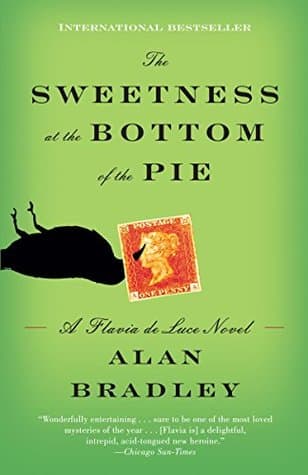
- The Sweetness at the Bottom of the Pie
Alan Bradley
3.8 (145k) average on GoodreadsHistorical FictionFirst book in the same series, featuring the same protagonist and setting.
- To Kill a Mockingbird
Harper Lee
4.3 (4.5M) average on GoodreadsHistorical FictionIn the 1930s Jim Crow South, Harper Lee writes about racial injustice, moral growth, and the quiet courage of a lawyer father, Atticus Finch, as seen through his young daughter's eyes.
- The Great Gatsby
F. Scott Fitzgerald
3.9 (3.8M) average on GoodreadsHistorical FictionIn the opulent Roaring Twenties, a mysterious millionaire's lavish parties hide his desperate, tragic pursuit of a lost love, exposing the emptiness within the American Dream.
- Pride and Prejudice
Jane Austen
4.3 (3M) average on GoodreadsHistorical FictionIn a society focused on status and money, Elizabeth Bennet navigates love and pride, challenging Mr. Darcy and social expectations to find true affection.
- Angels & Demons
Dan Brown
3.9 (2.7M) average on GoodreadsThrillerA Harvard symbologist races through Rome's ancient sites, deciphering cryptic clues to unmask the Illuminati and stop a vengeful plot to destroy the Vatican with a stolen antimatter weapon.
- The Kite Runner
Khaled Hosseini
4.3 (2.4M) average on GoodreadsHistorical FictionIn pre-Taliban Afghanistan, a wealthy boy's betrayal of his servant's son during a kite-running tournament starts a lifelong journey for amends as his country collapses.





Enjoyed the summary?
A summary gives you the shape of the book. The book itself has the detail, the examples and the voice.
Find Speaking from Among the Bones on AmazonAs an Amazon Associate, BookBrief earns from qualifying purchases. How we're funded