
Synopsis
Covers the whole plot, including the ending.
- Difficulty
- Easy
- Pacing
- Moderate
- Mood
- Heartwarming, Uplifting, Reflective, Hopeful
- Read it if
- You enjoy heartwarming stories about overcoming adversity, intergenerational bonds, and the journey of self-acceptance, especially if you appreciate books with a gentle humor and realistic character development.
- Skip it if
- You prefer high-stakes fantasy or action-driven plots; this book focuses more on character internal growth and emotional challenges.
Stand Tall Plot Summary
Covers the whole plot, including the ending.
Tree's Height and Family Troubles
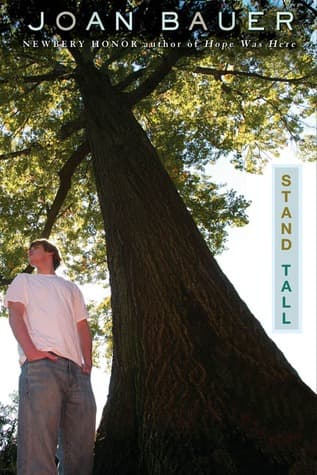
Twelve-year-old Christian 'Tree' McCrorey is six feet three inches tall, which makes him feel like an outsider. His parents recently divorced, and his father, a former basketball star, moved to California, leaving Tree feeling abandoned. Tree's mother, a veterinarian, does her best, but the household feels broken. Tree quit basketball after a bad season, unable to meet the expectations his height created. He finds comfort in his room, listening to music, and navigating middle school where his height makes him a target for bullies.
Grandpa Red's Accident and Arrival
Tree's grandfather, Grandpa Red, a decorated Vietnam veteran, has a terrible accident on his farm. A tractor runs over him, resulting in the amputation of his leg. After a hospital stay, Grandpa Red moves in with Tree and his mother to recover and adjust. This news adds stress to Tree's already complicated life. He worries about his grandfather and how this new living situation will affect his family. Grandpa Red, despite his injury, is usually calm and sometimes gruff.
Adjusting to a New Normal
Grandpa Red's arrival changes the McCrorey household. Tree's mother, Dr. McCrorey, works hard to ensure her father's comfort and physical therapy. Tree helps his grandfather with daily tasks. This responsibility forces Tree to face the realities of his grandfather's injury. He sees Grandpa Red's frustration and pain, but also his quiet determination. Tree's own struggles with his height and his father's absence are often put aside as he focuses on his grandfather, creating a close bond between them.
The Introduction of Sophie
At school, Tree meets Sophie, a new student who is very small. Despite her size, Sophie is confident and artistic. She is not bothered by Tree's height and treats him normally, which is new for him. Sophie loves art and carries a sketchbook, drawing what she sees. Their first interactions are careful, but Sophie's genuine interest and lack of judgment begin to break down Tree's walls, offering him a friendship that is not about his looks.
Bullying and Self-Doubt
Tree still deals with bullies at school who make fun of his height and past basketball failures. He often withdraws, feeling awkward. His father, David, calls from California sometimes, but the talks are shallow, leaving Tree feeling more hurt. He wants his father's approval and advice, especially about his height and sports, but his father seems distant. This lack of connection increases Tree's self-doubt and isolation, making him question his worth.
Connecting Through Shared Vulnerability
As Tree helps Grandpa Red, their relationship grows. Tree sees his grandfather's quiet strength and resilience, but also his frustration and sadness from the amputation. Grandpa Red, in turn, starts to see beyond Tree's height to the sensitive boy underneath. They begin to have more meaningful talks. Grandpa Red shares stories from his past and offers wisdom. Tree starts to tell his grandfather about his own feelings of inadequacy and his longing for his father, finding a safe place to share emotions he usually hides.
Sophie's Influence and Art
Sophie becomes a positive influence in Tree's life. She encourages him to see his height as a unique trait, not a problem. Sophie's love for art inspires Tree, and she often draws him, capturing his personality. Through Sophie, Tree starts to see the world differently, noticing details and beauty he missed before. She helps him understand that it is okay to be different and to find strength in being himself. Their friendship gives Tree much-needed validation and a sense of belonging outside his family problems.
Confronting the Past and Future
Grandpa Red, despite his physical limitations, encourages Tree to reconsider sports. He sees Tree's natural athletic ability and believes he should not give up. He shares stories of his own challenges and the importance of not giving up. This encouragement, along with Sophie's influence, makes Tree think about trying out for the school's track team, specifically the high jump, an event where his height could be an advantage. The idea is scary, as it means facing past failures, but the support from his grandfather and Sophie gives him courage.
The Track Tryouts
After thinking about it and receiving encouragement, Tree tries out for the track team. He chooses high jump, a sport where his height is finally an advantage. The tryouts are nerve-wracking, but Tree focuses on the advice he received and his own determination. He finds he is good at high jump, and the feeling of jumping over the bar is exciting. This experience is a big moment for Tree. He begins to find his athletic identity on his own terms and feels a sense of accomplishment that improves his self-esteem.
Reconciliation and Growth
By the end of the story, Tree has found a new sense of self. He does well at high jump, finding confidence and a place where his height is celebrated. His relationship with Grandpa Red is stronger, built on respect. He also starts to fix his relationship with his father, who begins to show more interest in Tree's life and achievements. Tree learns to stand tall, not just physically, but emotionally, accepting his unique qualities and overcoming his fears. His friendships, especially with Sophie, have helped him see his worth and handle the challenges of growing up.
Principal Figures
Christian 'Tree' McCrorey
Protagonist
A six-foot-three-inch twelve-year-old struggling with his height, family divorce, and self-doubt.
Tree is a sensitive and introspective twelve-year-old boy who feels overwhelmed by his extraordinary height of six feet three inches. He views his height as a curse, making him feel awkward and a target for bullies. His parents' recent divorce and his father's distance have left him feeling abandoned and insecure. Tree initially struggles with low self-esteem, especially after quitting basketball, where he felt immense pressure to perform. He finds solace in music and observing the world around him, but longs for acceptance and a place where he truly belongs. He is kind-hearted and deeply cares for his family, particularly his grandfather.
Relationships: Grandpa Red (Deeply loving and supportive grandson-grandfather bond, initially strained by Red's injury, but growing into mutual understanding and mentorship.); Dr. McCrorey (Mom) (Loving and supportive son-mother relationship; Tree sometimes feels his mom is overwhelmed but trusts her.); David McCrorey (Dad) (Strained and distant son-father relationship due to divorce and dad's relocation; Tree longs for his approval.); Sophie (Close and affirming friendship; Sophie helps Tree see his worth and embrace his individuality.)
Grandpa Red
Supporting
Tree's stoic Vietnam veteran grandfather who loses a leg and becomes a source of wisdom and support.
Grandpa Red is a strong, independent, and often gruff Vietnam veteran who lives on a farm. After a tragic accident leads to the amputation of his leg, he moves in with Tree and his mother. Despite his physical challenges and initial frustration, Grandpa Red possesses immense inner strength and a quiet wisdom. He doesn't coddle Tree but offers firm guidance and encouragement, especially regarding Tree's athletic potential and resilience. His experiences in the war have given him a perspective on perseverance and courage that he subtly imparts to Tree, becoming a crucial mentor figure.
Relationships: Christian 'Tree' McCrorey (Mentoring grandfather-grandson bond; he challenges and supports Tree, becoming a profound influence.); Dr. McCrorey (Daughter) (Loving and respectful father-daughter relationship; she cares for him during his recovery.)
Sophie
Supporting
A small, confident, and artistic new girl at school who becomes Tree's friend and helps him embrace his individuality.
Sophie is a new student at Tree's school, notable for her exceptionally small stature, which is a stark contrast to Tree's height. Despite her size, Sophie is incredibly confident, observant, and possesses a vibrant artistic spirit. She carries a sketchbook everywhere and uses art to interpret the world. Crucially, Sophie sees Tree for who he is, not just his height, and challenges his self-consciousness. She is a loyal and encouraging friend who helps Tree to appreciate his unique qualities and to stand up for himself, offering a perspective that allows him to see beauty in difference.
Relationships: Christian 'Tree' McCrorey (Close and affirming friendship; she inspires and supports him through his struggles.)
Dr. McCrorey (Mom)
Supporting
Tree's loving and hardworking veterinarian mother, trying to keep her family together after the divorce.
Tree's mother is a dedicated veterinarian who works hard to support her family after her divorce from David. She is loving and tries her best to create a stable home environment for Tree, even as she deals with her own emotional fallout from the separation. She is practical and caring, taking on the responsibility of Grandpa Red's recovery with diligence. While sometimes preoccupied with her work and family responsibilities, she deeply loves Tree and wants him to be happy, providing a steady, if sometimes overwhelmed, presence in his life.
Relationships: Christian 'Tree' McCrorey (Loving and supportive mother-son relationship; she provides stability and care.); Grandpa Red (Caring daughter-father relationship; she takes responsibility for his recovery.); David McCrorey (Ex-wife, shared custody/parenting of Tree (though his father is distant).)
David McCrorey (Dad)
Supporting
Tree's estranged father, a former basketball star, who moved to California after the divorce.
David McCrorey is Tree's father, a former high school basketball star whose athletic prowess casts a long shadow over Tree. After divorcing Tree's mother, he moves to California, maintaining a distant and somewhat superficial relationship with Tree through infrequent phone calls. Tree deeply misses his father and yearns for his approval and attention, especially regarding his height and athletic potential. His father's perceived lack of interest contributes to Tree's feelings of abandonment and self-doubt, making their eventual connection more significant.
Relationships: Christian 'Tree' McCrorey (Strained father-son relationship; Tree craves his attention and approval.); Dr. McCrorey (Ex-husband; co-parents Tree from a distance.)
Mr. McCrorey (Great-Grandfather)
Mentioned
Tree's deceased great-grandfather, a tall man whose legacy is sometimes invoked.
Tree's great-grandfather, Mr. McCrorey, is mentioned as another exceptionally tall man in the family's lineage. He serves as a historical reference point for Tree's unusual height, sometimes offering a sense of lineage but also contributing to the feeling that Tree is destined to be 'just like' the tall men before him. While not an active character, his memory subtly reinforces the theme of inherited traits and the weight of family expectations.
Relationships: Christian 'Tree' McCrorey (Deceased great-grandfather, a figure of family history.)
Coach L
Supporting
Tree's understanding track coach who helps him find his place in high jump.
Coach L is the track coach at Tree's school. Unlike Tree's previous basketball coaches, Coach L sees Tree's height as a potential asset for the high jump rather than a problem. He is patient, encouraging, and provides Tree with the guidance and training he needs to succeed in a new sport. Coach L represents the positive influence of a mentor who helps Tree channel his physical attributes into a strength, fostering his confidence and helping him discover a sport he genuinely enjoys.
Relationships: Christian 'Tree' McCrorey (Supportive coach-athlete relationship.)
The Bullies
Antagonist
Schoolmates who mock Tree for his height and past athletic failures.
A group of unnamed schoolmates who frequently tease and mock Tree for his towering height and his perceived clumsiness, especially after his disastrous basketball season. They represent the external pressures and social anxieties that Tree faces, highlighting his feelings of being different and targeted. Their taunts contribute to Tree's self-consciousness and his initial desire to shrink away from attention. They serve as a common antagonist in many middle school narratives, embodying the cruelty and thoughtlessness that children can inflict upon one another.
Relationships: Christian 'Tree' McCrorey (Antagonistic relationship; they are a source of stress and bullying for Tree.)
Themes & Insights
Identity and Self-Acceptance
The main theme is about Tree's struggle to accept his height and define himself beyond his looks and what others expect. He first sees his height as a problem, leading to much self-doubt. Through his relationships with Sophie and Grandpa Red, and by succeeding in high jump, Tree learns to accept himself. The book shows that true strength comes from within and that one's worth is not based on outside factors or the expectations of others, especially his father's wish for him to be a basketball star.
“He knew he was big. He knew he took up space. But he was more than just his size.”
Family and Support Systems
The book looks at family relationships and how important a strong support system is. Tree deals with his parents' divorce and his father's emotional distance, feeling abandoned. Grandpa Red's arrival, despite his own problems, gives Tree a needed mentor and a stronger family connection. His mother, though busy, gives consistent love. The story shows how family, even when not perfect, can provide resilience, comfort, and guidance during hard times, helping Tree grow personally and emotionally.
“Families were like that, he thought. Sometimes they broke apart, but sometimes they found new ways to stand tall together.”
Overcoming Adversity and Resilience
Both Tree and Grandpa Red face big difficulties. Tree must overcome self-consciousness, bullying, and past athletic failures, while Grandpa Red deals with the physical and emotional challenges of losing a leg. The story shows their individual and shared journeys of resilience. Grandpa Red's calmness and determination to adapt inspire Tree to face his own fears. Tree's decision to try out for track and succeed in high jump shows his growing resilience, proving that problems can be overcome with perseverance.
“You fall down, you get back up. That's the only way to live, Tree. You just keep getting back up.”
Mentorship and Intergenerational Connection
A key theme is the strong impact of mentorship, especially the bond between Tree and Grandpa Red. Grandpa Red, with his life experience and wisdom, becomes an important guide for Tree. He does not offer easy answers but encourages Tree to find his own strength. Their shared difficulties—Grandpa Red's physical recovery and Tree's emotional struggles—create a deep connection. This relationship gives Tree a sense of belonging and a model for resilience, helping him understand himself and his place in the world.
“Sometimes it takes a while to find your footing, Tree, but you'll get there. And when you do, it'll be on your own two feet.”
Plot Devices & Literary Techniques
Symbolism of Height
Tree's physical height represents his internal struggles and eventual triumph.
Tree's six-foot-three-inch height serves as a powerful symbol throughout the novel. Initially, it represents his feelings of awkwardness, his difference from others, and the burden of expectations (especially in basketball). It makes him literally 'stand out' but also makes him want to shrink. As the story progresses and Tree gains confidence, his height transforms into a symbol of his uniqueness, his strength, and his ability to 'stand tall' not just physically, but emotionally and mentally. His success in high jump, where his height is an advantage, fully reclaims this symbol positively.
The Amputated Leg
Grandpa Red's missing leg symbolizes his vulnerability, resilience, and a catalyst for intergenerational connection.
Grandpa Red's amputated leg is a significant plot device. It is the catalyst for his move into Tree's home, forcing a closer interaction between him and Tree. Symbolically, it represents vulnerability, loss, and the challenges of adapting to profound change. However, it also highlights Grandpa Red's incredible resilience and determination. His journey of recovery and adaptation mirrors Tree's own emotional and psychological journey of finding his footing. The visible wound also creates a shared sense of vulnerability that allows both characters to open up and connect on a deeper level.
Art as Expression
Sophie's art and drawing help Tree see the world differently and accept himself.
Sophie's constant sketching and passion for art serve as a plot device to broaden Tree's perspective. Through her drawings, Sophie captures the essence of people and things, not just their surface. Her willingness to draw Tree, focusing on his unique features rather than just his height, helps him see himself through a more accepting lens. Art provides a non-verbal means of communication and a way to appreciate individuality and beauty in the world, influencing Tree to observe more closely and to find value in his own distinct qualities.
Basketball vs. High Jump
The contrast between two sports highlights Tree's journey of self-discovery and finding his true calling.
The contrast between basketball and high jump is a crucial plot device. Basketball represents the expectations placed upon Tree due to his height, a sport where he felt immense pressure and ultimately failed, leading to self-doubt. High jump, on the other hand, is a sport Tree discovers on his own terms, where his height is an inherent advantage. It symbolizes finding a path that aligns with one's true self and abilities, rather than conforming to others' expectations. This shift marks Tree's transition from feeling like a misfit to finding a place where he can genuinely excel and feel confident.
Stand Tall Quotes
“Sometimes you have to stand tall even when you feel small.”
“A tree grows strong by bending in the wind, not by breaking.”
“You can't control how tall you are, but you can control how you stand.”
“When life gives you lemons, you don't just make lemonade. You plant a whole orchard.”
“The tallest trees have the deepest roots.”
“Sometimes the bravest thing you can do is ask for help.”
“You don't have to be perfect to be strong.”
“A good friend is like a sturdy branch—they help you reach higher.”
“Standing up for yourself doesn't mean you have to stand alone.”
“Growth isn't just about getting taller; it's about getting wiser.”
“Even the mightiest oak was once a little nut that held its ground.”
“The view from the top is better when you've climbed there yourself.”
“Sometimes you have to lean on others to stand up straight.”
“Your height is a gift, not a curse. It's all in how you use it.”
Quiz
10 questions on the plot and the characters. Each answer comes with a short explanation.
Question 1
What is the nickname of the main character, Sam, in 'Stand Tall'?
- Giant
- Tree
- Tower
- Stretch
Show answer
B. Tree Sam is nicknamed 'Tree' because he is six-foot-three inches tall at age twelve, which makes him stand out physically and symbolizes his growth and resilience throughout the story.
Question 2
Why does Tree feel like a failure as an athlete at the beginning of the book?
- He is cut from the basketball team due to his height
- He injures himself during a game and can no longer play
- He is clumsy and struggles with coordination in sports
- He loses interest in sports after his parents' divorce
Show answer
C. He is clumsy and struggles with coordination in sports Tree's clumsiness and lack of coordination make him feel like a failure in sports, which adds to his insecurities, but he later finds other ways to build confidence, such as helping his grandfather.
Question 3
What major life event is Tree coping with at the start of 'Stand Tall'?
- Moving to a new town
- His parents' recent divorce
- The death of a family member
- Starting high school
Show answer
B. His parents' recent divorce Tree is dealing with his parents' recent divorce, which contributes to his emotional struggles and shapes his journey toward self-acceptance and resilience in the story.
Question 4
How does Tree's grandfather, a Vietnam vet, become an amputee in the book?
- He loses his leg in a car accident
- He has a leg amputated due to diabetes complications
- He is injured in a farming accident
- He suffers a war-related injury that requires amputation later
Show answer
B. He has a leg amputated due to diabetes complications Tree's grandfather loses his leg due to diabetes, not directly from his Vietnam War service, and Tree helps him adjust, which strengthens their bond and teaches Tree about perseverance.
Question 5
What role does Sophie, the new girl at school, play in Tree's life?
- She bullies Tree for his height
- She helps Tree with his schoolwork
- She becomes a friend who understands his struggles
- She convinces him to join the basketball team
Show answer
C. She becomes a friend who understands his struggles Sophie befriends Tree and relates to his feelings of being an outsider, offering support and helping him see his own strengths beyond his physical appearance and athletic failures.
Question 6
Which theme is most prominently explored through Tree's relationship with his grandfather?
- The importance of academic success
- Overcoming physical and emotional challenges
- The dangers of peer pressure
- Exploring historical events like the Vietnam War
Show answer
B. Overcoming physical and emotional challenges Tree and his grandfather both face physical and emotional hurdles—Tree with his height and clumsiness, his grandfather with amputation—and their mutual support highlights resilience and personal growth.
Question 7
What does Tree learn about himself by helping his grandfather?
- He discovers a talent for cooking
- He realizes he wants to become a doctor
- He finds that he can be strong and useful despite his insecurities
- He learns to resent his parents for their divorce
Show answer
C. He finds that he can be strong and useful despite his insecurities Through assisting his grandfather, Tree gains confidence and sees that his value isn't tied to athletic ability, helping him overcome feelings of failure and embrace his unique qualities.
Question 8
How does Tree's height serve as a metaphor in the book?
- It represents his intellectual superiority
- It symbolizes his emotional growth and resilience
- It indicates his future career as a basketball player
- It shows his isolation from society
Show answer
B. It symbolizes his emotional growth and resilience Tree's physical height mirrors his journey of standing tall emotionally—facing challenges like divorce and insecurity with strength, much like a tree withstands storms.
Question 9
What practical skill does Tree develop while helping his grandfather adapt to life as an amputee?
- Learning to drive a car
- Building and repairing prosthetic devices
- Assisting with daily tasks and mobility
- Managing financial accounts
Show answer
C. Assisting with daily tasks and mobility Tree helps his grandfather with everyday activities and mobility, which not only aids his grandfather but also gives Tree a sense of purpose and practical competence.
Question 10
In what way does the book's title, 'Stand Tall', reflect Tree's overall character arc?
- It refers to his eventual success in basketball
- It emphasizes his physical growth spurt
- It symbolizes his journey from insecurity to self-acceptance and resilience
- It describes his posture improvement throughout the story
Show answer
C. It symbolizes his journey from insecurity to self-acceptance and resilience The title captures Tree's transformation: starting as an insecure boy struggling with divorce and failure, he learns to stand tall emotionally by supporting others and embracing his uniqueness.
Stand Tall FAQ
What is 'Stand Tall' about?
'Stand Tall' follows Tree, a 12-year-old boy who is unusually tall at 6'3" and struggles with his parents' recent divorce and his lack of athletic talent. He finds purpose by helping his grandfather, a Vietnam War veteran who recently lost a leg, and befriending Sophie, a new girl at school who faces her own challenges.
Why should I read 'Stand Tall'?
This book offers a heartwarming and relatable story about resilience, family, and self-acceptance, especially for young readers dealing with change or feeling out of place. It blends humor with emotional depth, as Tree learns to embrace his height and support others while navigating his own struggles.
What is the background/setting of 'Stand Tall'?
The story is set in a contemporary small-town or suburban environment, focusing on Tree's middle school, his home life with his grandfather, and community interactions. Key settings include his grandfather's house, where they bond over projects, and the school, where Tree deals with social dynamics.
What are the most memorable quotes?
Memorable quotes include Tree's grandfather saying, 'Sometimes you have to stand tall even when you feel small,' reflecting resilience, and Tree's realization, 'I'm not just tall; I'm me,' highlighting self-acceptance. These lines capture the book's themes of inner strength and identity.
What writing style does the author use?
Joan Bauer uses a first-person narrative from Tree's perspective, with a conversational and humorous tone that makes it accessible for young readers. The style blends lighthearted moments with poignant insights, often using Tree's height as a metaphor for overcoming obstacles.
What minor details add significant meaning?
Minor details like Tree helping his grandfather with household tasks after the amputation symbolize their growing bond and Tree's role as a caregiver. Sophie's quiet interest in photography subtly shows her observant nature and parallels Tree's own journey of finding hidden strengths.
What are some subtle foreshadowing moments?
Early scenes where Tree feels clumsy or out of place in sports foreshadow his eventual realization that his worth isn't tied to athleticism. His grandfather's initial reluctance to accept help hints at later emotional breakthroughs about vulnerability and interdependence.
What unexpected character connections exist?
An unexpected connection is between Tree and Sophie, who bond over their outsider status—Tree due to his height and Sophie as a new student. Their friendship helps each other navigate school life, showing how shared experiences can forge strong, supportive relationships.
What are unspoken character motivations?
Tree's unspoken motivation is to prove his worth and find stability after his parents' divorce, leading him to overcompensate by helping others. His grandfather is driven by a need to maintain independence post-amputation, masking his fear of being a burden with gruffness.
What psychological complexities do characters exhibit?
Tree exhibits complexity through his internal conflict between feeling inadequate due to his height and divorce, yet showing maturity in caring for his grandfather. His grandfather grapples with PTSD from Vietnam and loss of identity after amputation, revealing layers of resilience and vulnerability.
What are the major emotional turning points?
Major emotional turning points include Tree's grandfather opening up about his war experiences, helping Tree understand resilience. Another is when Tree accepts his non-athletic identity and stands up for Sophie at school, marking his growth in self-confidence and empathy.
How do relationship dynamics evolve?
Tree's relationship with his grandfather evolves from a caretaker role to a mutual support system, with shared vulnerability strengthening their bond. His friendship with Sophie grows from initial awkwardness to deep trust, as they help each other face school challenges and personal insecurities.
Which parts remain ambiguous or open-ended?
The book leaves some ambiguity around Tree's future relationship with his divorced parents, focusing more on his current coping mechanisms. Sophie's backstory and family life are also not fully explored, allowing readers to infer her struggles and resilience.
What are controversial scenes or decisions?
Some readers might find Tree's initial self-deprecation about his height or his grandfather's occasional gruffness controversial, as they touch on themes of bullying and emotional withdrawal. However, these elements are portrayed realistically to drive character growth and empathy.
'Stand Tall' ending explained: how it ends & what it means
The ending shows Tree embracing his height and identity, with improved relationships with his grandfather and Sophie. It symbolizes that true strength comes from self-acceptance and supporting others, rather than conforming to external expectations like athletic success.
Similar books
- Walk Two Moons
Sharon Creech
4.0 (151k) average on GoodreadsChildren'sExplores themes of family, loss, and self-discovery through a journey of emotional growth.
- Wonder
R.J. Palacio
4.4 (733k) average on GoodreadsChildren'sDeals with a young protagonist facing challenges related to their unique physical appearance and finding acceptance.
- Harry Potter and the Sorcerer's Stone
J.K. Rowling
4.5 (7M) average on GoodreadsFantasyRescued from a miserable life under the stairs, an orphaned boy discovers he's a wizard destined for a magical school, where he uncovers a dangerous secret tied to the dark wizard who murdered his parents.
- The Hobbit, or There and Back Again
J.R.R. Tolkien
4.3 (2.9M) average on GoodreadsFantasyA comfort-loving hobbit named Bilbo Baggins is whisked away by a mischievous wizard and a band of dwarves on an unexpected journey to reclaim stolen treasure from a fearsome dragon, discovering courage and a magical ring along the way.
- Harry Potter and the Goblet of Fire
J.K. Rowling
4.6 (2.6M) average on GoodreadsFantasyA bewildered Harry Potter, underage and thrust into a deadly Triwizard Tournament, must brave dragons, mermaids, and a resurgent dark magic to survive a year that will forever alter the wizarding world.
- Harry Potter and the Order of the Phoenix
J.K. Rowling
4.5 (2.5M) average on GoodreadsFantasyIn a year of oppressive secrets and the threat of Voldemort, Harry Potter and Dumbledore's Army secretly train for war, shown through Jim Kay and Neil Packer's dark illustrations.






Enjoyed the summary?
A summary gives you the shape of the book. The book itself has the detail, the examples and the voice.
Find Stand Tall on AmazonAs an Amazon Associate, BookBrief earns from qualifying purchases. How we're funded