
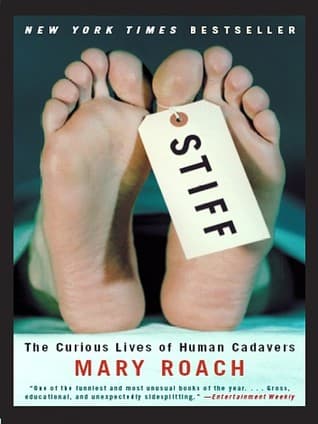
Core Idea
- Difficulty
- Easy
Key Takeaways from Stiff
The Unsung Heroes of Automotive Safety
Cadavers, not mannequins, were the original crash test dummies, enduring brutal experiments for safer cars.
Mary Roach describes how cadavers were used in early automotive safety research, especially by Dr. Lawrence Patrick at Wayne State University. Unlike today's uniform crash test dummies, cadavers gave valuable data on how human tissue, bones, and organs react to extreme forces. They were used in high-speed impacts, pendulum strikes, and rocket sled experiments to understand injury patterns in real bodies. This early, ethically complex work, though unsettling, built the foundation for seatbelt design, airbag deployment, and vehicle crumple zones, saving many lives. The book shows how much we owe to these anonymous donors for vehicle safety improvements.
“The cadaver has the feel of a living body. It is yielding and giving. There is some resilience to it.”
In the book: Dr. Lawrence Patrick's pioneering work at Wayne State University in the 1960s, subjecting cadavers to crash simulations.
Try this: When considering the safety features of modern vehicles, reflect on the historical context and the extreme lengths researchers went to understand human injury tolerance.
The Enduring Quest for Immortality (or at Least Preservation)
From ancient mummification to modern cryonics, humanity has long sought to defy decomposition.
Roach examines humanity's long interest in preserving the dead, from ancient Egyptian mummification to modern cryonics. She details embalming processes, showing its change from a practical need to a post-mortem art that aimed to create a 'sleeping' look. The book also covers the more extreme goals of cryonics, where bodies are frozen in hopes of future revival. This chapter shows a human wish to resist death's finality, whether for religious, sentimental, or scientific reasons, and illustrates different cultural and technological ways of approaching decay. It highlights the conflict between nature and human intervention.
“Decomposition is a process, not an event. It is a slow, methodical dismantling.”
In the book: Descriptions of ancient Egyptian mummification techniques and the modern practices of embalming and cryopreservation facilities like Alcor.
Try this: Consider how cultural and technological advancements influence our perception of death and the 'afterlife' of the body. Reflect on the ethical implications of preserving bodies indefinitely.
Cadavers in the Name of Science and War
From surgical training to ballistics research, cadavers have been vital, if ethically fraught, tools.
This is one of the book's best insights, showing the essential role cadavers have played in medical and military science. Roach explains how surgeons practiced on cadavers for centuries, perfecting procedures before operating on living patients. She also explores more unsettling uses, such as ballistics testing to understand wound trauma from different projectiles, or explosion experiments to simulate battlefield injuries. These accounts highlight the ethical balance researchers walk when using human remains for the greater good. The willingness of cadavers, or their families, to contribute to such research shows a deep altruism, even in death.
“The cadaver is the first and best teacher.”
In the book: The historical use of cadavers in anatomical dissection theaters, surgical training, and military ballistics research (e.g., testing bullet impacts).
Try this: Appreciate the foundational role cadavers play in medical education and research, recognizing the ethical considerations and the ultimate benefit to human health and safety.
The Unpredictable Journey of Organ Donation
While vital for transplants, the path of donated organs and bodies is often complex and fraught with unexpected turns.
Roach discusses the often surprising destinations of donated human remains. While organ donation for transplantation is well known, she reveals the broader range of body donation, where whole bodies are used for anatomical study, surgical practice, or forensic research. The book explains the screening processes, transport and preservation challenges, and sometimes unexpected uses of donated bodies. This argument does not extensively cover the emotional impact on donor families, but it clarifies the practical aspects. It exposes the careful attention and ethical rules that govern this often-invisible industry, showing the great value of each donation.
“You can't just pluck a kidney out and stick it in someone else. There's a whole lot of science and logistics involved.”
In the book: Descriptions of the protocols and procedures at body donation facilities and the journey of donated organs for transplantation.
Try this: If considering body or organ donation, understand the various ways your remains might be used and the profound impact of such a gift.
The Gruesome Glamour of Forensic Anthropology
Cadavers become silent witnesses, revealing secrets of death and identity through their decay.
Roach introduces us to forensic anthropology, particularly through visits to 'body farms' like the one at the University of Tennessee. Here, donated cadavers decompose under various conditions, giving valuable data for understanding decay stages, insect activity, and environmental effects on human remains. This research is important for law enforcement in solving crimes, identifying victims, and determining time of death. The book details the careful observation and scientific analysis applied to these decomposing bodies, turning what might seem gruesome into a vital information source. It shows how cadavers, even in their most deteriorated state, continue to aid justice.
“The dead speak to us through their bones, through their teeth, through the very soil that consumes them.”
In the book: The work conducted at the University of Tennessee's 'Body Farm' and the insights gained from studying human decomposition in various environments.
Try this: Appreciate the scientific rigor behind forensic investigations and how environmental factors influence the decomposition process, aiding in criminal justice.
Beyond the Grave: Cadavers in Space and Beyond
From high-altitude experiments to potentially deep space, cadavers have pushed the boundaries of human endurance.
This is one of the book's most unexpected sections. Roach explores the historical use of cadavers in aerospace research, especially in experiments simulating high-altitude parachute jumps and crash impacts for aircraft pilots. These tests, often involving extreme forces, were important for designing safer ejection seats and understanding human survivability in aviation disasters. She also considers the future, thinking about the potential for cadavers in deep-space exploration—perhaps as biological test subjects or even to 'seed' other planets. It shows the cadaver's versatility, how even after death, the human body can contribute to humanity's most ambitious goals.
“To be shot into space, even as a cadaver, is to achieve a kind of immortality.”
In the book: Historical accounts of cadavers used in aerospace experiments, such as those involving high-altitude jumps and ejection seat testing.
Try this: Consider the extreme and unconventional ways human remains might contribute to future scientific and exploratory missions, pushing the boundaries of our imagination.
The Taboo and the Trivial: A Cultural History of Cadaver Use
Societal norms dictate how we treat the dead, leading to both reverence and irreverence in scientific pursuits.
Roach navigates the changing cultural attitudes towards cadavers throughout history. She shows how different eras and societies have dealt with the ethical and emotional effects of dissecting, experimenting on, and displaying human remains. From Renaissance public dissections to grave robbing panics, the book shows how the scientific use of cadavers has often conflicted with taboos and religious beliefs. This insight reveals that the scientific use of cadavers is never purely objective; it is always viewed through societal acceptance and ethical debate. It shows the ongoing tension between scientific progress and human respect for the dead.
“The cadaver is a powerful symbol, imbued with cultural and emotional baggage.”
In the book: Historical accounts of public dissections, grave robbing for anatomical specimens, and the evolving legal and ethical frameworks surrounding body donation.
Try this: Reflect on how cultural and religious beliefs shape our views on death, burial, and the use of human remains in scientific research.
The Humorous Side of Mortality
Roach's unique blend of humor and reverence humanizes the often-macabre subject of cadavers.
One of the book's strengths is Mary Roach's ability to approach a potentially morbid topic with wit, curiosity, and respect. She does not avoid gruesome details but presents them with a light touch and a sense of wonder. Her humor makes the subject accessible and engaging, allowing readers to confront their own discomfort with death and decomposition. This approach humanizes the cadavers, making them silent collaborators in knowledge advancement. It teaches that even in death, there is a certain absurdity and dignity that can be explored with a smile.
“Science is not a heartless enterprise, but it does require a certain detachment.”
In the book: Roach's narrative style throughout the book, including her personal anecdotes, wry observations, and humorous descriptions of scientific procedures and historical events.
Try this: Approach difficult or uncomfortable subjects with a blend of curiosity, respect, and a willingness to find the unexpected humor in human experience.
Beyond the Physical: The Cadaver's Legacy
The impact of cadaveric research extends far beyond the individual body, shaping collective human well-being.
This book's main message is the lasting legacy of human cadavers. Each story Roach tells, whether about crash test research, surgical training, or forensic science, points to the great benefit from these silent contributions. The cadaver, in 'Stiff,' is not just a defunct biological specimen but a final, powerful act of altruism. Their sacrifices, often anonymous, have directly led to safer cars, more effective surgeries, quicker crime resolutions, and a deeper understanding of the human body and its limits. This takeaway emphasizes that even in death, individuals can greatly impact others' lives, making the cadaver a hero of science and humanity.
“They gave up their bodies so that others might live, or at least live better.”
In the book: The cumulative examples throughout the book demonstrating how cadaveric research has directly led to medical advancements, safety innovations, and forensic breakthroughs.
Try this: Reflect on the broader societal impact of individual contributions, even those made posthumously, and consider the profound ripple effect of altruism.
Quiz
10 questions on the main ideas. Each answer comes with a short explanation.
Question 1
What is the primary subject of Mary Roach's book "Stiff"?
- The history of embalming techniques
- The lives and uses of human cadavers after death
- The science of forensic pathology
- The ethics of organ donation
Show answer
B. The lives and uses of human cadavers after death The book "Stiff" by Mary Roach explores the various ways human cadavers have been used and studied throughout history and in modern times.
Question 2
According to the book's description, what is a common tone used by Mary Roach when discussing the subject matter?
- Solemn and mournful
- Clinical and detached
- Hilarious and oddly compelling
- Technical and academic
Show answer
C. Hilarious and oddly compelling The description explicitly states that the book is "oddly compelling, often hilarious."
Question 3
For how long have cadavers been involved in scientific endeavors, according to the book?
- The last century
- The last fifty years
- The last five hundred years
- Two thousand years
Show answer
D. Two thousand years The description mentions that "For two thousand years, cadavers—some willingly, some unwittingly—have been involved in science's boldest strides."
Question 4
What does Mary Roach's book aim to tell the reader about cadavers?
- Their potential for spiritual afterlife
- Their contributions to scientific progress and their existence post-mortem
- The legal ramifications of using cadavers in research
- The emotional impact of death on families
Show answer
B. Their contributions to scientific progress and their existence post-mortem The description states that Roach "visits the good deeds of cadavers over the centuries and tells the engrossing story of our bodies when we are no longer with them."
Question 5
The description implies that cadavers' involvement in science has been:
- Solely voluntary and ethical
- Limited to medical research
- A mix of willing and unwilling participation in varied scientific activities
- Primarily for artistic anatomical studies
Show answer
C. A mix of willing and unwilling participation in varied scientific activities The phrase "some willingly, some unwittingly" indicates a range of participation, and "science's boldest strides and weirdest undertakings" suggests a broad scope beyond just medical research.
Question 6
What kind of 'undertakings' are mentioned in relation to cadavers in the book's description?
- Only those that led to major medical breakthroughs
- "Boldest strides and weirdest undertakings"
- Strictly regulated and ethically approved experiments
- Ancient burial rituals and ceremonies
Show answer
B. "Boldest strides and weirdest undertakings" The description directly quotes "science's boldest strides and weirdest undertakings" as the context for cadaver involvement.
Question 7
The book "Stiff" can be categorized as exploring:
- Purely historical accounts
- Exclusively scientific research papers
- A blend of history and science with a narrative approach
- Philosophical discussions on mortality
Show answer
C. A blend of history and science with a narrative approach The description mentions "History, Science" as genres and describes an "exploration" and "fascinating account," suggesting a narrative that integrates both fields.
Question 8
What does the phrase "good deeds of cadavers" likely refer to in the context of the book?
- Acts of charity performed by deceased individuals
- The beneficial contributions cadavers have made to scientific and medical advancement
- Cadavers being donated for religious ceremonies
- The positive impact of death on the environment
Show answer
B. The beneficial contributions cadavers have made to scientific and medical advancement In the context of science and history, "good deeds" refers to the positive outcomes and advancements derived from the use of cadavers for study and experimentation.
Question 9
The book's description suggests that the narrative focuses on:
- The emotional grieving process of families
- The biological processes of decomposition
- The posthumous journey and utility of human bodies
- The future of cryonics and preservation
Show answer
C. The posthumous journey and utility of human bodies The phrase "the engrossing story of our bodies when we are no longer with them" clearly indicates a focus on the post-mortem existence and uses of the body.
Question 10
What does Mary Roach's approach to the topic of cadavers imply about her writing style?
- She avoids controversial subjects
- She presents potentially morbid subjects in an engaging and accessible way
- She adheres strictly to a formal, scientific tone
- She focuses solely on the historical aspects without scientific detail
Show answer
B. She presents potentially morbid subjects in an engaging and accessible way The combination of exploring "weirdest undertakings" and being "oddly compelling, often hilarious" suggests an ability to make a potentially difficult subject engaging and accessible, rather than purely formal or detached.
Stiff FAQ
What is the book 'Stiff: The Curious Lives of Human Cadavers' about?
'Stiff' by Mary Roach is a humorous and fascinating exploration of what happens to human bodies after death. It delves into the history and science of how cadavers have been used for medical research, anatomical study, and even some rather unusual purposes throughout history.
Is 'Stiff' a morbid or depressing book?
Despite its subject matter, 'Stiff' is surprisingly funny and engaging. Mary Roach has a unique ability to approach the topic of death with wit and curiosity, making the book more enlightening and entertaining than grim.
What kind of science is discussed in 'Stiff'?
The book covers a wide range of scientific topics, including anatomy, forensic science, surgical training, crash test dummy research, and the study of decomposition. It highlights the crucial role cadavers have played in advancing our understanding of the human body and improving medical practices.
Are there historical aspects to 'Stiff'?
Yes, 'Stiff' delves into the historical uses of cadavers, from ancient practices to more recent scientific endeavors. It explores how societies have viewed and utilized the deceased for knowledge and progress over centuries.
What are some of the 'curious lives' of cadavers mentioned in the book?
The book details various fascinating uses, such as cadavers being used to develop airbags and seatbelts, to study the effects of avalanches, and even in early attempts at plastic surgery. It showcases the unexpected contributions of deceased individuals.
Who is Mary Roach?
Mary Roach is an American author known for her witty and scientifically-focused non-fiction books. She often tackles unusual or taboo subjects with a blend of humor, research, and genuine fascination.
What is the main message of 'Stiff'?
The book's central message is to highlight the often-unseen but vital contributions of human cadavers to science and medicine. It aims to demystify death and celebrate the continued utility of the body even after life has ended.
Is 'Stiff' suitable for everyone?
While the book is humorous, it does deal with graphic descriptions of scientific procedures and the decomposition of bodies. Readers who are squeamish about such topics might find certain parts challenging, but overall, it's written for a general audience interested in science and history.
About the author
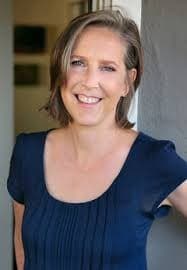
Mary Roach is an American author known for her engaging non-fiction works that explore scientific topics with humor and curiosity. Her book "Stiff: The Curious Lives of Human Cadavers" examines the role of human remains in science and culture. Roach's writing often blends research with personal anecdotes, making complex subjects accessible to a broad audience.
Similar books
- The Immortal Life of Henrietta Lacks
Rebecca Skloot
4.1 (587k) average on GoodreadsBiographySkloot's book, while also dealing with human biological material and its scientific use, is a more focused narrative on the ethical implications and personal story behind the HeLa cell line. It delves deeply into race, poverty, and medical ethics, with a strong biographical element. "Stiff" is a broader, more survey-like exploration of various cadaver uses throughout history and contemporary science, with less emphasis on a single individual's story and more on the general applications and their implications. Skloot's work carries a heavier emotional weight due to the direct human impact and injustice highlighted.
- The Diary of a Young Girl
Anne Frank
4.2 (2.7M) average on GoodreadsBiographyDuring the Nazi occupation, a teenage girl's diary, written from a secret annex, shares observations on humanity, hope, and the wait for freedom.
- Night
Elie Wiesel
4.3 (970k) average on GoodreadsBiographyIn the darkness of Auschwitz and Buchenwald, a teenage Elie Wiesel faces the extermination of his family, the loss of his faith, and the lasting scars of humanity's deepest cruelty.
- Steve Jobs
Walter Isaacson
4.1 (957k) average on GoodreadsBusinessSteve Jobs was a visionary who fused creativity and technology to revolutionize six industries and shape our digital world.
- Unbroken: A World War II Story of Survival, Resilience and Redemption
Laura Hillenbrand
4.4 (767k) average on GoodreadsBiographyLouis Zamperini's incredible World War II odyssey transforms him from a rebellious youth and Olympic runner into a survivor of a plane crash, shark-infested waters, and brutal Japanese POW camps, only to find redemption through forgiveness.
- Angela's Ashes
Frank McCourt
4.1 (540k) average on GoodreadsBiographyIn Depression-era Limerick, young Frank McCourt navigates an impoverished Irish Catholic childhood, sustained by his father's captivating stories and his own spirit, turning hardship into a tale of resilience, humor, and ultimate forgiveness.






Enjoyed the summary?
A summary gives you the shape of the book. The book itself has the detail, the examples and the voice.
Find Stiff on AmazonAs an Amazon Associate, BookBrief earns from qualifying purchases. How we're funded