
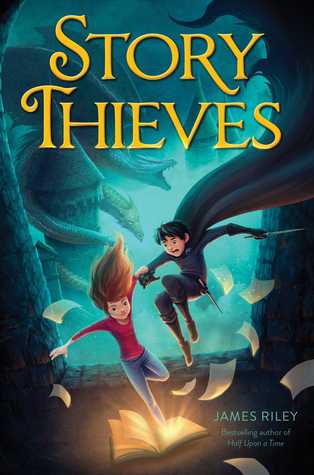
Synopsis
Covers the whole plot, including the ending.
- Difficulty
- Easy
- Pacing
- Fast
- Mood
- Whimsical, Adventurous, Humorous, Clever
- Read it if
- You love meta-narratives, enjoy witty humor, and are looking for a fun, fast-paced adventure that celebrates the magic of reading.
- Skip it if
- You dislike stories that break the fourth wall or prefer more serious, grounded fantasy.
Story Thieves Plot Summary
Covers the whole plot, including the ending.
A Girl from a Book and a Secret Deal
Owen Conners, a bored middle schooler obsessed with the 'Kiel Gnomenfoot' fantasy series, sees his classmate Bethany accidentally climb out of a book in the library. He confronts her, and she reluctantly reveals she is half-fictional, meaning her mother is real and her father is a fictional character. Bethany has been jumping into books to search for her missing father. Owen, excited by the prospect of adventure, blackmails Bethany: he'll keep her secret if she takes him into the 'Kiel Gnomenfoot' series. Bethany, desperate to keep her powers hidden, agrees, but warns him about the dangers of interfering with a story. They plan to meet that night to enter 'The Unwritten Order,' the first book in Owen's favorite series.
Entering The Unwritten Order
That night, Owen and Bethany meet at the library. Bethany uses a special bookmark to open a portal into 'The Unwritten Order,' the first Kiel Gnomenfoot book. Owen, excited, immediately tries to warn Kiel about a coming ambush, but Kiel dismisses him as a 'walk-on' character. Their presence quickly causes disruptions: Owen's warnings change events, and Bethany inadvertently helps Kiel escape a trap, altering the plot significantly. The book's narrator, sensing the changes, struggles to maintain control. Owen realizes that their actions have real consequences within the story, potentially unraveling the entire narrative. They are now actively part of Kiel's world, and their interference is already causing ripples.
The Narrator's Intervention and a New Mission
The Narrator of 'The Unwritten Order' appears as a disembodied voice and confronts Owen and Bethany. The Narrator explains that their presence as 'Unwritten' characters is causing the book to unravel, threatening its very existence. The Narrator reveals that Bethany's father, the fictional character 'Magus,' also had the power to jump between books and disappeared after entering 'The Unwritten Order.' To save the book and possibly find Magus, the Narrator tasks Owen and Bethany with finding the 'Plot Device' – a magical artifact that can restore the story's original course. They must work with Kiel Gnomenfoot, who is now even more confused by the altered events, to complete this mission before the book collapses.
Kiel, Owen, and the Plot Device Hunt
Kiel, now with Owen and Bethany, is bewildered by their sudden appearance and the strange changes to his world. Despite his initial skepticism, Kiel accepts their help, especially after Owen demonstrates knowledge of future events. They encounter the book's villain, the 'Evil Sorcerer,' much earlier than planned due to their interference. The Sorcerer, also confused by the narrative shifts, is still after the 'Plot Device' for his own purposes. The trio goes on a quest through the familiar yet altered landscapes of Kiel's world, with Owen constantly trying to guide Kiel while Bethany tries to minimize further damage to the story, all while searching for clues about her father.
Meeting the Sidekick and the Cliffhanger
The group eventually meets Kiel's loyal, but slightly dimwitted, sidekick, 'Mr. Snugglekins,' who is also perplexed by the changes in Kiel's behavior and the addition of Owen and Bethany. As they continue their quest, the Narrator's voice becomes increasingly frantic, warning them that the book is reaching its breaking point. Owen and Bethany's continued presence and alterations cause the story to accelerate rapidly, skipping over important plot points. The climax of 'The Unwritten Order' is triggered early, resulting in the book's 'cliffhanger ending' occurring unexpectedly. This abrupt ending leaves Kiel and his companions in a dangerous situation, and Owen and Bethany realize they are now trapped within the broken narrative.
Trapped in the Epilogue and the Real World's Reaction
With 'The Unwritten Order' prematurely ended, Owen and Bethany find themselves trapped in the book's epilogue, which is a bleak, empty space. The Narrator is gone, and the story has essentially ceased to exist in a coherent form. Meanwhile, in the real world, readers of 'The Unwritten Order' are baffled and outraged by the sudden, nonsensical ending of their beloved book. The library is in an uproar, and the book itself begins to physically degrade. Bethany realizes that they have not only destroyed this book but potentially jeopardized the entire 'Kiel Gnomenfoot' series and her own existence, as fictional characters rely on their stories being read and intact.
A New Plan: Into the Next Book
Realizing they cannot simply escape the now-broken 'Unwritten Order,' Owen and Bethany devise a desperate plan: they must jump into the next book in the series, 'The Unfinished Story,' to try and fix the narrative there before it too collapses. Bethany explains that if the entire series is destroyed, her half-fictional existence will be imperiled. With no other option, they manage to use Bethany's bookmark to open a portal to the second book, hoping they can somehow reverse the damage they've caused and perhaps even find clues to Magus's whereabouts. They step through, leaving the ruined first book behind.
Meeting the Author and the Ultimate Threat
Upon entering 'The Unfinished Story,' Owen and Bethany quickly find themselves face-to-face with the 'Author' of the Kiel Gnomenfoot series, who exists as a character within his own books. The Author is furious and distraught, explaining that their meddling has not only destroyed his first book but is threatening the integrity of his entire literary universe. He reveals that there's a powerful 'Editor' character who is trying to erase his stories. The Author, sensing Bethany's unique nature, also hints at her father's involvement in a larger conflict concerning the boundaries between fiction and reality. He agrees to help them, but warns of the grave consequences if they fail to restore order.
The Editor's Plan and Magus's Role
The Author explains that the 'Editor' is not just a character but a rogue entity within the fictional universe, aiming to streamline and 'correct' stories by literally erasing characters and plotlines deemed unnecessary. This Editor is the true antagonist, and he has been systematically targeting the Kiel Gnomenfoot series. The Author further reveals that Bethany's father, Magus, was a powerful 'Story Thief' himself, capable of moving between books. Magus had discovered the Editor's destructive plans and was trying to stop him, but was trapped or erased. Owen and Bethany realize their quest is much bigger than just saving one book; it's about protecting the entire fictional realm from the Editor's purge.
Confronting the Editor and a Desperate Battle
Armed with the knowledge from the Author, Owen and Bethany, along with the Author himself, confront the Editor. The Editor appears as a formidable being with the power to literally delete characters and plot points. A desperate battle ensues within the pages of 'The Unfinished Story.' Owen uses his extensive knowledge of the series to predict the Editor's moves and exploit weaknesses in the narrative structure, while Bethany uses her unique half-fictional abilities to resist the Editor's erasures. The Author, despite his age, fights to protect his creations. They discover that the Editor is powered by the collective belief (or lack thereof) in the stories and is trying to achieve a 'perfect' narrative.
Magus's Return and the Sacrifice
In the midst of the battle, Bethany's father, Magus, reappears, having been trapped by the Editor but now freed by the chaos. He joins the fight, his own Story Thief powers proving important. Magus reveals that the only way to truly defeat the Editor is to sacrifice a powerful narrative element to 'reboot' the stories. In a heartbreaking moment, Magus makes the ultimate sacrifice, using his own fictional existence to power the restoration. His essence is absorbed back into the narrative, allowing the stories to heal and the Editor to be defeated, though not entirely destroyed. The 'Kiel Gnomenfoot' series begins to mend itself, but Magus is gone forever.
The Aftermath and a New Understanding
With the Editor defeated and Magus's sacrifice, the 'Kiel Gnomenfoot' series slowly begins to return to its original state. Owen and Bethany find themselves back in the library, the physical copies of the books now whole again. They are forever changed by their adventure, with Owen having a new appreciation for the real world and the power of stories. Bethany, though heartbroken by her father's sacrifice, understands the importance of his mission and her own unique heritage. They realize that while they cannot jump into books anymore (the portals are closed), they carry the lessons and memories of their extraordinary journey. They have become guardians of a secret world, forever connected by their shared experience.
Principal Figures
Owen Conners
Protagonist
A bored middle schooler who discovers the secret world of books.
Owen is a highly imaginative and somewhat bored middle schooler who finds real life dull compared to the adventures in his favorite 'Kiel Gnomenfoot' fantasy series. He is intelligent and quick-witted, often using his extensive knowledge of fictional tropes and plot points to navigate the dangers within books. Initially, his motivation is pure escapism and a desire for adventure, leading him to blackmail Bethany. However, through his experiences, he develops a deeper understanding of responsibility, the consequences of his actions, and a profound respect for the integrity of stories. He learns that even the real world has its own kind of magic.
Relationships: Bethany (Unlikely friend and co-adventurer); Kiel Gnomenfoot (Idol and temporary companion); The Narrator (Antagonistic guide turned ally)
Bethany
Protagonist
A half-fictional girl searching for her missing fictional father.
Bethany is a mysterious and cautious girl, half-fictional and half-real, possessing the ability to jump in and out of books. She is driven by a deep longing to find her father, Magus, a fictional character who disappeared after entering a book. Bethany is initially reluctant to involve Owen and is acutely aware of the dangers of interfering with stories, often trying to undo Owen's disruptions. She is protective of her secret and her unique heritage, carrying the burden of her dual existence. Her journey is one of discovery about her father's true mission and her own place between worlds.
Relationships: Owen Conners (Reluctant partner turned close friend); Magus (Missing father, central to her quest); The Narrator (Authority figure within books)
Kiel Gnomenfoot
Supporting
The noble, yet often bewildered, protagonist of Owen's favorite fantasy series.
Kiel Gnomenfoot is the archetypal heroic protagonist of the 'Kiel Gnomenfoot' series. He is brave, honorable, and dedicated to his quests, but also somewhat naive and easily confused by events that deviate from his established narrative. When Owen and Bethany enter his book, Kiel struggles to comprehend the changes, often dismissing them as 'walk-on' characters or strange occurrences. Despite his bewilderment, he remains true to his heroic nature, accepting Owen and Bethany's help and continuing his quest, even as the story around him unravels. He represents the purity and consistency of a fictional character within their own world.
Relationships: Owen Conners (Confusing, yet sometimes helpful, 'walk-on'); Bethany (Mysterious ally); Mr. Snugglekins (Loyal sidekick)
The Narrator
Supporting
The disembodied voice of 'The Unwritten Order', trying to maintain its story.
The Narrator is the unseen, disembodied voice of 'The Unwritten Order,' acting as the book's consciousness. Initially, the Narrator is a force of order, trying to keep the story on track and expressing frustration and alarm at Owen and Bethany's interference. The Narrator is a guardian of the book's integrity, explaining the rules of the fictional world and the dire consequences of 'Unwritten' characters altering the plot. As the story unravels, the Narrator becomes increasingly desperate and frantic, eventually assigning Owen and Bethany the task of finding the Plot Device to save the book. The Narrator represents the self-aware aspect of a story itself.
Relationships: Owen Conners (Troublesome intruder); Bethany (Fellow 'Unwritten' and potential savior); Kiel Gnomenfoot (The character whose story he narrates)
The Author
Supporting
The creator of the Kiel Gnomenfoot series, existing within his own books.
The Author is a character within the second book, 'The Unfinished Story,' who is the actual creator of the Kiel Gnomenfoot series. He is an eccentric and wise old man, deeply distressed by the unraveling of his literary universe. He possesses extensive knowledge about the nature of stories, fictional characters, and the dangers posed by the Editor. The Author acts as a mentor figure to Owen and Bethany, explaining the larger conflict between fiction and reality and the true threat of the Editor. He is fiercely protective of his creations and represents the creative force behind fictional worlds.
Relationships: Owen Conners (Student and fellow defender of stories); Bethany (Student and fellow defender of stories); The Editor (Arch-nemesis and destroyer of his works)
The Editor
Antagonist
A rogue entity within the fictional world, seeking to 'perfect' stories by erasing them.
The Editor is the primary antagonist of the story, a powerful and destructive entity within the fictional universe. It is not merely a character but a force that seeks to 'improve' or 'streamline' stories by deleting characters, plot points, and entire narratives it deems unnecessary or imperfect. The Editor believes it is bringing order, but its actions lead to the destruction of fictional worlds. It is an embodiment of critical judgment taken to a destructive extreme, threatening the very existence of imagination and creativity. Its power is fueled by the lack of belief or attention given to stories.
Relationships: Owen Conners (Opponent and obstacle to its plans); Bethany (Opponent and obstacle to its plans); The Author (Its primary target and creative rival)
Magus
Supporting
Bethany's missing fictional father, a powerful 'Story Thief'.
Magus is Bethany's father, a fictional character from an unknown book who possesses the rare ability to jump between stories, much like Bethany. He is a powerful 'Story Thief' and was actively working to stop the Editor's destructive plans before he disappeared, believed to be trapped or erased. Magus is a mysterious figure whose past actions heavily influence Bethany's quest. His eventual return is crucial to defeating the Editor, and he demonstrates immense courage and sacrifice to protect the integrity of all stories, embodying the ultimate responsibility of a character who understands the nature of their existence.
Relationships: Bethany (Daughter, whom he deeply loves and protects); The Editor (Arch-nemesis and the reason for his disappearance and sacrifice)
Mr. Snugglekins
Mentioned
Kiel Gnomenfoot's loyal but dimwitted sidekick.
Mr. Snugglekins is Kiel Gnomenfoot's faithful companion and sidekick in 'The Unwritten Order'. He is depicted as well-meaning but not particularly intelligent, often providing comic relief. Like Kiel, he is a pure fictional character, and his reactions to Owen and Bethany's presence are primarily confusion and mild alarm at the deviations from his established reality. He serves to highlight the disruption caused by the 'Unwritten' characters, as his predictable reactions are thrown off by the altered plot.
Relationships: Kiel Gnomenfoot (Loyal sidekick)
Themes & Insights
The Power and Fragility of Stories
The novel explores how stories shape our understanding of the world, both real and fictional. It shows their power to inspire and entertain, but also their fragility, as they can be altered, destroyed, or forgotten. Owen's initial love for the Kiel Gnomenfoot series shows this power, while Bethany's half-fictional nature shows the idea that stories can become real. The threat of the Editor highlights how easily narratives can be unraveled or erased, emphasizing the importance of their preservation and the collective belief that sustains them.
“Stories are alive. They breathe, they grow, and sometimes, if you're not careful, they can break.”
Identity and Self-Discovery
Both Owen and Bethany go through significant journeys of self-discovery. Owen, initially bored with his 'real' life, finds his purpose and identity by becoming a protector of stories, realizing that the real world holds its own value. Bethany grapples with her unique half-fictional identity, torn between two worlds and searching for her father to understand her origins. Her quest for Magus is linked to understanding who she is and where she belongs. The characters learn that their identities are not solely defined by their origins but by their choices and actions.
“You are not just a character, Bethany. You're a bridge. Between what is real, and what can be imagined.”
The Blurring of Fiction and Reality
The core premise of 'Story Thieves' is the literal blurring of the lines between fictional worlds and the real world. Bethany's existence as a half-fictional being, the ability to jump into books, and the physical degradation of stories in the real world when altered, all show this theme. The book challenges the reader to consider the impact of stories on reality and vice-versa. It suggests that fictional characters have a form of 'life' and that the boundaries we perceive are more permeable than we think, creating a magical realism within the fantasy genre.
“Every time you read a book, a little piece of that world becomes real inside you.”
Consequences of Interference
A major theme is the often damaging consequences of meddling with established narratives. Owen's initial actions of trying to 'help' Kiel Gnomenfoot inadvertently lead to the unraveling of 'The Unwritten Order,' showing that even well-intentioned changes can have dire effects. The Narrator constantly warns against this, and Bethany, having experienced it before, tries to limit the damage. This theme is a cautionary tale about respecting the integrity of creative works and understanding that every action, even in a fictional context, can have a ripple effect.
“You cannot simply change a story without changing everything. It's like pulling a thread from a tapestry.”
Plot Devices & Literary Techniques
Book-Jumping (Story Thieving)
The ability to physically enter and exit fictional books.
This is the central plot device that kickstarts the entire story. Bethany possesses the unique ability, passed down from her father Magus, to open portals into books using a special bookmark. This allows characters to move between the real world and fictional narratives, and also between different fictional books. It serves as the primary mode of travel and conflict, enabling Owen and Bethany's adventures and introducing the concept of 'Unwritten' characters who exist outside of a single story's narrative bounds. It's the mechanism through which the lines between fiction and reality are blurred.
The Narrator
A self-aware voice representing the consciousness of a book.
The Narrator in 'The Unwritten Order' acts as a personified, albeit disembodied, consciousness of the book itself. This device allows for direct exposition about the rules of the fictional world and the consequences of Owen and Bethany's actions. The Narrator's increasing panic and struggle to maintain the story's integrity provides a tangible representation of the plot's unraveling. It serves as an authoritative figure, a guide, and a victim, making the abstract concept of a 'story' feel like a living entity that can be harmed or helped.
The Plot Device
A magical artifact within the book capable of restoring narrative order.
The Plot Device is a literal magical artifact within 'The Unwritten Order' that is sought by both the heroes and the villain. Its function is to restore the story's original course and mend any narrative damage. It's a meta-fictional concept made tangible, serving as a MacGuffin that drives the initial quest. The search for it highlights the idea that stories have an inherent structure and a 'correct' path, and its potential power underscores the fragility of narrative integrity when disturbed by outside forces like Owen and Bethany.
The Editor
An antagonist representing the destructive force of narrative 'correction' or erasure.
The Editor is a powerful, meta-fictional antagonist who actively deletes characters and plot points from stories in an attempt to 'perfect' them. This device personifies the critical and destructive aspects of storytelling, contrasting with the creative force of The Author. The Editor's existence as a character within the fictional world provides a concrete villain for the abstract threat of a story being forgotten or ruined. It represents the idea that even within fictional realms, there are forces that can undermine the very existence of imagination and creative freedom.
Story Thieves Quotes
“The thing about being a character in a book, you see, is that you’re not real. Not really. You’re just words on a page.”
“Sometimes, the best way to get what you want is to just… take it.”
“Every story needs a hero. And every hero needs a villain. It’s how the universe works.”
“Being a sidekick is harder than it looks. You have to be there, but not too much there. You have to help, but not steal the show.”
“The rules are only there if you let them be. If you don’t, then they’re just suggestions.”
“It’s amazing how much more sense things make when you’re actually inside the story, rather than just reading about it.”
“Sometimes, the most ordinary people can do the most extraordinary things, if they just believe they can.”
“A good villain isn’t just evil for evil’s sake. A good villain has a reason. A motivation. Something that makes them… understandable, even if you don’t agree.”
“The world isn’t always fair. But that doesn’t mean you stop trying to make it better.”
“Books are magic. Real magic. They can take you anywhere, make you anyone.”
“You can’t just jump into a story and expect everything to go your way. Stories have their own momentum, their own path.”
“Being a hero isn't about being fearless. It's about being scared, and doing it anyway.”
“Sometimes, the greatest adventures happen when you least expect them, and with the most unexpected people.”
“A true friend is someone who will jump into a book with you, even if they know they might not be able to get out.”
Quiz
10 questions on the plot and the characters. Each answer comes with a short explanation.
Question 1
What is Owen's primary motivation for wanting Bethany to take him into a book?
- He wants to help Bethany find her missing father.
- He is bored with his real-world life and wants an adventure.
- He wants to prove to his friends that fictional worlds are real.
- He believes the Kiel Gnomenfoot series holds a secret about his own family.
Show answer
B. He is bored with his real-world life and wants an adventure. Owen's initial motivation is his boredom with the 'real world’s homework and chores' and his desire to star in his own adventure, much like the characters in his favorite books.
Question 2
What is unique about Bethany's heritage?
- She is a wizard from a magical realm.
- She is a robot disguised as a human.
- She is half-fictional, with a fictional father.
- She is an alien who crash-landed on Earth.
Show answer
C. She is half-fictional, with a fictional father. The book explicitly states that Bethany is 'half-fictional' and her father is a 'fictional character,' which is why she can enter and exit books.
Question 3
What is the name of Owen's favorite book series that he wants to enter?
- The Adventures of Alistair Finch
- The Chronicles of Eldoria
- Kiel Gnomenfoot
- The Magic of Mythic Realms
Show answer
C. Kiel Gnomenfoot Owen makes a deal with Bethany to take him into a book from 'Owen’s favorite Kiel Gnomenfoot series.'
Question 4
What is Bethany's primary goal in searching through books?
- To find hidden treasures and magical artifacts.
- To escape her real-world problems and live in a fantasy.
- To locate her missing father, who is a fictional character.
- To rewrite the endings of stories she doesn't like.
Show answer
C. To locate her missing father, who is a fictional character. Bethany 'has been searching every book she can find for her missing father, a fictional character,' which is the core reason for her book-hopping.
Question 5
What is the consequence Owen risks by entering the Kiel Gnomenfoot series?
- He might get stuck in the book forever.
- He might accidentally destroy the series and reveal Bethany's secret.
- He might lose his memory of the real world.
- He might turn into a fictional character himself.
Show answer
B. He might accidentally destroy the series and reveal Bethany's secret. The description warns that visiting the book 'might just destroy the Kiel Gnomenfoot series, reveal Bethany’s secret to the entire world, and force Owen to live out Kiel Gnomenfoot’s final (very final) adventure.'
Question 6
How does Owen first discover Bethany's secret ability?
- Bethany tells him directly in confidence.
- He sees her climb out of a book in the library.
- He finds a magical book that explains her powers.
- His parents, who are also book-jumpers, introduce them.
Show answer
B. He sees her climb out of a book in the library. The story begins with Owen seeing 'the impossible happen—his classmate Bethany climb out of a book in the library.'
Question 7
What is the central conflict or dilemma that arises from Bethany's secret?
- The difficulty of finding new books to explore.
- The danger of her secret being exposed to the real world.
- Her inability to interact with fictional characters.
- The struggle to balance her real-world and fictional-world identities.
Show answer
B. The danger of her secret being exposed to the real world. Bethany's main concern is that she 'can’t let anyone else learn her secret,' which becomes a key element of the deal she strikes with Owen.
Question 8
What does Owen offer Bethany in exchange for taking him into a book?
- His help in finding her father.
- His silence about her secret.
- A rare first edition of a book.
- Protection from a rival book-jumper.
Show answer
B. His silence about her secret. Owen makes her a deal: 'All she has to do is take him into a book... and he’ll never say a word' about her ability.
Question 9
Beyond finding her father, what other potential consequence is mentioned for Bethany if her secret is revealed?
- She would lose her ability to enter books.
- She would be forced to live entirely in a fictional world.
- Her secret could be revealed 'to the entire world.'
- She would cause all fictional characters to disappear.
Show answer
C. Her secret could be revealed 'to the entire world.' The summary explicitly states that the adventure 'might just... reveal Bethany’s secret to the entire world,' highlighting the high stakes of her unique existence.
Question 10
What kind of 'final adventure' is Owen potentially forced to live out in the Kiel Gnomenfoot series?
- A celebratory feast with all the characters.
- A quest to restore lost magic to the world.
- Kiel Gnomenfoot’s very final, implying a dangerous or conclusive, adventure.
- A romantic subplot with a new character.
Show answer
C. Kiel Gnomenfoot’s very final, implying a dangerous or conclusive, adventure. The description ominously states that Owen might be forced to 'live out Kiel Gnomenfoot’s final (very final) adventure,' suggesting a climactic and potentially perilous event for the character.
Story Thieves FAQ
What is "Story Thieves" about?
"Story Thieves" follows Owen, a boy who discovers his classmate Bethany can exit fictional books. Bethany, who is half-fictional herself, is searching for her missing fictional father. Owen blackmails her into taking him into his favorite 'Kiel Gnomenfoot' series, leading to chaos as they disrupt the story and attract the attention of the real world.
Why should I read "Story Thieves"?
You should read "Story Thieves" for its unique premise of characters literally stepping in and out of books, its blend of humor and adventure, and its exploration of the blurred lines between fiction and reality. It's a fast-paced story that appeals to anyone who loves meta-narratives and the magic of storytelling.
What is the background/setting of "Story Thieves"?
The story primarily takes place between the 'real world' and the fictional world of Owen's favorite fantasy series, 'Kiel Gnomenfoot, Origin of a Hero.' The real world is a typical school setting, while the fictional world is a classic high-fantasy realm complete with quests, magic, and mythical creatures.
What are the most memorable quotes?
While specific quotes aren't provided in the summary, the book is known for its witty dialogue and meta-commentary on storytelling. Memorable lines often highlight the absurdity of fictional tropes or Owen's exasperation with the real world versus the excitement of his books.
What writing style does the author use?
James Riley employs an engaging, fast-paced, and humorous writing style, often breaking the fourth wall or making meta-references to storytelling conventions. The narrative is accessible for middle-grade readers but clever enough to entertain older audiences, blending adventure with comedic timing.
What minor details add significant meaning?
The concept of 'half-fictional' characters like Bethany, and the rules governing how fictional worlds operate (and can be broken), are crucial details. The fact that Bethany's father is a fictional character adds depth to her personal quest and the inherent dangers of their adventures.
What are some subtle foreshadowing moments?
Early hints about the fragility of fictional worlds and the consequences of altering them subtly foreshadow the major disruptions Owen and Bethany cause in the Kiel Gnomenfoot series. Bethany's initial desperation to keep her secret also hints at the larger implications of her existence.
What unexpected character connections exist?
The most unexpected connection is between Bethany and her father, who is a character within a book, blurring the lines of her own existence. Additionally, the eventual connection between characters from the 'real world' and the fictional worlds they enter creates unforeseen alliances and conflicts.
What are unspoken character motivations?
Owen's unspoken motivation is a deep desire for excitement and to escape the mundane reality of his life, which drives his impulsive decision to follow Bethany into a book. Bethany's primary unspoken motivation is her longing for her father and a sense of belonging, which fuels her risky search.
What psychological complexities do characters exhibit?
Bethany grapples with an identity crisis, being 'half-fictional' and searching for a father who isn't 'real' in the conventional sense. Owen struggles with the consequences of his actions, learning that fictional worlds have real stakes and that his desires can have far-reaching impacts.
What are the major emotional turning points?
A major emotional turning point is when Owen realizes the serious repercussions of his meddling in the Kiel Gnomenfoot series, shifting from childish excitement to genuine concern. Bethany's moments of despair or hope regarding her father's search also mark significant emotional shifts.
How do relationship dynamics evolve?
The relationship between Owen and Bethany evolves from a reluctant, almost antagonistic partnership (due to Owen's blackmail) into a genuine friendship built on shared adventure and mutual reliance. They learn to trust and support each other as they face increasingly dangerous challenges.
Which parts remain ambiguous or open-ended?
The full extent of how the fictional worlds operate and who created them, beyond the basic rules established, remains somewhat ambiguous. The broader implications of 'half-fictional' beings and the exact nature of the 'real world' versus 'fictional world' divide are also open for further exploration.
What are controversial scenes or decisions?
Owen's decision to blackmail Bethany into taking him into a book, despite the inherent dangers and her desire for secrecy, is a morally ambiguous choice that drives the plot. The chaotic disruptions they cause within the Kiel Gnomenfoot series, potentially 'destroying' the story, could be seen as controversial.
"Story Thieves" ending explained: how it ends & what it means
The summary indicates that Owen and Bethany's adventures 'might just destroy the Kiel Gnomenfoot series, reveal Bethany’s secret to the entire world, and force Owen to live out Kiel Gnomenfoot’s final (very final) adventure.' This suggests a climactic resolution where they must face the ultimate consequences of their actions, potentially becoming integral to the very story they sought to visit, and facing a definitive end to their initial quest, though likely setting up further adventures.
About the author

James Riley is an author known for his engaging children's and young adult fiction. His notable works include "Half Upon a Time," "Story Thieves," and "Once Upon the End," which often blend adventure and humor with familiar fairy tale elements. Riley's storytelling appeals to readers who enjoy imaginative narratives and playful twists on classic tales.
Similar books
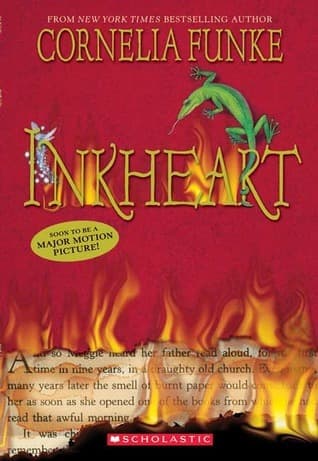
- Inkheart
Cornelia Funke
3.9 (369k) average on GoodreadsFantasyExplores the concept of characters coming out of books into the real world.
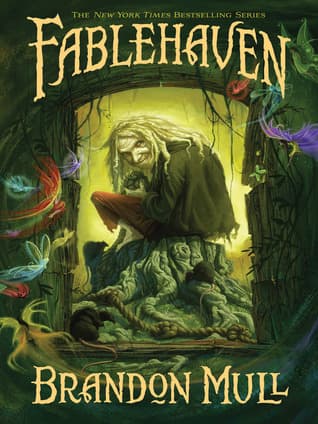
- Fablehaven
Brandon Mull
4.1 (134k) average on GoodreadsFantasyA magical world hidden within the mundane, with young protagonists discovering its secrets.
- The Lightning Thief
Rick Riordan
4.3 (2M) average on GoodreadsFantasyWhile both offer adventurous plots for young readers, Riordan's 'The Lightning Thief' grounds its characters in more developed emotional struggles and a richer, established mythological world-building, providing a greater sense of depth and stakes compared to 'Story Thieves'' more lighthearted and meta-fictional approach.
- Harry Potter and the Sorcerer's Stone
J.K. Rowling
4.5 (7M) average on GoodreadsFantasyRescued from a miserable life under the stairs, an orphaned boy discovers he's a wizard destined for a magical school, where he uncovers a dangerous secret tied to the dark wizard who murdered his parents.
- The Hunger Games
Suzanne Collins
4.3 (6.4M) average on GoodreadsFantasyIn a future where children fight to the death on live television, Katniss Everdeen volunteers for the arena, turning a death sentence into a fight for survival and a spark of rebellion.
- 1984
George Orwell
4.2 (3.1M) average on GoodreadsPoliticsIn a future where surveillance and thought control are absolute, a man's search for truth clashes with the Party, showing that hope can be a form of rebellion.




Enjoyed the summary?
A summary gives you the shape of the book. The book itself has the detail, the examples and the voice.
Find Story Thieves on AmazonAs an Amazon Associate, BookBrief earns from qualifying purchases. How we're funded