
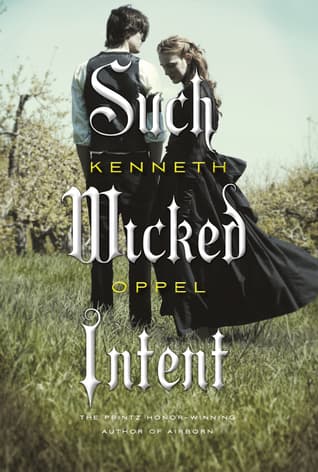
Synopsis
Covers the whole plot, including the ending.
- Difficulty
- Medium
- Pacing
- Moderate
- Mood
- Dark, Atmospheric, Suspenseful, Melancholy, Intense
- Read it if
- You enjoy dark, atmospheric retellings of classic tales with a focus on grief, ambition, and the supernatural.
- Skip it if
- You prefer lighthearted stories or are uncomfortable with themes of death, resurrection, and intense emotional turmoil.
Such Wicked Intent Plot Summary
Covers the whole plot, including the ending.
The Dark Library's Demise
Following the tragic death of Victor Frankenstein's younger brother, Ernest, and the subsequent suicide of his mother, Caroline, Victor's father, Baron Frankenstein, orders the complete destruction of the family's forbidden Dark Library. This collection of occult and alchemical texts was amassed by Victor's grandfather, Konrad Frankenstein. Victor, still grieving and feeling guilty over his mother's death, which he believes was caused by his reckless experiments, secretly salvages a single, ancient grimoire from the burning library. This book, bound in human skin, holds the promise of communicating with the dead and, more disturbingly, entering their realm. His father's decree is meant to sever all ties with the family's dark past and Victor's own dangerous inclinations, but Victor's act ensures the legacy of forbidden knowledge continues.
A Glimmer of Hope
Victor, consumed by grief and a desperate hope to rectify his past mistakes, confides in his adopted sister, Elizabeth Lavenza, and his best friend, Henry Clerval, about the salvaged grimoire. He reveals his belief that the book contains the key to not only communicating with the spirits of his deceased mother and brother but potentially bringing them back. Driven by their own love for Ernest and Caroline, Elizabeth and Henry, though initially hesitant about the dark implications, agree to help Victor decipher the ancient text. They retreat to a secluded part of the Frankenstein estate, the old tower, to secretly study the book, hoping to find a path to the spirit world.
The Spirit World Beckons
After weeks of intense study and experimentation, Victor, Elizabeth, and Henry discover a ritual within the grimoire that promises to transport their consciousness to the spirit world. They prepare a hidden chamber in the old tower, using strange herbs, candles, and incantations. With a mixture of fear and determination, they perform the ritual. Their physical bodies fall into a trance as their spirits are projected into a ghostly, ethereal version of Château Frankenstein. This spirit realm is a distorted reflection of their own home, filled with the lingering echoes and memories of those who lived and died there. They quickly realize this is not a simple communication, but a full sensory experience within the realm of the dead.
Ernest's Ghostly Presence
Upon entering the spirit world, Victor, Elizabeth, and Henry are immediately confronted by the ghostly presence of Ernest. However, he is not the boy they remember. Ernest's spirit is confused, childlike, and seemingly unaware of his own death. He wanders the spectral halls of Château Frankenstein, unable to fully comprehend his situation or communicate coherently. His presence is both a heartbreaking confirmation of their success and a stark reminder of the dangers they face. They realize that simply reaching the spirit world isn't enough; they must find a way to help Ernest, who is clearly suffering and disoriented in this limbo.
The Weeping Lady and the Architect
As they navigate the spectral Château, Victor, Elizabeth, and Henry encounter other lingering spirits. One prominent figure is the 'Weeping Lady,' a sorrowful female ghost who haunts the castle, eternally mourning. Her presence is a constant reminder of the pain and loss associated with the Frankenstein lineage. They also encounter the 'Architect,' a more lucid and powerful spirit who seems to oversee or influence the spirit world's structure. The Architect communicates through subtle manipulations of the environment and cryptic messages, hinting at the rules and dangers of this realm. These encounters reveal that the spirit world is not just a collection of individual souls but a complex, ancient system with its own inhabitants and guardians.
The Golem's Genesis
Driven by their inability to fully interact with or help Ernest in his current spectral state, Victor begins to formulate a radical plan. Inspired by the Architect's subtle hints and the malleable nature of the spirit world, he proposes creating a new, physical body for Ernest within this realm. This body would be constructed from the ethereal essence of the spirit world itself, a sort of golem or vessel that Ernest's spirit could inhabit, allowing him to regain his faculties and interact more fully. Elizabeth and Henry are initially horrified by the audacity of the idea, fearing the blasphemous implications and unknown consequences, but Victor's conviction and their shared desire to save Ernest eventually sway them.
Building the Form
Under Victor's increasingly obsessive guidance, the trio embarks on the unsettling task of constructing a new body for Ernest in the spirit world. This involves gathering and shaping the ethereal matter of the spirit realm, which manifests as strange, often disturbing, components. They manipulate spectral energies, drawing upon the latent memories and emotions within the Château to give form to their creation. The process is both physically and emotionally draining, forcing them to confront the grotesque and unnatural aspects of their endeavor. As the body takes shape, it is clear that this is no ordinary creation, but something born of forbidden knowledge and a desperate will.
Caroline's Warning
During their time in the spirit world, Victor finally encounters the spirit of his mother, Caroline. However, her presence is not one of comfort or reunion. Caroline's spirit is distraught and her communication is fragmented, filled with sorrow and grave warnings. She implores Victor to abandon his dangerous experiments and return to the living world, hinting at the terrible consequences of meddling with life and death. Her spectral form is a vessel of grief and regret, mirroring Victor's own internal torment. This encounter, rather than bringing him peace, only deepens his resolve, as he misinterprets her warnings as further proof of her suffering and his need to 'rescue' her and Ernest.
The Golem Awakens
After immense effort, the ethereal body for Ernest is complete. With a powerful ritual, Victor guides Ernest's confused spirit into the waiting form. For a moment, there is a glimmer of hope as the eyes of the new body open. However, the result is far from the joyous reunion they envisioned. The being that awakens is not the Ernest they knew; it is a distorted, more powerful, and unpredictable entity. While it recognizes them, its movements are unnatural, its understanding limited, and its presence unsettling. The creature, though housing Ernest's spirit, is tainted by the raw, untamed essence of the spirit world, making it a dangerous and unpredictable creation.
The Spirit World's Fury
The creation and animation of the spirit-golem for Ernest unleashes unforeseen consequences within the delicate balance of the spirit world. The Architect, who had previously been a mysterious observer, now actively opposes Victor's hubris, seeing his actions as a violation of the natural order. Other powerful, ancient entities within the spirit realm are also stirred, their anger manifesting as spectral storms and attacks on Victor, Elizabeth, and Henry. The Château Frankenstein in the spirit world becomes a battleground, its very fabric twisting and contorting as the spirits fight back against the intrusion and the unnatural creation. The trio finds themselves in grave danger, facing the wrath of the dead.
Elizabeth's Sacrifice
As the spirit world descends into chaos, Victor, Elizabeth, and Henry are overwhelmed by the enraged entities. Faced with imminent destruction, Elizabeth, ever selfless and courageous, makes a desperate sacrifice. She uses her own spiritual energy and connection to the living world as a shield, drawing the attention and fury of the spirits upon herself, allowing Victor and Henry a chance to escape. Her act of defiance and love is a turning point, showing her deep loyalty and the bond she shares with Victor. This sacrifice leaves her spiritual form vulnerable and severely weakened, hinting at grave consequences for her in the living world.
Escape and Consequences
With Elizabeth's selfless act buying them precious time, Victor and Henry manage to sever their spiritual ties to the realm of the dead and violently return to their physical bodies in the old tower. They awaken disoriented and traumatized, their minds reeling from the horrors they witnessed and the unnatural acts they committed. However, Elizabeth's body remains in a deep, unresponsive trance, her spirit seemingly trapped or damaged within the spirit world. Victor is now burdened with the immense guilt of his actions and the uncertain fate of Elizabeth, realizing the catastrophic price of his ambition and his desperate attempt to defy death. The spirit-golem of Ernest is left behind, a monstrous reminder of their failure.
The Fragmented Soul
Back in the living world, Victor and Henry are horrified to find Elizabeth's physical body alive but unresponsive. She is in a catatonic state, her eyes vacant, her mind seemingly shattered. Medical professionals are baffled by her condition, unable to find any physical ailment. Victor, however, understands the terrible truth: Elizabeth's spirit has been fragmented or severely damaged by her sacrifice in the spirit world. Her mind is a broken mosaic, her essence scattered. This outcome is a devastating blow to Victor, confirming his worst fears about the consequences of his hubris and the irreparable harm he has caused to those he loves most. He is consumed by guilt and a desperate, renewed need to find a way to heal her.
Henry's Departure and Victor's Vow
Witnessing Elizabeth's shattered state and the horrific outcome of their experiments, Henry Clerval is utterly disillusioned and horrified. He can no longer condone Victor's dangerous pursuits and, unable to bear the weight of their shared guilt and the sight of Elizabeth's suffering, he decides to leave Château Frankenstein. His departure marks a significant rift in their friendship, leaving Victor isolated. Despite the catastrophic consequences, Victor's resolve is not broken but transformed. He vows to dedicate himself to finding a way to restore Elizabeth's fragmented spirit, believing he is the only one who can understand and rectify the damage he inflicted. His desperation turns into a new, darker obsession.
Principal Figures
Victor Frankenstein
Protagonist
A brilliant but obsessive young alchemist consumed by grief and ambition.
Victor is a young man of extraordinary intellect, driven by an insatiable curiosity and a profound belief in his own genius. Following the deaths of his brother Ernest and mother Caroline, he is consumed by guilt and a desperate need to defy death, believing he can bring back his loved ones. This grief fuels his obsession with forbidden knowledge and alchemical experiments, leading him down a dangerous path. He possesses a strong will but is often blinded by his ambition and inability to foresee the catastrophic consequences of his actions. He deeply loves Elizabeth and Henry, but his drive often overshadows his concern for their safety.
Relationships: Elizabeth Lavenza (Adopted sister and love interest, whom he deeply cares for but ultimately harms through his recklessness.); Henry Clerval (Best friend and confidant, initially supportive but eventually disillusioned by Victor's dark pursuits.); Baron Frankenstein (His father, who disapproves of Victor's occult interests and tries to sever his ties to the Dark Library.); Caroline Frankenstein (His deceased mother, whose spirit warns him against his dangerous path.); Ernest Frankenstein (His deceased younger brother, whose spirit he desperately tries to restore.)
Elizabeth Lavenza
Supporting
Victor's kind and courageous adopted sister, caught in his dangerous pursuits.
Elizabeth is Victor's adopted sister and his closest confidante. She is characterized by her profound empathy, unwavering loyalty, and gentle nature. Despite her initial reservations about Victor's dark experiments, her love for him and her grief over Ernest and Caroline's deaths compel her to join him in his journey to the spirit world. She often acts as Victor's moral compass, questioning his methods and foreseeing potential dangers, yet she stands by him. Her courage is evident in her willingness to face the unknown dangers of the spirit realm, and ultimately, she makes a profound sacrifice to protect Victor and Henry.
Relationships: Victor Frankenstein (Adopted sister and love interest, deeply devoted to him, even to her own detriment.); Henry Clerval (Close friend and ally, sharing a similar concern for Victor's well-being.); Caroline Frankenstein (Her adopted mother, whose death she deeply mourns.)
Henry Clerval
Supporting
Victor's loyal best friend, who eventually becomes disillusioned by his dark experiments.
Henry is Victor's best friend, known for his grounded nature, pragmatism, and loyalty. He initially supports Victor out of friendship and a shared grief for Ernest and Caroline, but he is often the voice of caution and reason, less inclined towards the occult and more focused on the practical world. He is kind-hearted and brave, willing to face dangers alongside Victor and Elizabeth. However, as Victor's experiments become increasingly dark and dangerous, Henry's doubts grow, and he struggles with the moral implications of their actions. He values human life and sanity above all else, which ultimately puts him at odds with Victor's escalating obsession.
Relationships: Victor Frankenstein (Best friend, initially supportive but eventually separates due to moral conflict.); Elizabeth Lavenza (Close friend and ally, sharing concerns about Victor.)
Baron Frankenstein
Supporting
Victor's grief-stricken father, who attempts to sever ties with the family's dark past.
Baron Frankenstein is Victor's father, a man burdened by the recent tragedies of his wife and son's deaths. He is a practical and traditional man who views the Dark Library and its contents as a source of evil and sorrow, directly attributing his family's misfortunes to its influence. His decision to burn the library is an attempt to protect Victor from the same dark path that he believes consumed his ancestors. He is largely unaware of the extent of Victor's secret experiments, and his actions are driven by a desire to safeguard his remaining son, albeit in a way that further isolates Victor.
Relationships: Victor Frankenstein (Father, concerned for Victor's well-being but unable to understand or control his son's dark pursuits.); Caroline Frankenstein (His deceased wife, whose death deeply affects him.)
Ernest Frankenstein
Mentioned/Supporting
Victor's deceased younger brother, whose fragmented spirit becomes the focus of Victor's obsession.
Ernest is Victor's younger brother, whose untimely death by drowning serves as a major catalyst for Victor's descent into forbidden experiments. In the spirit world, Ernest appears as a confused, childlike ghost, unable to fully comprehend his state or communicate coherently. His innocence and vulnerability in the spirit realm deeply affect Victor, Elizabeth, and Henry, spurring Victor's desperate plan to create a new body for him. His spectral form highlights the tragic consequences of death and the profound impact it has on the living.
Relationships: Victor Frankenstein (Deceased younger brother, whose ghost Victor tries to save.); Elizabeth Lavenza (Deceased adopted brother, mourned deeply by Elizabeth.); Caroline Frankenstein (Deceased son, whose death led to his mother's suicide.)
Caroline Frankenstein
Mentioned/Supporting
Victor's deceased mother, whose spirit appears with dire warnings.
Caroline Frankenstein is Victor's mother, whose death by suicide, following Ernest's drowning, plunges Victor into profound guilt and grief. In the spirit world, her presence is not a comforting one but rather a sorrowful apparition that warns Victor against his dangerous path. Her fragmented messages are filled with regret and a deep understanding of the perils of meddling with life and death. Her appearance serves as a moral counterpoint to Victor's ambition, representing the tragic cost of defying the natural order and the suffering it brings to loved ones.
Relationships: Victor Frankenstein (Deceased mother, whose spirit tries to warn him.); Baron Frankenstein (His deceased wife, whose death deeply affects the Baron.)
The Architect
Antagonist/Supporting
An enigmatic and powerful spirit who governs the spirit world of Château Frankenstein.
The Architect is a mysterious and ancient spirit who seems to hold significant sway over the spirit world version of Château Frankenstein. He communicates through cryptic messages and by subtly manipulating the environment, hinting at the rules and dangers of this ethereal realm. Initially, he appears as an observer, but as Victor's actions escalate, the Architect becomes a formidable antagonist, actively opposing the creation of Ernest's spirit-body. He represents the natural order of the spirit world, a force that resists the hubris of the living who attempt to defy death and create unnatural life. His motivations are to maintain the balance of the spirit realm.
The Weeping Lady
Supporting
A sorrowful female ghost haunting the spirit world of Château Frankenstein.
The Weeping Lady is a spectral presence within the spirit world of Château Frankenstein, eternally mourning. She is a haunting figure, a constant reminder of the pain, loss, and tragedy that permeate the castle's history and the Frankenstein lineage. While she doesn't directly interact with Victor, Elizabeth, or Henry in a conversational way, her sorrowful presence adds to the eerie and melancholic atmosphere of the spirit realm. She embodies the lingering grief of the dead and serves as a silent witness to the unfolding events, reflecting the emotional weight of their journey.
Themes & Insights
The Peril of Hubris and Forbidden Knowledge
Victor Frankenstein's relentless pursuit of forbidden knowledge, driven by his own genius and a desire to overcome death, is a central theme. His belief that he can manipulate the natural order and bring back the dead leads to catastrophic consequences. The salvaged grimoire, a symbol of this forbidden knowledge, promises power but delivers ruin. Victor's actions in creating a body for Ernest in the spirit world, despite warnings, exemplify his hubris, ultimately leading to Elizabeth's fragmentation and the unleashing of the spirit world's wrath. This theme explores the idea that some knowledge is too dangerous for humanity to wield.
“What is the point of a mind like mine if not to challenge the very laws of existence?”
Grief, Guilt, and Obsession
The narrative is deeply rooted in Victor's grief over the deaths of Ernest and Caroline, coupled with immense guilt over his perceived role in his mother's suicide. This potent combination transforms his grief into an obsession with defying death. He believes that by bringing back his loved ones, he can absolve himself of guilt. This obsession blinds him to the dangers and the moral implications of his actions, leading him to sacrifice the well-being of those still alive, particularly Elizabeth and Henry, in his desperate quest to undo the past. His inability to process grief healthily is the engine of the plot.
“Grief is a black hole, and I, the foolish astronomer, thought I could chart its depths without being swallowed.”
The Nature of Life and Death
The book explores philosophical questions surrounding life, death, and the boundaries between the two. Victor's attempts to breach the veil between the living and the dead, and his creation of a 'spirit-body' for Ernest, challenge conventional understanding. The spirit world itself is depicted as a complex, ancient realm with its own rules and inhabitants, suggesting that death is not an end but a transformation into another state of being. The tragic outcome of Ernest's reanimation and Elizabeth's fragmentation reinforces the idea that tampering with these fundamental forces can lead to unforeseen and grotesque results, blurring the lines in horrifying ways.
“Some doors are meant to remain shut, Victor. Some secrets are not for the living to uncover.”
Love, Loyalty, and Sacrifice
Despite Victor's dark path, love and loyalty are powerfully present, primarily through Elizabeth and Henry. Elizabeth's unwavering devotion to Victor, and her love for Ernest and Caroline, compel her to follow Victor into the dangers of the spirit world. Her ultimate sacrifice, where she puts herself in harm's way to protect Victor and Henry, is an act of selfless love. Henry, too, demonstrates loyalty by standing by Victor for a significant portion of their journey. However, the story also explores the limits of loyalty, as Henry eventually leaves due to the moral transgressions. This theme highlights the enduring power of human connection even in the face of immense darkness.
“I will not let you walk into the darkness alone, Victor. Not while I still draw breath.”
Plot Devices & Literary Techniques
The Dark Library/The Grimoire
A collection of forbidden texts, specifically one grimoire, containing knowledge of the occult and spirit world.
The Dark Library, and particularly the salvaged grimoire, serves as the primary catalyst for the entire plot. It is the source of the forbidden knowledge Victor seeks, providing the rituals and instructions for entering the spirit world and attempting to create life. It represents the allure and danger of forbidden knowledge, inherited from generations of Frankensteins. The book's very existence, rescued from destruction by Victor, signifies his defiance of his father's wishes and his continued descent into the occult, setting the stage for all subsequent events.
The Spirit World of Château Frankenstein
An ethereal, distorted reflection of the physical castle, inhabited by lingering spirits.
The spirit world acts as the primary setting for a significant portion of the novel, serving as both a destination and an antagonist. It is not just a backdrop but a character in itself, reacting to the protagonists' presence and actions. Its distorted nature, reflecting the memories and emotions of the living and dead, creates a pervasive sense of unease and danger. It provides the 'raw material' for Victor's creation and ultimately becomes the source of the forces that punish his hubris, emphasizing the idea that the dead have their own domain and rules.
The Golem/Spirit-Body
An unnaturally constructed body in the spirit world, intended to house Ernest's spirit.
The creation of the golem or spirit-body for Ernest is the central object of Victor's ambition and the ultimate manifestation of his hubris. It is a blasphemous act, an attempt to defy the natural order of life and death by creating an artificial vessel for a departed soul. This device serves to highlight Victor's increasing disregard for ethical boundaries and the grotesque nature of his 'creations.' Its unpredictable and unsettling awakening underscores the dangers of playing God, as the resulting entity is not the beloved Ernest but something alien and potentially monstrous.
The Fragmented Spirit
A state where a spirit is shattered or damaged, resulting in mental and physical incapacitation.
The fragmented spirit is a crucial plot device, especially in the tragic outcome for Elizabeth. It represents the severe and lasting consequences of meddling with the spirit world. Elizabeth's sacrifice and subsequent fragmentation of her spirit leave her physical body catatonic and her mind broken. This device serves as a stark warning and a powerful motivator for Victor's future actions, shifting his obsession from bringing back the dead to 'healing' the living he has harmed, thus propelling the narrative into the next stage of his character arc and foreshadowing the dangers of his future experiments.
Such Wicked Intent Quotes
“There are more things in heaven and earth, Horatio, / Than are dreamt of in your philosophy.”
“The dead are never truly gone, not as long as we remember them.”
“Sometimes the greatest evils are born of the purest intentions.”
“A library is a hospital for the mind.”
“To bring something back from the dead, you must give something up in return.”
“Fear is a powerful motivator, but it can also blind you to the truth.”
“The past is a stubborn beast; it doesn't easily let go.”
“Even in the darkest places, there can be a flicker of hope.”
“Some secrets are better left buried.”
“Friendship, like any bond, can be tested to its breaking point.”
“The line between genius and madness is often razor-thin.”
“London holds its own kind of magic, dark and ancient.”
“To truly understand the light, you must first know the darkness.”
“The greatest monsters are not always found in shadows, but within the human heart.”
Quiz
10 questions on the plot and the characters. Each answer comes with a short explanation.
Question 1
What is Victor's father's initial instruction regarding the Dark Library after the death of Victor's mother?
- To expand its collection with new scientific texts.
- To meticulously catalog all its contents.
- To burn it to the ground.
- To move it to a more secure location.
Show answer
C. To burn it to the ground. After his wife's death, Victor's grieving father orders the destruction of the Dark Library, believing it to be a source of dangerous knowledge and sorrow.
Question 2
What specific promise does Victor find in the retrieved book that entices him?
- A formula for eternal youth.
- The ability to communicate with and enter the realm of the dead.
- Instructions for creating gold from base metals.
- A prophecy of his own glorious future.
Show answer
B. The ability to communicate with and enter the realm of the dead. Victor finds a book that promises not just communication with the dead, but the ability to physically enter their realm, which becomes his primary motivation.
Question 3
Which of the following characters does NOT accompany Victor into the spirit world?
- Elizabeth
- Henry
- Konrad
- All three accompany him.
Show answer
C. Konrad Victor, Elizabeth, and Henry are the three who venture into the spirit world together to pursue Victor's goal.
Question 4
What is the primary objective of Victor, Elizabeth, and Henry once they are in the spirit world of Château Frankenstein?
- To find a hidden treasure.
- To create and grow a body.
- To communicate with an ancient spirit.
- To map the spirit realm.
Show answer
B. To create and grow a body. Their central endeavor in the spirit world is the creation and growth of a body, which Victor intends to use to bring his mother back.
Question 5
How does Victor primarily manage to retrieve the crucial book from the Dark Library despite his father's orders?
- He openly defies his father and takes it.
- He sneaks in before the destruction begins.
- Elizabeth retrieves it for him.
- It is delivered to him by a mysterious figure.
Show answer
B. He sneaks in before the destruction begins. Victor acts quickly and secretly, retrieving the book before his father's command for the library's destruction can be fully carried out.
Question 6
What is the overarching theme explored by Victor's pursuit of entering the spirit world and creating a body?
- The pursuit of ultimate power and control.
- The dangers of grief and unchecked ambition.
- The importance of familial loyalty.
- The beauty of scientific discovery.
Show answer
B. The dangers of grief and unchecked ambition. Victor's actions are heavily driven by his grief over his mother's death, leading him down a path of ambition that has dangerous consequences.
Question 7
What is the significance of the 'spirit world of Château Frankenstein' as the location for their efforts?
- It is a neutral zone where their actions will have no consequences.
- It is the only place where the book's rituals can be performed.
- It is a reflection or echo of their familiar world, making their actions more potent and personal.
- It is a randomly chosen location with no particular meaning.
Show answer
C. It is a reflection or echo of their familiar world, making their actions more potent and personal. The spirit world being a reflection of Château Frankenstein implies a deep personal connection and potentially amplifies the emotional and psychological stakes of their experiments.
Question 8
What specific type of 'body' are Victor, Elizabeth, and Henry attempting to create and grow in the spirit world?
- A golem made of earth and clay.
- A homunculus from alchemical ingredients.
- A vessel for a spirit, intended for Victor's mother.
- A protective automaton to guard them.
Show answer
C. A vessel for a spirit, intended for Victor's mother. Their goal is to create a physical vessel, specifically designed to house the spirit of Victor's deceased mother, to bring her back from the dead.
Question 9
How does Elizabeth's role primarily differ from Victor's in their joint endeavor?
- She is mostly a passive observer, not actively participating.
- She provides the emotional and moral counterpoint, often questioning Victor's methods.
- She is the primary researcher, finding new spells and rituals.
- She focuses on the practical and physical aspects of the body's creation.
Show answer
B. She provides the emotional and moral counterpoint, often questioning Victor's methods. Elizabeth often serves as Victor's conscience, providing a moral compass and questioning the ethical implications of his increasingly dangerous experiments, even as she aids him.
Question 10
What is the core danger associated with 'entering the realm of the dead' as described in the book?
- Physical harm from hostile spirits.
- The risk of losing one's own soul or becoming trapped there permanently.
- Exposure to ancient diseases.
- The theft of their memories by the dead.
Show answer
B. The risk of losing one's own soul or becoming trapped there permanently. A significant danger of traversing the spirit realm is the potential for one's own spirit or life force to be compromised, lost, or trapped, highlighting the profound risks of their venture.
Such Wicked Intent FAQ
What is the central premise of 'Such Wicked Intent'?
Following his father's command to burn the Dark Library, Victor secretly salvages a forbidden book that promises a way to not only speak with the dead but to journey into their realm. Driven by his grief and ambition, he, along with Elizabeth and Henry, soon finds themselves navigating the spirit world, specifically the ghostly Château Frankenstein, where they embark on the creation of a new, living body.
How does Victor's grief over his mother's death influence his actions in this book?
Victor's profound grief for his mother, Caroline, is the primary catalyst for his dangerous obsession with the spirit world. He is desperate to reunite with her, believing the book holds the key to bringing her back or at least communicating meaningfully, which overrides his caution and ethical concerns about dabbling with forbidden knowledge and the dead.
Who are Elizabeth and Henry, and what roles do they play in Victor's venture into the spirit world?
Elizabeth Lavenza is Victor's beloved adopted sister and confidante, who, despite her initial reservations, accompanies him into the spirit world out of loyalty and love. Henry Clerval is Victor's best friend, a more grounded and morally conscious individual, who also joins them, often serving as the voice of reason and a moral compass amidst Victor's increasingly reckless pursuits.
What is the significance of the 'Dark Library' and its destruction at the beginning of the story?
The Dark Library represents the forbidden knowledge and occult studies that Victor's father, Baron Frankenstein, deems dangerous and wishes to purge from their lives after the tragedy of Caroline's death. Its destruction is an attempt to sever ties with the past, but Victor's secret retrieval of a book from it ensures the continuation, and escalation, of his dark apprenticeship.
What is the 'spirit world' like as depicted in 'Such Wicked Intent'?
The spirit world is a shadowy, ethereal realm where the souls of the dead reside, often mirroring aspects of their earthly lives but imbued with a spectral quality. Château Frankenstein, in particular, appears as a ghostly echo of its former self, populated by the spirits of those who died there, offering both potential resources and significant dangers to the living trespassers.
What 'body' are Victor, Elizabeth, and Henry attempting to create in the spirit world?
They are attempting to construct a new, living vessel, a golem-like creature, using spiritual essence and perhaps residual matter from the spirit world. The ultimate goal, driven by Victor, is to create a physical body that could potentially house a soul, specifically his mother's, or at least serve as a conduit for more direct interaction with the dead.
How does Victor's ambition evolve and intensify during his time in the spirit world?
Victor's ambition, initially fueled by grief and a desire for reunion, rapidly spirals into a more dangerous obsession with mastery over life and death. The act of creating a body in the spirit world empowers him, making him increasingly arrogant and dismissive of the moral boundaries that Elizabeth and Henry try to uphold, pushing him towards a path of hubris.
Are there any existing entities or dangers within the spirit world that threaten Victor and his companions?
Yes, the spirit world is not empty; it is inhabited by various spectral entities, some benevolent, some indifferent, and others actively hostile. The dangers include being trapped, losing one's own soul, or encountering malevolent spirits that seek to manipulate or harm the living who trespass in their realm, adding significant peril to their mission.
What ethical dilemmas do Elizabeth and Henry face regarding Victor's experiments?
Elizabeth and Henry are constantly grappling with the ethical implications of Victor's work, questioning the morality of disturbing the dead and creating life unnaturally. They fear the consequences of his hubris, the potential for spiritual corruption, and the dangers their actions pose to themselves and the natural order, often trying to rein in Victor's increasingly reckless behavior.
How does the setting of Château Frankenstein in the spirit world differ from its physical counterpart?
The ghostly Château Frankenstein is an ethereal echo of its physical form, retaining its architectural details but existing in a state of decay and spectral grandeur. It is imbued with the lingering emotions and memories of those who lived and died there, making it a place of both profound connection to the past and potential spiritual contamination for the living.
Does Victor succeed in communicating with his mother, Caroline, in a meaningful way?
While Victor's primary motivation is to connect with Caroline, the success of his communication is complex and often ambiguous. He experiences fleeting moments, visions, or indirect messages that he interprets as coming from her, but the direct, unambiguous reunion he craves remains elusive, constantly driving his further, more desperate endeavors.
How does 'Such Wicked Intent' connect to the broader 'Apprenticeship of Victor Frankenstein' series?
As the second book, 'Such Wicked Intent' significantly escalates Victor's journey into forbidden science and the supernatural, building directly on the foundational experiments and intellectual curiosity established in the first book. It directly sets the stage for the creation of the monster, showing Victor's increasing disregard for ethical boundaries and his growing mastery over the forces of life and death.
What psychological toll does the spirit world take on Victor, Elizabeth, and Henry?
The spirit world exacts a heavy psychological toll, exposing them to profound grief, fear, and the unsettling nature of death. Victor becomes more isolated and driven, his sanity potentially fraying, while Elizabeth and Henry struggle with despair, moral compromise, and the trauma of witnessing the unnatural, straining their relationships and their own mental well-being.
Is there a specific 'spirit' or entity that acts as an antagonist within the spirit world?
Yes, there are malevolent or manipulative spirits within Château Frankenstein that pose direct threats. These entities, often tied to the dark history of the Frankenstein family or other deceased inhabitants, seek to exploit Victor's grief and ambition for their own shadowy purposes, adding an adversarial element to their spiritual journey.
How does the book explore the themes of creation and playing God?
'Such Wicked Intent' deeply explores the themes of creation and playing God through Victor's relentless pursuit of bringing the dead back to life and creating a new body. It questions the limits of human ambition, the moral responsibility that comes with such power, and the potential for disastrous consequences when individuals attempt to usurp divine authority over life and death.
What is the role of the 'forbidden book' Victor retrieves from the Dark Library?
The forbidden book serves as Victor's primary guide and source of knowledge for navigating the spirit world and the principles of creating life from spiritual essence. It contains ancient, dangerous lore that empowers his experiments, but also subtly corrupts his judgment, pushing him further into morally ambiguous territory.
How does the dynamic between Victor, Elizabeth, and Henry shift during their ordeal?
Their dynamic becomes increasingly strained as Victor's obsession grows, leading to frequent disagreements and a widening rift. Elizabeth's loyalty is tested by her moral objections, while Henry struggles to balance his friendship with his growing horror at Victor's actions, creating tension and emotional distance among the trio.
Does the book offer any definitive answers about the nature of the afterlife?
The book presents a specific, albeit fantastical, depiction of an afterlife, but it refrains from offering definitive, universal answers. It explores one possible interpretation of a spirit realm, focusing on its immediate impact on the characters and their philosophical questions rather than making broad theological statements about the afterlife itself.
About the author

Kenneth Oppel is a Canadian author known for his works of children's and young adult fiction. His notable books include "Airborn," "Silverwing," "Skybreaker," "This Dark Endeavor," "Sunwing," and "Starclimber," which often blend adventure with elements of fantasy and science fiction. Oppel's storytelling has garnered recognition among young readers and educators alike.
Similar books
- Frankenstein: The 1818 Text
Mary Shelley
3.8 (1.2M) average on GoodreadsFantasyExplores the origins of Victor Frankenstein's ambition and his early experiments with life and death.
- The Graveyard Book
Neil Gaiman
4.1 (438k) average on GoodreadsFantasyDeals with themes of death, the spirit world, and a young protagonist navigating a supernatural existence.
- Harry Potter and the Sorcerer's Stone
J.K. Rowling
4.5 (7M) average on GoodreadsFantasyRescued from a miserable life under the stairs, an orphaned boy discovers he's a wizard destined for a magical school, where he uncovers a dangerous secret tied to the dark wizard who murdered his parents.
- The Hunger Games
Suzanne Collins
4.3 (6.4M) average on GoodreadsFantasyIn a future where children fight to the death on live television, Katniss Everdeen volunteers for the arena, turning a death sentence into a fight for survival and a spark of rebellion.
- 1984
George Orwell
4.2 (3.1M) average on GoodreadsPoliticsIn a future where surveillance and thought control are absolute, a man's search for truth clashes with the Party, showing that hope can be a form of rebellion.
- Divergent
Veronica Roth
4.2 (2.9M) average on GoodreadsFantasyIn a society divided by virtues, a sixteen-year-old's difference from the norm starts a rebellion that threatens her world.





Enjoyed the summary?
A summary gives you the shape of the book. The book itself has the detail, the examples and the voice.
Find Such Wicked Intent on AmazonAs an Amazon Associate, BookBrief earns from qualifying purchases. How we're funded