

Synopsis
Covers the whole plot, including the ending.
- Difficulty
- Medium
- Pacing
- Moderate
- Mood
- Dark, Suspenseful, Disturbing, Macabre
- Read it if
- You enjoy classic gothic horror, psychological thrillers, and tales of madness and obsession, presented in a concise format.
- Skip it if
- You prefer lighthearted stories, explicit fantasy elements, or dislike dark, disturbing themes and unreliable narrators.
Tales of Mystery and Imagination Plot Summary
Covers the whole plot, including the ending.
The Pit and the Pendulum: Condemnation and Sensory Deprivation
The narrator, condemned by the Spanish Inquisition, wakes in total darkness. He fears being buried alive and feels his way around his cell. He finds it is a large, round dungeon. Trying to cross the room, he trips, just missing a deep pit in the center. The Inquisitors give him water and spiced food, which he thinks is drugged. He passes out and wakes to find himself tied to a wooden frame. A large, sharp pendulum slowly lowers from the ceiling, swinging closer to his chest. The mental suffering from the slow, certain approach of death is huge, as he watches the blade shine and hears its hiss.
The Pit and the Pendulum: Escape from the Pendulum
As the pendulum keeps lowering, the narrator quickly tries to find a solution. He sees rats in the dungeon, drawn by the smell of his spiced meat. He gets an idea: he smears the remaining meat on the straps holding him. The hungry rats chew through the straps, freeing him just before the pendulum would have cut him. He falls to the pit's edge, barely escaping the blade. However, his relief does not last. The cell walls begin to glow with heat, slowly closing in, threatening to push him into the pit he just escaped.
The Pit and the Pendulum: The Final Rescue
The narrator nearly goes mad as the hot, closing walls push him toward the central pit. The air becomes very hot and bitter, and he hears the walls grinding together. With no hope left, he stumbles toward the edge, ready to throw himself into the pit to avoid being crushed or burned. At the last moment, as he is about to fall, he hears a trumpet and human voices. The walls move back, and a hand grabs him. General Lasalle and the French army have taken Toledo and freed the Inquisition's prisoners, saving the narrator from his terrible experience.
The Tell-Tale Heart: The Obsession with the Old Man's Eye
The narrator, saying he is sane, describes his growing obsession with an old man's 'vulture eye' — a pale blue eye with a film over it. He says he loves the old man and wants his gold, but it is this eye that makes him mad. He decides to murder the old man to get rid of the eye. For seven nights, he quietly goes into the old man's room, opening the lantern just enough to shine a thin light ray directly onto the eye, watching him sleep. The old man, though disturbed, does not know the narrator's plan.
The Tell-Tale Heart: The Murder and Concealment
On the eighth night, the narrator enters the room as usual, but the old man wakes, startled by a sound. He sits up, terrified. The narrator stays still for an hour, then shines the lantern's light directly into the old man's open 'vulture eye'. He hears the old man's heart beating fast, a sound that makes him more mad. Unable to stand it, he rushes into the room, pulls the heavy bed over the old man, suffocating him. He then cuts up the body in the bathtub, carefully collecting all the blood, and hides the remains under the floorboards, sure he left no trace.
The Tell-Tale Heart: The Confession
At 4 AM, three police officers arrive, called by a neighbor who heard a scream. The narrator, calm and confident, invites them in, saying the scream was his own in a dream, and that the old man is away. He confidently leads them through the house, even bringing chairs into the old man's room and placing his own chair directly over the spot where the body is hidden. As they talk, the narrator begins to hear a faint, rhythmic thumping — the old man's heart, he believes, beating from under the floorboards. The sound grows louder, making him frantic until, unable to stand the imagined sound and his guilt, he screams his confession, revealing the body.
The Black Cat: Initial Affection and Alcoholism
The narrator, a man known for his gentle nature and animal love, begins his story by admitting he murdered his wife. He describes his early life, his special liking for cats, and his bond with a black cat named Pluto. However, he gradually changes due to alcoholism. His gentle nature becomes violent. He starts to hurt his wife and pets, his love for them turning bad because of drink. This starts his tragic decline, showing the horrors to come.
The Black Cat: Pluto's Mutilation and Death
One night, very drunk, the narrator is annoyed by Pluto, who avoids him. In a drunken rage, he grabs the cat, and believing it bit him, he takes out a knife and deliberately cuts out one of Pluto's eyes. The next morning, feeling quick regret, he is soon overcome by a strange urge to do wrong. He ties a rope around Pluto's neck and hangs the cat from a tree, knowing his act is terrible, yet driven by an unexplainable, evil urge to do it.
The Black Cat: Fire and the Second Cat
The night after Pluto's hanging, the narrator's house mysteriously burns down, destroying everything he owns. He thinks this is punishment for his crime. Among the ruins, he finds one wall still standing, with a clear image of a large cat with a rope around its neck. This sight further disturbs him. Later, drinking in a tavern, he finds another large black cat, very much like Pluto, but with a white patch on its chest. He takes this new cat home, hoping it will replace his lost pet.
The Black Cat: The White Patch and the Murder of the Wife
The narrator first enjoys the new cat's company, but soon his alcoholism and a growing dislike for the animal return. He sees that the white patch on the cat's chest slowly takes the shape of a gallows. This visual sign of his guilt makes him very irritated and afraid. One day, as he goes into the cellar with his wife, the cat trips him on the stairs. Enraged, he raises an axe to hit the cat, but his wife steps in to protect it. In a fit of rage, he brings the axe down, killing his wife instantly.
The Black Cat: Concealment and Discovery
After his wife's murder, the narrator calmly plans to hide the body. He decides to wall it up in the cellar, within a false chimney breast, sure no one will find it. He finishes the task carefully, plastering over the bricks to make it look seamless. He feels at ease, believing he committed the perfect crime. However, when the police arrive to investigate his wife's disappearance, the narrator, overly confident, taps on the newly plastered wall to brag about its strong build. From inside, a shriek and a wail come out, revealing the cat, which had accidentally been walled up with the body, and thus exposing his secret.
Tales of Mystery and Imagination Characters
Narrator (The Pit and the Pendulum)
Protagonist
A prisoner of the Spanish Inquisition, enduring extreme psychological and physical torture.
The unnamed narrator is a man condemned to death by the Spanish Inquisition. He is highly intelligent and observant, using his wits to navigate the horrors of his dungeon. His descriptions are vivid and detailed, reflecting his heightened sensory awareness under duress. He experiences extreme fear, despair, and moments of ingenuity, constantly battling for survival against seemingly insurmountable odds. His ordeal is a journey through psychological torment, pushing the limits of human endurance.
Narrator (The Tell-Tale Heart)
Protagonist/Antagonist
A murderer driven by an irrational obsession, meticulously planning and executing a crime.
The unnamed narrator is a deeply unreliable and disturbed individual, obsessed with proving his sanity while confessing to a heinous murder. He is cunning, patient, and methodical in his planning, displaying a chilling detachment from his actions. His motivation is not greed or hatred, but a pathological aversion to the old man's 'vulture eye'. His internal monologue reveals his escalating madness, characterized by auditory hallucinations (the old man's heartbeat) and a profound sense of self-justification, ultimately leading to his undoing.
Relationships: Old Man (Victim, landlord/housemate)
Old Man (The Tell-Tale Heart)
Victim
An elderly man whose 'vulture eye' becomes the focus of the narrator's murderous obsession.
The old man is largely a passive character, defined solely by his 'vulture eye' in the narrator's disturbed perception. He is wealthy, as implied by the narrator's brief mention of his gold, but otherwise, his personality and life are irrelevant to the story beyond being the object of the narrator's irrational fear and hatred. His fear in his final moments is palpable, serving to highlight the narrator's cruelty. He represents innocence and vulnerability against unchecked madness.
Relationships: Narrator (The Tell-Tale Heart) (Landlord/housemate, murderer)
Narrator (The Black Cat)
Protagonist/Antagonist
A once kind-hearted man whose descent into alcoholism transforms him into a violent murderer.
The narrator of 'The Black Cat' is a complex and tragic figure, initially described as a benevolent animal lover. His character undergoes a profound and horrifying transformation due to alcoholism, which unleashes a 'fiend Intemperance' within him. He struggles with guilt and remorse but is ultimately overcome by a 'spirit of perverseness' that compels him to commit increasingly heinous acts, including animal cruelty and murder. His unreliable narration attempts to rationalize his actions, but his eventual confession is driven by the very supernatural element he fears.
Relationships: Pluto (Beloved pet, then victim); Second Cat (Haunting tormentor); Wife (The Black Cat) (Victim, spouse)
Pluto (The Black Cat)
Supporting
The narrator's cherished black cat, who becomes the first victim of his drunken rage.
Pluto is the narrator's first black cat, described as remarkably intelligent and affectionate, forming a deep bond with his owner. He represents the narrator's initial goodness and the purity of his past self. His mutilation (losing an eye) and subsequent hanging symbolize the narrator's complete descent into depravity and the irreversible damage caused by his alcoholism. Pluto's ghost, or at least his image, later reappears to haunt the narrator, acting as a catalyst for his ultimate downfall.
Relationships: Narrator (The Black Cat) (Owner, then abuser)
Second Cat (The Black Cat)
Supporting
A mysterious black cat resembling Pluto, serving as a supernatural tormentor and instrument of justice.
This black cat, found after the fire, is eerily similar to Pluto but has a distinct white patch on its chest. It embodies the narrator's guilt, with the white patch gradually forming the image of a gallows. The cat's persistent presence and subtle acts of malice (like tripping the narrator) drive him to further madness. It is the ultimate instrument of the narrator's undoing, its cry from within the wall revealing the hidden body of his wife. This cat serves as a supernatural or symbolic force of retribution.
Relationships: Narrator (The Black Cat) (Tormentor, accuser)
Wife (The Black Cat)
Victim
The narrator's long-suffering wife, who becomes the ultimate victim of his escalating violence.
The wife in 'The Black Cat' is a patient and loving individual, enduring her husband's increasing abuse with quiet fortitude. She shares his initial love for animals and attempts to protect the second black cat from his rage. Her murder is the narrator's most heinous act, marking his complete transformation into a monster. She is a tragic figure, a victim of domestic violence fueled by alcoholism and perversity. Her silent presence, even after death, continues to haunt the narrator through the cat's cry.
Relationships: Narrator (The Black Cat) (Spouse, murderer)
Inquisitors (The Pit and the Pendulum)
Antagonists
The unseen, malevolent forces of the Spanish Inquisition, orchestrating the narrator's torture.
The Inquisitors are never directly seen but are the unseen architects of the narrator's torment. They represent institutionalized cruelty, religious fanaticism, and the systematic dehumanization of prisoners. Their methods are designed to inflict maximum psychological and physical suffering, using fear, sensory deprivation, and the illusion of hope to break their victims. They are a faceless, omnipresent evil, symbolizing oppressive power.
Relationships: Narrator (The Pit and the Pendulum) (Tormentors, captors)
General Lasalle (The Pit and the Pendulum)
Supporting
The French general who liberates Toledo and rescues the narrator.
General Lasalle appears only in the final moments of 'The Pit and the Pendulum', representing salvation and the triumph of justice over tyranny. His sudden appearance signifies the end of the Inquisition's reign of terror and the narrator's miraculous escape from certain death. He is a symbol of external intervention and hope, providing a definitive resolution to the narrator's seemingly hopeless situation.
Relationships: Narrator (The Pit and the Pendulum) (Rescuer)
Tales of Mystery and Imagination Themes
Madness and Sanity
Poe often shows the thin line between sanity and madness, usually through narrators who claim to be rational while describing their mental decline. In 'The Tell-Tale Heart', the narrator carefully plans a murder, thinking his actions are logical, but his imagined sounds show his disturbed mind. The narrator of 'The Black Cat' blames his actions on a 'spirit of perverseness', struggling with regret but unable to control his violent urges, which suggests a form of moral insanity. The intense mental suffering in 'The Pit and the Pendulum' pushes the narrator close to madness, showing how outside pressures can break the mind.
“TRUE!—nervous—very, very dreadfully nervous I had been and am; but why will you say that I am mad?”
Guilt and Consequence
The stories show how guilt, whether admitted or hidden, always leads to bad results. In 'The Tell-Tale Heart', the narrator's imagined sound of the old man's beating heart, a sign of his huge guilt, makes him confess his crime. In 'The Black Cat', the narrator's terrible acts against Pluto and his wife are met with a series of punishments: his house burning, the haunting presence of the second cat, and finally, the cat's cry from inside the wall, revealing his murder. These stories suggest that wrongdoings will not go unpunished, often leading to self-destruction.
“I knew myself, however, to be guiltless of the death of my wife.”
The Perversity of Human Nature
Poe often looks at the darker, irrational urges in the human mind, especially the 'spirit of perverseness' — the urge to do wrong just for the sake of it. This idea is clearest in 'The Black Cat', where the narrator, despite loving Pluto, deliberately hurts and then hangs the cat, knowing his act is evil. He calls it an 'unfathomable longing of the soul to vex itself'. This human ability for self-destructive and bad acts, even against one's own better judgment, is a repeated idea, suggesting a deep darkness that can overcome reason and morals.
“I am not more sure that my soul lives, than I am that perverseness is one of the primitive impulses of the human heart—one of the indivisible primary divisions of the faculties or sentiments, which give direction to the character of Man.”
Horror and Psychological Torment
Poe creates a sense of dread and mental terror, often by carefully describing the victim's experience. In 'The Pit and the Pendulum', the horror comes not just from the physical threats (the pit, the pendulum, the closing walls) but from the narrator's expectation of death, the lack of sensory input, and the slow, deliberate torture of his mind. The fear of the unknown and mental breakdown under extreme pressure are central. Similarly, the narrators of 'The Tell-Tale Heart' and 'The Black Cat' suffer internal mental torment, driven by their guilt and imagined sounds, which are often more frightening than any outside threat.
“I had been up to the ceiling, and down to the floor, and everywhere in the dungeon, except where the pit was; and now, as if in mockery of my terror, the very walls of my prison were in motion!”
Retribution and Justice
Throughout these tales, there is a clear sense of punishment for bad deeds, often delivered through seemingly supernatural or ironic ways. The narrator of 'The Tell-Tale Heart' is undone by his own conscience, appearing as the imagined heartbeat. In 'The Black Cat', the second cat acts as a supernatural agent of justice, revealing the narrator's crime from inside the wall. Even in 'The Pit and the Pendulum', the rescue comes at the last moment, saving the innocent from the Inquisition's cruel justice. Poe suggests that justice, whether divine, psychological, or external, will ultimately win against evil.
“No sooner had the reverberation of my blows sunk into silence, than I was answered by a voice from within the tomb!—by a cry, at first muffled and broken, like the sobbing of a child, and then quickly swelling into one long, loud, and continuous scream, utterly anomalous and inhuman—a howl—a wailing shriek, half of horror and half of triumph, such as could have issued only from hellish throats, and from the throats of the damned in their agony and in their defiance.”
Plot Devices & Literary Techniques
Unreliable Narrator
A narrator whose credibility is compromised, often due to madness or self-deception.
Poe frequently employs unreliable narrators to heighten the psychological tension and ambiguity of his stories. In 'The Tell-Tale Heart', the narrator's repeated assertions of sanity, despite his clear psychosis and irrational motivations, force the reader to question the reality of events. Similarly, the narrator of 'The Black Cat' attempts to rationalize his horrific acts, attributing them to external forces or an intrinsic 'perverseness', thus blurring the line between his perception and objective truth. This device immerses the reader into the disturbed minds of the characters, making the horror more internal and subjective.
First-Person Perspective
The story is told from the viewpoint of a single character, often the protagonist.
The use of a first-person perspective is crucial to Poe's psychological horror. It allows the reader direct access to the narrator's thoughts, fears, and obsessions, creating an intimate and claustrophobic experience. In 'The Pit and the Pendulum', the narrator's detailed sensory descriptions and internal monologue immerse the reader in his terrifying ordeal. In 'The Tell-Tale Heart' and 'The Black Cat', this perspective allows Poe to showcase the narrators' escalating madness and perverted logic, making their descent into crime more chillingly personal and immediate. The reader experiences the horror through the character's own distorted lens.
Symbolism
Objects or entities representing deeper ideas or qualities.
Poe uses potent symbolism to enrich his narratives. In 'The Tell-Tale Heart', the old man's 'vulture eye' symbolizes the narrator's irrational fear and the perceived evil that drives him to murder. In 'The Black Cat', Pluto initially symbolizes the narrator's innocence and later his brutalized conscience. The second cat, with its gallows-shaped white patch, symbolizes guilt and impending retribution. The pit, pendulum, and contracting walls in 'The Pit and the Pendulum' symbolize the various forms of psychological and physical torture inflicted by the Inquisition, as well as the inevitability of death.
Foreshadowing
Hints or clues that suggest future events in the story.
Poe masterfully employs foreshadowing to build suspense and dread. In 'The Black Cat', the narrator's initial description of his kindness towards animals and his subsequent descent into alcoholism clearly foreshadows his violent acts. The mysterious image of Pluto on the wall after the fire hints at the supernatural element and the cat's role in the narrator's fate. In 'The Pit and the Pendulum', the narrator's early discovery of the pit sets up the later horror of being driven towards it by the contracting walls. These subtle hints create an ominous atmosphere, preparing the reader for the inevitable horrors to come.
Irony
A literary device where there is a contrast between expectation and reality.
Poe frequently uses irony, particularly dramatic and situational irony, to underscore the dark themes of his stories. In 'The Tell-Tale Heart', the narrator's proud boasts of his cunning and meticulousness are ironically undermined by his eventual confession, driven by his own internal torment. In 'The Black Cat', the narrator's attempt to wall up his wife's body for a 'perfect crime' is ironically undone by the very cat he despises, trapped within the wall and revealing his secret. The rescue of the narrator in 'The Pit and the Pendulum' is ironic in its timing, arriving at the very last second, just as he is about to succumb to the pit.
Tales of Mystery and Imagination Quotes
“Deep into that darkness peering, long I stood there wondering, fearing, doubting, dreaming dreams no mortal ever dared to dream before.”
“All that we see or seem is but a dream within a dream.”
“The death of a beautiful woman is, unquestionably, the most poetical topic in the world.”
“I became insane, with long intervals of horrible sanity.”
“The boundaries which divide Life from Death are at best shadowy and vague. Who shall say where the one ends, and where the other begins?”
“I have great faith in fools; self-confidence my friends call it.”
“Never to suffer would never to have been blessed.”
“The scariest monsters are the ones that lurk within our souls.”
“Words have no power to impress the mind without the exquisite horror of their reality.”
“Invisible things are the only realities.”
“The fever called 'Living' is conquered at last.”
“There is no exquisite beauty without some strangeness in the proportion.”
“I was never really insane except upon occasions when my heart was touched.”
“To be thoroughly conversant with a man's heart, is to take our final lesson in the iron-clasped volume of despair.”
Quiz
10 questions on the plot and the characters. Each answer comes with a short explanation.
Question 1
In 'The Fall of the House of Usher,' what does Roderick Usher believe is alive and sentient?
- The family portraits
- The house itself
- His sister's ghost
- The surrounding fog
Show answer
B. The house itself Roderick Usher suffers from a nervous condition that leads him to believe the house has a consciousness and influences the family's fate, a key element in Poe's tale of psychological horror.
Question 2
In 'The Tell-Tale Heart,' what specific feature of the old man's eye drives the narrator to murder?
- Its color
- Its blindness
- Its resemblance to a vulture's eye
- Its constant movement
Show answer
C. Its resemblance to a vulture's eye The narrator describes the old man's eye as 'pale blue, with a film over it' like that of a vulture, which he finds so disturbing it compels him to kill, illustrating Poe's theme of obsession.
Question 3
In 'The Masque of the Red Death,' what do the seven colored rooms in Prince Prospero's abbey symbolize?
- The days of the week
- The stages of life from birth to death
- Different emotions
- Types of wealth
Show answer
B. The stages of life from birth to death The rooms, arranged from east to west with colors like blue (birth) to black (death), represent the progression of human life, emphasizing the inevitability of mortality that Prospero tries to escape.
Question 4
What method does the narrator use to conceal the old man's body in 'The Tell-Tale Heart'?
- Burying it in the garden
- Dissolving it in acid
- Hiding it under the floorboards
- Throwing it into a river
Show answer
C. Hiding it under the floorboards After killing the old man, the narrator dismembers the body and hides the pieces under the floorboards of the room, a detail that heightens the tale's tension and the narrator's madness.
Question 5
In 'The Fall of the House of Usher,' what is the name of Roderick Usher's twin sister who appears to die and return?
- Lenore
- Madeline
- Annabel Lee
- Morella
Show answer
B. Madeline Madeline Usher is Roderick's twin sister who suffers from a cataleptic condition, leading to her premature burial and dramatic reappearance, central to the story's climax.
Question 6
What does the ebony clock in 'The Masque of the Red Death' do each hour that unsettles the revelers?
- Changes color
- Strikes with a loud, ominous sound
- Displays a skull
- Stops working
Show answer
B. Strikes with a loud, ominous sound The clock chimes hourly with a deep, solemn tone that causes the partygoers to pause in fear, symbolizing the passage of time and the inevitability of death.
Question 7
Which theme is most prominently explored in 'The Tell-Tale Heart' through the narrator's actions?
- Love and betrayal
- The unreliability of the human mind and guilt
- Social class conflict
- Natural beauty
Show answer
B. The unreliability of the human mind and guilt The story delves into madness and guilt, as the narrator's obsession and subsequent auditory hallucinations of the heart's beating reveal his psychological unraveling and moral conscience.
Question 8
In 'The Fall of the House of Usher,' what literary work does Roderick Usher perform for the narrator that parallels the story's events?
- A poem called 'The Haunted Palace'
- A play about a murder
- A song of lament
- A historical chronicle
Show answer
A. A poem called 'The Haunted Palace' Roderick recites 'The Haunted Palace,' a poem that allegorically describes the decay of a once-glorious house and mind, mirroring the Usher family's decline and the house's collapse.
Question 9
What is the significance of the title 'The Masque of the Red Death' in relation to the story's climax?
- It refers to a costume party where death appears as a masked figure
- It describes a painting in the abbey
- It is the name of a disease that only affects the rich
- It symbolizes a political rebellion
Show answer
A. It refers to a costume party where death appears as a masked figure The 'masque' is a masked ball hosted by Prince Prospero, and the 'Red Death' manifests as a mysterious, blood-stained figure who enters uninvited, representing death's inescapable nature and the futility of hiding from it.
Question 10
How does the narrator in 'The Tell-Tale Heart' ultimately reveal his crime to the police?
- By showing them the hidden body
- By confessing under interrogation
- By hearing the imagined beating of the heart and shouting out his guilt
- By leaving a written note
Show answer
C. By hearing the imagined beating of the heart and shouting out his guilt Driven mad by guilt, the narrator hallucinates the sound of the old man's heart beating loudly from under the floorboards, leading him to scream his confession to the police, highlighting Poe's exploration of psychological torment.
Tales of Mystery and Imagination FAQ
What is 'Tales of Mystery and Imagination' about?
This illustrated edition presents three of Edgar Allan Poe's classic tales: 'The Fall of the House of Usher,' 'The Tell-Tale Heart,' and 'The Masque of the Red Death.' Each story explores themes of madness, death, and the supernatural, with extraordinary artwork enhancing the eerie atmosphere and psychological depth.
Why should I read 'Tales of Mystery and Imagination'?
You should read it to experience Poe's masterful blend of gothic horror and psychological insight, amplified by stunning visual art. The illustrations bring new dimensions to iconic scenes like Roderick Usher's decaying mansion or the narrator's guilt in 'The Tell-Tale Heart,' making it a unique entry point for both Poe newcomers and enthusiasts.
What is the background/setting of 'Tales of Mystery and Imagination'?
The settings vary by tale: 'The Fall of the House of Usher' unfolds in a remote, crumbling estate shrouded in gloom; 'The Tell-Tale Heart' occurs in a claustrophobic domestic space where the narrator hides a body; and 'The Masque of the Red Death' takes place in Prince Prospero's opulent, sealed abbey during a plague.
What are the most memorable quotes?
Key quotes include: 'I heard all things in the heaven and in the earth' from 'The Tell-Tale Heart,' highlighting the narrator's hyper-awareness; 'The red death had long devastated the country' from 'The Masque of the Red Death,' setting the apocalyptic tone; and 'During the whole of a dull, dark, and soundless day' from 'The Fall of the House of Usher,' establishing its gothic mood.
What writing style does the author use?
Poe employs a dense, atmospheric prose style rich in symbolism and first-person narration, often delving into unreliable perspectives. His language is poetic yet precise, building tension through detailed descriptions of settings and internal monologues, as seen in the narrator's obsessive recounting in 'The Tell-Tale Heart.'
What minor details add significant meaning?
In 'The Fall of the House of Usher,' the fissure in the mansion's facade mirrors Roderick's mental decay, while in 'The Tell-Tale Heart,' the old man's 'vulture eye' symbolizes the narrator's irrational fear. The artwork often highlights these details, such as the eerie lighting on the eye or the crumbling architecture.
What are some subtle foreshadowing moments?
In 'The Masque of the Red Death,' the ominous clock in the black room foreshadows inevitable death with each chime. In 'The Fall of the House of Usher,' Madeline's cataleptic state hints at her premature burial, and in 'The Tell-Tale Heart,' the narrator's insistence on his sanity early on foreshadows his eventual breakdown.
What unexpected character connections exist?
Across the tales, characters share themes of isolation and madness: Roderick Usher's hypersensitivity parallels the narrator's auditory hallucinations in 'The Tell-Tale Heart,' while Prince Prospero's arrogance in defying death contrasts with the old man's vulnerability. The artwork visually links these through recurring motifs like shadows and distorted perspectives.
What are unspoken character motivations?
In 'The Tell-Tale Heart,' the narrator's murder stems from an irrational hatred of the old man's eye, possibly masking deeper guilt or psychosis. Roderick Usher in 'The Fall of the House of Usher' may unconsciously desire his sister Madeline's death to end their cursed lineage, driven by familial dread rather than explicit malice.
What psychological complexities do characters exhibit?
Characters often grapple with paranoia and obsession: the narrator of 'The Tell-Tale Heart' exhibits compulsive behavior and auditory hallucinations, while Roderick Usher suffers from acute sensory sensitivity and existential fear. Prince Prospero displays denial and hubris in the face of mortality, reflecting a psychological flight from reality.
What are the major emotional turning points?
Key turning points include: in 'The Tell-Tale Heart,' when the narrator hears the imagined heartbeat and confesses; in 'The Fall of the House of Usher,' when Madeline emerges from her tomb, leading to the house's collapse; and in 'The Masque of the Red Death,' when the Red Death appears in the black room, shattering Prospero's illusion of safety.
How do relationship dynamics evolve?
In 'The Fall of the House of Usher,' the bond between Roderick and the narrator shifts from friendship to shared terror as Madeline's return exposes their complicity. In 'The Tell-Tale Heart,' the narrator's relationship with the old man deteriorates from caretaking to murderous obsession, while in 'The Masque of the Red Death,' Prospero's guests move from revelry to panic as death intrudes.
Which parts remain ambiguous or open-ended?
Ambiguities include whether Madeline Usher is truly supernatural or a product of Roderick's madness, and if the heartbeat in 'The Tell-Tale Heart' is real or hallucinated. The artwork leaves room for interpretation, such as the Red Death's appearance—is it a literal plague or a symbolic force? These elements invite reader debate.
What are controversial scenes or decisions?
Controversial aspects include the graphic depiction of murder in 'The Tell-Tale Heart,' which raises ethical questions about sanity and violence, and Prince Prospero's decision to isolate the wealthy during the plague, critiquing class indifference. The artwork's vivid imagery can intensify these scenes, sparking discussions on horror and morality.
'Tales of Mystery and Imagination' ending explained: how it ends & what it means
Each tale ends with dramatic closure: 'The Tell-Tale Heart' concludes with the narrator's confession to police, symbolizing guilt's inescapability; 'The Fall of the House of Usher' ends with the mansion's collapse, representing the demise of a cursed family; and 'The Masque of the Red Death' finishes with death claiming all, underscoring mortality's inevitability. The artwork reinforces these themes through visual metaphors of decay and finality.
About the author
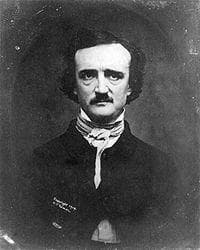
Edgar Allan Poe was an American writer, poet, editor, and literary critic who is best known for his poetry and short stories, particularly his tales of mystery and the macabre. He is widely regarded as a central figure of Romanticism in the United States, and of American literature. He was one of the country's earliest practitioners of the short story, and is considered the inventor of the detective fiction genre, as well as a significant contributor to the emerging genre of science fiction. He is the first well-known American writer to earn a living through writing alone, resulting in a financially difficult life and career.
Similar books
- Frankenstein: The 1818 Text
Mary Shelley
3.8 (1.2M) average on GoodreadsFantasyFeatures dark themes, moral ambiguity, and a sense of dread, characteristic of early horror.
- The Turn of the Screw
Henry James
3.4 (104k) average on GoodreadsMysteryFocuses on psychological suspense and unreliable narration, blurring lines between reality and delusion.
- The Adventures of Sherlock Holmes
Arthur Conan Doyle
4.3 (243k) average on GoodreadsMysteryPoe invented the detective genre with Dupin, establishing core conventions. Doyle refined it with Holmes, focusing on more intricate, external-clue-based plots and a generally more heroic, rational detective. Poe's detective stories are more philosophical and introspective, exploring the process of ratiocination and its psychological implications, while Doyle's are more accessible and plot-driven, aiming for clear resolutions.
- Harry Potter and the Sorcerer's Stone
J.K. Rowling
4.5 (7M) average on GoodreadsFantasyRescued from a miserable life under the stairs, an orphaned boy discovers he's a wizard destined for a magical school, where he uncovers a dangerous secret tied to the dark wizard who murdered his parents.
- The Hunger Games
Suzanne Collins
4.3 (6.4M) average on GoodreadsFantasyIn a future where children fight to the death on live television, Katniss Everdeen volunteers for the arena, turning a death sentence into a fight for survival and a spark of rebellion.
- 1984
George Orwell
4.2 (3.1M) average on GoodreadsPoliticsIn a future where surveillance and thought control are absolute, a man's search for truth clashes with the Party, showing that hope can be a form of rebellion.





Enjoyed the summary?
A summary gives you the shape of the book. The book itself has the detail, the examples and the voice.
Find Tales of Mystery and Imagination on AmazonAs an Amazon Associate, BookBrief earns from qualifying purchases. How we're funded