

Synopsis
Covers the whole plot, including the ending.
- Difficulty
- Medium
- Pacing
- Variable
- Mood
- Atmospheric, Suspenseful, Melancholy, Romantic
- Read it if
- You enjoy intricate historical mysteries with dual timelines, wartime romance, and espionage.
- Skip it if
- You prefer straightforward plots without historical complexity or morally ambiguous characters.
Tamar Plot Summary
Covers the whole plot, including the ending.
The Inheritance and the Unveiling
After her grandfather Ted dies, fifteen-year-old Tamar inherits a wooden box. It contains a coded map, a compass, a tin of buttons, a photo, and a small, worn diary. Her grandmother, Audrey, is distant and unhelpful, which only increases Tamar's curiosity. The items suggest a hidden life and a dramatic past, different from the quiet grandfather she knew. Tamar finds a hidden compartment in the box, with more clues and a reference to someone named 'Tamar.' This discovery leads her to uncover the secrets Ted kept for decades, drawing her into a world she never knew existed.
The Dutch Resistance: Tamar and Ernst
The story flashes back to 1944 in Nazi-occupied Holland. We meet Tamar, a British Special Operations Executive (SOE) agent parachuted into the Netherlands to help the Dutch Resistance. She works closely with Ernst, a charismatic and dedicated resistance leader. Their mission involves sabotage, sending intelligence, and protecting their network from German forces and collaborators. The constant threat of capture and execution creates an intense bond between Tamar and Ernst, who share a deep commitment to their cause and a growing affection. They operate under extreme pressure, relying on secrecy and coded communications to survive.
Betrayal and Jealousy: Elias Arrives
A new SOE agent, Elias, parachutes in to join Tamar and Ernst's cell. Elias is intelligent, handsome, and quickly connects with Tamar, much to Ernst's quiet jealousy. The group's dynamic shifts, with romantic tension mixing with the high-stakes espionage. Ernst, deeply in love with Tamar, watches their growing closeness with resentment and suspicion. Elias's presence, while initially seen as helpful, also brings distrust and rivalry that threatens to compromise the group's unity and focus, especially as their missions become more dangerous.
The Radio and the Hunt
Tamar, as the radio operator, is essential for the cell's communication with London. However, German forces actively hunt for illegal radio transmissions using sophisticated equipment. The constant need to move locations, the fear of being located, and the tension of sending messages under threat create immense stress. One night, while Tamar transmits, German radio detection vans get dangerously close, forcing the cell to make a desperate, narrow escape. This highlights the danger of their operations and the constant need for vigilance.
The Mission and the Ambush
The cell undertakes a vital mission to sabotage a German supply train, a high-risk operation. During the mission, they are ambushed. The attack is brutal and swift, resulting in several resistance members being killed or captured. Ernst, showing great bravery, fights fiercely to protect Tamar and Elias. The ambush is a devastating blow, weakening their network and increasing their sense of vulnerability. This event leaves the survivors traumatized and forces them to face the brutal realities of their war, while also raising questions about how the Germans knew their plans.
Suspicions and Accusations
After the ambush, Ernst begins to suspect Elias is a traitor. The details of the ambush suggest an inside leak, and Elias's behavior, combined with Ernst's existing jealousy, fuels his distrust. Ernst confronts Elias, accusing him of collaboration. Elias denies it strongly, but the tension is clear. Tamar is caught in the middle, torn between the two men she cares for. The confrontation escalates, and a desperate decision is made under duress and fear, leading to a tragic outcome that will haunt the survivors for decades. This event creates a deep, unspoken wound within the group.
Consequences and Escape
Following the tragic incident, the remaining cell members are forced into deeper hiding, their network shattered. The war is nearing its end, but the immediate danger remains. Ernst and Tamar must escape, burdened by recent events and the loss of their comrades. Their bond is forever changed by the shared trauma and the dark secret they now carry. They are constantly moving, relying on the kindness of strangers and their own wits to avoid capture, knowing that the choices made in those desperate moments will forever define their lives and relationships.
Tamar's Search for Truth
In the present day, Tamar, with help from her friend, a local archivist, deciphers the coded messages and pieced-together fragments from her grandfather's box. She discovers that 'Tamar' is not a woman, but her grandfather's codename, Ted, during his time as an SOE agent. The diary entries and other artifacts slowly reveal the harrowing story of the Dutch Resistance, the love triangle, the betrayal, and Elias's tragic fate. This revelation shatters her idealized image of her grandfather, forcing her to confront the complex, morally ambiguous actions of a man she thought she knew.
The Confrontation and Revelation
Armed with the truth, Tamar confronts her grandmother, Audrey, who has remained quiet and emotionally distant during Tamar's investigation. Audrey, finally forced to acknowledge the past, reveals her own pain and the long shadow of the war. It becomes clear that Audrey was also deeply affected by the events, perhaps even involved or knew more than she let on. The confrontation is emotionally charged, as decades of suppressed grief, guilt, and unspoken truths finally surface, allowing for a deeper understanding between grandmother and granddaughter, and the healing process to begin.
The Legacy of Lies
Tamar grapples with the profound implications of her grandfather's past. She learns that the man she knew as Ted had lived a life burdened by a terrible secret and a morally ambiguous decision made during wartime. The story raises questions about heroism, betrayal, and the compromises people make to survive. Tamar realizes that truth is rarely simple and that the legacy of war can haunt generations. She understands that her grandfather's silence was a form of protection, but also a burden that shaped his entire life and the lives of those around him.
The Present-Day Echoes
As Tamar processes her grandfather's complex story, she begins to see echoes of the past in her own life and relationships. The themes of love, jealousy, betrayal, and the search for identity resonate deeply. The experience changes her perspective on her family, her understanding of history, and her own sense of self. She realizes that secrets, even those meant to protect, can have far-reaching consequences. This journey of discovery helps her mature, offering a more nuanced view of human nature and how historical events affect individual lives.
Finding Peace and Forgiveness
By the end of her journey, Tamar does not find simple answers or easy forgiveness, but a deep understanding of the difficult choices made during wartime. She comes to terms with her grandfather's flawed humanity and the reasons for his lifelong silence. The experience allows her to build a stronger, more honest relationship with her grandmother, Audrey. Tamar carries the weight of the past, but also the strength of knowing the truth, enabling her to move forward with a more complete picture of her family's legacy and a deeper appreciation for the sacrifices and secrets of those who came before her.
Principal Figures
Tamar (present day)
Protagonist
A curious and determined teenager uncovering her grandfather's wartime secrets.
Fifteen-year-old Tamar is initially a typical, somewhat naive teenager. Her grandfather's death and the mysterious inheritance ignite a profound curiosity and a relentless drive to uncover the truth. She is intelligent, analytical, and persistent, meticulously piecing together clues and codes. Her journey transforms her from an innocent girl into a young woman with a deeper understanding of history, human nature, and the complexities of morality. She is driven by a desire to understand her family's hidden past.
Relationships: Ted (Grandfather) (Granddaughter, seeking to understand his hidden past.); Audrey (Granddaughter, initially distant, later understanding and empathetic.); Rike (Friend and confidante, assisting in her research.)
Tamar (SOE Agent, 'Ted')
Protagonist (past narrative)
A British SOE agent in WWII Holland, grappling with love, loyalty, and betrayal.
The younger 'Tamar' is actually Ted, Tamar's grandfather, during his time as an SOE agent in Nazi-occupied Holland. He is courageous, intelligent, and deeply committed to the Resistance cause. He falls passionately in love with the real Tamar, a Dutch woman working with the resistance. Ted is plagued by jealousy and suspicion when Elias arrives, leading him to make a fateful, morally compromising decision that will haunt him for the rest of his life. He embodies the difficult choices and psychological toll of war.
Relationships: Ernst (Close comrade and friend, later rival and co-conspirator.); Elias (Fellow agent, rival for Tamar's affection, and victim of his decision.); Tamar (Dutch woman) (His passionate love interest and the source of his jealousy.)
Ernst
Supporting Character (past narrative)
A dedicated and charismatic Dutch resistance leader.
Ernst is a strong, charismatic, and deeply committed leader within the Dutch Resistance. He is courageous, resourceful, and commands respect from his comrades. He forms a deep bond with 'Tamar' (Ted) and falls in love with the real Tamar. Ernst's character is defined by his unwavering resolve, but also by his capacity for suspicion and the heavy burden of leadership in wartime. He is instrumental in the fateful decision regarding Elias, driven by a combination of genuine suspicion and personal jealousy.
Relationships: Tamar (SOE Agent) (Comrade and friend, later co-conspirator.); Tamar (Dutch woman) (Love interest, though unrequited.); Elias (Fellow agent, but viewed with suspicion and rivalry.)
Elias
Supporting Character/Catalyst (past narrative)
A charming and intelligent SOE agent whose arrival sparks a tragic love triangle.
Elias is a handsome, intelligent, and seemingly capable SOE agent who is parachuted into the resistance cell. His charm and quick wit immediately attract the real Tamar, creating a love triangle with 'Tamar' (Ted) and Ernst. Elias's arrival acts as a catalyst for the central conflict of the past narrative, as he becomes the object of suspicion and jealousy. His true loyalty is debated, but his presence ultimately leads to a tragic and defining event for the group, making him a pivotal figure despite his relatively short time in the story.
Relationships: Tamar (SOE Agent) (Fellow agent, object of his suspicion.); Tamar (Dutch woman) (Love interest.); Ernst (Fellow agent, but viewed with suspicion and rivalry.)
Tamar (Dutch woman)
Supporting Character (past narrative)
A Dutch resistance worker, the object of affection for Ted and Elias.
This Tamar is a brave and committed Dutch woman involved in the resistance. She is intelligent, resourceful, and works closely with Ernst and 'Tamar' (Ted). She becomes the focus of a complex love triangle, attracting both Ted and Elias. Her affections for Elias fuel Ted's jealousy, indirectly leading to the tragic events. She is a symbol of the beauty and resilience that existed amidst the horrors of war, and her presence profoundly impacts the decisions and lives of the men around her.
Relationships: Tamar (SOE Agent) (Comrade, object of his affection.); Ernst (Comrade, object of his unrequited affection.); Elias (Love interest.)
Audrey
Supporting Character (present day)
Tamar's grandmother, initially secretive and distant, later revealing her own suppressed pain.
Audrey is Tamar's grandmother, a seemingly stoic and emotionally reserved woman. In the present day, she is initially unhelpful and evasive when Tamar begins to investigate Ted's past, due to her own deep-seated grief and the burden of shared secrets. Her silence is a protective mechanism, but it also creates distance. As Tamar uncovers more, Audrey is forced to confront her past, revealing her own suffering and the profound impact of the war on her life and marriage. She eventually offers Tamar a more complete, albeit painful, picture.
Relationships: Ted (Grandfather) (Wife, sharing a secret-laden marriage.); Tamar (present day) (Grandmother, initially distant, later sharing truth and grief.)
Rike
Supporting Character (present day)
Tamar's friend, a local archivist who assists in her research.
Rike is a supportive friend to present-day Tamar. She works at a local archive and possesses the practical skills and knowledge necessary to help Tamar decipher historical documents, codes, and maps. Rike represents the younger generation's connection to history and the tools available for research. She acts as a sounding board and a practical aid, helping Tamar navigate the complexities of her grandfather's past and providing a grounding presence in Tamar's emotional journey.
Relationships: Tamar (present day) (Close friend and research collaborator.)
Themes & Insights
The Weight of Secrets and the Past's Persistence
The novel shows how secrets, especially those from traumatic events like war, can shape lives for decades and deeply affect future generations. Ted's lifelong silence about his wartime experiences and the tragic decision he made creates emotional distance with his wife, Audrey, and leaves his granddaughter, Tamar, with a mystery to solve. The coded messages and hidden objects are physical signs of this suppressed past, always trying to emerge. The story emphasizes that the past is never truly buried; it always finds a way to assert its influence, demanding to be acknowledged and understood.
“Secrets are like stones. You can carry them, or you can let them go, but either way, they weigh you down.”
Moral Ambiguity and Wartime Decisions
The novel explores the complex ethics of war, where clear ideas of right and wrong become blurred. Ted's decision regarding Elias is not presented as a simple act of heroism or villainy, but as a desperate choice made under immense pressure, made worse by personal jealousy. The story asks readers to consider the compromises people make for survival, for love, and for a cause. It highlights that even heroes can make deeply flawed decisions, and that the consequences of these choices can be far-reaching and morally ambiguous, haunting a person for a lifetime. War forces characters into situations where no 'good' option exists.
“In war, there are no good men, only men who do what they must.”
Love, Jealousy, and Betrayal
At the heart of the past narrative is a passionate and destructive love triangle between Ted, Ernst, and the Dutch Tamar, complicated by Elias's arrival. This theme explores how intense emotions like love and jealousy can mix with the high stakes of espionage and war, leading to tragic outcomes. Ted's jealousy of Elias, fueled by his love for Tamar, directly contributes to the suspicion and Elias's ultimate fate. This personal drama shows how human emotions, even in major conflicts, can drive important, often devastating, decisions. The betrayal is both of a comrade and of trust, leaving a lasting mark.
“Love, like war, makes fools of us all.”
The Nature of Identity and Memory
Tamar's journey is about uncovering her grandfather Ted's true identity and reconciling the quiet man she knew with the brave, flawed SOE agent 'Tamar.' The novel explores how individuals build and rebuild their identities, especially after traumatic experiences, and how memory can be selective, distorted, or suppressed. Ted deliberately reshaped his public identity to bury his past. For present-day Tamar, uncovering these layers of identity and memory is transformative, forcing her to question what she thought she knew about her family and the nature of truth itself. It highlights that identity is not fixed but fluid, shaped by experience and the stories we choose to tell or hide.
“We are all made of stories, some we tell, some we hide, and some we don't even know exist until someone else unearths them.”
Plot Devices & Literary Techniques
The Inheritance Box
A physical collection of clues that drives the present-day narrative.
The wooden box inherited by Tamar from her grandfather is the central plot device. It contains a carefully curated collection of seemingly innocuous items – a compass, buttons, a diary, a coded map – that serve as breadcrumbs leading Tamar through her grandfather's past. The box acts as a tangible link between the two timelines, a puzzle box that must be deciphered, compelling Tamar's investigation and slowly revealing the secrets of the Dutch Resistance and the love triangle. It symbolizes the hidden layers of history and the deliberate way secrets are preserved and eventually revealed.
Dual Narrative / Alternating Timelines
The story unfolds across two parallel timelines: present-day Tamar's investigation and the WWII events.
The novel employs a dual narrative structure, alternating between present-day Tamar's quest to uncover her grandfather's secrets and the historical events of World War II in Holland. This device builds suspense as clues discovered in the present illuminate events in the past, and vice versa. It allows for a gradual revelation of information, keeping the reader engaged in both stories simultaneously while highlighting the enduring impact of historical events on contemporary lives. The parallel structure emphasizes the connection between generations and the lingering shadows of history.
Coded Messages and Cryptography
Various codes and ciphers used by the resistance, and by Ted, to conceal information.
Coded messages and cryptography are central to both the historical and present-day narratives. In the past, the resistance uses codes for secure communication, highlighting the danger and ingenuity of their operations. In the present, Tamar must decipher her grandfather's personal codes and cryptic clues within the diary and map to unlock his story. This device not only adds a mystery element but also emphasizes the themes of secrecy, hidden truths, and the intellectual challenge of uncovering obscured information. It reflects the real-life methods of espionage and resistance during WWII.
The Unreliable Narrator (Implied)
The historical account is filtered through Ted's perspective and later Tamar's interpretation.
While not a single unreliable narrator in the traditional sense, the past narrative is essentially Ted's story, told through his memories and the 'diary' he leaves behind. This implies a degree of subjectivity and potential for omitted or altered truths, especially concerning the events surrounding Elias. Present-day Tamar then interprets these 'facts,' adding another layer of perspective. This device encourages the reader to question what is presented as truth, fostering a deeper engagement with the moral ambiguities and the complexities of memory and self-preservation, particularly when dealing with traumatic events.
Tamar Quotes
“The past is a foreign country; they do things differently there.”
“Sometimes you have to break something to see what's inside.”
“Love isn't a choice, it's a consequence.”
“There are some things you can never outrun, no matter how fast you go.”
“Every secret has a life of its own, and it grows in the dark.”
“To forget is to betray.”
“War makes monsters of us all, in different ways.”
“Sometimes the greatest courage is not to fight, but to wait.”
“The truth is rarely simple, and never convenient.”
“We carry our histories inside us, like ghosts.”
“Silence can be a weapon, or a shield.”
“A story is never just a story. It's a key.”
“The hardest part of a journey is often knowing where to begin.”
“Even the smallest acts of kindness can echo through generations.”
Quiz
10 questions on the plot and the characters. Each answer comes with a short explanation.
Question 1
What is the initial object Tamar inherits from her grandfather, setting off the mystery?
- A diary written in code
- A box containing clues and coded messages
- A collection of old photographs
- A map of wartime Holland
Show answer
B. A box containing clues and coded messages Tamar inherits a mysterious box from her grandfather that contains a series of clues and coded messages, which she must decipher.
Question 2
In which country and during which historical conflict does the 'other Tamar's' story primarily take place?
- France during World War I
- Germany during the Cold War
- Nazi-occupied Holland during World War II
- England during the Blitz
Show answer
C. Nazi-occupied Holland during World War II The historical narrative follows the 'other Tamar' (the grandfather) as a resistance fighter in Nazi-occupied Holland during the Second World War.
Question 3
What is the name of the woman whom the 'other Tamar' (the grandfather) falls in love with during the war?
- Elise
- Margot
- Marijke
- Lena
Show answer
C. Marijke The 'other Tamar' falls passionately in love with Marijke, a key figure in the resistance movement.
Question 4
What is the primary role of the character 'Dart' in the historical narrative?
- A British spy sent to assist the Dutch resistance
- A German officer secretly helping the resistance
- A Dutch collaborator working for the Nazis
- A civilian caught in the crossfire
Show answer
A. A British spy sent to assist the Dutch resistance Dart is a British agent, specifically an SOE operative, parachuted into Holland to work with and organize the Dutch resistance.
Question 5
Which theme is most central to both the past and present narratives in 'Tamar'?
- The pursuit of wealth
- The impact of secrets and betrayal across generations
- The struggle for artistic freedom
- The challenges of space exploration
Show answer
B. The impact of secrets and betrayal across generations The novel heavily explores how secrets kept in the past, particularly those involving betrayal and wartime actions, profoundly affect the present generation and characters.
Question 6
How does Tamar's current life begin to change as she uncovers her grandfather's past?
- She decides to move to Holland permanently.
- She develops a deeper understanding of her family and her own identity.
- She becomes involved in a new political movement.
- She discovers she has inherited a vast fortune.
Show answer
B. She develops a deeper understanding of her family and her own identity. Unraveling her grandfather's story transforms Tamar's life by giving her a profound understanding of her family's history, the sacrifices made, and ultimately, a clearer sense of her own identity and purpose.
Question 7
What is the significance of the character 'Nightwatchman' in the historical storyline?
- He is a German officer who secretly provides intelligence.
- He is the code name for the leader of the Dutch resistance cell.
- He is another British agent, and a key figure in the love triangle and eventual betrayal.
- He is a double agent working for both the resistance and the Nazis.
Show answer
C. He is another British agent, and a key figure in the love triangle and eventual betrayal. Nightwatchman is another British agent who becomes a rival to the 'other Tamar' for Marijke's affection, complicating the resistance work and leading to tragic consequences.
Question 8
The coded messages and clues Tamar finds are primarily related to which aspect of her grandfather's past?
- His hidden art collection
- His involvement in specific resistance operations and personal relationships.
- His pre-war academic research
- His financial investments
Show answer
B. His involvement in specific resistance operations and personal relationships. The clues and coded messages are intricately linked to his time as a resistance fighter, detailing specific operations, betrayals, and the complex personal relationships he formed during the war.
Question 9
What is the ultimate tragic outcome for Marijke in the historical narrative?
- She successfully escapes to England and lives a long life.
- She is captured and executed by the Nazis.
- She betrays the resistance and joins the Nazis.
- She marries another resistance fighter and disappears after the war.
Show answer
B. She is captured and executed by the Nazis. Marijke tragically meets her end when she is captured by the Nazis, a consequence deeply tied to the betrayals and complex loyalties within the resistance.
Question 10
How does the novel use the dual narratives (past and present) to enhance its themes?
- It suggests that history merely repeats itself without change.
- It demonstrates how past events and choices have lasting, sometimes painful, repercussions on future generations.
- It contrasts the simplicity of the past with the complexity of the present.
- It primarily serves to confuse the reader about the timeline.
Show answer
B. It demonstrates how past events and choices have lasting, sometimes painful, repercussions on future generations. The dual narrative structure is crucial for showing how the wartime experiences, secrets, and betrayals of the 'other Tamar' directly impact and shape the life and understanding of the present-day Tamar, highlighting the enduring legacy of the past.
Tamar FAQ
What is the central mystery Tamar (the granddaughter) is trying to solve?
Tamar, the granddaughter, is trying to unravel the mystery surrounding her grandfather's past during World War II. She discovers a box with coded messages, maps, and artifacts that hint at a secret life as a Dutch resistance fighter named Tamar, leading her to question everything she thought she knew about her family's history.
Who are the two main characters named Tamar, and how are they connected?
There are two main characters named Tamar: the contemporary teenage granddaughter and her grandfather, who used the codename 'Tamar' as a Dutch resistance fighter during WWII. The granddaughter is indirectly connected to her grandfather's past through the clues he left behind, which reveal his experiences and the secrets he kept for decades.
What is the primary setting for the historical storyline?
The primary setting for the historical storyline is Nazi-occupied Holland during World War II. It vividly portrays the dangerous and clandestine world of the Dutch resistance, focusing on their operations, daily struggles, and the constant threat of discovery by German forces.
How does the past narrative influence Tamar's (the granddaughter's) present-day life?
The past narrative profoundly influences Tamar's present-day life by forcing her to confront uncomfortable truths about her family and the nature of war. It challenges her perceptions of love, loyalty, and betrayal, leading her to a deeper understanding of human complexities and the lasting impact of historical events.
What role does the character Lodewijk play in the historical narrative?
Lodewijk is Tamar's (the grandfather's) best friend and fellow resistance fighter in occupied Holland. Their bond is central to the historical plot, as they share dangers, secrets, and eventually a tragic love triangle that forms the emotional core of the past narrative.
What is the significance of the coded messages and the 'box' Tamar inherits?
The coded messages and the 'box' are the primary catalysts for the entire plot. They serve as a breadcrumb trail left by her grandfather, meticulously designed to guide the contemporary Tamar through his past, revealing his identity as a resistance fighter and the tragic events that shaped his life.
How does the author use the shifting perspectives and timelines to build suspense?
The author masterfully uses alternating chapters between the past (WWII Holland) and the present (Tamar's investigation) to build suspense. This structure allows for gradual revelations, creating dramatic irony as the reader often pieces together information before Tamar does, and drawing parallels between the emotional stakes of both timelines.
What hidden connections exist between the contemporary characters and the historical figures?
The most significant hidden connection is the direct lineage between the contemporary Tamar and the historical 'Tamar' (her grandfather). Other subtle connections emerge as Tamar's modern-day discoveries directly correspond to the historical narrative, revealing the true identities and fates of characters from her grandfather's past within her own family tree.
What is the symbolic meaning behind the name 'Tamar' being used by both grandfather and granddaughter?
The shared name 'Tamar' symbolizes the powerful inheritance of history and memory. For the grandfather, it was a codename representing a new identity forged in resistance; for the granddaughter, it signifies her direct connection to this legacy and her role in uncovering and understanding it, making her an inheritor of his story and spirit.
How does the novel explore the psychological impact of war and secrecy on individuals?
The novel deeply explores the psychological toll of war through characters like Tamar (the grandfather), who carries the trauma of his experiences and the weight of his secrets for decades. It shows how secrecy can isolate individuals, warp relationships, and lead to profound internal conflict, even long after the war has ended.
Discuss the moral dilemmas faced by resistance fighters in the book, particularly regarding betrayal and trust.
Resistance fighters like Tamar and Lodewijk face constant moral dilemmas, especially concerning who to trust and the consequences of betrayal. They must make life-or-death decisions, sometimes involving sacrificing one for the many or dealing with informants, highlighting the blurred lines between right and wrong in wartime.
How does the love triangle between Tamar, Lodewijk, and Marijke contribute to the psychological depth of the historical plot?
The love triangle between Tamar, Lodewijk, and Marijke adds immense psychological depth by introducing intense jealousy, passion, and betrayal into an already high-stakes environment. It explores how personal emotions can be magnified and distorted by the pressures of war, leading to tragic choices and lasting emotional scars.
In what ways does Tamar (the granddaughter) undergo a significant character transformation?
Tamar undergoes a significant transformation from a somewhat detached teenager to a more empathetic and mature individual. By delving into her grandfather's dark past, she gains a deeper understanding of human suffering, love, and betrayal, which broadens her perspective on life and her own identity.
What is the novel's overarching message about memory and history?
The novel's overarching message is that memory and history are not static but living forces that continue to shape the present. It emphasizes the importance of confronting the past, even its painful aspects, to understand who we are and to ensure that the sacrifices and lessons of previous generations are not forgotten.
How does the book challenge traditional notions of heroism?
The book challenges traditional notions of heroism by portraying resistance fighters not as flawless heroes, but as complex individuals driven by a mix of conviction, fear, and personal desires. It shows the messy reality of war, where 'heroes' can make morally ambiguous choices and carry deep psychological wounds, highlighting the human cost of their actions.
Is the ending of the book ultimately hopeful or tragic, considering the revelations?
The ending is a complex blend of both hope and tragedy. While the full truth of the past is revealed, bringing closure, it also exposes profound losses and betrayals. However, the granddaughter Tamar's journey of understanding and acceptance offers a hopeful note, suggesting that confronting difficult truths can lead to healing and a deeper appreciation of life.
How does the author use the setting of rural Holland to enhance the narrative's atmosphere?
The author uses the setting of rural Holland, with its canals, fields, and hidden farmhouses, to create a sense of both idyllic beauty and claustrophobic danger. The quiet, seemingly peaceful landscape often conceals clandestine operations and the constant threat of discovery, amplifying the tension and the hidden struggles of the resistance.
What role do the themes of identity and assumed identities play in the historical plot?
Themes of identity are central, as characters like Tamar and Lodewijk adopt assumed identities or codenames to operate within the resistance. This constant deception blurs their true selves, creating internal conflict and making trust a perilous commodity, highlighting the psychological toll of living a double life.
Similar books
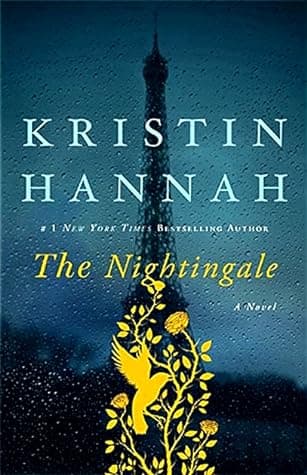
- The Nightingale
Kristin Hannah
4.6 (698k) average on GoodreadsHistorical FictionFeatures strong female protagonists in WWII resistance, exploring themes of love, sacrifice, and betrayal.
- Code Name Verity
Elizabeth Wein
4.0 (97k) average on GoodreadsHistorical FictionIntense WWII espionage with a focus on female friendship and complex moral choices.
- Atonement
Ian McEwan
4.4 (70) average on GoodreadsExplores the long-term consequences of wartime actions and betrayals on love and family.
- The Book Thief
Markus Zusak
4.4 (1.8M) average on GoodreadsHistorical Fiction'Tamar' shares with 'The Book Thief' a focus on World War II and the resilience of individuals amidst immense hardship. Both novels use a unique narrative voice (though Peet's is more traditional third-person compared to Zusak's Death as narrator). However, 'Tamar' delves more explicitly into the intricacies of a resistance movement and a family mystery spanning generations, whereas 'The Book Thief' offers a more intimate, localized perspective on the war's impact on a small German town and its inhabitants' daily lives.
- To Kill a Mockingbird
Harper Lee
4.3 (4.5M) average on GoodreadsHistorical FictionIn the 1930s Jim Crow South, Harper Lee writes about racial injustice, moral growth, and the quiet courage of a lawyer father, Atticus Finch, as seen through his young daughter's eyes.
- The Great Gatsby
F. Scott Fitzgerald
3.9 (3.8M) average on GoodreadsHistorical FictionIn the opulent Roaring Twenties, a mysterious millionaire's lavish parties hide his desperate, tragic pursuit of a lost love, exposing the emptiness within the American Dream.




Enjoyed the summary?
A summary gives you the shape of the book. The book itself has the detail, the examples and the voice.
Find Tamar on AmazonAs an Amazon Associate, BookBrief earns from qualifying purchases. How we're funded