
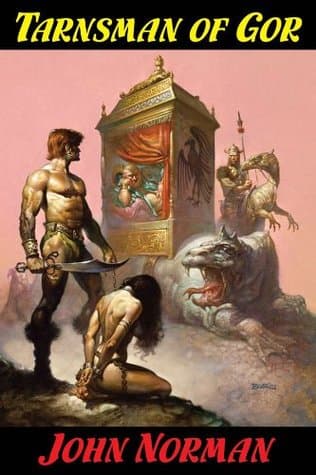
Synopsis
Covers the whole plot, including the ending.
- Difficulty
- Easy
- Pacing
- Fast
- Mood
- Adventurous, Action-packed, Exotic, Controversial
- Read it if
- You enjoy classic pulp science fiction/fantasy with a focus on a lone hero in a dangerous alien world, gladiatorial combat, and a strong, if controversial, exploration of power dynamics.
- Skip it if
- You are sensitive to outdated cultural depictions, highly patriarchal societies, or explicit themes of dominance and submission.
Tarnsman of Gor Plot Summary
Covers the whole plot, including the ending.
The Abduction to Counter-Earth
Tarl Cabot, a history professor from New England, is walking in the woods when a mysterious light envelops him. He awakens on a strange, alien world with two moons. A man named Matthew greets him, explaining that Tarl was chosen by the Priest-Kings to be brought to Gor, also known as Counter-Earth. Matthew reveals that Tarl's father, whom Tarl believed was dead, is a renowned Tarnsman on Gor. Tarl receives a ring, a symbol of his new status, and begins to learn about this new world, which is both primitive and technologically advanced.
Introduction to Ko-ro-ba and the Caste System
Tarl is brought to Ko-ro-ba, a large city built with advanced materials but governed by ancient, rigid traditions. He learns about the Gorean caste system, where individuals are born into specific roles, such as Warriors, Scribes, Builders, and Physicians. Tarl, being from Earth, is an outsider, but his father's reputation gives him a unique position. He observes daily life, customs, and the strict social hierarchy, including the concept of 'slaves' and 'free women,' which he finds disturbing and challenging to his Earth-based sensibilities.
Training as a Tarnsman
Under Matthew's guidance and other Gorean warriors, Tarl begins his intensive training to become a Tarnsman, a rider of giant, bird-like tarns. He learns to use Gorean weapons, including the sword and spear, and masters aerial combat on his tarn, which he names 'Swift.' This training is brutal and demanding, pushing Tarl to his physical and mental limits. He learns the Gorean code of honor, the importance of skill in battle, and the strict discipline of a warrior, slowly adapting to the Gorean way of life.
The Quest for the Home Stone
Tarl learns that the Home Stone of Ko-ro-ba, a sacred artifact vital to the city's prosperity and defense, has been stolen. This theft has left Ko-ro-ba vulnerable and dishonored. He is informed that his estranged father, the legendary Tarnsman of Gor, was the last to guard the stone before its disappearance. Tarl accepts the mission to retrieve the Home Stone, understanding that its recovery is crucial for the city and for restoring his father's honor. This quest becomes his main goal, solidifying his commitment to his new life on Gor.
Encounter with Talena
While in Ko-ro-ba, Tarl meets Talena, the beautiful daughter of the Ubar (leader) of the city. Their initial interactions have tension and cultural clashes, as Talena embodies the traditional Gorean female role, which Tarl struggles to accept with his Earthly views. Despite their differences, a complex attraction develops between them. Talena, initially dismissive of Tarl, begins to see his strength and honor, while Tarl is captivated by her spirit, even as he grapples with the Gorean societal norms that define her existence.
Journey to the Sardar Mountains
Tarl, with his loyal tarn Swift, begins his journey towards the Sardar Mountains, where the Home Stone is believed to be hidden. He travels through difficult landscapes, encountering various Gorean creatures and facing the harsh realities of the wild. Along the way, he sharpens his combat skills and strengthens his bond with Swift. This journey tests Tarl's resilience, forcing him to rely on his new Gorean instincts and training. He learns to navigate the dangers of Gor, proving his growing ability as a Tarnsman.
Confrontation with the Priest-Kings
As Tarl continues his quest, he learns more about the mysterious Priest-Kings, the unseen rulers of Gor. He discovers they are not benevolent protectors but a reclusive, technologically advanced race who manipulate Gorean society for their own purposes. They brought Tarl to Gor, and their motives remain secret, hinting at a larger plan. This challenges Tarl's understanding of Gor and raises questions about his own role in their design.
The Capture and Escape
During his journey, Tarl is ambushed and captured by a rival Gorean faction or agents of the Priest-Kings. He faces the harsh realities of Gorean captivity, but his training and determination help him plan an escape. He uses his wits and fighting skills to overcome his captors, showing his growing mastery of Gorean combat. This experience further solidifies his transformation into a capable Tarnsman, ready to face any challenge Gor presents.
Retrieval of the Home Stone
After overcoming obstacles and danger, Tarl finds the Home Stone within the Sardar Mountains. He confronts its current guardians, fighting a fierce battle that pushes him to his limits. With skill, courage, and the aid of his tarn, Swift, Tarl defeats his adversaries and reclaims the sacred artifact. The recovery of the Home Stone is a major victory for Ko-ro-ba and for Tarl, solidifying his reputation as a warrior and a true Tarnsman.
Return to Ko-ro-ba and Revelation
Tarl returns to Ko-ro-ba with the recovered Home Stone, to the city's relief. He is hailed as a hero, and his position as a Tarnsman is established. He then learns the full truth about his father, who reveals himself to Tarl. The reunion is bittersweet, as Tarl grapples with his father's past and his own destiny on Gor. The book ends with Tarl embracing his new identity and responsibilities, ready for further adventures on this alien world.
Principal Figures
Tarl Cabot
Protagonist
An Earth professor transformed into a Gorean Tarnsman.
Tarl Cabot is initially an unassuming history professor from New England, suddenly thrust into the brutal and alien world of Gor. He is intelligent and possesses a strong moral compass shaped by Earthly values, which often clashes with Gorean customs. Despite his initial discomfort with Gorean society, particularly its treatment of women, he proves to be adaptable, courageous, and quick to learn. He is driven by a desire to understand his new reality and to prove himself worthy of the Tarnsman title.
Relationships: Matthew (mentor and guide on Gor); Talena (love interest, complex and culturally conflicted); Tarl's Father (estranged father, legendary Tarnsman)
Talena
Supporting
The proud and beautiful daughter of the Ubar of Ko-ro-ba.
Talena is a quintessential Gorean free woman, beautiful, proud, and fiercely independent within the confines of her society. She is the daughter of the Ubar of Ko-ro-ba and embodies the strength and spirit of Gorean women. Initially, she views Tarl with skepticism and a degree of disdain due to his Earthly origins and customs. However, she is drawn to his courage and honor, and a complex relationship develops between them. She is a symbol of the Gorean culture Tarl must learn to understand and accept, or challenge.
Relationships: Tarl Cabot (love interest, culturally conflicted relationship); Ubar of Ko-ro-ba (her father, city leader)
Matthew
Supporting
Tarl's initial guide and mentor on Gor.
Matthew is a Gorean warrior who serves as Tarl's first point of contact and mentor upon his arrival on Gor. He is patient and knowledgeable, guiding Tarl through the initial bewildering experiences of the new planet. Matthew explains the customs, the caste system, and the dangers of Gor, helping Tarl to adapt. He is loyal and dedicated to his role, representing the more honorable aspects of Gorean warrior culture. He is instrumental in Tarl's early training and understanding of his new identity.
Relationships: Tarl Cabot (mentor and guide)
Tarl's Father
Supporting
A legendary Tarnsman whose reputation precedes Tarl.
Tarl's father is a mysterious and legendary figure on Gor, a renowned Tarnsman whose exploits are widely known. Tarl believed him to be dead, but he is revealed to be alive and a significant presence on Gor. His reputation grants Tarl a certain status upon his arrival. He is a powerful and influential warrior, embodying the pinnacle of Gorean masculinity and skill. His past actions and motivations are gradually revealed, adding layers to Tarl's understanding of his own heritage and destiny.
Relationships: Tarl Cabot (estranged father)
Swift
Supporting
Tarl's loyal and powerful tarn mount.
Swift is Tarl's magnificent tarn, a giant, bird-like creature that serves as his mount for aerial combat and travel. Swift is more than just an animal; he is a loyal companion and a crucial partner in Tarl's adventures. The bond between Tarl and Swift is deep and telepathic, essential for navigating the skies of Gor and engaging in aerial battles. Swift represents the wild, majestic, and powerful aspects of Gorean nature, and Tarl's mastery of him is a testament to his growing skill as a Tarnsman.
Relationships: Tarl Cabot (loyal mount and companion)
Ubar of Ko-ro-ba
Supporting
The leader of the city of Ko-ro-ba and Talena's father.
The Ubar is the ruling leader of the city of Ko-ro-ba. He is a powerful and respected figure, responsible for the city's welfare and defense. He is Talena's father and plays a significant role in Tarl's initial integration into Gorean society, granting him privileges due to his father's reputation. He embodies the authority and tradition of Gorean city-states, navigating political challenges and upholding the rigid caste system. His concern for the stolen Home Stone drives Tarl's main quest.
Relationships: Talena (father); Tarl Cabot (city leader, grants Tarl privilege)
Themes & Insights
Culture Clash and Adaptation
The novel explores culture clash as Tarl Cabot, an Earthling, is thrust into the alien and morally challenging world of Gor. His Earthly views, especially regarding women and social hierarchy, are constantly challenged by Gorean customs. Tarl's journey is one of forced adaptation, where he must learn to navigate and eventually embrace the Gorean way of life to survive. This is clear in his initial discomfort with 'slaves' and 'free women' versus his eventual acceptance and participation in Gorean society, as seen in his training as a Tarnsman and his interactions with Talena.
“I was an Earthman, and I was on Gor. The two facts did not seem to belong together, but they did.”
Honor and Duty
Honor and duty are central to Gorean society, particularly for its warriors. Tarl Cabot, despite his Earthly origins, quickly learns that personal honor and fulfilling one's duty are paramount. His quest to retrieve the Home Stone of Ko-ro-ba is not just a mission but a matter of restoring the city's honor and, by extension, his own and his father's. His rigorous training to become a Tarnsman instills in him a deep understanding of loyalty, courage, and the warrior's code, shaping his actions and decisions.
“In Gor, a man's word was his bond, and his honor was his life.”
The Nature of Freedom and Slavery
A controversial but undeniable theme in the novel is the exploration of freedom and slavery, particularly through Gorean society's institutionalized practice of female slavery. Tarl Cabot, from Earth, initially finds this concept abhorrent and struggles to reconcile it with his own moral framework. However, the narrative explores the complexities of this system, presenting it as an integral part of Gorean culture, where 'free women' and 'slaves' exist within a rigid social order. This theme forces the reader, and Tarl, to confront differing definitions of freedom and agency.
“On Gor, a woman's place was often defined by the collar about her neck, or its absence.”
Transformation and Identity
Tarl Cabot undergoes a transformation throughout the novel, shedding his Earthly identity as a history professor and adopting the identity of a Gorean Tarnsman. This theme explores how environment and circumstance can reshape an individual's sense of self. Tarl's physical and mental training, his adoption of Gorean customs, and his acceptance of his destiny on Counter-Earth all contribute to this change. He learns new skills and internalizes new values, fundamentally altering who he is and how he sees the world.
“I was no longer Tarl Cabot of Earth, but Tarl Cabot of Gor, a Tarnsman.”
Plot Devices & Literary Techniques
In Media Res Opening
The story begins with Tarl Cabot's sudden abduction to Gor.
The novel immediately thrusts the reader into the action by starting with Tarl Cabot's mysterious transportation from Earth to Gor. This 'in media res' opening creates instant intrigue and disorientation, mirroring Tarl's own experience. It quickly establishes the fantastical premise and sets a tone of wonder and danger, compelling the reader to uncover the 'how' and 'why' of his sudden change of worlds. This device efficiently hooks the reader into the narrative without lengthy exposition.
The Home Stone
A sacred artifact central to Ko-ro-ba's identity and Tarl's quest.
The Home Stone serves as a classic MacGuffin, a plot device that drives the main character's actions and the overall narrative. Its theft creates the central conflict for Tarl Cabot, giving him a clear objective and a reason to prove his worth on Gor. While its specific properties are important to the city of Ko-ro-ba, its primary function in the story is to motivate Tarl's journey, introduce him to various aspects of Gorean culture, and facilitate his transformation into a Tarnsman.
The Priest-Kings
Mysterious, unseen overlords who manipulate Gorean society.
The Priest-Kings function as an enigmatic and omnipotent force, providing a sense of cosmic mystery and ultimate authority over Gor. They are rarely seen but their influence is felt throughout the planet, acting as the puppet masters behind the scenes. This device allows for a larger, overarching narrative beyond the immediate events, hinting at deeper secrets and a grander design for Gor and Tarl's role within it. Their unseen nature adds to their mystique and power.
The Tarns
Giant, intelligent, bird-like mounts for Gorean warriors.
The tarns are not merely mounts but integral to the identity of a Tarnsman and the unique combat of Gor. They serve as a symbol of Gorean power and skill, and Tarl's mastery of Swift represents his successful adaptation to this new world. The bond between tarn and rider is a key element, providing both practical advantages in aerial warfare and an emotional connection for Tarl. They also introduce a fantastical element that grounds the science fiction aspects of Gor in a more traditional fantasy setting.
Tarnsman of Gor Quotes
“I am Tarl Cabot, Tarnsman of Gor, and this is my story.”
“The Earth is but a stepping stone, a place of origin, not of destiny.”
“On Gor, one learns that freedom is often a matter of who is stronger.”
“A woman's place is not to question, but to obey.”
“The collar is not merely a piece of metal, but a symbol of ownership, of surrender, of belonging.”
“There are no gods on Gor, only men, and sometimes, the Priest-Kings.”
“To be a Tarnsman is to be a master of the skies, a warrior of the wind.”
“Love on Gor is a complicated thing, often intertwined with duty, honor, and ownership.”
“The Ubar is the law, and his word is absolute.”
“One does not choose Gor; Gor chooses you.”
“The true strength of a man is not in his sword arm, but in his will.”
“To taste the dust of the arena is to know defeat, and perhaps, to know oneself.”
“On Gor, even the most beautiful cage can still be a prison.”
“The Priest-Kings move in ways inscrutable to men, their motives a mystery.”
Quiz
10 questions on the plot and the characters. Each answer comes with a short explanation.
Question 1
What is the name of the planet Tarl Cabot is transported to?
- Earth-2
- Gor
- Counter-Earth
- Ar
Show answer
B. Gor Tarl Cabot is transported to the planet Gor, which is also known as Counter-Earth in the narrative.
Question 2
What is the honored position Tarl Cabot is trained for in Gorean society?
- Scribe
- Warrior-Priest
- Tarnsman
- Caste Master
Show answer
C. Tarnsman Tarl is trained as a Tarnsman, one of the most honored positions in the rigid, caste-bound Gorean society.
Question 3
Where is Tarl Cabot originally from?
- Mars
- Gor
- New England, Earth
- Venus
Show answer
C. New England, Earth Tarl Cabot initially believes himself to be a citizen of Earth and is transported from the New England woods.
Question 4
What is the primary mode of transportation for a Tarnsman, implied by the name?
- Ground vehicles
- Large, winged birds
- Sailing ships
- Teleportation
Show answer
B. Large, winged birds The term 'Tarnsman' implies a connection to 'tarns,' which are large, winged birds used for riding in the Gorean series, akin to a knight and his steed.
Question 5
What is a defining characteristic of Gorean society as described in the book?
- Technologically advanced and democratic
- Highly egalitarian and peaceful
- Rigid and caste-bound
- Anarchic and lawless
Show answer
C. Rigid and caste-bound The book explicitly states that Gorean society is 'rigid, caste-bound,' indicating a structured social hierarchy.
Question 6
What is the initial setting on Earth where Tarl Cabot is before his transportation?
- A bustling city street
- A desert landscape
- A frosty winter night in the New England woods
- A tropical beach
Show answer
C. A frosty winter night in the New England woods Tarl is transported to Gor from 'one frosty winter night in the New England woods.'
Question 7
What is the implied purpose of Tarl's training as a Tarnsman?
- To become a scholar and historian
- To serve as a diplomat to other planets
- To fulfill a specific, grand destiny or mission on Gor
- To return to Earth as a Gorean ambassador
Show answer
C. To fulfill a specific, grand destiny or mission on Gor The description states he is trained 'to what end?' and that his destiny is 'far greater than the small planet he has inhabited,' implying a significant purpose on Gor.
Question 8
The Gorean Saga is described as 'controversial.' What common themes in the series contribute to this controversy, based on general knowledge of the series and the provided context?
- Exploration of advanced scientific concepts and alien civilizations.
- Detailed descriptions of Gorean ecology and environmentalism.
- The portrayal of slavery, particularly the subjugation of women, and rigid social hierarchies.
- Complex political intrigue and inter-city warfare.
Show answer
C. The portrayal of slavery, particularly the subjugation of women, and rigid social hierarchies. The Gorean Saga is widely known for its controversial themes, particularly the depiction of female slavery and a highly patriarchal, caste-bound society, which is hinted at by 'rigid, caste-bound' and the general 'controversial' label.
Question 9
What distinguishes Gor from Earth, as indicated by its alternative name 'Counter-Earth'?
- It is a planet made entirely of anti-matter.
- It orbits the sun on the opposite side of Earth, hidden from view.
- It is an artificial planet created by advanced aliens.
- It is a parallel dimension version of Earth.
Show answer
B. It orbits the sun on the opposite side of Earth, hidden from view. The term 'Counter-Earth' in science fiction often refers to a planet that shares the same orbit as Earth but is located on the opposite side of the sun, thus hidden from direct observation from Earth.
Question 10
Given Tarl's sudden transportation and the nature of Gor, what kind of genre blend does 'Tarnsman of Gor' represent?
- Hard Science Fiction with elements of utopian fiction.
- Cyberpunk with a focus on artificial intelligence.
- Sword and Planet (a subgenre of Science Fantasy) with elements of adventure.
- Post-apocalyptic dystopia with magical realism.
Show answer
C. Sword and Planet (a subgenre of Science Fantasy) with elements of adventure. The blend of a human from Earth being transported to another planet (Science Fiction) where he engages in swordplay, takes on a warrior role, and experiences a non-Earth-like society (Fantasy/Adventure) perfectly fits the 'Sword and Planet' subgenre.
Tarnsman of Gor FAQ
What is the primary catalyst for Tarl Cabot's journey to Gor?
Tarl Cabot is unexpectedly transported to Gor during a frosty winter night in the New England woods. He is drawn through a mysterious portal or mechanism, revealing that his true destiny lies beyond Earth, a revelation orchestrated by unknown forces connected to his heritage.
What is 'Gor' and why is it also called 'Counter-Earth'?
Gor is an Earth-like planet located on the opposite side of the sun from Earth, hence its nickname 'Counter-Earth.' It is a world with significantly different societal structures, advanced but hidden technology, and a distinct lack of the scientific advancement openly practiced on Earth, maintaining a more primitive, yet highly cultured, facade.
Who are the 'Tarnsman' and what is their significance in Gorean society?
Tarnsman are elite warriors and riders of the tarn, a giant bird of prey native to Gor. They represent the highest military caste and are revered for their skill, courage, and dedication to their city-state, playing crucial roles in defense and warfare.
What is the initial purpose of Tarl Cabot's training on Gor?
Tarl Cabot is brought to Gor and trained as a Tarnsman primarily to reclaim the stolen Home Stone of his ancestral city, Ko-ro-ba. This quest is essential for restoring his family's honor and the city's power, as the Home Stone is vital for its continued existence and prosperity.
Who is Sarm and what is her relationship with Tarl Cabot?
Sarm is a Gorean woman from the city of Ko-ro-ba, initially enslaved but later freed by Tarl. She becomes Tarl's loyal companion and love interest, sharing his adventures and providing him with valuable insights into Gorean customs and dangers.
What is the 'Home Stone' and why is its theft so critical to Ko-ro-ba?
The Home Stone is a mystical artifact, a large, glowing gem that is the heart and soul of a Gorean city-state, providing its power and vitality. Its theft by the Usurper, a rival leader, plunges Ko-ro-ba into decline and jeopardizes its very existence, making its recovery Tarl's primary mission.
What role do the 'Priest-Kings' play in the overall Gorean narrative, even if subtly in this first book?
The Priest-Kings are the enigmatic, unseen rulers of Gor, highly advanced insectoid beings who maintain the planet's technological and social order. While their direct influence is more evident in later books, their presence is hinted at through the rigid societal structure and the advanced, yet suppressed, technology observed by Tarl.
How does Tarl Cabot's Earth upbringing influence his initial reactions to Gorean society?
Tarl's Earth upbringing instills in him a strong sense of individuality and a revulsion towards the Gorean institution of slavery and its rigid caste system. He frequently questions and challenges Gorean norms, struggling to reconcile his own moral compass with the brutal realities of his new world.
Discuss the psychological impact of being suddenly transported to a completely alien world on Tarl.
Tarl experiences significant culture shock and an identity crisis upon arriving on Gor. He grapples with feelings of displacement, loneliness, and the constant threat of violence, which forces him to adapt rapidly and embrace a more primal, warrior mentality to survive and fulfill his destiny.
How does the concept of 'caste' affect the individual psychology of Gorean characters?
The rigid caste system deeply imprints Gorean characters with a sense of predetermined purpose and social standing. Individuals are expected to adhere strictly to their caste's duties and behaviors, leading to a strong collective identity but also limiting personal freedom and fostering resentment among lower castes.
What does the ending of 'Tarnsman of Gor' imply about Tarl's future on Gor?
The ending of 'Tarnsman of Gor,' with Tarl having reclaimed the Home Stone and established himself as a respected warrior, implies his continued integration into Gorean society and further adventures. It suggests that his role on Gor is far from over, with new challenges and revelations awaiting him as he delves deeper into the planet's mysteries and politics.
How does the book's portrayal of Gorean women contribute to its controversial status?
The book's portrayal of Gorean women, particularly the institution of female slavery and their submissive roles, is a primary source of its controversial status. It depicts women as property, often subject to male dominance and sexual servitude, which has been widely criticized for its misogynistic implications.
To what extent is Tarl Cabot a 'hero' in the traditional sense, given his actions and the Gorean context?
Tarl Cabot is a hero in the traditional sense of embarking on a quest to right a wrong and protect his people, displaying courage and martial prowess. However, his heroism is complicated by his gradual acceptance and participation in certain Gorean customs, particularly regarding women and slavery, which challenges modern ethical interpretations of heroism.
What philosophical arguments about freedom vs. order can be drawn from the Gorean society depicted?
The Gorean society presents a stark contrast between individual freedom and societal order. While seemingly primitive, its rigid caste system and emphasis on duty over personal desires highlight a philosophy where collective stability and tradition are prioritized, often at the expense of individual liberties, especially for those in lower castes or enslaved.
What is the significance of the tarn in Gorean culture beyond mere transportation?
Beyond transportation, the tarn symbolizes status, power, and the bond between rider and beast. To be a Tarnsman is to achieve a pinnacle of Gorean masculinity and martial skill, and the tarn itself represents untamed nature and the raw, dangerous beauty of Gor, deeply intertwined with the Gorean warrior ethos.
How does Tarl's relationship with Sarm evolve throughout the novel, reflecting his adaptation to Gor?
Tarl's relationship with Sarm evolves from that of rescuer and rescued to one of mutual respect and affection. Initially, Tarl's Earth-bound morality makes him uncomfortable with Sarm's Gorean submission, but as he adapts to Gor, he begins to appreciate her loyalty and strength within their cultural context, forming a deep, albeit controversial, bond.
What is the 'Usurper's' motivation for stealing the Home Stone and attacking Ko-ro-ba?
The Usurper's motivation for stealing the Home Stone and attacking Ko-ro-ba is primarily to seize power and territory. He seeks to weaken rival city-states and consolidate his own influence, viewing the Home Stone as a critical symbol and source of power necessary to legitimize his rule and expand his dominion.
How does the concept of 'honor' manifest differently on Gor compared to Earth, from Tarl's perspective?
From Tarl's perspective, honor on Gor is far more tied to martial prowess, adherence to caste duties, and the defense of one's city-state, often involving brutal violence and a rigid code of conduct. This contrasts sharply with Earth's more nuanced and individualistic understanding of honor, which often prioritizes ethical behavior and personal integrity over sheer strength or social standing.
About the author

John Norman is an American author best known for his science fiction and fantasy works, particularly the "Gor" series. His first book in this series, "Tarnsman of Gor," introduces readers to a complex world of adventure and intrigue. Norman's writing often explores themes of power and societal structures within a fictional setting.
Similar books
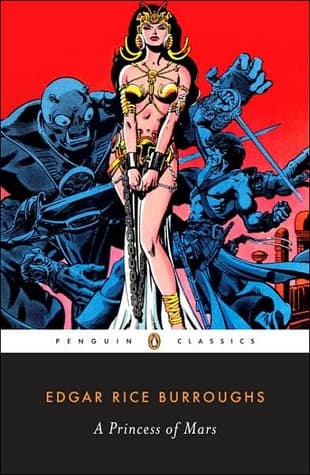
- A Princess of Mars
Edgar Rice Burroughs
3.8 (51k) average on GoodreadsFantasyFeatures an Earthman transported to an alien world, becoming a warrior and finding love amidst swordplay and strange creatures.
- Dune
Frank Herbert
4.2 (766k) average on GoodreadsFantasyDune and Tarnsman of Gor both create complex alien societies with intricate caste systems and unique ecologies. Herbert's Dune is lauded for its sophisticated political intrigue, ecological themes, and nuanced exploration of power, religion, and prophecy. While Tarnsman also builds a detailed world, its societal structures, particularly concerning gender, are presented in a far more simplistic and often regressive manner. Herbert's female characters, like Lady Jessica, are powerful, intelligent, and drive significant portions of the plot, whereas Norman's female characters, despite occasional moments of agency, are ultimately defined by their subjugation within the Gorean system. Dune offers a much richer and more critically acclaimed engagement with societal complexity and philosophical depth without resorting to the problematic gender politics of Gor.
- Harry Potter and the Sorcerer's Stone
J.K. Rowling
4.5 (7M) average on GoodreadsFantasyRescued from a miserable life under the stairs, an orphaned boy discovers he's a wizard destined for a magical school, where he uncovers a dangerous secret tied to the dark wizard who murdered his parents.
- The Hunger Games
Suzanne Collins
4.3 (6.4M) average on GoodreadsFantasyIn a future where children fight to the death on live television, Katniss Everdeen volunteers for the arena, turning a death sentence into a fight for survival and a spark of rebellion.
- 1984
George Orwell
4.2 (3.1M) average on GoodreadsPoliticsIn a future where surveillance and thought control are absolute, a man's search for truth clashes with the Party, showing that hope can be a form of rebellion.
- Divergent
Veronica Roth
4.2 (2.9M) average on GoodreadsFantasyIn a society divided by virtues, a sixteen-year-old's difference from the norm starts a rebellion that threatens her world.





Enjoyed the summary?
A summary gives you the shape of the book. The book itself has the detail, the examples and the voice.
Find Tarnsman of Gor on AmazonAs an Amazon Associate, BookBrief earns from qualifying purchases. How we're funded