
Synopsis
Covers the whole plot, including the ending.
- Difficulty
- Easy
- Pacing
- Moderate
- Mood
- Adventurous, Moralistic, Wild, Nostalgic
- Read it if
- You enjoy classic fables, anthropomorphic animals, and stories about finding one's place in the world.
- Skip it if
- You prefer modern fantasy or stories without moralistic undertones.
The Jungle Book Plot Summary
Covers the whole plot, including the ending.
Mowgli's Adoption
One evening, Father Wolf finds a human baby in their cave. Mother Wolf, Raksha, feels an immediate connection, naming him Mowgli, 'little frog'. Shere Khan, a tiger, arrives, demanding the cub as his prey. Father Wolf refuses, protecting Mowgli. At the next Pack Council, Mother Wolf presents Mowgli. Baloo, a bear, speaks for Mowgli, supporting his right to stay. Bagheera, a panther, offers a freshly killed bull to pay the 'adoption price' required by jungle law, ensuring Mowgli's place in the Seeonee Wolf Pack, despite Shere Khan's protests.
Life in the Pack
Mowgli grows up with the wolves, learning their language and the jungle's laws. Baloo teaches him the calls of all creatures and the rules of their lives. Bagheera mentors him, teaching hunting skills, stealth, and self-reliance. Mowgli, with his human intelligence, often finds ways to solve problems that even animals find hard. He forms close bonds with his wolf siblings and the pack, but he knows he is human among animals, often feeling like an outsider.
The Kidnapping by the Bandar-log
Despite warnings, Mowgli sometimes interacts with the Bandar-log, the Monkey-People, who are lawless and disliked by other animals. One day, the monkeys, intrigued by Mowgli's human abilities, kidnap him and take him to their ruined city, the Cold Lairs. Mowgli cleverly uses a bird's 'Master-Word' to send a message to Kaa, a python feared by monkeys. Baloo and Bagheera, worried, get Kaa's help. They track Mowgli to the Cold Lairs and fight the monkeys, with Kaa's hypnotic gaze and strength being key to rescuing Mowgli.
Shere Khan's Threat
As Mowgli becomes a young man, Akela, the old leader of the Seeonee Wolf Pack, loses strength. Shere Khan, who always hated Mowgli, uses this chance to turn younger wolves against him. He spreads rumors and poisons the pack's minds, claiming Mowgli, as a human, does not belong. Bagheera warns Mowgli and advises him to get 'Red Flower' (fire) from the human village to protect himself, reminding him he is human and can use tools animals cannot.
Mowgli's Confrontation and Banishment
At the next Pack Council, Shere Khan openly challenges Mowgli, supported by younger wolves. Mowgli, following Bagheera's advice, brings burning coals from the village. He uses the fire to scare Shere Khan, hitting him with a burning branch and showing his human power. He then expresses his disappointment with the pack for their disloyalty to Akela and their willingness to betray him. Despite defeating Shere Khan, Mowgli, saddened by the pack's betrayal, realizes he no longer belongs. He cries for the first time, a human emotion, and decides to leave the jungle for human society.
Life in the Village
Mowgli arrives at a human village. Messua and her husband take him in, believing he is their lost son Nathoo. Mowgli struggles to adapt to human customs, language, and the idea of private property. He finds human laws and behaviors confusing, often seeing them as worse than the jungle's clear rules. He learns to herd buffalo but feels trapped and misunderstood. His jungle instincts and physical skills make him an outsider. He finds it hard to connect with other children, preferring animals and the wild.
The Death of Shere Khan
Mowgli learns from Grey Brother, a wolf sibling, that Shere Khan is still hunting near the village and plans to ambush him. With Grey Brother and Akela's help, Mowgli plans. He leads the village's buffalo herd to a deep ravine, instructing them to stampede Shere Khan into a narrow gorge. The buffalo, guided by Mowgli, trap and kill the tiger. Mowgli skins Shere Khan, a trophy and a promise kept to the jungle, and brings the hide to the village. This act shows his skill but also makes the villagers more uneasy about his wild nature.
Accusation and Rejection
After killing Shere Khan, Mowgli brings the tiger's hide to the village. However, the villagers, especially the priest and hunter Buldeo, suspect his methods and his close ties to animals. They accuse him of witchcraft and being a wolf-child, fearing his wildness and inability to conform. Buldeo, wanting the tiger's skin and envious of Mowgli's hunting skill, turns the villagers against him. The human community rejects Mowgli, banishing him from the village and declaring him an outcast. He realizes he is truly an outsider, belonging fully to neither the human world nor the animal.
Return to the Jungle
With no other place to go, Mowgli returns to the jungle. His loyal friends, Baloo, Bagheera, and his wolf siblings, including Grey Brother, welcome him back. He finds comfort and belonging among the animals, understanding that the jungle, with its clear laws and acceptance, is his true home. He lives freely, hunting and thriving, no longer tied to the conflicting rules of human and animal societies. He becomes a respected figure, a master of both worlds, understanding all creatures, and sometimes using his human insight in jungle matters.
The Spring Running
Years pass, and Mowgli lives happily in the jungle, a powerful and respected figure. As he becomes a young adult, he feels a restlessness, a vague desire for something more. This is 'the Spring Running,' a time of change. He meets a young woman from a human village and feels drawn to her and the human world. Though he loves his jungle family, he knows his human nature, which he once tried to hide, is calling him. The story ends with Mowgli thinking about this new phase of his life, hinting at a possible return to human society, but with the wisdom and strength from his jungle upbringing.
The Jungle Book Characters
Mowgli
Protagonist
The 'man-cub' raised by wolves in the Indian jungle.
Mowgli is a brave, intelligent, and resourceful human boy. Orphaned and adopted by a wolf pack, he grows up learning the Law of the Jungle from Baloo and Bagheera. He possesses keen instincts, physical prowess, and a unique human intelligence that allows him to navigate and often dominate the animal world. He struggles with his dual identity, feeling an outsider among both humans and animals, ultimately seeking a place where he truly belongs. His core drive is survival and finding his identity.
Relationships: Father Wolf (Adoptive father); Raksha (Mother Wolf) (Adoptive mother); Baloo (Teacher and mentor); Bagheera (Mentor, protector, and friend); Akela (Leader of the wolf pack, adoptive grandfather figure); Shere Khan (Arch-nemesis); Kaa (Powerful ally and friend); Messua (Adoptive human mother in the village)
Baloo
Supporting
The sleepy brown bear who teaches Mowgli the Law of the Jungle.
Baloo is a large, old, and wise brown bear, known for his love of honey and his stern but loving instruction. He serves as Mowgli's primary teacher, patiently imparting the intricate laws, customs, and languages of the jungle. Despite his gruff exterior, he deeply cares for Mowgli, often defending him and advocating for his place in the jungle. He represents tradition, wisdom, and the importance of learning and respecting the natural order.
Relationships: Mowgli (Student and beloved friend); Bagheera (Colleague in teaching Mowgli)
Bagheera
Supporting
The cunning black panther who acts as Mowgli's protector and mentor.
Bagheera is a sleek, powerful, and intelligent black panther. Born in captivity but escaped to the jungle, he possesses both the cunning of a wild animal and a nuanced understanding of human nature. He is Mowgli's fierce protector, wise advisor, and close friend, often providing practical advice and strategic thinking. Bagheera is pragmatic and somewhat cynical, always reminding Mowgli of his unique position and the dangers he faces. His personal history gives him a unique perspective on Mowgli's human origins.
Relationships: Mowgli (Protégé and close friend); Baloo (Colleague in teaching Mowgli)
Shere Khan
Antagonist
The lame, arrogant tiger who relentlessly hunts Mowgli.
Shere Khan is a powerful but cowardly and cruel Bengal tiger with a lame foot, which makes him a less effective hunter of natural prey, leading him to target humans. He is arrogant, prideful, and a constant threat to Mowgli, driven by a deep-seated hatred and a desire for revenge since Mowgli's adoption by the wolves thwarted his initial attempt to claim the cub. He represents lawlessness, malice, and the disruptive force against the established order of the jungle. His actions often instigate conflict and bring danger to Mowgli.
Relationships: Mowgli (Arch-nemesis); Akela (Rival for leadership/influence in the pack)
Akela
Supporting
The venerable leader of the Seeonee Wolf Pack.
Akela is the wise and respected leader of the Seeonee Wolf Pack. He presides over the Pack Council and upholds the Law of the Jungle with integrity. He initially accepts Mowgli into the pack and protects him, acting as a grandfatherly figure. As he ages, his strength wanes, making him vulnerable to challenges from younger wolves and Shere Khan's manipulations. His eventual vulnerability highlights the cycle of leadership and the challenges of maintaining order.
Relationships: Mowgli (Adoptive grandfather figure, protected by Akela); Shere Khan (Opponent in pack politics)
Raksha (Mother Wolf)
Supporting
Mowgli's fiercely protective adoptive wolf mother.
Raksha, or Mother Wolf, is the epitome of maternal love and ferocity. She immediately claims Mowgli as her own, defying Shere Khan and defending him against any threat. Her love for Mowgli is unconditional, and she raises him alongside her own cubs, teaching him the ways of the wolf. She embodies the instinctual, powerful bond of family and the protective nature of a mother. Her initial defiance of Shere Khan sets the stage for Mowgli's life in the jungle.
Relationships: Mowgli (Adoptive son); Father Wolf (Mate); Shere Khan (Antagonist who threatened her cub)
Kaa
Supporting
The ancient and powerful rock python, an unlikely ally to Mowgli.
Kaa is an immense, ancient rock python, immensely powerful and feared by most jungle creatures, especially the Bandar-log. Despite his intimidating presence, he is a loyal and helpful ally to Mowgli, often acting as a force of nature that restores order. He has a hypnotic gaze that can paralyze his prey. Kaa represents raw, primeval power and ancient wisdom, and his help is invaluable in Mowgli's rescue from the monkeys, demonstrating that even the most fearsome creatures can be allies.
Relationships: Mowgli (Ally and friend); Baloo (Acquaintance and ally); Bagheera (Acquaintance and ally)
Messua
Supporting
A kind human woman who believes Mowgli is her lost son.
Messua is a gentle and compassionate woman from the human village who takes Mowgli in, believing him to be her son Nathoo, who was lost to the jungle years ago. She treats Mowgli with kindness and tries to teach him human ways, offering him a glimpse into human family life. She represents the potential for human connection and maternal love outside the jungle, but also highlights the cultural chasm Mowgli faces when trying to integrate into human society. Her initial acceptance contrasts with the village's later rejection of Mowgli.
Relationships: Mowgli (Adoptive human mother); Buldeo (Villager who opposes Mowgli)
Buldeo
Antagonist
A greedy and superstitious village hunter.
Buldeo is a prominent hunter in the human village, characterized by his greed, superstition, and narrow-mindedness. He is suspicious of Mowgli's wild ways and his ability to interact with animals, viewing it as witchcraft. He harbors a desire for Shere Khan's hide and is instrumental in turning the villagers against Mowgli, ultimately leading to Mowgli's banishment from human society. Buldeo embodies the ignorance and fear of the unknown that often drive human prejudice.
Relationships: Mowgli (Antagonist)
The Jungle Book Themes
The Law of the Jungle vs. Human Law
This theme explores the difference between the animal kingdom's clear, often strict but consistent rules and human society's complex, often unfair, and biased laws. The Law of the Jungle, taught by Baloo, stresses mutual respect, survival, and the pack's well-being ('For the strength of the Pack is the Wolf, and the strength of the Wolf is the Pack'). Mowgli finds human laws confusing and hypocritical, especially when villagers accuse him of witchcraft and banish him despite his good deeds. This contrast shows that 'savagery' can exist in both worlds, but order and fairness are often more reliable in the jungle.
“Now these are the Laws of the Jungle, and many and mighty are they. But the head and the hoof of the Law and the haunch and the hump is — Obey!”
Identity and Belonging
Mowgli's main challenge is finding his true place. Raised by wolves, he is neither fully human nor fully animal. He is too wild for the human village and their customs, but too human for the jungle, with his unique intelligence and ability to use fire. His journey is a search for identity, moving between these two worlds. The jungle offers him acceptance and family, while the human world offers his own kind but often rejects him. He ultimately finds a unique identity, a bridge between both worlds, a 'Master of the Jungle' who understands both.
“He was a man, though he was naked, and what man had ever died for sheer loneliness since the world began?”
Nature vs. Nurture
The story shows how Mowgli's upbringing shapes him. Born human, his early years with wolves give him jungle instincts, values, and language. His physical abilities and senses sharpen to an animalistic level. However, his human intelligence and ability to think complexly, like using fire and planning against Shere Khan, set him apart. The story suggests that while upbringing greatly influences a person, their inherent nature (his 'humanity') will eventually show itself, creating a unique mix of both.
“Man goes to Man at the last, though the Jungle has been good to him.”
Loyalty and Betrayal
Loyalty is a core value in the jungle, especially within the wolf pack and among Mowgli's animal friends. Baloo, Bagheera, Kaa, and his wolf siblings consistently show strong loyalty to Mowgli, even risking their lives for him. In contrast, Shere Khan embodies disloyalty, always plotting against Mowgli and manipulating younger wolves. The wolf pack's wavering loyalty to Akela and Mowgli, influenced by Shere Khan, highlights how fragile trust can be. Similarly, the human villagers' quickness to accuse and banish Mowgli after he helps them shows human inconsistency and betrayal.
“For the strength of the Pack is the Wolf, and the strength of the Wolf is the Pack.”
Coming of Age
Mowgli's story is a classic coming-of-age tale. He goes from a 'man-cub' to a young adult making complex choices about his place in the world. His experiences, from learning jungle ways to facing Shere Khan, navigating human society, and choosing his path, mark his growth. He develops from a dependent child to a self-sufficient person capable of leadership and making hard choices, ending with his understanding of his unique position between two worlds and 'the Spring Running' that signals a new life phase.
“But Mowgli was a man, though he was naked, and what man had ever died for sheer loneliness since the world began?”
Plot Devices & Literary Techniques
Anthropomorphism
Animals exhibiting human-like qualities and social structures.
Kipling imbues the jungle animals with human-like intelligence, language, and complex social structures, particularly the 'Law of the Jungle'. This device allows the animals to serve as allegorical figures, delivering moral lessons and exploring themes of law, loyalty, and community. For example, the wolves hold councils, Baloo teaches lessons, and Bagheera offers philosophical insights, making the animal characters relatable and their actions resonant with human experiences and dilemmas.
The Law of the Jungle
A codified set of rules governing the animal kingdom.
This is a detailed, often poetic, set of rules and customs that dictate behavior, hunting practices, and social interactions within the jungle. It serves as a moral compass and a framework for order and survival. It's explicitly taught to Mowgli by Baloo and repeatedly referenced to justify actions or condemn transgressions. The Law provides a stark contrast to human laws, highlighting themes of justice, community, and the natural order, and is central to Mowgli's education and understanding of his world.
The Red Flower (Fire)
A symbol of human power and a tool for survival.
Fire, referred to as 'the Red Flower' by the animals, is a powerful symbol of human capability and dominance over nature. It is feared by most animals, but Mowgli learns to control it. His use of fire to subdue Shere Khan and assert his authority at the Pack Council demonstrates his unique human power and intelligence, marking his distinction from the animals. It represents both protection and destruction, and Mowgli's mastery of it signifies his bridging of the human and animal worlds.
The Cold Lairs
A ruined, abandoned city, home to the Bandar-log.
The Cold Lairs are the ruins of an ancient, abandoned human city, now inhabited by the chaotic and lawless Bandar-log (monkeys). This setting represents the decay of human civilization when left without purpose or order. It serves as a stark contrast to the living, ordered jungle and highlights the destructive and purposeless nature of the monkeys. It's the site of Mowgli's kidnapping, emphasizing the dangers of straying from the Law of the Jungle and interacting with those who disregard it.
The Jungle Book Quotes
“For the strength of the Pack is the Wolf, and the strength of the Wolf is the Pack.”
“Now Chil, the Kite, swooped down, all but touching Mowgli's head, and screamed: 'Where do you hunt, Little Brother?'”
“We be of one blood, ye and I.”
“Man goes to Man at the last, though the Jungle has fed him for years.”
“All the Jungle knows that I am Mowgli – Mowgli’s own flesh and blood.”
“The one thing that is not allowed in the Jungle is to kill Man, except when he hunts for food.”
“Trust an elephant to remember. And they have a good memory, too.”
“The kill is for the hunter, not for the one who watches.”
“No! Let him go to his own kind. He has been a man-cub for too long.”
“Listen, Manling, and remember. We are thy brothers, we are thy brothers, to the death.”
“He knew that he was a man, but he was more than a man, for he had been a wolf.”
“Though he had been born among men, he had been reared by wolves, and he thought as a wolf.”
“The Jungle moves itself; the Jungle does not wait for a signal.”
“The law of the jungle is that it is always changing, and those who do not change with it will perish.”
Quiz
10 questions on the plot and the characters. Each answer comes with a short explanation.
Question 1
Which animal pack adopts the human child Mowgli?
- The Tiger Pack
- The Wolf Pack
- The Bear Pack
- The Panther Pack
Show answer
B. The Wolf Pack Mowgli is famously adopted and raised by a family of wolves, led by Akela, and taught the Law of the Jungle.
Question 2
What is the name of the lame tiger who is Mowgli's primary antagonist?
- Hathi
- Baloo
- Shere Khan
- Kaa
Show answer
C. Shere Khan Shere Khan is the fearsome, lame tiger who constantly seeks to kill and eat Mowgli, challenging his place in the jungle.
Question 3
Which character teaches Mowgli the Law of the Jungle?
- Bagheera
- Baloo
- Akela
- Kaa
Show answer
B. Baloo Baloo, the sleepy brown bear, is the primary teacher of the Law of the Jungle to the wolf cubs and Mowgli.
Question 4
What item does Mowgli use to defeat Shere Khan at the Council Rock?
- A sharp knife
- A burning branch (the Red Flower)
- A poisoned dart
- A large rock
Show answer
B. A burning branch (the Red Flower) Mowgli uses a burning branch, referred to as 'the Red Flower' by the animals, to assert his dominance and drive Shere Khan away from the Council Rock.
Question 5
Which animal serves as Mowgli's wise and protective mentor, often advising him on jungle ways?
- Kaa, the python
- Hathi, the elephant
- Bagheera, the black panther
- Akela, the lone wolf
Show answer
C. Bagheera, the black panther Bagheera, the black panther, is a constant companion and mentor to Mowgli, often providing guidance and protection due to his wisdom and strength.
Question 6
What is the primary moral lesson conveyed through 'The Law of the Jungle'?
- Survival of the fittest at all costs
- The importance of individual freedom above all else
- Rules for the safety and well-being of individuals, families, and communities
- The dominance of the strongest animal in the jungle
Show answer
C. Rules for the safety and well-being of individuals, families, and communities The Law of the Jungle, as described in the book, lays down clear rules and ethics for the safety and harmonious functioning of the jungle's inhabitants, emphasizing community and responsibility.
Question 7
What is the name of the tribe of monkeys who kidnap Mowgli and are considered outcasts by the other jungle animals?
- The Bandar-log
- The Seeonee Pack
- The Dholes
- The Free People
Show answer
A. The Bandar-log The Bandar-log are the chaotic, lawless monkey people who kidnap Mowgli, leading to his rescue by Baloo, Bagheera, and Kaa.
Question 8
In the story 'Rikki-Tikki-Tavi', what type of animal is Rikki-Tikki-Tavi?
- A mongoose
- A squirrel
- A weasel
- A ferret
Show answer
A. A mongoose Rikki-Tikki-Tavi is a brave mongoose who protects a human family from cobras in one of the standalone stories within The Jungle Book.
Question 9
What is the significance of the term 'Red Flower' in the context of Mowgli's interactions with the jungle animals?
- It refers to a rare jungle plant with medicinal properties.
- It is a metaphor for human love and compassion.
- It is the animals' term for fire, which they fear but Mowgli learns to control.
- It symbolizes the blood shed in jungle conflicts.
Show answer
C. It is the animals' term for fire, which they fear but Mowgli learns to control. The 'Red Flower' is the jungle animals' term for fire, which they instinctively fear. Mowgli's ability to control it gives him power and leverage over animals like Shere Khan.
Question 10
Which of the following is a key theme explored in 'The Jungle Book' through Mowgli's journey?
- The superiority of human intelligence over animal instinct.
- The conflict between civilization and the wild, and the search for belonging.
- The inevitable destruction of nature by human expansion.
- The idea that all animals are inherently evil and dangerous.
Show answer
B. The conflict between civilization and the wild, and the search for belonging. Mowgli's story is fundamentally about his struggle to find his place, caught between the human world and the jungle, highlighting themes of identity, belonging, and the contrast between different ways of life.
The Jungle Book FAQ
What is the central premise of 'The Jungle Book' regarding Mowgli?
The central premise revolves around Mowgli, a human child adopted and raised by wolves in the Seoni jungle of India. He learns the ways of the jungle and the Law from his animal mentors, particularly Baloo the bear and Bagheera the black panther, navigating the challenges of his unique identity among both animals and later, humans.
Who are Mowgli's primary protectors and mentors in the jungle?
Mowgli's primary protectors are Mother Wolf (Raksha) and Father Wolf, who adopt him. His mentors are Baloo, the sleepy brown bear who teaches him the Law of the Jungle, and Bagheera, the sleek black panther who teaches him hunting and jungle survival skills, often using his cunning.
Who is the main antagonist Mowgli faces throughout his time in the jungle?
The primary antagonist is Shere Khan, the lame tiger who initially demands Mowgli as his prey. Shere Khan constantly plots against Mowgli and represents a disruptive force within the jungle, often disregarding the Law and instilling fear among other animals.
What is 'The Law of the Jungle' and how does it influence the characters?
The Law of the Jungle is a complex code of conduct governing the animals, emphasizing mutual respect, survival, and community order. It dictates hunting practices, defines territories, and outlines responsibilities, influencing characters like Akela, Baloo, and Bagheera in their leadership and teaching roles, and providing a moral framework for Mowgli's upbringing.
How does Mowgli eventually leave the jungle and interact with human society?
Mowgli is eventually compelled to leave the jungle due to Shere Khan's persistent threats and the changing attitudes of the wolf pack. He seeks refuge in a human village, where he is adopted by Messua and her husband, learning human customs and language, though he struggles to fully assimilate.
What is the significance of the 'Red Flower' in Mowgli's story?
The 'Red Flower' refers to fire, which Mowgli learns to control and use. It symbolizes his unique human intelligence and power, enabling him to drive away Shere Khan and assert his dominance, even intimidating animals who fear it. This ability marks a significant turning point in his conflict with the tiger.
Are there any deeper meanings behind the names of characters like Bagheera or Baloo?
Yes, their names often reflect their characteristics. 'Bagheera' means 'black tiger' in Hindi, aptly describing the black panther. 'Baloo' means 'bear' in Hindi, directly identifying his species. These names ground the anthropomorphic characters in their natural forms while also hinting at their roles.
What role do the Bandar-log (monkey people) play in Mowgli's development?
The Bandar-log represent chaos, lawlessness, and lack of purpose within the jungle. Their kidnapping of Mowgli highlights his vulnerability and the importance of the Law, forcing Baloo and Bagheera to seek help from Kaa, the python, to rescue him, thereby reinforcing the value of order and community.
How does Kipling subtly convey the cultural clash between the jungle and human worlds through Mowgli?
Kipling conveys this clash through Mowgli's internal struggles. He finds human laws arbitrary and confusing, misses the clear code of the jungle, and often perceives humans as weak or foolish. His difficulty adapting to village life, his animalistic instincts, and his eventual return to the jungle highlight the fundamental differences in their value systems.
How does Mowgli's upbringing by animals influence his empathy and understanding of morality?
Mowgli's upbringing instills a strong sense of empathy rooted in the Law of the Jungle, which prioritizes community welfare and individual responsibility. He learns morality not through abstract concepts but through direct consequences and the needs of his pack, leading to a pragmatic yet deeply loyal and protective nature.
Discuss the psychological impact of being an 'outsider' on Mowgli, both in the jungle and among humans.
Mowgli consistently experiences the psychological impact of being an outsider. In the jungle, he is 'man-cub,' a unique creature. Among humans, he is 'wolf-boy,' wild and untamed. This dual identity leads to feelings of belonging to neither world, fostering a sense of isolation and a perpetual search for his true place.
What psychological traits do Baloo and Bagheera represent in their mentorship of Mowgli?
Baloo represents patience, tradition, and the foundational wisdom of the Law, emphasizing discipline and knowledge. Bagheera embodies pragmatism, cunning, and the harsh realities of survival, teaching Mowgli adaptability and self-reliance. Together, they provide a balanced psychological development for Mowgli, combining moral grounding with practical skills.
How does Shere Khan's character reflect aspects of destructive human nature?
Shere Khan embodies destructive human nature through his egocentrism, disregard for communal laws, and relentless pursuit of personal vendettas. His arrogance, cowardice, and tendency to manipulate others for his own gain mirror negative human traits that disrupt social order and cause suffering.
Is 'The Jungle Book' primarily a children's story, or does it contain deeper themes for adult readers?
'The Jungle Book' functions on multiple levels. While accessible to children through its adventure and talking animals, it delves into profound themes for adults, including law vs. chaos, nature vs. nurture, colonialism, the struggle for identity, and the complexities of human and animal societies, making it a rich literary work.
How does the concept of 'The Law of the Jungle' serve as a commentary on human society and governance?
The 'Law of the Jungle' serves as a commentary by presenting an idealized, albeit strict, system of governance based on mutual respect, clear boundaries, and collective survival. It implicitly critiques human societies that often lack such clarity, succumb to individual greed, or fail to protect their weakest members, highlighting the virtues of a well-ordered community.
To what extent can Mowgli be considered a 'bridge' between the animal and human worlds?
Mowgli is very much a bridge, uniquely possessing traits from both worlds. He understands animal speech and laws, yet wields human tools and intelligence. His existence challenges the strict division between species, suggesting a potential for understanding and interaction, though he ultimately finds belonging in neither fully.
What is the overarching message about belonging and identity that Kipling conveys through Mowgli's journey?
Kipling conveys that true belonging is not merely about species or origin, but about shared values and acceptance. Mowgli's journey highlights the struggle to forge an identity when torn between different worlds, ultimately suggesting that one's chosen community and adherence to its laws define where one truly belongs.
How do the stories reflect Kipling's own experiences and views on India and colonialism?
The stories subtly reflect Kipling's experiences in India through vivid descriptions of its landscape and wildlife. While often seen as fables, some interpretations suggest underlying colonial themes, with the 'Law' representing British order and Mowgli's 'civilizing' of the jungle mirroring colonial efforts, though this remains a subject of debate among literary critics.
About the author
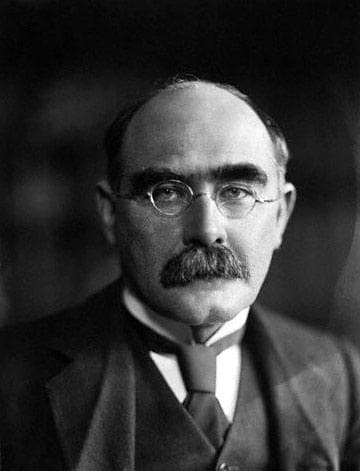
Joseph Rudyard Kipling was an English novelist, short-story writer, poet, and journalist. He was born in British India, which inspired much of his work.
Similar books
- Watership Down
Richard Adams
4.1 (434k) average on GoodreadsFantasyFeatures anthropomorphic animals and explores themes of survival and community.
- Tarzan of the Apes
Edgar Rice Burroughs
3.9 (39k) average on GoodreadsFantasyWhile both The Jungle Book and Tarzan of the Apes feature a human raised by animals in a wild setting, Kipling's work is arguably more nuanced in its exploration of law and community. Burroughs' Tarzan often embodies a more romanticized and less conflicted 'noble savage' trope, with less emphasis on a structured animal society or the deep psychological struggle of belonging. Kipling's 'Law of the Jungle' provides a moral and social framework largely absent in Tarzan's more individualistic existence, making The Jungle Book a more complex study of socio-cultural integration and rejection. Moreover, Burroughs' colonial undertones are often more overt and less subtly woven into the narrative fabric than Kipling's.
- Harry Potter and the Sorcerer's Stone
J.K. Rowling
4.5 (7M) average on GoodreadsFantasyRescued from a miserable life under the stairs, an orphaned boy discovers he's a wizard destined for a magical school, where he uncovers a dangerous secret tied to the dark wizard who murdered his parents.
- The Hunger Games
Suzanne Collins
4.3 (6.4M) average on GoodreadsFantasyIn a future where children fight to the death on live television, Katniss Everdeen volunteers for the arena, turning a death sentence into a fight for survival and a spark of rebellion.
- 1984
George Orwell
4.2 (3.1M) average on GoodreadsPoliticsIn a future where surveillance and thought control are absolute, a man's search for truth clashes with the Party, showing that hope can be a form of rebellion.
- Divergent
Veronica Roth
4.2 (2.9M) average on GoodreadsFantasyIn a society divided by virtues, a sixteen-year-old's difference from the norm starts a rebellion that threatens her world.





Enjoyed the summary?
A summary gives you the shape of the book. The book itself has the detail, the examples and the voice.
Find The Jungle Book on AmazonAs an Amazon Associate, BookBrief earns from qualifying purchases. How we're funded