
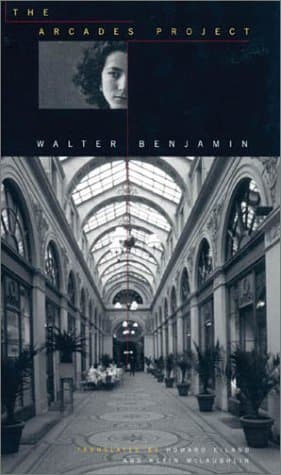
Core Idea
- Difficulty
- Hard
- Read it if
- You are a serious scholar of critical theory, urban studies, philosophy, or literary criticism and are prepared for a challenging, non-linear engagement with one of the 20th century's most influential thinkers. Essential for understanding Benjamin's unique methodology and his profound insights into modernity, capitalism, and history.
- Skip it if
- You are looking for a conventional, narrative-driven history book, an easy introduction to Benjamin's thought, or a quick read. This book is dense, fragmented, and demands significant intellectual effort and patience.
Key Takeaways from The Arcades Project
The Ruin as Revelation
Unfinished fragments can reveal more profound truths than polished complete works.
Benjamin's Arcades Project shows this idea. It is a massive, intentionally fragmented work, a 'monumental ruin' that uses incompleteness as its form. He believed that the smooth, linear stories of traditional history and philosophy often hide more than they show, giving a false sense of order. In contrast, the fragment, the montage, and the collection of different observations allow for a more honest look at the messy, conflicting reality of experience and history. The real insights often lie between the fragments, in the reader's active putting together of ideas, rather than in a set conclusion from the author. This anti-system approach questions the very idea of a 'finished' understanding.
“To great writers, finished works weigh lighter than those fragments on which they labor their entire lives.”
In the book: The entire structure of *The Arcades Project*, a collection of thousands of notes, quotations, and reflections categorized into thirty-six rubrics like 'Fashion,' 'Boredom,' and 'Dream City,' rather than a continuous narrative.
Try this: Embrace the process of exploration and research as valuable in itself, even if it doesn't lead to a perfectly polished product. Allow for ambiguity and contradiction in your understanding of complex subjects, as these often hold deeper truths than simplistic narratives. Value the 'behind-the-scenes' work as much as the final output.
Related ideas: fragmentation, anti-systemic-thought, process-over-product
The Commodity as Historical Lens
Consumer goods and commercial spaces are crucial sites for understanding the commodification of modern life and history.
Benjamin argues that turning things into commodities is not just an economic process but a deep cultural and historical one. The Parisian arcades, with their bright displays of goods, were not just stores but stages where the dreams, desires, and worries of 19th-century middle-class society played out. By carefully looking at how objects were made, shown, and bought, Benjamin reveals the hidden beliefs and power structures within everyday life. He sees the commodity as a 'petrified dream,' a frozen image of shared fantasy and historical change, letting us understand history not through grand stories but through the seemingly ordinary objects of consumer culture.
“His central preoccupation is what he calls the commodification of things—a process in which he locates the decisive shift to the modern age.”
In the book: Benjamin's extensive analysis of specific commodities within the arcades, from fashion items and advertisements to architectural elements, demonstrating how these 'things' reflect and shape the consciousness of an era.
Try this: Pay critical attention to the objects you consume and the spaces you inhabit. Consider what stories they tell about your society, your values, and your historical moment. Practice 'reading' advertisements and product designs for their underlying cultural messages, not just their surface appeal.
Related ideas: commodified-culture, material-culture-studies, consumerism-critique
Unmasking 'Progress'
The dominant narrative of historical progress is an ideological construct that suppresses alternative histories.
Benjamin was very doubtful of the 19th-century middle-class idea of steady, unavoidable progress. He saw it as a dangerous belief that excused social inequalities and hid the repeating, cyclical, and often disastrous parts of history. For Benjamin, 'progress' was a capitalist myth meant to keep things as they were. His project aimed to 'blast open' this continuous view of history, revealing the 'true history' of the oppressed, the forgotten, and the marginalized that lies beneath the triumphant stories. He wanted to wake society from the 'dream-sleep' caused by this false awareness, recognizing that the past is not dead but actively shapes the present.
“The Arcades Project is Benjamin's effort to represent and to critique the bourgeois experience of nineteenth-century history, and, in so doing, to liberate the suppressed 'true history' that underlay the ideological mask.”
In the book: Benjamin's 'Theory of Progress' rubric, where he dissects the philosophical underpinnings and societal implications of this concept, contrasting it with his own dialectical understanding of history.
Try this: Question dominant narratives of history and societal advancement. Seek out marginalized voices and alternative perspectives to understand how history is constructed and what agendas it might serve. Recognize that 'progress' can often be a euphemism for capitalist expansion or technological advancement that doesn't necessarily benefit all.
Related ideas: critique-of-progress, historical-materialism, ideology-critique
The Dream City
Modern cities, particularly their commercial spaces, function as collective dreamscapes, both alluring and deceptive.
For Benjamin, 19th-century Paris, especially its arcades, was a 'dream city' where the lines between reality and fantasy blurred. These places were designed to charm, to create desire, and to offer an escape from daily life. However, this dream state was also a kind of shared sleep, a distraction from the harsh realities of capitalist exploitation. The city, through its buildings, advertisements, and goods, shows a collective unconscious, a 'wish-image' of society's desires and its unresolved conflicts. Understanding the city as a dream allows us to see its structures and displays as symbols of deeper societal tensions and hopes, revealing its hidden truths.
“In the bustling, cluttered arcades, street and interior merge and historical time is broken up into kaleidoscopic distractions and displays of ephemera.”
In the book: The rubric 'Dream City' where Benjamin explores the psychological and sociological dimensions of urban architecture and commercial displays, seeing them as manifestations of collective unconscious desires and anxieties.
Try this: Analyze urban environments as psychological landscapes. Consider how architecture, public spaces, and commercial districts influence your mood, desires, and sense of reality. Be aware of how cities are designed to create specific emotional responses and consumption patterns.
Related ideas: urban-studies, collective-unconscious, psychogeography
The Flâneur's Gaze
The detached, observant stroller offers a unique perspective for critiquing modern urban life.
The flâneur, the relaxed, watchful wanderer of the Parisian streets and arcades, is a key figure in Benjamin's project. This person shows a particular way of seeing and understanding the modern city. Unlike the busy worker or the focused shopper, the flâneur moves with a casual detachment, allowing for chance encounters and a critical look at city life. This detached view lets the flâneur see the hidden connections, the layers of history, and the underlying social dynamics that are invisible to those caught in the fast pace of modern life. It is a way of 'reading' the city as a text, uncovering its forgotten stories and contradictions.
“The street and the interior merge... Here, at a distance from what is normally meant by 'progress,' Benjamin finds the lost time(s) embedded in the spaces of things.”
In the book: Benjamin's extensive reflections on the figure of the flâneur, particularly in relation to Baudelaire's poetry and the anonymity and spectacle of the modern city.
Try this: Practice mindful walking and observation in your own city. Take time to simply wander without a specific destination, paying attention to details, people, and the interplay of public and private spaces. Cultivate a 'flâneur's eye' to notice the overlooked and the revealing aspects of your environment.
Related ideas: flânerie, urban-observation, critical-seeing
The Authority of Montage
Juxtaposition and fragmentation can create new meanings and disrupt conventional understanding.
Benjamin's method in The Arcades Project is mainly montage. He connects different fragments—quotes, observations, historical facts, philosophical thoughts—without clear transitions or an overall story. This technique is not random; it is a deliberate plan to resist linear thinking and to force unexpected connections. By putting seemingly unrelated items side-by-side, Benjamin aims to create 'dialectical images'—sudden flashes of understanding that show the conflicting nature of historical events. The meaning comes from the tension and interaction between the fragments, rather than from a single author's voice. This challenges the reader to actively help build meaning, reflecting the complexity of modern experience.
“Benjamin presents a montage of quotations from, and reflections on, hundreds of published sources, arranging them in thirty-six categories...”
In the book: The very form of *The Arcades Project*, a colossal collection of categorized but often non-sequential notes and quotations, functioning as a literary collage.
Try this: Experiment with juxtaposing different ideas, images, or texts to generate new insights. Don't be afraid to break down complex subjects into their constituent parts and then reassemble them in novel ways. Recognize that meaning can arise from the gaps and tensions between elements, not just their smooth integration.
Related ideas: montage-technique, dialectical-image, non-linear-thinking
Photography as Historical Witness
Photography captures the ephemeral and reveals the forgotten aspects of history.
Benjamin saw photography as a groundbreaking medium, not just for its ability to copy reality, but for its power to show the 'optical unconscious'—details and parts of the world that the naked eye misses. In the context of the arcades, photographs captured the changing fashions, the forgotten faces, and the evolving city, preserving moments that would otherwise disappear. He believed that photographs, especially early ones, had an 'aura' that linked them to their historical moment, offering a unique way to access the past. While also acknowledging photography's role in making things into commodities and spectacles, Benjamin valued its potential as a critical historical document, stopping time for a closer look at its contents.
“His central preoccupation is what he calls the commodification of things—a process in which he locates the decisive shift to the modern age.”
In the book: The rubric 'Photography' where Benjamin delves into the history and theory of photography, discussing its impact on perception, art, and historical memory, often referencing early photographic processes and portraits.
Try this: Approach photographs, especially historical ones, not just as simple records but as complex historical artifacts. Look beyond the obvious subject to the background details, the expressions, and the overall composition for clues about the time and culture they represent. Consider how photography shapes our memory and understanding of events.
Related ideas: photography-theory, aura-of-art, historical-memory
Boredom's Revelation
Boredom, often dismissed, can be a fertile ground for critical insight and historical awareness.
Benjamin gives a significant section to 'Boredom,' raising it from just a negative state to a potentially important one. In a society increasingly driven by distractions and buying, boredom can be a rare chance for self-reflection and a resistance to the constant demands of capitalist display. For Benjamin, true boredom is not just doing nothing but a state of heightened awareness, a slow, deep breath that lets one see the true nature of time and the subtle details of existence. In this state, the 'aura' of things might show itself, and the repetitive, cyclical nature of history becomes clear, breaking the illusion of linear progress. This is where the flâneur gains his critical edge, by letting the city unfold without an immediate goal.
“The Arcades Project (in German, Das Passagen-Werk) is a monumental ruin, meticulously constructed over the course of thirteen years—'the theater,' as Benjamin called it, 'of all my struggles and all my ideas.'”
In the book: The detailed 'Boredom' rubric, where Benjamin explores the psychological and social dimensions of boredom in 19th-century urban life, linking it to the experience of time and the perception of the new.
Try this: Allow for moments of genuine boredom in your daily life, resisting the urge to constantly fill every moment with stimulation. Use these periods for reflection, observation, or simply allowing your mind to wander. Recognize that profound insights can emerge from these quiet, unstimulated states, offering a counterpoint to the always-on culture.
Related ideas: philosophy-of-boredom, mindful-living, anti-distraction
The Ephemeral and the Eternal
Understanding history requires recognizing the interplay between fleeting trends and enduring structures.
The arcades were places of the temporary—fashion, advertisements, passing trends. Yet, for Benjamin, these short-lived events were not merely superficial. They were precisely where deeper, more lasting historical forces and structures revealed themselves. He looked for 'the lost time(s) embedded in the spaces of things,' suggesting that the seemingly unimportant objects and experiences of the present contain echoes of the past and hints of the future. By carefully analyzing the temporary, Benjamin aims to uncover the 'ur-phenomena' of modern life, the underlying patterns that continue despite constant change. This back-and-forth between the fleeting and the fundamental is important for a detailed understanding of history.
“In the bustling, cluttered arcades, street and interior merge and historical time is broken up into kaleidoscopic distractions and displays of ephemera. Here, at a distance from what is normally meant by 'progress,' Benjamin finds the lost time(s) embedded in the spaces of things.”
In the book: Benjamin's detailed examination of specific fashion trends, advertising campaigns, and architectural details within the arcades, showing how these transient elements reveal deeper societal shifts and psychological states.
Try this: Don't dismiss contemporary trends or popular culture as merely superficial. Analyze them for what they reveal about current societal values, anxieties, and aspirations. Look for recurring patterns and underlying structures that connect present-day ephemera to historical precedents and future possibilities.
Related ideas: ephemerality, historical-continuity, cultural-analysis
The Arcades Project Quotes
“The collector is the true inhabitant of the arcades.”
“To discover the new in the old, that is the essence of my endeavor.”
“Fashion is the eternal recurrence of the new.”
“The street is the dwelling place of the collective.”
“History is in every respect a construction.”
“Not to find one's way in a city is nothing to be ashamed of. Not to find one's way in a city, however, takes some training.”
“The dream of the nineteenth century was to be rid of the past.”
“Architecture, fashion, and advertising are the three forms in which the phantasmagoria of the new urban landscape manifests itself.”
“The true picture of the past flits by. The past can be seized only as an image which flashes up at the instant when it can be recognized and is never seen again.”
“The commodity is a fetish, the commodity is a dream object.”
“To write history means to cite history.”
“The new is a quality of fashion, and fashion is a quality of the commodity.”
“The arcades are a world in miniature.”
“The work has to construct itself from the most minute elements.”
“The phantasmagoria of capitalist culture is nowhere more at home than in the department store.”
Quiz
10 questions on the main ideas. Each answer comes with a short explanation.
Question 1
Which specific architectural features of 19th-century Paris serve as the central subject and organizing principle for Benjamin's 'The Arcades Project'?
- The grand boulevards designed by Haussmann
- The glass-roofed rows of shops known as arcades
- The hidden catacombs beneath the city
- The newly constructed railway stations
Show answer
B. The glass-roofed rows of shops known as arcades The text explicitly states that Benjamin focuses on 'the arcades of nineteenth-century Paris—glass-roofed rows of shops that were early centers of consumerism.'
Question 2
What term does Benjamin use to describe the central process he is preoccupied with, which he locates as the decisive shift to the modern age?
- The industrial revolution
- The rise of mass media
- The commodification of things
- The urbanization of society
Show answer
C. The commodification of things The provided text states, 'His central preoccupation is what he calls the commodification of things—a process in which he locates the decisive shift to the modern age.'
Question 3
How did Benjamin construct 'The Arcades Project' in terms of its textual form and content?
- As a continuous narrative essay detailing his personal experiences in Paris.
- As a montage of quotations from and reflections on hundreds of published sources.
- As a fictionalized account of characters living in the Parisian arcades.
- As a historical monograph based solely on archival documents.
Show answer
B. As a montage of quotations from and reflections on hundreds of published sources. The text describes the project as 'a montage of quotations from, and reflections on, hundreds of published sources.'
Question 4
Which of the following best describes Benjamin's overarching goal in 'The Arcades Project' regarding history?
- To celebrate the linear progression of 19th-century innovation and societal improvement.
- To document the economic history of Parisian consumerism through empirical data.
- To critique the bourgeois experience of history and liberate a suppressed 'true history'.
- To provide a nostalgic account of the beauty and charm of old Paris.
Show answer
C. To critique the bourgeois experience of history and liberate a suppressed 'true history'. The text states, 'The Arcades Project is Benjamin's effort to represent and to critique the bourgeois experience of nineteenth-century history, and, in so doing, to liberate the suppressed 'true history' that underlay the ideological mask.'
Question 5
Benjamin arranged his collected fragments and reflections into how many distinct categories, each with descriptive rubrics?
- Twelve categories
- Eighteen categories
- Thirty-six categories
- Fifty categories
Show answer
C. Thirty-six categories The description specifies that Benjamin arranged them 'in thirty-six categories with descriptive rubrics'.
Question 6
Benjamin described 'The Arcades Project' as 'the theater of all my struggles and all my ideas.' This suggests the project was not merely an academic exercise but also what to him?
- A lucrative publishing venture to support himself during his exile.
- A deeply personal and intellectually formative undertaking.
- A collaborative effort with other contemporary Parisian intellectuals.
- A political manifesto intended to incite revolution.
Show answer
B. A deeply personal and intellectually formative undertaking. The phrase 'theater of all my struggles and all my ideas' implies a profound personal engagement and intellectual wrestling, making it a deeply formative project for Benjamin.
Question 7
In the context of the arcades, Benjamin suggests that 'historical time is broken up into kaleidoscopic distractions and displays of ephemera.' What implication does this have for understanding his approach to 'progress'?
- He views progress as an inevitable and positive force, even in fragmented forms.
- He sees the arcades as a symbol of progress due to their innovative construction.
- He finds 'lost time(s) embedded in the spaces of things,' suggesting a critical distance from conventional notions of progress.
- He believes that distractions in the arcades are essential for true historical understanding.
Show answer
C. He finds 'lost time(s) embedded in the spaces of things,' suggesting a critical distance from conventional notions of progress. The text states, 'Here, at a distance from what is normally meant by 'progress,' Benjamin finds the lost time(s) embedded in the spaces of things.' This directly links the fragmentation of time in the arcades to his critical stance on 'progress.'
Question 8
What is the significance of the project being described as a 'monumental ruin'?
- It literally refers to the dilapidated state of the Parisian arcades at the time Benjamin was writing.
- It highlights the fact that the project was never formally completed due to historical circumstances, yet remains vast and impactful.
- It implies that Benjamin intended the project to be a critique of architectural decay and urban neglect.
- It suggests that Benjamin deliberately structured the work to be disorganized and chaotic.
Show answer
B. It highlights the fact that the project was never formally completed due to historical circumstances, yet remains vast and impactful. The text explains the project 'is a monumental ruin, meticulously constructed over the course of thirteen years—and still in progress when Benjamin fled the Occupation in 1940.' This points to its unfinished, yet vast and significant, nature.
Question 9
Benjamin's method of presenting a 'montage of quotations from, and reflections on, hundreds of published sources' serves what primary theoretical purpose?
- To demonstrate his extensive scholarship by cataloging all relevant 19th-century texts.
- To create a fragmented, non-linear representation of history that resists conventional narrative coherence.
- To allow readers to draw their own conclusions without any authorial intervention.
- To provide a comprehensive, encyclopedic overview of Parisian cultural life.
Show answer
B. To create a fragmented, non-linear representation of history that resists conventional narrative coherence. The montage technique, especially given his goal to 'liberate the suppressed 'true history'' and his critique of 'progress,' suggests a deliberate effort to break from conventional historical narratives and offer a fragmented, multi-faceted perspective on the past, allowing hidden connections and meanings to emerge.
Question 10
The quote 'To great writers... finished works weigh lighter than those fragments on which they labor their entire lives' provides insight into Benjamin's own perception of 'The Arcades Project' because:
- It implies he considered the project a minor work compared to his other completed essays.
- It highlights his belief that the ongoing process of intellectual labor on a complex, evolving project is more significant than a finalized, polished product.
- It suggests he viewed the 'fragments' as mere preparatory notes, not intended for publication.
- It expresses his frustration that he was unable to complete the work before his death.
Show answer
B. It highlights his belief that the ongoing process of intellectual labor on a complex, evolving project is more significant than a finalized, polished product. The quote, placed at the beginning of the description of a project he labored on for thirteen years and left unfinished, directly frames 'The Arcades Project' as a work where the 'fragments' and the ongoing intellectual 'labor' were paramount, aligning with the idea that the process itself held more weight than a 'finished' product.
The Arcades Project FAQ
What is The Arcades Project by Walter Benjamin about?
The Arcades Project is Walter Benjamin's unfinished magnum opus, a vast collection of reflections and quotations exploring 19th-century Parisian life, culture, and consumerism, particularly through its glass-roofed shopping arcades. It delves into themes like the commodification of things, the nature of modernity, and the hidden histories embedded within urban spaces.
Does The Arcades Project offer a straightforward historical narrative?
No, The Arcades Project does not present a conventional historical narrative. Instead, Benjamin employs a montage technique, assembling fragments, quotations, and reflections to create a kaleidoscopic, non-linear exploration of history, revealing the 'true history' suppressed by dominant ideologies.
What is 'the commodification of things' as discussed in the book?
The commodification of things, for Benjamin, refers to the process where objects increasingly acquire value based on their exchangeability and marketability rather than their intrinsic use or historical context. He identifies this shift as central to the emergence of the modern age and bourgeois experience.
How does The Arcades Project differ from typical academic historical studies?
Unlike traditional academic historical studies that often present linear arguments and conclusions, The Arcades Project is an experimental, fragmentary work. It prioritizes montage, juxtaposition, and critical theory over conventional narrative, inviting readers to engage with its material in a more open-ended and interpretive way.
What role do the Parisian arcades play in Benjamin's work?
The Parisian arcades serve as the central metaphor and physical site for Benjamin's investigation. These glass-roofed passages, early centers of consumerism, symbolize the merging of street and interior, historical time broken into ephemera, and the spaces where modernity's contradictions are most visible.
Is The Arcades Project a difficult book to read?
Yes, The Arcades Project is generally considered a challenging read due to its unfinished nature, non-linear structure, dense theoretical content, and extensive use of quotations and fragments. It demands active engagement and patience from the reader.
What is the significance of the book being an 'unfinished' work?
The unfinished nature of The Arcades Project is integral to its meaning, reflecting Benjamin's belief that 'finished works weigh lighter than those fragments on which they labor their entire lives.' It embodies the ongoing process of thought and critique, a monumental ruin that resists definitive closure.
Does The Arcades Project offer insights into contemporary consumer culture?
Absolutely. While focused on 19th-century Paris, Benjamin's analysis of commodification, spectacle, advertising, and the psychological effects of urban consumerism offers profound and enduring insights that remain highly relevant for understanding contemporary consumer culture and its impact.
Who would enjoy reading The Arcades Project?
This book appeals to readers interested in critical theory, philosophy, cultural studies, urban history, and literary experimentation. Scholars and students of Walter Benjamin, critical theory, and 19th-century European culture will find it particularly rewarding.
About the author
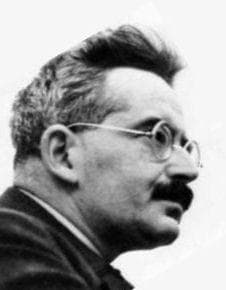
Walter Benjamin was a German-Jewish philosopher and cultural critic active in the early 20th century. He is best known for his work "The Arcades Project," which explores the relationship between modernity and urban life through the lens of Parisian arcades. His writings often delve into aesthetics, history, and the impact of technology on culture.
Similar books
- The Diary of a Young Girl
Anne Frank
4.2 (2.7M) average on GoodreadsBiographyDuring the Nazi occupation, a teenage girl's diary, written from a secret annex, shares observations on humanity, hope, and the wait for freedom.
- Night
Elie Wiesel
4.3 (970k) average on GoodreadsBiographyIn the darkness of Auschwitz and Buchenwald, a teenage Elie Wiesel faces the extermination of his family, the loss of his faith, and the lasting scars of humanity's deepest cruelty.
- Steve Jobs
Walter Isaacson
4.1 (957k) average on GoodreadsBusinessSteve Jobs was a visionary who fused creativity and technology to revolutionize six industries and shape our digital world.
- Unbroken: A World War II Story of Survival, Resilience and Redemption
Laura Hillenbrand
4.4 (767k) average on GoodreadsBiographyLouis Zamperini's incredible World War II odyssey transforms him from a rebellious youth and Olympic runner into a survivor of a plane crash, shark-infested waters, and brutal Japanese POW camps, only to find redemption through forgiveness.
- The Immortal Life of Henrietta Lacks
Rebecca Skloot
4.1 (587k) average on GoodreadsBiographyA poor Southern tobacco farmer's unwitting contribution of 'immortal' cells starts a journey through scientific breakthroughs, medical ethics, and her family's decades-long fight for recognition and understanding.
- Angela's Ashes
Frank McCourt
4.1 (540k) average on GoodreadsBiographyIn Depression-era Limerick, young Frank McCourt navigates an impoverished Irish Catholic childhood, sustained by his father's captivating stories and his own spirit, turning hardship into a tale of resilience, humor, and ultimate forgiveness.






Enjoyed the summary?
A summary gives you the shape of the book. The book itself has the detail, the examples and the voice.
Find The Arcades Project on AmazonAs an Amazon Associate, BookBrief earns from qualifying purchases. How we're funded