

Core Idea
- Difficulty
- Medium
- Read it if
- You are a fan of Mark Twain's wit and satire and want an unfiltered, deeply personal, and often surprising insight into his mind and life, presented in a non-linear, conversational style. Also recommended for those interested in the craft of memoir and the complexities of memory.
- Skip it if
- You prefer a conventional, chronologically ordered biography, or find digressions and an author's unfiltered, sometimes curmudgeonly, opinions off-putting. Not for those seeking a straightforward historical account.
Key Takeaways from The Autobiography of Mark Twain
The Power of Posthumous Honesty
Unfiltered truth emerges when the author is unbound by contemporary judgment.
Twain's decision to publish his autobiography after his death was brilliant. It allowed him to express opinions, criticisms, and personal reflections without fear of immediate social or professional consequences. This freedom let him be remarkably candid about his contemporaries, his own failures, and the often-unvarnished truths of human nature. This approach gives the reader an intimate and often surprising look into the mind of a literary giant, free from the need to maintain a public image. It shows that true self-reflection often requires distance from present-day worries, making the work an interesting experiment in delayed self-revelation.
“I can speak of these things more freely because I am not alive to be hurt by them.”
In the book: Twain explicitly states his intention to be 'free and frank and unembarrassed' by having the work published after his death, allowing him to critique figures like President Theodore Roosevelt or express his changing views on religion without immediate backlash.
Try this: Consider how removing the pressure of immediate judgment might alter your own journaling or reflective writing. Practice writing about sensitive topics as if no one will read them for a century, allowing for greater honesty and depth.
Related ideas: posthumous-publication, unfiltered-truth, authorial-freedom
Memory's Whimsical Labyrinth
Twain's narrative jumps reflect the non-linear, associative nature of human recall.
Unlike typical autobiographies that follow a strict timeline, Twain's narrative is a delightful and sometimes frustrating wander through his memories. He jumps from his childhood in Hannibal to his time as a riverboat pilot, then to his later life as a celebrated author, often triggered by a seemingly random thought. This structure, initially confusing, ultimately gives a more authentic picture of how memory actually works – not as a straight line, but as a complex web of interconnected ideas, emotions, and images. It asks the reader to accept the unpredictable flow of consciousness rather than demanding a neatly organized historical account.
“My autobiography is not a history, but a ramble.”
In the book: The book's structure itself is the primary evidence, with Twain explicitly stating that he dictates whatever comes to mind, leading to frequent chronological leaps and thematic shifts between chapters.
Try this: When reflecting on your own life story, allow your mind to wander and make connections freely, rather than forcing a strict timeline. This can reveal unexpected insights and patterns.
Related ideas: non-linear-narrative, associative-memory, stream-of-consciousness
The Enduring Power of Place
Early landscapes deeply imprint the psyche and shape future perspectives.
Twain's autobiography clearly shows how his early environment, especially the Mississippi River and Hannibal, Missouri, shaped his views, his literary themes, and his identity. The river, in particular, becomes a character itself – a source of adventure, danger, beauty, and livelihood. These early experiences gave him a deep understanding of human nature, class differences, and the vastness of the American landscape, which he later put into his fiction. His descriptions are filled with a nostalgic yet realistic view, recognizing both the ideal and the harsh realities of his youth.
“My life was not complete until I had seen the Mississippi.”
In the book: His extensive recollections of his childhood in Hannibal, his apprenticeship as a riverboat pilot, and his detailed descriptions of the river's character and the people who lived along its banks.
Try this: Reflect on the places that most influenced your early life. How did they shape your values, interests, and understanding of the world? Consider revisiting or researching these places to gain new perspectives.
Related ideas: sense-of-place, formative-years, regionalism
The Comedy and Tragedy of Being Human
Life's deepest lessons are often revealed through a blend of humor and sorrow.
Twain skillfully blends humor and tragedy throughout his life story, reflecting his belief that these two elements are linked in human experience. His wit often helps him cope with deep loss and disappointment, from the deaths of his children and beloved wife to his own financial ruin. He uses satire and irony to critique society's flaws, but he also reveals his own vulnerabilities and moments of despair. This balance makes his autobiography incredibly relatable and emotionally moving. It shows that a full life includes both the absurd and the heartbreaking.
“The secret source of humor itself is not joy but sorrow. There is no humor in heaven.”
In the book: His humorous anecdotes about various figures are often juxtaposed with poignant reflections on personal loss, such as the death of his daughter Susy or his financial struggles with the Paige Compositor.
Try this: When facing difficult situations, try to find moments of levity or absurdity. Recognize that humor can be a powerful tool for processing grief and challenging the status quo, without diminishing the seriousness of the situation.
Related ideas: tragicomedy, satire, human-condition
The Illusion of Progress
Despite technological leaps, human nature's flaws remain stubbornly constant.
Living through a time of huge technological and societal change – from riverboats to railroads, and the expansion of the American West – Twain observes that while the external world changes, basic human characteristics like greed, prejudice, ambition, and folly remain. He critiques the 'Gilded Age' with a cynical eye, seeing beneath the surface of progress to the lasting flaws in human institutions and individual morality. His reflections suggest a deep skepticism about humanity's ability for true moral advancement, even as material conditions improve, making his observations feel remarkably current.
“History does not repeat itself, but it often rhymes.”
In the book: His scathing critiques of political corruption, religious hypocrisy, and the imperialist tendencies of his era, often drawing parallels to historical events.
Try this: When evaluating current events or societal changes, look beyond surface-level advancements. Consider how underlying human motivations and historical patterns might still be at play, despite new technologies or ideologies.
Related ideas: social-critique, human-nature, historical-cycles
The Burden of Fame and Fortune
Success brings its own unique set of anxieties and disillusionments.
Twain's autobiography offers a look at the mixed blessing of celebrity and wealth. While fame brought him recognition and money, it also brought constant public scrutiny, endless demands on his time, and the pain of personal attacks. His experiences with financial speculation, especially the disastrous investment in the Paige Compositor, highlight the risks and often ruinous temptations that come with great success. He reveals a deep weariness with the public image he had to maintain, contrasting it with his desire for a simpler, more private life. It's a reminder that external achievements do not guarantee inner peace.
“To be famous is to be a target.”
In the book: His detailed accounts of his lecture tours, the constant stream of visitors and letters, and the significant financial losses incurred from failed investments, particularly the Paige Compositor.
Try this: Recognize that external markers of success often come with unforeseen pressures. Prioritize internal well-being and genuine connections over the pursuit of fame or unbridled wealth, understanding their potential costs.
Related ideas: celebrity-culture, financial-speculation, disillusionment
Mentorship and the Shaping of Self
Key figures in one's life leave indelible marks on personality and perspective.
Throughout his autobiography, Twain often acknowledges the influence of various people on his development. From the riverboat pilots who taught him the complex art of navigating the Mississippi to his wife, Olivia Langdon Clemens, who was his literary editor and moral guide, these relationships were fundamental. He details how these mentors and companions not only taught him practical skills but also shaped his character, refined his writing, and challenged his views. His reflections emphasize that identity is not solely self-created but is significantly shaped by the people we meet and the lessons they teach.
“Every man is a quotation from all his ancestors.”
In the book: His extensive praise and detailed anecdotes about his wife, Livy, and his former riverboat master, Horace Bixby, who taught him to 'read' the river.
Try this: Actively seek out mentors and diverse perspectives. Reflect on the people who have most influenced you and consciously identify the specific lessons or traits you gained from them. Express gratitude for these relationships.
Related ideas: mentorship, personal-development, interpersonal-influence
The Art of Storytelling as Truth-Telling
Even in an autobiography, the narrative voice crafts reality.
Twain, a master storyteller, brings the same flair and narrative skill to his autobiography as he did to his fiction. While he promises to be 'frank and unembarrassed,' his truth often comes through anecdotes, digressions, and a highly developed voice. He knows that simply recounting facts is not enough; the truth must be engaging, memorable, and impactful. This means that even in his most candid moments, there is an element of performance, a conscious shaping of his own legend. It reminds us that all personal narratives, even those aiming for complete honesty, are ultimately constructed and interpreted through memory and authorial intent.
“Truth is the most valuable thing we have. Let us economize it.”
In the book: His use of vivid character sketches, dramatic retellings of events, and his characteristic wit and hyperbole, even when discussing serious topics like his personal losses or financial woes.
Try this: When sharing your own stories or experiences, consider not just the facts, but how you can make them compelling and resonant. Understand that the way you frame a narrative can profoundly impact its reception and meaning.
Related ideas: narrative-craft, authorial-voice, memoir-writing
The Evolving Self in Retrospect
One's identity is not static but continuously reinterpreted over time.
Twain's autobiography, written in his later years, reflects a man looking back on a long and varied life with the benefit of hindsight. He does not present one unchanging 'self,' but rather acknowledges the different versions of himself at various stages: the mischievous boy, the ambitious riverboat pilot, the struggling prospector, the celebrated author, the grieving father. His reflections show how past events and people shaped him, but also how his understanding and interpretation of those events changed over time. This dynamic view of self shows that identity is an ongoing process of construction and revision, not a fixed thing.
“A man's character is the sum of his experiences.”
In the book: His reflections on his younger, more naive self versus his later, more cynical or philosophical self, particularly concerning his views on religion, politics, and human nature.
Try this: Regularly engage in self-reflection and journaling to track your own personal growth and changing perspectives. Revisit past experiences with a new lens, understanding that your interpretation of them may evolve as you do.
Related ideas: self-reflection, identity-formation, personal-evolution
The Solace and Curse of Solitude
Periods of isolation can foster creativity but also deepen melancholy.
Throughout his life, Twain experienced periods of intense social engagement and equally intense isolation. His autobiography reveals how these solitary moments, whether self-imposed or forced by circumstances, often fueled his creative work and provided space for deep reflection. However, they also seem to have worsened his melancholic tendencies and his growing disappointment with humanity. He found comfort in his family and close friends, but as he aged and faced more personal losses, a sense of deep loneliness often runs through his later writings. This duality highlights the complex relationship between solitude, creativity, and emotional well-being.
“The more I see of men, the more I admire dogs.”
In the book: His detailed accounts of withdrawing to his study for writing, his travels alone, and his increasingly cynical observations about society in his later years, often following significant personal losses.
Try this: Balance periods of social connection with dedicated time for solitude and introspection. Recognize that while solitude can be a powerful tool for creativity and self-discovery, prolonged isolation without meaningful connection can be detrimental to mental health.
Related ideas: solitude, creativity, melancholy
The Autobiography of Mark Twain Quotes
“I have been interrupted, here, by a call to go to the funeral of a neighbor. I shall go. It is a thing which I always do, if I can. It is a thing which one's neighbors expect, and it is a thing which I am glad to do, for it is a compliment to the dead, and it is a comfort to the living.”
“When I was a boy of 14, my father was so ignorant I could hardly stand to have the old man around. But when I got to be 21, I was astonished at how much the old man had learned in seven years.”
“The very ink with which history is written is merely fluid prejudice.”
“I came in with Halley's Comet in 1835. It is coming again next year, and I expect to go out with it. It will be the greatest disappointment of my life if I don't go out with Halley's Comet. The Almighty has said, no doubt, 'Now here are these two unaccountable freaks; they came in together, they must go out together.'”
“Get your facts first, and then you can distort them as much as you please.”
“The human race has only one really effective weapon and that is laughter.”
“It is by the goodness of God that in our country we have three unspeakably precious things: freedom of speech, freedom of conscience, and the prudence never to practice either of them.”
“I am an old man and have known a great many troubles, but most of them never happened.”
“Loyalty to petrified opinion never yet broke a chain or freed a human soul.”
“Travel is fatal to prejudice, bigotry, and narrow-mindedness, and many of our people need it sorely on these accounts. Broad, wholesome, charitable views of men and things cannot be acquired by vegetating in one little corner of the earth all one's lifetime.”
“Man is the only animal that blushes. Or needs to.”
“The difference between the almost right word and the right word is really a large matter—'tis the difference between the lightning bug and the lightning.”
“I do not fear death. I had been dead for billions and billions of years before I was born, and had not suffered the slightest inconvenience from it.”
“Noise proves nothing. Often a hen who has merely laid an egg cackles as if she had laid an asteroid.”
Quiz
10 questions on the main ideas. Each answer comes with a short explanation.
Question 1
Mark Twain famously stated that in writing his autobiography, he intended to be 'free and frank and unembarrassed.' What was his primary motivation for adopting this approach, especially given he was writing it on his deathbed?
- To settle old scores and publicly denounce his literary rivals.
- To provide an unvarnished and unfiltered account of his life and experiences, free from conventional constraints.
- To ensure his autobiography would be controversial enough to guarantee high sales posthumously.
- To experiment with a new literary style that broke from traditional biographical norms.
Show answer
B. To provide an unvarnished and unfiltered account of his life and experiences, free from conventional constraints. The introduction highlights Twain's vow to be 'free and frank and unembarrassed' in recounting his life, implying a desire for an authentic and unconstrained narrative, especially as he was writing it on his deathbed.
Question 2
The introduction compares Mark Twain's autobiography to those of two other prominent American figures. Who are they?
- Ralph Waldo Emerson and Henry David Thoreau
- Walt Whitman and Emily Dickinson
- Benjamin Franklin and Henry Adams
- Frederick Douglass and Harriet Tubman
Show answer
C. Benjamin Franklin and Henry Adams According to the introduction by Charles Neider, Twain's autobiography is 'to be ranked with the autobiographies of Benjamin Franklin and Henry Adams.'
Question 3
What aspects of American life during Twain's time are mentioned as providing material and inspiration for both his novels and his autobiography?
- The Civil Rights Movement and the Jazz Age.
- The Industrial Revolution and the rise of organized labor.
- Riverboats, gold rushes, and the vast westward movement.
- The Abolitionist Movement and the Women's Suffrage Movement.
Show answer
C. Riverboats, gold rushes, and the vast westward movement. The text states that 'the expanding America of riverboats, gold rushes, and the vast westward movement, which provided the material for his novels and which served to inspire this beloved and uniquely American autobiography.'
Question 4
Charles Neider's introduction describes Twain as 'larger than life.' Which of the following characteristics does Neider NOT use to support this description?
- Massive in talent
- Eruptive in temperament
- Predictable in his actions
- Unpredictable in his actions
Show answer
C. Predictable in his actions Neider describes Twain as 'massive in talent, eruptive in temperament, unpredictable in his actions.' The opposite, 'predictable in his actions,' is not used.
Question 5
The introduction notes that Twain crafted stories reflecting the 'changing America of the time.' How does his autobiography likely mirror this aspect of his fiction?
- By focusing exclusively on personal anecdotes without broader social commentary.
- By providing a static, unchanging view of American society.
- By intertwining his personal narrative with observations and experiences of the evolving American landscape and culture.
- By strictly adhering to historical facts without any personal interpretation.
Show answer
C. By intertwining his personal narrative with observations and experiences of the evolving American landscape and culture. Given that his fiction reflected 'changing America' and his life spanned periods of 'riverboats, gold rushes, and the vast westward movement,' it's logical that his autobiography would connect his personal story to these broader societal transformations.
Question 6
How does Twain's approach to writing his autobiography, particularly his vow to be 'free and frank,' differentiate it from more conventional biographical works?
- It implies a greater reliance on external historical documents rather than personal memory.
- It suggests a willingness to reveal uncomfortable truths and personal flaws without censorship or self-consciousness.
- It indicates a more formal, academic tone suitable for historical record.
- It means he would only include stories that cast him in a positive light.
Show answer
B. It suggests a willingness to reveal uncomfortable truths and personal flaws without censorship or self-consciousness. To be 'free and frank and unembarrassed' suggests a departure from common biographical reticence, allowing for a more unfiltered, honest, and potentially revealing account of his life, including aspects others might omit.
Question 7
The introduction mentions that Twain's autobiography includes 'sixteen pages of photos.' While the text doesn't explicitly state their purpose, what is the most probable reason for their inclusion in a memoir of this nature?
- To provide visual evidence for every claim made in the text, acting as primary source documentation.
- To add a visual dimension to his narrative, illustrating key people, places, or moments from his life and the era.
- To serve as artistic embellishments that are unrelated to the text's content.
- To fill pages and increase the book's overall length.
Show answer
B. To add a visual dimension to his narrative, illustrating key people, places, or moments from his life and the era. In a memoir, especially one from a prominent public figure documenting a changing era, photographs typically serve to enhance the narrative by visually depicting the people, places, and events discussed in the text, adding authenticity and depth.
Question 8
Given the description of Twain's temperament as 'eruptive' and his actions as 'unpredictable,' how might these personal traits influence the narrative structure or tone of his autobiography?
- They would likely lead to a rigidly chronological and highly formal narrative style.
- They might contribute to a digressive, anecdotal, and perhaps emotionally charged storytelling approach, reflecting his personality.
- They would necessitate a third-person narrative to maintain objectivity.
- They would result in a muted and understated recounting of events.
Show answer
B. They might contribute to a digressive, anecdotal, and perhaps emotionally charged storytelling approach, reflecting his personality. An 'eruptive temperament' and 'unpredictable actions' suggest a dynamic, perhaps less conventional personality. This would likely translate into a narrative style that is similarly dynamic, possibly less linear, and more prone to emotional expression and anecdotal detours, mirroring his own nature.
Question 9
The introduction states that Twain brought the 'same flair he brought to his fiction' to his own story. What specific elements of his fiction's 'flair' would most likely be evident in his autobiography based on the provided text?
- An exclusive focus on the inner psychological states of characters without external action.
- A blend of humor, tragedy, adventure, and vivid storytelling, reflecting his fictional themes and style.
- Strict adherence to academic historical analysis, devoid of personal voice.
- A detached, objective perspective that avoids personal opinions or emotions.
Show answer
B. A blend of humor, tragedy, adventure, and vivid storytelling, reflecting his fictional themes and style. The text explicitly states Twain 'crafted stories of heroism, adventure, tragedy, and comedy' and tells his own story with the 'same flair.' This suggests his autobiography would similarly incorporate these narrative elements and emotional range.
Question 10
Considering the context that Twain wrote this autobiography on his deathbed and vowed to be 'free and frank and unembarrassed,' what might be the profound implication of this timing on the work's overall tone and content?
- It suggests a cautious, retrospective assessment, focused primarily on legacy management.
- It implies a heightened sense of urgency and a final opportunity to speak his mind without fear of immediate social or professional repercussions.
- It would likely lead to a highly embellished and fictionalized account, detached from reality.
- It would result in a brief, unreflective summary of his life due to his declining health.
Show answer
B. It implies a heightened sense of urgency and a final opportunity to speak his mind without fear of immediate social or professional repercussions. Writing on one's deathbed, combined with a vow to be 'free and frank,' strongly implies a final, uninhibited declaration, freed from the concerns of public opinion or career consequences that might influence earlier autobiographical attempts.
The Autobiography of Mark Twain FAQ
What makes Mark Twain's autobiography unique compared to others?
Mark Twain's autobiography is unique due to its unconventional structure, dictated in a non-linear fashion over many years, and his vow to be 'free and frank and unembarrassed,' offering candid opinions and observations rather than a strict chronological narrative.
Does 'The Autobiography of Mark Twain' provide a complete chronological account of his life?
No, the autobiography does not offer a complete chronological account. Twain dictated it in a non-linear fashion, often jumping between memories and current thoughts, reflecting his belief that a more natural flow of consciousness would be more authentic.
What is the significance of Mark Twain writing this autobiography on his deathbed?
Writing on his deathbed allowed Twain to speak with an unparalleled candor and freedom, unconcerned with immediate public opinion. This context contributes to the book's 'free and frank' nature, providing a deeply personal and reflective look at his life and the world around him.
How does 'The Autobiography of Mark Twain' differ from a typical biography written by another author?
Unlike a typical biography, which is a third-person account, Twain's autobiography is a first-person narrative, offering his direct voice, unfiltered opinions, and personal reflections on events and people. It provides an intimate look into his mind rather than an objective historical recounting.
What kind of historical insights can readers gain from 'The Autobiography of Mark Twain'?
Readers can gain insights into 19th-century American life, including experiences with riverboats, gold rushes, westward expansion, and the social and cultural changes of the era. Twain's observations offer a vivid firsthand perspective on a transformative period in American history.
Does 'The Autobiography of Mark Twain' feature his characteristic humor and wit?
Absolutely. Twain brings the same flair, humor, and sharp wit that characterize his fiction to his autobiography. Readers will find abundant examples of his satirical observations, comedic timing, and profound insights mixed with laughter.
How does the book's style compare to Twain's fictional works like 'Huckleberry Finn'?
While sharing Twain's distinctive voice and wit, the autobiography's style is more reflective and discursive than his novels. It maintains his narrative charm but trades the structured plot of fiction for a stream-of-consciousness exploration of memory, opinion, and personal history.
Are the sixteen pages of photos in the book significant?
Yes, the sixteen pages of photos are significant as they offer visual context to Twain's life and the people and places he describes. They provide a tangible connection to the historical period and personal experiences detailed in the text, enhancing the reader's immersion.
About the author
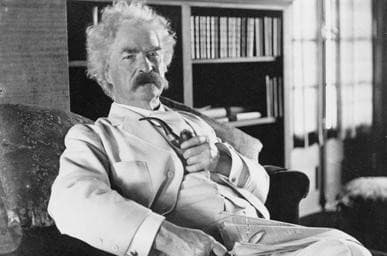
Samuel Langhorne Clemens, best known by his pen name Mark Twain, was an American writer, humorist, entrepreneur, publisher, and lecturer. He was praised as the "greatest humorist the United States has produced", and William Faulkner called him "the father of American literature". His novels include The Adventures of Tom Sawyer (1876) and its sequel, Adventures of Huckleberry Finn (1884), the latter of which has often been called the "Great American Novel". Twain also wrote A Connecticut Yankee in King Arthur's Court (1889) and Pudd'nhead Wilson (1894), and co-wrote The Gilded Age: A Tale of Today (1873) with Charles Dudley Warner.
Similar books
- Walden
Henry David Thoreau
3.8 (158k) average on GoodreadsBiographyBoth offer deeply personal reflections on life, society, and the human condition, written with distinct authorial voices and philosophical undertones.
- The Education of Henry Adams
Henry Adams
3.6 (3k) average on GoodreadsPoliticsAdams's autobiography is highly structured, intellectually rigorous, and presents a carefully curated argument about his intellectual development and the failures of his education in a rapidly changing world. Twain's Autobiography is far less formal, embracing digression and the chaotic flow of memory, offering a more anecdotal and less overtly didactic self-portrait. While Adams seeks to understand the forces shaping an era through his own experience, Twain often revels in the absurdity of human experience itself.
- The Diary of a Young Girl
Anne Frank
4.2 (2.7M) average on GoodreadsBiographyDuring the Nazi occupation, a teenage girl's diary, written from a secret annex, shares observations on humanity, hope, and the wait for freedom.
- Eat, Pray, Love
Elizabeth Gilbert
3.6 (1.5M) average on GoodreadsLifestyleA heartbroken writer leaves her conventional life for a year-long global search for pleasure in Italy, spiritual devotion in India, and unexpected love and balance in Bali.
- Night
Elie Wiesel
4.3 (970k) average on GoodreadsBiographyIn the darkness of Auschwitz and Buchenwald, a teenage Elie Wiesel faces the extermination of his family, the loss of his faith, and the lasting scars of humanity's deepest cruelty.
- Steve Jobs
Walter Isaacson
4.1 (957k) average on GoodreadsBusinessSteve Jobs was a visionary who fused creativity and technology to revolutionize six industries and shape our digital world.






Enjoyed the summary?
A summary gives you the shape of the book. The book itself has the detail, the examples and the voice.
Find The Autobiography of Mark Twain on AmazonAs an Amazon Associate, BookBrief earns from qualifying purchases. How we're funded