

Synopsis
Covers the whole plot, including the ending.
- Difficulty
- Hard
- Pacing
- Slow
- Mood
- Atmospheric, Labyrinthine, Oppressive, Surreal, Melancholy
- Read it if
- You enjoy experimental narrative structures, rich, dense prose, and exploring the psychological depths of power and corruption through the lens of magical realism.
- Skip it if
- You prefer straightforward plots, fast pacing, or find stream-of-consciousness narratives and lack of clear paragraph breaks challenging.
The Autumn of the Patriarch Plot Summary
Covers the whole plot, including the ending.
The Discovery of the Patriarch's Death
The novel begins with the collective discovery of the Patriarch's death. After years of rumors and false reports, the people finally gather the courage to enter the dilapidated presidential palace, a sprawling, decaying structure overrun by cattle and plants. They move through the filth and neglect, guided by the smell of death, until they find the General's body. He is a huge, ancient figure, lying face down in a pool of his own waste, his body ravaged by vultures. This discovery ends an era, freeing the nation from decades of his absolute, often surreal, rule, and setting the stage for the story's exploration of his life and legacy.
A Life of Isolation and Paranoia
The story then explores the Patriarch's origins, showing him as a man of humble birth, possibly illegitimate, who rose to power through sheer force and a talent for cruelty. He is shown as an intensely lonely figure, isolated in his immense palace, surrounded by flatterers and spies. His paranoia is legendary; he trusts no one, constantly fearing assassination and coups. This fear guides his every action, leading to elaborate security, constant changes in his sleeping quarters, and the ruthless elimination of perceived threats, often based on weak evidence or mere suspicion. His only true companion is Manuela Sánchez, a woman he obsesses over but can never truly have.
The Reign of Terror and Capriciousness
The Patriarch's rule is marked by extreme capriciousness and brutal repression. He governs through a mix of arbitrary decrees, public executions, and a bizarre, almost magical, form of authority. For example, he sells the Caribbean Sea to American businessmen, leading to its physical removal from the nation's coast. He has his closest confidant, General Rodrigo de Aguilar, served to him on a silver platter as a roasted human effigy, a gruesome display of his absolute power and distrust. His whims decide the nation's fate, from economic policies to the lives of individual citizens, creating widespread fear and uncertainty.
Bendición Alvarado: The Beloved Mother
One of the most important parts of the Patriarch's character is his relationship with his mother, Bendición Alvarado. She is the only person he truly loves and trusts, and her death deeply traumatizes him. He arranges an elaborate, almost divine, canonization process for her, proclaiming her a saint and forcing the Vatican to recognize her miracles, despite the Church's resistance. Her memory becomes a central part of his regime, a source of legitimacy and a constant reminder of a purer, perhaps more human, past. Her influence, even after her death, continues to shape his decisions and his internal world.
Letitia Nazareno: The Attempt at a Family Life
Driven by a desire for a legitimate heir and perhaps some normalcy, the Patriarch marries Letitia Nazareno, a beautiful former nun. Their marriage produces a son, and for a short time, the Patriarch experiences something like family life. However, this fragile happiness is brutally shattered. Letitia and their son are killed in a bomb attack by his enemies, a tragedy that pushes the Patriarch into deeper paranoia and despair. This event reinforces his isolation and further confirms his belief that love and intimacy are dangerous weaknesses in his world of power.
The Endless Succession of Doubles
Throughout his reign, the Patriarch often uses body doubles to protect himself from assassination attempts and to appear in multiple places at once. These doubles are carefully trained to mimic his mannerisms and voice. However, this practice blurs identity, not only for the doubles but also for the Patriarch himself. The constant fear and the use of stand-ins contribute to the widespread rumor that the Patriarch is immortal, or that there are many Patriarchs, further enhancing his mythical status while reducing his singular humanity. The death of a double is often reported as his own, adding to the confusion.
The Illusion of Power and Impotence
Despite his absolute power, the Patriarch is shown to be increasingly powerless against time and outside forces. He loses control of his own body, suffering from various ailments of old age. His memory fades, and his grip on reality weakens. Foreign powers, especially the United States, greatly influence his nation, often dictating policies and exploiting its resources, such as the infamous sale of the sea. This shows that even an absolute dictator is not entirely immune to history and external pressure, revealing the ultimate fragility of his seemingly unshakable authority.
The Nation's Decay
Under the Patriarch's decades-long rule, the nation itself falls into deep decay. The presidential palace, a small version of the country, becomes a ruin, overgrown and filled with livestock. Infrastructure crumbles, the economy stagnates, and the people live in constant fear and poverty. The moral fabric of society erodes from corruption, violence, and the suppression of dissent. The country is a wasteland, physically and spiritually, directly reflecting the Patriarch's internal desolation and the destructive nature of his unchecked power. The lingering smell of his reign is noticeable even after his death.
The Enduring Myth and the Final Death
The novel ends with the confirmation of the Patriarch's death, but with a lingering sense of uncertainty. The people celebrate, yet the story suggests that the cycle of tyranny may not be entirely broken. The Patriarch's myth, built on decades of fear, propaganda, and his seemingly endless life, continues to cast a long shadow. His physical death is real, but the psychological hold of his regime on the nation remains, hinting at the lasting challenge of escaping the legacy of absolute power and the difficulty of truly starting anew after such a long and oppressive rule.
The Autumn of the Patriarch Characters
The Patriarch (General of the Universe)
Protagonist/Antagonist
The ancient, tyrannical dictator of an unnamed Caribbean nation.
The Patriarch is an enigmatic and immensely powerful figure, an embodiment of absolute rule and its corrupting influence. He is depicted as ancient, possibly immortal, with a grotesque physique and a pervasive stench. His character is a mosaic of contradictions: capable of both immense cruelty and fleeting moments of tenderness, utterly paranoid yet deeply attached to his mother. He is driven by a primal need for control, a fear of death, and a profound loneliness that he attempts to fill with power and the illusion of love. His actions are often absurd, yet they hold absolute sway over his nation.
Relationships: Bendición Alvarado (His beloved and revered mother, the only person he truly trusts and loves.); Manuela Sánchez (A young, beautiful woman he obsesses over, representing an unattainable ideal of love and innocence.); Letitia Nazareno (His wife and mother of his son, whom he briefly loves before their assassination.); General Rodrigo de Aguilar (His most trusted general, whom he brutally murders and serves to his court, a testament to his paranoia.)
Bendición Alvarado
Supporting
The Patriarch's revered and saintly mother.
Bendición Alvarado is the only figure in the Patriarch's life who commands his genuine love and respect. She is portrayed as a simple, humble woman, often depicted selling sweets in the market. Her death profoundly affects the Patriarch, leading him to orchestrate an elaborate, forced canonization to solidify her saintly image and maintain her presence in his life. She represents a connection to a more human, moral past for the Patriarch, a purity that stands in stark contrast to his own tyrannical existence. Her memory serves as a fragile anchor to his lost humanity.
Relationships: The Patriarch (Her son, to whom she is devoted, and who in turn worships her.)
Manuela Sánchez
Supporting
The beautiful young woman the Patriarch obsessively desires.
Manuela Sánchez is a local beauty, a symbol of unattainable innocence and love for the aging Patriarch. He becomes utterly infatuated with her, attempting to win her affection through lavish gifts and public displays, even trying to recreate an eclipse for her. She represents a fleeting hope for personal connection and a life beyond his tyrannical existence, but her youth and purity are ultimately incompatible with his corrupted world. Her eventual disappearance, possibly an escape or a tragic end, leaves the Patriarch in deeper despair.
Relationships: The Patriarch (The object of his intense, unrequited obsession.)
Letitia Nazareno
Supporting
The former nun who becomes the Patriarch's wife.
Letitia Nazareno is a former nun who the Patriarch marries, seeking a legitimate heir and perhaps a more conventional family life. She is portrayed as a strong-willed woman who manages to bring a brief period of order and domesticity to the chaotic presidential palace. Her marriage to the Patriarch and the birth of their son represent a rare moment of vulnerability and hope for him. However, her and their son's brutal assassination by his enemies shatters this fragile peace, plunging the Patriarch back into isolation and paranoia.
Relationships: The Patriarch (His wife and mother of his son, a relationship born of necessity and brief affection.)
General Rodrigo de Aguilar
Supporting
The Patriarch's most trusted general, brutally murdered.
General Rodrigo de Aguilar serves as the Patriarch's loyal, albeit ruthless, right-hand man for many years. He is a symbol of the absolute power and terror wielded by the regime. However, in a shocking display of the Patriarch's paranoia and cruelty, Aguilar is accused of treason, executed, and then roasted and served to the Patriarch's court. This horrific act not only eliminates a perceived threat but also serves as a chilling warning to anyone contemplating disloyalty, solidifying the Patriarch's reputation for unpredictable and absolute brutality.
Relationships: The Patriarch (His trusted general, who is ultimately betrayed and executed by the dictator.)
Patricio Aragonés
Supporting
One of the Patriarch's many body doubles.
Patricio Aragonés is one of the more prominent body doubles employed by the Patriarch. He is a meticulously trained look-alike, used to deceive assassins and appear in public, blurring the lines between the real dictator and his surrogates. Aragonés embodies the theme of identity erosion under tyranny, as his own self is subsumed by the persona of the Patriarch. His eventual death, often mistaken for the real dictator's, contributes to the myth of the Patriarch's immortality and the pervasive confusion surrounding his true existence.
Relationships: The Patriarch (His body double, used to deceive and protect the dictator.)
The People (The Populace)
Mentioned
The suffering and oppressed citizens of the unnamed nation.
Though not a single character, the collective 'people' of the nation play a vital role. They are the constant, suffering backdrop against which the Patriarch's tyranny unfolds. They endure poverty, fear, arbitrary violence, and political oppression, yet they also harbor a deep-seated hope for liberation. Their collective voice, often expressed through rumors, whispers, and eventually, their communal discovery of the Patriarch's body, provides a counterpoint to the dictator's isolated existence. They represent the ultimate victims and, eventually, the inheritors of the Patriarch's legacy.
Relationships: The Patriarch (The oppressive ruler of their lives, inspiring both fear and a longing for freedom.)
The Autumn of the Patriarch Themes
The Corrupting Nature of Absolute Power
The novel clearly shows how absolute power corrupts, isolating the ruler and turning him into a monstrous figure. The Patriarch, once a strong leader, becomes paranoid, cruel, and ultimately pathetic, trapped by his own tyranny. His power allows him to commit atrocities like selling the sea or executing his closest general, but it also strips him of real human connection and meaning. His immense power leads to an inability to trust anyone, resulting in a life of deep loneliness and fear, as seen in his constant search for assassins and his reliance on body doubles.
“He knew that the only truth in this world was the absolute power of the general of the universe, and that the only certainty was the uncertainty of life under his rule.”
Loneliness and Isolation
Despite his absolute authority and the crowds of people around him, the Patriarch is a deeply lonely figure. His paranoia prevents him from forming real relationships, and those he loves, like his mother or Manuela Sánchez, are either lost or unattainable. He lives in a decaying palace, a physical sign of his internal desolation, surrounded only by echoes of his past and the constant threat of betrayal. This theme is clear in his endless wandering through the palace, his inability to sleep in the same bed twice, and his desperate longing for Manuela Sánchez, which ultimately remains unfulfilled.
“He was the only one who didn't know he was alone.”
The Blurring of Reality and Myth
García Márquez uses magical realism to blend reality and myth, history and legend. The Patriarch's life is full of impossible events—his supposed immortality, the removal of the sea, the forced canonization of his mother—which are presented as facts in the story. This blending shows how tyrannical regimes manipulate truth and create their own reality, where the dictator becomes a legendary, almost supernatural, figure. The constant rumors about his death and his use of body doubles add to this widespread sense of unreality, making it hard for the people, and the reader, to know what is truly real.
“He had died so many times that he had lost count.”
The Cycle of Tyranny and the Burden of History
The novel suggests that tyranny is a recurring event, deeply rooted in the nation's history. The Patriarch's decades-long rule leaves a lasting mark, and even after his death, the future is uncertain. The ending, while celebratory, hints at the difficulty of truly breaking free from the psychological and systemic structures of oppression. The people's relief is clear, but the long shadow of the Patriarch's legacy, his myths, and the corruption he encouraged will likely continue to influence the country, implying that true liberation is a much longer and more complex process than just the death of one man.
“It was the end of his time, but it was also the beginning of the time of the rumors that he was not dead.”
The Decay of the Body Politic and Physical Environment
The physical decay of the presidential palace, overrun by cattle and plants, reflects the moral and political decay of the nation under the Patriarch's rule. The smell of his body and the filth of his living quarters symbolize the corruption and rot that fill every part of the country. This theme highlights the destructive impact of unchecked power not just on human lives, but on the very fabric of society and its environment. The nation itself is shown as a ruin, a sign of the Patriarch's long and destructive reign.
“The palace was falling apart around him, a ruin of grandeur and decay.”
Plot Devices & Literary Techniques
Stream of Consciousness / Run-on Sentences
Long, winding sentences that blend multiple perspectives and events.
García Márquez employs incredibly long, paragraph-length sentences that often span many pages, frequently without conventional punctuation breaks. This technique creates a sense of continuous, overwhelming narrative flow, mimicking the unfiltered thoughts and collective consciousness of the populace. It blurs time and perspective, allowing the reader to experience the suffocating, cyclical nature of the Patriarch's reign and the difficulty of escaping his pervasive influence. This style immerses the reader in the chaotic, dreamlike reality of the novel, reflecting the dictator's own fragmented perception of time and memory.
Magical Realism
The integration of fantastic or improbable elements into a realistic setting.
Magical realism is central to the novel, presenting extraordinary events as commonplace and unquestioned realities. Examples include the physical removal of the Caribbean Sea, the forced canonization of Bendición Alvarado, and the Patriarch's seemingly immortal existence. This device serves to underscore the surreal nature of tyranny, where the dictator's power can defy natural laws and logic. It also reflects the way myths and legends grow around such figures, blurring the lines between historical fact and collective fantasy, making the Patriarch an almost supernatural entity in the minds of his people.
Multiple Perspectives / Collective Voice
The narrative shifts between various unnamed narrators, often using 'we' or 'they'.
The story is not told from a single, omniscient point of view but through a shifting, collective 'we' or 'they,' representing the voices of the populace, courtiers, and historical accounts. This creates a polyphonic narrative, reflecting the fragmented and often contradictory information surrounding the Patriarch. It emphasizes the collective experience of living under tyranny and the way rumors and shared perceptions shape the understanding of such a figure. This technique reinforces the idea that the Patriarch is less a single man and more a collective myth or force of nature.
Symbolism (Decay and Stench)
The use of physical decay and pervasive foul odors to represent moral and political corruption.
Throughout the novel, the decaying presidential palace, overrun with cattle and vegetation, and the constant, nauseating stench associated with the Patriarch and his environment, serve as powerful symbols. The physical rot reflects the moral and political corruption of his regime and the decay of the nation itself. The stench is a tangible manifestation of the oppressive, unhealthy atmosphere created by his absolute power, a sensory detail that immerses the reader in the squalor and degradation of his rule. It underlines the idea that tyranny is a disease that pollutes everything it touches.
The Autumn of the Patriarch Quotes
“He was the only one who didn't know that he was the only one who didn't know that he was the only one who didn't know that he was the only one who didn't know.”
“The only thing he'd managed to keep clean in that filthy house was his conscience, the only thing that couldn't be taken away from him.”
“It was then that he realized that the truth was not what had happened but what people believed had happened.”
“He had seen so many sunrises that he could no longer tell if it was dawn or dusk.”
“Power is a solitary vice.”
“He was a man who had never felt the need to make a will because he had never believed in death.”
“The sea, which had been his only friend in his solitary childhood, was now his only witness to his final defeat.”
“He learned that the only way to endure the unendurable was to endure it.”
“He had loved so much that he had forgotten how to love.”
“He was the oldest man in the world, the one who had seen everything and forgotten everything.”
“What he wanted was not power, but to be loved.”
“The only certain thing was that he was not dead, and he would not die, because he was the general of the nation and the nation could not die.”
“He discovered that the only way to be free was to live without hope.”
“He had been everything and nothing, and now he was nothing and everything.”
Quiz
10 questions on the plot and the characters. Each answer comes with a short explanation.
Question 1
What is the physical state of the Patriarch when the novel opens and the people enter the presidential palace?
- He is alive and well, giving orders.
- He is found dead and decaying, surrounded by livestock.
- He is in a coma, on his deathbed.
- He has fled the palace, leaving it deserted.
Show answer
B. He is found dead and decaying, surrounded by livestock. The novel famously opens with the discovery of the Patriarch's decaying body in the presidential palace, amidst the stench of buzzards and the presence of livestock, signaling the end of his long reign.
Question 2
Which of the following is NOT a method the Patriarch uses to maintain his absolute power?
- Public executions and disappearances of opponents.
- Cultivating a myth of his own immortality and omnipresence.
- Allowing free and fair elections to legitimize his rule periodically.
- Manipulating public perception through rumors and propaganda.
Show answer
C. Allowing free and fair elections to legitimize his rule periodically. The Patriarch rules through absolute totalitarian control, fear, and the creation of a powerful personal myth, never through democratic processes like free elections.
Question 3
What happens to General Rodrigo de Aguilar, the Patriarch's closest confidant and head of his secret police?
- He successfully stages a coup against the Patriarch.
- He is found dead and dismembered, served as a banquet.
- He flees the country with a large sum of the Patriarch's money.
- He retires peacefully after decades of service.
Show answer
B. He is found dead and dismembered, served as a banquet. In one of the novel's most grotesque and memorable scenes, General Rodrigo de Aguilar is murdered and his remains are served to the Patriarch's guests at a banquet, demonstrating the dictator's extreme paranoia and cruelty.
Question 4
What is the significance of Manuela Sánchez in the Patriarch's life?
- She is his long-lost daughter who returns to claim the throne.
- She is a beautiful young woman with whom he becomes obsessively infatuated.
- She is his most trusted advisor and strategist.
- She leads a popular uprising against his regime.
Show answer
B. She is a beautiful young woman with whom he becomes obsessively infatuated. Manuela Sánchez is a young, beautiful woman with whom the aging Patriarch becomes deeply obsessed, even attempting to change the natural order to be with her, highlighting his delusion and yearning for youth and love.
Question 5
What iconic structure does the Patriarch sell to the United States in exchange for foreign debt relief?
- The national railway system.
- The entire Caribbean Sea surrounding his nation.
- The country's largest oil reserves.
- The presidential palace itself.
Show answer
B. The entire Caribbean Sea surrounding his nation. In a display of his ultimate disregard for his nation's sovereignty and a powerful piece of magical realism, the Patriarch sells the entire Caribbean Sea to the United States to settle foreign debts.
Question 6
The novel's narrative style is characterized by its long, sprawling sentences and lack of conventional punctuation. What effect does this create?
- It makes the story feel objective and journalistic.
- It reflects the cyclical, timeless, and oppressive nature of the Patriarch's reign.
- It provides clear, linear progression of events for the reader.
- It emphasizes individual dialogues between characters.
Show answer
B. It reflects the cyclical, timeless, and oppressive nature of the Patriarch's reign. The novel's unique narrative structure, with its lack of clear paragraph breaks and long, winding sentences, immerses the reader in the chaotic, timeless, and overwhelming reality of the dictatorship, mirroring the Patriarch's own consciousness.
Question 7
What is the primary thematic concern explored through the Patriarch's character and reign?
- The triumph of democracy over tyranny.
- The corrupting and isolating nature of absolute power.
- The redemptive power of love and forgiveness.
- The inevitability of progress and modernization.
Show answer
B. The corrupting and isolating nature of absolute power. The novel is a profound exploration of how absolute power inevitably corrupts and isolates the individual, turning the Patriarch into a monstrous yet pathetic figure trapped by his own tyranny.
Question 8
Who is Bendición Alvarado, and what role does she play in the Patriarch's life?
- She is a foreign diplomat who negotiates peace treaties.
- She is the Patriarch's mother, whose memory he holds sacred.
- She is a revolutionary leader who attempts to overthrow him.
- She is a popular singer who entertains the court.
Show answer
B. She is the Patriarch's mother, whose memory he holds sacred. Bendición Alvarado is the Patriarch's mother, whose memory he reveres and whose death he attempts to conceal and deny, highlighting his complex relationship with his past and his inability to accept loss.
Question 9
The novel's structure often involves repetitive phrases and cyclical recounting of events. How does this contribute to the overall atmosphere?
- It creates a sense of rapid, unpredictable change.
- It underscores the static, unchanging, and inescapable nature of the dictatorship.
- It provides comic relief through exaggerated repetition.
- It symbolizes the linear progression of historical time.
Show answer
B. It underscores the static, unchanging, and inescapable nature of the dictatorship. The cyclical and repetitive nature of the narrative, with events and rumors recurring, emphasizes the timelessness and stagnation under the Patriarch's rule, where nothing truly changes and history repeats itself endlessly.
Question 10
What is the ultimate fate of the Patriarch, despite his attempts at immortality and denial of death?
- He is overthrown in a popular uprising and exiled.
- He dies alone and forgotten in his decaying palace.
- He miraculously disappears, leaving no trace.
- He achieves true immortality and continues to rule indefinitely.
Show answer
B. He dies alone and forgotten in his decaying palace. Despite his long reign and the myths surrounding his immortality, the Patriarch ultimately dies a lonely, pathetic death, consumed by his own isolation and the decay of his regime, discovered only by the buzzards.
The Autumn of the Patriarch FAQ
What is the central premise of 'The Autumn of the Patriarch'?
The novel chronicles the life and death of an unnamed, ageless dictator who rules a Caribbean nation for an indeterminate period, spanning centuries. It delves into his absolute power, paranoia, loneliness, and the decaying state of his regime, culminating in his eventual demise and the subsequent liberation of his people.
How is the story structured and narrated?
The narrative is presented as a single, sprawling sentence, or a series of very long sentences, often without clear paragraph breaks, creating a stream-of-consciousness effect. It's told from multiple, shifting perspectives, including the collective voice of the populace, close advisors, and even the dictator's own fragmented thoughts, blurring the lines of objectivity.
Who are some of the key figures in the dictator's inner circle?
General Rodrigo de Aguilar is his loyal but ultimately expendable double, used to deceive the populace. Manuela Sánchez is a beautiful commoner whom the dictator obsessively pursues, representing his longing for genuine connection. Patricia de Saint-Victor is his only wife, a former nun he marries out of political convenience and personal need for an heir.
What significant event marks the beginning of the dictator's final decline?
The novel opens with the discovery of the dictator's body, already being consumed by vultures, in the presidential palace. This immediate reveal of his death sets the stage for the subsequent flashbacks and fragmented memories that piece together his long, tyrannical reign and its eventual, unlamented end.
What role does magical realism play in depicting the dictator's reign?
Magical realism manifests in the dictator's impossibly long lifespan, the sea being sold off, cows roaming the presidential palace, and the surreal, often grotesque, imagery. These elements serve to amplify the absurdity and absolute nature of his power, blurring the lines between reality and the exaggerated myths that surround him.
How does the character of General Rodrigo de Aguilar reflect the dictator's paranoia?
Rodrigo de Aguilar, the dictator's body double, is a profound manifestation of his paranoia. The dictator uses him to test loyalty, deflect assassination attempts, and even to create a false sense of his own immortality, showcasing his deep-seated fear of death and betrayal.
What is the significance of the sea being sold to the United States?
The selling of the Caribbean Sea to foreign powers is a symbolic act representing the ultimate betrayal and exploitation of the nation's resources and identity. It highlights the dictator's complete disregard for his country's sovereignty and his willingness to sacrifice anything for personal gain or to alleviate debt.
How does the dictator's relationship with his mother, Bendición Alvarado, influence his rule?
His mother, Bendición Alvarado, is the only person he truly loves and respects, and her death deeply impacts him, leading to an elaborate and costly canonization process. Her simple, maternal presence is a stark contrast to his brutal regime, hinting at a hidden vulnerability and a yearning for an idealized past.
What is the implied fate of Manuela Sánchez?
Manuela Sánchez, the beautiful commoner with whom the dictator is infatuated, mysteriously disappears during a solar eclipse. Her vanishing symbolizes the dictator's inability to grasp genuine love or happiness, as everything he desires either perishes or slips away from his grasp, leaving him in perpetual solitude.
How does the dictator's loneliness contribute to his tyranny?
His profound loneliness, despite being surrounded by sycophants, fuels his paranoia and cruelty. Isolated by his absolute power, he trusts no one, leading him to commit increasingly arbitrary and violent acts to assert control, ultimately perpetuating his own isolation.
Discuss the psychological impact of the dictator's agelessness on his character.
The dictator's seemingly ageless existence contributes to his detachment from humanity and a warped sense of time and consequence. It fosters a feeling of invincibility and an inability to adapt, trapping him in a cycle of repetitive abuses of power and preventing any genuine personal growth or reflection.
In what ways does the novel explore the psychology of absolute power?
The novel meticulously dissects how absolute power corrupts absolutely, leading to paranoia, megalomania, and an erosion of empathy. It shows how the dictator becomes a prisoner of his own regime, unable to distinguish reality from the fabricated myths surrounding him, culminating in his tragic, isolated end.
How do the people's collective memory and myths shape the dictator's image?
The collective memory of the people, intertwined with rumors and exaggerated tales, creates a monstrous, almost mythical image of the dictator. This shared narrative, born from fear and oppression, contributes to his legendary status while simultaneously fueling the resentment that eventually leads to his unmourned death.
What is the overarching political message of 'The Autumn of the Patriarch'?
The novel serves as a powerful allegory for the nature of dictatorial regimes in Latin America, critiquing the cyclical nature of tyranny, the corruption of power, and the devastating impact on a nation and its people. It suggests that such systems are inherently unsustainable and ultimately self-destructive.
How does the novel's unconventional narrative style contribute to its themes?
The long, winding sentences and shifting perspectives mirror the convoluted, oppressive nature of the dictatorship itself, trapping the reader in a dense, inescapable stream of information. This style reflects the suffocating lack of freedom and the blurring of truth under such a regime, immersing the reader in the dictator's distorted world.
Is the dictator a purely evil figure, or are there nuances to his character?
While undeniably cruel and tyrannical, the dictator is portrayed with complex nuances, revealing moments of vulnerability, loneliness, and a distorted desire for love and recognition. His actions stem from a mix of paranoia, insecurity, and perhaps a warped sense of duty, preventing him from being a one-dimensional villain.
What does the ending, with the dictator's body discovered and the people celebrating, signify?
The ending signifies the ultimate triumph of life and freedom over oppression. The dictator's unlamented death, marked by the immediate decay of his body and the jubilant celebration of the populace, underscores the ephemeral nature of even the most absolute power and the enduring hope for liberation.
How does the novel comment on the role of history and memory in shaping national identity?
The novel demonstrates how history under a dictatorship becomes distorted and manipulated, replaced by official myths and fear-driven narratives. It highlights how collective memory, even when suppressed, eventually reclaims the truth, allowing a nation to confront its past and redefine its identity after tyranny.
About the author
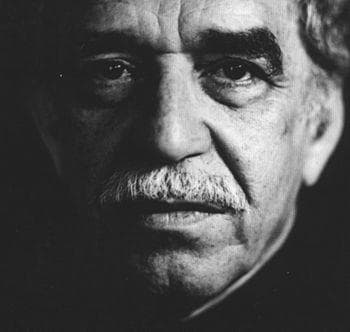
Gabriel José de la Concordia García Márquez was a Colombian novelist, short-story writer, screenwriter, and journalist, known affectionately as Gabo or Gabito throughout Latin America. Considered one of the most significant authors of the 20th century, particularly in the Spanish language, he was awarded the 1972 Neustadt International Prize for Literature and the 1982 Nobel Prize in Literature. He pursued a self-directed education that resulted in leaving law school for a career in journalism. From early on he showed no inhibitions in his criticism of Colombian and foreign politics. In 1958, he married Mercedes Barcha Pardo; they had two sons, Rodrigo and Gonzalo.
Similar books
- One Hundred Years of Solitude
Gabriel García Márquez
4.1 (753k) average on GoodreadsLiterary FictionShares a similar magical realist style, epic scope, and exploration of Latin American history and myth.
- Nineteen Eighty-Four
George Orwell
4.2 (5.5M) average on GoodreadsFictionWinston Smith dreams of truth and rebellion in a world where Big Brother watches all, but he confronts the terrifying power of a regime that controls not just actions, but thoughts.
- The Frozen River
Ariel Lawhon
4.4 (600k) average on GoodreadsFictionIn 1789 Maine, a heroic midwife's diary helps her expose a murder and get justice in a town that wants to silence her.
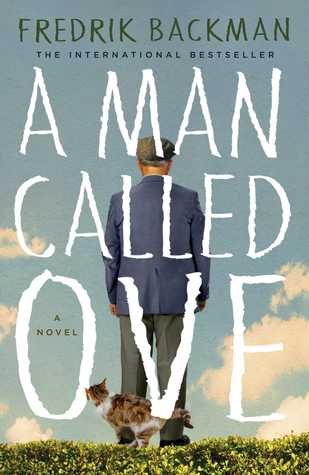
- A Man Called Ove
Fredrik Backman
4.4 (569k) average on GoodreadsFictionA stubborn widower, who lives by strict rules, finds his quiet world changed by a lively new family next door, making him face his past and find happiness in human connection.
- The Art of Racing in the Rain
Garth Stein
4.2 (452k) average on GoodreadsFictionThrough the eyes of Enzo, a wise and observant dog, a race car driver's family navigates a journey of love, loss, and resilience, learning that life's most important lessons often come in the curves, not just on the straightaways.
- The Colour of Magic
Terry Pratchett
4.0 (425k) average on GoodreadsFictionOn a discworld hurtling through space on the back of a giant turtle, an inept wizard and his naive, walking-luggage-toting tourist embark on a chaotic, belief-fueled journey to the very edge of their flat planet, encountering dragons that only exist if you believe in them.





Enjoyed the summary?
A summary gives you the shape of the book. The book itself has the detail, the examples and the voice.
Find The Autumn of the Patriarch on AmazonAs an Amazon Associate, BookBrief earns from qualifying purchases. How we're funded