

Synopsis
Covers the whole plot, including the ending.
- Difficulty
- Medium
- Pacing
- Variable
- Mood
- Witty, Philosophical, Absurdist, Whimsical, Thought-provoking
- Read it if
- You enjoy philosophical debates wrapped in witty farce and whimsical adventure, with allegorical depth.
- Skip it if
- You prefer straightforward plots without heavy philosophical undertones or a lot of intellectual banter.
The Ball and the Cross Plot Summary
Covers the whole plot, including the ending.
The Duel's Genesis
The story begins when Professor Lucifer, a fervent atheist, meets Michael, a devout Catholic. Michael had publicly defended a blasphemous statement made by a shopkeeper's assistant named Turnbull. Lucifer, initially amused, becomes increasingly angered by Michael's unwavering faith and the perceived irrationality of his beliefs. Their verbal sparring quickly escalates, fueled by their mutual, opposing dogmatism. Michael, offended by Lucifer's atheistic pronouncements and a perceived slight against the Virgin Mary, challenges Lucifer to a duel to defend his faith. Lucifer, despite his modern sensibilities, accepts the challenge, seeing it as a chance to expose the absurdity of religious zealotry.
The Futile Search for a Duelling Ground
Michael and Lucifer, armed with pistols, set out to find a secluded spot for their duel, but their attempts are comically frustrated. They try a quiet park, but a policeman interrupts them. They then attempt a remote field, only to be discovered by picnickers. Each potential location is unsuitable due to modern law and the public's lack of understanding, who view their intentions as barbaric or insane. This repeated failure highlights the clash between their old code of honor and the realities of contemporary life, where such disputes are no longer settled by personal combat.
The Flight to the Airship
Unable to find a suitable dueling ground on land, Michael and Lucifer are unexpectedly rescued by an enormous airship. This fantastical vessel belongs to Lucifer's uncle, Turnbull, a brilliant but eccentric inventor and a staunch rationalist who created this marvel of technology. Seeing their plight, Turnbull offers them refuge on his airship, believing its isolated nature will provide the perfect, unobserved arena for their duel. This offers a temporary solution to their dilemma, lifting them above society's constraints, but also introducing them to the peculiar world of Turnbull's scientific idealism.
Life Aboard the Airship
Aboard the airship, the duel is continually delayed, not by external forces, but by Turnbull's unique environment. The airship is populated by a diverse and often bizarre crew, including a 'madman' who believes he is a king, and a young woman named Lady Andromeda, Turnbull's ward and a symbol of his attempt to raise a child purely on reason. Turnbull, obsessed with scientific progress and social engineering, uses the airship as a laboratory for his philosophical experiments, including an attempt to create a perfect, rational society. Michael and Lucifer find themselves drawn into these strange dynamics, their duel momentarily forgotten amidst the airship's eccentricities.
The Escape and the Chase
Growing uncomfortable with Turnbull's rationalist experiments and the delay of their duel, Lady Andromeda, who is surprisingly resourceful, helps Michael and Lucifer escape the airship. They descend to earth in a small, experimental flying machine, landing in an English village. Their escape triggers a widespread pursuit by Turnbull and his airship crew, who are determined to recapture them and continue their 'experiments.' This starts a series of farcical chases and close calls across England, with the duo constantly on the run from Turnbull's technologically superior forces.
The Disguises and the Inn
To throw Turnbull's pursuers off their scent, Michael and Lucifer use various elaborate disguises, often leading to humorous misunderstandings. They pose as a clergyman and his assistant, then as tramps, and even as actors, each new identity adding to the comic absurdity of their situation. Their journey takes them through numerous English inns, which serve as temporary havens and stages for their ongoing philosophical debates. These inns, with their colorful landlords and patrons, become microcosms of everyday life, contrasting sharply with the abstract intellectualism of Michael and Lucifer's quarrel and the technological detachment of Turnbull's airship.
The Monastic Interlude
In a desperate attempt to find a truly secluded and sacred space for their duel, Michael and Lucifer seek refuge in a remote monastery. The monks, initially confused by the two men's strange request, offer them hospitality. For a brief period, the monastery provides peace and contemplation, allowing for deeper discussions between the duellists. However, their sanctuary is short-lived. Turnbull's relentless pursuit eventually leads his airship to the monastery, disrupting the quiet and again preventing the duel, showing that even the most ancient institutions are not immune to the intrusions of the modern world.
The Asylum and the Irony
Their increasingly bizarre behavior, coupled with their persistent desire for a duel over abstract principles, leads to Michael and Lucifer being apprehended and committed to a lunatic asylum. Here, the irony of their situation is clear. In a society that values rationality above all else, their fervent commitment to their beliefs, and their willingness to fight for them, is deemed a sign of madness. Inside the asylum, they encounter a diverse group of inmates, some genuinely disturbed, others perhaps just non-conformist, further blurring the lines between sanity and insanity in the eyes of society and highlighting the arbitrary nature of 'normalcy.'
The Grand Escape and the Final Confrontation
With the help of some sympathetic inmates and their own ingenuity, Michael and Lucifer orchestrate a dramatic escape from the asylum. Renewed in their determination, they again find themselves in a direct confrontation with Turnbull and his formidable airship. This scene is a chaotic blend of action and philosophical debate, as the two duellists, now more united by their shared experiences, challenge Turnbull's detached rationalism. The airship itself becomes a symbol of the scientific arrogance and cold logic that they both, in their different ways, oppose. The confrontation is a culmination of their journey, pitting human passion against technological might.
The Island and the Resolution
Following the confrontation, the airship is damaged, and Michael and Lucifer are shipwrecked on a small, deserted island. With no external forces to interrupt them, they are finally able to prepare for their long-delayed duel. However, the isolation and shared ordeal have subtly changed them. As they face each other, pistols drawn, a deeper understanding of each other's convictions, and perhaps the futility of their initial animosity, begins to emerge. The duel, which was once an act of aggression, becomes a symbolic gesture, leading to a profound, if unspoken, resolution.
The Return to Civilization
Eventually, Michael and Lucifer are rescued from the island by a passing ship. Their return to civilization is marked by a quiet transformation. While their fundamental beliefs remain, their experiences have broadened their perspectives and softened their initial fanaticism. They have learned to see the humanity in their opponent, and the limitations of their own dogmatism. The physical journey is over, but the philosophical journey has led them to a more nuanced understanding of faith, reason, and the complexities of the human spirit. They re-enter the world not as adversaries, but as individuals who have shared a unique and enlightening odyssey.
Principal Figures
Michael
Protagonist
A devout, passionate, and sometimes naive Roman Catholic.
Michael is a young, earnest Roman Catholic whose faith is the bedrock of his identity. He is fiercely loyal to his beliefs, willing to defend them with his life, and possesses a strong sense of honor. Despite his unwavering conviction, he is not entirely rigid; his journey with Lucifer subtly broadens his understanding of faith and humanity. He represents the passionate, sometimes unreasoning, adherence to tradition and spiritual truth. His actions are often driven by a sense of duty to God and a perceived insult to his sacred beliefs.
Relationships: Professor Lucifer (Philosophical adversary, later a reluctant companion and fellow traveler); Lady Andromeda (Brief ally and helper during their escape from the airship)
Professor Lucifer
Protagonist/Antagonist
A zealous, intellectual, and sometimes naive atheist.
Professor Lucifer is a brilliant, articulate atheist who believes fervently in reason and scientific progress. He is an intellectual and a polemicist, eager to expose what he sees as the irrationality and superstition of religious belief. Despite his modern, rationalist facade, he possesses a surprising sense of honor and a willingness to engage in the seemingly archaic act of a duel. He represents the intellectual, sometimes cold, adherence to reason and scientific materialism. His initial motivation is to prove the absurdity of faith, but his experiences challenge his own dogmatism.
Relationships: Michael (Philosophical adversary, later a reluctant companion and fellow traveler); Turnbull (Eccentric uncle, a fellow rationalist but with more extreme scientific ambitions)
Turnbull
Supporting
An eccentric inventor, rationalist, and owner of the giant airship.
Turnbull is Professor Lucifer's uncle, a genius inventor and a fervent rationalist who has built an enormous airship as a symbol of scientific triumph. He is detached, almost clinical, in his approach to humanity, viewing people as subjects for social and scientific experimentation. He believes in creating a perfect, logical society through technological advancement and social engineering. His character embodies the potential dangers of unchecked scientific ambition and the dehumanizing aspects of pure, unfeeling reason.
Relationships: Professor Lucifer (Nephew, shares some rationalist views but less extreme); Lady Andromeda (Ward, whom he attempts to raise purely on rational principles)
Lady Andromeda
Supporting
Turnbull's ward, a young woman raised on purely rational principles, who yearns for something more.
Lady Andromeda is Turnbull's ward, raised by him according to strict rationalist principles, devoid of emotional or spiritual influence. Despite her upbringing, she possesses an innate curiosity, a rebellious spirit, and a longing for beauty, romance, and the unknown. She represents the inherent human need for more than just logic and reason. Her actions often provide the impetus for the plot's progression, particularly her decision to help Michael and Lucifer escape the airship, showing that human nature cannot be entirely suppressed by scientific conditioning.
Relationships: Turnbull (Guardian and philosophical mentor); Michael (Brief ally, finds his passion intriguing); Professor Lucifer (Brief ally, finds his intellectualism less stifling than Turnbull's)
The Policeman
Mentioned
A symbol of mundane law and order that constantly thwarts the duel.
The policeman, or rather, the various policemen encountered by Michael and Lucifer, represent the ubiquitous presence of modern law and order. They are not malicious, but simply uphold the status quo, viewing the duelists' intentions as either criminal or insane. They embody the practical, unphilosophical nature of everyday society that cannot comprehend the abstract principles for which Michael and Lucifer are willing to fight. Their consistent interruptions highlight the incompatibility of archaic codes of honor with contemporary legal frameworks.
The Madman/King
Supporting
An inmate in the asylum who believes he is a king, offering a different perspective on reality.
This unnamed character, encountered in the asylum, believes himself to be a king. He is presented as genuinely mad by societal standards, yet his 'madness' often contains a strange, inverted logic or a profound, if unconventional, truth. He serves as a foil to the 'sane' characters, particularly Michael and Lucifer, by demonstrating that different realities can be equally compelling from within. His presence questions the very definition of sanity and the arbitrary lines drawn between reason and unreason, especially when Michael and Lucifer's own 'sane' actions are deemed mad.
Relationships: Michael (Fellow inmate, subject of Michael's observation); Professor Lucifer (Fellow inmate, subject of Lucifer's observation)
The Landlords
Mentioned
Various innkeepers who provide temporary refuge and a glimpse into ordinary life.
The various landlords encountered in the English inns represent the grounding, practical aspects of everyday life. They are often jovial, pragmatic, and entirely unconcerned with the grand philosophical debates of Michael and Lucifer. They offer hospitality, food, and drink, providing a stark contrast to the abstract world of the duelists and the technological world of Turnbull. Their brief appearances serve to highlight the disconnect between the intellectual pursuits of the protagonists and the simple, material realities of most people's existence. They are symbols of the 'common man' who finds little relevance in high-minded disputes.
Themes & Insights
The Nature of Faith vs. Reason
The main theme of the novel is the conflict and eventual reconciliation between fervent religious faith (Michael) and zealous scientific reason (Lucifer). Chesterton explores the limitations and dogmatism inherent in both extremes when held without nuance. The characters' relentless pursuit of their duel, despite societal obstacles, shows the human need to believe in something, whether it be God or pure logic. Through their journey, both Michael and Lucifer must confront the humanity and sincerity of their opponent's convictions, suggesting that neither absolute faith nor absolute reason provides a complete understanding of the world. The asylum scene particularly highlights how society struggles to categorize profound conviction, often labeling it as madness.
“The great difficulty of the duel was not in fighting, but in finding a place to fight.”
The Absurdity of Modernity
Chesterton satirizes various aspects of modern society, especially its obsession with scientific progress, its bureaucratic laws, and its inability to comprehend profound, non-material conflicts. The repeated frustration of the duelists by policemen, picnickers, and the legal system underscores the mundane and often illogical constraints of the 'rational' modern world. Turnbull's airship, a marvel of technology, becomes a symbol of scientific arrogance and the potential dehumanization that can accompany a purely rationalist worldview. The commitment of Michael and Lucifer to an asylum for their 'mad' belief in a duel further mocks a society that cannot tolerate passionate conviction outside its prescribed norms.
“The modern world is so mad that it cannot even understand the sanity of a duel.”
The Search for Meaning and Truth
Beneath the farcical plot is a serious inquiry into the human quest for ultimate meaning. Both Michael and Lucifer, in their opposed beliefs, are driven by a deep desire to understand the universe and their place within it. Their willingness to fight to the death for their convictions, no matter how absurd it appears to others, signifies the deep-seated human need for truth and purpose. The journey itself, rather than the duel's outcome, becomes the true path to understanding, as they must confront their own limitations and the complexities of human experience beyond their initial dogmas. The deserted island provides the ultimate setting for this internal search.
“A man's belief is his life; and if you take it from him, you kill him.”
The Paradox of Freedom and Constraint
The novel constantly plays with the idea of freedom and the various constraints placed upon it. Michael and Lucifer seek the ultimate freedom to settle their dispute according to their own code of honor, but they are consistently constrained by the laws of society, the limitations of technology, and even the eccentricities of others. Turnbull's airship, while offering physical freedom from the ground, becomes a different kind of prison, enforcing a rationalist ideology. The asylum represents the ultimate loss of freedom, yet ironically, it is within this confinement that the protagonists gain a new perspective on their own 'sanity.' The paradox is that true freedom is found not in the absence of constraint, but in understanding and accepting one's convictions amidst them.
“We are free to choose, but we are not free to choose not to choose.”
Plot Devices & Literary Techniques
The Airship
A fantastical technological marvel that serves as both refuge and prison.
Turnbull's giant airship is a prominent plot device. Initially, it offers Michael and Lucifer an escape from the societal constraints preventing their duel, symbolizing a literal elevation above earthly problems. However, it quickly transforms into a metaphorical prison, representing the detached, sterile, and potentially dehumanizing world of pure scientific rationalism. Its advanced technology allows for the continuation of the chase, but also isolates the characters, forcing them into close proximity and prolonged philosophical debate. It is both a product of human ingenuity and a symbol of its potential hubris.
The Duel
The central, never-fought conflict that drives the entire narrative.
The proposed duel between Michael and Lucifer is the primary plot device, acting as the inciting incident and the constant motivation for their adventures. Paradoxically, the duel is never actually fought in the conventional sense. Its repeated postponement by external forces (police, public, technology) and internal changes (growing understanding between the men) highlights the futility of such a physical confrontation for philosophical differences. The duel becomes a symbol of their initial, narrow-minded dogmatism, and its ultimate non-occurrence (or transformation) signifies their growth and a more profound resolution.
The Chase
A series of farcical pursuits that propel the characters through diverse settings.
The extended chase sequence, with Michael and Lucifer constantly on the run from Turnbull's airship and other societal forces, is a key plot device. It provides the narrative structure, moving the characters through various English landscapes and social situations (inns, monasteries, asylum). This constant movement prevents the duel from occurring while forcing the protagonists into close, prolonged interaction, deepening their understanding of each other. The farcical nature of the chase also injects humor, preventing the philosophical debates from becoming overly dry and emphasizing the absurdity of their situation within a 'normal' world.
Disguises
Various assumed identities used to evade capture, leading to comic misunderstandings.
The use of disguises by Michael and Lucifer is a recurring plot device that adds to the novel's comedic and allegorical layers. By adopting different identities (clergymen, tramps, actors), they highlight the fluidity of social roles and the superficiality of outward appearances. These disguises often lead to humorous misunderstandings with the general public, further emphasizing the chasm between the duelists' abstract concerns and everyday life. Allegorically, the disguises can be seen as representing the different 'masks' people wear, and how their true convictions remain despite external presentations.
The Ball and the Cross Quotes
“The most important thing in life is not to be happy, but to be sure that you are happy.”
“The madman is not the man who has lost his reason. The madman is the man who has lost everything but his reason.”
“You can never be just to a man if you do not understand him. And you can never understand him if you do not love him.”
“The object of opening the mind, as of opening the mouth, is to shut it again on something solid.”
“It is always the man who is not quite sure of his God who is quite sure of his virtues.”
“The world is not a problem to be solved; it is a mystery to be experienced.”
“The greatest crimes are not committed for money, but for a philosophy.”
“There are no uninteresting things, only uninterested people.”
“The only way to get rid of a temptation is to yield to it. Resist it, and your soul grows sick with longing for the things it has forbidden to itself.”
“A man is not a man until he is in trouble.”
“The true soldier fights not because he hates what is in front of him, but because he loves what is behind him.”
“Logic and truth are not the same thing. Logic is the beginning of wisdom, not the end.”
“The only way to enjoy a thing is to be afraid of losing it.”
“It is easy to be a rebel; it is much harder to be a saint.”
“To be clever enough to get all that money, one must be stupid enough to want it.”
Quiz
10 questions on the plot and the characters. Each answer comes with a short explanation.
Question 1
What is the primary point of contention between the two main Scotsmen in 'The Ball and the Cross'?
- Their differing political affiliations regarding Scottish independence.
- A dispute over property ownership and land rights.
- Their contrasting views on Roman Catholicism and atheism.
- A rivalry over the affection of the same woman.
Show answer
C. Their contrasting views on Roman Catholicism and atheism. The core conflict driving the plot is the 'hot dispute' between a devout Roman Catholic and a zealous atheist, leading to a proposed duel.
Question 2
What kind of event do the two Scotsmen initially propose to settle their dispute, though it is 'never fought'?
- A formal debate in a public forum.
- A legal trial in a court of law.
- A duel.
- A wrestling match.
Show answer
C. A duel. The description explicitly states their fanatically held opinions 'leading to a duel that is proposed but never fought'.
Question 3
According to the provided description, what real-life inspiration is mentioned for Chesterton's 'The Ball and the Cross'?
- Chesterton's personal experience serving in the military.
- A debate between Chesterton and a famous atheist.
- An ancient Scottish legend or folklore.
- A historical event involving a religious conflict.
Show answer
B. A debate between Chesterton and a famous atheist. Martin Gardner's introduction 'reveals the real-life debate between Chesterton and a famous atheist that provided inspiration for the story'.
Question 4
What literary style or genre is 'The Ball and the Cross' described as blending, alongside its philosophical inquiry?
- Gritty realism and historical fiction.
- Hard science fiction and dystopian commentary.
- Fantasy, farce, and theology.
- Gothic horror and psychological thriller.
Show answer
C. Fantasy, farce, and theology. The novel is described as 'delighting and challenging readers with its heady mixture of fantasy, farce, and theology.'
Question 5
How are the two Scotsmen's opinions characterized regarding their respective beliefs?
- They are open-minded and willing to compromise.
- They are fanatically held and naive.
- They are intellectually superior and well-reasoned.
- They are indifferent and easily swayed.
Show answer
B. They are fanatically held and naive. The text states, 'Their fanatically held opinions—leading to a duel that is proposed but never fought—inspire a host of comic adventures.' It also calls them 'devout but naive Roman Catholic' and 'zealous but naive atheist.'
Question 6
Beyond the surface plot, what deeper debate does 'The Ball and the Cross' allegorically explore?
- The conflict between monarchy and democracy.
- The economic struggle between capitalism and socialism.
- The debate between theism and atheism.
- The differences between urban and rural lifestyles.
Show answer
C. The debate between theism and atheism. The novel's 'allegorical levels vigorously explore the debate between theism and atheism.'
Question 7
When did 'The Ball and the Cross' first appear in book form in America?
- 1905
- 1906
- 1909
- 1912
Show answer
C. 1909 The text specifies that 'Chesterton's second novel first appeared in book form in America in 1909'.
Question 8
What specific qualities does Martin Gardner's introduction highlight about the book's style, beyond its philosophical aspects?
- Its stark realism, minimalist prose, and tragic undertones.
- Its scholarly footnotes, academic tone, and historical accuracy.
- Its 'colorful style . . . amusing puns and clever paradoxes . . . and the humor and melodrama of its crazy plot.'
- Its experimental narrative structure, stream-of-consciousness, and psychological depth.
Show answer
C. Its 'colorful style . . . amusing puns and clever paradoxes . . . and the humor and melodrama of its crazy plot.' Gardner 'alerts readers as well to the pleasures of its 'colorful style . . . amusing puns and clever paradoxes . . . and the humor and melodrama of its crazy plot.'
Question 9
In what British publication was 'The Ball and the Cross' originally serialized?
- The Spectator
- The Illustrated London News
- The Commonwealth
- Punch Magazine
Show answer
C. The Commonwealth The novel was 'Serialized in the British publication The Commonwealth in 1905-06'.
Question 10
How does the description characterize Chesterton's approach to serious religious and philosophical inquiry in his fiction, generally and in this novel?
- Direct, didactic, and overtly academic.
- Witty and profound, cloaking serious inquiry in sparkling humor and whimsy.
- Somber, introspective, and melancholic.
- Sarcastic, cynical, and dismissive of deep thought.
Show answer
B. Witty and profound, cloaking serious inquiry in sparkling humor and whimsy. The description states, 'Like much of G. K. Chesterton's fiction, The Ball and the Cross is both witty and profound, cloaking serious religious and philosophical inquiry in sparkling humor and whimsy.'
The Ball and the Cross FAQ
What is the central conflict that drives the plot of 'The Ball and the Cross'?
The central conflict revolves around the philosophical and religious dispute between two Scotsmen: Evan Maclan, a devout Roman Catholic, and Turnbull, a zealous atheist. Their clashing, fanatically held opinions about God and existence lead them to propose a duel, which, despite their repeated attempts, is comically and continually thwarted.
Who are the two main characters and what do they represent in the broader philosophical debate?
Evan Maclan represents fervent, albeit sometimes naive, faith and tradition, rooted in Roman Catholicism. Turnbull embodies passionate, unyielding atheism and skepticism, often driven by a desire for rational explanation. Together, they personify the age-old debate between theism and atheism, though Chesterton often highlights the shared intensity and conviction in their opposing views.
What role does the 'ball' and the 'cross' play in the novel's title and its allegorical meaning?
The 'ball' symbolizes the world, or perhaps the universe, often depicted as a globe or sphere, representing the totality of existence from a secular or material perspective. The 'cross' unequivocally represents Christianity and the spiritual dimension. Their juxtaposition in the title sets up the central allegorical conflict between the material world and spiritual faith.
How do Maclan and Turnbull attempt to resolve their dispute, and what constantly prevents them?
Maclan and Turnbull initially attempt to resolve their dispute through a duel, believing it to be the only honorable way to settle such a fundamental disagreement. However, they are repeatedly prevented from fighting by a series of farcical interventions, including legal authorities, well-meaning but misguided individuals, and the sheer absurdity of their escalating circumstances.
What is the significance of Professor Lucifer and his asylum in the narrative?
Professor Lucifer, a seemingly benevolent but subtly sinister figure, runs an asylum that becomes a central location for Maclan and Turnbull. This asylum, initially appearing as a refuge, allegorically represents a world that attempts to 'cure' or 'rationalize' passionate beliefs, often by labeling them as madness, thus highlighting Chesterton's critique of purely secular or scientific approaches to human conviction.
Are there any real-life inspirations for the characters or the central debate?
Yes, Martin Gardner's introduction reveals that the novel was inspired by Chesterton's real-life debates with a prominent atheist of his time, likely Robert Blatchford. While not direct caricatures, Maclan and Turnbull embody the intellectual fervor and sometimes dogmatic stances observed in such contemporary philosophical clashes, making the story a fictionalized exploration of these public arguments.
How does the recurring motif of flight, particularly the airship, connect to the novel's themes?
The airship, piloted by the eccentric Michael, represents humanity's aspiration and ingenuity, but also its detachment from earthly concerns and traditional moorings. Its ability to transcend the world below, yet often being subject to the whims of the wind, mirrors the characters' intellectual journeys—seeking higher truths while sometimes being carried away by their own philosophical currents.
What is the symbolic meaning behind the constant changes in setting and environment for Maclan and Turnbull?
The rapid and often absurd changes in setting, from London streets to a remote island, and ultimately to Professor Lucifer's asylum, symbolize the shifting intellectual landscapes and the difficulty of finding a stable ground for absolute truth in the modern world. It also emphasizes the universality of their debate, transcending specific locations to become a fundamental human struggle.
How does Chesterton use humor and paradox to convey serious philosophical points?
Chesterton employs humor through farcical situations, witty dialogue, and ironic reversals, making complex philosophical ideas accessible and engaging. He uses paradox, such as the idea that passionate atheism is closer to faith than lukewarm belief, to challenge conventional thinking and reveal deeper truths about human conviction, often highlighting the shared intensity between seemingly opposite viewpoints.
Discuss the psychological state of Maclan and Turnbull. Are they truly mad, or something else?
Maclan and Turnbull are not portrayed as clinically mad, but rather as possessing an intense, unwavering conviction that society, particularly the 'rational' world of Professor Lucifer, struggles to comprehend. Their 'madness' is largely a social construct, an inability of others to tolerate profound passion for an idea, whether religious or atheistic, suggesting that society often pathologizes deep belief.
How does Chesterton explore the psychology of conviction and fanaticism through his characters?
Chesterton meticulously explores how conviction, even when seemingly fanatical, can be a driving force for identity and action. He shows that both Maclan's faith and Turnbull's atheism stem from deep-seated beliefs that define their existence, suggesting that fanaticism isn't just about the belief itself, but the intensity with which it is held, often leading to a paradoxical solidarity between the two men.
What does the novel suggest about the nature of true freedom, particularly in the context of belief?
The novel suggests that true freedom lies not in the absence of belief or commitment, but in the liberty to hold and defend one's deepest convictions, even if they appear irrational to others. The attempts to 'cure' Maclan and Turnbull of their beliefs are presented as a form of intellectual imprisonment, implying that denying one's fundamental worldview is a loss of self.
How do the minor characters, such as Michael or the various policemen, contribute to the psychological landscape of the story?
Minor characters often act as foils or catalysts, highlighting the protagonists' unique psychologies. Michael's detached eccentricity contrasts with Maclan and Turnbull's intense focus, while the baffled policemen represent the practical, mundane world's inability to grasp profound philosophical or spiritual conflicts, underscoring the isolation of those with deep convictions.
Is Chesterton ultimately arguing that faith is superior to atheism, or is his message more nuanced?
While Chesterton was a devout Catholic, the novel's message is surprisingly nuanced. He doesn't simply declare faith superior, but rather champions the *passion* for truth and conviction itself. He often shows Maclan and Turnbull sharing a common ground in their zeal, suggesting that a passionate atheist is, in a way, closer to a believer than a lukewarm, indifferent person, regardless of their specific creed.
What is the significance of the duel never actually happening?
The unfulfilled duel is highly significant. It symbolizes the futility of trying to resolve profound philosophical differences through violence or simplistic confrontation. It suggests that such debates are ultimately internal and continuous, not to be settled by a single, definitive act, and that the shared human experience of struggling with these questions is more important than a 'victory' for one side.
How does the ending of the novel resolve the conflict, if at all, and what is its overarching message?
The ending doesn't offer a definitive resolution to the philosophical debate, but rather a kind of existential solidarity between Maclan and Turnbull. They find a shared humanity in their passionate conviction, even if their beliefs remain opposed. The overarching message seems to be that the pursuit of truth and the intensity of belief are valuable in themselves, creating a bond that transcends their specific disagreements.
Could 'The Ball and the Cross' be interpreted as a critique of modernity and its approach to belief?
Absolutely. The novel can be seen as a strong critique of a modernity that seeks to rationalize away or pathologize deeply held beliefs. Professor Lucifer's asylum, which attempts to 'cure' passion, represents a society that values bland conformity over genuine conviction, suggesting that modern secularism may inadvertently strip life of its meaningful struggles and spiritual depth.
What is Chesterton's view on the nature of truth as presented in the novel?
Chesterton implies that truth is not easily arrived at through purely rational or scientific means, nor is it necessarily found in comfortable neutrality. Instead, he suggests that truth is often found through earnest struggle, passionate conviction, and even paradox. He values the active pursuit and defense of truth, even if the 'truth' itself remains elusive or contested by others.
About the author

G.K. Chesterton was an English writer and philosopher active in the early 20th century, known for his contributions to both fiction and non-fiction. His notable works include "Orthodoxy," a defense of Christian faith, "The Everlasting Man," which explores the significance of Christianity, and "The Napoleon of Notting Hill," a fantasy novel. He also wrote "The Ball and the Cross," which delves into the conflict between faith and reason, and "The Ballad of the White Horse," a narrative poem about King Alfred.
Similar books
- The Hitchhiker's Guide to the Galaxy
Douglas Adams
4.2 (1.4M) average on GoodreadsFantasyFeatures absurd situations and philosophical musings wrapped in a comedic, adventurous narrative.
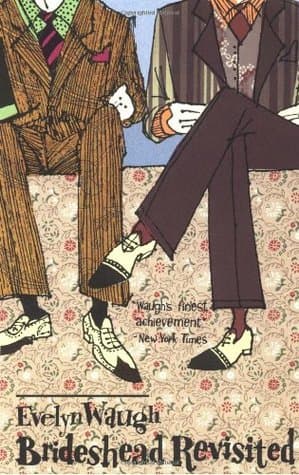
- Brideshead Revisited
Evelyn Waugh
4.0 (93k) average on GoodreadsLiterary FictionWaugh's novel explores similar themes of faith and modernity, but through a more character-driven and psychologically nuanced lens. Its protagonists grapple with belief and doubt in a more organic, human way, contrasting with Chesterton's more archetypal and firmly entrenched characters.
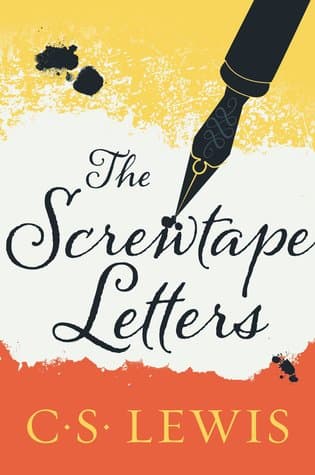
- The Screwtape Letters
C.S. Lewis
4.2 (332k) average on GoodreadsFantasyLewis's work, while equally didactic in its religious intent, employs a more focused and witty satirical structure. Its arguments are presented in a more digestible and engaging manner through the epistolary format, making it less sprawling and potentially less challenging than the narrative of The Ball and the Cross.
- Harry Potter and the Sorcerer's Stone
J.K. Rowling
4.5 (7M) average on GoodreadsFantasyRescued from a miserable life under the stairs, an orphaned boy discovers he's a wizard destined for a magical school, where he uncovers a dangerous secret tied to the dark wizard who murdered his parents.
- The Hunger Games
Suzanne Collins
4.3 (6.4M) average on GoodreadsFantasyIn a future where children fight to the death on live television, Katniss Everdeen volunteers for the arena, turning a death sentence into a fight for survival and a spark of rebellion.
- 1984
George Orwell
4.2 (3.1M) average on GoodreadsPoliticsIn a future where surveillance and thought control are absolute, a man's search for truth clashes with the Party, showing that hope can be a form of rebellion.




Enjoyed the summary?
A summary gives you the shape of the book. The book itself has the detail, the examples and the voice.
Find The Ball and the Cross on AmazonAs an Amazon Associate, BookBrief earns from qualifying purchases. How we're funded