
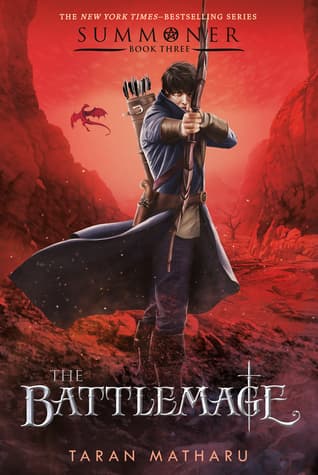
Synopsis
Covers the whole plot, including the ending.
- Difficulty
- Medium
- Pacing
- Fast
- Mood
- Epic, Triumphant, Action-packed, Dark
- Read it if
- You enjoy epic fantasy conclusions with large-scale battles, political intrigue, and a focus on magical summoning.
- Skip it if
- You haven't read the previous books in the Summoner trilogy or prefer standalone fantasy novels.
The Battlemage Plot Summary
Covers the whole plot, including the ending.
The Aftermath of the Rift
After the events of 'The Inquisition,' Fletcher and his demon Ignatius are in the ether, a chaotic dimension where demons live. With him are his friends Othello, Sylva, and the dwarf Atilla. They are lost and separated from the main human armies. Their first challenge is to survive the hostile environment and the ether's unpredictable nature, which distorts perception. Fletcher soon realizes they must find a way back to Hominum, or at least a more stable part of the ether, to understand the rift's full impact and their world's fate. Their initial journey is dangerous, as they face wild demons and struggle to find their way in the changing landscape.
A Desperate Alliance and a Dire Warning
As Fletcher, Othello, Sylva, and Atilla go deeper into the ether, they meet the powerful demon lord, Vulnus, and his demon, Koto. Vulnus is hostile at first, but Fletcher makes a truce, explaining the rift's catastrophic opening. Vulnus, an old and wise demon, says the rift's opening was foretold, part of a prophecy, and warns them of a greater danger: the Orcus, a evil entity that wants to consume everything. He explains that the ether is now linked to Hominum, and the Orcus threatens both worlds. This changes their goal from just returning home to understanding and fighting this threat, forming an uneasy alliance with Vulnus.
The Orcus's Influence and the Search for the Catalyst
The Orcus's influence appears as darkness and corruption in the ether, making neutral demons hostile and twisting the landscape. Fletcher and his allies, now including Vulnus and Koto, realize the only way to stop the Orcus is to close the rift between Hominum and the ether. Vulnus reveals that a powerful item, a 'Catalyst,' is needed, located in a dangerous part of the ether called the 'Abyss.' This journey is very risky, testing their courage and forcing them to face their deepest fears. The group must cross treacherous land, fight more corrupted demons, and race against time as the Orcus's power grows, threatening to engulf both realms.
Return to Hominum and the Orcish Threat
After getting the Catalyst from the Abyss, Fletcher and his friends open a temporary portal back to Hominum. But their return is not a relief. They find that orc forces, led by Khan, have used the chaos from the rift to invade human lands. The capital city of Vocans is under attack, and human armies are struggling. Fletcher is horrified by the destruction and the betrayal of Khan, his former friend and now enemy. This immediately changes their priorities; they must now defend Hominum from the orcs while still dealing with the larger threat of the Orcus and the need to close the rift.
The Battle for Vocans
Fletcher, with Othello, Sylva, and Atilla, joins the struggling human forces defending Vocans. He quickly takes charge, his proven strategies and ability to summon powerful demons becoming vital. The battle is fierce, with many casualties on both sides. Khan, driven by his hatred for humans and Fletcher, leads his orc warriors effectively. Fletcher faces Khan directly many times, their personal rivalry adding intensity to the desperate conflict. The human kingdom's fate is uncertain, and Fletcher must use his summoner abilities to their fullest to protect his people.
The Betrayal of Arcturus
During the intense fighting, a betrayal is revealed: General Arcturus, a high-ranking human commander, is working with the orcs, or at least using the chaos for his own gain. He tries to weaken Fletcher's command and create division among human soldiers, believing only he can lead or that a new order is needed. This internal sabotage further weakens the human defense, forcing Fletcher to not only fight Khan's army but also expose Arcturus's actions. Arcturus's deception is a severe blow to human morale and adds political intrigue to the war.
The Orcus's Return and the United Front
As the battle for Vocans continues, the Orcus, now much stronger because of the open rift, begins to appear in Hominum. Its corrupting influence affects both humans and orcs, creating mutated creatures and making both sides more desperate. This threat forces a realization: neither race can survive alone. Fletcher, understanding the situation, tries to make a temporary, difficult truce with Khan. He argues they must unite against the Orcus, the real enemy, before both their worlds are destroyed. This is hard, given the deep hatred between races, but the Orcus's overwhelming power makes it necessary.
The Battle Against the Orcus
An alliance forms between the remaining human forces, Khan's orc army, and Fletcher's demon allies, including Vulnus. Together, they confront the physical form of the Orcus, a monstrous entity of corruption. The battle is huge, involving combined magic and physical attacks from all races. Fletcher, using the Catalyst and his full summoning power, leads the fight. He must coordinate the different forces, overcoming centuries of racial hatred, to strike a decisive blow against the Orcus. This tests his leadership, summoning abilities, and belief in a united future.
The Sacrifice and the Closing of the Rift
The battle against the Orcus pushes everyone to their limits. During the conflict, a critical sacrifice is needed to fully use the Catalyst and seal the rift. This sacrifice comes from a major character, whose death provides the power or focus to complete the ritual. With the combined efforts of Fletcher, Khan, and Vulnus, and empowered by the sacrifice, the Catalyst is activated, and the rift between Hominum and the ether begins to close. The Orcus, weakened and unable to exist without the open rift, is defeated, its corruption fading from both worlds. This moment is bittersweet, marking both victory and great loss.
Aftermath and a New Beginning
After the Orcus's defeat and the rift's sealing, Hominum is devastated but safe. The temporary alliance between humans and orcs showed that coexistence is possible. Fletcher, now a hero, works to establish lasting peace between the races. Khan, changed by the shared struggle, agrees to a ceasefire and begins talks for his people's future. The world starts to heal, physically and politically. Fletcher, having fulfilled his destiny, looks to a future where humans, orcs, and even demons can find a way to live together, starting an era of understanding and rebuilding.
The Battlemage Characters
Fletcher
Protagonist
A human summoner who rises from commoner to hero, bridging races and worlds.
Fletcher is an orphaned commoner from Pelt whose innate talent for summoning demons propels him into the Novice Summoner program at Vocans Academy. He is courageous, resourceful, and possesses a strong moral compass, always striving to do what is right. He values his friends and his demon, Ignatius, above all else. His journey is marked by a desire for justice and equality, often challenging the rigid class structures of Hominum. He develops into a powerful battlemage, capable of commanding multiple demons and strategizing on a grand scale.
Relationships: Ignatius (His loyal and powerful salamander demon familiar.); Othello (His best friend, a dwarf warrior and fellow summoner.); Sylva (His close friend, an elf warrior and skilled archer.); Atilla (His dwarf friend, a skilled engineer and inventor.); Khan (His fierce rival and later reluctant ally, an albino orc.)
Ignatius
Supporting
Fletcher's loyal and powerful salamander demon familiar.
Ignatius is Fletcher's first and most loyal demon. He is a salamander, known for his fiery attacks and protective nature. He shares a deep, telepathic bond with Fletcher, often sensing his emotions and intentions. Ignatius is more than just a battle companion; he is a friend and a moral anchor for Fletcher, often providing comfort and unwavering support. His presence is crucial in battles, providing both offensive power and defensive capabilities, and his unique connection to Fletcher allows for complex magical maneuvers.
Relationships: Fletcher (His summoner and best friend, with whom he shares a deep, telepathic bond.)
Othello
Supporting
Fletcher's best friend, a gruff but loyal dwarf warrior and summoner.
Othello is a dwarf summoner and one of Fletcher's closest friends. He is known for his immense strength, his proficiency with a hammer, and his gruff exterior that hides a deeply loyal heart. Othello is pragmatic and often provides a grounded perspective to Fletcher's more idealistic views. He is a formidable warrior in his own right, often fighting alongside his demon, and his unwavering support for Fletcher is a constant throughout their adventures. Despite his initial skepticism about forming alliances, he ultimately recognizes the need for unity.
Relationships: Fletcher (His best friend and comrade-in-arms.); Sylva (A close friend and fellow adventurer.); Atilla (A close friend and fellow dwarf.)
Sylva
Supporting
Fletcher's elven friend, a skilled archer and warrior.
Sylva is an elf summoner and a close friend of Fletcher. She is an exceptionally skilled archer, known for her precision and agility in combat. Sylva is intelligent, observant, and often acts as the group's strategist, offering keen insights into battle situations. She possesses a strong sense of justice and is fiercely protective of her friends. Her elven heritage gives her a unique perspective on the magic and history of Hominum, and her calm demeanor provides balance to the group's more impulsive members. She is adept at both long-range combat and close-quarters fighting with her demon.
Relationships: Fletcher (A close friend and trusted ally.); Othello (A close friend and fellow adventurer.)
Atilla
Supporting
Fletcher's dwarf friend, a brilliant engineer and inventor.
Atilla is a dwarf and a close friend of Fletcher. Unlike Othello, Atilla is more of an engineer and inventor than a frontline warrior, though he is capable in a fight. He is highly intelligent, always tinkering with gadgets and finding innovative solutions to problems. His knowledge of mechanics and the physical world often proves invaluable to the group, especially when navigating complex environments or facing unique challenges. He is loyal and courageous, always willing to lend his skills to aid his friends.
Relationships: Fletcher (A close friend and ally.); Othello (A close friend and fellow dwarf.)
Khan
Antagonist/Supporting
The albino orc chieftain, Fletcher's primary rival who later becomes an uneasy ally.
Khan is the albino orc chieftain and Fletcher's primary antagonist for much of the series. He is ruthless, ambitious, and driven by a deep-seated hatred for humans, believing his race has been unjustly persecuted. Khan is a formidable warrior and a cunning strategist, leading his orc armies with brutal efficiency. His personal rivalry with Fletcher is intense, stemming from their past encounters and differing ideologies. However, when faced with a greater, existential threat, Khan is capable of pragmatic alliances, demonstrating a capacity for leadership beyond mere conquest.
Relationships: Fletcher (His sworn enemy and rival, later an uneasy ally against the Orcus.)
Vulnus
Supporting
An ancient and powerful demon lord from the ether, who aids Fletcher.
Vulnus is an ancient and immensely powerful demon lord residing in the ether. Unlike many wild demons, he possesses significant wisdom and a degree of neutrality, observing the balance of the realms. He is initially wary of Fletcher but recognizes the dire threat posed by the Orcus. Vulnus becomes a crucial ally, providing invaluable knowledge about the ether, the Orcus, and the means to combat it. He is a formidable combatant, wielding immense magical power, and his experience is vital in navigating the treacherous demon realm and understanding the larger cosmic forces at play.
Relationships: Fletcher (An uneasy but vital ally, guiding him through the ether and against the Orcus.)
General Arcturus
Antagonist
A high-ranking human general who betrays his people for power.
General Arcturus is a prominent human military leader who, despite his position, harbors ambitions beyond loyalty to the crown. He is cunning, manipulative, and ultimately self-serving, willing to betray his own people if it furthers his personal power or agenda. He views the chaos of the war and the opening of the rift as an opportunity to seize control, rather than a crisis to be overcome. His actions undermine the human war effort and create internal strife, forcing Fletcher to deal with treachery from within while battling external threats.
Relationships: Fletcher (An adversary who attempts to undermine Fletcher's authority and efforts.)
The Battlemage Themes
Unity in the Face of Adversity
The novel shows that even enemies can find common ground when facing a major threat. Fletcher's journey often makes him bridge gaps between commoners and nobles, humans and dwarves, and especially humans and orcs. The alliance between humans, orcs, and demons against the Orcus is the clearest example of this. It shows that survival often means overcoming prejudice and working together, as seen when Khan and Fletcher, despite their hatred, must fight side-by-side to save their worlds.
“We are not so different, you and I. Both of us fight for our people. Perhaps it is time we fought for all peoples.”
Prejudice and Acceptance
Throughout the series, and especially in 'The Battlemage,' prejudice between races (humans, orcs, elves, dwarves) and social classes (commoners, nobles) is a main conflict. Fletcher, a commoner who befriends non-humans, often challenges these biases. The book shows how prejudice can blind individuals and societies to bigger truths and threats. The eventual, reluctant alliance between humans and orcs against the Orcus forces characters like Khan and some human generals to confront their deep-seated hatreds, showing that acceptance, though hard-won, is necessary for progress and survival.
“Hatred is a fire that consumes the hater more than the hated.”
Leadership and Responsibility
Fletcher's change from an orphaned commoner to a leader is a main theme. He often faces situations where he must make hard choices, inspire loyalty, and plan for the greater good. His leadership includes empathy, courage, and a willingness to listen to different views, even from enemies. The weight of responsibility affects him, especially when Hominum and the ether face destruction. His ability to unite different groups, from his friends to powerful demons and even his rival Khan, demonstrates true leadership.
“A true leader does not command by fear, but by inspiring hope and trust.”
The Price of Power and Sacrifice
The novel explores the immense power of summoning and magic, but also its costs and sacrifices. Fletcher constantly pushes his limits, risking his life and his demons' lives. The opening of the rift, a huge act of magic, has terrible results, leading to the Orcus's appearance. In the end, defeating the Orcus and sealing the rift demands a great sacrifice, showing that great power often comes with a great price. This theme highlights that true victory often requires personal loss and selflessness.
“Some victories are bought with a currency far more precious than gold.”
Plot Devices & Literary Techniques
The Rift
A tear between Hominum and the ether, serving as the central catalyst for conflict.
The rift is a physical and magical tear in reality that connects the human world (Hominum) with the demon dimension (the ether). Its opening at the end of the previous book serves as the primary catalyst for all major conflicts in 'The Battlemage.' It allows demons to freely enter Hominum, facilitates the Orcus's manifestation, and forces Fletcher's party into the ether. The existence of the rift introduces an existential threat that compels unprecedented alliances and drives the narrative towards a desperate, world-saving quest. Closing the rift becomes the ultimate goal, symbolizing the restoration of order and the protection of both realms.
The Catalyst
A powerful artifact required to seal the rift and defeat the Orcus.
The Catalyst is a mythical and immensely powerful artifact located deep within the perilous Abyss of the ether. It is introduced as the only known means to effectively seal the rift between Hominum and the ether, and thus, to defeat the Orcus. The quest to find and retrieve the Catalyst forms a significant portion of Fletcher's journey through the ether, providing a clear objective in a chaotic environment. Its activation requires not only immense magical power but also a significant sacrifice, making it a crucial element in the climax of the story and underscoring the theme of the price of power.
The Orcus
A malevolent, corrupting entity that threatens to consume all worlds.
The Orcus is the ultimate antagonist of 'The Battlemage,' a malevolent entity of pure corruption and chaos that originates from the deepest parts of the ether. Its influence spreads through the open rift, threatening to consume and destroy both Hominum and the ether. The Orcus serves as a common enemy so terrifying that it forces humans, orcs, and demons to set aside their differences and form an unprecedented alliance. It embodies the ultimate stakes of the conflict, elevating the story from a racial war to a cosmic battle for existence. Its defeat signifies the culmination of all efforts and sacrifices.
Racial Prejudice
The ingrained animosity and stereotypes between humans, orcs, elves, and dwarves.
Racial prejudice is a pervasive plot device that drives much of the conflict and character development. The deep-seated hatred between humans and orcs, fueled by centuries of conflict and misunderstanding, is a constant obstacle. This prejudice initially prevents alliances and fosters betrayal, as seen with General Arcturus. However, the overwhelming threat of the Orcus forces characters to confront and, to some extent, overcome these biases. This device highlights the destructive nature of intolerance and sets the stage for the eventual, difficult unity that becomes crucial for survival, reinforcing the theme of overcoming adversity through cooperation.
The Battlemage Quotes
“The past is a stubborn thing, always there, always waiting to remind you of what you've lost.”
“True power isn't about how many spells you can cast, but about the strength of your will and the purity of your intentions.”
“Sometimes, the hardest battles are fought not with swords and spells, but within your own mind.”
“Hope is a fragile thing, easily shattered, but without it, we are truly lost.”
“A leader's greatest strength is not their ability to command, but their capacity to inspire.”
“Sacrifice is not merely giving something up; it is choosing what is more important than yourself.”
“The greatest magic lies not in what we can do, but in what we choose to believe.”
“Even in the darkest of times, there is always a flicker of light, if you only know where to look.”
“Fear is a powerful enemy, but it can also be a powerful teacher.”
“The world is not always fair, but that does not mean we should stop fighting for what is right.”
“Loyalty is a bond forged in fire, and it is stronger than any spell.”
“Every choice we make, no matter how small, ripples through time and shapes our destiny.”
“To truly understand your enemy, you must first understand yourself.”
“The greatest stories are not written by fate, but by the courage of those who dare to defy it.”
Quiz
10 questions on the plot and the characters. Each answer comes with a short explanation.
Question 1
What is the primary goal of Fletcher and his friends in the ether at the beginning of 'The Battlemage'?
- To find a legendary demon to aid them in battle.
- To rebuild their world and broker peace.
- To locate a hidden stash of powerful artifacts.
- To rescue a captured ally from the orcs.
Show answer
B. To rebuild their world and broker peace. The synopsis explicitly states that Fletcher and his friends pursue a 'mortally dangerous quest to rebuild their world and broker peace' in the ether.
Question 2
Who is Fletcher's main nemesis in 'The Battlemage'?
- The Emperor of the Hominum Empire.
- An ancient, powerful demon lord.
- The albino orc, Khan.
- A traitorous general from his own army.
Show answer
C. The albino orc, Khan. The description clearly names 'his nemesis, the albino orc, Khan' as Fletcher's biggest challenge.
Question 3
What kind of army does Fletcher lead into battle to protect his ancestral homeland?
- A massive, well-equipped imperial legion.
- A small army of soldiers.
- An alliance of elven and dwarven warriors.
- A band of mercenary summoners.
Show answer
B. A small army of soldiers. The synopsis mentions Fletcher must 'lead a small army of soldiers into battle to protect his ancestral homeland.'
Question 4
What emotional challenge threatens to turn 'friend into foe' within the narrative of 'The Battlemage'?
- Greed for ancient magical artifacts.
- A curse placed by a powerful demon.
- Hatred amongst allies.
- Misunderstandings caused by language barriers.
Show answer
C. Hatred amongst allies. The text states, 'Even as hatred threatens to turn friend into foe in The Battlemage,' indicating this specific emotion as a key internal conflict.
Question 5
What is the primary threat that Khan, the albino orc, poses to Fletcher?
- He seeks to conquer the entire Hominum Empire.
- He aims to destroy everything Fletcher holds dear.
- He plans to unleash an unstoppable demon army.
- He intends to usurp Fletcher's position as a summoner.
Show answer
B. He aims to destroy everything Fletcher holds dear. The description specifies Khan 'who seeks to destroy everything Fletcher holds dear,' highlighting the personal nature of his threat.
Question 6
What does the term 'ancestral homeland' imply about Fletcher's connection to the land he defends?
- It's a newly acquired territory he must protect for the Empire.
- It's a land with deep personal and familial ties to him.
- It's a strategic military outpost crucial for the war effort.
- It's a neutral zone he is tasked with patrolling.
Show answer
B. It's a land with deep personal and familial ties to him. Ancestral implies a connection through generations of family, suggesting a deep, personal stake in its defense rather than just a strategic or newly acquired one.
Question 7
The story is described as the 'epic conclusion to the New York Times–bestselling Summoner trilogy.' What does 'epic conclusion' suggest about the scope and stakes of 'The Battlemage'?
- It will feature a small, intimate conflict focused solely on Fletcher's personal journey.
- It signifies the final, grand culmination of major plotlines and character arcs from the entire series, with high stakes.
- It means the book will introduce entirely new characters and conflicts unrelated to previous installments.
- It implies a cliffhanger ending that sets up a new series.
Show answer
B. It signifies the final, grand culmination of major plotlines and character arcs from the entire series, with high stakes. An 'epic conclusion' to a trilogy strongly suggests that the final book will resolve major overarching conflicts and character developments from the entire series, often on a grand scale and with significant consequences.
Question 8
Given the description, what is the most significant thematic conflict Fletcher faces internally, beyond the external battles?
- His struggle with loyalty to his friends versus loyalty to his homeland.
- The challenge of overcoming hatred threatening to divide his allies and potentially turn them against each other.
- His personal quest for power to defeat his enemies.
- The internal debate over whether to use forbidden magic.
Show answer
B. The challenge of overcoming hatred threatening to divide his allies and potentially turn them against each other. The line 'Even as hatred threatens to turn friend into foe' points to an internal, thematic conflict within Fletcher's own group, highlighting the challenge of maintaining unity amidst adversity.
Question 9
The phrase 'mortally dangerous quest to rebuild their world' suggests what about the state of their world at the start of 'The Battlemage'?
- It is experiencing a golden age of peace and prosperity.
- It is in a state of significant destruction or collapse, requiring fundamental restoration.
- It is merely undergoing minor political reforms.
- It is being invaded by an alien species from another dimension.
Show answer
B. It is in a state of significant destruction or collapse, requiring fundamental restoration. A 'quest to rebuild their world' implies that the world has been significantly damaged or broken, requiring monumental effort to restore it, making the quest 'mortally dangerous'.
Question 10
Considering 'The Battlemage' is the conclusion to a trilogy, what is a reasonable expectation for the resolution of the conflict with Khan?
- Khan will simply retreat and reappear in a future, unannounced sequel.
- Fletcher and Khan will engage in a final, decisive confrontation that resolves their long-standing animosity.
- Khan will turn out to be a benevolent character who was misunderstood all along.
- The conflict with Khan will be sidelined to focus on a new villain introduced late in the book.
Show answer
B. Fletcher and Khan will engage in a final, decisive confrontation that resolves their long-standing animosity. As the 'epic conclusion' and with Khan explicitly named as Fletcher's 'nemesis' who seeks to destroy everything Fletcher holds dear, it is highly probable their conflict will culminate in a final, definitive showdown.
The Battlemage FAQ
What is the central conflict driving the plot of 'The Battlemage'?
The central conflict revolves around Fletcher and his allies' desperate quest into the ether to find the lost dwarven city of Tartarus and retrieve a legendary artifact, the 'Amulet of Tartarus,' which is believed to be the only way to seal the demon invasion portals and save Hominum. Simultaneously, they must contend with the ongoing war against the orcs, led by Fletcher's nemesis, Khan, who aims to conquer Hominum and destroy Fletcher.
Who are Fletcher's primary companions on his journey into the ether, and what roles do they play?
Fletcher's primary companions are Arcturus, his salamander demon, who provides combat support and a strong emotional bond; Sylva, the elven princess, who offers diplomatic insight and archery skills; and Othello, the dwarven smith, whose knowledge of dwarven history and engineering is crucial for navigating Tartarus. Together, they represent the united races of Hominum, symbolizing the potential for peace.
What is the significance of the Amulet of Tartarus, and why is it so vital to Fletcher's quest?
The Amulet of Tartarus is a powerful dwarven artifact designed to seal the portals between the ether and Hominum, effectively stopping the demon invasion that threatens to overrun their world. It is the only known item capable of achieving this on such a grand scale, making its retrieval paramount to saving all life in Hominum and preventing its utter destruction.
Who is Khan, and what is his ultimate goal in 'The Battlemage'?
Khan is the albino orc chieftain and Fletcher's long-standing nemesis, driven by a deep-seated hatred for humans and a desire for revenge. His ultimate goal is to conquer Hominum, destroy the human kingdom, and establish orc supremacy, seeing Fletcher as the primary obstacle to achieving his genocidal vision.
How does the political landscape of Hominum shift throughout the book, particularly concerning the human-elf-dwarf alliance?
The political landscape is initially fragile, with lingering prejudices between races, but the shared threat of the demon invasion and Khan's conquest forces a stronger alliance between humans, elves, and dwarves. Fletcher, Sylva, and Othello's cooperation in the ether, along with the growing unity of their forces on the battlefield, solidifies this alliance, paving the way for a more unified Hominum post-war.
What is the 'ether' and how does it differ from Hominum?
The ether is a dangerous, chaotic dimension that exists between worlds, serving as the source of demons and the pathway for their invasions. Unlike the stable, structured world of Hominum, the ether is constantly shifting, filled with unpredictable magical energies, hostile creatures, and portals that can lead to various dimensions or back to Hominum.
Were there any subtle hints about the true nature of the 'ancients' or the origin of summoning magic that were revealed in this book?
Yes, 'The Battlemage' reveals that the 'ancients' were not just powerful summoners but beings who understood the fundamental mechanics of the ether and how to manipulate its portals, hinting at a more advanced civilization than previously understood. Their knowledge of the Amulet of Tartarus and its specific function suggests a deeper, long-forgotten history of interdimensional conflict and defense.
How does Arcturus's unique lineage or connection to the ether contribute to the final resolution?
Arcturus's unique lineage as a salamander demon, and his deep bond with Fletcher, allows him to perceive and interact with the ether in ways other demons cannot, providing crucial insights into its chaotic nature and the location of specific portals. His ability to withstand and even manipulate some of the ether's energies proves vital in navigating Tartarus and ultimately in the final confrontation with Khan.
What is the significance of the dragon egg Fletcher carries, and how does it connect to past events or future possibilities?
The dragon egg symbolizes hope and a new beginning, representing the potential return of dragons to Hominum. It connects to Fletcher's past encounter with the dragon Igni and hints at a future where dragons might once again play a vital role in balancing the world's magic and defending against threats, potentially even serving as powerful allies.
How does Fletcher's internal conflict between his human and summoner identities evolve throughout this final book?
Fletcher's internal conflict largely resolves as he fully embraces both his human heritage and his summoner abilities, realizing that they are not separate but integral parts of who he is. He learns to wield his power not just for personal gain or survival, but for the greater good of all races, accepting the responsibility that comes with being a powerful battlemage and a leader.
What psychological toll does the constant warfare and loss take on Fletcher, and how does he cope?
The constant warfare and loss take a significant psychological toll on Fletcher, leading to moments of despair, doubt, and overwhelming grief for fallen comrades. He copes by relying on his deep bonds with Sylva, Othello, and Arcturus, drawing strength from their unwavering loyalty and the shared purpose of saving Hominum, ultimately finding resilience in unity.
Analyze Khan's motivations beyond simple hatred; what psychological drivers fuel his extreme actions?
Beyond simple hatred, Khan's extreme actions are fueled by a deep-seated inferiority complex and a desire to prove orcish superiority, stemming from generations of perceived oppression and marginalization by humans. His albino mutation also likely contributed to feelings of otherness and a need to exert power, driving his ruthless ambition and genocidal tendencies.
How do the relationships between the main trio (Fletcher, Sylva, Othello) demonstrate different aspects of leadership and friendship under pressure?
Fletcher embodies inspirational leadership and strategic thinking, Sylva offers diplomatic wisdom and a sense of justice, and Othello provides grounded practicality and unwavering loyalty, demonstrating different facets of effective leadership. Their friendship showcases mutual respect, unwavering support, and the strength found in diversity, proving essential for overcoming adversity under immense pressure.
Was the ending of 'The Battlemage' a definitive conclusion, or did it leave room for future stories in the Summoner universe?
'The Battlemage' provides a definitive conclusion to Fletcher's personal journey and the immediate threat of the demon invasion, sealing the portals and bringing peace to Hominum. However, the reintroduction of dragons and the establishment of a unified Hominum leave ample room for future stories within the Summoner universe, exploring new characters or later generations.
How does the theme of 'unity' versus 'division' play out in the context of the racial conflicts and ultimate alliance?
The theme of 'unity' versus 'division' is central, initially highlighted by the deep-seated prejudices and historical conflicts between humans, elves, and dwarves. The existential threat of the demon invasion and Khan's conquest forces these races to overcome their divisions and forge a powerful alliance, demonstrating that only through unity can they achieve true peace and overcome overwhelming odds.
What is the deeper meaning behind the 'Amulet of Tartarus' and its role in restoring balance?
The Amulet of Tartarus represents more than just a weapon; it symbolizes the restoration of balance and the inherent power of creation over destruction. Its ability to seal portals suggests a natural order that was disrupted, and its retrieval signifies humanity's (and the allied races') capacity to mend what was broken and re-establish harmony between worlds.
Could Fletcher have achieved his goals without the aid of his demon, Arcturus? Discuss the nature of their bond.
It is highly unlikely Fletcher could have achieved his goals without Arcturus. Their bond is symbiotic; Arcturus provides not just combat prowess but also emotional support, a unique connection to the ether, and unwavering loyalty that often grounds Fletcher. Arcturus's presence is a constant reminder of the potential for good within demonkind and the strength found in unusual alliances.
How does the final confrontation with Khan reflect Fletcher's growth as a character throughout the trilogy?
The final confrontation with Khan reflects Fletcher's immense growth from a naive orphan to a seasoned battlemage and leader. He no longer fights out of pure vengeance but with a clear understanding of the stakes, demonstrating strategic thinking, controlled power, and a commitment to protecting Hominum, rather than just personal retribution. He fights for peace, not just victory.
About the author
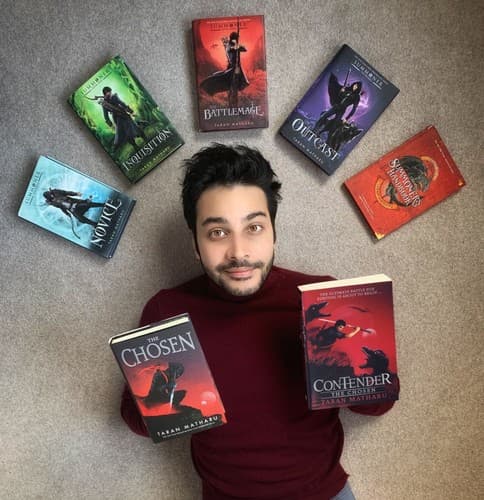
Taran Matharu is a British author known for his work in the fantasy genre. He is best recognized for "The Battlemage," which is part of his popular Summoner series. Matharu's writing often features themes of magic and adventure, appealing to young adult readers.
Similar books
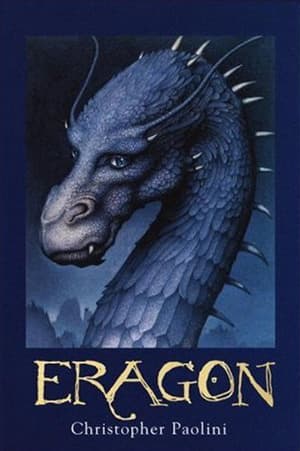
- Eragon
Christopher Paolini
3.9 (1.4M) average on GoodreadsFantasyFeatures a young protagonist with a magical companion in a coming-of-age fantasy epic.
- The Hobbit, or There and Back Again
J.R.R. Tolkien
4.3 (2.9M) average on GoodreadsFantasyClassic quest narrative with diverse races uniting against a common enemy.
- Harry Potter and the Sorcerer's Stone
J.K. Rowling
4.5 (7M) average on GoodreadsFantasyRescued from a miserable life under the stairs, an orphaned boy discovers he's a wizard destined for a magical school, where he uncovers a dangerous secret tied to the dark wizard who murdered his parents.
- The Hunger Games
Suzanne Collins
4.3 (6.4M) average on GoodreadsFantasyIn a future where children fight to the death on live television, Katniss Everdeen volunteers for the arena, turning a death sentence into a fight for survival and a spark of rebellion.
- 1984
George Orwell
4.2 (3.1M) average on GoodreadsPoliticsIn a future where surveillance and thought control are absolute, a man's search for truth clashes with the Party, showing that hope can be a form of rebellion.
- Divergent
Veronica Roth
4.2 (2.9M) average on GoodreadsFantasyIn a society divided by virtues, a sixteen-year-old's difference from the norm starts a rebellion that threatens her world.





Enjoyed the summary?
A summary gives you the shape of the book. The book itself has the detail, the examples and the voice.
Find The Battlemage on AmazonAs an Amazon Associate, BookBrief earns from qualifying purchases. How we're funded