

Synopsis
Covers the whole plot, including the ending.
- Difficulty
- Easy
- Pacing
- Moderate
- Mood
- Thought-provoking, Resilient, Realistic, Hopeful
- Read it if
- You enjoy poignant coming-of-age stories about overcoming adversity, class struggles, and finding your voice, with a focus on empathy and social issues.
- Skip it if
- You prefer light-hearted stories without serious themes of poverty, abuse, and social inequality.
The Benefits of Being an Octopus Plot Summary
Covers the whole plot, including the ending.
A Life of Responsibility and Invisibility
Zoey, a seventh-grader, lives in a trailer park with her mother, her four younger siblings—Milo, Aurora, Aster, and Leo—and her mother's boyfriend, Lenny. Her days are consumed by caring for her siblings after school, cooking, and managing the household while her mother works at the pizza parlor. At school, Zoey strives for invisibility, avoiding attention from both teachers and wealthier classmates from the other side of town. Her only friend, Fuchsia, shares a similar background of poverty and social marginalization. Zoey often fantasizes about being an octopus, wishing for its multiple arms to handle her responsibilities, its camouflage to disappear, and its protective defenses to shield her family. Her life is a constant balancing act of duty and avoidance.
Forced into Debate Club
Zoey's carefully constructed invisibility is shattered when her English teacher, Ms. Polanski, insists she join the school's debate club. Despite Zoey's protests and her deep discomfort with public speaking and drawing attention to herself, Ms. Polanski sees potential in her and refuses to take no for an answer. Zoey is initially resentful, feeling that this is just another burden added to her already overwhelming life. She attends the first few meetings reluctantly, her anxiety making it difficult for her to participate. She views the club as an unwelcome intrusion into her world, forcing her to engage with topics and people she'd rather avoid, especially the more affluent students.
First Encounters and Uncomfortable Topics
In the debate club, Zoey is paired with a boy named Silas, who comes from a more privileged background. The initial debate topics, such as the minimum wage, feel uncomfortably close to Zoey's personal life, making her even more reluctant to speak. She finds it difficult to articulate her thoughts, especially when surrounded by students who seem to have a natural ease with public speaking and access to resources she lacks. Zoey observes the stark differences between her life and theirs, feeling a growing sense of injustice and frustration. She fears exposing her family's struggles and her own lack of experience with the world outside her trailer park.
The Gun Debate and Fuchsia's Secret
The debate club eventually shifts its focus to gun control, a contentious issue that deeply impacts Zoey. It is revealed that Lenny, Zoey's mother's boyfriend, keeps a gun in the trailer, which makes Zoey uneasy. Simultaneously, Zoey discovers that Fuchsia's older brother, Kyle, has been involved in a shooting incident. This revelation adds another layer of stress and fear to Zoey's life, as she worries about Fuchsia and the potential repercussions for her family. The gun debate becomes intensely personal for Zoey, forcing her to confront the realities of violence and safety within her own community and home.
Lenny's True Nature Emerges
As the gun debate progresses and tensions rise, Lenny's true character begins to emerge more clearly. He becomes increasingly controlling and verbally abusive towards Zoey's mother, often making her cry. He criticizes Zoey's mother's parenting, her decisions, and even her appearance. Zoey witnesses these interactions, feeling a growing sense of unease and fear for her mother and siblings. Lenny's presence, once a source of stability due to his trailer, now feels threatening and oppressive. Zoey starts to question the safety and security of their living situation and her mother's reliance on Lenny.
The Pressure Mounts for Zoey's Mother
Zoey's mother, already exhausted from work and the demands of raising five children, becomes visibly more distressed and withdrawn as Lenny's behavior escalates. She tries to minimize Lenny's outbursts and often makes excuses for him, but Zoey sees the fear in her eyes. The constant tension in the trailer creates an unbearable atmosphere for Zoey and her siblings. Zoey desperately wants to protect her mother and her younger siblings, but feels powerless to change the situation, further fueling her desire for the protective qualities of an octopus.
Fuchsia's Desperation and Zoey's Loyalty
Fuchsia's situation at home also worsens, particularly after her brother Kyle's involvement in the shooting. The legal and emotional toll on Fuchsia's family is immense. Fuchsia often comes to school looking tired and distraught, and Zoey tries her best to be a supportive friend, offering comfort and a listening ear. Zoey feels a strong sense of loyalty to Fuchsia, recognizing their shared experiences of hardship and marginalization. However, Zoey's ability to help Fuchsia is limited by her own overwhelming responsibilities and the escalating problems in her own home.
The Final Debate and Zoey's Voice
During the final debate, the topic of gun safety becomes highly charged. Zoey, initially terrified to speak, finds her voice when she realizes she can no longer stay silent. Drawing on her personal experience with Lenny's gun in the trailer and Fuchsia's brother's situation, Zoey speaks passionately and authentically about the importance of safe gun storage and the impact of gun violence on families. Her words, though not polished, are raw and powerful, resonating with the audience and surprising her debate partners and Ms. Polanski. This moment is a turning point for Zoey, as she realizes the power of her own voice.
Confronting Lenny and a Glimmer of Hope
Inspired by finding her voice in the debate, Zoey gathers the courage to confront Lenny about his treatment of her mother and the unsafe environment he has created. She tells him to leave, standing up for herself and her family. Her mother, witnessing Zoey's bravery and having reached her breaking point, finally decides to leave Lenny. This is a terrifying but necessary step, as it means they will be homeless again. However, Zoey's mother demonstrates newfound strength, and they begin to make plans to move into a shelter, signifying a fresh start and a break from the abusive relationship.
A New Beginning, Still Challenging
Zoey and her family move into a family shelter. While the living conditions are still challenging and uncertain, there is a palpable sense of relief and hope for the future. Zoey's mother is visibly less stressed, and the children are safer and happier away from Lenny's influence. Zoey continues to care for her siblings but now does so with a sense of purpose and a nascent belief in her own ability to make a difference. She realizes that while being an octopus might offer escape, finding her voice and speaking up is a more powerful defense, allowing her to protect her family and herself in the real world.
Principal Figures
Zoey
Protagonist
A seventh-grader burdened by family responsibilities, seeking invisibility and a way to protect her loved ones.
Zoey is a quiet, observant, and deeply responsible seventh-grader. She carries the weight of her family on her young shoulders, acting as a surrogate parent to her four younger siblings while her mother works. Her primary coping mechanism is to be invisible, both at home and at school, to avoid drawing attention to her family's poverty and struggles. She often fantasizes about being an octopus, drawn to its abilities for camouflage, multi-tasking, and self-defense. Zoey is fiercely protective of her family, especially her younger siblings, and struggles with feelings of powerlessness. Her journey is about finding her voice and realizing that true strength comes from speaking up, not hiding.
Relationships: Zoey's Mom (daughter-mother, Zoey often takes on parental responsibilities for her siblings); Lenny (stepfather-like figure, later antagonist due to his abusive behavior); Fuchsia (best friend, sharing similar socio-economic backgrounds); Milo, Aurora, Aster, Leo (younger siblings, Zoey is their primary caregiver); Ms. Polanski (teacher and mentor, who pushes Zoey to find her voice); Silas (debate club partner, initially a source of discomfort due to class differences)
Zoey's Mom
Supporting
Zoey's overwhelmed and struggling mother, trying to provide for her five children.
Zoey's mom is a single mother of five, working long hours at a pizza parlor to make ends meet. She is often exhausted, stressed, and emotionally vulnerable, which leads her to rely on Lenny for housing and a sense of stability. She is initially depicted as somewhat oblivious to the full extent of Zoey's burdens and later, as fearful and submissive under Lenny's increasing control. Despite her struggles, she loves her children and ultimately finds the strength to leave an abusive situation, inspired by Zoey's courage. Her character highlights the challenges faced by low-income families.
Relationships: Zoey (mother-daughter, relies heavily on Zoey for childcare); Lenny (boyfriend, later becomes abusive); Milo, Aurora, Aster, Leo (mother to her younger children)
Lenny
Antagonist
Zoey's mother's boyfriend, who provides housing but becomes increasingly controlling and abusive.
Lenny is Zoey's mother's boyfriend, who initially provides the family with a place to live in his trailer. He represents a precarious form of stability for Zoey's family. However, as the story progresses, his true nature is revealed. He becomes increasingly verbally abusive and controlling towards Zoey's mother and creates a tense, unsafe environment for the children. He keeps a gun in the trailer, which adds to Zoey's anxiety. Lenny embodies the dangers of seeking stability at any cost and the insidious nature of domestic abuse, serving as a catalyst for Zoey's eventual confrontation.
Relationships: Zoey's Mom (boyfriend, abusive partner); Zoey (stepfather-like figure, recipient of Zoey's eventual confrontation)
Fuchsia
Supporting
Zoey's best friend, who shares a similar background of poverty and faces her own family struggles.
Fuchsia is Zoey's closest and only friend at school. She comes from a similar low-income background and understands the struggles Zoey faces. Fuchsia is depicted as having her own set of family problems, particularly concerning her older brother, Kyle, who gets involved in a shooting. She is often quiet and withdrawn, reflecting the weight of her home life. Fuchsia provides a sense of solidarity for Zoey, a person who truly 'gets' her, and their friendship is a source of comfort amidst their shared difficulties. Her story highlights the broader community impact of poverty and violence.
Relationships: Zoey (best friend); Kyle (older brother, involved in a shooting)
Ms. Polanski
Supporting
Zoey's English teacher and debate coach, who sees Zoey's potential and pushes her to speak up.
Ms. Polanski is Zoey's English teacher and the coach of the debate club. She is observant and perceptive, recognizing Zoey's intelligence and hidden strength despite Zoey's attempts to remain invisible. Ms. Polanski is persistent in encouraging Zoey to join the debate club, believing that Zoey has a voice that needs to be heard. She acts as a mentor figure, providing Zoey with the tools and platform to articulate her experiences and opinions. Her role is crucial in Zoey's character development, as she challenges Zoey to step outside her comfort zone and realize her own power.
Relationships: Zoey (teacher/mentor)
Silas
Supporting
Zoey's debate club partner, who comes from a more privileged background.
Silas is a student in the debate club who is partnered with Zoey. He comes from a wealthier background, which initially creates a social and experiential divide between him and Zoey. He is intelligent and articulate, but sometimes appears oblivious to the realities of Zoey's life. Through their interactions in the debate club, Silas begins to understand different perspectives, particularly those related to class and socio-economic disparities. He represents the 'other side of town' and serves as a foil to Zoey, highlighting the class divides explored in the novel.
Relationships: Zoey (debate partner, initially an uncomfortable dynamic due to class differences)
Milo, Aurora, Aster, Leo
Supporting
Zoey's younger siblings, for whom she is a primary caregiver.
Milo, Aurora, Aster, and Leo are Zoey's four younger siblings. They are a constant presence in Zoey's life, as she is largely responsible for their care after school, including cooking, cleaning, and entertaining them. They represent the immediate responsibilities that weigh on Zoey and are the primary reason for her desire to be an octopus—to better manage their needs. Their innocence and vulnerability amplify Zoey's protective instincts and serve as a powerful motivation for her to seek a safer environment for her family.
Relationships: Zoey (siblings, Zoey is their primary caregiver); Zoey's Mom (children of Zoey's mom)
Kyle
Mentioned
Fuchsia's older brother, whose involvement in a shooting adds to the family's troubles.
Kyle is Fuchsia's older brother. He is not a direct character in the narrative but his actions significantly impact Fuchsia and, by extension, Zoey. His involvement in a shooting incident brings the issue of gun violence and its consequences directly into Fuchsia's life, highlighting the real-world dangers faced by characters in their community. Kyle's situation adds another layer of stress and realism to the gun debate topic within the story.
Relationships: Fuchsia (brother)
Themes & Insights
Identity and Finding One's Voice
Zoey's journey is about discovering her own identity and the power of her voice. Initially, she strives for invisibility, wishing to be an octopus to blend in and avoid attention. The debate club, forced upon her by Ms. Polanski, helps her articulate her thoughts and experiences. Through research and public speaking, Zoey learns that her unique perspective, shaped by her challenging life, is valuable and powerful. Her climactic speech in the debate, rooted in her personal experiences with Lenny's gun and Fuchsia's brother, shows her transition from a silent observer to an active participant in her own life and in advocating for her family.
“Maybe being an octopus isn’t about being invisible. Maybe it’s about having enough arms to fight for what’s right.”
Class and Socioeconomic Disparity
The novel portrays the contrast between the lives of Zoey and Fuchsia, who live in a trailer park and face daily struggles with poverty, and their wealthier classmates like Silas. Zoey's constant worry about money, her responsibilities as a caregiver, and her limited access to resources highlight the challenges faced by low-income families. The school setting, where these different worlds collide, shows the social stigma and judgment that Zoey experiences. The debate topics, such as minimum wage and gun control, often touch upon issues that affect the working class, making the abstract concepts personal for Zoey and exposing the privilege of others.
“It was like we were on different planets, even though we lived in the same town.”
Family and Responsibility
Family is at the core of Zoey's existence. As the eldest child, she shoulders immense responsibility for her younger siblings, caring for them, cooking, and maintaining order in their chaotic home. Her actions are consistently driven by a fierce love and protective instinct for her family. The challenges they face—from poverty to domestic abuse—strengthen her resolve to keep them safe. Her mother's struggles to provide and protect her children also highlight the complex dynamics of family, resilience, and the difficult choices parents make. Ultimately, Zoey's courage to confront Lenny is born from her commitment to her family's well-being.
“I had to be an octopus for them. Eight arms, doing eight things at once. Keeping them safe.”
Abuse and Domestic Violence
The theme of abuse is introduced through Lenny's escalating controlling behavior and verbal aggression towards Zoey's mother. Zoey observes the emotional toll it takes on her mother and the fearful atmosphere it creates in their home. Lenny's presence, initially a source of stability (a trailer to live in), gradually becomes a source of terror and instability. This theme highlights the nature of domestic abuse, how it can trap victims, and the courage required to break free. Zoey's decision to confront Lenny directly is an important moment, demonstrating her refusal to allow abuse to continue within her family.
“The air in the trailer got thicker and thicker when Lenny was around, like we were all holding our breath.”
Courage and Resilience
Zoey exemplifies courage and resilience throughout the novel. Despite her overwhelming responsibilities, the constant threat of poverty, and the fear of public speaking, she continues to navigate her life with determination. Her resilience is evident in her daily care for her siblings and her initial attempts to cope by seeking invisibility. Her ultimate act of courage is finding her voice in the debate club and, more significantly, confronting Lenny to protect her family. This theme shows that courage isn't the absence of fear, but the ability to act despite it, leading to personal growth and positive change for her family.
“I wasn't an octopus. I was just me. And maybe that was enough.”
Plot Devices & Literary Techniques
The Octopus Metaphor
A recurring symbol representing Zoey's ideal coping mechanisms.
The octopus serves as a central, recurring metaphor throughout the novel. For Zoey, the octopus embodies everything she wishes she could be: eight arms to handle her overwhelming responsibilities, incredible camouflage to become invisible and avoid unwanted attention, and powerful protective defenses to shield her family from harm. This metaphor illustrates Zoey's deep desire for control, escape, and security in her chaotic life. As the story progresses, Zoey realizes that while the octopus offers a fantasy of escape, her true strength lies in finding her own voice and actively confronting her challenges, rather than wishing to disappear.
The Debate Club
A narrative device that forces Zoey out of her comfort zone and provides a platform for her voice.
The debate club functions as a crucial plot device that drives Zoey's character development. Initially, it is an unwelcome obligation that forces Zoey, who craves invisibility, into the spotlight. However, it gradually becomes the vehicle through which she learns to research, articulate her thoughts, and, most importantly, find her voice. The debate topics, particularly gun control, directly intersect with her personal life, making the abstract arguments deeply personal and empowering her to speak from experience. The club provides a structured environment for Zoey to practice self-expression and ultimately gives her the courage to speak up in her personal life.
First-Person Perspective (Zoey's POV)
Allows intimate access to Zoey's thoughts, fears, and observations.
The novel is told entirely from Zoey's first-person perspective. This narrative choice immerses the reader directly into Zoey's mind, allowing for an intimate understanding of her overwhelming responsibilities, her anxieties about poverty, her longing for invisibility, and her observations of the class divide. It effectively conveys her internal struggles, her fantasies about being an octopus, and her growing courage. By experiencing the world through Zoey's eyes, readers gain a profound empathy for her situation and a deeper appreciation for the challenges faced by children in similar circumstances, making her eventual triumph more impactful.
The Gun
A symbol of unspoken threat, fear, and the core of the gun control debate.
Lenny's gun, kept in the trailer, serves as a powerful symbol in the novel. It represents the constant, unspoken threat and fear that pervades Zoey's home life. Its presence directly connects to the debate club's topic of gun control, making the abstract debate intensely personal and immediate for Zoey. The gun amplifies the tension in the trailer and highlights the lack of safety and control in Zoey's environment. It is a tangible representation of the dangers Zoey and her family face, motivating her to speak out not just about the broader issue, but about the specific dangers within her own home.
The Benefits of Being an Octopus Quotes
“Sometimes you have to be an octopus, with all your arms reaching out in different directions, just to keep everything together.”
“It's not about being perfect. It's about being there.”
“When you're an octopus, you don't have to choose just one thing to be good at.”
“Silence can be a weapon, but it can also be a shield.”
“Home isn't a place. It's the people who make you feel safe.”
“You don't have to have all the answers to stand up for what's right.”
“Being invisible is easier, but it doesn't change anything.”
“Sometimes the bravest thing you can do is ask for help.”
“Poverty isn't just about money. It's about choices you never get to make.”
“You can't fix everything, but you can fix something.”
“Labels are for jars, not for people.”
“Strength isn't about being loud. It's about knowing when to speak.”
“Every arm of an octopus has a purpose, even if it's just to hold on.”
Quiz
10 questions on the plot and the characters. Each answer comes with a short explanation.
Question 1
What is the main reason Zoey wishes she were an octopus?
- To escape from school and homework
- To have eight arms to handle multiple responsibilities at once
- To become a better swimmer and explore the ocean
- To impress her classmates with unique abilities
Show answer
B. To have eight arms to handle multiple responsibilities at once Zoey feels overwhelmed by her responsibilities caring for her younger siblings while her mom works, and she imagines having eight arms like an octopus would help her manage everything more efficiently.
Question 2
Where does Zoey's mom work?
- At a grocery store
- At a pizza parlor
- At a factory
- At a school cafeteria
Show answer
B. At a pizza parlor Zoey's mom works shifts at a pizza parlor, which is why Zoey has to take care of her younger siblings after school.
Question 3
What activity does a teacher force Zoey to join at school?
- The school choir
- The debate club
- The soccer team
- The science fair
Show answer
B. The debate club Despite Zoey's efforts to stay unnoticed, one of her teachers notices her potential and forces her to join the debate club, which becomes a turning point in the story.
Question 4
Who is Lenny in relation to Zoey's family?
- Zoey's biological father
- Zoey's school counselor
- Zoey's mom's boyfriend
- Zoey's uncle who helps with childcare
Show answer
C. Zoey's mom's boyfriend Lenny is Zoey's mom's boyfriend, and they all live in his trailer, which provides the most stable home Zoey has ever had.
Question 5
Why does Zoey try to stay 'under the radar' at school?
- Because she is shy and has social anxiety
- Because she feels she and her friend Fuchsia are in a different world than the rich kids
- Because she is afraid of being bullied for her grades
- Because she wants to avoid participating in extracurricular activities
Show answer
B. Because she feels she and her friend Fuchsia are in a different world than the rich kids Zoey and her friend Fuchsia come from less privileged backgrounds compared to the wealthier students, so Zoey believes it's safer to avoid drawing attention to themselves.
Question 6
What does debate club ultimately help Zoey do?
- Improve her grades in all subjects
- See things in a new way, including her mom's relationship and her own situation
- Make friends with the rich kids at school
- Convince her mom to quit her job at the pizza parlor
Show answer
B. See things in a new way, including her mom's relationship and her own situation Through debate, Zoey gains new perspectives that allow her to critically examine her mom's relationship with Lenny, Fuchsia's issues, and her own place in society.
Question 7
What is the name of Zoey's only friend at school?
- Fuchsia
- Lena
- Maya
- Chloe
Show answer
A. Fuchsia Fuchsia is Zoey's only friend, and she has her own personal issues that Zoey becomes more aware of through the course of the story.
Question 8
What major social issues does the novel explore through Zoey's experiences?
- Climate change and environmental justice
- Class divides and the gun debate
- Racial discrimination and immigration
- Gender equality and women's rights
Show answer
B. Class divides and the gun debate The book delves into cultural divides around class and the gun debate, as Zoey navigates her life on the margins of society and learns to speak up about these issues.
Question 9
What risk does Zoey face if she speaks up about her situation?
- Losing her scholarship to a private school
- Being expelled from school for causing trouble
- Risking the most stable home she's ever had with Lenny
- Alienating her friend Fuchsia permanently
Show answer
C. Risking the most stable home she's ever had with Lenny Zoey worries that speaking her mind, particularly about her mom's relationship with Lenny, might jeopardize their living situation in his trailer, which represents stability for her family.
Question 10
How does the octopus metaphor extend beyond just having multiple arms?
- It symbolizes Zoey's desire to move to the ocean and start a new life
- It represents Zoey's wish to become a marine biologist when she grows up
- It encompasses camouflage, steady vision, and protective defenses as qualities Zoey admires
- It refers to Zoey's ability to multitask better than her classmates
Show answer
C. It encompasses camouflage, steady vision, and protective defenses as qualities Zoey admires Zoey admires octopuses not only for their eight arms but also for their camouflage abilities (to blend in), unblinking vision (to see clearly), and defensive mechanisms (to protect themselves), which parallel her own struggles and desires.
The Benefits of Being an Octopus FAQ
What is 'The Benefits of Being an Octopus' about?
The novel follows seventh-grader Zoey, who juggles caring for her younger siblings while her mom works at a pizza parlor. Living in her mom's boyfriend Lenny's trailer, Zoey tries to stay invisible at school until a teacher forces her to join the debate club, which helps her reevaluate her family dynamics, friendship with Fuchsia, and her place in a divided community.
Why should I read 'The Benefits of Being an Octopus'?
This book offers a poignant look at poverty, family responsibility, and finding one's voice through the relatable perspective of a young girl. It thoughtfully explores class divides and gun violence debates while maintaining hope and resilience at its core.
What is the background/setting of 'The Benefits of Being an Octopus'?
The story is set in a small town with clear economic divides, where Zoey lives in Lenny's trailer park home and attends a middle school where wealthy students dominate social dynamics. The pizza parlor where her mom works and the school debate club serve as key locations.
What are the most memorable quotes from the book?
Zoey's recurring thought 'Some people can do their homework. Some people get to have crushes on boys. Some people have other things they've got to do' captures her burdened perspective. Her octopus metaphor—'eight arms to do eight things at once'—symbolizes her desire to manage overwhelming responsibilities.
What writing style does Ann Braden use in this novel?
Braden employs first-person narration from Zoey's perspective, using accessible yet emotionally resonant prose that balances the heaviness of poverty with moments of humor and insight. The octopus metaphor weaves throughout as a literary device.
What minor details add significant meaning to the story?
Zoey's careful observation of Lenny's trailer—its cleanliness and stability—highlights her longing for security. The debate topics about gun control subtly mirror her personal struggles with protection and vulnerability in her own home.
What are some subtle foreshadowing moments?
Early mentions of Lenny's controlling behavior and Zoey's mom's exhaustion foreshadow the unhealthy dynamics in their relationship. Zoey's initial resistance to debate club hints at her eventual transformation into someone who speaks up.
What unexpected character connections exist?
Zoey discovers that her wealthy classmate's family owns the pizza parlor where her mom works, revealing how economic systems connect characters across class lines. Fuchsia's family struggles, while different from Zoey's, create an unspoken bond between them.
What are Zoey's unspoken motivations throughout the story?
Beneath her quiet exterior, Zoey is motivated by deep fear of instability—she tolerates Lenny's flaws because his trailer represents the most secure home she's known. She also harbors unacknowledged anger toward her mom for relying on her as a caretaker.
What psychological complexities do the characters exhibit?
Zoey's mom shows conflicted loyalty—grateful for Lenny's provision yet increasingly aware of his manipulation. Lenny displays a mix of generosity and control, using housing security as leverage. Zoey herself balances childhood desires with adult responsibilities.
What are the major emotional turning points in Zoey's journey?
Key moments include when Zoey realizes during a debate that her family situation mirrors larger societal issues, when she confronts her mom about Lenny's behavior, and when she decides to use her voice to protect her siblings despite potential consequences.
How do Zoey's relationships evolve throughout the novel?
Zoey's relationship with her mom shifts from silent resentment to courageous honesty. Her friendship with Fuchsia deepens as they share vulnerabilities. Her dynamic with Lenny changes from passive acceptance to cautious defiance as she recognizes his manipulation.
Which parts of the story remain ambiguous or open-ended?
The novel doesn't provide a neat resolution to Zoey's housing situation or her mom's relationship with Lenny, leaving their future stability uncertain. It also doesn't fully resolve the class divides at school, suggesting these are ongoing struggles.
What controversial scenes or decisions drive the plot?
The debate club's discussions about gun control provoke tension among students from different backgrounds. Zoey's ultimate decision to speak up about Lenny's behavior risks their housing security, presenting a moral dilemma about safety versus truth.
How does 'The Benefits of Being an Octopus' end, and what does it mean?
The ending shows Zoey finding courage to voice her concerns about Lenny, though without guaranteed outcomes. It symbolizes her shift from camouflage to self-advocacy, suggesting that speaking up—even when risky—is the first step toward change.
How does the octopus metaphor develop throughout the story?
Initially, Zoey fantasizes about octopus traits to escape her reality, but gradually she reinterprets them: camouflage becomes strategic observation, multiple arms represent resilience, and defensive ink symbolizes using her voice for protection.
What role does the debate club play in Zoey's transformation?
The debate club forces Zoey to research and articulate arguments about societal issues, which helps her recognize parallels in her personal life. It provides a structured space where her voice matters, contrasting with her silenced role at home.
How does the novel address class divides through Zoey's experiences?
Through Zoey's eyes, we see how poverty affects daily choices—from homework completion to social interactions. The contrast between her trailer park life and wealthy classmates' experiences highlights systemic inequalities in access and opportunity.
What does Zoey learn about protection and vulnerability?
Zoey discovers that true protection isn't just physical security (like Lenny's trailer) but also emotional safety and honesty. Her journey shows that vulnerability—speaking difficult truths—can be a stronger defense than silence or camouflage.
Similar books
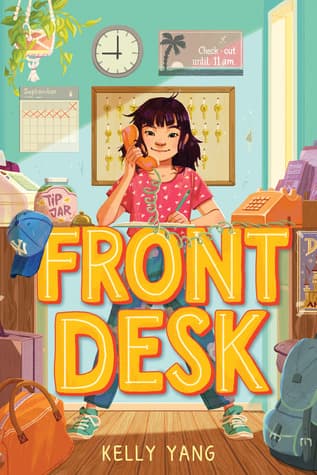
- Front Desk
Kelly Yang
4.4 (15k) average on GoodreadsChildren'sExplores themes of poverty, immigrant experiences, and finding resilience in challenging circumstances, often with a young protagonist.
- The Hate U Give
Angie Thomas
4.5 (504k) average on GoodreadsYoung AdultDeals with social justice issues, speaking truth to power, and a young person navigating complex societal divides, though for an older YA audience.
- Harry Potter and the Sorcerer's Stone
J.K. Rowling
4.5 (7M) average on GoodreadsFantasyRescued from a miserable life under the stairs, an orphaned boy discovers he's a wizard destined for a magical school, where he uncovers a dangerous secret tied to the dark wizard who murdered his parents.
- The Hobbit, or There and Back Again
J.R.R. Tolkien
4.3 (2.9M) average on GoodreadsFantasyA comfort-loving hobbit named Bilbo Baggins is whisked away by a mischievous wizard and a band of dwarves on an unexpected journey to reclaim stolen treasure from a fearsome dragon, discovering courage and a magical ring along the way.
- Harry Potter and the Goblet of Fire
J.K. Rowling
4.6 (2.6M) average on GoodreadsFantasyA bewildered Harry Potter, underage and thrust into a deadly Triwizard Tournament, must brave dragons, mermaids, and a resurgent dark magic to survive a year that will forever alter the wizarding world.
- Harry Potter and the Order of the Phoenix
J.K. Rowling
4.5 (2.5M) average on GoodreadsFantasyIn a year of oppressive secrets and the threat of Voldemort, Harry Potter and Dumbledore's Army secretly train for war, shown through Jim Kay and Neil Packer's dark illustrations.





Enjoyed the summary?
A summary gives you the shape of the book. The book itself has the detail, the examples and the voice.
Find The Benefits of Being an Octopus on AmazonAs an Amazon Associate, BookBrief earns from qualifying purchases. How we're funded