

Core Idea
- Difficulty
- Hard
- Read it if
- You want a deep, character-driven examination of the intellectual and political failures that led to the Vietnam War, focusing on the personalities and decision-making processes of America's elite policymakers.
- Skip it if
- You are looking for a concise overview of the Vietnam War, prefer a military history perspective, or want a book that offers easy answers or quick resolutions.
Key Takeaways from The Best and the Brightest
The Arrogance of Intellect
Brilliance without practical wisdom led to catastrophic miscalculations in Vietnam.
Halberstam explains how America's 'best and brightest'—highly intelligent, credentialed people from top schools—failed completely in Vietnam. Their intelligence, developed in academic and corporate settings, made them overconfident. They thought they could apply systems analysis and rational planning to a complex geopolitical and cultural conflict. This intellectual pride led them to ignore differing opinions, historical context, and to underestimate the determination and nature of the Vietnamese enemy. They believed their superior intelligence could overcome any problem. This caused them to be detached from the harsh realities of war and to tragically underestimate the human cost, for both Americans and Vietnamese.
“The very qualities that had brought them to power, their analytical brilliance and self-confidence, blinded them to the realities on the ground.”
In the book: The book details the backgrounds of figures like Robert McNamara, a brilliant Ford executive, and McGeorge Bundy, a Harvard dean, who approached the Vietnam War as a problem solvable through data, metrics, and strategic models, rather than understanding the deep historical, cultural, and political roots of the conflict.
Try this: Leaders should actively seek out and value diverse perspectives, especially those from the field or with unconventional backgrounds, to counteract the echo chamber effect of like-minded, highly credentialed individuals. Prioritize practical wisdom and humility over pure intellectual horsepower, particularly in complex, human-centric challenges.
Related ideas: intellectual-hubris, groupthink, rationality-trap
The Illusion of Control
American policymakers believed they could orchestrate a war from afar, ignoring ground realities.
A repeated idea is the policymakers' strong belief that they could control the war's story and outcome through gradual escalation and better technology. From Washington, D.C., they tried to manage every part of the conflict, from bombing targets to troop movements. They often based decisions on abstract numbers and cleaned-up reports. This top-down, distant approach created a false sense of control. They consistently underestimated the unpredictable nature of war and the resilience of the Vietnamese. They failed to understand that a war against an local, ideologically driven force on its home ground could not be 'managed' like a business project. This led to a dangerous gap between strategy and action.
“They had a boundless faith in the power of American technology and will, believing that sheer force could bend any situation to their design.”
In the book: The repeated failures of bombing campaigns like Operation Rolling Thunder, which were meticulously planned in Washington but failed to break the will of the North Vietnamese, illustrate this illusion. The constant demand for 'positive indicators' from the field, leading to manipulated reports, further highlights the disconnect.
Try this: In any large-scale endeavor, especially those involving human conflict or complex systems, prioritize decentralized decision-making and empower those closest to the ground. Leaders must cultivate a culture where unfiltered, even negative, information is welcomed and acted upon, rather than suppressed to maintain an illusion of progress.
Related ideas: centralized-control, strategy-execution-gap, technological-fallacy
The Trap of Escalation
Each step deeper into Vietnam made retreat politically impossible, creating a self-perpetuating cycle.
Halberstam clearly shows the 'slippery slope' of escalation that trapped the U.S. in Vietnam. What started as limited advisory roles slowly turned into a full military intervention. This was driven by a fear of seeming weak, losing face, or being seen as 'soft on communism.' Each new commitment of troops, resources, and American lives raised the stakes. This made it harder for policymakers to change course without admitting a big mistake and facing huge political consequences. This gradual commitment, without a clear long-term plan for victory or exit, became a self-reinforcing cycle. The perceived cost of pulling out always seemed higher than the cost of staying involved, even as the situation got worse.
“Once a nation has committed its prestige and its blood, the political cost of withdrawal becomes almost unbearable.”
In the book: The sequence of events from President Kennedy's increase of advisors to President Johnson's massive troop deployments following the Gulf of Tonkin incident demonstrates this. Each step was justified as necessary to prevent a greater loss, rather than a re-evaluation of the core premise.
Try this: Before committing to any significant course of action, especially in high-stakes situations, establish clear exit criteria and regularly reassess the fundamental assumptions. Leaders must foster an environment where admitting mistakes and changing course is seen as a strength, not a weakness, to avoid being trapped by sunk costs and political pride.
Related ideas: sunk-cost-fallacy, commitment-bias, political-trap
The Failure of Expertise
Specialized knowledge, when isolated, proved insufficient to grasp the holistic nature of the conflict.
The book reveals a key problem in relying only on specialized knowledge without combining it with a broader, more complete understanding. The 'best and brightest' were often experts in economics, strategic analysis, or military logistics. But few knew much about Vietnamese history, culture, or the details of guerrilla warfare. When differing voices, like those from career diplomats or regional experts, tried to point out these important aspects, they were often pushed aside. They were seen as lacking the 'hard data' or analytical rigor favored by the McNamara-era technocrats. This isolated expertise stopped a full assessment of the situation. It led to strategies that were technically sound but fundamentally wrong for the realities on the ground.
“They were specialists, brilliant in their narrow fields, but lacking the broader understanding of history, culture, and human nature that the conflict demanded.”
In the book: Ambassador George Kennan's early warnings about the dangers of intervention and the dismissal of French colonial history lessons by American policymakers exemplify the disregard for historical and cultural expertise.
Try this: When tackling complex problems, consciously assemble interdisciplinary teams that bring together diverse forms of knowledge – not just 'hard' data and analytics, but also historical context, cultural understanding, and human psychology. Create mechanisms for these diverse voices to be heard and integrated into decision-making, rather than allowing one form of expertise to dominate.
Related ideas: siloed-knowledge, interdisciplinary-failure, contextual-blindness
The Price of Conformity
Within the administration, challenging the consensus was career suicide, stifling crucial dissent.
Halberstam shows the strong pressures to conform within the Kennedy and Johnson administrations. The 'best and brightest' were part of an exclusive group. Expressing serious doubts about the Vietnam policy often meant risking one's career, influence, or social standing within this elite group. This created an environment where differing opinions were suppressed, softened, or simply not spoken. This led to a dangerous lack of critical self-reflection. The desire to stay loyal, show unity, and avoid being seen as 'weak' or 'unpatriotic' ultimately stopped the very intellectual rigor these people were supposed to have. It prevented needed changes.
“To question the war was to question the very judgment of the President, and few were willing to pay that price.”
In the book: The marginalization of figures like George Ball, who consistently argued against escalation, demonstrates the high cost of challenging the prevailing wisdom within the administration. His memos were often dismissed or ignored.
Try this: Leaders must actively cultivate a culture of psychological safety where dissent and critical feedback are not just tolerated but encouraged and rewarded. Implement formal and informal mechanisms for anonymous feedback or 'red team' exercises to ensure that uncomfortable truths can surface without fear of reprisal.
Related ideas: groupthink, conformity-bias, psychological-safety
The Dehumanization of the Enemy
Underestimating and misunderstanding the Vietnamese people fueled failed strategies.
A major failure Halberstam highlights is American policymakers' inability or unwillingness to truly understand their Vietnamese enemies. The Vietnamese were often seen as abstract figures in the global Cold War fight against communism. They were not seen as a people driven by deep nationalism, a desire for independence, and a long history of resisting foreign occupation. This dehumanization and misunderstanding led to a consistent underestimation of their resilience, their strategic cleverness, and their willingness to suffer greatly. American strategy relied on breaking their will through superior firepower. This tactic proved completely ineffective against an enemy fighting for their homeland.
“They saw the Vietnamese as a chess piece in a larger Cold War game, rather than a people with their own history, nationalism, and fierce will.”
In the book: The consistent misjudgment of North Vietnamese and Viet Cong resolve, despite escalating bombing and ground operations, highlights this. The belief that more force would inevitably lead to their capitulation ignored their historical context and motivations.
Try this: In any conflict or negotiation, dedicate significant resources to deeply understanding the motivations, history, and cultural context of the 'other side.' Avoid reducing adversaries to caricatures or abstract threats; instead, strive for empathetic understanding to inform more effective and humane strategies.
Related ideas: empathy-gap, othering, cultural-misunderstanding
The Erosion of Truth
Misleading information, both intentional and unintentional, corrupted decision-making.
Halberstam carefully details how truth became a casualty of the Vietnam War, both in operations and strategy. From manipulated body counts and 'pacification' numbers to overly optimistic progress reports, accurate information was consistently twisted. This happened partly from a desire to please superiors, partly from a genuine belief in the mission despite conflicting evidence, and partly from deliberate hiding of facts. This widespread loss of truth meant that policymakers in Washington often made decisions based on faulty information and a cleaned-up version of reality. This led to a constant cycle of bad strategies and an inability to recognize real failure until it was too late.
“The gap between what was happening on the ground and what was being reported in Washington grew into a chasm.”
In the book: The 'light at the end of the tunnel' rhetoric, consistently contradicted by battlefield realities, and the repeated optimistic reports from military commanders despite mounting evidence of stalemate, illustrate this corruption of truth.
Try this: Leaders must establish robust, independent channels for information gathering and analysis that are insulated from political pressures or the desire for positive news. Foster a culture of radical transparency and accountability, where those who bring bad news are valued for their honesty, not punished.
Related ideas: information-distortion, truth-decay, accountability-failure
The Weight of History
Policymakers were trapped by Cold War dogma and the specter of Munich.
The 'best and the brightest' were products of their time. They were deeply influenced by the lessons of World War II and the start of the Cold War. The appeasement at Munich, the perceived failure to stop communism in China, and the Korean War created a strong 'domino theory' mindset. This historical baggage made them see Vietnam not as a unique nationalistic struggle, but as another front in the global fight against communism. They believed any sign of weakness would encourage enemies worldwide. This rigid historical view stopped them from critically looking at Vietnam's specific situation. It blinded them to other, non-military solutions, effectively trapping them in a set ideological path.
“The ghosts of Munich and the Korean War loomed large, shaping their perceptions and limiting their options.”
In the book: The constant invocation of the 'domino theory' by successive administrations, arguing that if Vietnam fell, all of Southeast Asia would follow, demonstrates the powerful influence of this historical narrative.
Try this: While learning from history is crucial, leaders must avoid rigidly applying past lessons to present challenges without a thorough analysis of the unique context. Cultivate a flexible mindset that questions prevailing historical narratives and considers novel approaches, rather than being bound by past paradigms.
Related ideas: historical-bias, cold-war-ideology, domino-theory
The Personal Cost of Hubris
The intellectual architects of the war suffered profound personal and moral consequences.
Beyond the geopolitical tragedy, Halberstam also explores the personal cost for these intelligent men. While initially confident and detached, many of the 'best and brightest' later struggled with the moral implications and terrible human cost of their policies. The book subtly shows their growing disappointment, the fading of their initial certainties, and the heavy personal burden of having overseen such a disastrous failure. This human aspect adds a layer of sadness. It shows that even those with the highest intelligence and best intentions can be consumed by the results of their own pride and system failures, leaving behind a legacy of regret and damaged reputations.
“The weight of their decisions, and the human cost, would haunt many of them for the rest of their lives.”
In the book: The later reflections and public confessions of figures like Robert McNamara, who admitted his profound errors in judgment regarding Vietnam, serve as a stark reminder of this personal cost.
Try this: Leaders should regularly engage in self-reflection and moral auditing of their decisions, understanding the potential human and ethical consequences beyond immediate strategic objectives. Cultivate empathy and a willingness to confront difficult truths, even when it means acknowledging personal or systemic failures.
Related ideas: moral-dilemma, leadership-burden, ethical-leadership
The Limits of Power
Even the mightiest nation can be defeated by a determined, indigenous force.
Finally, 'The Best and the Brightest' is a clear reminder of the limits of even the strongest global power. This is true when it faces an enemy with strong will and deep nationalistic passion. The book shows that technology, vast economic resources, and intelligence are not enough to win against a determined, decentralized, and ideologically committed local force fighting on its home ground. The Vietnam War showed the false idea that military power alone could enforce political will. It highlighted how important it is to understand local situations, motivations, and the strong power of self-determination. It is a humbling lesson about how complex international involvement is and the lasting strength of human resolve.
“The sheer will of a people fighting for their independence proved more potent than the technological and military might of a superpower.”
In the book: The protracted nature of the war and the eventual withdrawal of U.S. forces, despite overwhelming military advantage, is the ultimate evidence of this takeaway. The Tet Offensive, while a military defeat for the North Vietnamese, was a psychological victory that exposed the limits of American power.
Try this: Before engaging in foreign intervention, carefully assess the adversary's will, motivations, and popular support, rather than focusing solely on their military capabilities. Recognize that some conflicts cannot be won by external force and prioritize diplomatic and political solutions over military ones, especially against deeply rooted nationalistic movements.
Related ideas: asymmetric-warfare, nationalism, geopolitical-limits
The Best and the Brightest Quotes
“They were going to go to Vietnam and they were going to win. They were going to make it work.”
“The very qualities that had brought them to power, their intelligence, their rationality, their sense of purpose, were the qualities that would ultimately doom them.”
“They were imprisoned by their own success, by their own sense of what was right, by their own definitions of power.”
“There was a failure of imagination, a failure to understand that the enemy was not just another army, but a people, and a cause.”
“The problem with the American involvement in Vietnam was not a lack of talent, but a surfeit of it.”
“They had confused the ability to analyze a problem with the ability to solve it.”
“The gap between rhetoric and reality became a chasm, and the bridge between them was burned.”
“They were men who believed in numbers, in systems, in the quantifiable. The human element, the unquantifiable, often eluded them.”
“The bureaucracy, once set in motion, had its own terrible logic, its own momentum.”
“The greatest danger lay not in the enemy's strength, but in America's own self-delusion.”
“They were so busy solving the problems of the world that they failed to see the problems within themselves.”
“The very best and the brightest, the most intelligent and articulate of their generation, had led the nation into a quagmire.”
“The price of their brilliance was paid in blood.”
“They had not anticipated the resilience of the Vietnamese, nor the corrosive effect of the war on American society.”
Quiz
10 questions on the main ideas. Each answer comes with a short explanation.
Question 1
Which U.S. President is most closely associated with the initial escalation of American involvement in Vietnam, as detailed in 'The Best and the Brightest'?
- John F. Kennedy
- Lyndon B. Johnson
- Dwight D. Eisenhower
- Richard Nixon
Show answer
B. Lyndon B. Johnson Halberstam extensively details how Lyndon B. Johnson's administration presided over the significant escalation of U.S. military involvement in Vietnam, moving from advisory roles to full-scale combat operations.
Question 2
Halberstam's central argument in 'The Best and the Brightest' attributes the failure in Vietnam primarily to what characteristic of the American policymakers?
- Lack of intelligence and education
- Moral corruption and greed
- Arrogance, hubris, and an inability to question their own assumptions
- Insufficient military resources
Show answer
C. Arrogance, hubris, and an inability to question their own assumptions The book's title itself, 'The Best and the Brightest,' is ironic, highlighting Halberstam's thesis that highly intelligent and credentialed individuals failed due to their overconfidence and inability to adapt to complex realities.
Question 3
Which Secretary of Defense is prominently featured in 'The Best and the Brightest' as a key architect of Vietnam policy, known for his reliance on quantitative analysis?
- Dean Rusk
- Robert McNamara
- McGeorge Bundy
- Clark Clifford
Show answer
B. Robert McNamara Robert McNamara, with his background in statistics and management from Ford, is a central figure in Halberstam's narrative, epitomizing the 'best and brightest' who applied rational, quantitative methods to an intractable conflict.
Question 4
Halberstam frequently contrasts the perspectives of the policymakers in Washington with which group of individuals, whose warnings were often disregarded?
- Soviet Bloc diplomats
- Academics and university professors
- Journalists, junior diplomats, and military advisors on the ground in Vietnam
- Domestic anti-war protestors
Show answer
C. Journalists, junior diplomats, and military advisors on the ground in Vietnam A recurring theme in the book is the disconnect between the optimistic, often abstract analyses of the policymakers in Washington and the more pessimistic, realistic assessments from those directly experiencing the conflict in Vietnam.
Question 5
The concept of 'credibility' played a significant role in the policymakers' decisions regarding Vietnam. How did Halberstam portray its influence?
- They believed maintaining American credibility globally was more important than the specific outcome in Vietnam.
- They were primarily concerned with the credibility of their economic models.
- They worried about the credibility of the South Vietnamese government above all else.
- They sought to enhance their personal credibility with the American public.
Show answer
A. They believed maintaining American credibility globally was more important than the specific outcome in Vietnam. Halberstam emphasizes that many policymakers felt compelled to continue the war to preserve America's international reputation and deter communist expansion elsewhere, even when doubts about victory in Vietnam grew.
Question 6
Which historical event, occurring shortly after the Gulf of Tonkin incident, significantly increased President Johnson's power to escalate military action in Vietnam without a formal declaration of war?
- The Tet Offensive
- The Dien Bien Phu defeat
- The Gulf of Tonkin Resolution
- The Cuban Missile Crisis
Show answer
C. The Gulf of Tonkin Resolution The Gulf of Tonkin Resolution, passed by Congress after alleged attacks on U.S. destroyers, gave President Johnson broad authority to use military force in Southeast Asia, which Halberstam argues was a critical turning point.
Question 7
Halberstam critiques the policymakers' understanding of the enemy in Vietnam. What was a key aspect of this misunderstanding?
- They underestimated the financial support the Viet Cong received from China.
- They failed to grasp the deep nationalist and anti-colonial motivations of the North Vietnamese and Viet Cong.
- They overestimated the conventional military strength of the North Vietnamese Army.
- They believed the Viet Cong were primarily motivated by religious ideology.
Show answer
B. They failed to grasp the deep nationalist and anti-colonial motivations of the North Vietnamese and Viet Cong. A central theme is the American failure to recognize that the Vietnamese struggle was driven by powerful nationalist desires for independence, rather than solely being a proxy for global communism, leading to a misjudgment of their will to fight.
Question 8
The book suggests that the 'best and brightest' often operated within an echo chamber. What psychological phenomenon best describes this dynamic among the policymakers?
- Cognitive dissonance
- Groupthink
- Confirmation bias
- Halo effect
Show answer
B. Groupthink Halberstam portrays a group of highly intelligent individuals who reinforced each other's assumptions and suppressed dissenting opinions, a classic example of groupthink, which led to flawed decision-making.
Question 9
Halberstam argues that the policymakers' backgrounds, often from elite institutions and with limited experience outside of academia or corporate boardrooms, contributed to their misjudgments in Vietnam. This reflects a critique of what aspect of American leadership?
- The lack of military experience among civilian leaders.
- The insularity and lack of practical, diverse experience within the foreign policy establishment.
- Their inability to understand economic theory.
- Their preference for secrecy over transparency.
Show answer
B. The insularity and lack of practical, diverse experience within the foreign policy establishment. Halberstam highlights how the similar, privileged backgrounds of these policymakers, often lacking direct experience with complex foreign cultures or ground-level realities, fostered a narrow perspective that hindered their ability to comprehend the Vietnam conflict.
Question 10
The book extensively covers the role of the press in shaping public understanding and challenging official narratives during the Vietnam War. How does Halberstam generally characterize the early relationship between the press and the 'best and brightest'?
- Initially cooperative and accepting of official statements, but increasingly critical as discrepancies emerged.
- Consistently adversarial from the outset, with deep distrust on both sides.
- Largely indifferent, with the press focusing more on domestic issues.
- Primarily supportive of the war effort, acting as government propagandists.
Show answer
A. Initially cooperative and accepting of official statements, but increasingly critical as discrepancies emerged. Halberstam documents how initially, many journalists shared the establishment's assumptions, but as they witnessed the realities on the ground in Vietnam, their reporting became increasingly skeptical and critical, clashing with the optimistic official pronouncements.
The Best and the Brightest FAQ
What is 'The Best and the Brightest' about?
'The Best and the Brightest' by David Halberstam is a definitive historical account of how America became embroiled in the Vietnam War. It explores the decisions, personalities, and underlying forces that led the United States into the conflict and ultimately to its defeat.
Who were 'The Best and the Brightest' mentioned in the book?
The 'Best and the Brightest' refers to the highly intelligent, often Ivy League-educated policy makers and advisors in the administrations of Presidents Kennedy and Johnson. These individuals, despite their impressive credentials, are depicted as having made critical errors in judgment regarding Vietnam.
Does 'The Best and the Brightest' explain why America lost the Vietnam War?
Yes, the book meticulously dissects the factors contributing to America's failure in Vietnam, focusing on the flawed strategies, miscalculations, and the hubris of the policy makers. It argues that a combination of internal political pressures, a misunderstanding of Vietnamese culture, and overconfidence led to the eventual loss.
How does 'The Best and the Brightest' differ from other books about the Vietnam War?
While many books cover the Vietnam War, Halberstam's work stands out for its deep focus on the personal and political dynamics within the American leadership. It's less a battlefield history and more an examination of the intellectual and cultural forces that shaped policy, offering detailed portraits of key figures.
Is 'The Best and the Brightest' still relevant today?
Absolutely. The book's insights into leadership, the dangers of groupthink, the complexities of foreign intervention, and the disconnect between policy makers and reality remain highly pertinent. It serves as a cautionary tale for contemporary political and military decision-making.
What is the significance of the title 'The Best and the Brightest'?
The title is deeply ironic, highlighting the paradox that highly intelligent and credentialed individuals could lead the nation into such a catastrophic conflict. It questions whether intelligence alone is sufficient without wisdom, empathy, and a clear understanding of complex geopolitical realities.
Does the book cover the perspectives of the Vietnamese people?
While the book primarily focuses on the American decision-making process and the figures within the U.S. government, it does touch upon the misinterpretations and lack of understanding of Vietnamese history and motivations by American leaders. However, it is not written from the Vietnamese perspective.
What kind of research did David Halberstam conduct for this book?
David Halberstam conducted extensive research, including countless interviews with key figures involved in the Vietnam War policy, as well as drawing upon his own experience as a war correspondent in Vietnam. His journalistic rigor and access provided a rich, detailed narrative.
About the author
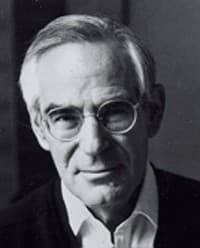
David Halberstam was an American writer, journalist, and historian, known for his work on the Vietnam War, politics, history, the Civil Rights Movement, business, media, American culture, Korean War, and later, sports journalism. He won a Pulitzer Prize for International Reporting in 1964. Halberstam was killed in a car crash in 2007, while doing research for a book.
Similar books
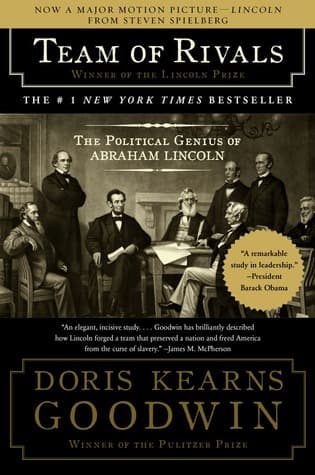
- Team of Rivals: The Political Genius of Abraham Lincoln
Doris Kearns Goodwin
4.3 (152k) average on GoodreadsPoliticsExamines the complex dynamics and intellectual clashes within a presidential administration during a period of national crisis.
- The Guns of August
Barbara W. Tuchman
4.2 (58k) average on GoodreadsPoliticsDetails the cascade of decisions and miscalculations by intelligent leaders that led to World War I.
- 1984
George Orwell
4.2 (3.1M) average on GoodreadsPoliticsIn a future where surveillance and thought control are absolute, a man's search for truth clashes with the Party, showing that hope can be a form of rebellion.
- Animal Farm
George Orwell
4.0 (2.7M) average on GoodreadsPoliticsA farm animals' rebellion against humans turns into a pig-led dictatorship, showing how power corrupts and revolutionary ideals are betrayed.
- Freakonomics: A Rogue Economist Explores the Hidden Side of Everything
Steven D. Levitt
4.0 (709k) average on GoodreadsBusinessThis book uses economic principles to reveal the surprising incentives behind everything from drug dealing and real estate to cheating teachers and the decline of crime.
- I Am Malala: The Story of the Girl Who Stood Up for Education and Was Shot by the Taliban
Malala Yousafzai
4.1 (419k) average on GoodreadsPoliticsA teenage girl from a Taliban-controlled valley refuses to give up her books, becoming a global voice for education even after an assassination attempt.





Enjoyed the summary?
A summary gives you the shape of the book. The book itself has the detail, the examples and the voice.
Find The Best and the Brightest on AmazonAs an Amazon Associate, BookBrief earns from qualifying purchases. How we're funded