
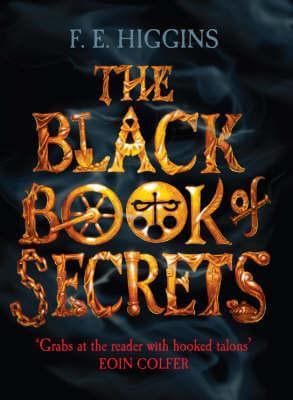
Synopsis
Covers the whole plot, including the ending.
- Difficulty
- Medium
- Pacing
- Moderate
- Mood
- Atmospheric, Dark, Mysterious, Suspenseful
- Read it if
- You enjoy dark, atmospheric mysteries with a touch of the macabre, featuring a young protagonist uncovering sinister secrets in a gothic setting.
- Skip it if
- You prefer light-hearted stories or are sensitive to themes of child abduction, murder, and betrayal.
The Black Book of Secrets Plot Summary
Covers the whole plot, including the ending.
Ludlow's Escape and Arrival in Pagus Parvus
Ludlow Fitch, a boy from a poor family in the City, is sold by his parents to a chimney sweep. Ludlow escapes during his transport, hiding on a carriage. The carriage takes him to the desolate, misty village of Pagus Parvus. Cold, hungry, and alone, Ludlow walks the streets until he finds a shop with a faint glow. Here, he meets Joe Zabbidou, a tall, limping man who offers him shelter and a strange job.
Joe Zabbidou's Peculiar Business
Joe Zabbidou tells Ludlow his business is unique: he deals in secrets. Villagers confess their worst deeds, regrets, or scandals, getting money for their revelations. Ludlow becomes Joe's assistant, carefully writing these confessions in a large, leather-bound book called 'The Black Book of Secrets.' He is told not to read the secrets, only to write them, and warned about the dangerous information. This new job gives Ludlow a home and food, but also puts him in the hidden bad parts of Pagus Parvus.
The Gravedigger's Confession and the Whispers of the Town
Ludlow's first entry in The Black Book is the confession of the local gravedigger, Silas, who says he has been bringing bodies back to life to sell them to a 'doctor' for study, because he is poor. Ludlow is scared but writes the details. As he gets used to his job, Ludlow sees the strange people of Pagus Parvus: the grotesque Butcher Bap, the secretive bookseller Mrs. Margolois, and the always fearful Mrs. Pinch. He hears whispers and sees their odd interactions, realizing that underneath the village's quiet outside is a network of hidden crimes and moral compromises, all going through Joe Zabbidou's shop.
The Butcher's Confession and Ludlow's Growing Curiosity
Butcher Bap, a cruel man, comes to Joe to confess his own secret. He says he purposely made a 'mouse-meat' pie for his bullying father, which led to his father's death. Ludlow, despite his instructions, feels drawn to the book's contents, putting together pieces of the villagers' connected lives. He starts to think that Joe Zabbidou is not just taking secrets but might be changing events or using the information for his own reasons. Ludlow's first fear of Joe turns into a strong curiosity about his master's past and what The Black Book is really for.
Mrs. Margolois and the Stolen Tome
Mrs. Margolois, the bookseller, confesses her crime: she killed a rival bookseller to get a priceless, old book she wanted. Her cold confession scares Ludlow, showing how far villagers will go for their desires. As Ludlow writes these disturbing stories, he starts to notice patterns and links between the secrets, realizing that many villagers' troubles and wrongs are connected. The amount of bad things in the book makes him question Pagus Parvus's morals and what people are really like.
Ludlow's Own Secret and the Discovery of Joe's Past
Ludlow has his own secret: he once stole a small, valuable silver locket from a rich woman. This desperate act, caused by hunger and fear, led to his parents' anger and his sale. This personal guilt makes him both understanding and cautious. Because of his growing suspicion, Ludlow secretly explores Joe's shop and finds a hidden room. Inside, he finds old maps, star charts, and strange objects, all suggesting Joe Zabbidou was once a scholar or explorer, far from his current job as a pawnbroker of secrets. The discovery makes Joe even more mysterious.
The Secret of Pagus Parvus and the Missing Children
From broken conversations and his own observations, Ludlow learns about Pagus Parvus's biggest secret: children have been disappearing from the village for many years, often blamed on a mythical 'Shadowman.' He realizes that Joe Zabbidou came to the village soon after the last disappearance. The villagers' fear and quiet talk about the topic suggest a deeper, worse truth. Ludlow starts to connect things, wondering if Joe's presence and The Black Book are linked to these sad events, or if Joe is trying to solve the mystery.
Joe's True Purpose Revealed
When Ludlow asks more questions and shows his growing knowledge, Joe Zabbidou finally tells him his real reason. He explains that he is not just collecting secrets for money but is looking into the disappearances of children in Pagus Parvus, trying to find the 'Shadowman.' Joe believes that the villagers' secrets, especially their hidden desires and guilt, have clues to the criminal's identity and location. He uses the information in The Black Book to solve a complex puzzle, hoping to bring justice to the lost children and peace to the village. Ludlow, at first scared, now feels he has a purpose helping Joe.
The Confrontation and the Locket's Clue
While writing a new confession, Ludlow sees a detail that connects to his own stolen locket—a unique design on the clasp. This leads him to a surprising conclusion about who the 'Shadowman' really is. The locket, which he had kept hidden, becomes important evidence. He bravely tells Joe Zabbidou what he found, and together they put together the last clues from The Black Book. The person responsible is someone unexpected, a respected community member who had hidden their bad deeds behind a normal appearance, using their position to take the children.
Justice and a New Beginning
With Ludlow's insight and Joe's careful records, the 'Shadowman' is found and brought to justice. The villagers, once afraid and silent, are freed from the terror in Pagus Parvus. The criminal's identity shocks the community, making them face their own silence and the darkness they had ignored. Joe Zabbidou, having finished his task, gets ready to leave Pagus Parvus. Ludlow, no longer a scared runaway, has changed a lot. He chooses to stay in Pagus Parvus, a different boy with a new sense of purpose and belonging, ready for his future with courage and honesty.
Principal Figures
Ludlow Fitch
Protagonist
A young, naive boy who escapes a cruel fate and becomes Joe Zabbidou's assistant.
Ludlow is a timid and impoverished boy from the City, initially driven by fear and a longing for security. He is observant and intelligent, quickly piecing together the dark undercurrents of Pagus Parvus. He carries the guilt of a past theft, which makes him both empathetic to the villagers' secrets and wary of his own. His journey is one of self-discovery, moving from a frightened, passive observer to an active participant in uncovering the truth. He develops a strong moral compass and a surprising courage, ultimately choosing to stay and help the village.
Relationships: Joe Zabbidou (Master and apprentice, mentor and protégé); His Parents (Betrayers, source of his initial flight)
Joe Zabbidou
Supporting
A mysterious, limping pawnbroker who trades in secrets and seeks justice for missing children.
Joe Zabbidou is a tall, enigmatic man with a limp, whose true motives are shrouded in mystery for much of the story. He runs a unique business in Pagus Parvus, exchanging money for villagers' darkest secrets, which he meticulously records in The Black Book. He appears detached and calculating, but his underlying purpose is noble: to uncover the identity of the 'Shadowman' responsible for the disappearances of children. He acts as a mentor figure to Ludlow, guiding him through the moral complexities of the village. His past is hinted at, suggesting a life of scholarship and perhaps personal tragedy.
Relationships: Ludlow Fitch (Master and apprentice, mentor and protégé); The Villagers (Confessors and subjects of his investigation)
Silas
Supporting
The impoverished gravedigger of Pagus Parvus, forced into macabre acts for survival.
Silas is the village gravedigger, one of the first villagers to confess a secret to Joe Zabbidou. Driven by extreme poverty, he resorted to secretly exhuming bodies from graves to sell them to a 'doctor' for medical study. His confession highlights the desperation that can lead ordinary people to commit heinous acts. He is a minor character but his secret sets the tone for the moral decay present in Pagus Parvus and the chilling nature of the confessions Ludlow records.
Relationships: Joe Zabbidou (Confessor to pawnbroker)
Butcher Bap
Supporting
A cruel and grotesque butcher who confesses to a particularly gruesome act against his father.
Butcher Bap is a physically repulsive and morally reprehensible character. He is known for his bullying nature and his general unpleasantness. His secret, confessed to Joe, reveals that he deliberately fed his abusive father a pie made with 'mouse-meat,' leading to his father's death. This act underscores the deep-seated malice and revenge present within the villagers. He serves as an example of the moral corruption that Joe Zabbidou's business exposes, and his confession is one of the more shocking ones Ludlow records.
Relationships: Joe Zabbidou (Confessor to pawnbroker)
Mrs. Margolois
Supporting
The village bookseller, who murdered for a priceless literary tome.
Mrs. Margolois is the seemingly respectable but ruthlessly ambitious bookseller of Pagus Parvus. Her passion for rare books transcends morality, leading her to commit murder. She confesses to killing a rival bookseller to acquire a unique and valuable ancient tome. Her cold, calculated confession demonstrates the extreme lengths to which some villagers will go for their obsessions. She is a key example of how even seemingly benign figures in the village harbor dark secrets, and her crime adds another layer of intrigue and horror to the collection of secrets in The Black Book.
Relationships: Joe Zabbidou (Confessor to pawnbroker)
Mrs. Pinch
Supporting
A perpetually fearful and gossipy villager, often the first to spread rumors.
Mrs. Pinch is a minor but notable character who embodies the pervasive fear and gossip within Pagus Parvus. She is often seen whispering, clutching her shawl, and is quick to spread news or speculation about the 'Shadowman' and the missing children. While she doesn't confess a major crime, her constant anxiety and willingness to believe in dark rumors contribute to the oppressive atmosphere of the village and highlight the collective fear that has gripped its inhabitants for years. She represents the general populace's reaction to the underlying evil.
Relationships: The Villagers (Source and recipient of gossip and fear)
The 'Shadowman'
Antagonist
The unknown perpetrator responsible for the disappearances of children in Pagus Parvus.
The 'Shadowman' is not a single character in the traditional sense for much of the story, but rather a terrifying, mythical figure created by the fearful villagers to explain the recurring disappearances of children. This antagonist remains an anonymous, unseen threat for most of the book, driving Joe Zabbidou's mission and instilling a pervasive sense of dread in Pagus Parvus. The revelation of the 'Shadowman's' true identity is the central mystery, exposing a seemingly ordinary villager as a calculating and depraved abductor.
Relationships: Joe Zabbidou (Target of his investigation); Ludlow Fitch (Unwitting assistant in his capture)
Ludlow's Parents
Mentioned
Impoverished and desperate City dwellers who cruelly sell Ludlow.
Ludlow's parents are minor characters who appear only briefly at the beginning of the story. Driven by extreme poverty and perhaps a lack of compassion, they sell Ludlow to a chimney sweep master, initiating his escape and the entire plot. Their actions represent the harsh realities and desperation of life in the City and serve as the catalyst for Ludlow's journey to Pagus Parvus. They embody betrayal and the struggle for survival in a cruel world, leaving Ludlow with emotional scars.
Relationships: Ludlow Fitch (Biological parents, but betrayers)
Themes & Insights
Secrets and Their Burden
The main theme is about secrets—how they start, the burden they create, and their power to shape lives and communities. The Black Book shows this theme, collecting Pagus Parvus's hidden truths. Villagers' confessions show human badness, desperation, and regret, showing how secrets can lead to moral decay or be used to manipulate. Ludlow's own secret theft and his entry into the village's hidden world show the weight of hidden truths.
“For there was nothing so dark and so powerful that it could not be contained within the pages of The Black Book of Secrets.”
Justice and Retribution
The search for justice, especially for the missing children of Pagus Parvus, drives the story. Joe Zabbidou's business aims to uncover the truth behind these disappearances, using villagers' secrets as clues. The theme explores if justice can be served, and what it looks like when crimes are hidden and the community is silent. Ludlow's involvement changes him from an observer to an active helper in bringing the criminal to justice, showing that even a young boy can help correct wrongs.
“Someone had to remember the children. Someone had to find out what had happened to them.”
Identity and Belonging
Ludlow's journey is about finding his place after being left and betrayed. He arrives in Pagus Parvus as an outsider, an orphan, looking for belonging. His job as Joe's assistant, writing the village's darkest truths, makes him face his own morals and decide who he wants to be. By the end, he stays in Pagus Parvus, having found a new identity rooted in courage and purpose, not fear and anonymity. This theme explores how one's surroundings and experiences shape how they see themselves.
“He was no longer Ludlow Fitch, the boy who had been sold. He was Ludlow Fitch, the keeper of secrets.”
The Corrupting Influence of Fear and Greed
Many secrets in The Black Book come from fear and greed. Silas the gravedigger acts out of poverty, while Mrs. Margolois kills out of greed for a valuable book. The whole village lives in fear of the 'Shadowman,' which leads to silence, letting the criminal act for years. This theme shows how these strong human feelings can twist morals, lead to desperate acts, and let evil grow when not stopped. Joe Zabbidou's business uses these human flaws.
“Fear was a powerful thing in Pagus Parvus, stronger than truth, stronger than justice.”
Plot Devices & Literary Techniques
The Black Book of Secrets
A large, leather-bound ledger where villagers' confessions are recorded.
The Black Book is the central symbolic and literal plot device. It functions as a repository for the villagers' hidden truths and crimes, providing the narrative structure for Ludlow's immersion into the dark underbelly of Pagus Parvus. More than just a ledger, it becomes a tool for investigation for Joe Zabbidou, as he uses the collected secrets to piece together clues about the 'Shadowman.' For Ludlow, it is a source of both horror and fascination, forcing him to confront the complexities of human nature and ultimately leading him to discover the truth.
The 'Shadowman' Legend
A mythical figure used to explain the disappearances of children in Pagus Parvus.
The 'Shadowman' is a local legend that serves as a red herring and a powerful symbol of fear and the unknown. Attributing the missing children to a mythical entity allows the villagers to avoid confronting the uncomfortable truth that a human perpetrator is among them. This device creates suspense and dread throughout the story, as Ludlow and Joe work to unmask the true identity behind the legend. It highlights how communities can create narratives to cope with unspeakable horrors, often enabling the real evil to persist unchecked.
Ludlow's Own Secret
Ludlow's past theft of a silver locket, which later becomes a crucial clue.
Ludlow's personal secret—the theft of a silver locket—serves as a character-driven plot device. It connects him emotionally to the themes of guilt and hidden pasts, allowing him to empathize with the confessors. More importantly, the locket itself becomes a critical piece of evidence in solving the mystery of the 'Shadowman.' Its unique design, recognized from a confession, provides the final link to the antagonist, demonstrating how seemingly insignificant personal details can hold immense importance in solving a larger mystery. It also gives Ludlow agency in the climax.
Confessions and Intertwined Narratives
The narrative technique of revealing plot through individual villager confessions.
The structure of the story relies heavily on the device of individual confessions. Each villager's secret, recorded by Ludlow, serves as a mini-narrative that builds the overall picture of Pagus Parvus and its dark history. These confessions are not isolated incidents; they often subtly intertwine, revealing connections between characters and events that Ludlow gradually uncovers. This technique allows the author to reveal plot details gradually, build suspense, and create a complex web of moral ambiguity, reflecting the interconnectedness of human actions and their consequences within a small community.
The Black Book of Secrets Quotes
“The wind howled a song of sorrow, a lament for all that was lost and all that was yet to be found.”
“Secrets are like shadows, they grow longer and darker the longer you try to hide them.”
“There are some truths that are best left undisturbed, like ancient dust in a forgotten tomb.”
“Even the smallest key can unlock the biggest secrets, if you know where to look.”
“Hope, my boy, is a fragile thing, easily crushed, but even more easily rekindled.”
“The city itself was a labyrinth of whispers and shadows, each alleyway a potential trap, each window a watchful eye.”
“Some stories are not meant to be told, but to be felt, deep in the marrow of your bones.”
“He carried his past like a heavy cloak, each fold a memory, each stitch a regret.”
“Fear can be a useful tool, if you know how to wield it, but it can also be a terrible master.”
“The truth, like a river, will always find its way to the sea, no matter how many dams you build.”
“Sometimes, the greatest darkness hides within the brightest smiles.”
“A good lie, like a carefully crafted illusion, requires attention to detail and a touch of magic.”
“The world is full of forgotten things, and sometimes, those are the most important of all.”
“Every lock has a key, and every secret has a whisper waiting to be heard.”
Quiz
10 questions on the plot and the characters. Each answer comes with a short explanation.
Question 1
Why does Ludlow Fitch leave the City at the beginning of the story?
- He was banished for theft.
- His parents cruelly betrayed him.
- He was seeking adventure.
- He ran away to find work.
Show answer
B. His parents cruelly betrayed him. Ludlow's journey begins because his parents betrayed him, leading him to steal away on a carriage.
Question 2
What is Joe Zabbidou's unique profession?
- He is a regular pawnbroker, trading goods for cash.
- He is a baker who specializes in unusual ingredients.
- He trades secrets for cash.
- He is a bookseller of rare and forbidden texts.
Show answer
C. He trades secrets for cash. Joe Zabbidou is a pawnbroker with a difference; he trades secrets, not typical goods, for cash.
Question 3
What is the name of the ancient leather-bound volume in which Ludlow records the villagers' confessions?
- The Tome of Truths
- The Ledger of Lies
- The Black Book of Secrets
- The Scroll of Sins
Show answer
C. The Black Book of Secrets Ludlow's primary task as Joe's assistant is to record the villagers' confessions in the book known as 'The Black Book of Secrets'.
Question 4
Which character is described as a gravedigger who has been resurrecting bodies?
- The butcher
- One of Joe Zabbidou's clients
- Ludlow Fitch's former employer
- A character from Ludlow's past in the City
Show answer
B. One of Joe Zabbidou's clients The synopsis mentions a gravedigger who has been resurrecting bodies as one of the villagers whose fiendish confessions are recorded in the Black Book.
Question 5
What is the physical characteristic that distinguishes Joe Zabbidou?
- He is unusually short.
- He has a distinctive limp.
- He wears a large, ornate hat.
- He has a scarred face.
Show answer
B. He has a distinctive limp. Joe Zabbidou is introduced as a 'tall and limping figure', a key physical detail about the character.
Question 6
What did the butcher character do that had 'fatal consequences' for his father?
- He poisoned his father's drink.
- He pushed his father down a flight of stairs.
- He made a mouse-meat pie for his bullying father.
- He neglected to give his father his medicine.
Show answer
C. He made a mouse-meat pie for his bullying father. The synopsis specifically details that the butcher 'made a mouse-meat pie for his bullying father, with fatal consequences'.
Question 7
What is a central theme explored through Ludlow's relationship with Joe Zabbidou and the villagers?
- The importance of forgiveness and redemption.
- The nature of trust, secrets, and hidden darkness within individuals.
- The struggle between good and evil in a magical world.
- The pursuit of wealth at any cost.
Show answer
B. The nature of trust, secrets, and hidden darkness within individuals. The entire premise revolves around trading and recording secrets, and Ludlow's longing to trust Joe while sensing he has much to hide, highlighting themes of trust, secrets, and inherent darkness.
Question 8
What specific action did the wizened bookseller take to acquire a priceless tome?
- She bartered her entire shop.
- She went to murderous lengths.
- She discovered it in a hidden library.
- She outbid all other collectors at auction.
Show answer
B. She went to murderous lengths. The synopsis explicitly states the bookseller 'went to murderous lengths to get her hands on a priceless tome', indicating a dark and violent act.
Question 9
What does Ludlow's internal conflict regarding Joe Zabbidou reveal about the book's narrative complexity?
- It suggests Joe is secretly a benevolent guardian.
- It establishes a clear villain-protagonist dynamic from the outset.
- It introduces moral ambiguity and the idea that even central figures may harbor darkness.
- It foreshadows a simple betrayal that Ludlow will easily overcome.
Show answer
C. It introduces moral ambiguity and the idea that even central figures may harbor darkness. Ludlow's internal struggle to trust Joe, despite sensing his master has 'much to hide', combined with the final line 'Ludlow Fitch has his own, very dark, secrets', indicates a complex narrative where characters, including the protagonist and his mentor, are not simply good or evil but possess hidden depths and moral ambiguities.
Question 10
The description of Ludlow's arrival in the remote village at 'dead of night' and his parents' 'cruel betrayal' sets what kind of atmosphere for the story?
- A whimsical and lighthearted adventure.
- An idyllic and peaceful rural escape.
- A mysterious, dark, and potentially unsettling tone.
- A bustling and vibrant urban mystery.
Show answer
C. A mysterious, dark, and potentially unsettling tone. The initial events—betrayal, escaping a 'stinking City', arriving in a remote village 'in the dead of night', and encountering a 'limping figure' who trades secrets—all contribute to a mysterious, dark, and somewhat unsettling atmosphere, fitting for a story involving 'fiendish confessions' and 'dark secrets'.
The Black Book of Secrets FAQ
What is 'The Black Book of Secrets' about?
'The Black Book of Secrets' follows Ludlow Fitch, a young boy betrayed by his parents, who flees to a remote village and becomes the assistant to Joe Zabbidou, a mysterious pawnbroker who trades in secrets. Ludlow's job is to record the villagers' dark confessions in the titular Black Book, uncovering their hidden crimes and motivations while also trying to unravel the enigma of his master and confront his own past.
Why should I read 'The Black Book of Secrets'?
You should read 'The Black Book of Secrets' for its unique blend of dark fantasy, mystery, and moral complexity. It offers a compelling narrative filled with eccentric characters, each with their own chilling secrets, and explores themes of justice, redemption, and the weight of hidden truths, all wrapped in atmospheric historical fiction with a gothic sensibility.
What is the background/setting of 'The Black Book of Secrets'?
The story is set in a remote, unnamed village, described as desolate and perpetually shrouded in a grey atmosphere, far from the 'stinking City' Ludlow escapes. This isolated, almost timeless setting, with its cobbled streets and peculiar inhabitants, perfectly complements the book's gothic and mysterious tone, creating an oppressive yet intriguing backdrop for the unfolding secrets.
What are the most memorable quotes?
One memorable concept is 'A secret is a heavy burden, but a shared secret is a bond.' Another is the recurring idea that 'some secrets are best left buried,' which often proves tragically true for the villagers. While not direct quotes, these encapsulate the book's core philosophy about the power and danger of hidden truths.
What writing style does the author use?
F.E. Higgins employs a distinctive gothic and atmospheric writing style, rich in vivid descriptions that evoke a sense of unease and mystery. The prose is often dark and slightly macabre, yet accessible for young adult readers, focusing on the psychological aspects of its characters and their hidden lives.
What minor details add significant meaning?
The recurring motif of Joe Zabbidou's limp and his peculiar, almost otherworldly demeanor, along with the fact that he never appears to eat or sleep like normal people, subtly hints at his true, non-human nature long before it's explicitly revealed. These details build an aura of mystery around him that is crucial to the plot's later twists.
What are some subtle foreshadowing moments?
Early in the story, Joe Zabbidou's uncanny ability to know a secret without being told, and his seemingly ageless appearance, subtly foreshadow his true identity as a supernatural being. Also, the descriptions of Ludlow's own 'very dark secrets' from the City hint at the betrayal by his parents and his act of revenge, which is later revealed.
What unexpected character connections exist?
An unexpected connection is between Joe Zabbidou and the very concept of secrets and justice, implying he is an ancient, perhaps eternal, arbiter. Also, the various seemingly isolated villagers' secrets often have ripple effects, subtly connecting them through the web of their shared moral failings, such as the butcher's actions influencing his family, or the gravedigger's affecting the entire community's peace.
What are unspoken character motivations?
Joe Zabbidou's unspoken motivation, beyond simply collecting secrets for cash, is to expose moral failings and perhaps bring a form of twisted justice or consequence to those who harbor dark deeds. Ludlow's unspoken motivation for staying with Joe, despite his fear, is a deep-seated desire for belonging and a strange form of validation, as he himself is burdened by his past and seeks understanding.
What psychological complexities do characters exhibit?
Ludlow exhibits significant psychological complexity, grappling with the trauma of his parents' betrayal and his own act of revenge, which leads to a constant internal struggle between his desire for goodness and his darker impulses. The villagers, too, show complexity, often driven to their heinous acts by desperation, greed, or a twisted sense of self-preservation, revealing the dark underbelly of human nature.
What are the major emotional turning points?
A major emotional turning point for Ludlow is the revelation of his own dark secret – how he dealt with his treacherous parents – which forces him to confront his capacity for cruelty. Another is when he finally understands Joe Zabbidou's true nature and purpose, shifting his perception of his master from a mysterious figure to an ancient, impartial entity, leading to a profound re-evaluation of his role.
How do relationship dynamics evolve?
The relationship between Ludlow and Joe Zabbidou evolves from that of a frightened, subservient assistant to a more complex bond of understanding and reluctant partnership. Initially, Ludlow fears Joe, but as he records more secrets and learns more about his master, he begins to see Joe as a necessary, albeit morally ambiguous, force in the world, eventually accepting his role in Joe's unique enterprise.
Which parts remain ambiguous or open-ended?
The precise nature and origin of Joe Zabbidou remain somewhat ambiguous; while he is revealed to be an ancient being, his full backstory and the extent of his powers are left to the reader's imagination. The ultimate fate of some of the villagers, beyond the immediate consequences of their revealed secrets, also remains open-ended, leaving room for contemplation on justice and redemption.
What are controversial scenes or decisions?
Ludlow's decision to exact revenge on his cruel parents, by abandoning them in a way that leads to their probable demise, is a controversial scene. It forces readers to grapple with the ethics of vengeance, especially from a child, and whether such an act can ever be justified, even in response to extreme cruelty.
The Black Book of Secrets ending explained: how it ends & what it means
The book ends with Ludlow fully embracing his role as Joe Zabbidou's assistant, having come to terms with his own past and understood Joe's purpose as an ancient keeper of secrets and bringer of a unique form of justice. It signifies Ludlow's acceptance of the dark complexities of the world and his place within it, suggesting a future where he continues to record the hidden truths of humanity, perhaps even finding a strange form of peace or purpose in this macabre calling.
Similar books
- Coraline
Neil Gaiman
4.0 (23k) average on GoodreadsFantasyA young protagonist uncovers a sinister, unsettling truth in a seemingly ordinary setting.
- The Graveyard Book
Neil Gaiman
4.1 (438k) average on GoodreadsFantasyA young boy raised in an unusual, slightly macabre environment, surrounded by secrets and danger.
- Harry Potter and the Sorcerer's Stone
J.K. Rowling
4.5 (7M) average on GoodreadsFantasyRescued from a miserable life under the stairs, an orphaned boy discovers he's a wizard destined for a magical school, where he uncovers a dangerous secret tied to the dark wizard who murdered his parents.
- The Hunger Games
Suzanne Collins
4.3 (6.4M) average on GoodreadsFantasyIn a future where children fight to the death on live television, Katniss Everdeen volunteers for the arena, turning a death sentence into a fight for survival and a spark of rebellion.
- 1984
George Orwell
4.2 (3.1M) average on GoodreadsPoliticsIn a future where surveillance and thought control are absolute, a man's search for truth clashes with the Party, showing that hope can be a form of rebellion.
- Divergent
Veronica Roth
4.2 (2.9M) average on GoodreadsFantasyIn a society divided by virtues, a sixteen-year-old's difference from the norm starts a rebellion that threatens her world.





Enjoyed the summary?
A summary gives you the shape of the book. The book itself has the detail, the examples and the voice.
Find The Black Book of Secrets on AmazonAs an Amazon Associate, BookBrief earns from qualifying purchases. How we're funded