

Synopsis
Covers the whole plot, including the ending.
- Difficulty
- Easy
- Pacing
- Moderate
- Mood
- Witty, Amusing, Satirical, Lighthearted, Charming
- Read it if
- You enjoy witty, satirical comedies of manners with a focus on cultural clashes and a memorable, mischievous child character.
- Skip it if
- You prefer deep emotional romance, plot-driven narratives over character studies, or dislike stories where infidelity is a central theme.
The Blessing Plot Summary
Covers the whole plot, including the ending.
The Whirlwind Courtship
Grace Allingham, a young, somewhat naive Englishwoman, travels to France to visit friends. While there, she meets the incredibly charming and handsome French count, Charles-Edouard de Valhubert. Their courtship is swift and passionate, a whirlwind of romantic gestures and declarations that sweep Grace off her feet. Despite her family's initial reservations about the speed and nature of the match, Grace, deeply in love and enchanted by Charles-Edouard's aristocratic world, agrees to marry him. She envisions a life of idyllic romance in the French countryside, unaware of the complexities and cultural differences that lie ahead.
A New Life in France
After their marriage, Grace moves into Charles-Edouard's family chateau, which, while grand, is also somewhat dilapidated and run with a peculiar French flair. She quickly discovers that her romanticized view of French aristocratic life clashes significantly with reality. Charles-Edouard's family and friends, particularly his mother, the formidable Comtesse de Valhubert, are a tight-knit and often bewildering group. Grace finds herself an outsider, struggling to understand the nuances of French conversation, social etiquette, and the daily routines, which are far removed from her English upbringing. Her initial joy begins to be tinged with feelings of isolation and inadequacy.
The Blessing Arrives
Grace soon becomes pregnant and gives birth to a son, Sigismund. She dotes on him, finding immense joy and purpose in motherhood, which somewhat alleviates her feelings of loneliness and cultural displacement. Sigismund, who is referred to as 'The Blessing,' quickly becomes the focal point of her life. He is a beautiful and precocious child, and Grace pours all her affection and attention into raising him. Charles-Edouard, while fond of his son, maintains a more detached, traditional aristocratic view of fatherhood, leaving most of the child-rearing to Grace and the household staff.
Charles-Edouard's Infidelities
As Sigismund grows, Grace's initial romantic illusions about Charles-Edouard begin to crumble. She gradually becomes aware of his casual infidelities, which are treated with an almost nonchalant acceptance by his French family and friends. Charles-Edouard, in their view, is simply behaving as a French nobleman does. Grace, however, is deeply hurt and bewildered by his lack of discretion and his expectation that she should simply tolerate his affairs. This cultural clash regarding fidelity creates a growing rift between them, making Grace feel even more isolated and betrayed within her marriage.
Return to England
Distraught by Charles-Edouard's infidelity and her increasing unhappiness, Grace decides to take Sigismund to England for an extended visit. She hopes that time away from France and her husband's family will give her clarity and a chance to reconsider her marriage. In England, she finds comfort in her familiar surroundings and the company of her English friends and family, who offer sympathy and support. Sigismund, meanwhile, adapts easily to the English environment, though his inherent French charm and cunning are already evident, even at a young age.
The Game of Jealousy
Charles-Edouard, while initially indifferent to Grace's departure, begins to miss Sigismund deeply. He also finds his social life less satisfying without Grace's presence. He devises a manipulative plan to win her back, believing that the best way to do so is to make her jealous. He writes her letters describing a fictitious affair with a beautiful and alluring woman named Suzanne. His intention is to stir Grace's competitive spirit and make her realize how much she values him, thus prompting her return to France.
Sigismund's Intervention
Unbeknownst to his parents, Sigismund, now a highly intelligent and observant child, understands the underlying tensions in their marriage and his father's manipulative tactics. Concerned about the prolonged separation and desiring a stable family unit, Sigismund decides to intervene. With remarkable cunning for his age, he writes letters to both his mother and father, subtly twisting facts and exaggerating situations to achieve his desired outcome. He wants his parents together, and he's not above a little deception to make it happen, demonstrating a nascent Machiavellian streak.
The Return to France and Reconciliation
Driven by a complex mix of jealousy, a desire to protect her son, and perhaps a lingering affection for Charles-Edouard, Grace decides to return to France. She believes Charles-Edouard is genuinely in love with 'Suzanne' and feels compelled to confront the situation. Her return is fueled by a desire to understand what has happened and possibly reclaim her husband, or at least ensure Sigismund's well-being. Charles-Edouard, meanwhile, is pleased by her return, misinterpreting it as a sign that his jealousy ploy has worked perfectly, unaware of Sigismund's subtle manipulations.
The Truth Revealed (Partially)
Upon her return, Grace quickly discovers that 'Suzanne' is largely a figment of Charles-Edouard's imagination, a tool in his elaborate scheme to win her back. While relieved that there isn't a serious rival, Grace is also deeply frustrated by Charles-Edouard's manipulative nature and his inability to understand her feelings. They reconcile, but the underlying issues of his infidelity and their cultural differences remain. Grace accepts that Charles-Edouard is unlikely to change, and she must find a way to navigate their marriage with this understanding.
Sigismund's Ongoing Influence
Even after their reconciliation, Sigismund continues to exert a subtle but significant influence over his parents' relationship. He skillfully plays them off against each other, always ensuring that he benefits from their interactions and remains at the center of their attention. He manipulates situations to get what he wants, whether it's a particular toy, an outing, or simply to keep his parents focused on him. Grace and Charles-Edouard, both deeply fond of him, remain largely oblivious to the extent of his cunning, seeing him as simply a charming and intelligent child.
A Precarious Balance
Grace gradually comes to terms with the realities of her marriage to Charles-Edouard. She accepts his charming but unfaithful nature and the unique customs of French aristocratic life. She finds a precarious balance, focusing on her love for Sigismund and carving out her own space within the marriage. While the passionate romance she initially envisioned may not have materialized, she finds a different kind of contentment, rooted in her son and her growing understanding of her husband. She learns to manage Charles-Edouard, often with Sigismund's unwitting help, and develops a more cynical yet resilient perspective on love and relationships.
The Blessing's Future
The narrative concludes with Grace and Charles-Edouard settled into a peculiar but functional marriage, largely orchestrated by their son, Sigismund. He is the true 'blessing' of the title, not in the sense of bringing unadulterated joy, but in his ability to manipulate and manage the complex dynamics of his parents' relationship. Sigismund, with his blend of French cunning and English practicality, is firmly established as the central figure, subtly dictating the terms of their family life. Grace has matured, accepting her lot with a dry wit, while Charles-Edouard remains charmingly oblivious to his son's deeper machinations, leaving Sigismund poised to continue his clever management of their lives.
Principal Figures
Grace Allingham de Valhubert
Protagonist
A naive Englishwoman who marries into French aristocracy.
Grace is initially a romantic and somewhat naive English rose, enchanted by the charm and perceived romance of Charles-Edouard and French aristocratic life. She is sensitive, loyal, and deeply loving, particularly towards her son, Sigismund. Her English sensibilities clash sharply with the more liberal French attitudes towards fidelity and social customs, leading to much internal conflict and unhappiness. She seeks genuine love and a traditional family unit, making her vulnerable to Charles-Edouard's manipulations.
Relationships: Charles-Edouard de Valhubert (Husband, initially romantic, later strained by infidelity and cultural differences.); Sigismund de Valhubert (Son, deeply loved and central to her life, but also a source of subtle manipulation.)
Charles-Edouard de Valhubert
Supporting/Antagonist (at times)
A charming, aristocratic, and unfaithful French count.
Charles-Edouard is the epitome of the charming French nobleman: handsome, witty, and socially adept. He genuinely loves Grace and Sigismund in his own way but adheres to the French aristocratic tradition of casual infidelity, seeing it as a natural part of life rather than a betrayal. He is manipulative and enjoys playing games, often oblivious to the emotional toll his actions take on Grace. He is somewhat self-absorbed and enjoys being the center of attention, but also possesses a certain endearing quality.
Relationships: Grace Allingham de Valhubert (Wife, whom he loves but constantly tests with his infidelities and games.); Sigismund de Valhubert (Son, whom he adores and misses when separated.); Comtesse de Valhubert (Mother, with whom he shares a close, traditional mother-son aristocratic bond.)
Sigismund de Valhubert
Supporting/Central Figure
The precocious and cunning 'Blessing' who subtly manipulates his parents.
Sigismund, 'The Blessing,' is the true genius of the story. From a young age, he displays extraordinary intelligence, observation, and cunning. He possesses a unique blend of Gallic charm and Saxon thoroughness, allowing him to understand and manipulate the complex dynamics of his parents' relationship. He acts out of a desire for his own comfort and a stable family unit, employing subtle deceptions and strategic communications to achieve his goals. He is both endearing and a little terrifying in his precocity.
Relationships: Grace Allingham de Valhubert (Mother, whom he loves and manipulates for his benefit.); Charles-Edouard de Valhubert (Father, whom he also loves and manipulates to achieve his desired outcomes.)
Comtesse de Valhubert
Supporting
Charles-Edouard's formidable and traditional French mother.
The Comtesse is the matriarch of the Valhubert family, a formidable and deeply traditional French aristocrat. She embodies the entrenched customs and values that Grace finds so alien. She is fiercely protective of her son and family, accepting Charles-Edouard's infidelities as a normal part of his aristocratic lifestyle. She is observant and intelligent, often subtly critical of Grace's English sensibilities, but ultimately concerned with the family's continuity and reputation. She is a source of both intimidation and a peculiar kind of wisdom for Grace.
Relationships: Charles-Edouard de Valhubert (Son, whom she adores and whose behavior she implicitly condones.); Grace Allingham de Valhubert (Daughter-in-law, whom she observes with a mix of curiosity and mild disapproval.)
Suzanne
Mentioned
A fictitious woman used by Charles-Edouard to provoke Grace's jealousy.
Suzanne is a fabrication, a phantom rival invented by Charles-Edouard to make Grace jealous and encourage her return to France. She is described as beautiful, alluring, and everything Charles-Edouard believes Grace would find threatening. Although not a real character, her existence drives a significant portion of the plot, highlighting Charles-Edouard's manipulative nature and Grace's emotional vulnerability. Her eventual non-existence is a relief but also a source of frustration for Grace.
Lady Mary
Supporting
Grace's sympathetic English friend.
Lady Mary is one of Grace's English friends who provides a contrast to the French characters. She is more traditional in her views on marriage and fidelity, offering Grace sympathy and a familiar perspective during her visits to England. She represents the English social world Grace left behind and helps Grace process the cultural shock she experiences in France. Lady Mary is kind, sensible, and a grounding influence for Grace.
Relationships: Grace Allingham de Valhubert (Close friend, confidante, and source of English perspective.)
The Duchess
Supporting
A member of Charles-Edouard's French social circle.
The Duchess is a prominent figure in Charles-Edouard's French aristocratic circle. She embodies the sophisticated, often cynical, and accepting attitude towards extramarital affairs prevalent in their society. She is witty and observant, often making remarks that highlight the cultural differences Grace struggles with. She is a representative of the world Grace marries into, a world that puzzles and sometimes offends her English sensibilities.
Relationships: Grace Allingham de Valhubert (Acquaintance, representing the French social world Grace observes.)
Themes & Insights
Culture Clash and National Identity
The novel explores the clash between English and French aristocratic cultures, particularly regarding marriage, fidelity, and child-rearing. Grace's English sense of propriety, loyalty, and straightforwardness constantly bumps up against the more liberal, charmingly cynical, and manipulative French customs. Scenes like Grace's bewilderment at the casual acceptance of Charles-Edouard's mistresses or her struggle to understand French social etiquette highlight this central theme, showing how deeply ingrained national identities shape personal relationships and expectations.
“The French, Grace thought, had a way of making everything seem logical, even the most outrageous behaviour.”
The Nature of Love and Marriage
Mitford examines different perceptions of love and marriage. Grace initially seeks a romantic, exclusive partnership, while Charles-Edouard views marriage as a societal institution that allows for external romantic dalliances. The novel questions whether true love can exist amidst such differing expectations and if acceptance, rather than passionate devotion, can form the basis of a lasting union. Grace's journey involves coming to terms with a version of marriage far removed from her initial dreams, demonstrating that love can take unexpected and imperfect forms.
“Love, it seemed, was not always a grand passion, but sometimes a series of small adjustments.”
Manipulation and Power Dynamics
Manipulation is a pervasive element, most notably embodied by Sigismund and Charles-Edouard. Charles-Edouard manipulates Grace through jealousy, while Sigismund subtly orchestrates his parents' interactions for his own benefit. The novel explores how power dynamics play out within relationships, with characters using charm, wit, and deceit to achieve their desires. Sigismund's actions, in particular, highlight how even the seemingly powerless can exert significant control through cleverness and observation, blurring the lines between innocence and cunning.
“He understood, with the terrifying clarity of childhood, that the world was a thing to be managed.”
The Loss of Innocence and Maturation
Grace's journey is one of maturation and the loss of her youthful innocence. She begins as a romantic idealist but is gradually disabused of her illusions about love, marriage, and aristocratic life. Her experiences with Charles-Edouard's infidelity and the cultural differences force her to become more cynical, resilient, and realistic. This theme is evident in her growing ability to cope with her husband's nature and her acceptance of an imperfect reality, transforming her from a naive girl into a more self-aware and pragmatic woman.
“She had learned that happiness, like life, was often a compromise, not a perfect state.”
Plot Devices & Literary Techniques
The Naive Protagonist
Grace's initial innocence sets up the culture clash and her journey of disillusionment.
Grace's initial naivety about French culture and Charles-Edouard's character serves as a crucial plot device. Her romantic idealism and English sensibilities create a stark contrast with the realities of her new life, fueling the novel's comedic and dramatic tension. This allows Mitford to highlight the culture clash and makes Grace's eventual disillusionment and maturation more impactful, as she learns hard lessons about love and human nature. Her innocence is the starting point from which all her struggles and growth emerge.
The Machiavellian Child
Sigismund's cunning and manipulation drive key plot points and resolve conflicts.
Sigismund, 'The Blessing,' is the ultimate plot device. His precocious intelligence and manipulative nature are instrumental in driving the narrative, particularly during his parents' separation. His forged letters and strategic communications directly influence Grace's decision to return to France and ensure his parents' eventual reconciliation. He acts as a deus ex machina of sorts, but one driven by his own self-interest and desire for stability, rather than divine intervention. His actions provide both humor and a sense of underlying control.
The Phantom Rival (Suzanne)
A fictitious character used to provoke jealousy and advance the plot.
The invention of Suzanne, Charles-Edouard's 'mistress,' is a classic plot device used to create conflict and motivate Grace's actions. She serves as a catalyst for Grace's return to France, fueled by jealousy and a desire to confront the perceived threat. The fact that Suzanne is not real underscores Charles-Edouard's manipulative nature and the games he plays, while also providing a moment of both relief and frustration for Grace when the truth is revealed. It's a clever way to move the plot forward without introducing a truly disruptive character.
Epistolary Elements
Letters are used to convey information, mislead characters, and advance the plot.
Letters play a significant role in advancing the plot, particularly during Grace and Charles-Edouard's separation. Charles-Edouard uses letters to invent Suzanne and provoke Grace's jealousy, while Sigismund masterfully writes his own letters to both parents, subtly manipulating their perceptions and actions. These epistolary elements allow for miscommunication, dramatic irony, and the direct revelation of characters' cunning, making them crucial tools for driving the narrative and highlighting the theme of manipulation.
The Blessing Quotes
“The great thing about the English is their originality. They have no taste, but they have originality.”
“Love is a very pleasant disease, but like all diseases, it is best got over quickly.”
“It’s not that the French are immoral, it’s that they have no sense of sin.”
“One marries to be loved, not to be understood.”
“Children are a great blessing, but they are also a great bore.”
“The English are never rude intentionally; they are merely unaware of other people's feelings.”
“Happiness is not a destination, it is a method of life.”
“There are two sorts of women: those who are in love with love, and those who are in love with a man.”
“It is always a mistake to marry a man who is too much in love with you. He is sure to be tiresome.”
“One must choose between being happy and being English.”
“The young are always so earnest. It is their most endearing and most irritating quality.”
“The French always prefer the mistress to the wife. It’s a question of excitement.”
“One can always tell a lot about a man by the way he treats his dog, or his wife.”
“To be well-dressed is a form of politeness.”
Quiz
10 questions on the plot and the characters. Each answer comes with a short explanation.
Question 1
What is Grace Allingham's nationality at the beginning of the novel?
- French
- American
- English
- Italian
Show answer
C. English Grace Allingham is described as a 'naive English rose' who marries a French nobleman.
Question 2
Who is Sigismund in relation to Grace and Charles-Edouard?
- Charles-Edouard's younger brother
- Grace's cousin
- Their son
- A family friend
Show answer
C. Their son Sigismund is referred to as their son and 'the Blessing of the title'.
Question 3
What is Charles-Edouard's social standing?
- A wealthy merchant
- A French nobleman
- An English diplomat
- A struggling artist
Show answer
B. A French nobleman Charles-Edouard is explicitly described as a 'French nobleman'.
Question 4
What is the primary cultural conflict explored in the novel?
- German vs. French customs
- English vs. French manners and lifestyles
- Upper class vs. working class struggles
- Rural vs. urban living
Show answer
B. English vs. French manners and lifestyles The novel blends 'a comedy of manners with culture shock' through Grace's experience as an Englishwoman marrying into a French noble family.
Question 5
How does Sigismund primarily influence the plot?
- He tries to reconcile his parents' differences.
- He remains largely passive, observing the adults.
- He manipulates his parents to achieve his own ends.
- He runs away from home, causing a crisis.
Show answer
C. He manipulates his parents to achieve his own ends. Sigismund is described as a 'juvenile Machiavelli' who 'dupes' his parents through cunning.
Question 6
What characteristic is Grace initially depicted as possessing?
- Worldly sophistication
- Cynical realism
- Naivety
- Aggressiveness
Show answer
C. Naivety Grace Allingham is introduced as a 'naive English rose'.
Question 7
What specific qualities does Sigismund combine in his personality?
- English wit and French charm
- Gallic cunning and Saxon thoroughness
- American optimism and British reserve
- French decadence and English naivety
Show answer
B. Gallic cunning and Saxon thoroughness Sigismund 'mixes Gallic cunning with Saxon thoroughness'.
Question 8
What does the title 'The Blessing' ironically refer to?
- The initial happiness of Grace and Charles-Edouard's marriage
- The wisdom gained by Grace through her experiences
- Their manipulative son, Sigismund
- The financial security of the de Valhubert family
Show answer
C. Their manipulative son, Sigismund The description states that Sigismund is 'the Blessing of the title', highlighting the irony of his manipulative nature.
Question 9
How is Charles-Edouard's character depicted, beyond his nobility?
- As austere and moralistic
- As having charm and decadence
- As shy and reserved
- As practical and hardworking
Show answer
B. As having charm and decadence Charles-Edouard is described as a French nobleman 'with all his class's charm and decadence'.
Question 10
What literary device is most prominent in Nancy Mitford's portrayal of the characters and situations in 'The Blessing'?
- Tragedy
- Satire and comedy of manners
- Epic poetry
- Gothic horror
Show answer
B. Satire and comedy of manners The novel 'blends a comedy of manners with culture shock' and features 'amusing malice', characteristic of satire.
The Blessing FAQ
What is the central conflict in 'The Blessing'?
The central conflict revolves around Grace Allingham's struggle to adapt to her husband Charles-Edouard's aristocratic French family life, which is vastly different from her English upbringing. Further complicating matters is her son Sigismund's manipulative behavior and his impact on her relationship with Charles-Edouard.
Who is Grace Allingham and what is her initial role in the story?
Grace Allingham is a naive Englishwoman who impulsively marries Charles-Edouard de Valhubert. She is initially depicted as somewhat overwhelmed and out of place in the sophisticated, often scandalous, French society into which she marries, struggling to understand its customs and her husband's lifestyle.
Describe Charles-Edouard de Valhubert's character.
Charles-Edouard is a charming and decadent French nobleman, embodying the allure and moral ambiguity of his class. He is deeply entrenched in French aristocratic traditions, including having mistresses, which causes considerable distress and confusion for his English wife, Grace.
What is the significance of the title 'The Blessing'?
The title refers to Grace and Charles-Edouard's son, Sigismund, who is initially seen as a 'blessing' that might unite his parents. However, he quickly reveals himself to be a highly manipulative and cunning child, using his charm and intelligence to control situations and people around him, particularly his parents.
How does Sigismund manipulate his parents?
Sigismund, with his 'Gallic cunning and Saxon thoroughness,' masterfully plays his parents against each other. He subtly encourages Grace's jealousy regarding Charles-Edouard's mistresses and uses Charles-Edouard's affection to secure his own desires, often creating scenarios that benefit him while causing friction between his parents.
Are there any subtle foreshadowing elements regarding Sigismund's true nature?
Early interactions with Sigismund, though seemingly innocent, often hint at his precocious intelligence and keen observation skills. His seemingly innocuous questions or comments about his parents' relationships often lay the groundwork for later manipulative actions, suggesting a deeper understanding of adult dynamics than expected for his age.
What role do Charles-Edouard's mistresses play beyond creating marital strife?
Charles-Edouard's mistresses, particularly Madame de Valhubert (his mother's friend) and later Daisy, serve to highlight the cultural differences between English and French aristocracy. Their presence is a normalized part of French high society, which is incomprehensible and deeply hurtful to Grace, emphasizing her outsider status and the societal norms she struggles against.
Is there an underlying commentary on post-war Anglo-French relations or perceptions?
While not explicitly stated, the novel subtly plays on common stereotypes of English reserve and French decadence, which were prevalent post-war. Grace's initial naivety and Charles-Edouard's casual infidelity could be seen as Mitford's amusing, if pointed, commentary on the cultural gaps and mutual misunderstandings between the two nations.
How does Grace's psychological state evolve throughout the novel?
Grace begins as naive and overwhelmed, experiencing significant culture shock and emotional distress over Charles-Edouard's infidelities. Over time, she develops a more cynical and resigned understanding of her situation, hardening somewhat but also finding a peculiar form of acceptance, albeit one tinged with sadness and a loss of innocence.
Analyze Sigismund's motivations for his manipulative behavior.
Sigismund's motivations appear to stem from a desire for stability, attention, and control within his fractured family unit. He seems to derive satisfaction from orchestrating events, perhaps as a way to manage the emotional turmoil around him, or simply because he finds it amusing and empowering to exert influence over adults.
How does Charles-Edouard cope with the marital discord and Sigismund's antics?
Charles-Edouard often copes by retreating into his established lifestyle, viewing Grace's distress as a somewhat charming, if inconvenient, English eccentricity. He struggles to genuinely understand or empathize with her perspective, often dismissing her concerns and relying on his inherent charm to smooth over conflicts, often to limited success.
To what extent is Grace a victim, and to what extent does she contribute to her own predicament?
Grace is undeniably a victim of cultural misunderstandings and Charles-Edouard's infidelity. However, her initial naivety and passive acceptance of certain situations, coupled with her inability to fully communicate her feelings or assert her boundaries effectively in the early stages, could be seen as contributing, albeit unintentionally, to her prolonged predicament.
Is Sigismund truly malicious, or is he merely a product of his environment?
This is debatable. While Sigismund's environment, with its casual infidelity and complex adult relationships, certainly provides fertile ground for his cunning, his innate 'Machiavellian' tendencies suggest a deeper, perhaps inherent, capacity for manipulation. He seems to enjoy the game for its own sake, indicating more than just environmental conditioning.
Does the novel offer a happy ending for Grace and Charles-Edouard?
The ending is ambiguous rather than definitively happy. While Grace and Charles-Edouard may find a peculiar kind of equilibrium, it's not a traditional romantic resolution. They achieve a truce based on mutual understanding of their respective limitations and Sigismund's ongoing influence, rather than a rekindling of passionate love or a resolution of core conflicts.
What is Mitford's overall message about marriage and family through 'The Blessing'?
Mitford seems to suggest that marriage, especially across cultural divides, is a complex and often absurd institution, prone to misunderstandings and power struggles. She highlights how children, far from being unifying forces, can become agents of chaos and manipulation, challenging the idealized notions of domestic bliss.
How does Mitford use humor in portraying the challenges of Grace's life?
Mitford employs her characteristic 'amusing malice' and dry wit to highlight the absurdities of Grace's situation. The humor often arises from the stark contrast between Grace's English sensibilities and the casual decadence of French aristocracy, as well as Sigismund's precocious and often shocking pronouncements, making light of deeply uncomfortable social situations.
What is the significance of Grace's initial attraction to Charles-Edouard?
Grace's initial attraction to Charles-Edouard is largely based on his charm, aristocratic allure, and a certain romantic idealization, rather than a deep understanding of his character or his cultural context. This impulsive attraction sets the stage for her later disillusionment and culture shock, as the reality of their life together unfolds.
How does the novel satirize aristocratic society?
The novel satirizes aristocratic society through its portrayal of Charles-Edouard's casual infidelity, the family's acceptance of it, and their detached, often self-serving, interactions. Mitford highlights the superficiality, moral relativism, and insularity of this world, contrasting it sharply with Grace's more conventional moral compass.
About the author
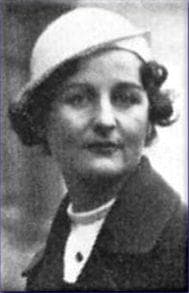
Nancy Freeman-Mitford, known as Nancy Mitford, was an English novelist, biographer, and journalist. The eldest of the Mitford sisters, she was regarded as one of the "bright young things" on the London social scene in the inter-war period. She wrote several novels about upper-class life in England and France, and is considered a sharp and often provocative wit. She also has a reputation as a writer of popular historical biographies.
Similar books
- The Pursuit of Love
Nancy Mitford
4.0 (11k) average on GoodreadsHistorical FictionAnother Mitford classic with similar themes of love, marriage, and family eccentricity.
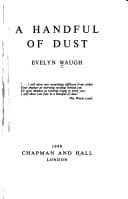
- A Handful of Dust
Evelyn Waugh
3.9 (23k) average on GoodreadsLiterary FictionFeatures satirical takes on aristocratic society and marital discord with dry humor.
- The Hunger Games
Suzanne Collins
4.3 (6.4M) average on GoodreadsFantasyIn a future where children fight to the death on live television, Katniss Everdeen volunteers for the arena, turning a death sentence into a fight for survival and a spark of rebellion.
- The Great Gatsby
F. Scott Fitzgerald
3.9 (3.8M) average on GoodreadsHistorical FictionIn the opulent Roaring Twenties, a mysterious millionaire's lavish parties hide his desperate, tragic pursuit of a lost love, exposing the emptiness within the American Dream.
- The Fault in Our Stars
John Green
4.2 (3.6M) average on GoodreadsYoung AdultA girl with a terminal illness finds her story rewritten when a charming boy with a similar past enters her life at a cancer support group, leading to a star-crossed romance.
- Pride and Prejudice
Jane Austen
4.3 (3M) average on GoodreadsHistorical FictionIn a society focused on status and money, Elizabeth Bennet navigates love and pride, challenging Mr. Darcy and social expectations to find true affection.





Enjoyed the summary?
A summary gives you the shape of the book. The book itself has the detail, the examples and the voice.
Find The Blessing on AmazonAs an Amazon Associate, BookBrief earns from qualifying purchases. How we're funded