
Synopsis
Covers the whole plot, including the ending.
- Difficulty
- Hard
- Pacing
- Variable
- Mood
- Melancholy, Introspective, Suspenseful, Dark, Intellectual
- Read it if
- You enjoy complex, multi-layered narratives with unreliable narrators, a blend of genres (literary, historical, mystery, sci-fi), and profound explorations of memory, authorship, and societal constraints.
- Skip it if
- You prefer straightforward plots, fast-paced action, or shy away from dark themes, explicit content, and intricate literary structures.
The Blind Assassin Plot Summary
Covers the whole plot, including the ending.
The End and the Beginning
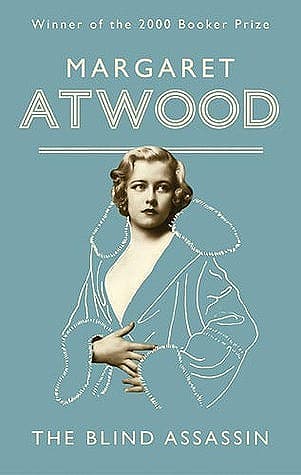
The novel begins with Iris Chase Griffen saying, 'Ten days after the war ended, my sister drove a car off the bridge.' This is Laura Chase, Iris's younger sister, who died in 1945. Her death was officially ruled an accident. Now in her eighties, Iris lives alone, frail and mostly ignored by her granddaughter, Sabrina. Haunted by memories and wanting to tell the truth before she dies, Iris starts writing her memoirs. She aims to reveal the truth about Laura's life and the reasons for her tragic end. She describes her childhood in Port Ticonderoga, Ontario, focusing on her relationship with Laura and their privileged but isolated upbringing.
Childhood Echoes
Iris recounts her early life with Laura at Avilion, their family's decaying estate in Port Ticonderoga. Their mother died young, leaving them with their emotionally distant father, Richard Chase, who owns a button factory. The girls are mostly left to themselves, forming a close bond. Their childhood includes an early awareness of social class and their family's declining wealth. They see poverty in the town and the contrast with their sheltered life. This gives Iris a sense of duty, while Laura remains more imaginative and sensitive, often escaping into her thoughts.
Richard's Betrayal and the Marriage Pact
As the Great Depression worsens, the Chase family's button factory faces financial trouble. Richard Chase, desperate to save his legacy and provide for his daughters, arranges Iris's marriage to Richard Griffen, a wealthy and powerful industrialist from Toronto, much older than Iris. This decision is presented to Iris as a duty, a sacrifice for the family. Iris, though worried and aware of Griffen's bad reputation, agrees, understanding her family's dire financial situation. This arranged marriage changes everything, ending Iris's childhood innocence and putting her into a world of adult compromises and political dealings.
Life with Richard Griffen
Iris's marriage to Richard Griffen has no affection and is marked by his controlling behavior and many affairs, especially with his mistress, Alex Thomas. Iris is expected to fulfill her social duties as Mrs. Griffen but is otherwise isolated. She has a daughter, Aimee, but finds little comfort in her new life. Laura often visits, giving Iris her only real companionship. During these visits, Laura sees the oppressive atmosphere of the Griffen household and her sister's unhappiness, which deepens her own unease and rebellion against social expectations.
The Novel-within-a-Novel: 'The Blind Assassin'
Throughout Iris's story, long parts from Laura Chase's controversial published novel, 'The Blind Assassin', appear. This embedded novel is a science fiction romance, telling of the secret affair between a wealthy, unnamed young woman and a socialist writer, Alex Thomas. Their meetings are passionate and secret, often in cheap hotels. During their encounters, the man tells the woman an elaborate, fantastical story about a planet called Zycron, where blind, mute children are used to operate dangerous machines, and a 'blind assassin' is a figure of myth and rebellion. The embedded novel's themes of forbidden love, social injustice, and escape reflect the larger story.
Laura's Exile and Sacrifice
Laura's increasingly strange behavior and her outspoken, unconventional views make her a problem in conservative Griffen social circles. After a public incident, Richard Griffen uses his influence to have Laura institutionalized, supposedly for her own good, but mainly to protect his family's reputation. After her release, Laura is sent to live in a remote cottage, effectively exiled from Toronto society. This isolation, arranged by Richard and his sister, Winifred, is presented as a humane solution, but it further alienates Laura and deepens her sense of entrapment and despair, contributing to her eventual tragic end.
The War and the Factory
As World War II intensifies, the Griffen Button Factory switches to wartime production, making buttons for military uniforms. The factory sees a surge in profits, further strengthening Richard Griffen's power. However, labor disputes arise, leading to a violent strike. Iris, now more aware of social injustices, sees the harsh realities faced by the factory workers. The strike is brutally put down, showing the class divisions and the ruthless tactics used by industrialists like Richard Griffen to maintain control and profit, even at the cost of human lives.
The Death of Richard Griffen
In 1947, Richard Griffen's body is found in a sailboat, an apparent accident. His death leaves Iris a widow and free from the oppressive marriage. However, the circumstances of his death remain unclear, adding another layer of mystery to the family's history. Iris inherits a significant fortune, but also the burden of her husband's legacy and the unresolved tensions within the Griffen family. His death, while giving Iris some freedom, also leaves her responsible for managing the family's affairs and facing the truths she has long hidden.
Aimee's Downward Spiral
Aimee, Iris's daughter, grows up burdened by the dysfunctional family and her parents' cold relationship. She struggles with mental instability, making poor choices in relationships and eventually being institutionalized. Iris tries to help her, but Aimee's condition worsens, and she dies in an asylum. Aimee's tragic life reflects the generational trauma and the destructive impact of the secrets and suppressions within the Chase and Griffen families. Her story shows the devastating results of a life without real love and emotional support.
The Revelation of Alex Thomas
As Iris continues her memoirs, she slowly reveals the true identity of Alex Thomas, the socialist writer from Laura's novel. Alex was a real person, a charismatic and intelligent activist whom both Iris and Laura met. He became Laura's lover; their forbidden affair mirrored the one in 'The Blind Assassin'. Iris eventually reveals that she, too, had a brief, passionate encounter with Alex, driven by a desperate need for connection and rebellion against her sterile marriage. This revelation complicates the narrative, suggesting a deeper, more intertwined relationship between the sisters and Alex than initially apparent.
The True Author
The most shocking revelation comes near the end of Iris's memoirs: she, Iris, is the true author of the novel 'The Blind Assassin'. Laura, heartbroken and overwhelmed by her life, had only written the first sentence. Iris, after Laura's death, carefully completed the manuscript, basing the story on Laura's affair with Alex Thomas, but adding her own experiences and imagination. She published it under Laura's name as a tribute and a way to give Laura a voice she never had, while also hiding her own involvement and the scandalous truths it contained.
The Final Truths
Iris describes the passionate and doomed affair between Laura and Alex Thomas. She explains that Richard Griffen discovered their relationship, which led to Alex's brutal beating and disappearance, arranged by Richard's men. Laura, devastated and pregnant with Alex's child, was forced to have an abortion and was then institutionalized. Iris clarifies that Laura's death was a suicide, an act of despair and defiance, driven by the loss of Alex and the child, and the crushing weight of her life. The car crash was a deliberate act, a final escape from her suffering.
Legacy and Redemption
Having revealed the full, painful truth of her and Laura's lives, Iris finishes her memoirs. She reflects on her choices, sacrifices, and deceptions. Her story is an attempt at both confession and justification, a way to reclaim her and Laura's stories from the official, sanitized versions. She leaves the manuscript for her granddaughter, Sabrina, hoping that the next generation will understand the complexities of their family history and the hidden struggles of the women within it. Iris finds some peace in finally telling her story, even as she faces her own death.
The Blind Assassin Characters
Iris Chase Griffen
Protagonist
The elderly narrator recounting her life and her sister Laura's tragic story.
Iris is the primary narrator, an elderly woman in her eighties, reflecting on her life and the mysterious death of her younger sister, Laura. She is intelligent, pragmatic, and initially appears to be the more conventional and dutiful of the two sisters. Married off to the wealthy industrialist Richard Griffen, she endures a stifling and loveless marriage, becoming adept at suppressing her true feelings and navigating the treacherous waters of Toronto society. Beneath her composed exterior lies a deep well of resentment, regret, and a fierce loyalty to Laura, which ultimately drives her to write her memoirs and reveal the hidden truths.
Relationships: Laura Chase (Younger sister, deep bond, complex rivalry); Richard Griffen (Controlling, unfaithful husband); Alex Thomas (Brief, passionate lover); Aimee Griffen (Daughter, strained and tragic relationship); Richard Chase (Distant father)
Laura Chase
Central Figure/Catalyst
Iris's enigmatic and sensitive younger sister, whose death is the novel's central mystery.
Laura is Iris's younger sister, whose suicide in 1945 is the catalyst for Iris's memoirs. She is portrayed as sensitive, artistic, and unconventional, often retreating into her own world. Unlike Iris, Laura struggles to conform to societal expectations, making her appear fragile and erratic to outsiders. She has a deep, almost spiritual connection with Iris, but also a rebellious streak that leads her into a forbidden affair with Alex Thomas. Her posthumously published novel, 'The Blind Assassin', is initially attributed to her, making her a literary figure, though the truth of its authorship is a key revelation.
Relationships: Iris Chase Griffen (Older sister, deep bond, emotional confidante); Alex Thomas (Forbidden lover, intellectual and emotional connection); Richard Griffen (Brother-in-law, oppressive figure)
Richard Griffen
Antagonist
Iris's powerful, controlling, and manipulative industrialist husband.
Richard Griffen is a wealthy and influential industrialist, significantly older than Iris, whom she is forced to marry to save her family from financial ruin. He is cold, calculating, and ruthless, embodying the oppressive patriarchal power of his era. Richard is unfaithful, having a long-standing affair with Alex Thomas's sister, Alex Thomas (confusingly, also named Alex Thomas), and uses his wealth and influence to control those around him, including Iris and Laura. He is responsible for the brutal suppression of the factory strike and the institutionalization of Laura, acting as a primary antagonist to the sisters' freedom and happiness.
Relationships: Iris Chase Griffen (Wife, emotionally abusive and controlling relationship); Laura Chase (Sister-in-law, object of his control and ultimately, his victim); Alex Thomas (Political adversary, victim of his violence); Winifred Griffen Prior (Sister, ally in maintaining social order)
Alex Thomas
Supporting/Catalyst
The charismatic socialist writer and lover to both Laura and Iris.
Alex Thomas is a passionate and intelligent socialist writer and activist who enters the lives of Iris and Laura. He represents a world of intellectual freedom, political idealism, and sensual awakening, contrasting sharply with the conservative, stifling world of the Griffen family. He becomes Laura's lover, their affair forming the core of the novel-within-a-novel. He also shares a brief, intense encounter with Iris. His political views and his relationship with the Chase sisters make him a dangerous figure in Richard Griffen's eyes, leading to his brutal suppression and disappearance. His influence profoundly shapes both sisters' lives.
Relationships: Laura Chase (Lover, intellectual and emotional connection); Iris Chase Griffen (Brief lover, intellectual connection); Richard Griffen (Political adversary, ultimately his aggressor)
Aimee Griffen
Supporting/Victim
Iris's troubled daughter, who struggles with mental illness and a tragic life.
Aimee is Iris and Richard Griffen's daughter. She grows up in an emotionally sterile environment, caught between her distant mother and her oppressive father. Aimee is depicted as a troubled and unstable individual, making poor life choices and eventually succumbing to mental illness. Her life is a tragic reflection of the intergenerational trauma and the destructive consequences of the family's secrets and dysfunctions. She eventually dies in an asylum, representing another casualty of the Griffen family's suffocating influence and the broader societal pressures on women.
Relationships: Iris Chase Griffen (Mother, strained and complex relationship); Richard Griffen (Father, distant and oppressive relationship); Laura Chase (Aunt, distant figure)
Winifred Griffen Prior
Supporting/Antagonist
Richard Griffen's sister, a staunch traditionalist and social gatekeeper.
Winifred is Richard Griffen's sister, a formidable and socially conservative woman who embodies the rigid class expectations of the era. She is deeply concerned with appearances and maintaining the Griffen family's social standing. Winifred acts as a secondary antagonist, supporting Richard's oppressive control over Iris and Laura, particularly in orchestrating Laura's institutionalization and subsequent isolation. She is judgmental and unforgiving, serving as a constant reminder of the societal pressures and expectations that the Chase sisters struggle against. Her presence reinforces the suffocating atmosphere of the Griffen household.
Relationships: Richard Griffen (Brother, close ally in social and familial control); Iris Chase Griffen (Sister-in-law, critical and judgmental relationship); Laura Chase (Sister-in-law, dismissive and controlling relationship)
Richard Chase
Supporting
Iris and Laura's distant and financially struggling father.
Richard Chase is the father of Iris and Laura, and the owner of a failing button factory in Port Ticonderoga. Following his wife's death, he becomes emotionally distant, leaving his daughters largely to their own devices. Faced with financial ruin during the Great Depression, he makes the pragmatic but devastating decision to marry Iris off to Richard Griffen, believing it is the only way to save his family. He is a figure of faded gentility and quiet desperation, ultimately sacrificing his daughter's happiness for the sake of his family's legacy, though his intentions are not malicious.
Relationships: Iris Chase Griffen (Daughter, distant but loving relationship); Laura Chase (Daughter, distant but loving relationship)
Sabrina
Mentioned
Iris's granddaughter, who is largely absent from Iris's elderly life.
Sabrina is Iris's granddaughter, the daughter of Aimee. She is mentioned as being largely absent from Iris's elderly life, representing the disconnect between generations and the ultimate audience for Iris's memoirs. Her presence is minimal, serving primarily as a framing device for Iris's narrative, implying that Iris is writing her story for Sabrina to finally understand the complex and often painful family history. Sabrina embodies the future generation, who may or may not grasp the full weight of the past.
Relationships: Iris Chase Griffen (Grandmother, distant relationship); Aimee Griffen (Mother, distant relationship)
The Blind Assassin Themes
The Power of Storytelling and Truth
The novel explores how stories are built, changed, and used to both show and hide truth. Iris's memoir rewrites history, correcting the official stories about Laura's death and the family's past. The embedded novel, 'The Blind Assassin,' further complicates this, as its authorship and meaning are constantly reinterpreted. This theme highlights how subjective memory is and how people need to create stories to understand life, even if those stories are partly made up or protect deeper, more painful truths. This is clear in Iris's careful crafting of her story, ending with the revelation that she, not Laura, wrote the controversial novel, showing her ultimate control over the family's legacy.
“A life is a story. I know that. A life is also a story about a story.”
Social Class and Gender Oppression
The novel clearly shows the strict social classes and widespread gender oppression in early 20th-century Canada. Iris and Laura, despite their privileged background, are limited by their gender; their lives are dictated by men like Richard Griffen and the expectations of society. Iris's arranged marriage is an example of women being treated as goods to ensure financial stability. The exploitation of factory workers by Richard Griffen further highlights class differences. Both sisters struggle for control in a world that tries to control their bodies, minds, and voices, leading to rebellion, despair, and tragic outcomes.
“The women were not supposed to have any political opinions, or any opinions at all, come to that.”
Memory, Trauma, and Intergenerational Impact
Memory is not just a timeline of events but a complex, often painful process of dealing with past traumas. Iris's memoirs are a journey through her own hidden memories and her family's collective trauma. The secrets about Laura's death, Alex Thomas's fate, and the true author of 'The Blind Assassin' affect Aimee's mental health and Sabrina's distant relationship with Iris. The novel suggests that unresolved trauma, when ignored, continues to affect generations, appearing as various forms of suffering. Iris's writing is an attempt to break this cycle by facing the past directly.
“The past is a dissolve, a stain, a smudge, a blur, a faded photograph, an echo. But it is still there.”
Love, Betrayal, and Sacrifice
At its core, the novel tells a story of deep love and devastating betrayal. The strong bond between Iris and Laura is central, marked by both deep affection and unspoken rivalries. The forbidden love between Laura and Alex Thomas causes much of the tragedy, leading to sacrifice and loss. Iris's own brief affair with Alex is an act of desperate longing and rebellion. Betrayals, both personal and systemic, fill the story: Richard Griffen's betrayal of his marriage vows and trust, society's betrayal of its vulnerable members, and the ultimate sacrifices made by the sisters for each other and for a sense of freedom. Each act of love is shadowed by the potential for deep hurt and loss.
“Love is a trap. When it's not a lie.”
Art as Escape and Resistance
Creating art, especially writing, works as both an escape from harsh realities and a form of resistance against oppression. For Laura, her early attempts at writing and her imaginative world offer comfort from her difficult life. For Iris, writing her memoirs and finishing 'The Blind Assassin' becomes her ultimate form of agency and rebellion. The embedded science fiction story, with its fantastical elements and themes of exploitation, offers a symbolic escape from the mundane and cruel world, while also subtly criticizing it. Art allows the characters to process trauma, express forbidden desires, and ultimately, leave a lasting legacy that challenges conventional truths.
“A word, a phrase, a sentence, a paragraph, a page. Then a chapter, then a book. Then a life.”
Plot Devices & Literary Techniques
Frame Narrative
Iris Chase Griffen's memoir frames the entire story, including the embedded novel.
The novel employs a complex frame narrative, with the elderly Iris Chase Griffen's memoirs serving as the overarching structure. Within this frame, excerpts from Laura Chase's posthumously published novel, 'The Blind Assassin,' are interspersed. This layered approach allows Atwood to control the flow of information, gradually revealing truths and recontextualizing events. The frame narrative emphasizes Iris's subjective perspective, making the reader question the reliability of the narrator until the final revelations. It also highlights the act of storytelling itself as a central theme, as Iris meticulously crafts her narrative to reveal the 'real' story.
Novel-within-a-Novel (Embedded Narrative)
Laura Chase's science fiction novel, 'The Blind Assassin,' provides a parallel and symbolic story.
The embedded novel, 'The Blind Assassin,' is a crucial plot device. Initially presented as Laura's work, it is a science fiction romance detailing a forbidden affair between an unnamed woman and a socialist writer, interspersed with a fantastical tale about Zycron. This embedded narrative serves multiple functions: it creates mystery around its authorship and meaning, offers symbolic commentary on the main plot's themes of class, gender, and forbidden love, and provides a space for characters to express emotions and ideas that cannot be openly articulated in their 'real' lives. The eventual revelation of Iris's authorship dramatically shifts its significance.
Unreliable Narrator
Iris Chase Griffen selectively reveals information, manipulating the reader's perception of events.
Iris Chase Griffen acts as an unreliable narrator. While she presents herself as striving for truth, she strategically withholds crucial information, particularly about her own involvement in 'The Blind Assassin' and her relationship with Alex Thomas. This deliberate ambiguity forces the reader to constantly re-evaluate previously presented facts and character motivations. Her unreliability is not malicious but rather a reflection of her own need to process and control her traumatic past, and to protect herself and Laura. The gradual unveiling of her deceptions is a core element of the novel's suspense and its ultimate impact.
Epistolary Elements / Newspaper Clippings
Historical newspaper articles and official reports provide context and contrast with personal narratives.
Interspersed throughout Iris's memoir are various epistolary elements, primarily newspaper clippings, inquest reports, and brief excerpts from other historical documents. These serve to ground the narrative in specific historical periods (the 1930s and 40s) and provide an 'objective' counterpoint to Iris's subjective recollections. They highlight the public's perception of events, often contrasting sharply with the private, hidden truths Iris eventually reveals. These official accounts often misinterpret or simplify complex situations, underscoring the novel's theme of manipulated narratives and the difficulty of discerning truth from public record.
The Blind Assassin Quotes
“Children are not a consolation, they are a responsibility.”
“The past is a mirror, it reflects your own face.”
“All stories are ghost stories.”
“You don't get over things. You just incorporate them. It's like a house. You don't demolish a house every time something goes wrong. You just make repairs.”
“When you're in the middle of a story, it isn't a story at all. It's just a muddle. A mess. Only afterward, when you've survived it, does it begin to have the shape of a story.”
“Better to be a repented sinner than a good-for-nothing saint.”
“Love, like a carefully tended garden, can go to seed if you don't keep an eye on it.”
“The dead are not long gone. They are with us, in the air, in the words, in the things we touch.”
“Every life has a turning point, a moment when a door opens or closes, when the path changes.”
“We are all of us, in some way, the inventions of others.”
“There's no point in being grown-up if you can't be childish sometimes.”
“Memory is a fascinating thing, a cruel thing, a thing that will not leave you alone.”
“Fiction is about what it means to be a human being, it's about life and death, love and loss.”
“The future is a blank page, but the past is a palimpsest.”
Quiz
10 questions on the plot and the characters. Each answer comes with a short explanation.
Question 1
What is the very first sentence of 'The Blind Assassin', spoken by Iris?
- My sister's death was no accident.
- Ten days after the war ended, my sister drove a car off the bridge.
- Laura died on a Tuesday in the spring of 1945.
- The bridge claimed another victim that year.
Show answer
B. Ten days after the war ended, my sister drove a car off the bridge. The novel opens with Iris's stark declaration: 'Ten days after the war ended, my sister drove a car off the bridge.'
Question 2
What is the title of the novel-within-a-novel that Atwood introduces, told by two unnamed lovers?
- The Star-Crossed Lovers
- The Blind Assassin
- The Secret Rendezvous
- The Planet of Zycron
Show answer
B. The Blind Assassin The novel-within-a-novel, a science fiction story about two lovers, is also titled 'The Blind Assassin'.
Question 3
According to the inquest report mentioned early in the book, what was the official cause of Laura's death?
- Suicide
- Murder
- Accidental
- Unknown causes
Show answer
C. Accidental After Iris's account of Laura's death, an inquest report is presented which proclaims the death accidental.
Question 4
What significant event occurs in 1947, as reported by a newspaper article, involving Iris's husband?
- He announced his retirement from industry.
- He was involved in a major political scandal.
- His sailboat was found with his dead body aboard.
- He published a controversial autobiography.
Show answer
C. His sailboat was found with his dead body aboard. A 1947 newspaper article announces the discovery of a sailboat carrying the dead body of Iris's husband, a distinguished industrialist.
Question 5
What is a distinguishing characteristic of the language and style used in 'The Blind Assassin'?
- Modern, experimental prose.
- Formal, academic language.
- Colloquialisms and clichés of the 1930s and 1940s.
- Highly poetic and symbolic language.
Show answer
C. Colloquialisms and clichés of the 1930s and 1940s. The novel's style is noted for 'magnificently captur[ing] the colloquialisms and clichés of the 1930s and 1940s'.
Question 6
Which of the following genres is NOT explicitly mentioned as being part of 'The Blind Assassin'?
- Literary Fiction
- Romance
- Historical Fiction
- Mystery
Show answer
B. Romance The provided description lists Literary Fiction, Historical Fiction, Mystery, and Science Fiction as genres, but not Romance.
Question 7
How many sisters are explicitly mentioned in the initial setup of the novel?
- One, Laura
- Two, Laura and another unnamed sister
- None, the narrator is an only child
- Three, including Iris
Show answer
A. One, Laura Iris speaks of 'my sister Laura's death', indicating one sister named Laura.
Question 8
What is a key structural element of 'The Blind Assassin' that adds to its complexity?
- It is told entirely through epistolary letters.
- It features a novel-within-a-novel.
- It is a single, uninterrupted stream of consciousness.
- It uses only dialogue to advance the plot.
Show answer
B. It features a novel-within-a-novel. The description highlights the introduction of 'a novel-within-a-novel' as a key structural device.
Question 9
What is the primary narrative perspective established at the beginning of the book?
- Third-person omniscient
- First-person from Laura's perspective
- First-person from Iris's perspective
- Alternating between multiple third-person perspectives
Show answer
C. First-person from Iris's perspective The opening words 'They are spoken by Iris' indicate that the initial narrative is from Iris's first-person point of view.
Question 10
The description suggests that 'The Blind Assassin' concludes with what kind of narrative device?
- An ambiguous, unresolved ending.
- A brilliant and wonderfully satisfying twist.
- A tragic, inevitable conclusion.
- A cliffhanger for a sequel.
Show answer
B. A brilliant and wonderfully satisfying twist. The description explicitly states that the novel 'concludes in a brilliant and wonderfully satisfying twist'.
The Blind Assassin FAQ
What is the central mystery driving the plot of 'The Blind Assassin'?
The central mystery revolves around the death of Laura Chase, who drives her car off a bridge in 1945. Her sister, Iris Chase Griffen, narrates the story much later, hinting that Laura's death was not as simple as the official 'accidental' verdict, and the novel gradually reveals the complex circumstances and secrets leading up to it, particularly concerning Laura's relationship with Iris's husband, Richard.
Who is Iris Chase Griffen and what is her role in the narrative?
Iris Chase Griffen is the primary narrator, recounting her life story from her old age, reflecting on her childhood, her marriage to Richard Griffen, and her complicated relationship with her sister Laura. She is the one piecing together the events that led to Laura's death and the publication of the controversial novel, 'The Blind Assassin,' after Laura's demise.
What is the 'novel-within-a-novel' titled 'The Blind Assassin' about?
The novel-within-a-novel, also titled 'The Blind Assassin,' is a pulp science fiction story about a mute, blind assassin and a mysterious woman from a different planet. It is presented as a story told by two unnamed lovers who meet illicitly, and its fantastical narrative subtly mirrors the themes of forbidden love, sacrifice, and social injustice found in the main plot.
How does the 'novel-within-a-novel' connect to the main story of Iris and Laura?
The 'novel-within-a-novel' is presented as Laura Chase's posthumously published work, believed to be an autobiographical account of her affair. However, the true connection is a major reveal: it was actually written by Iris, based on her own affair with Alex Thomas, and presented as Laura's work to protect her reputation and reveal the truth after her own death.
Who is Richard Griffen and what is his significance?
Richard Griffen is Iris's wealthy, politically ambitious, and emotionally abusive husband, whom she marries to save her family's failing button factory. He is a central figure in the sisters' lives, having an affair with Laura and being implicated in the tragic events that unfold, his power and influence casting a long shadow over their fates.
What is the significance of the character Alex Thomas?
Alex Thomas is a socialist labor organizer whom Iris falls in love with during the 1930s. Their passionate, clandestine affair is a source of both joy and immense danger. He is the true 'blind assassin' figure in Iris's life, a revolutionary whose ideals and actions lead to his eventual tragic disappearance and presumed death, leaving a profound impact on Iris.
How does the historical context of the 1930s and 1940s influence the characters' lives?
The Great Depression, rising fascism, labor unrest, and World War II profoundly shape the characters' lives. The economic struggles force Iris into a marriage of convenience, while political anxieties and social inequalities fuel Alex Thomas's activism and contribute to the repressive atmosphere that stifles the sisters' desires and freedom.
What is the ultimate twist regarding the authorship of 'The Blind Assassin' (the book within the book)?
The ultimate twist is that Iris, not Laura, is the true author of the novel 'The Blind Assassin' (the science fiction story). Iris wrote it based on her own affair with Alex Thomas, then published it under Laura's name posthumously to protect her own reputation, expose the truth about Richard, and ensure her story was told.
How does Iris's narration evolve throughout the novel?
Iris's narration begins with a seemingly detached, cynical tone, slowly revealing details and withholding crucial information. As she ages and reflects, her voice becomes more vulnerable and confessional, eventually leading to the full disclosure of her secrets and motivations, transforming from an observer to the central, active participant in the story's unraveling.
Discuss the psychological impact of Richard Griffen's control and abuse on Iris and Laura.
Richard's psychological manipulation, emotional abuse, and sexual exploitation severely warp both sisters' lives. Iris endures a loveless, controlling marriage, suppressing her true self. Laura, more vulnerable and sensitive, becomes a victim of Richard's predatory nature, leading to her profound trauma, silence, and eventual suicide, a direct consequence of his actions.
What role does memory play in Iris's storytelling?
Memory is central and often unreliable in Iris's storytelling. She revisits events from different perspectives, sometimes deliberately omitting or distorting facts, only to reveal them later. Her fragmented recollections and the act of writing her memoirs serve as a way for her to process trauma, seek understanding, and ultimately reclaim her narrative from the shadows of the past.
How does the novel explore themes of sisterhood and rivalry between Iris and Laura?
The novel portrays a complex sisterhood marked by deep love, shared trauma, and underlying rivalry. While Iris initially appears protective of Laura, later revelations expose moments of resentment, jealousy, and a silent competition for affection and agency. Their bond is ultimately tragic, defined by secrets and the devastating impact of external forces.
Is Laura Chase a victim or an active participant in her fate?
Laura is largely portrayed as a victim, particularly of Richard Griffen's abuse and the societal constraints placed upon women. Her sensitivity and vulnerability make her susceptible to manipulation. However, her act of writing the 'novel-within-a-novel' (as initially believed) and her suicide can also be interpreted as acts of agency, desperate attempts to control her own narrative and escape her suffering.
How does 'The Blind Assassin' critique societal expectations for women in the mid-20th century?
The novel powerfully critiques the limited roles and expectations for women, particularly those of the upper class, in the mid-20th century. Iris and Laura are trapped by societal pressures to marry for status, maintain appearances, and suppress their intellectual and sexual desires. Their struggles highlight the severe consequences of these patriarchal norms on women's autonomy and well-being.
What is the significance of the title 'The Blind Assassin' in relation to the main story?
The title 'The Blind Assassin' has multiple layers of significance. In the embedded novel, it refers to a mythical figure who is both literally blind and an assassin. In the main narrative, it can symbolize the unseen forces of fate, societal pressures, or even the characters themselves (like Alex Thomas or Iris) who, though seemingly powerless or 'blind' to certain truths, act as agents of destruction or change.
Could the 'blind assassin' also refer to the act of storytelling itself?
Yes, the 'blind assassin' can be interpreted as the act of storytelling. Iris, as the narrator, carefully controls the information, revealing truths and withholding others, essentially 'assassinating' previous assumptions and constructing a new reality for the reader. Her narrative selectively exposes and conceals, much like a 'blind' force shaping perceptions.
How does the novel use the science fiction genre to enhance its themes?
The science fiction genre of the novel-within-a-novel serves as an allegorical mirror to the main plot's themes. The alien planet, the mute assassin, and the forbidden love highlight issues of oppression, communication barriers, and the struggle for freedom that Iris and Laura face. It allows Atwood to explore sensitive topics with a layer of symbolic distance, making the personal political.
What is the ultimate message about truth and narrative in 'The Blind Assassin'?
The novel's ultimate message is that truth is subjective, constructed, and often manipulated. Iris's narrative demonstrates how personal stories can be crafted, hidden, and revealed over time to reshape understanding. It suggests that control over one's narrative is a powerful form of agency, especially for those whose voices have been historically silenced, and that 'truth' is often an act of careful curation.
About the author

Margaret Eleanor Atwood is a Canadian poet, novelist, literary critic, essayist, teacher, environmental activist, and inventor. Since 1961, she has published eighteen books of poetry, eighteen novels, eleven books of non-fiction, nine collections of short fiction, eight children's books, two graphic novels, and a number of small press editions of both poetry and fiction. Atwood has won numerous awards and honors for her writing, including two Booker Prizes, the Arthur C. Clarke Award, the Governor General's Award, the Franz Kafka Prize, Princess of Asturias Awards, and the National Book Critics and PEN Center USA Lifetime Achievement Awards. A number of her works have been adapted for film and television.
Similar books
- Atonement
Ian McEwan
4.4 (70) average on GoodreadsFeatures a complex narrative structure, the impact of a single event, and themes of memory, guilt, and the power of storytelling to alter perception.
- Possession
A.S. Byatt
4.3 (13k) average on GoodreadsRomanceInterweaves multiple narratives and time periods, exploring literary detective work and forbidden love, with a focus on academic and historical discovery.
- The Handmaid's Tale
Margaret Atwood
4.1 (1.5M) average on GoodreadsFantasyExplores themes of female oppression, societal control, and the search for agency within a restrictive world, with Atwood's distinctive voice and speculative elements.
- The Old Man and the Sea
Ernest Hemingway
3.8 (831k) average on GoodreadsLiterary FictionA Cuban fisherman's long struggle with a giant marlin becomes a story of endurance and dignity, now retold for young adults with illustrations, phonetic guides, and writing prompts in Traditional Chinese.
- One Hundred Years of Solitude
Gabriel García Márquez
4.1 (753k) average on GoodreadsLiterary FictionThrough the multi-generational story of the Buendía family, a mythical town deals with the repeating patterns of time, love, and solitude, as the extraordinary mixes with the ordinary.
- The Goldfinch
Donna Tartt
3.9 (720k) average on GoodreadsLiterary FictionHaunted by a tragic explosion and clutching a stolen Dutch masterpiece, a young orphan navigates the opulent drawing rooms of New York and the gritty underbelly of the art world, desperately seeking connection and redemption amidst a life spiraling into crime and obsession.





Enjoyed the summary?
A summary gives you the shape of the book. The book itself has the detail, the examples and the voice.
Find The Blind Assassin on AmazonAs an Amazon Associate, BookBrief earns from qualifying purchases. How we're funded