
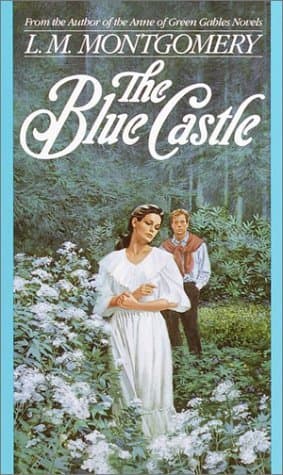
Synopsis
Covers the whole plot, including the ending.
- Difficulty
- Easy
- Pacing
- Moderate
- Mood
- Heartwarming, Hopeful, Romantic, Liberating
- Read it if
- You enjoy stories about quiet heroines finding their voice, unconventional romances, and the triumph of individuality against societal expectations, especially if you appreciate L.M. Montgomery's charming prose.
- Skip it if
- You prefer fast-paced plots with high stakes, complex mysteries, or gritty realism, or if you dislike stories with a strong focus on internal character development and gentle romance.
The Blue Castle Plot Summary
Covers the whole plot, including the ending.
A Life of Drudgery and Daydreams
Valancy Stirling, known to her family as 'Doss,' is a 29-year-old unmarried woman living in the oppressive household of her mother, Mrs. Frederick Stirling, and her Aunt Isabel in the fictional town of Deerwood, Ontario. Her life is controlled by her large, wealthy, and highly conventional Stirling family, who constantly remind her of her perceived failings, particularly her lack of beauty and a husband. Valancy finds solace only in her secret daydreams of a 'Blue Castle' – a place of beauty and freedom – and in the forbidden nature books of John Foster, which she keeps hidden. She is considered a meek and insignificant member of the family, often overlooked and criticized, leading her to internalize a sense of worthlessness.
A Shocking Diagnosis and a Sudden Rebellion
One day, Valancy experiences a severe chest pain and visits Dr. Trent, a new doctor in town. To her astonishment, Dr. Trent informs her that she has a serious heart condition and has only about a year to live. This news, instead of crushing her, frees Valancy. Realizing she has nothing left to lose, she decides to live the remaining time on her own terms. She immediately begins to defy her family's expectations, speaking her mind, wearing clothes she likes, and refusing to participate in the tedious family rituals she despises. Her family is bewildered and attributes her sudden change to mental instability, even considering having her institutionalized.
Breaking Free and Seeking Independence
Among Valancy's acts of rebellion is her decision to visit Cissy Gay, a young woman from a poorer background who is dying of tuberculosis and neglected by her own family and the Stirlings. Valancy, moved by Cissy's situation, offers to care for her in her final days. This decision shocks her family even further, as Cissy is considered 'common.' Valancy moves out of the Stirling mansion and into Cissy's small, dilapidated cottage. Here, for the first time, Valancy experiences genuine independence and the satisfaction of being useful and kind. She finds a sense of peace and purpose in nursing Cissy, despite the humble surroundings.
A Proposal of Convenience and a Secret Marriage
While caring for Cissy, Valancy encounters Barney Snaith, the local 'bad boy' and outcast, who lives alone on a secluded island and is rumored to be a drunkard and a ne'er-do-well. Barney visits Cissy and Valancy, bringing them gifts and offering help. One evening, Barney proposes a marriage of convenience to Valancy, explaining that he needs a housekeeper and she needs a place to live after Cissy's death. Valancy, having nothing to lose and finding Barney surprisingly kind and unconventional, accepts. They marry quietly, keeping the union a secret from her family, who would undoubtedly be horrified by her choice.
Life on the Island and a Budding Relationship
After Cissy's death, Valancy moves to Barney's isolated cabin on the island in Lake Mistawis. To her delight, she finds the cabin charming and the island a haven of natural beauty, far removed from the stifling world of Deerwood. Barney, despite his public reputation, proves to be a thoughtful, intelligent, and respectful companion. They establish a comfortable routine, with Valancy managing the household and finding joy in her freedom and the picturesque surroundings. She begins to fall in love with Barney, appreciating his quiet strength and their shared love for nature and unconventional living. However, she remains uncertain of his true feelings for her.
The Stirling Family Discovers the Marriage
Eventually, the Stirling family discovers Valancy's marriage to Barney Snaith. They are utterly scandalized and outraged, seeing it as the ultimate disgrace. Her mother, aunts, and cousins descend upon the island, attempting to 'rescue' Valancy and convince her to annul the marriage. Valancy, however, stands firm, asserting her happiness and independence. Her newfound confidence and defiance shock her family, who are unable to comprehend her choices. They leave in a huff, convinced Valancy has lost her mind, but Valancy remains unfazed, choosing her own happiness over their approval.
A Revelation and a Heartbreak
One day, Valancy discovers a letter addressed to 'John Foster' among Barney's belongings. She realizes that Barney Snaith is John Foster, the nature writer whose books she admired and whose identity had been a mystery. She also finds a copy of their marriage agreement, which states that Barney would pay her a substantial sum of money if she stayed with him for a year. Feeling betrayed and believing that Barney married her out of pity or as a charitable act, Valancy confronts him. Hurt and humiliated, she decides to leave the island and return to her family, believing their marriage was a sham.
Return to Deerwood and a Renewed Sense of Self
Valancy returns to her mother's house in Deerwood, but her experience on the island has fundamentally changed her. She is no longer the meek 'Doss' of old. Despite her family's attempts to reassert control and make her conform, Valancy maintains her independent spirit, speaking her mind and refusing to be silenced. She finds the stifling atmosphere unbearable but refuses to let it break her. Her family, still bewildered by her transformation, finds her even more incomprehensible than before, but Valancy holds onto the self-respect she gained.
The Truth About the Diagnosis
While back in Deerwood, Valancy encounters Dr. Trent again. He apologizes, explaining that the lab results for her heart condition were mixed up with another patient's. Valancy is not dying; she is perfectly healthy. This news is a shock, but also a relief. The revelation means she has a long life ahead of her, and the freedom she had found was not just for a year but for a lifetime. The initial despair of the misdiagnosis had ironically been the catalyst for her liberation, allowing her to break free from her oppressive life.
A Reunion and a Confession of Love
Soon after, Barney Snaith comes to Deerwood to find Valancy. He explains that he had originally offered the marriage of convenience because he genuinely admired her spirit and wanted to help her escape her family, and the financial clause was merely a way to ensure she wouldn't feel trapped or indebted. He confesses that he had fallen deeply in love with her on the island and had been heartbroken when she left. Valancy, now understanding the full truth and realizing her own deep love for him, accepts his apology and his declaration. They reconcile, looking forward to a future together, free from the constraints of society and full of genuine affection.
Principal Figures
Valancy Stirling (Doss)
Protagonist
A repressed 29-year-old spinster who finds liberation and love after a false terminal diagnosis.
Valancy is initially presented as a meek, undervalued member of the wealthy but stifling Stirling family. She is 29, unmarried, and constantly criticized for her perceived lack of beauty and accomplishments. She finds solace in daydreams of a 'Blue Castle' and the forbidden nature books of John Foster. Her terminal diagnosis acts as a catalyst, transforming her into a courageous, independent woman who speaks her mind and pursues her own happiness. She is kind, imaginative, and possesses a deep appreciation for nature and authenticity, which she eventually embraces fully.
Relationships: Mrs. Frederick Stirling (Overbearing and critical mother); Aunt Isabel (Meddlesome and judgmental aunt); Barney Snaith (Husband, love interest, and soulmate); Cissy Gay (Friend and patient she cares for)
Barney Snaith (John Foster)
Love Interest / Supporting
A reclusive, enigmatic writer who is secretly wealthy and marries Valancy out of admiration and love.
Barney Snaith is initially known as the local 'bad boy' of Deerwood, a reclusive man living on an island, rumored to be a drunkard and an outcast. In reality, he is John Foster, a highly respected and wealthy nature writer, who chooses to live a simple, anonymous life. He is intelligent, unconventional, kind, and deeply observant. He sees beyond Valancy's timid exterior to her true spirit and offers her a marriage of convenience, which ultimately blossoms into genuine love. He values authenticity and freedom, reflecting Valancy's own secret desires.
Relationships: Valancy Stirling (Wife, love interest, and soulmate); Cissy Gay (Acquaintance he offers help to)
Mrs. Frederick Stirling
Antagonist / Supporting
Valancy's overbearing, socially conscious mother who epitomizes the oppressive Stirling family values.
Mrs. Frederick Stirling is Valancy's mother, a formidable and domineering woman who embodies the rigid social conventions and judgmental attitudes of the Stirling family. She constantly criticizes Valancy, reminding her of her perceived failures and pushing her to conform to societal expectations. She is obsessed with appearances, social standing, and maintaining the family's reputation. Her inability to understand or accept Valancy's transformation highlights the stifling environment Valancy grows up in.
Relationships: Valancy Stirling (Daughter, whom she constantly criticizes); Aunt Isabel (Sister-in-law, co-conspirator in Valancy's oppression)
Aunt Isabel
Antagonist / Supporting
Valancy's meddlesome and judgmental aunt, a key figure in her oppressive upbringing.
Aunt Isabel is Valancy's paternal aunt and lives with Valancy and her mother. She is depicted as equally, if not more, critical and meddlesome than Mrs. Stirling. She delights in pointing out Valancy's flaws, particularly her lack of beauty and marital prospects. Aunt Isabel represents the collective, suffocating judgment of the extended Stirling family. Her constant nagging and interference contribute significantly to Valancy's early misery and repression.
Relationships: Valancy Stirling (Niece, whom she constantly criticizes); Mrs. Frederick Stirling (Sister-in-law, co-conspirator in Valancy's oppression)
Dr. Trent
Supporting
The new doctor in Deerwood who mistakenly diagnoses Valancy with a terminal heart condition.
Dr. Trent is a new, somewhat inexperienced doctor in Deerwood. He delivers the life-altering, though ultimately incorrect, diagnosis of a terminal heart condition to Valancy. His mistake, while grave, inadvertently serves as the catalyst for Valancy's liberation and rebellion. He later apologizes for his error, providing Valancy with the good news that she has a full life ahead of her. He is presented as earnest but fallible.
Relationships: Valancy Stirling (Patient, whose life he inadvertently changes)
Cissy Gay
Supporting
A poor, dying young woman whom Valancy cares for, providing her first taste of purpose and independence.
Cissy Gay is a young woman dying of tuberculosis, neglected by her own family and dismissed by the judgmental Stirlings. Valancy chooses to care for Cissy, an act of rebellion and compassion that leads her to leave her family home. Cissy's illness and eventual death provide Valancy with a profound sense of purpose and her first experience of genuine usefulness and independence outside her family's control. Cissy's humble cottage becomes Valancy's first taste of freedom.
Relationships: Valancy Stirling (Caretaker and friend); Barney Snaith (Acquaintance who offers help)
Uncle Benjamin
Supporting
Valancy's kind and understanding uncle, who offers her some comfort and a small inheritance.
Uncle Benjamin is Valancy's paternal uncle and one of the few Stirlings who shows her any kindness or understanding. He is a gentle, somewhat eccentric man who appreciates Valancy's quiet nature. Before his death, he leaves Valancy a small inheritance, which, though not substantial, provides her with a sense of personal worth and a small degree of financial independence, foreshadowing her eventual break from the family. He represents a rare spark of warmth in the cold Stirling clan.
Relationships: Valancy Stirling (Niece, whom he shows kindness and provides an inheritance)
Olive Stirling
Supporting
Valancy's cousin, who embodies the 'perfect' Stirling woman and serves as a constant point of comparison.
Olive Stirling is Valancy's cousin, held up by the family as the epitome of a successful, beautiful, and socially adept Stirling woman. She is engaged to a wealthy man and represents everything Valancy is supposedly not. Olive's character highlights the superficial values of the Stirling family and serves as a constant, albeit unintentional, source of comparison and insecurity for the younger Valancy. She is polite but ultimately a product of her environment, lacking the depth Valancy eventually finds.
Relationships: Valancy Stirling (Cousin, against whom Valancy is constantly compared)
Themes & Insights
Identity and Self-Discovery
The novel explores Valancy's journey from a repressed, undervalued individual to a self-assured woman who embraces her true identity. Her terminal diagnosis acts as a catalyst, freeing her from societal expectations and allowing her to shed the 'Doss' persona imposed by her family. Through her rebellion, her care for Cissy, and her life with Barney, Valancy discovers her own strength, desires, and the kind of life that genuinely fulfills her. She learns to define herself, rather than be defined by others.
“It was as if she had been born again, into a world where she could be herself, without fear of criticism or ridicule.”
Freedom vs. Conformity
A central theme is the stark contrast between the stifling conformity demanded by the Stirling family and the freedom Valancy craves and ultimately achieves. The Stirling household represents rigid social norms, judgment, and emotional repression, where individual expression is crushed. Valancy's rebellion, from speaking her mind to marrying an outcast and living on an island, symbolizes her escape from these chains. Her 'Blue Castle' daydreams are a metaphor for this desired freedom, which she eventually finds in her unconventional life with Barney, away from the judgmental eyes of society.
“She was free, free, free. She would never again be afraid of them. She would never again be 'Doss'.”
Love and Unconventional Relationships
The book challenges traditional notions of love and marriage, showing how Valancy finds genuine affection and partnership in an unconventional relationship. Her marriage to Barney Snaith, an outcast and rumored 'bad boy,' is initially one of convenience but blossoms into deep, authentic love. Their shared appreciation for nature, quiet understanding, and mutual respect form the foundation of their bond, contrasting sharply with the superficial, status-driven marriages expected by the Stirling family. Their relationship proves that love can be found outside societal norms and expectations.
“She had found her Blue Castle... and it was not a castle, but a little cabin on an island, and her prince was a man with a bad name.”
The Power of Imagination and Nature
Valancy's vivid imagination, particularly her 'Blue Castle' daydreams, is a coping mechanism and a predictor of her desired reality. Her love for nature, fostered by the forbidden books of John Foster (Barney Snaith), is another escape from her drab existence. The island, with its beauty and solitude, becomes the physical manifestation of her 'Blue Castle' and a sanctuary where she can truly be herself. Nature provides her with solace, inspiration, and a deep connection to her authentic self, away from the artificiality of society.
“The Blue Castle was her refuge, her secret garden, where she could be what she really was.”
Courage and Rebellion
Valancy's journey shows the power of courage in the face of adversity and societal pressure. Her terminal diagnosis, though false, empowers her to rebel against her oppressive family and societal expectations. She finds the courage to speak her mind, leave her home, care for Cissy, and marry Barney, all acts deemed scandalous by her family. Her rebellion is not born of spite, but of a newfound conviction to live authentically, demonstrating that true courage is choosing one's own path despite fear and judgment.
“It was a wonderful sensation, that of being afraid of no one. It was worth dying for.”
Plot Devices & Literary Techniques
The Terminal Diagnosis
A medical error that acts as the primary catalyst for Valancy's transformation.
Dr. Trent's incorrect diagnosis of Valancy's terminal heart condition serves as the pivotal inciting incident in the novel. This seemingly devastating news paradoxically liberates Valancy from the fear of her family's judgment and social expectations. Believing she has nothing to lose and only a year to live, she sheds her timid persona and begins to live authentically, speaking her mind, making independent choices, and pursuing happiness. The eventual revelation that the diagnosis was a mistake allows her to embrace her new, free life with the knowledge that it will endure.
The 'Blue Castle'
Valancy's imaginary sanctuary, symbolizing her deepest desires for beauty, freedom, and love.
The 'Blue Castle' is Valancy's vivid mental construct, a fantastical place where all her dreams come true and she is free to be her true self. It functions as a powerful symbol of her repressed desires for beauty, independence, and romantic fulfillment. Initially, it is a purely internal escape, but as the plot progresses, elements of her 'Blue Castle' manifest in her real life: the beauty of Barney's island, her freedom from the Stirlings, and her genuine love with Barney. It represents the idealized life she yearns for, which she eventually finds in an unexpected, real-world form.
John Foster's Books
Forbidden nature books that provide Valancy with an intellectual and spiritual escape, and connect her to Barney.
The nature books written by the mysterious 'John Foster' are Valancy's secret literary pleasure, providing her with an escape from her dreary life and resonating with her inner love for beauty and the natural world. These books symbolize her hidden intellectual and spiritual life, forbidden by her conventional family. The revelation that Barney Snaith is John Foster creates a profound connection between them, demonstrating their shared values and understanding before their relationship fully develops, and solidifying their intellectual and emotional bond.
The Island Cabin
A secluded setting that serves as a physical manifestation of Valancy's 'Blue Castle' and a sanctuary for her new life.
Barney Snaith's cabin on the isolated island in Lake Mistawis is more than just a dwelling; it functions as a physical representation of Valancy's 'Blue Castle' and a sanctuary for her newfound freedom. Removed from the judgmental eyes of Deerwood society and the suffocating influence of the Stirling family, the island provides a space where Valancy can truly be herself. Its natural beauty, simplicity, and solitude allow her to flourish, fostering her independence and her burgeoning love for Barney. It is a haven where she can live authentically and without pretense.
The Stirling Family
A collective antagonist representing societal repression and conventionalism.
The entire Stirling family, particularly Valancy's mother and Aunt Isabel, functions as a collective antagonist. They embody the rigid social conventions, judgmental attitudes, and emotional repression that Valancy must escape to find happiness. Their constant criticism, obsession with appearances, and inability to understand Valancy's true nature create the suffocating environment from which she rebels. They serve as a foil to Valancy's desire for authenticity and freedom, highlighting the oppressive forces she overcomes.
The Blue Castle Quotes
“Poor girl, what a life you've had. It's a wonder you're not a raving maniac.”
“I'm going to have a year of living, for the first time in my life. I'm going to do what I like, and say what I like, and think what I like.”
“It was as if she had been born anew, a free soul, with power to choose her own way, and not be driven by the whims of others.”
“The only way to get rid of a temptation is to yield to it. Resist it, and your soul grows sick with longing for the things it has forbidden to itself.”
“She had always known that her Blue Castle was a castle in the air, but she had never known that it could be built on earth.”
“I'd rather be a living atom in the world than a dead star in the firmament.”
“It's a strange thing, but a man's heart can be won by kindness as much as by beauty.”
“She felt as if she had come home, not to a place, but to a person.”
“Don't be afraid to be yourself. It's the only way to be happy.”
“There are some things in life you have to do yourself. You can't expect other people to do them for you.”
“She had found her own soul, and it was a soul that loved laughter and beauty and freedom.”
“Life is a good thing, a very good thing, if you know how to live it.”
“The greatest prison people live in is the fear of what other people think.”
“She had thought that love was a beautiful, ethereal thing, but she found it was a very practical thing as well.”
Quiz
10 questions on the plot and the characters. Each answer comes with a short explanation.
Question 1
What shocking news does Valancy receive from the doctor that prompts her rebellion?
- She has inherited a large sum of money.
- She has a serious heart condition and only a year to live.
- She is expected to marry a man she despises.
- Her family is planning to send her to a sanatorium.
Show answer
B. She has a serious heart condition and only a year to live. Valancy learns from Dr. Trent that she has a fatal heart condition and will likely die within a year, which liberates her to live authentically.
Question 2
What is the name of the 'forbidden' author whose books Valancy enjoys reading?
- Lewis Carroll
- Lord Byron
- John Foster
- Oscar Wilde
Show answer
C. John Foster Valancy finds solace and escape in the romantic and adventurous books written by John Foster, which her family disapproves of.
Question 3
Who does Valancy first propose to marry as part of her newfound freedom?
- Dr. Trent
- Barney Snaith
- Abel Stirling
- Cousin Benjamin
Show answer
D. Cousin Benjamin In her initial rebellion, Valancy proposes to her timid cousin Benjamin, primarily to escape her family and live independently, though he ultimately refuses.
Question 4
What is the 'Blue Castle' to Valancy?
- A specific location she dreams of visiting in Europe.
- A metaphor for a perfect, idyllic life where her dreams come true.
- A childhood toy she cherishes.
- The title of a book she wishes to write.
Show answer
B. A metaphor for a perfect, idyllic life where her dreams come true. The Blue Castle is Valancy's deeply personal symbol for a life where she can be her true self, find love, and experience joy, far from her oppressive reality.
Question 5
Where does Valancy go to live after leaving her family home?
- She rents a small apartment in a nearby town.
- She moves in with her friend, Evelyn.
- She takes a position as a housekeeper for Abel Stirling and his daughter.
- She travels to the city to find work.
Show answer
C. She takes a position as a housekeeper for Abel Stirling and his daughter. Valancy takes a job as a housekeeper for Abel Stirling, a distant, ailing relative, and his neglected daughter, Cissy, a move that further shocks her family.
Question 6
What is Barney Snaith's true identity, initially hidden from Valancy?
- He is a wealthy businessman from Toronto.
- He is a famous, reclusive author.
- He is a distant cousin of the Stirling family.
- He is a secret agent working for the government.
Show answer
B. He is a famous, reclusive author. Barney Snaith is revealed to be John Foster, the very author whose 'forbidden' books Valancy adored, adding a layer of romantic irony to their relationship.
Question 7
Why does Valancy initially agree to marry Barney Snaith despite knowing little about him?
- She is deeply in love with him from their first meeting.
- She believes she is dying and wants to experience love and freedom before she dies, without long-term commitment.
- Her family pressures her into the marriage for financial reasons.
- She wants to spite her family by marrying someone they disapprove of.
Show answer
B. She believes she is dying and wants to experience love and freedom before she dies, without long-term commitment. Believing she has only a year to live, Valancy marries Barney on a whim of independence and a desire to live fully, seeing it as a temporary arrangement without the burden of future expectations.
Question 8
What happens to Valancy's 'fatal' heart condition by the end of the book?
- She undergoes a miraculous surgery and fully recovers.
- It is revealed that she was misdiagnosed and never had a serious condition.
- She learns to manage it with medication and lifestyle changes.
- She tragically succumbs to the illness, but finds happiness beforehand.
Show answer
B. It is revealed that she was misdiagnosed and never had a serious condition. It is discovered that Valancy was misdiagnosed. Dr. Trent had mistaken her severe anxiety and emotional distress for a fatal heart condition, meaning she was never actually dying.
Question 9
What is the primary theme explored through Valancy's journey?
- The importance of social status and wealth.
- The struggle for self-discovery and freedom from societal expectations.
- The dangers of defying one's family.
- The pursuit of intellectual achievements.
Show answer
B. The struggle for self-discovery and freedom from societal expectations. Valancy's journey is a powerful exploration of finding one's true self, breaking free from the oppressive expectations of family and society, and daring to live authentically.
Question 10
What significant secret does Barney Snaith initially keep from Valancy regarding his living situation?
- He is secretly married to another woman.
- He is much poorer than he appears, living in a dilapidated cabin.
- He is actually a wealthy man, owning the large house on the island, not the small cabin.
- He is living under an assumed identity to escape the law.
Show answer
C. He is actually a wealthy man, owning the large house on the island, not the small cabin. Barney Snaith, as John Foster, owns the beautiful, large house on the island, but initially lives in and marries Valancy from a small, rustic cabin, leading her to believe he is a poor, unconventional man.
The Blue Castle FAQ
What is The Blue Castle about?
The Blue Castle tells the story of Valancy Stirling, a repressed 29-year-old woman living under the thumb of her strict, conventional family. After receiving a life-altering medical diagnosis, Valancy decides to break free from her oppressive existence, leading her to unexpected independence, a controversial marriage, and the discovery of true love and self-worth.
Why should I read The Blue Castle?
You should read The Blue Castle for its inspiring portrayal of a woman finding her voice and happiness against all odds. It's a charming blend of romance, humor, and self-discovery, offering a delightful escape into a world where courage is rewarded and unconventional choices lead to profound fulfillment.
What is the background/setting of The Blue Castle?
The story is set in the early 20th century in the fictional town of Deerwood, Muskoka, Ontario, Canada. It vividly depicts the rigid social conventions and expectations of the time, particularly for unmarried women, contrasting sharply with the natural beauty of the Canadian wilderness where Valancy finds her freedom.
What are the most memorable quotes?
One memorable quote is Valancy's realization: "She had always been afraid of things, and now she was not afraid of anything." Another is Barney Snaith's philosophy: "It isn't the great big pleasures that you have to wait for, but the little ones that come every day."
What writing style does the author use?
L.M. Montgomery employs a warm, descriptive, and often witty narrative style. Her prose is rich with imagery, particularly when describing nature, and she uses internal monologue effectively to reveal Valancy's evolving thoughts and emotions, balancing humor with poignant insights.
What minor details add significant meaning?
The recurring motif of Valancy's 'Blue Castle' daydreams, initially a mere escape, becomes a powerful symbol of her inner strength and desire for an authentic life. Also, the detail of her hidden collection of John Foster's 'forbidden' books highlights her suppressed rebellious spirit and intellectual curiosity long before her outward transformation.
What are some subtle foreshadowing moments?
Valancy's fascination with the reclusive Barney Snaith, whom she only knows by reputation as a 'bad man,' subtly foreshadows their eventual connection and the unconventional nature of their relationship. Her brief, almost accidental encounters with him also hint at a deeper bond forming beneath the surface.
What unexpected character connections exist?
The most unexpected connection is between Valancy and Cissy Gay, the 'fallen woman' of Deerwood, whom Valancy bravely befriends. This unlikely friendship challenges societal norms and showcases Valancy's newfound compassion and rejection of her family's judgmental attitudes.
What are unspoken character motivations?
Valancy's mother, Mrs. Stirling, is motivated not just by strictness but by a deep-seated fear of social disgrace and a desire to maintain the family's perceived standing, which she believes Valancy constantly jeopardizes. Barney Snaith's initial aloofness is driven by a desire to protect his privacy and avoid the scrutiny that would come with revealing his true identity and wealth.
What psychological complexities do characters exhibit?
Valancy exhibits profound psychological growth, moving from extreme introversion and anxiety to self-confidence and assertiveness. Her transformation isn't instantaneous but a gradual unfolding of her true self once the external pressures are removed, revealing a complex inner world of dreams and desires.
What are the major emotional turning points?
The most significant emotional turning point is Valancy receiving her grim medical diagnosis, which shatters her complacency and ignites her rebellion. Another is her decision to marry Barney Snaith, a choice driven by desperation for freedom, which unexpectedly leads to genuine love and happiness.
How do relationship dynamics evolve?
Valancy's relationship with her family shifts dramatically from one of subservience and fear to one of defiance and eventual independence, as she gains the courage to stand up to their criticisms. Her relationship with Barney Snaith evolves from a marriage of convenience and mutual understanding to one of deep affection, respect, and passionate love, built on shared values and freedom.
Which parts remain ambiguous or open-ended?
While the main plot lines are resolved, the long-term future of Valancy's relationship with her family remains somewhat open-ended. Although she asserts her independence, the novel leaves room for interpretation regarding the extent of their eventual reconciliation or if Valancy will ever fully forgive their past treatment.
What are controversial scenes or decisions?
Valancy's decision to marry Barney Snaith, a man with a scandalous reputation and no apparent means, is highly controversial within the context of her family and society. Her subsequent choice to live in his rustic cabin and embrace a simple, unconventional life further defies societal expectations and her family's values.
The Blue Castle ending explained: how it ends & what it means
The novel ends with Valancy discovering that her medical diagnosis was a mistake, and that Barney Snaith is actually John Foster, the wealthy author she admired, and the true owner of her beloved 'Blue Castle' island. This ending signifies that Valancy's courage and authenticity led her not only to love and freedom but also to the fulfillment of her deepest, most impossible dreams, proving that happiness comes from within, not from external circumstances or family approval.
About the author
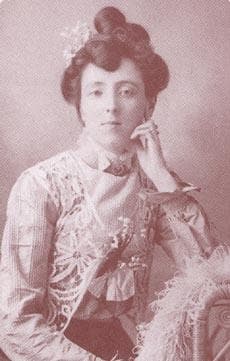
L.M. Montgomery was a Canadian author known for her works of fiction, particularly the "Anne of Green Gables" series. This series includes titles such as "Anne of Avonlea," "Anne of the Island," "Anne of Windy Poplars," "Anne of Ingleside," and "The Complete Anne of Green Gables Boxed Set," as well as the standalone novel "The Blue Castle." Her writing often explores themes of imagination, nature, and the complexities of growing up.
Similar books
- A Room With a View
E.M. Forster
3.9 (152k) average on GoodreadsHistorical FictionExplores a young woman's awakening and rebellion against societal constraints through travel and an unexpected romance.
- Major Pettigrew's Last Stand
Helen Simonson
3.9 (132k) average on GoodreadsLiterary FictionOffers a delightful romance between two unconventional characters in a small, gossipy community, with themes of defying expectations.
- Pride and Prejudice
Jane Austen
4.3 (3M) average on GoodreadsHistorical FictionBoth are iconic romances, but The Blue Castle diverges significantly in its depiction of class and social mobility. Austen's heroines navigate rigid social structures where marriage often secures financial stability and social standing. Valancy, conversely, actively rejects her family's wealth and status, prioritizing personal happiness and authenticity over societal expectations, making it a more individualistic and less class-bound romance for its time.
- To Kill a Mockingbird
Harper Lee
4.3 (4.5M) average on GoodreadsHistorical FictionIn the 1930s Jim Crow South, Harper Lee writes about racial injustice, moral growth, and the quiet courage of a lawyer father, Atticus Finch, as seen through his young daughter's eyes.
- The Great Gatsby
F. Scott Fitzgerald
3.9 (3.8M) average on GoodreadsHistorical FictionIn the opulent Roaring Twenties, a mysterious millionaire's lavish parties hide his desperate, tragic pursuit of a lost love, exposing the emptiness within the American Dream.
- Angels & Demons
Dan Brown
3.9 (2.7M) average on GoodreadsThrillerA Harvard symbologist races through Rome's ancient sites, deciphering cryptic clues to unmask the Illuminati and stop a vengeful plot to destroy the Vatican with a stolen antimatter weapon.





Enjoyed the summary?
A summary gives you the shape of the book. The book itself has the detail, the examples and the voice.
Find The Blue Castle on AmazonAs an Amazon Associate, BookBrief earns from qualifying purchases. How we're funded