
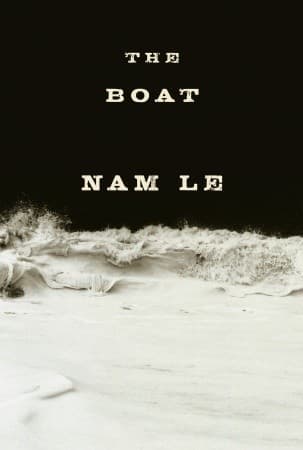
Synopsis
Covers the whole plot, including the ending.
- Difficulty
- Medium
- Pacing
- Variable
- Mood
- Reflective, Poignant, Intense, Melancholy, Thought-provoking
- Read it if
- You appreciate literary short stories with diverse settings and characters, exploring complex themes of identity, displacement, and the human condition.
- Skip it if
- You prefer continuous narratives or light, easy reads without challenging subject matter.
The Boat Plot Summary
Covers the whole plot, including the ending.
Love and Honor and Pity and Pride and Compassion and Sacrifice
Nam, a Vietnamese-Australian writer in Iowa City, has writer's block and faces pressure from friends and his agent to write about his Vietnamese heritage, specifically his father's experiences during the Vietnam War. He resists, feeling it is wrong and not true to him. His estranged father visits, and their strained relationship is clear. Nam deals with his father's quiet nature and the unspoken history between them. Through memories and current interactions, Nam starts to understand the sacrifices his father made, not just during the war but also in providing for his family and adapting to a new culture. The story ends with Nam trying to make peace with his father and accept his heritage, even as he struggles to write about it.
Cartagena
Petty, a fourteen-year-old hitman in Medellín, Colombia, lives a life of violence and constant danger. He works for a drug lord, Jorge, and is very loyal to his crew, especially his friend, Pato. Petty gets an assignment to kill a rival gang member. He struggles with the moral questions and the brutality of his task, questioning his own ability to be violent. The story shows the harsh realities of street life, the widespread corruption, and the desperate reasons that lead young men into such roles. Petty's inner conflict grows as he faces the moment of truth, forcing him to confront his own humanity amid the violence around him, finally making a choice that shows his character.
Meeting Elise
Henry, an aging painter in New York City, is dealing with his body's decline and his art fading. He is preparing to meet his daughter, Elise, a gifted pianist, before her Carnegie Hall debut. Their relationship is complicated, marked by Henry's past neglect due to his art and Elise's desire for her father's approval. As Henry moves through the city, he thinks about his life, his art, his failed relationships, and his regrets. He remembers moments of artistic inspiration and personal failure. The thought of seeing Elise brings a mix of pride, worry, and a longing for reconciliation, showing the sacrifices made for art and the lasting power of family bonds.
Hiroshima
Mayu, a young girl in modern-day Hiroshima, carries the weight of the atomic bomb's legacy and its effect on her family. Her grandmother, a bomb survivor, has deep physical and emotional scars, which show in her quietness and her refusal to talk about her experiences. Mayu feels a strong duty to remember and honor the past, but also struggles to connect it with her own current life. The story explores the quiet suffering of survivors and the trauma passed down through generations. Mayu tries to understand her grandmother's silence and the weight of history, seeking a way to connect with her and find peace amid the lingering pain of the past, finally finding comfort in a shared moment of understanding.
Tehran Calling
Sarah, an Australian woman, travels to Tehran to visit her friend, Parisa, an Iranian poet who faces increasing political oppression. Sarah knows the dangers and the restrictive environment in Iran but feels she must support Parisa. The story shows the tension and fear under the repressive government, where surveillance is constant and disagreement is met with harsh punishment. Sarah observes the small acts of rebellion and the strength of the Iranian people. She sees the sacrifices Parisa makes for her art and her beliefs, and the effect of censorship on creative expression. Sarah deals with her own privilege and the helplessness she feels in the face of such unfairness, leading to a sad farewell.
Halflead Bay
Stephen, a young boy in the isolated Australian fishing village of Halflead Bay, is struggling with his mother's recent death. His father, a gruff fisherman, withdraws into his grief, leaving Stephen feeling alone. The village has local stories, especially the legend of a huge squid, the 'kraken,' said to live in the deep waters. Stephen becomes interested in this myth, seeing it as a way to understand life and death. He forms a bond with an old fisherman who shares sea stories. The story explores grief, the power of storytelling, and the search for meaning in loss, ending with Stephen's personal encounter with the vastness of the ocean.
The Boat
Mai, a young Vietnamese woman, is among hundreds of refugees packed onto a damaged fishing trawler fleeing the Vietnam War. The journey across the South China Sea is full of danger: hunger, thirst, illness, and the constant threat of pirates and storms. Mai forms a bond with a mother, Mrs. Chiem, and her young son, Truong, who also need to survive. As conditions on the boat worsen, supplies run out, and hope fades, Mai must make an impossible, morally hard decision to help others survive. The story is a depiction of human strength, desperation, and the sacrifices made for freedom and a new life, leaving a lasting mark on Mai's conscience.
The Boat: The Storm
As the refugee boat continues its dangerous journey, it runs into a fierce storm that threatens to sink the vessel and kill everyone on board. Conditions become even worse, with huge waves, heavy rain, and the constant fear of being swept into the sea. Mai, along with Mrs. Chiem and other survivors, struggles to keep themselves and their loved ones alive amid the chaos. The storm acts as a metaphor for the overwhelming forces of nature and the political unrest that drove them from their homes. It tests their physical endurance and their will to survive, showing deep human despair and the strong hope for rescue, even as many are lost.
The Boat: The Aftermath
After the devastating storm, the refugee boat is badly damaged, and many lives are gone. The remaining survivors, including Mai and Mrs. Chiem, are left to deal with their grief, their injuries, and the grim reality of their dwindling supplies. Hope begins to fade as days turn into weeks with no sign of rescue. The bonds between the survivors are tested, and despair threatens to take over. Mai continues to care for Truong, the young boy, offering what little comfort she can. The story shows the psychological toll of long suffering and the desperate measures people take to hold onto life, even when things look impossible, as they drift further into the unknown, facing starvation.
The Boat: Rescue and Reflection
After what seems like a very long time, a rescue ship finally appears, bringing salvation to the weak and traumatized refugees on 'The Boat.' Mai, Mrs. Chiem, and the other survivors are brought to safety, but the physical and emotional scars of their ordeal run deep. The story ends with Mai thinking about the hard journey, the impossible choices she made, and the lives lost. The rescue marks the end of their physical suffering but the beginning of a long process of healing and accepting the deep trauma they went through. The experience changes Mai's view of life, humanity, and the true cost of survival forever, leaving her with a lasting sense of both loss and strength.
Principal Figures
Nam Le
Protagonist
A Vietnamese-Australian writer grappling with identity and heritage.
Nam is a young, aspiring writer living in Iowa City. He is intelligent and sensitive, but also somewhat self-absorbed and insecure about his artistic voice. He struggles with the expectation to write about his Vietnamese heritage, viewing it as a commodification of his family's pain. His relationship with his father is complex and strained, marked by unspoken history and cultural differences. Nam is driven by a desire for authenticity in his writing and a yearning to understand his place in the world, caught between two cultures.
Relationships: Nam's Father (Estranged, complex, emotionally distant but deeply impactful.); Friends/Agent (Supportive but pressure him to write about his background.)
Nam's Father
Supporting
A stoic Vietnamese immigrant, a survivor of war and displacement.
Nam's father is a quiet, reserved man who carries the weight of his past experiences during the Vietnam War and his subsequent life as a refugee. He rarely speaks of his trauma, embodying a stoic resilience common among survivors. His actions, rather than words, convey his deep love and commitment to his family. He represents the older generation's sacrifices and the challenges of cultural assimilation, often misunderstood by his more modern son. His presence forces Nam to confront his own identity.
Relationships: Nam Le (Son, strained but deeply connected.); Nam's Mother (Wife, implied history of shared struggle.)
Petty
Protagonist
A fourteen-year-old sicario in Medellín, Colombia.
Petty is a young, hardened hitman who has grown up in the brutal streets of Medellín. Despite his profession, he retains glimpses of innocence and a nascent moral compass. He is fiercely loyal to his crew and his mentor, Jorge, but also struggles with the extreme violence he is forced to commit. Petty is driven by a need for survival and belonging, but also by an internal conflict between the life he leads and the person he might wish to be. He is observant and surprisingly reflective for his age.
Relationships: Jorge (Boss/mentor, provides structure and demands loyalty.); Pato (Friend, fellow sicario, a bond of shared danger.)
Henry
Protagonist
An aging New York painter grappling with decline and past regrets.
Henry is a once-acclaimed artist now facing the physical and creative decline of old age. He is deeply passionate about his art, which has often taken precedence over his personal relationships. He is reflective, introspective, and carries a burden of regret for his past failures as a father and husband. Henry is driven by a desire to leave a lasting legacy and to reconcile with his estranged daughter, Elise, before it's too late. His internal monologue reveals a man wrestling with his identity, his body, and his place in the art world.
Relationships: Elise (Daughter, strained due to Henry's past neglect, aspiring musician.); Ex-Wife (Past relationship, source of regret.)
Mai
Protagonist
A young Vietnamese refugee enduring a perilous sea journey.
Mai is a resilient and compassionate young woman who finds herself on a crowded, dangerous refugee boat fleeing Vietnam. She is resourceful and possesses a strong will to survive, but also carries deep emotional burdens. Mai is driven by a desperate hope for freedom and a new life, but her journey forces her to make unimaginable moral choices. She forms a protective bond with a mother and child, revealing her inherent empathy and capacity for sacrifice. Her experiences leave her profoundly changed, marked by both trauma and an enduring spirit.
Relationships: Mrs. Chiem (Fellow refugee, a shared bond of desperation and mutual support.); Truong (Mrs. Chiem's young son, Mai develops a protective, maternal bond with him.)
Mrs. Chiem
Supporting
A mother on the refugee boat, struggling to protect her son.
Mrs. Chiem is a fellow refugee on 'The Boat,' a mother fiercely dedicated to the survival of her young son, Truong. She is vulnerable and desperate, relying on the kindness of others, particularly Mai, as conditions on the boat worsen. Her primary motivation is her child's safety and future. She represents the universal maternal instinct to protect offspring at all costs, even in the face of unimaginable hardship. Her suffering highlights the profound human cost of displacement.
Relationships: Mai (Fellow refugee, forms a close, dependent bond.); Truong (Son, her reason for enduring the journey.)
Mayu
Protagonist
A young Japanese girl grappling with her family's atomic bomb legacy.
Mayu is a sensitive and thoughtful young girl living in modern Hiroshima. She is deeply affected by the historical trauma of the atomic bomb, particularly through its impact on her grandmother, an hibakusha. Mayu feels a responsibility to remember and understand the past, but also struggles with the weight of that history and her grandmother's silence. She is driven by a desire for connection and understanding, seeking to bridge the generational gap and find meaning in her family's suffering. Her gentle nature belies a quiet strength.
Relationships: Mayu's Grandmother (Hibakusha, a stoic figure, source of historical trauma and quiet strength.); Family (Shared legacy of the bomb's impact.)
Sarah
Protagonist
An Australian woman visiting her friend in politically oppressive Tehran.
Sarah is an empathetic and observant Australian woman who travels to Tehran out of loyalty to her friend, Parisa. She is aware of the political dangers and cultural restrictions but is determined to offer support. Sarah is a compassionate outsider, witnessing the struggles of those living under an authoritarian regime. She grapples with her own privilege and the helplessness she feels in the face of injustice, becoming a conduit for the reader to experience the oppressive atmosphere and the resilience of those who resist it.
Relationships: Parisa (Iranian friend, a poet facing political persecution, symbol of resistance.); Iranian people (Witnesses their daily struggles and subtle acts of defiance.)
Themes & Insights
Identity and Heritage
Many stories explore the struggle to define oneself in relation to one's background and family history. In 'Love and Honor...', Nam deals with his Vietnamese heritage and the pressure to write about it, at first resisting but later accepting his father's sacrifices. 'Hiroshima' shows Mayu's struggle to connect her modern Japanese identity with the deep, traumatic legacy of the atomic bomb carried by her grandmother. This theme shows how personal identity is shaped by origin, memory, and stories passed down through generations, often without words.
“What was it about the Vietnamese, about their stories, that made them so available, so ripe for the plucking?”
Trauma and Resilience
The collection examines the lasting impact of trauma—war, violence, displacement—and the human ability to recover. 'The Boat' shows the physical and psychological toll of the refugee journey, highlighting Mai's enduring spirit amid immense suffering. Nam's father in 'Love and Honor...' embodies the quiet strength of a war survivor, his trauma showing in his stoicism. 'Hiroshima' explores trauma across generations, as Mayu tries to understand her grandmother's quiet suffering. These stories show how people cope with great difficulty, finding strength even in deep despair.
“A human life, she knew now, was nothing more than a flicker in the vast, indifferent darkness.”
The Power and Limits of Storytelling
Storytelling itself is a recurring theme. Nam Le, the character, struggles with the ethics of using personal and cultural trauma for literature in 'Love and Honor...'. This story questions the commercialization of suffering and the writer's responsibility. On the other hand, 'Halflead Bay' shows how local myths and tales, like that of the kraken, provide meaning and comfort in the face of loss for young Stephen. The collection as a whole shows the power of stories to connect, to heal, and to preserve memory, while also recognizing the difficulties and ethical issues in representing complex human experiences.
“It was as if by telling the story, she could somehow make sense of it, or at least make it bearable.”
Sacrifice and Moral Choices
Many characters face impossible choices that demand great personal sacrifice. In 'The Boat,' Mai faces a hard moral dilemma to help others survive, a choice that will always affect her. Petty in 'Cartagena' must decide whether to commit a terrible act, testing his loyalty and his developing morality. Henry in 'Meeting Elise' thinks about the sacrifices he made for his art, often at the expense of his family. These stories explore the heavy weight of such decisions, showing deep human compassion and desperation in extreme situations, and the lasting effects of these choices on the individual.
“There was no good choice, only degrees of terrible.”
The Universality of Human Experience
Despite the different settings and specific cultural contexts, the collection highlights common human experiences: love, loss, fear, hope, and the search for meaning. From Medellín's urban violence to Hiroshima's quiet grief, from an artist's studio in New York to a refugee boat in the South China Sea, the stories connect on a basic level. The emotional struggles of Nam, Petty, Henry, Mayu, and Mai resonate across boundaries, showing that beneath cultural differences lie shared human emotions and problems. This theme shows the book's ability to create empathy for many different lives.
“The details were different, the language was different, but the ache, the fundamental human ache, was the same.”
Plot Devices & Literary Techniques
Framing Narrative (Metafiction)
The collection's first story directly addresses the act of writing and the author's own background.
The opening story, 'Love and Honor and Pity and Pride and Compassion and Sacrifice,' features a character named Nam Le, a Vietnamese-Australian writer, who explicitly grapples with the pressure to write about his heritage. This metafictional device immediately establishes a self-awareness about the act of storytelling and the author's relationship to his material. It sets a tone that questions authenticity and the ethics of representation, inviting the reader to consider the stories that follow through a lens of critical inquiry regarding authorship and cultural appropriation.
Shifting Perspectives and Settings
Each story features a different protagonist, setting, and narrative voice.
Nam Le's collection is characterized by its remarkable versatility, with each story offering a completely new perspective, geographical location, and narrative style. This device allows the author to explore a vast range of human experiences—from the slums of Colombia to an Australian fishing village, from New York City to a refugee boat. The constant shift challenges the reader to adapt to new worlds and empathize with diverse characters, showcasing the universality of human emotions while highlighting the specificities of different cultural and political contexts.
Symbolic Journeys
Physical journeys often mirror characters' internal transformations.
Many stories feature literal journeys that serve as powerful metaphors for the characters' internal struggles and transformations. The most prominent is the harrowing sea voyage in 'The Boat,' which is not only a physical quest for freedom but also a profound journey of moral decision-making and survival for Mai. Similarly, Sarah's trip to Tehran in 'Tehran Calling' is a journey into a politically oppressive world that deepens her understanding and empathy. These physical movements externalize the characters' emotional and psychological odysseys.
Intergenerational Trauma
The lasting psychological impact of past events on subsequent generations.
This device is prominently featured in 'Hiroshima' and 'Love and Honor...'. In 'Hiroshima,' Mayu grapples with the unspoken trauma of her grandmother, an hibakusha, and how the atomic bomb's legacy continues to affect their family and city. In 'Love and Honor...,' Nam struggles with his father's past as a Vietnamese refugee and war survivor, feeling the weight of that history even though he didn't directly experience it. This device explores how historical events cast long shadows, shaping the identities and emotional landscapes of those who follow.
The Boat Quotes
“When you’re a kid, you think your parents are an extension of yourself. It takes a long time to realize they’re not.”
“The past is never dead. It’s not even past.”
“You can’t just write about what you know. You have to write about what you don’t know, and make it yours.”
“Every family has its own particular brand of silence.”
“There was a certain kind of suffering that made you feel like you were the only person in the world.”
“We were all just trying to survive, in our own way.”
“He understood then that sometimes, the only way to hold onto something was to let it go.”
“Memory, he thought, was a kind of fiction.”
“The things we don't say are often the heaviest.”
“Home was not a place, but a feeling. And that feeling could be lost.”
“He had learned that courage wasn't the absence of fear, but the triumph over it.”
“The past was a country you could never truly leave, no matter how far you traveled.”
“There was a fragility to life, like a thin sheet of ice over a deep, dark lake.”
“Sometimes, the only way to move forward was to look back.”
Quiz
10 questions on the plot and the characters. Each answer comes with a short explanation.
Question 1
In the story 'Love and Honor and Pity and Pride and Compassion and Sacrifice,' what specific advice do the protagonist's friends give him regarding his writing?
- To focus on writing a science fiction novel.
- To mine his father's experiences in Vietnam for literary material.
- To write about his personal struggles as an emerging artist in New York.
- To abandon fiction and pursue poetry instead.
Show answer
B. To mine his father's experiences in Vietnam for literary material. The synopsis explicitly states that in 'Love and Honor and Pity and Pride and Compassion and Sacrifice,' a young writer is urged by his friends to mine his father's experiences in Vietnam.
Question 2
What is the primary setting and central character type in the story 'Cartagena'?
- New York City, an aging painter.
- A tiny fishing village in Australia, a local fisherman.
- Colombia, a fourteen-year-old hit man.
- Iowa City, a struggling student.
Show answer
C. Colombia, a fourteen-year-old hit man. The story 'Cartagena' is described as providing a visceral glimpse of life in Colombia as it enters the mind of a fourteen-year-old hit man.
Question 3
In 'Meeting Elise,' what significant event is the aging New York painter preparing for with his daughter?
- Her graduation from art school.
- Her Carnegie Hall debut.
- Her wedding to a fellow musician.
- An exhibition of her latest paintings.
Show answer
B. Her Carnegie Hall debut. The synopsis details that in 'Meeting Elise,' an aging New York painter prepares to meet his daughter on the eve of her Carnegie Hall debut.
Question 4
Which story in 'The Boat' directly explores the theme of 'turning one's life into literary commerce' and later transcends it into an exploration of homeland and father-son ties?
- 'Cartagena'
- 'Meeting Elise'
- 'Love and Honor and Pity and Pride and Compassion and Sacrifice'
- 'The Boat'
Show answer
C. 'Love and Honor and Pity and Pride and Compassion and Sacrifice' The description for 'Love and Honor and Pity and Pride and Compassion and Sacrifice' explicitly states it 'seems at first a satire of turning one's life into literary commerce becomes a transcendent exploration of homeland, and the ties between father and son.'
Question 5
What is the physical condition of the aging New York painter in 'Meeting Elise' that causes him distress?
- He is struggling with a severe artistic block.
- He is mourning his body's decline.
- He is experiencing financial ruin.
- He is suffering from extreme loneliness.
Show answer
B. He is mourning his body's decline. The synopsis states that in 'Meeting Elise,' an aging New York painter 'mourns his body's decline' as he prepares to meet his daughter.
Question 6
The title story, 'The Boat,' features a young woman forming a bond with a mother and her small son. Where does this story primarily take place?
- In a refugee camp in Thailand.
- On a foundering vessel in the South China Sea.
- In a hospital in Vietnam.
- At a port in Australia.
Show answer
B. On a foundering vessel in the South China Sea. The description for the title story, 'The Boat,' states it returns to Vietnam, 'to a fishing trawler crowded with refugees, where a young woman's bond with a mother and her small son forces both women to a shattering decision.' The overall description also mentions a 'foundering vessel in the South China Sea' as a setting for one of the stories.
Question 7
Which of the following describes the narrative technique and overall impression of Nam Le's writing in 'The Boat' as highlighted in the provided text?
- A consistent, singular voice focused on one geographical region.
- A focus on experimental, non-linear narratives with minimal character development.
- Jaw-dropping versatility of voice and point of view, demonstrating astonishing gifts.
- Primarily journalistic, non-fictional accounts of real-world events.
Show answer
C. Jaw-dropping versatility of voice and point of view, demonstrating astonishing gifts. The final paragraph of the synopsis praises the book for its 'Brilliant, daring, and demonstrating a jaw-dropping versatility of voice and point of view, 'The Boat' is an extraordinary work of fiction that takes us to the heart of what it means to be human, and announces a writer of astonishing gifts.'
Question 8
The collection 'The Boat' is described as having a 'graceful symmetry' in its structure. How is this symmetry specifically achieved according to the synopsis?
- By having all stories feature characters who are artists.
- By starting and ending with stories set in the same country, Vietnam.
- By mirroring the themes of love and loss in every narrative.
- By gradually increasing the difficulty of the moral dilemmas faced by characters.
Show answer
B. By starting and ending with stories set in the same country, Vietnam. The synopsis states, 'And with graceful symmetry, the final, title story returns to Vietnam,' while the opening story, 'Love and Honor and Pity and Pride and Compassion and Sacrifice,' also involves Vietnam through the father's experiences.
Question 9
What is the 'shattering decision' that the young woman and the mother in the title story, 'The Boat,' are forced to make?
- To abandon their journey and return to Vietnam.
- To separate from each other upon reaching their destination.
- The synopsis only states they are forced to a 'shattering decision' without specifying its nature.
- To betray fellow refugees to secure their own safety.
Show answer
C. The synopsis only states they are forced to a 'shattering decision' without specifying its nature. The synopsis mentions that in the title story, 'a young woman's bond with a mother and her small son forces both women to a shattering decision,' but it does not reveal the specific nature of that decision, leaving it ambiguous.
Question 10
Beyond specific plot points, what overarching theme or human experience does 'The Boat' aim to explore, as stated in the final assessment of the book?
- The challenges of artistic creation and the pursuit of fame.
- The complexities of international politics and global conflicts.
- What it means to be human.
- The history of migration and refugee crises across different eras.
Show answer
C. What it means to be human. The concluding sentence of the synopsis states: ''The Boat' is an extraordinary work of fiction that takes us to the heart of what it means to be human.'
The Boat FAQ
What is the central conflict in 'Love and Honor and Pity and Pride and Compassion and Sacrifice'?
The central conflict revolves around the young Vietnamese-Australian writer, Nam, struggling with the expectation to write about his father's refugee experience for commercial success, while simultaneously grappling with his own artistic integrity and the complex, often unspoken, relationship with his father. He resists exploiting his father's trauma, even as he feels the pull of its literary potential.
Who is Angel in 'Cartagena' and what is his ultimate test?
Angel is a fourteen-year-old sicario (hit man) in Colombia, working for the local drug lord, El Doctor. His ultimate test is to assassinate a man named Ricardo, a task that forces him to confront his own burgeoning conscience and the brutal realities of his life, especially when he sees Ricardo with his family.
What is the relationship between the painter and Elise in 'Meeting Elise'?
The aging painter is Elise's father, and he is preparing to meet her on the eve of her Carnegie Hall debut as a classical musician. Their relationship is marked by distance and his unspoken pride, as he reflects on his own artistic decline and the generational differences in their pursuit of art.
Describe the setting and core situation of the title story, 'The Boat'.
The title story is set on a crowded fishing trawler filled with Vietnamese refugees fleeing their homeland after the war, adrift in the South China Sea. The core situation involves Mai, a young woman, forming a bond with a mother, Phuong, and her small son, Truong, amidst the horrific conditions, dwindling supplies, and the constant threat of pirates and the sea.
Are the stories in 'The Boat' interconnected beyond thematic links?
While primarily a collection of distinct short stories, the book features subtle thematic and emotional echoes, particularly the recurring motif of displacement, the immigrant experience, and the complexities of family ties. There are no direct character crossovers or explicit plot connections between the individual narratives.
How does the father's 'history' in 'Love and Honor...' subtly influence Nam's writing, even when he tries to avoid it?
Despite Nam's conscious effort to avoid writing about his father's refugee past, elements of his father's stoicism, resilience, and the unspoken weight of his experiences inevitably permeate Nam's perspective and his understanding of sacrifice and identity. The father's presence, though quiet, is a foundational aspect of Nam's own being and artistic lens.
What is the significance of the recurring images of water and drowning across the collection?
Water and drowning are potent symbols throughout the collection, representing not only the literal danger faced by refugees in 'The Boat' but also the overwhelming forces of fate, memory, and trauma that characters like Angel, the painter, and even Nam, feel submerged by. It signifies the precariousness of life and the threat of being consumed by circumstances.
Are there any subtle allusions to the author Nam Le's own biography within 'Love and Honor...'?
The opening story, 'Love and Honor and Pity and Pride and Compassion and Sacrifice,' is widely interpreted as a meta-fictional commentary on Nam Le's own position as a Vietnamese-Australian writer and the expectations placed upon him to write 'ethnic' stories. The protagonist, Nam, shares the author's name and background, creating a deliberate blurring of lines between author and character.
How does the setting of Iowa City in 'Love and Honor...' contribute to the story's themes?
Iowa City, known for its prestigious Writers' Workshop, serves as a backdrop that highlights the commercial pressures and artistic expectations placed on Nam. It represents a specific literary world where stories are critiqued and often commodified, contrasting sharply with the raw, unadorned experience his father represents.
Analyze the psychological impact of Angel's profession on his developing identity in 'Cartagena'.
Angel's life as a sicario deeply warps his psychological development, forcing him to suppress empathy and adopt a hardened exterior to survive. His internal struggle, particularly when faced with Ricardo's family, reveals a fragile humanity beneath the violence, suggesting a profound conflict between his imposed role and an emerging moral compass.
Explore the painter's relationship with his aging body and its psychological effect in 'Meeting Elise'.
The painter's aging body is a source of profound psychological distress, symbolizing his loss of artistic vitality, physical independence, and perhaps even his sense of self. His reflections on his physical decline are intertwined with his anxieties about legacy and his daughter's burgeoning success, creating a melancholic introspection.
What psychological coping mechanisms do the refugees employ in 'The Boat' to endure their ordeal?
In 'The Boat,' refugees like Mai and Phuong employ various psychological coping mechanisms, including forming small, supportive bonds, clinging to hope, and engaging in denial or dissociation from the horrors around them. The shared experience of suffering, however, also pushes them to make unimaginable, morally ambiguous choices for survival.
How does the concept of 'home' shift and evolve for the characters across the different stories?
For characters like Nam and the refugees in 'The Boat,' 'home' transcends a physical location, becoming a complex interplay of memory, identity, and belonging that is often lost or unattainable. For Angel, home is a dangerous, unforgiving environment, while for the painter, it's a place of quiet decline. The collection suggests home is as much an internal state as an external place.
Discuss the ethical dilemma presented in the ending of 'The Boat'.
The ending of 'The Boat' presents a shattering ethical dilemma: Mai and Phuong must decide whether to save Phuong's dying son by giving him the last of the water, knowing it will condemn them, or to conserve it for their own survival. It forces a brutal choice between maternal love, compassion, and the primal instinct for self-preservation, with no easy answer.
How does Nam Le challenge or uphold traditional notions of heroism in his stories?
Nam Le often challenges traditional notions of heroism, presenting characters whose 'heroism' lies not in grand, triumphant acts, but in quiet endurance, moral struggle, and the difficult choices made under duress. Angel's nascent conscience, Mai's compassion, and even the painter's stoic acceptance of decline, redefine heroism as an internal battle for humanity.
What role does the theme of sacrifice play in the collection, particularly in the title story and the first story?
Sacrifice is a central theme. In 'Love and Honor...', Nam grapples with the sacrifice his father made and the sacrifice of artistic integrity versus commercial success. In 'The Boat', sacrifice takes a literal, devastating form as characters face the ultimate decision of whose life to save, highlighting the profound and often tragic cost of love and survival.
How does the author's use of varying points of view contribute to the book's impact?
Nam Le's masterful use of diverse points of view, from the first-person introspection of Nam to the immersive third-person limited perspective of Angel and Mai, allows him to inhabit vastly different worlds and psychological states. This versatility creates a rich, multifaceted tapestry of human experience, enhancing empathy and demonstrating the universality of struggle.
Could the collection be seen as a commentary on the 'trauma narrative' in contemporary literature?
Yes, particularly the opening story, 'Love and Honor and Pity and Pride and Compassion and Sacrifice,' explicitly functions as a meta-commentary on the 'trauma narrative.' Nam's struggle to avoid exploiting his father's refugee experience reflects a broader literary debate about authenticity, representation, and the commodification of suffering in contemporary fiction.
About the author

Nam Le is an author known for his fiction, particularly his debut collection of short stories, The Boat. The book explores themes of identity and displacement through narratives that span different cultures and experiences. Le's work has received recognition for its literary quality and emotional depth.
Similar books
- Tenth of December
George Saunders
4.0 (62k) average on GoodreadsLiterary FictionA collection of short stories showcasing diverse voices and profound insights into human nature.
- A Good Scent from a Strange Mountain
Robert Olen Butler
4.0 (8k) average on GoodreadsLiterary FictionExplores the experiences of Vietnamese immigrants in America through interconnected short stories.
- Interpreter of Maladies
Jhumpa Lahiri
4.2 (160k) average on GoodreadsLiterary FictionLahiri's collection, like Le's, explores themes of cultural identity and the immigrant experience, particularly focusing on Indian-Americans. However, Lahiri's work often has a more consistent, introspective, and nuanced tone, delving deeply into the internal lives of her characters within a more confined cultural scope. Le's 'The Boat' is more geographically expansive and stylistically varied, tackling a broader array of global diasporas and historical conflicts, whereas Lahiri's focus is more concentrated on the specificities of the Indian diaspora in America and India.
- The Old Man and the Sea
Ernest Hemingway
3.8 (831k) average on GoodreadsLiterary FictionA Cuban fisherman's long struggle with a giant marlin becomes a story of endurance and dignity, now retold for young adults with illustrations, phonetic guides, and writing prompts in Traditional Chinese.
- One Hundred Years of Solitude
Gabriel García Márquez
4.1 (753k) average on GoodreadsLiterary FictionThrough the multi-generational story of the Buendía family, a mythical town deals with the repeating patterns of time, love, and solitude, as the extraordinary mixes with the ordinary.
- The Goldfinch
Donna Tartt
3.9 (720k) average on GoodreadsLiterary FictionHaunted by a tragic explosion and clutching a stolen Dutch masterpiece, a young orphan navigates the opulent drawing rooms of New York and the gritty underbelly of the art world, desperately seeking connection and redemption amidst a life spiraling into crime and obsession.





Enjoyed the summary?
A summary gives you the shape of the book. The book itself has the detail, the examples and the voice.
Find The Boat on AmazonAs an Amazon Associate, BookBrief earns from qualifying purchases. How we're funded