
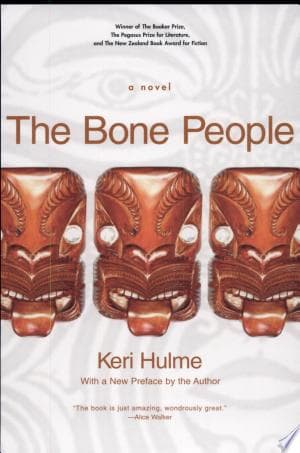
Synopsis
Covers the whole plot, including the ending.
- Difficulty
- Hard
- Pacing
- Slow
- Mood
- Intense, Raw, Spiritual, Poetic, Dark, Redemptive
- Read it if
- You appreciate literary fiction that delves deep into complex psychological states, explores themes of identity, abuse, and healing with a raw, poetic intensity, and integrates rich cultural mythology (Maori) into a contemporary setting.
- Skip it if
- You prefer straightforward narratives, are sensitive to depictions of child abuse, or find experimental prose with significant use of indigenous language challenging.
The Bone People Plot Summary
Covers the whole plot, including the ending.
The Intruder
Kerewin Holmes lives an isolated life in a tower house on the New Zealand coast, dedicating herself to art and avoiding human connection. One day, her solitude is broken when a small, mute boy, Simon, breaks into her home. Simon, of ambiguous European and Maori heritage, is wild and uncommunicative, but Kerewin finds herself drawn to him despite her initial resistance. She tries to understand his background, learning he is an orphan adopted by a Maori factory worker named Joe Gillayley. Simon's presence stirs a dormant part of Kerewin, challenging her emotional barriers and forcing her to confront the possibility of connection she has long avoided.
Joe's Burden
Joe Gillayley, a Maori widower, adopted Simon after the boy was found shipwrecked and traumatized. Joe loves Simon, seeing him as a second chance after the death of his own family. However, Joe is tormented by an inner darkness and a history of violence, often lashing out at Simon physically. These brutal beatings are followed by intense remorse and attempts at reconciliation, creating a destructive cycle. Joe knows his failings and wants to be a good father, but his rage, fueled by grief and cultural displacement, often overwhelms him, leaving Simon scarred and fearful, yet still attached to his adoptive father.
A Precarious Triangle
As Simon continues to seek out Kerewin, a complex and often volatile relationship develops between the three. Kerewin offers Simon a sanctuary and an intellectual connection, teaching him to communicate through drawing and observation. Joe, initially wary and possessive of Simon, gradually begins to trust Kerewin, seeing her as a positive influence. They form a strange, makeshift family, sharing meals and quiet moments. However, the underlying tension of Joe's violence and Kerewin's fear of commitment constantly threatens to shatter their fragile bond, making every interaction a delicate balance of affection and potential conflict.
The Cycles of Abuse
Joe's pattern of abuse towards Simon becomes more severe and frequent. Despite his love for the boy, his inner demons manifest in brutal beatings, leaving Simon physically injured and emotionally traumatized. Kerewin witnesses the aftermath of these incidents, torn between her desire to protect Simon and her fear of interfering too deeply. These violent outbursts show the deep pain within Joe and the pervasive cycle of trauma. Simon, despite his suffering, remains loyal to Joe, embodying the complex nature of their bond, rooted in both love and fear.
Kerewin's Retreat
The intensity of the relationships and the escalating violence prove too much for Kerewin. Her deeply ingrained fear of attachment resurfaces, and she begins to push Simon and Joe away. She convinces herself that she is not equipped to handle such emotional burdens. Kerewin retreats back into her solitary existence, focusing on her art and rebuilding the emotional walls she had allowed to crumble. This withdrawal leaves Simon feeling abandoned and Joe feeling rejected, further isolating the boy and reigniting Joe's turmoil and violent tendencies.
The Near-Fatal Beating
In a fit of drunken rage and despair, Joe inflicts a brutal, severe beating on Simon. The severity of the attack leaves Simon critically injured, near death. This devastating event is a horrifying culmination of Joe's self-destructive patterns. The community is alerted, and Joe is arrested, facing the consequences of his actions. This incident shatters the fragile world the three had built, forcing each character to confront the repercussions of their choices and the destructive power of unchecked pain and violence.
Separation and Solitude
Following the severe beating, Simon is hospitalized, his survival uncertain. Joe is arrested, charged, and imprisoned for his actions, finally facing the legal consequences of his abuse. Kerewin is left alone in her tower, consumed by guilt and regret for having pushed them away. She grapples with the realization that her fear of connection may have contributed to Simon's suffering. This period of separation forces each character into solitude, allowing them to reflect on their past actions, their pain, and the nature of their interconnectedness, however fractured it may be.
Spiritual Journey
Haunted by the events and her own culpability, Kerewin leaves her tower and goes on a spiritual journey. She travels to different parts of New Zealand, seeking understanding and a deeper connection to her Maori heritage and the land. During this time, she experiences visions and encounters with spiritual entities, exploring Maori mythology and ancient traditions. This journey is one of introspection and healing, allowing her to process her grief, guilt, and fear, and to begin to reconcile with her own identity and the culture that defines her.
Joe's Transformation
While imprisoned, Joe changes significantly. Stripped of his freedom and forced to confront his demons, he begins a deep process of self-reflection and spiritual awakening. He connects with his Maori elders and traditions, learning to understand the cultural and personal roots of his rage and pain. Joe embraces the concept of 'utu' – reciprocity and balance – and seeks a path to redemption and healing. His time in prison is not just punishment but a crucible for personal growth, aiming to break the cycle of violence that has plagued him.
Simon's Healing
Simon slowly recovers from his injuries. In a new, safer environment, he begins to heal physically and emotionally. His muteness, a symptom of his trauma, gradually recedes as he starts to speak, first in fragments, then with increasing clarity. He begins to explore his identity, understanding more about his mysterious past and the complexities of his heritage. Simon's journey is one of resilience, finding his own voice and agency after years of silence and abuse, showing the potential for healing and growth even after suffering.
Reunion and Reconciliation
After their respective journeys of healing and change, Kerewin, Joe, and Simon tentatively reunite. Joe, released from prison, is a changed man, committed to a path of non-violence and spiritual understanding. Simon, now speaking, is more self-possessed. Kerewin, having embraced her heritage and overcome her fear of connection, is ready to engage with the world. Their reunion has awkwardness and lingering pain, but it is marked by a newfound understanding and a shared desire to forge a healthier, more authentic bond. They acknowledge their past hurts but look towards a future of mutual support and growth.
The New Whare
As a symbol of their renewed commitment to each other and their shared future, Kerewin, Joe, and Simon decide to build a new 'whare' (Maori house) together. This act of creation is symbolic, representing their collective healing, the rebuilding of their lives, and the establishment of a foundation for a true, loving family. The whare incorporates elements of both Maori and European traditions, reflecting their mixed heritage and the synthesis of their individual journeys. It stands as a symbol of their resilience, their capacity for forgiveness, and the enduring power of connection amidst pain.
The Bone People Characters
Kerewin Holmes
Protagonist
A reclusive, fiercely independent artist of mixed Maori and European descent.
Kerewin is a complex, often abrasive character who actively shuns human connection, believing it only leads to pain. She lives in a tower house on the coast, dedicating herself to her art, which is both a refuge and an expression of her inner turmoil. Her intelligence is sharp, her wit biting, and her emotional walls formidable. Despite her fierce independence, she possesses a deep, albeit buried, capacity for love and empathy, which Simon's arrival slowly unearths. She grapples with her mixed heritage, often feeling disconnected from both worlds.
Relationships: Simon (Initially a disruptive intruder, becomes a surrogate son and catalyst for her emotional awakening.); Joe Gillayley (A complex, often strained relationship, marked by initial distrust, eventual empathy, and a shared bond over Simon.)
Joe Gillayley
Protagonist/Antagonist
Simon's adoptive Maori father, tormented by grief, love, and cycles of violence.
Joe is a Maori factory worker, deeply loving and protective of his adopted son, Simon. However, he is also plagued by an inner darkness, fueled by the loss of his own family and a history of violence that manifests in brutal beatings towards Simon. He is a man of deep contradictions: tender and cruel, remorseful and destructive. Joe carries the weight of cultural displacement and unresolved grief, struggling to reconcile his traditional Maori identity with the harsh realities of his life. His love for Simon is genuine, but his inability to control his rage makes him a tragic figure.
Relationships: Simon (Deeply loving and protective, but also violently abusive, creating a traumatic and codependent bond.); Kerewin Holmes (Initially wary, then develops a complex understanding and shared responsibility for Simon.)
Simon
Protagonist
A mysterious, mute, and traumatized boy of unknown origins, adopted by Joe.
Simon is a feral, mute six-year-old boy, the sole survivor of a mysterious shipwreck. He communicates primarily through gestures, drawings, and an intense, almost animalistic intuition. His muteness is a profound symptom of his trauma, but he possesses an innate resilience and a deep capacity for love and loyalty, particularly towards Joe, despite the abuse. Simon is a catalyst for change in both Kerewin and Joe, his vulnerability and unique spirit forcing them to confront their own emotional landscapes. He represents innocence, resilience, and the potential for healing.
Relationships: Joe Gillayley (A deeply complex bond of love, fear, and loyalty, marked by Joe's abuse and Simon's enduring attachment.); Kerewin Holmes (A sanctuary and mentor, who teaches him to communicate and offers him intellectual and emotional connection.)
The Land/Coast
Supporting/Mentioned
The wild, untamed New Zealand coastline, a powerful presence and reflection of the characters' inner worlds.
The rugged New Zealand coastline is almost a character in itself, constantly present in the narrative. It is a harsh, beautiful, and indifferent environment that mirrors the internal landscapes of Kerewin, Joe, and Simon. The sea, the wind, and the isolated beaches provide both a refuge and a source of danger, reflecting the characters' struggles with their own wildness and their search for belonging. It's a place of ancient Maori spirits and raw, untamed nature, symbolizing the deep-seated spiritual and cultural forces at play.
The Maori Ancestors/Spirits
Supporting/Mentioned
Ancestral figures and spiritual forces that guide and influence the characters.
Throughout the novel, especially during Kerewin's and Joe's spiritual journeys, the presence of Maori ancestors and spiritual forces is deeply felt. These are not merely abstract concepts but living entities that offer guidance, wisdom, and sometimes challenge. They represent the deep cultural roots and spiritual heritage that the characters, particularly Joe and Kerewin, must reconcile with. Their influence helps the characters understand their identities, their place in the world, and the importance of 'utu' (reciprocity) and 'whanaungatanga' (kinship).
Relationships: Kerewin Holmes (Initially a distant presence, becomes a source of profound spiritual connection and guidance during her journey.); Joe Gillayley (Connects with them in prison, finding guidance for his redemption and understanding of his cultural identity.)
The Bone People Themes
The Nature of Family and Belonging
The novel explores what constitutes a family, moving beyond traditional definitions to encompass a bond forged through shared trauma, love, and resilience. Kerewin, Joe, and Simon, all outcasts, create an unconventional family unit that is both destructive and ultimately redemptive. Their struggle to belong to each other, despite their fears and Joe's violence, highlights the human need for connection. The eventual rebuilding of the 'whare' symbolizes their commitment to forging a new, healthier sense of belonging.
“To care for anything is to invite disaster.”
Trauma, Violence, and Healing
Trauma is a pervasive force in the novel, appearing in Simon's muteness and Joe's violent outbursts, stemming from his grief and cultural displacement. The cycle of violence is central, showing how pain can be both inflicted and endured. However, the novel ultimately emphasizes the possibility of healing and redemption. Joe's spiritual journey in prison, Simon's recovery and finding his voice, and Kerewin's confrontation of her fears all illustrate the arduous but possible path from deep trauma to eventual peace and reconciliation.
“There are some things that cannot be broken. There are some things that are too strong.”
Identity and Cultural Heritage
All three protagonists grapple with their mixed Maori and European heritage. Kerewin feels alienated from both, struggling to reconcile her Pakeha upbringing with her Maori blood. Joe is deeply rooted in his Maori identity but struggles with its place in a modern world, and the loss of his family worsens this. Simon's unknown origins make his search for identity even more profound. The novel explores Maori mythology, language, and spiritual practices, suggesting that understanding and embracing one's cultural heritage is important for self-discovery and healing.
“I am a pakeha with a bit of Maori. I am a Maori with a bit of pakeha. I am nothing. I am myself.”
Isolation vs. Connection
Kerewin embodies isolation, actively choosing solitude out of fear of vulnerability. Her tower home is a physical manifestation of her emotional walls. Simon's muteness and Joe's internal struggles also contribute to their individual isolations. The narrative explores the tension between the desire for connection and the fear of the pain it can bring. The journey of the characters is one of slowly dismantling these walls, learning to trust, and ultimately finding that genuine connection, despite its risks, is essential for growth and fulfillment.
“Loneliness is a human condition. No matter how much you love, you are alone.”
Art as a Means of Expression and Healing
Art, particularly Kerewin's painting and Simon's drawing, is a non-verbal means of expression and a path to healing. Kerewin's art is her primary mode of communication and a reflection of her inner world, often dark and complex. Simon, unable to speak, uses drawing to convey his experiences, fears, and desires, allowing others to understand his trauma and inner life. Art provides a safe space for emotions that cannot be articulated, acting as a bridge between characters and a catalyst for their individual and collective healing processes.
“I paint to make sense of things. To make beautiful things out of ugly.”
Plot Devices & Literary Techniques
Symbolism of the Tower House
Kerewin's isolated home, representing her emotional and physical withdrawal.
Kerewin's tower house on the desolate coast is a potent symbol of her self-imposed isolation and her attempts to wall herself off from human connection. Its elevated, solitary position reflects her desire to observe life from a distance, without engaging directly. The tower's eventual disrepair and the intrusion of Simon metaphorically break down her defenses, forcing her to confront her fear of vulnerability and connection. Its later abandonment and the building of the new 'whare' signify her transformation.
Simon's Mutism
A physical manifestation of trauma and a catalyst for non-verbal communication.
Simon's mutism is a central plot device, serving both as a consequence of his severe trauma and as a powerful means of driving the narrative. It forces other characters, particularly Kerewin, to find alternative ways to communicate and connect with him, such as through drawing and intuition. His eventual recovery of speech symbolizes his healing and the breaking of the cycle of abuse, marking a significant turning point in his personal arc and the relationships with Kerewin and Joe.
Maori Mythology and Language
Integration of indigenous culture to enrich themes of identity and spirituality.
The pervasive use of Maori mythology, legends, and language (Te Reo Maori) is a vital plot device. It deepens the novel's themes of identity, cultural heritage, and spiritual connection to the land. The myths provide a framework for understanding the characters' struggles and their search for meaning, particularly during Kerewin's and Joe's spiritual journeys. The language itself adds authenticity and a layer of cultural richness, emphasizing the unique New Zealand setting and the characters' complex heritage.
The Sea and the Land
Natural elements as a reflection of characters' inner states and a source of spiritual power.
The wild, untamed New Zealand coastline and the powerful sea are more than just a setting; they are active plot devices. They reflect the characters' internal turmoil, their wildness, and their isolation. The sea represents both danger (Simon's shipwreck) and purification, while the land provides a source of ancient wisdom and spiritual grounding for Joe and Kerewin during their respective journeys. The natural world underscores the raw, elemental forces at play in the characters' lives and their connection to a deeper, ancestral heritage.
The Bone People Quotes
“The wind was picking up now, and the sea was a great grey sheet, ruffled and torn at the edges.”
“All my life I've been a solitary person, a bit of a hermit even. But I never knew how much I needed other people until I met them.”
“He knew, with a certainty that was almost unbearable, that he had found his home, his people.”
“There are some things you carry with you, all your life, like a stone in your pocket.”
“Sometimes the greatest love is a fierce, protective thing, willing to wound to prevent a greater harm.”
“The sea, the land, the sky. They were all one, and she was part of them.”
“He was a small boy, but he carried a world of silence inside him.”
“The past is never dead. It's not even past.”
“It was a wild, strange beauty, like a broken thing that had found its own way to mend.”
“We are all made of stories, and we tell them to ourselves, to make sense of who we are.”
“The house was a shell, but it was a shell that held a beating heart.”
“Some wounds heal, leaving only a scar. Others burrow deep, and never quite close.”
“And the world kept turning, indifferent to the small, intense dramas unfolding within it.”
“It was a kind of communion, a silent understanding that passed between them without words.”
Quiz
10 questions on the plot and the characters. Each answer comes with a short explanation.
Question 1
What is Kerewin Holmes's profession at the beginning of the novel?
- A teacher
- A painter
- A factory worker
- A musician
Show answer
B. A painter Kerewin is described as a painter and a loner, whose isolation is disrupted by Simon.
Question 2
What is unique about Simon's ability to communicate when he first encounters Kerewin?
- He speaks multiple languages.
- He is completely mute.
- He communicates through elaborate drawings.
- He uses sign language exclusively.
Show answer
B. He is completely mute. Simon is introduced as a six-year-old mute boy.
Question 3
What is Joe Gillayley's relationship to Simon?
- He is Simon's biological father.
- He is Simon's uncle.
- He is Simon's adoptive father.
- He is Simon's guardian from a social service agency.
Show answer
C. He is Simon's adoptive father. Joe Gillayley is described as the widower Maori factory worker who has adopted Simon.
Question 4
What is Kerewin's initial philosophy regarding emotional attachment?
- To care for anything is to invite joy.
- To care for anything is to invite disaster.
- Emotional attachment is essential for artistic creation.
- Attachment is a sign of weakness.
Show answer
B. To care for anything is to invite disaster. Kerewin is a loner, convinced that 'to care for anything is to invite disaster,' a philosophy that is challenged by Simon's arrival.
Question 5
Which specific New Zealand geographical feature forms the primary setting of the novel?
- The North Island mountains
- The South Island beaches
- The central plains of the North Island
- A specific urban center like Auckland
Show answer
B. The South Island beaches The novel is explicitly set 'on the South Island beaches of New Zealand, a harsh environment.'
Question 6
What is the primary internal conflict faced by the three main characters (Kerewin, Simon, Joe)?
- The struggle between wealth and poverty.
- The desire to connect versus the fear of attachment.
- The choice between urban and rural living.
- The conflict between artistic expression and practical work.
Show answer
B. The desire to connect versus the fear of attachment. The novel reveals each character's thoughts and feelings as they 'struggle with the desire to connect and the fear of attachment.'
Question 7
What is Simon's origin story, as revealed in the novel's setup?
- He was found abandoned in a city park.
- He is the sole survivor of a mysterious shipwreck.
- He was left at an orphanage as an infant.
- He ran away from an abusive home.
Show answer
B. He is the sole survivor of a mysterious shipwreck. Simon is described as 'the sole survivor of a mysterious shipwreck.'
Question 8
The novel is noted for integrating which two cultural elements into its narrative?
- Australian folklore and European history.
- Maori myth and New Zealand reality.
- Polynesian legends and British colonial narratives.
- Japanese Zen philosophy and New Zealand indigenous art.
Show answer
B. Maori myth and New Zealand reality. The book is praised for 'integrating both Maori myth and New Zealand reality.'
Question 9
The narrative perspective of 'The Bone People' is characterized by what technique?
- A single, omniscient narrator throughout.
- Strictly first-person from Kerewin's point of view.
- Shifting points of view to reveal each character's thoughts.
- An unreliable narrator whose identity is hidden.
Show answer
C. Shifting points of view to reveal each character's thoughts. The novel reveals each character's thoughts and feelings 'Through shifting points of view'.
Question 10
Which author's work is 'The Bone People' compared to, specifically regarding its use of indigenous language and portrayal of consciousness?
- Virginia Woolf
- Gabriel García Márquez
- James Joyce
- Toni Morrison
Show answer
C. James Joyce The novel is 'Compared to the works of James Joyce in its use of indigenous language and portrayal of consciousness.'
The Bone People FAQ
What is the central premise of 'The Bone People'?
The novel explores the complex, often violent, and ultimately redemptive relationships between three social outcasts: Kerewin Holmes, a reclusive painter; Joe Gillayley, a Maori factory worker; and Simon, Joe's adopted mute son. Their interactions unfold against the backdrop of New Zealand's South Island, blending Maori myth with contemporary reality as they navigate desires for connection and fears of vulnerability.
Who are the main characters and what are their initial states?
Kerewin Holmes is a fiercely independent artist who shuns society, believing that emotional attachment leads to pain. Joe Gillayley is a widower struggling with grief and an inability to express his love for Simon, often resorting to physical abuse. Simon is a mysterious, mute six-year-old orphan, a survivor of a shipwreck, whose presence acts as a catalyst for the other two characters' journeys.
How does Simon's arrival impact Kerewin's reclusive life?
Simon's unexpected intrusion into Kerewin's tower house shatters her carefully constructed isolation. Despite her initial resistance and disdain for human connection, Simon's vulnerability and unique spirit gradually chip away at her defenses, forcing her to confront her own buried emotions and her capacity for care.
What role does Joe Gillayley's violence play in the narrative?
Joe's periodic, brutal beatings of Simon are a central, disturbing element of the novel, stemming from his own trauma, grief, and inability to communicate his love. This violence highlights the destructive cycles within families and communities, but also sets the stage for the characters' eventual confrontation with their pain and their path towards healing.
What significance does the setting of New Zealand's South Island hold?
The rugged, often harsh landscape of the South Island mirrors the internal struggles and emotional desolation of the characters. It also serves as a canvas for the integration of Maori mythology and spiritualism, grounding the story in a specific cultural and geographical reality while allowing for elements of the fantastical.
What is the 'bone people' mentioned in the title, and what does it symbolize?
The 'bone people' refers to a Maori myth about ancient, powerful beings associated with the land and ancestral spirits. It symbolizes the deep, enduring connections to heritage, land, and the spiritual world that are essential for healing and identity. For the characters, finding their 'bone people' means reconnecting with their true selves and their cultural roots.
Are there specific Maori myths or legends integrated into the story beyond the 'bone people'?
Yes, the novel weaves in various elements of Maori mythology, including references to tohunga (priests/experts), tapu (sacredness), and the spiritual significance of the natural world. These myths are not merely decorative but inform the characters' understanding of their experiences and their path towards spiritual and communal reconciliation.
What is the true origin of Simon, and how does it relate to the novel's themes?
Simon is revealed to be the sole survivor of a shipwreck, a 'Pākehā' (European) boy adopted into a Maori family. His mysterious origin and mute state symbolize a rupture, a loss of identity, and the potential for a new, integrated identity. His journey to find his voice parallels the characters' collective search for belonging and healing across cultural divides.
How does Kerewin's artistic process evolve throughout the novel?
Initially, Kerewin's art is a solitary, almost sterile expression of her isolation. As she connects with Simon and Joe, her art becomes more communal, incorporating Maori motifs and reflecting a deeper engagement with life, pain, and healing. Her final work signifies a move from detachment to integration and shared experience.
How does Kerewin's declaration, 'to care for anything is to invite disaster,' reflect her core psychological defense?
This statement reveals Kerewin's profound fear of vulnerability and loss, likely stemming from past trauma. Her chosen isolation is a protective mechanism, an attempt to preempt pain by avoiding emotional attachment altogether. Simon's arrival directly challenges this defense, forcing her to confront the 'disaster' of caring and the potential for growth it brings.
What psychological factors contribute to Joe's cycle of abuse and remorse?
Joe's abusive behavior towards Simon is rooted in unexpressed grief over his wife's death, cultural pressures, and an inability to articulate his deep love and fear of losing Simon. His remorse after each beating indicates a profound internal conflict, a struggle between his destructive impulses and his underlying desire to be a loving father figure.
How does Simon's muteness function psychologically for the characters?
Simon's inability to speak amplifies the communication breakdowns and unspoken traumas within the relationships. For Kerewin, he is a challenge to her intellectual detachment; for Joe, he is a mirror reflecting his own inarticulate pain. His eventual finding of a voice, albeit non-verbal at times, signifies a breakthrough in emotional expression for all three.
What is the psychological significance of the 'healing' period the characters undergo after their initial conflicts?
The period of communal healing, often involving ritual and shared work, represents a necessary psychological integration after the destructive climax. It allows the characters to process trauma, rebuild trust, and learn new ways of relating to each other. It signifies a move from individual brokenness to collective repair and interdependence.
How does the novel challenge traditional notions of family and kinship?
The novel presents a non-traditional family unit formed by outcasts who are not biologically related, yet forge profound bonds through shared trauma and healing. It suggests that family is not solely defined by blood but by deep emotional connection, responsibility, and mutual care, especially within the context of Maori communal values.
Is 'The Bone People' ultimately a story of redemption, despite its violent elements?
Yes, despite the harrowing violence and pain depicted, the novel is widely interpreted as a powerful story of redemption. The characters confront their deepest flaws and traumas, undergo a transformative journey, and ultimately find a form of peace, belonging, and healing through their profound, if unconventional, bond. The ending suggests hope for reconciliation and new beginnings.
How does the blending of Maori and European cultures contribute to the novel's thematic depth?
The novel explores the complexities and tensions of a bicultural society, showing how characters of mixed heritage navigate their identities. It suggests that true healing and wholeness come from integrating both cultural streams, drawing strength from indigenous traditions while acknowledging the realities of a post-colonial world. This fusion is central to the characters' personal and collective evolution.
What is the significance of the novel's non-linear structure and shifting perspectives?
The non-linear narrative and shifting points of view allow the reader deep access to the internal worlds of Kerewin, Joe, and Simon. This structure emphasizes the subjective nature of truth and experience, gradually revealing the motivations behind their actions and fostering empathy for each character, even in their most destructive moments. It mirrors the fragmented nature of their lives before their eventual integration.
How does the novel use language, particularly Maori words, to enhance its meaning?
Keri Hulme masterfully integrates Maori words and phrases into the English text, often without direct translation, immersing the reader in the bicultural world of the characters. This linguistic choice not only lends authenticity but also underscores the importance of indigenous language and culture, inviting readers to engage more deeply with the unique voice and perspective of New Zealand literature.
About the author
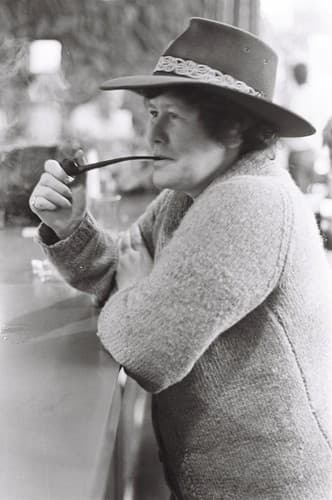
Keri Ann Ruhi Hulme was a New Zealand novelist, poet and short-story writer. She also wrote under the pen name Kai Tainui. Her novel The Bone People won the Booker Prize in 1985; she was the first New Zealander to win the award, and also the first writer to win the prize for a debut novel. Hulme's writing explores themes of isolation, postcolonial and multicultural identity, and Maori, Celtic, and Norse mythology.
Similar books
- A Brief History of Seven Killings
Marlon James
3.9 (28k) average on GoodreadsLiterary FictionExplores complex characters and violence with a multi-perspectival approach and rich, challenging prose.
- The Luminaries
Eleanor Catton
3.7 (66k) average on GoodreadsLiterary FictionSet in historical New Zealand, features a large cast and intricate narrative structure, though less focused on trauma.
- Ulysses
James Joyce
3.7 (111k) average on GoodreadsLiterary FictionCited in the description for its use of indigenous language and portrayal of consciousness, though 'The Bone People' is more accessible.
- Once Were Warriors
Alan Duff
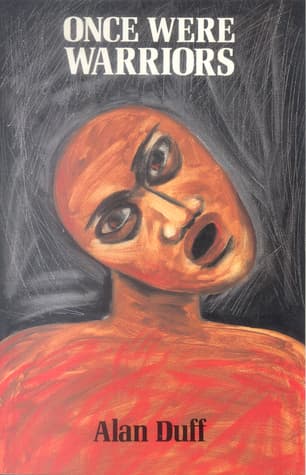
4.0 (3k) average on GoodreadsHistorical FictionWhile both The Bone People and Duff's Once Were Warriors (1990) unflinchingly portray domestic violence and the struggles of Māori families within contemporary New Zealand society, Hulme's novel delves far deeper into spiritual and mythological realms. Duff's work is more starkly realistic, focusing on the social and economic determinants of violence and poverty, offering a grittier, less redemptive view of its characters' lives. Hulme, conversely, offers a path to healing and cultural reclamation through a more symbolic and spiritual lens, exploring the possibility of transcendence even after profound trauma, whereas Duff's narrative often ends with a sense of cyclical despair. Hulme's language is also significantly more poetic and experimental than Duff's more direct and colloquial style.
- The Old Man and the Sea
Ernest Hemingway
3.8 (831k) average on GoodreadsLiterary FictionA Cuban fisherman's long struggle with a giant marlin becomes a story of endurance and dignity, now retold for young adults with illustrations, phonetic guides, and writing prompts in Traditional Chinese.
- One Hundred Years of Solitude
Gabriel García Márquez
4.1 (753k) average on GoodreadsLiterary FictionThrough the multi-generational story of the Buendía family, a mythical town deals with the repeating patterns of time, love, and solitude, as the extraordinary mixes with the ordinary.





Enjoyed the summary?
A summary gives you the shape of the book. The book itself has the detail, the examples and the voice.
Find The Bone People on AmazonAs an Amazon Associate, BookBrief earns from qualifying purchases. How we're funded