
Synopsis
Covers the whole plot, including the ending.
- Difficulty
- Hard
- Pacing
- Slow
- Mood
- Atmospheric, Intricate, Mysterious, Literary
- Read it if
- You enjoy intricate, character-driven historical mysteries with a unique astrological structure and a strong sense of place.
- Skip it if
- You prefer fast-paced plots, straightforward narratives, or find large casts of characters and complex structures overwhelming.
The Luminaries Plot Summary
Covers the whole plot, including the ending.
The Gathering at the Crown Hotel
On a stormy night in January 1866, Walter Moody, a young man from Britain, arrives in Hokitika, New Zealand, hoping to find gold. He checks into the Crown Hotel and, in the smoking room, finds himself among a secret meeting of twelve notable local men. These men, including banker Alistair Lauderback, Maori carver Te Rau Tauwhare, and opium dealer Quee Long, are discussing strange events that have recently shaken the town. These events include the disappearance of wealthy prospector Emery Staines, the suicide attempt of prostitute Anna Wetherell, and the discovery of a large gold fortune in the hut of opium addict Crosbie Wells. Moody, a lawyer, gets pulled into their theories and suspicions.
The Discovery of Crosbie Wells's Body
The story describes the events before Moody arrived. Crosbie Wells, a struggling prospector, is found dead in his isolated hut, with a lot of gold hidden under his floorboards. His death looks suspicious, with signs of foul play. Finding gold with Wells is especially confusing, as he was known to be poor. This discovery fuels the speculation among the twelve men at the Crown Hotel, who are trying to figure out how Wells got such wealth and if his death connects to Emery Staines's disappearance and Anna Wetherell's suicide attempt. The gold becomes a key clue.
Anna Wetherell's Ordeal
The story moves to Anna Wetherell, a young woman who arrived in Hokitika on the same ship as Emery Staines. She is found unconscious in the street after taking laudanum. Her recovery is slow, and she has no memory of the events leading up to her overdose. Dr. Gideon Prosper, the town physician, cares for her, while Reverend Cowell and brothel madam Lydia Wells (Crosbie's estranged wife) also help in her recovery and later accusations. Anna's past slowly comes out, suggesting a link to Emery Staines and the gold, making her a main character in the mystery, though her memory loss complicates the investigation.
The Trial of Anna Wetherell
Anna Wetherell is arrested and charged with Crosbie Wells's murder and gold theft. The trial becomes a focus of the town, with various characters giving testimony. The prosecution, led by Te Rau Tauwhare, tries to link Anna to the crime with circumstantial evidence and her connection to Crosbie and Emery Staines. Lydia Wells, Crosbie's widow, gives damaging testimony against Anna, wanting the gold for herself. Walter Moody, though not officially involved, watches the proceedings closely, seeing the complex web of relationships and motives, and starts to form his own ideas about the truth.
Emery Staines's Disappearance and the Gold
The real story of Emery Staines's disappearance gradually comes out. He and Anna Wetherell had a secret relationship, and Staines had indeed found gold. However, a series of bad events, including a robbery by Francis Carver and George Shepard, led to the gold being taken from him. Staines, affected by opium and a strong astrological alignment, becomes confused and disappears from public view, thought to be dead. His fate is connected to the gold found in Crosbie Wells's hut, further complicating the murder investigation and creating a sense of karmic justice among the characters.
Lydia Wells's Deception and Manipulation
Lydia Wells, Crosbie's estranged wife and a clever fortune-teller, is shown to be a main manipulator. She had an affair with Francis Carver and conspired with him to steal gold from Emery Staines. After Crosbie Wells accidentally got the stolen gold, Lydia helped murder him, poisoning him and framing Anna Wetherell. Her testimony against Anna at the trial is a planned act to divert suspicion and get the fortune for herself and Carver. Her ambition and greed drive many of the tragic events.
Francis Carver's Villainy
Francis Carver is revealed as the real villain. He is a brutal criminal, responsible for the initial robbery of Emery Staines's gold and, later, Crosbie Wells's murder with Lydia. Carver's violent nature and his pursuit of wealth drive much of the plot's dark side. He tries to silence witnesses and control events to his advantage, using threats and force. His actions directly lead to Anna Wetherell's suffering and Crosbie Wells's death, making him the most responsible figure in the tragic events that plague Hokitika.
The Intertwined Fates of Anna and Emery
The story explains the strong astrological connection between Anna Wetherell and Emery Staines. They are 'soul mates' whose lives are connected, meaning that when one suffers, the other feels a similar pain. This cosmic link explains why Anna attempted suicide when Emery was attacked and left for dead, and why Emery experienced a period of extreme confusion and memory loss when Anna was in a similar state. Their shared fate is a central part of the story's astrological structure, showing the powerful, unseen forces that control their lives and those around them.
The Resolution of the Gold Mystery
After much intrigue and legal maneuvering, the fate of Crosbie Wells's gold is settled. It is decided that the gold rightfully belongs to Emery Staines, having been stolen from him by Francis Carver and Lydia Wells. The legal process is difficult, but eventually, justice is done, and the gold is returned to its rightful owner. This resolution brings a sense of closure to one of the central mysteries, though the emotional and physical scars left by the events remain. The gold, a cause of so much greed and violence, ultimately returns to its original prospector.
Justice Served (Mostly)
Francis Carver eventually dies violently, a victim of his own ruthlessness. Lydia Wells, though not facing the harshest legal punishment, loses her social standing and her claim to the gold, ending her manipulative power. Anna Wetherell is found not guilty of murder and begins to recover from her ordeal, her memory slowly returning. Emery Staines, having survived his difficult experience, reunites with Anna. While not every wrong is perfectly fixed, the main perpetrators face consequences, and the community of Hokitika can begin to heal from the turmoil and violence that gripped it, although the scars of greed and betrayal remain.
The Luminaries Characters
Walter Moody
Protagonist
A young Scottish lawyer who arrives in Hokitika and becomes entangled in the central mystery.
Walter Moody is an intelligent, observant, and somewhat reserved young man. He arrives in New Zealand seeking his fortune and a new start, but his legal background quickly draws him into the complex web of crimes and deceptions in Hokitika. He functions as the initial outsider perspective, piecing together information from the various townspeople. He is driven by a desire for truth and justice, using his logical mind to navigate the astrological and human complexities of the story.
Relationships: Alistair Lauderback (acquaintance, source of information); Te Rau Tauwhare (acquaintance, source of information)
Anna Wetherell
Central Figure/Victim
A young prostitute whose attempted suicide and subsequent amnesia are central to the mystery.
Anna Wetherell is a sensitive and enigmatic young woman whose life is marked by tragedy and misfortune. She is deeply connected to Emery Staines through an astrological bond, experiencing his pain as her own. Accused of murder and theft, she struggles with memory loss and the judgment of society. Despite her vulnerability, she possesses an inner strength and resilience, enduring immense suffering. Her purity and innocence are often contrasted with the depravity of others.
Relationships: Emery Staines (lover, soulmate); Crosbie Wells (acquaintance, falsely accused of his murder); Lydia Wells (antagonist, accuser)
Emery Staines
Central Figure/Missing Person
A wealthy prospector whose disappearance and connection to Anna are key to the plot.
Emery Staines is a charismatic and initially successful prospector. He is a 'golden boy' whose fortune seems to be tied to his astrological chart. His deep, unspoken connection with Anna Wetherell is a fundamental aspect of his character, making him vulnerable to her suffering. He experiences a profound disorientation and memory loss after being assaulted, mirroring Anna's own amnesia. His disappearance and the theft of his gold are the catalysts for much of the story's conflict. He represents the potential for both great fortune and great misfortune.
Relationships: Anna Wetherell (lover, soulmate); Francis Carver (antagonist, robber); Crosbie Wells (indirectly connected through the gold)
Lydia Wells
Antagonist
Crosbie Wells's estranged wife, a cunning and manipulative fortune-teller.
Lydia Wells is a complex and highly manipulative character, driven by greed and a desire for social advancement. She presents herself as a respectable widow and a talented clairvoyant, but beneath this facade lies a ruthless individual capable of murder and deception. She uses her charm and supposed mystical abilities to influence others and orchestrate events to her advantage, particularly in her schemes to acquire Crosbie's gold. Her ambition makes her a formidable and dangerous foe.
Relationships: Crosbie Wells (estranged husband, victim); Francis Carver (lover, conspirator); Anna Wetherell (accuser, rival for gold)
Francis Carver
Antagonist
A brutal and violent criminal, responsible for much of the story's suffering.
Francis Carver is the embodiment of pure villainy in the novel. He is a ruthless and violent man, a former convict who operates outside the law. Driven by a relentless desire for wealth, he is responsible for the robbery of Emery Staines and the murder of Crosbie Wells. Carver uses intimidation and brute force to achieve his goals, showing no remorse for his actions. His presence casts a dark shadow over Hokitika, representing the lawless and dangerous elements of the gold rush era.
Relationships: Lydia Wells (lover, conspirator); Emery Staines (victim of robbery); Crosbie Wells (victim of murder)
Crosbie Wells
Victim
A reclusive, opium-addicted prospector whose murder and hidden gold spark the central mystery.
Crosbie Wells is a tragic figure, a reclusive and luckless prospector addicted to opium. He is the accidental recipient of Emery Staines's stolen gold, which ultimately leads to his murder. Despite his unassuming nature, his death sets in motion the entire complex plot. He is a quiet figure whose past is slowly revealed through the testimonies of others, highlighting his estranged relationship with Lydia and his simple, solitary existence before his untimely end.
Relationships: Lydia Wells (estranged wife, murderer); Anna Wetherell (acquaintance, falsely accused of his murder)
Alistair Lauderback
Supporting
A prominent and wealthy banker, one of the twelve men at the Crown Hotel.
Alistair Lauderback is a respected and influential figure in Hokitika, representing the established wealth and power of the town. He is part of the initial gathering at the Crown Hotel, offering a perspective informed by his financial acumen and social standing. He is logical and analytical, attempting to make sense of the events through rational means. His involvement highlights the impact of the crimes on the town's elite.
Relationships: Walter Moody (acquaintance); Other members of the twelve (colleagues/acquaintances)
Te Rau Tauwhare
Supporting
A wise Maori greenstone carver, one of the twelve men and a prosecutor in Anna's trial.
Te Rau Tauwhare is a respected elder and a skilled greenstone carver, representing the indigenous perspective and a connection to ancient wisdom. He is one of the twelve men, and his insights often carry a deeper, more spiritual weight. He acts as a prosecutor in Anna Wetherell's trial, demonstrating a keen understanding of human nature and the intricacies of the law, despite his traditional background. He embodies a sense of justice and cultural continuity amidst the chaos of the gold rush.
Relationships: Walter Moody (acquaintance); Other members of the twelve (colleagues/acquaintances)
Quee Long
Supporting
A Chinese opium dealer, one of the twelve men.
Quee Long is a taciturn and enigmatic Chinese opium dealer, representing the diverse immigrant population of Hokitika and the shadowy underworld of the town. His business connects him to many characters, particularly those involved in opium use like Crosbie Wells and Emery Staines. He is a man of few words but keen observation, holding information that is crucial to the unfolding mystery. His presence highlights the racial and cultural dynamics of the era.
Relationships: Crosbie Wells (client); Emery Staines (client)
The Luminaries Themes
Fate vs. Free Will
The novel explores the tension between predetermined destiny, especially through its astrological framework, and the choices characters make. Characters' actions are often influenced by their 'stars,' suggesting a cosmic plan for their lives. For example, Anna Wetherell and Emery Staines are linked by astrology, feeling each other's pain and fortune. However, within this framework, characters like Lydia Wells and Francis Carver choose greed and lies, showing that human choice, for good or bad, still shapes events. The story questions whether characters are just puppets of their stars or if they have the free will to defy their celestial maps.
“What if the world was a great machine, and we were all just cogs within it, our lives turning on the same old spindle, over and over, until the whole thing wore out?”
Justice and Retribution
The pursuit of justice, both legal and karmic, is a main theme. The legal system, shown by Anna Wetherell's trial, is imperfect and easily manipulated by false testimony and bias. However, the novel also suggests a deeper, almost cosmic sense of retribution, where wrongdoers like Francis Carver and Lydia Wells eventually face consequences for their actions, even if not always through traditional legal means. The gold, a symbol of greed, ultimately returns to its rightful owner, Emery Staines, suggesting a natural order that seeks balance. The twelve men at the Crown Hotel show the community's desire to understand and bring justice to the chaotic events.
“Every secret will be told, every truth revealed, every debt repaid.”
Greed and Corruption
The appeal of gold and the corrupting effect of wealth are common themes. The gold rush setting naturally highlights human greed, as characters like Francis Carver and Lydia Wells resort to robbery, murder, and complex schemes to get the fortune. Crosbie Wells's accidental possession of the gold leads directly to his death, showing its dangerous power. The pursuit of wealth distorts moral compasses, leading to betrayal and violence. Even seemingly respectable members of society are involved in the tangled web of greed, showing how easily the promise of riches can corrupt individuals and a community.
“Gold was a living thing, a hungry thing, a thing that could make men mad.”
Identity and Deception
Many characters in 'The Luminaries' use false appearances or struggle with broken identities. Anna Wetherell's memory loss and the changing views of her character show how fragile identity is and how it can be shaped by outside accusations. Lydia Wells, a fortune-teller, carefully creates a deceptive persona to hide her criminal activities. Emery Staines's disappearance and subsequent confusion also involve a loss of self. The story's structure, revealing information bit by bit, forces the reader to constantly re-evaluate characters' true natures, emphasizing how easily appearances can mislead and how hard it is to truly know another person in a world full of secrets.
“A man's true nature, like a woman's, was a thing that could be hidden, altered, and even entirely forgotten.”
Plot Devices & Literary Techniques
Astrological Structure
The novel's entire narrative and character relationships are meticulously structured around the zodiac and planetary alignments.
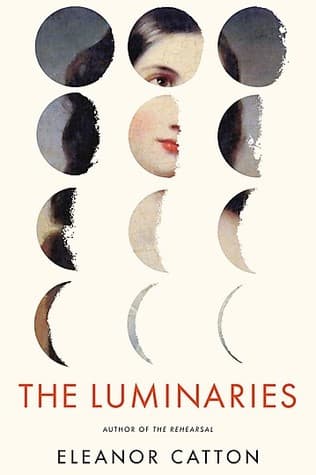
Each of the twelve men at the Crown Hotel represents a zodiac sign, and their personalities and roles align with astrological archetypes. Anna Wetherell and Emery Staines are 'luminaries' (the Moon and Sun, respectively), whose fates are intricately linked. The decreasing chapter lengths mirror the waning moon, and the plot unfolds according to specific astrological conjunctions and oppositions. This device not only adds a layer of intricate complexity to the narrative but also reinforces the theme of fate versus free will, suggesting a cosmic order that underpins all human actions and connections.
Unreliable Narration / Multiple Perspectives
The story is told through the fragmented, often biased, accounts of various characters, particularly the twelve men.
The initial chapters are framed as Walter Moody receiving information from the twelve men, each offering their own perspective, theories, and prejudices about the events. This creates an unreliable and incomplete picture, forcing the reader to piece together the truth from conflicting testimonies. Anna Wetherell's amnesia further contributes to this, as her own memory is a fractured source of information. This device heightens the mystery and suspense, challenging the reader to discern truth from falsehood and highlighting the subjective nature of perception.
Red Herring
Clues and characters are deliberately presented to mislead the reader and investigators.
The novel employs numerous red herrings to deepen the mystery. For instance, Anna Wetherell is initially presented as the prime suspect for Crosbie Wells's murder, with seemingly damning circumstantial evidence and testimony against her. Similarly, the gold's origin and ownership are obscured, leading to various false theories among the characters. These misdirections force the reader to constantly re-evaluate their assumptions and contribute to the intricate, puzzle-like nature of the plot, making the eventual revelations more impactful.
Foil Characters
Characters whose contrasting traits highlight the qualities of another character.
The novel uses foil characters to emphasize particular traits or themes. For example, the innocence and vulnerability of Anna Wetherell are thrown into sharp relief by the cunning and ruthless ambition of Lydia Wells. Similarly, the straightforward, albeit flawed, morality of characters like Te Rau Tauwhare contrasts with the utter depravity of Francis Carver. These pairings serve to illuminate the moral spectrum of Hokitika and underscore the choices characters make between good and evil, fate and free will.
The Luminaries Quotes
“The world in which we live is fluid, and the course of a human life, no less so.”
“Every man has his own destiny: the lucky, the unlucky, the rich, the poor, the good, the bad. All are written in the stars.”
“It is not the facts themselves that interest me, but the connections between them.”
“Gold is a key to unlock the earth, but it is also a key to lock the heart.”
“There is no such thing as chance. There is only what is intended.”
“The past is never dead. It's not even past.”
“We are all bound, one to another, in a tapestry of invisible threads.”
“Truth is a thing of many facets, and each man sees but one.”
“The stars do not compel, they only incline.”
“A secret is a kind of currency, and like all currencies, it loses value the more it is exchanged.”
“Desire is a kind of illness, and love is its cure, or its complication.”
“Justice is a debt that must be paid, whether in coin or in blood.”
“Every moment of a human life is a coin, and it can be spent on anything at all.”
“The human heart is a dark forest, full of winding paths and hidden dangers.”
Quiz
10 questions on the plot and the characters. Each answer comes with a short explanation.
Question 1
Upon his arrival in Hokitika on the stormy night, Walter Moody stumbles upon a secret gathering of how many local men?
- Ten
- Eleven
- Twelve
- Thirteen
Show answer
C. Twelve Walter Moody encounters a secret gathering of twelve local men, who are discussing a series of mysterious events in Hokitika.
Question 2
What is the primary reason Walter Moody has come to the New Zealand goldfields?
- To investigate a murder
- To make his fortune
- To escape a past scandal
- To practice law
Show answer
B. To make his fortune The synopsis explicitly states that Walter Moody has come to the New Zealand goldfields 'to make his fortune'.
Question 3
Which of the following events is NOT mentioned as one of the unexplained occurrences being discussed by the twelve men?
- A wealthy man has vanished
- A prostitute has tried to end her life
- A ship has mysteriously sunk
- An enormous fortune has been discovered
Show answer
C. A ship has mysteriously sunk The synopsis lists the vanishing of a wealthy man, a prostitute's suicide attempt, and the discovery of a fortune as the key mysteries, but not a sunken ship.
Question 4
The structure of 'The Luminaries' is intricately linked to what celestial concept?
- The phases of the moon
- Astrology and the zodiac
- The movement of comets
- Constellations and their myths
Show answer
B. Astrology and the zodiac Eleanor Catton structured the novel like an astrological chart, with each character representing a zodiac sign or a planet, influencing their fates and interactions.
Question 5
What is the name of the town where Walter Moody arrives and the main events of the story unfold?
- Dunedin
- Christchurch
- Hokitika
- Wellington
Show answer
C. Hokitika The events of the novel are primarily set in Hokitika, a town on the West Coast of New Zealand's South Island, during the gold rush era.
Question 6
Which character is described as having an 'enormous fortune... discovered in [their] home'?
- The wealthy man who vanished
- The prostitute who tried to end her life
- A luckless drunk
- Walter Moody
Show answer
C. A luckless drunk One of the key mysteries mentioned is that 'an enormous fortune has been discovered in the home of a luckless drunk.'
Question 7
The novel's narrative structure significantly diminishes in length with each successive part. How does this formal choice reflect the novel's thematic concerns?
- It symbolizes the dwindling gold reserves in New Zealand.
- It mimics the waxing and waning of the moon, central to the astrological framework.
- It represents the characters' decreasing importance as the plot progresses.
- It reflects the unreliable nature of memory and historical records.
Show answer
B. It mimics the waxing and waning of the moon, central to the astrological framework. The novel is structured with twelve parts, each decreasing in length, mirroring the waning moon. This formal choice is deeply tied to the novel's astrological framework, where characters are linked to celestial bodies and their influence changes over time.
Question 8
Which character is associated with the discovery of gold in the abandoned cottage, leading to much of the central mystery?
- Emery Staines
- Crosbie Wells
- Anna Wetherell
- George Moodie
Show answer
B. Crosbie Wells Crosbie Wells is the 'luckless drunk' in whose cottage an enormous fortune (gold) is discovered, a key event that sets the complex mystery in motion.
Question 9
The novel employs a highly formal and precise Victorian prose style. What effect does this style have on the reader's experience of the mystery?
- It simplifies the complex plot, making it easier to follow.
- It creates a sense of detachment, emphasizing the forensic investigation of the events.
- It injects humor and lightness into an otherwise dark narrative.
- It makes the characters' emotions more immediate and relatable.
Show answer
B. It creates a sense of detachment, emphasizing the forensic investigation of the events. Catton's precise, formal prose style, reminiscent of Victorian literature, contributes to a sense of intellectual rigor and detachment, aligning with the narrative's 'ghost story' aspect and the forensic examination of interconnected fates.
Question 10
What is the primary genre combination of 'The Luminaries' as described in the provided text?
- Science Fiction, Romance, Thriller
- Literary Fiction, Historical Fiction, Mystery
- Fantasy, Young Adult, Adventure
- Horror, Satire, Biography
Show answer
B. Literary Fiction, Historical Fiction, Mystery The provided text explicitly states the genres as 'Literary Fiction, Historical Fiction, Mystery.'
The Luminaries FAQ
What is the central mystery that Walter Moody encounters upon his arrival in Hokitika?
Walter Moody arrives in Hokitika to find twelve local men gathered, discussing a series of interconnected mysteries: the disappearance of wealthy landowner Alistair Lauderback, the attempted suicide of prostitute Anna Wetherell, and the discovery of a large gold fortune in the home of the drunkard Crosbie Wells. These events are deeply entangled, drawing Moody into their complex web.
How does the novel's structure reflect the astrological conceit?
The novel is structured around the twelve zodiac signs, each represented by a male character, and seven planetary figures, represented by other key characters like Anna Wetherell (Moon) and Emery Staines (Sun). The chapters progressively shorten as the 'moon' waxes and wanes, mirroring astrological movements and the intricate interdependencies of the characters' fates.
Who are the key 'planetary' characters and what roles do they play in the central mystery?
The key planetary figures are Anna Wetherell (the Moon), Emery Staines (the Sun), and Lydia Wells (Venus). Anna is at the center of the mystery, accused of prostitution and opium addiction, while Emery Staines is her fated counterpart, whose disappearance and subsequent reappearance are linked to the gold and Lauderback's fate. Lydia Wells, Crosbie's widow, manipulates events from behind the scenes.
What is the significance of the gold found in Crosbie Wells's hut?
The gold found in Crosbie Wells's hut is the catalyst for much of the plot's intrigue and conflict. It is believed to be Alistair Lauderback's missing fortune, stolen by Mannering, and its discovery implicates several characters, including Te Rau Tauwhare, in the events surrounding Lauderback's disappearance and Crosbie's death.
How does the narrative perspective shift throughout the book, and why is this important?
The narrative begins from Walter Moody's perspective, then broadens to encompass the twelve 'zodiac' men's discussions, and later focuses on the 'planetary' characters. This shifting perspective is crucial because it slowly reveals layers of truth, deception, and interconnected fates, mirroring how astrological influences affect different individuals at different times.
What is the true nature of the connection between Anna Wetherell and Emery Staines?
Anna Wetherell and Emery Staines share an astrological 'twin soul' connection, where their fortunes and health are inextricably linked. When one thrives, the other suffers, and vice-versa, a bond that is ultimately revealed to be literal and physical, explaining their alternating states of prosperity and destitution.
How does the opium trade influence the events and characters in Hokitika?
The opium trade, primarily facilitated by the Chinese character Sook Yongsheng, serves as a significant undercurrent in the novel, fueling Anna Wetherell's addiction and providing a means for Lydia Wells to manipulate others. It highlights the darker, illicit side of the gold rush economy and its impact on vulnerable individuals.
What is the role of the séances and spiritualism in the plot?
Séances and spiritualism, particularly practiced by Lydia Wells, serve as a tool for deception and manipulation. Lydia uses them to spread misinformation, gain control over others (like Crosbie Wells), and orchestrate events to her advantage, blurring the lines between genuine belief and calculated trickery.
How does the character of Walter Moody evolve after his initial encounter with the twelve men?
Walter Moody initially arrives as an observer, a man of logic and law, but as he delves deeper into the mysteries, he becomes increasingly entangled and compromised. He transitions from detached analyst to an active participant, his own fortunes and beliefs challenged by the inexplicable connections and deceptions he uncovers.
Analyze Lydia Wells's motivations and her psychological complexity.
Lydia Wells is driven by a desire for wealth, power, and social standing, often masked by a veneer of genteel respectability. Her psychological complexity lies in her cunning manipulation, her ability to exploit others' weaknesses, and her capacity for calculated cruelty, all stemming from a shrewd intelligence and a lack of moral restraint.
How does the isolation of the New Zealand goldfields contribute to the characters' psychological states?
The isolation of the New Zealand goldfields amplifies the characters' psychological states, fostering paranoia, desperation, and a sense of being beyond the reach of conventional law and order. This remote setting allows for the flourishing of illicit activities, moral ambiguity, and intense interpersonal dramas, unconstrained by external societal pressures.
Discuss the theme of fate versus free will as explored through Anna and Emery's connection.
The intertwined fates of Anna and Emery strongly suggest a powerful, almost inescapable destiny, challenging notions of free will. Their astrological bond dictates their alternating fortunes, making their individual choices seem less impactful than the cosmic forces at play, prompting readers to question the extent of human agency.
Is 'The Luminaries' ultimately a ghost story, a mystery, or something else entirely?
'The Luminaries' is primarily a mystery with elements of historical fiction and psychological drama. While it contains an ethereal, almost 'ghostly' atmosphere due to its astrological conceit and the lingering presence of past events, its core is a meticulously constructed whodunit focused on unraveling a complex web of human actions and deceptions.
How does the novel critique or reflect the colonial experience in 19th-century New Zealand?
The novel critiques the colonial experience by depicting the ruthless pursuit of wealth, the breakdown of social order, and the exploitation of both natural resources and vulnerable individuals in a frontier setting. It highlights the transient, often morally ambiguous nature of the gold rush, where quick fortunes could be made and lost, and justice was often elusive.
What is the significance of the Māori character, Te Rau Tauwhare, among the twelve 'zodiac' men?
Te Rau Tauwhare represents the indigenous presence and perspective within the predominantly European gold rush society. His quiet wisdom and connection to the land contrast with the settlers' greed, offering a different moral compass and a subtle critique of the colonial encroachment, while also being implicated in the European-centric mysteries.
How does the shifting reliability of the narrators contribute to the reader's experience?
The shifting reliability of the narrators, particularly as the story moves between the twelve men's varying accounts and the characters' internal thoughts, creates a sense of constant doubt and intrigue for the reader. This narrative technique forces the reader to actively piece together the truth, mirroring Walter Moody's own investigative journey.
What is the ultimate resolution of Alistair Lauderback's disappearance?
Alistair Lauderback's disappearance is ultimately revealed to be a complex case of mistaken identity and a calculated plot. He was not murdered but rather drugged and left for dead by Lydia Wells and Carver, who intended to steal his gold, leading to Crosbie Wells being wrongly implicated and murdered in his place.
How do the character names, particularly those of the 'zodiac' men, subtly hint at their personalities or fates?
Many character names subtly hint at their roles or personalities; for example, Thomas Balfour (Libra) is a shipping agent concerned with balance and trade, while George Moodie (Cancer) is a melancholic newspaperman. While not always explicit, these names often align with the traditional astrological traits associated with their respective signs, adding a layer of hidden meaning.
About the author

Eleanor Catton is a New Zealand author known for her work in fiction. Her notable novel, The Luminaries, won the Man Booker Prize in 2013, making her the youngest recipient of the award at that time. Catton's writing often explores complex narratives and intricate character relationships.
Similar books
- Cloud Atlas
David Mitchell
4.0 (216k) average on GoodreadsLiterary FictionFeatures an intricate, multi-layered narrative structure and interconnected character fates.
- Fingersmith
Sarah Waters
4.0 (81k) average on GoodreadsHistorical FictionA Victorian-era mystery with complex plotting, hidden identities, and unexpected twists.
- The Name of the Rose
Umberto Eco
4.1 (301k) average on GoodreadsHistorical FictionA historical mystery with a strong intellectual bent, detailed setting, and a large cast of characters.
- Wolf Hall
Hilary Mantel
3.9 (166k) average on GoodreadsLiterary FictionWhile both are critically acclaimed historical fictions, "Wolf Hall" offers an immersive, chronological, first-person narrative focusing on character study and political intrigue in Tudor England. Mantel's prose is renowned for its immediacy and psychological depth. "The Luminaries," conversely, presents a more fragmented, multi-perspective narrative governed by an elaborate astrological structure, making it a more intellectual puzzle than a direct historical account.
- The Old Man and the Sea
Ernest Hemingway
3.8 (831k) average on GoodreadsLiterary FictionA Cuban fisherman's long struggle with a giant marlin becomes a story of endurance and dignity, now retold for young adults with illustrations, phonetic guides, and writing prompts in Traditional Chinese.
- One Hundred Years of Solitude
Gabriel García Márquez
4.1 (753k) average on GoodreadsLiterary FictionThrough the multi-generational story of the Buendía family, a mythical town deals with the repeating patterns of time, love, and solitude, as the extraordinary mixes with the ordinary.






Enjoyed the summary?
A summary gives you the shape of the book. The book itself has the detail, the examples and the voice.
Find The Luminaries on AmazonAs an Amazon Associate, BookBrief earns from qualifying purchases. How we're funded