

Synopsis
Covers the whole plot, including the ending.
- Difficulty
- Medium
- Pacing
- Moderate
- Mood
- Introspective, Melancholy, Thought-provoking, Historical
- Read it if
- You are fascinated by the intersection of personal tragedy and political history, and enjoy deeply introspective narratives that explore the legacy of injustice.
- Skip it if
- You prefer straightforward, action-driven plots or are not interested in historical reflections on Cold War-era America and its social tensions.
The Book of Daniel Plot Summary
Covers the whole plot, including the ending.
A Dissertation on the Left
The novel opens with Daniel Lewin, a graduate student at Columbia University, preparing to write his dissertation. He has chosen a deeply personal and politically charged topic: the history of the American Left, specifically focusing on the radical movements of the 1930s and 40s. Daniel's parents, Paul and Rochelle Isaacson, were executed for espionage during the height of the Cold War, a fictionalized version of the Julius and Ethel Rosenberg case. He struggles with the legacy of their lives and deaths, and the public perception of them as either martyrs or traitors. His writing process is fragmented, interspersed with his current life, memories, and historical research, reflecting his own fractured identity and search for truth and understanding.
Childhood Memories and the Isaacson Home
Daniel looks into his childhood memories, painting a picture of a household steeped in political fervor. His parents, Paul and Rochelle Isaacson, were devoted Communists, and their Bronx apartment was a hub for political discussions, meetings, and the circulation of radical literature. Daniel and his younger sister, Susan, were often present, absorbing the atmosphere of idealism and impending struggle. He remembers the subtle shifts as the FBI's presence became more noticeable, phone taps, surveillance vans, and the growing sense of unease that permeated their lives, foreshadowing the confrontation with authorities. These early experiences shaped his understanding of justice, loyalty, and betrayal.
The Arrest and Initial Indictment
The narrative shifts to the dramatic arrest of Paul and Rochelle Isaacson. FBI agents descend upon their apartment, taking them into custody on charges of conspiracy to commit espionage, specifically for passing atomic secrets to the Soviet Union. The children, Daniel and Susan, witness this traumatic event, which shatters their family life. The news of their parents' arrest sends shockwaves through their community and across the nation, igniting public debate and political hysteria. This moment marks the beginning of their parents' publicized trial, and the children's subsequent placement with relatives, initiating a period of uncertainty and distress for them.
The Trial and Public Spectacle
Daniel reconstructs the events of his parents' trial, drawing from public records, news reports, and his own fragmented childhood memories. The trial is depicted as less a pursuit of justice and more a political show trial, fueled by anti-communist hysteria and Cold War paranoia. The prosecution paints Paul and Rochelle as unrepentant traitors, while the defense struggles against public sentiment and the weight of circumstantial evidence. Daniel reflects on the media's portrayal of his parents, the public's vilification, and the sense of isolation and helplessness he felt as a child watching his parents' fate unfold in the national spotlight, with their lives hanging in the balance.
Life with the Mindish Family
Following their parents' arrest and conviction, Daniel and Susan are placed with Rochelle's sister, Aunt Frieda, and her husband, Uncle Mendel Mindish. The Mindishes, though well-meaning, are ordinary people ill-equipped to handle the scrutiny and social ostracism that comes with being related to the Isaacsons. They attempt to provide normalcy for the children, but the shadow of the trial and the public's judgment constantly looms over their household. Daniel observes their quiet struggles, their attempts to distance themselves from the Isaacsons' politics, and the subtle ways their lives are altered by their association with the infamous 'spies,' highlighting the ripple effect of political persecution.
The Appeals and International Protests
As the Isaacsons await execution, their legal team launches a series of appeals, fighting to overturn the conviction or commute their death sentences. Simultaneously, the case garners international attention, sparking widespread protests and petitions from intellectuals, activists, and ordinary citizens around the world who believe the Isaacsons are victims of a political witch hunt. Daniel recalls the sense of hope and despair that accompanied each legal maneuver and public demonstration, and the growing gap between the legal and political realities. Despite the global outcry, the appeals are denied, sealing his parents' fate and deepening Daniel's cynicism about the justice system.
The Execution and its Aftermath
The inevitable arrives: Paul and Rochelle Isaacson are executed via electric chair. Daniel vividly recounts the trauma of this event, not just for himself and Susan, but for the entire family and the broader community of their supporters. The execution solidifies their parents' status as martyrs in the eyes of many, and as traitors in the eyes of others. For Daniel, it marks a moment, leaving him with an indelible sense of injustice, loss, and a burning desire to understand the truth behind their deaths. The aftermath is characterized by a deep personal void and a public silence surrounding their controversial legacy.
Daniel's Young Adulthood and Political Awakening
Years later, Daniel attends college and becomes involved in the student protest movements of the 1960s. He finds himself drawn to radical politics, perhaps as a way to connect with his parents' past or to channel his own anger and disillusionment. He observes the parallels and differences between his generation's activism and his parents' Communist ideals. This period is marked by his intellectual development, his attempts to reconcile his personal history with the larger political situation, and his struggle to define his own identity separate from the shadow of his parents' martyrdom and the controversies surrounding their lives and deaths.
Susan's Path and Mental Health
Daniel frequently interweaves his narrative with reflections on his sister, Susan. Unlike Daniel, who channels his trauma into intellectual pursuit, Susan struggles with the psychological burden of their parents' fate. She experiences periods of severe depression and eventually retreats into a state of mental illness, requiring institutionalization. Daniel feels a deep sense of responsibility and guilt, acknowledging that their shared experience affected them in vastly different, yet equally devastating, ways. Her story is a reminder of the personal cost of political persecution and the lasting psychological scars left on the children of the Isaacsons.
The Isaacson Archives and Research
In his quest for understanding, Daniel spends countless hours in libraries and archives, looking over documents related to the Isaacson case, the Cold War, and the history of American Communism. He examines trial transcripts, FBI reports, newspaper articles, and personal letters, piecing together a comprehensive, albeit often contradictory, picture of his parents' lives and the political climate that condemned them. This research is not merely academic; it is a personal excavation, an attempt to uncover the objective truth that eluded him as a child, and to find meaning in the tragedy that defined his family.
The Meeting with Selig Mindish
A moment occurs when Daniel seeks out his mother's brother, Selig Mindish, who was a key government witness against Paul and Rochelle. This confrontation is tense and filled with unresolved pain. Daniel hopes to gain insight, perhaps even an admission of guilt or regret, from the man whose testimony helped send his parents to the electric chair. Selig, now an old and broken man, is defensive and evasive, offering little in the way of satisfying answers. This encounter forces Daniel to grapple with the complexities of betrayal, the fallibility of memory, and the elusive nature of absolute truth, leaving him with a deeper understanding of human weakness.
Reflections on American Identity and Justice
Throughout his dissertation and personal reflections, Daniel continually grapples with the grand narratives of American identity, the promises of freedom, justice, and equality, against the reality of his parents' persecution and execution. He critically examines how the Cold War era twisted these ideals, allowing for widespread paranoia and the suppression of dissent. He questions the foundations of the American justice system when applied to political cases, pondering how a nation built on revolutionary principles could condemn its own citizens for holding unpopular beliefs. His work becomes a broader commentary on the recurring tension between state power and individual liberty in America.
The New Left and Generational Divide
Daniel draws comparisons and contrasts between the 'Old Left' ideology of his parents' generation and the 'New Left' movements of the 1960s, in which he participates. He recognizes the shared idealism and desire for social change but also notes the fundamental differences in their tactics, goals, and understanding of power. His parents were committed to a structured, party-line Communism, while the New Left was more decentralized, focused on civil rights, anti-war sentiment, and cultural rebellion. This reflection allows Daniel to place his parents' story within a larger historical context of American radicalism, understanding both its enduring appeal and its inherent vulnerabilities.
Personal Reckoning and Unfinished Business
As Daniel nears the completion of his dissertation, he comes to a personal reckoning. He acknowledges that while he seeks objective truth, his narrative is subjective, filtered through his own trauma and perspectives. He recognizes that he may never fully resolve the ambiguities surrounding his parents' guilt or innocence, nor the impact their lives and deaths had on him. The act of writing becomes a therapeutic process, a way for him to integrate his past into his present, and to understand how their story continues to shape his identity, relationships, and worldview, leaving him with a sense of ongoing, yet more manageable, grief.
A Legacy of Questions, Not Answers
The book concludes with Daniel's dissertation, which, rather than providing definitive answers, offers a complex, multi-layered exploration of his parents' lives, their trial, and their legacy. He does not fully exonerate them, nor does he condemn them, but instead presents a nuanced portrait of individuals caught in the maelstrom of history. His work is a reminder of the power of memory, the elusive nature of truth, and the tragic consequences of political ideology and state power. Daniel's journey ends not with closure, but with a deeper understanding of the questions that will continue to define his life.
Principal Figures
Daniel Lewin (Isaacson)
Protagonist
The son of executed 'spies' attempting to understand his past and identity.
Daniel is a complex and introspective graduate student writing a dissertation on the American Left, which serves as the narrative framework for the novel. Haunted by the execution of his parents, Paul and Rochelle Isaacson, for espionage, he grapples with their legacy, the public's perception of them, and his own identity. He is intellectual, driven by a need for truth and understanding, but also deeply scarred by trauma. He struggles with anger, cynicism, and a profound sense of loss, yet also possesses a sharp wit and a keen observational eye.
Relationships: Paul Isaacson (Son, seeking to understand his father's ideology and actions.); Rochelle Isaacson (Son, seeking to understand his mother's idealism and sacrifice.); Susan Isaacson (Protective older brother, deeply concerned about her mental health struggles.); Selig Mindish (Nephew, confronts him seeking answers about his betrayal of his parents.)
Paul Isaacson
Supporting (central to Daniel's narrative)
Daniel's father, a committed Communist executed for espionage.
Paul Isaacson is depicted through Daniel's memories and research as an idealistic, intellectually driven, and fiercely committed Communist. He is the more ideologically rigid of Daniel's parents, deeply believing in the cause and the historical inevitability of communism. His character embodies the fervent political activism of the 1930s and 40s. While Daniel seeks to understand his father's motivations, Paul remains somewhat enigmatic, a figure of both admiration for his conviction and frustration for his perceived blindness to the consequences of his actions.
Relationships: Daniel Lewin (Father, a source of both pride and profound trauma for his son.); Rochelle Isaacson (Husband, a partner in political activism and shared fate.); Selig Mindish (Brother-in-law, betrayed by his testimony.)
Rochelle Isaacson
Supporting (central to Daniel's narrative)
Daniel's mother, a passionate Communist executed alongside her husband.
Rochelle Isaacson is portrayed as a passionate, emotional, and deeply loyal woman, committed to her husband and their shared political ideals. Daniel remembers her as a loving mother, though one whose life was consumed by political activism. She seems to embody a more human, less dogmatic side of their radicalism compared to Paul. Her stoicism and resolve during the trial and impending execution profoundly impact Daniel, making her a figure of tragic strength and a symbol of the personal cost of political conviction.
Relationships: Daniel Lewin (Mother, her execution is a central trauma for Daniel.); Paul Isaacson (Wife, a partner in political and personal life.); Susan Isaacson (Mother, her loss contributes to Susan's mental health struggles.); Frieda Mindish (Sister, whose family takes in her children.)
Susan Isaacson
Supporting
Daniel's younger sister, deeply scarred by their parents' execution.
Susan is Daniel's younger sister, who, unlike Daniel, internalizes the trauma of their parents' execution in a more destructive way. She struggles with severe mental illness, requiring institutionalization, and represents the direct, devastating psychological cost of their family's tragedy. Her story serves as a foil to Daniel's intellectual processing of grief, highlighting the varied and profound impacts of trauma. Daniel feels a deep sense of protective responsibility and guilt towards her, acknowledging her as a fellow victim of their shared history.
Relationships: Daniel Lewin (Younger sister, a source of deep concern and affection for Daniel.); Paul Isaacson (Daughter, traumatized by his execution.); Rochelle Isaacson (Daughter, traumatized by her execution.)
Selig Mindish
Supporting/Antagonist
Rochelle's brother, who testifies against the Isaacsons.
Selig Mindish is Rochelle's older brother and a key government witness against Paul and Rochelle Isaacson. His testimony, whether coerced or voluntary, contributes significantly to their conviction. He embodies the theme of betrayal and the moral compromises forced upon individuals during times of political hysteria. When Daniel confronts him years later, Selig is a broken, defensive man, still wrestling with his past actions and offering no clear answers or genuine remorse, leaving Daniel with a complex understanding of human weakness and the ambiguity of justice.
Relationships: Rochelle Isaacson (Brother, betrayed her by testifying against her.); Paul Isaacson (Brother-in-law, testified against him.); Daniel Lewin (Uncle, confronted by his nephew for answers about his betrayal.)
Frieda Mindish
Supporting
Rochelle's sister and Daniel's aunt, who provides a home for the children.
Frieda Mindish is Rochelle's sister and Daniel and Susan's aunt, who takes them in after their parents' arrest. She is a well-meaning but overwhelmed woman, representing the 'ordinary' people caught in the political crossfire. She tries to provide a stable home but struggles with the social stigma attached to the Isaacsons and the emotional burden of raising children traumatized by such public tragedy. Her quiet suffering and attempts at normalcy highlight the pervasive impact of the Cold War hysteria on extended families.
Relationships: Rochelle Isaacson (Sister, deeply affected by her sister's fate.); Mendel Mindish (Husband, a partner in raising Daniel and Susan.); Daniel Lewin (Aunt, provides a home for him.)
Mendel Mindish
Supporting
Daniel's uncle, Frieda's husband, who helps raise the children.
Mendel Mindish is Frieda's husband and Daniel and Susan's uncle. Like Frieda, he is a figure of quiet decency and struggle, attempting to navigate the social and emotional challenges of raising children whose parents are infamous 'traitors.' He represents the working-class, less politically engaged segment of society, who are nonetheless deeply impacted by the ideological battles of the era. His efforts to provide for the children and shield them from the worst of the public's judgment underscore the human cost of political persecution.
Relationships: Frieda Mindish (Husband, a partner in raising Daniel and Susan.); Daniel Lewin (Uncle, provides a home for him.)
Artie Sternlicht
Mentioned
A fellow activist and friend of Paul and Rochelle, also implicated in the espionage.
Artie Sternlicht is mentioned as an associate and friend of Paul and Rochelle Isaacson, also involved in their political circle and implicated in the espionage charges. He represents the broader network of individuals caught up in the McCarthy era's anti-communist purges. While not a central character, his presence reinforces the idea that the Isaacsons were part of a larger movement and that many lives were destroyed or irrevocably altered by the political climate.
Relationships: Paul Isaacson (Associate/Friend.); Rochelle Isaacson (Associate/Friend.)
Themes & Insights
The Legacy of Political Idealism and Betrayal
The novel deeply explores the lasting impact of political idealism, particularly that of the American Left in the mid-20th century, and the betrayals that often accompany such movements. Daniel grapples with his parents' unwavering commitment to Communism, questioning whether their ideals justified their alleged actions and ultimate sacrifice. The theme manifests in the personal betrayal by Selig Mindish, who testifies against his own sister, and in the larger societal betrayal of American ideals of justice during the Cold War. Daniel's struggle is to reconcile the nobility of their aspirations with the tragic consequences and the ambiguity of their guilt, seeking to understand the line between principled conviction and fanaticism. His dissertation is an attempt to process this complex legacy, both personally and historically.
“History is the present. That's why every generation writes it anew.”
The Elusiveness of Truth and Memory
A central theme is the difficulty, if not impossibility, of arriving at a definitive 'truth,' especially when dealing with historical events filtered through personal trauma and political agendas. Daniel's narrative is fragmented, shifting between first-person memoir, third-person historical accounts, and fictionalized scenes, reflecting the fractured nature of memory and the subjective experience of history. He constantly questions the veracity of official records, media portrayals, and even his own recollections, understanding that truth is often constructed and manipulated. The novel suggests that while facts can be sought, the ultimate understanding of events like the Isaacson case lies in embracing the ambiguities and multiple perspectives, rather than finding a single, clear answer. The confrontation with Selig Mindish particularly highlights this, as Selig offers an unconvincing and self-serving version of events.
“I will get to the truth, or if not the truth, then a truth, a truth of my own making.”
The Personal Cost of Political Persecution
The novel illustrates the human cost of political persecution and hysteria, particularly during the McCarthy era. The execution of Paul and Rochelle Isaacson is not just a political event but a personal tragedy that reverberates through generations. Daniel and Susan's lives are shaped by their parents' fate: Daniel through his intellectual obsession and emotional detachment, and Susan through her mental illness. The Mindish family also suffers, ostracized and burdened by their association. Doctorow details how state-sponsored paranoia and the suppression of dissent destroy families, warp individual identities, and leave deep, unhealing scars, demonstrating that political struggles have personal consequences that far outlast the immediate events.
“That's the price, isn't it? For every bit of light, there's a corresponding darkness.”
American Identity and the Promise of Justice
The Book of Daniel critically examines the tension between America's founding ideals of freedom, democracy, and justice, and the reality of political repression and injustice, particularly during the Cold War. Daniel continually questions how a nation that prides itself on liberty could condemn its citizens for their beliefs, turning them into symbols of treason. The trial of the Isaacsons becomes a metaphor for the broader failure of the American system to uphold its own principles when faced with ideological fear. The novel challenges the reader to confront the darker aspects of American history, prompting reflection on the nation's capacity for both idealism and cruelty, and the constant struggle to reconcile these contradictory elements within its identity.
“The past is never dead. It's not even past.”
Generational Conflict and Continuity in Activism
The novel explores the complex relationship between the 'Old Left' activism of Daniel's parents and the 'New Left' movements of the 1960s, in which Daniel himself participates. Daniel scrutinizes the similarities in idealism and the desire for social change, but also highlights the differences in ideology, tactics, and their understanding of power. He grapples with whether his own political engagement is a continuation of his parents' legacy, a rebellion against it, or an entirely new response to contemporary injustices. This theme shows how political struggles evolve across generations, yet often share underlying motivations and face similar challenges, demonstrating both the continuity and the disjunction of radical movements in American history.
“We were not their children, we were the children of their time.”
Plot Devices & Literary Techniques
Non-Linear Narrative Structure
The story jumps between past and present, memoir and historical account.
The novel employs a highly fragmented and non-linear narrative structure. Daniel's dissertation serves as the framing device, allowing him to weave together his present-day experiences as a graduate student, his traumatic childhood memories, historical research, and imagined scenes from his parents' lives and trial. This deliberate disjunction mirrors Daniel's fractured psychological state and his struggle to piece together a coherent understanding of his past. It also emphasizes the subjective and elusive nature of truth and memory, forcing the reader to actively engage in constructing the narrative alongside Daniel, reflecting his own intellectual and emotional journey.
First-Person (Unreliable) Narrator
Daniel Lewin narrates, filtering events through his trauma and perspective.
Daniel Lewin narrates the story in the first person, but his perspective is inherently shaped by his profound trauma, anger, and intellectual biases. While he strives for objectivity in his dissertation, his personal investment in the subject matter and his unresolved grief mean that his account is subjective and at times unreliable. This device allows Doctorow to explore the psychological impact of historical events on an individual, highlighting how personal experience inevitably colors the interpretation of facts. It forces the reader to question Daniel's conclusions and to consider the complexities of memory and emotional truth versus objective reality.
Intertextuality (Rosenberg Case)
The novel directly parallels the real-life Julius and Ethel Rosenberg espionage trial.
The 'Isaacson case' is a thinly veiled fictionalization of the real-life Julius and Ethel Rosenberg espionage trial and execution. This intertextuality is a crucial plot device, as it leverages the reader's existing knowledge and emotional associations with the historical event. By fictionalizing a well-known tragedy, Doctorow gains artistic license to explore the psychological and philosophical dimensions of the case without being constrained by strict historical accuracy. It allows him to delve into the 'what if' and the 'why' in a way that pure non-fiction might not, while still grounding the narrative in a powerful, recognizable historical context that resonates with themes of justice, paranoia, and political persecution.
Dissertation as Narrative Frame
Daniel's academic work provides structure and thematic depth to his personal story.
The concept of Daniel writing a dissertation on the American Left, with his parents' story as its core, serves as the primary narrative frame. This device allows for a blending of personal memoir, historical analysis, and critical commentary. It gives intellectual rigor to Daniel's emotional journey, enabling him to detach and analyze his trauma even as he experiences it. The dissertation structure provides a formal, academic lens through which the highly personal and politically charged events are examined, offering a meta-commentary on the process of writing history and understanding one's own past.
The Book of Daniel Quotes
“The past is a hydra, one head cut off, another grows.”
“I will tell you my story, not so much because it is mine, but because it is not.”
“Every generation has its own version of the truth, and every truth is partial.”
“The whole country was a stage, and we were all playing parts we didn't understand.”
“Memory is a kind of writing, and it can be erased.”
“We lived in a time when the world was divided into good and evil, and you had to choose a side.”
“There are times when you have to invent your own history, because the official one is a lie.”
“The past is never dead. It's not even past.”
“Perhaps the only way to understand something is to write it down, to make it solid.”
“Even silence can be a form of protest.”
“The family is a primary source of history, whether we like it or not.”
“Grief is not a phase; it's a way of being.”
“We are all products of our time, and victims of it too.”
“The story of my parents is a story of America, for better or worse.”
Quiz
10 questions on the plot and the characters. Each answer comes with a short explanation.
Question 1
What is the primary method Daniel uses to try and make sense of his parents' lives and deaths?
- He joins a political activist group to continue their work.
- He writes a dissertation about their case and its impact.
- He travels the world seeking out other children of political prisoners.
- He becomes a lawyer to clear their names posthumously.
Show answer
B. He writes a dissertation about their case and its impact. Daniel's main endeavor throughout the novel is writing a dissertation, which serves as the narrative framework for his exploration of his parents' story and legacy.
Question 2
What historical period serves as the backdrop for the initial arrest and trial of Daniel's parents?
- The Great Depression
- The McCarthy Era / Cold War hysteria
- The Vietnam War protests
- The Civil Rights Movement
Show answer
B. The McCarthy Era / Cold War hysteria The book explicitly states that Cold War hysteria inflames America, and the parents' arrest and trial take place during this period, often associated with the McCarthy era.
Question 3
What is the fate of Daniel's parents following their controversial trial?
- They are given life sentences in prison.
- They are exiled from the United States.
- They are executed by electric chair for treason.
- They are eventually pardoned after public outcry.
Show answer
C. They are executed by electric chair for treason. The synopsis clearly states that 'the couple go to the electric chair for treason despite worldwide protests.'
Question 4
The novel explores the tension between America's 'highest human ideals' and the 'tragedy of his parents.' This directly relates to which overarching theme?
- The pursuit of personal happiness versus societal expectations.
- The conflict between individual freedom and state security.
- The generational gap between parents and children.
- The struggle for economic equality in a capitalist society.
Show answer
B. The conflict between individual freedom and state security. The core conflict Daniel grapples with is reconciling the ideals of American justice and democracy with the perceived injustice of his parents' execution for treason, highlighting the tension between individual rights and the state's perceived need for security during the Cold War.
Question 5
Which real-life couple's story is fictionalized and serves as the inspiration for Daniel's parents?
- Sacco and Vanzetti
- Ethel and Julius Rosenberg
- Alger Hiss and Priscilla Hiss
- The Hollywood Ten
Show answer
B. Ethel and Julius Rosenberg While not explicitly stated in the provided synopsis, E.L. Doctorow's 'The Book of Daniel' is widely known to be a fictionalization of the Rosenberg case, where Ethel and Julius Rosenberg were executed for espionage during the Cold War.
Question 6
What is Daniel's relationship to the executed couple?
- He is their estranged nephew.
- He is their adopted son.
- He is their biological son.
- He is a journalist investigating their case.
Show answer
C. He is their biological son. The synopsis clearly states, 'Decades later their son, Daniel, grown to young manhood, tries to make sense of their lives and deaths.'
Question 7
The narrative structure of 'The Book of Daniel' is characterized by Daniel's attempt to 'make sense' of his past. Which literary device does this most strongly suggest is central to the novel?
- Stream of consciousness
- Non-linear narrative and unreliable narration
- Epistolary format
- Third-person omniscient perspective
Show answer
B. Non-linear narrative and unreliable narration Daniel's struggle to 'make sense' of a complex and traumatic past often involves fragmented memories, differing perspectives, and a subjective interpretation of events, which points to a non-linear narrative and potentially unreliable narration as he processes his own memories and historical accounts.
Question 8
The novel's title, 'The Book of Daniel,' is an allusion to the biblical Book of Daniel. Considering the themes of the novel, what connection is E.L. Doctorow most likely drawing?
- Daniel's prophetic visions predicting future political events.
- Daniel's ability to interpret dreams and complex, hidden truths.
- Daniel's steadfast faith in the face of persecution.
- Daniel's exile and longing for his homeland.
Show answer
B. Daniel's ability to interpret dreams and complex, hidden truths. The biblical Daniel is known for his wisdom and ability to interpret visions and dreams, often revealing hidden truths. This aligns with the protagonist Daniel's quest to unravel the complex, often obscured, truths surrounding his parents' trial and legacy.
Question 9
How does the novel specifically connect the personal tragedy of Daniel's family to a broader American context?
- By showing how Daniel's family's wealth was confiscated by the government.
- By portraying Daniel's parents as typical, apolitical Americans caught in a random event.
- By suggesting their story is a microcosm of America's struggle to reconcile its ideals with its actions during a period of fear.
- By illustrating how their case led to significant legal reforms in the American justice system.
Show answer
C. By suggesting their story is a microcosm of America's struggle to reconcile its ideals with its actions during a period of fear. The synopsis explicitly states, 'Like millions of other Americans, he is attempting to reconcile an America based on the highest human ideals with the tragedy of his parents.' This frames their personal story as emblematic of a larger national struggle.
Question 10
The novel is described as 'fictionalizing an actual social and political drama.' What is the primary implication of this approach for the reader?
- It guarantees an unbiased, purely factual account of historical events.
- It allows for an imaginative exploration of psychological depth and thematic resonance beyond mere historical reporting.
- It simplifies complex historical events to make them more accessible to a general audience.
- It serves as a direct legal brief arguing for the innocence of the fictionalized couple.
Show answer
B. It allows for an imaginative exploration of psychological depth and thematic resonance beyond mere historical reporting. Fictionalizing actual events allows an author to delve into the emotional, psychological, and philosophical dimensions of the story, exploring themes and character motivations that might be inaccessible in a purely factual historical account. It adds depth and resonance.
The Book of Daniel FAQ
What is the central conflict Daniel Isaacson grapples with throughout the novel?
Daniel Isaacson is centrally conflicted by the legacy of his parents, Paul and Rochelle, who were executed for treason. He struggles to reconcile their unwavering Communist ideals and perceived martyrdom with the brutal reality of their deaths and the profound impact on his own life and identity, all while navigating the political paranoia of the Cold War era.
Who are Paul and Rochelle Isaacson based on in real history?
Paul and Rochelle Isaacson are thinly veiled fictionalizations of Julius and Ethel Rosenberg, an American couple executed in 1953 for conspiring to commit espionage by passing information about the atomic bomb to the Soviet Union. Doctorow uses their story as a springboard to explore broader themes of justice, political dissent, and American identity.
What is the significance of Daniel's academic pursuits at the beginning of the novel?
Daniel is a graduate student writing a dissertation, which serves as a framing device for his narrative. This academic pursuit symbolizes his intellectual attempt to construct a coherent understanding of his parents' lives and the political climate that condemned them, allowing him to process his trauma through research and writing.
How does Doctorow use different narrative voices and structures in the book?
Doctorow employs a complex narrative structure, primarily using Daniel's first-person voice, but also incorporating third-person omniscient sections, historical documents, and imagined dialogues. This fragmented approach mirrors Daniel's fractured psyche and his struggle to piece together a comprehensive truth from conflicting sources and memories.
What role does Susan Isaacson play in Daniel's journey of understanding?
Susan, Daniel's sister, represents a different response to their shared trauma; she is more politically active and outwardly rebellious, eventually institutionalized. Her struggles and breakdown highlight the intense psychological toll of their parents' deaths and provide a contrast to Daniel's more intellectual, introspective coping mechanisms.
What is the significance of Daniel's visit to the library and his research into the "historical record"?
Daniel's exhaustive research in the library, poring over newspaper clippings and trial transcripts, signifies his desperate attempt to find an objective truth or a definitive account of his parents' case. However, he often finds conflicting narratives, underscoring the subjective nature of historical truth and the biases embedded in public records.
How does the character of Artie Stern relate to Daniel's past and present?
Artie Stern is a childhood friend from the Isaacsons' neighborhood whose family was also involved in radical politics. His re-emergence in Daniel's life serves as a reminder of their shared past and the community from which they came, forcing Daniel to confront the lingering influence of his parents' political world.
What is the implied fate of the character Selig Mindish?
Selig Mindish, based on Morton Sobell, was a co-defendant in the Isaacsons' case who received a long prison sentence. His character represents the survivors of the era's political purges, and his continued existence serves as a living, breathing link to the past that Daniel desperately tries to understand and often resents.
Explain the psychological impact of Daniel's parents' execution on his identity formation.
Daniel's identity is profoundly shaped by the execution; he feels both a burden of legacy and a sense of betrayal. He struggles with an Oedipal complex, simultaneously idealizing and resenting his parents, leading to a fragmented self that seeks to understand their choices while carving out his own path distinct from their martyrdom.
How does Daniel's relationship with his wife, Phyllis, reflect his internal struggles?
Daniel's relationship with Phyllis is fraught with tension, as he often distances himself emotionally, unable to fully connect due to his unresolved trauma. His inability to fully commit to the present and his family life reflects his preoccupation with the past and his parents' ghosts, creating a barrier to intimacy.
What role does anger play in Daniel's emotional landscape throughout the novel?
Anger is a pervasive emotion for Daniel, directed at various targets: the government for executing his parents, his parents for their choices and leaving him, and himself for his inability to escape their shadow. This anger often manifests as cynicism and a profound sense of injustice, fueling his relentless search for answers.
How does Daniel's narrative style, often detached and analytical, serve as a coping mechanism?
Daniel's detached and analytical narrative style is a primary coping mechanism, allowing him to intellectualize his trauma and maintain emotional distance from the raw pain. By presenting his story as an academic exercise, he attempts to exert control over a past that was inherently chaotic and beyond his control as a child.
What is the novel's stance on the guilt or innocence of Paul and Rochelle Isaacson?
The novel deliberately avoids definitively declaring Paul and Rochelle Isaacson's guilt or innocence, instead focusing on the subjective nature of truth and the devastating human cost of political persecution. Doctorow emphasizes the political climate and the legal process itself as the central injustice, rather than a definitive verdict on their actions.
How does Doctorow use the Isaacson family story to comment on the broader American experience during the Cold War?
Doctorow uses the Isaacson family as a microcosm to critique the pervasive fear, paranoia, and McCarthyite hysteria that defined the Cold War era in America. Their story highlights the suppression of dissent, the abuse of state power, and the profound impact of political ideology on individual lives and families, challenging the myth of American exceptionalism.
What is the meaning of the novel's title, 'The Book of Daniel'?
The title alludes to the biblical Book of Daniel, which features a prophet interpreting dreams and surviving persecution in a foreign land. This parallel suggests Daniel Isaacson's role as an interpreter of his family's complex history and a survivor navigating a hostile political landscape, seeking truth amidst chaos and injustice.
Does the novel offer any hope or resolution for Daniel by its conclusion?
The novel offers a tentative, ambiguous form of resolution rather than outright hope. Daniel's journey is ongoing, but through his writing, he achieves a degree of understanding and perhaps a fragile peace with his past. He accepts the complexity of his parents' lives and his own, suggesting a continuation of his struggle but also a capacity for endurance.
How does the theme of martyrdom resonate through Paul and Rochelle's story?
Paul and Rochelle are often portrayed, particularly by their supporters and perhaps in their own minds, as martyrs for their Communist beliefs. The novel explores how this perception of martyrdom shapes their public image, the political discourse around their trial, and the overwhelming burden placed on their children to uphold or reject this legacy.
What is the significance of the novel's exploration of memory and its unreliability?
Memory is a central theme, highlighted by Daniel's fragmented recollections, his reliance on external records, and the subjective nature of historical accounts. Doctorow suggests that memory is not a fixed truth but a constructed narrative, constantly reinterpreted and influenced by present circumstances, making the search for a definitive past elusive.
About the author

E.L. Doctorow was a celebrated American novelist known for his sweeping historical fiction that explored American identity and myth. His acclaimed works include "Ragtime," "The Book of Daniel," and "The March." Doctorow's writing often blended historical accuracy with fictional narratives, earning him numerous awards and critical recognition throughout his career.
Similar books
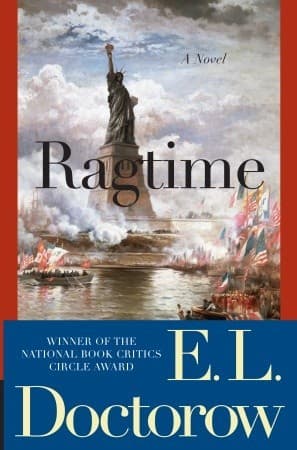
- Ragtime
E.L. Doctorow
3.9 (38k) average on GoodreadsLiterary FictionShares Doctorow's distinctive blend of historical events and fictional characters to explore American identity.
- The Plot Against America
Philip Roth
3.8 (48k) average on GoodreadsLiterary FictionExplores an alternate American history with a focus on political paranoia and its impact on a Jewish family.
- A Great Deliverance
Elizabeth George
4.0 (40k) average on GoodreadsThrillerFeatures a complex mystery rooted in family secrets and historical injustice, albeit in a different genre.
- American Pastoral
Philip Roth
3.9 (65k) average on GoodreadsLiterary FictionRoth's American Pastoral (1997) also explores the disillusionment of American idealism through the lens of political radicalism and its impact on a family, but from a different generational and class perspective. While Doctorow's Daniel is the child of radical parents, Roth's protagonist, Seymour 'Swede' Levov, is a successful, assimilated Jewish businessman whose daughter, Merry, becomes a radicalized bomb-throwing terrorist during the Vietnam era. Both novels grapple with the collapse of the 'American Dream' and the profound personal costs of political upheaval, but Roth's narrative is more focused on the bewildered, tragic perspective of the parents trying to comprehend their child's radicalization, and the destruction of their idyllic suburban life. Doctorow's novel, by contrast, is an internal struggle of a son trying to make sense of his parents' radicalism and its state-sponsored retribution. Roth's prose is often more direct and emotionally raw, while Doctorow's is more intellectual and fragmented.
- The Old Man and the Sea
Ernest Hemingway
3.8 (831k) average on GoodreadsLiterary FictionA Cuban fisherman's long struggle with a giant marlin becomes a story of endurance and dignity, now retold for young adults with illustrations, phonetic guides, and writing prompts in Traditional Chinese.
- One Hundred Years of Solitude
Gabriel García Márquez
4.1 (753k) average on GoodreadsLiterary FictionThrough the multi-generational story of the Buendía family, a mythical town deals with the repeating patterns of time, love, and solitude, as the extraordinary mixes with the ordinary.




Enjoyed the summary?
A summary gives you the shape of the book. The book itself has the detail, the examples and the voice.
Find The Book of Daniel on AmazonAs an Amazon Associate, BookBrief earns from qualifying purchases. How we're funded