
Synopsis
Covers the whole plot, including the ending.
- Difficulty
- Easy
- Pacing
- Moderate
- Mood
- Adventurous, Gentle, Resourceful, Slightly Perilous
- Read it if
- You enjoy classic children's fantasy about tiny people surviving in a big world, with themes of adventure and resourcefulness.
- Skip it if
- You prefer fast-paced action or complex adult fantasy narratives.
The Borrowers Afloat Plot Summary
Covers the whole plot, including the ending.
The Threat of Moving Day
The miniature Clock family—Pod, Homily, and their daughter Arrietty—live a risky life under the floorboards of a large country house, taking what they need from the humans who live there. Their peace ends when they hear the human owners, Mr. and Mrs. Pott, talking about moving. Homily worries about the unknown and losing their comfortable life. Pod, always practical, starts looking at their options, while Arrietty, more adventurous, is curious about a new world, though she shares her parents' worry about surviving without humans to borrow from. The house, once safe, becomes a place of coming abandonment, forcing the Borrowers to face their biggest fear: exposure and the unknown.
A Desperate Escape
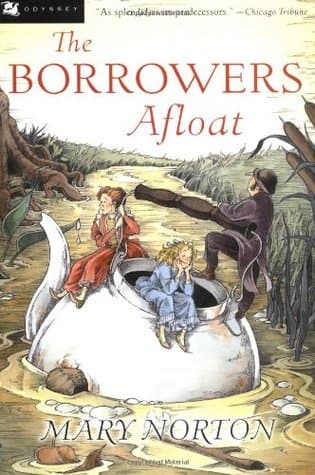
As the human family packs, the Clocks realize they must leave. With no other clear way out, Pod finds a drain leading from the house. Homily fears the dark, wet, and unknown passage, but they have no choice. Arrietty, surprisingly brave, helps her father get ready. They make a temporary boat from a soap dish and, with Pod steering, start a frightening trip down the drainpipe. The rushing water, the echoing darkness, and the fear of being swept away test their courage. They emerge, wet and confused, into the outside world, a place much larger and more dangerous than their familiar home under the floorboards. This marks a big change in their lives.
Meeting Spiller
After their difficult escape, the Clocks find themselves in a strange, overgrown garden, exposed to everything. They are confused and vulnerable. Here they meet Spiller, a quiet Borrower boy who lives outdoors. Spiller is a mystery to the house-dwelling Clocks; he is resourceful, good at hunting and fishing, and moves with an independence they have never known. Despite being quiet, he offers them a place to stay: an old teakettle by the river. Spiller's practical skills and knowledge of the wild contrast with Pod's house-borrowing experience, and his presence brings a new dynamic, offering both a possible friend and a challenge to their ideas of Borrower life.
Life in the Teakettle
The teakettle, though basic, gives the Clocks shelter. Homily struggles to adjust to the lack of comforts and the constant dampness, missing her old, comfortable home. Pod, with Spiller's help, learns new skills like fishing and gathering wild berries. Arrietty, however, thrives outdoors. She enjoys the freedom, the fresh air, and the lessons Spiller teaches her about surviving in the wild. She watches Spiller's quiet efficiency and begins to appreciate a different way of life. This time is a big learning period for the Clocks, making them give up their reliance on human 'borrowings' and embrace a more self-sufficient, though challenging, life, guided by Spiller's unique knowledge.
The Threat of Milk Eye
Just as the Clocks start to settle into their new routine by the river, their past returns. Milk Eye, a strange human boy who had found the Borrowers in their old house and caused them much trouble, appears again. He is a persistent and somewhat mean threat, wanting to catch and watch the miniature people. His presence near the river fills Homily with fear, and even Pod, usually calm, feels renewed dread. Milk Eye's return means their fight for survival is not just against nature, but also against the unpredictable and often dangerous curiosity of humans, forcing them to stay alert.
A Flood on the River
Nature itself becomes a strong enemy when heavy rain makes the river swell greatly. The water level rises steadily, threatening to cover their teakettle home. Homily panics, sure they will drown. Pod and Spiller work quickly to secure their belongings and get ready for an emergency. Arrietty, though scared, watches her father and Spiller's calm determination, learning the importance of quick thinking in a crisis. The rising water creates a sense of urgency and coming doom, showing how fragile their lives are and how vulnerable they are to the strong forces of nature, forcing another desperate escape.
A New Boat and a New Journey
With the teakettle underwater, Pod, Homily, Arrietty, and Spiller are again without a home. Spiller, always resourceful, quickly builds a new, larger boat from an old wooden cigar box. This boat is sturdier than their previous soap dish, but the river is powerful. They set off downstream, navigating rapids and debris, facing the constant threat of overturning. Homily is very nervous, while Arrietty finds a strange excitement in the adventure, despite the danger. This journey shows their resilience and Spiller's cleverness, as they are carried further into the unknown, relying on their shared courage to survive the dangerous currents and find a new safe place.
Encountering Other Borrowers
As they drift downstream, the Clocks and Spiller eventually see something unexpected: a small village of other Borrowers. This community lives in the walls and under the floorboards of various houses, much like the Clocks once did. The discovery is both a relief and a surprise. Homily is happy at the thought of a more settled life and the company of her own kind, while Arrietty is fascinated by how these Borrowers have adapted. Pod is careful, watching their customs and considering them as a new home. This meeting offers a look into a larger Borrower world, hinting at the possibility of belonging and a shared history.
Life in the Village
The Clock family tries to join the Borrower village, finding a temporary home in an unused doll's house. Homily first enjoys the company of other female Borrowers, sharing stories and borrowing tips. However, the village Borrowers are more isolated and wary than she expected. Arrietty, while curious, finds some of their customs limiting and misses the freedom of the outdoors. Pod, always observing, notices their routines and the hierarchy of their society. This time shows the different ideas of Borrower life—the settled, community-focused existence versus wild independence. The Clocks realize that finding a true home means more than just finding other Borrowers; it means finding a place where they truly belong.
Milk Eye's Persistent Pursuit
Milk Eye, with his ability to find Borrowers, eventually discovers their new village. His presence causes panic among the settled Borrowers, who are less used to direct human contact and more easily found than the Clocks. The villagers, fearing for their safety and hidden lives, become agitated and suspicious. Milk Eye's constant pursuit shows the ongoing threat humans pose to the Borrowers' survival, even when they think they are safe. His arrival disrupts the village's fragile peace and makes the Clocks question if this community can truly offer the security they seek, bringing their journey back to the threat of human interference.
A Difficult Decision
The new threat from Milk Eye, along with the difficulties of fitting into the village, forces the Clock family to make a big decision. Homily, despite her initial happiness, now feels the village is too exposed and relies too much on old borrowing methods. Arrietty longs for the open spaces and wild adventures she had with Spiller. Pod, practical as ever, weighs the risks and benefits of staying versus leaving again. The village, once a sign of hope, now feels like a trap. The family struggles with wanting community versus needing safety and independence, eventually choosing to continue their nomadic life with Spiller, who remains a steady, if quiet, friend.
Leaving the Village
After much thought, the Clock family, with Spiller, decides to leave the Borrower village. They see that the village, while offering temporary rest, cannot give them the long-term security and freedom they want, especially with Milk Eye still around. Homily, though at first hesitant, now understands they must move on. Arrietty is eager for new adventures, and Pod, having seen the limits of village life, is ready to find a more suitable home. Their departure shows their commitment to their unique, adaptable lifestyle, a mix of Pod's resourcefulness, Homily's resilience, and Arrietty's growing independence, with Spiller as their constant guide and protector in the wild.
The Search Continues
The Clock family, with Spiller, continues their journey along the river. They are again in Spiller's cigar-box boat, moved by the current and Spiller's expert navigation. Their destination is still unknown, but their determination to find a safe and lasting home is stronger than ever. Arrietty continues to learn survival skills from Spiller, while Homily, though still prone to worry, has become more resilient. Pod remains the steady, thoughtful leader, adapting to the challenges of their nomadic life. The journey highlights their ongoing search for a place where they can truly belong, showing their lasting spirit and the hope that a permanent and secure home awaits them, free from human interference and nature's whims.
The Borrowers Afloat Characters
Arrietty Clock
Protagonist
A curious and adventurous young Borrower.
Arrietty is the only child of Pod and Homily. She is naturally curious, often yearning for the world beyond her confined home. Unlike her more cautious parents, Arrietty possesses an innate adventurous spirit, finding excitement in new experiences and a deep appreciation for the natural world. She is observant and intelligent, quickly adapting to new situations and learning from her surroundings. Her empathy extends to humans, though she understands the danger they pose.
Relationships: Pod Clock (Father; she respects his wisdom and resourcefulness.); Homily Clock (Mother; she loves her but sometimes chafes under her overprotective nature.); Spiller (Friend and mentor; she admires his independence and learns invaluable skills from him.)
Pod Clock
Protagonist
The pragmatic and resourceful father of the Clock family.
Pod is the head of the Clock family, a skilled and experienced Borrower. He is pragmatic, resourceful, and generally calm under pressure, always focused on the practicalities of survival. His expertise lies in 'borrowing' from human homes, but he proves adaptable in the wild, learning new skills from Spiller. Pod is deeply protective of his family, especially Homily, and is burdened by the responsibility of finding them a safe home. He is a man of few words but profound action.
Relationships: Homily Clock (Wife; he is devoted to her and often calms her anxieties.); Arrietty Clock (Daughter; he teaches her and guides her, proud of her growing independence.); Spiller (Fellow Borrower; he respects Spiller's skills and relies on him for guidance in the wild.)
Homily Clock
Protagonist
The anxious but resilient mother of the Clock family.
Homily is Arrietty's mother and Pod's wife. She is often anxious and prone to worrying, especially about the dangers of the outside world and the loss of their comfortable home. Homily values cleanliness, order, and the comforts of a 'proper' home, making her adaptation to nomadic life particularly challenging. Despite her fears, she possesses an underlying strength and resilience, always putting her family's well-being first. Her emotional reactions often contrast with Pod's stoicism.
Relationships: Pod Clock (Husband; she relies on his strength and practicality.); Arrietty Clock (Daughter; she is fiercely protective of her, though sometimes stifles her adventurous spirit.)
Spiller
Supporting
A wild, resourceful, and solitary Borrower boy.
Spiller is a wild Borrower, accustomed to living outdoors and surviving by his wits. He is taciturn, independent, and incredibly skilled at hunting, fishing, and crafting. He uses a bow and arrow and is at home in the natural world, a stark contrast to the house-dwelling Clocks. Spiller rarely speaks but communicates effectively through actions and gestures. He is a vital guide and protector for the Clocks, teaching them how to survive outside the human world. He represents a different, more primitive, but highly effective way of Borrower life.
Relationships: Arrietty Clock (Friend and mentee; he teaches her survival skills and shares his world with her.); Pod Clock (Fellow Borrower; they share a mutual respect for each other's skills and resourcefulness.)
Milk Eye
Antagonist
A persistent and peculiar human boy who hunts Borrowers.
Milk Eye is a human boy with a distinctive 'milky' eye, a feature that makes him seem somewhat unsettling. He is obsessed with finding and observing Borrowers, driven by a strange mix of curiosity and a desire for possession. He is persistent, tracking the Clocks across various locations, and his presence always signifies danger for the miniature people. While not overtly malicious, his actions are driven by a human perspective that fails to grasp the Borrowers' plight, making him a constant, unpredictable threat to their existence.
Relationships: The Clock Family (Hunter and hunted; he relentlessly pursues them.)
Mr. and Mrs. Pott
Mentioned
The human 'beans' who previously owned the house where the Borrowers lived.
Mr. and Mrs. Pott are the human owners of the house where the Clock family initially resided. They are largely unaware of the Borrowers' existence, serving as the unwitting providers of their 'borrowings.' Their decision to move precipitates the Clocks' entire journey. They represent the benign but ultimately disruptive force of human activity on the Borrowers' lives. Their actions, though not aimed at the Borrowers, have profound consequences for the miniature family.
Relationships: The Clock Family (Unwitting providers; their departure forces the Borrowers to leave.)
The Borrower Village Inhabitants
Supporting
A community of settled Borrowers living in a village.
These are various unnamed Borrowers who live in a community within the walls of a human village. They are more numerous and less individualistic than the Clocks, living by established customs and relying on a more communal system of borrowing. They are generally wary of humans and outsiders, prioritizing their hidden existence. Their way of life offers the Clocks a glimpse of an alternative to their solitary existence, but also highlights the differences in their approaches to survival and independence.
Relationships: The Clock Family (Temporary hosts; they offer the Clocks shelter but also present cultural differences.)
The Borrowers Afloat Themes
Survival and Adaptability
The main theme of the book is the Borrowers' constant fight for survival in a human-sized world. From their first escape down the drain to living in a teakettle and navigating a flooded river, the Clock family must always adapt to new and dangerous surroundings. Pod's cleverness, Homily's growing strength, and Arrietty's adventurous spirit all help them overcome problems. Spiller shows ultimate adaptability, living a life completely separate from human 'borrowings.' This theme appears in scenes like Pod learning to fish and Arrietty embracing the wild, showing their ability to change and last.
“One had to live, after all. And if one lived, one must find food and shelter.”
The Search for Home and Belonging
Throughout their hard journey, the Borrowers are always looking for a safe and permanent home. Their initial removal from their familiar house starts them on a search for belonging, both physically and socially. Homily misses the comforts of a stable home, while Arrietty seeks a place where she can truly be herself. Meeting the Borrower village offers brief hope of community, but ultimately shows that 'home' is more than just a physical place or even other Borrowers; it is about security, freedom, and peace. Their continuous journey shows that home is a changing idea, always evolving with their needs.
“Home was somewhere else, always somewhere else.”
The Human Impact on Nature
The book subtly explores how humans affect the natural world and, by extension, the Borrowers' lives. Human actions, from moving house to leaving trash, directly determine the Borrowers' fate. Milk Eye's constant pursuit shows the danger of human curiosity and the problems it causes. Even natural events like the flood are linked to the larger human world, as the river environment is not untouched but contains human debris. The Borrowers constantly navigate a world shaped by human presence, reminding readers of humanity's broad influence on even the smallest creatures and environments.
“Humans were like giants, moving through their lives, leaving destruction and opportunity in their wake.”
Independence vs. Community
The story explores the tension between individual independence and the safety of community. Spiller shows complete independence, surviving entirely on his own terms in the wild. The Clock family, initially relying on humans, learns to become more self-sufficient through their journey. Their meeting with the Borrower village presents the appeal of community and shared resources, but also shows its limitations, such as conformity and a higher risk of being found. The Clocks eventually choose a path that mixes both, keeping their family unit while embracing some wild independence, suggesting that true strength comes from a balance between self-reliance and chosen companionship.
“It was one thing to be free, but quite another to be alone.”
Plot Devices & Literary Techniques
Miniature Perspective
The world is viewed from the tiny scale of the Borrowers.
This device immediately immerses the reader in the Borrowers' unique reality. Everyday objects like a thimble become a bucket, a soap dish a boat, and a drainpipe a terrifying tunnel. This perspective amplifies the stakes of their journey, making ordinary challenges monumental and highlighting their vulnerability. It also allows for a detailed and imaginative description of their environment, forcing the reader to reconsider the scale and function of common items. This device is crucial for generating empathy and understanding their constant struggle for survival.
The Journey Motif
The narrative is structured as a continuous quest for a new home.
The entire story is framed as a journey, both physical and metaphorical. The Clocks' journey from the house to the river, then downstream, and through the village, is a literal quest for a safe haven. Metaphorically, it represents their evolution from a sheltered existence to a more resilient and independent one. The journey provides a continuous source of conflict, new environments, and character development, pushing the Borrowers to adapt and grow with each new challenge they face on the road to finding belonging.
The Antagonist as a Force of Nature
Milk Eye represents an unpredictable, relentless human threat.
Milk Eye functions less as a complex character and more as an embodiment of the unpredictable and dangerous aspects of the human world. His 'milky' eye and persistent tracking make him a looming, almost mythical threat. He doesn't act out of malice but out of a disturbing curiosity, which is even more terrifying because it's detached from the Borrowers' suffering. He serves as a constant reminder that even when the Borrowers escape natural dangers, they are still at the mercy of human whims, symbolizing the larger, uncontrollable forces they must contend with.
Foreshadowing
Subtle hints of future events or dangers.
The novel uses subtle foreshadowing to build tension and prepare the reader for upcoming challenges. For instance, early discussions about the human 'beans' moving house immediately establish the impending crisis for the Borrowers. The initial mention of Milk Eye and his past encounters with Borrowers creates a sense of dread for his inevitable reappearance. These hints, often through overheard human conversations or the Borrowers' own anxieties, create a continuous undercurrent of suspense, making the reader anticipate the next obstacle in their perilous journey.
The Borrowers Afloat Quotes
“The world was not always a safe place for small people, and the more they travelled, the more dangers they seemed to encounter.”
“It was not courage, exactly, nor was it fear; it was just a sort of grim determination to go on.”
“Hope, like a small, persistent weed, could grow in the most unpromising cracks.”
“To be homeless was to be free, in a terrifying, exhilarating way.”
“Everything was borrowed, even time.”
“You couldn't stay in one place forever, not if you were a Borrower.”
“The trick was not to be seen, not to be heard, not to leave a trace.”
“Sometimes, the smallest things made the biggest difference.”
“The greatest adventures were often found in the most unexpected places.”
“It was one thing to be brave, another to be foolhardy.”
“The world was full of things to borrow, if only you knew how to look.”
“There was a loneliness in being small, a constant awareness of the vastness around you.”
“To move was to live; to stay still was to risk being found.”
“Even fear could be useful, if it made you clever.”
Quiz
10 questions on the plot and the characters. Each answer comes with a short explanation.
Question 1
What object do the Borrowers initially use to escape the cottage drain with Spiller's help?
- A tin can
- A matchbox
- A soap dish
- A teacup
Show answer
C. A soap dish The Borrowers, with Spiller's assistance, make their harrowing journey down the cottage drain in a soap dish.
Question 2
Who is the 'wild Borrower boy' who helps Pod, Homily, and Arrietty escape the cottage?
- Crampfoot
- Spiller
- Peagreen
- Egglet
Show answer
B. Spiller The summary explicitly states that they make their journey 'with the help of the wild Borrower boy Spiller'.
Question 3
What is the primary reason the Clock family is forced to leave their initial home?
- They were discovered by the human beans.
- Their human beans were moving away.
- The cottage was being demolished.
- A flood destroyed their home.
Show answer
B. Their human beans were moving away. The summary states, 'So when they discover that their humans are moving away, the Borrowers are forced to find a new home.'
Question 4
Where do the Borrowers make their first temporary home after escaping the drain?
- In a hollow log by the riverbank
- Inside a discarded boot
- In a teakettle by a river
- Under a bridge
Show answer
C. In a teakettle by a river After their journey, the summary mentions they are 'soon living in a teakettle by a river.'
Question 5
What is the term the Borrowers use to refer to humans?
- Giants
- Big Folk
- Human beans
- Grown-ups
Show answer
C. Human beans The summary states, 'Pod, Homily, and Arrietty Clock -- the miniature Borrowers -- depend for their livelihood on the 'human beans' whose cottage they live in.'
Question 6
Which of these is NOT mentioned as a potential threat causing the Borrowers to seek a new home again after settling in the teakettle?
- Flood
- Famine
- A cat
- Their old enemy Milk Eye
Show answer
C. A cat The summary lists 'flood or famine or their old enemy Milk Eye' as reasons for needing to move again, but a cat is not mentioned.
Question 7
What concept best describes the Borrowers' method of survival?
- Hunting and gathering
- Agriculture and farming
- Borrowing discarded items from humans
- Trading with other miniature creatures
Show answer
C. Borrowing discarded items from humans The title itself, 'The Borrowers,' and the description 'depend for their livelihood on the 'human beans'' indicates their method is borrowing.
Question 8
What is the primary emotion driving the Borrowers' continuous search for new homes?
- Curiosity and adventure
- A desire for luxury
- The need for survival and safety
- A longing to explore the world
Show answer
C. The need for survival and safety The description highlights 'forced to find a new home' due to humans moving, and 'barely have time enough to catch their breath before flood or famine or their old enemy Milk Eye sends them looking for a home once again,' emphasizing survival.
Question 9
Based on the summary, which character would most likely possess superior knowledge of the outdoors and survival in the wild?
- Homily Clock
- Arrietty Clock
- Pod Clock
- Spiller
Show answer
D. Spiller Spiller is described as the 'wild Borrower boy,' implying he is accustomed to and skilled in navigating environments outside of human dwellings, unlike the Clock family who traditionally live within them.
Question 10
What does the repeated need for the Borrowers to find a new home primarily symbolize within the story's context?
- Their desire for varied interior design
- The inherent instability and precariousness of their existence
- A cultural tradition of nomadic living among Borrowers
- Their adventurous spirit and love for travel
Show answer
B. The inherent instability and precariousness of their existence The summary emphasizes they are 'forced to find a new home' and have 'barely have time enough to catch their breath before flood or famine or their old enemy Milk Eye sends them looking for a home once again,' highlighting the constant threats and lack of permanent security in their lives.
The Borrowers Afloat FAQ
What prompts the Clock family to leave their home under the floorboards?
The Clock family is forced to abandon their comfortable home when they overhear the 'human beans' discussing their impending move away from the cottage. This realization of their primary source of livelihood disappearing compels Pod, Homily, and Arrietty to seek a new, uncertain future.
Who is Spiller, and how does he assist the Clock family early in their journey?
Spiller is a resourceful, independent wild Borrower boy who lives outdoors and is skilled at survival. He aids the Clock family by guiding them through the dangerous drain system and providing the soap dish that becomes their makeshift boat, facilitating their escape from the cottage.
Describe the Clock family's first new home after leaving the cottage.
After their perilous journey down the drain, the Clock family settles in an abandoned teakettle by the riverbank. This new dwelling, though initially damp and unfamiliar, offers them temporary shelter and a new environment to explore for borrowing opportunities.
What are some of the immediate challenges the Borrowers face once they are living by the river?
Once by the river, the Borrowers contend with the constant threat of the elements, such as rising floodwaters and the scarcity of familiar borrowed goods. They also face the looming danger of their old nemesis, Milk Eye, who continues to track them.
How does the river environment change the Borrowers' borrowing habits?
The river environment forces the Borrowers to adapt their borrowing habits from a domestic setting to a more natural one. They must learn to forage for natural items, fish for food, and utilize materials found outdoors, rather than relying on discarded human items from a house.
What is the significance of the soap dish in the early part of their journey?
The soap dish is crucial as it serves as the Borrowers' primary vessel for their journey down the cottage drain and into the outside world. It represents their initial leap of faith and the practicality of using human discards for their survival, albeit in an unconventional way.
How does Arrietty's perspective on the world expand during their river journey compared to her earlier experiences?
Arrietty's world view dramatically expands from the confines of the floorboards to the vastness of the river and its surroundings. She gains a deeper understanding of nature, independence, and the diverse ways Borrowers can live, moving beyond her sheltered upbringing.
What clues suggest the persistent threat of Milk Eye even after they leave the cottage?
Milk Eye's persistent threat is subtly hinted at through the Borrowers' ongoing anxiety and the occasional mention of his tracking abilities. His past actions and reputation make his potential reappearance a constant, underlying fear, even without direct encounters early on.
How does Homily's character evolve as she faces repeated displacement?
Homily, initially prone to anxiety and domesticity, gradually develops resilience and adaptability through repeated displacements. While she still yearns for comfort, her experiences force her to confront her fears and become more resourceful, a significant shift from her earlier sheltered existence.
Discuss Pod's role as a leader during the journey and the psychological toll it takes on him.
Pod shoulders the immense burden of leadership, constantly strategizing for his family's survival and safety. This responsibility takes a psychological toll, as he grapples with the unknown, the dangers of the outside world, and the need to protect Homily and Arrietty, often suppressing his own fears.
How does Arrietty's adventurous spirit manifest, and what psychological benefits does it offer the family?
Arrietty's adventurous spirit manifests in her curiosity and willingness to explore new territories, often pushing the family forward. Psychologically, her optimism and eagerness provide a counterpoint to Homily's anxieties and Pod's burdens, offering hope and a sense of discovery amidst hardship.
What psychological impact does the constant threat of 'human beans' have on the Borrowers?
The constant threat of 'human beans' instills a deep-seated fear and caution in the Borrowers, shaping their entire existence around avoidance and secrecy. This psychological conditioning leads to a perpetual state of vigilance, influencing their decisions and their perception of the world.
Is Spiller truly a 'wild' Borrower, or does he represent a different kind of adaptation for survival?
Spiller represents a profound adaptation for survival, demonstrating that Borrowers can thrive outside human dwellings, not merely as 'wild' in a primitive sense. He embodies resourcefulness and independence, challenging the Clock family's traditional view of Borrower existence and suggesting alternative paths.
How does the book explore themes of home and belonging through the Borrowers' journey?
The book deeply explores themes of home and belonging by repeatedly displacing the Borrowers, forcing them to redefine what 'home' means beyond a physical structure. It suggests that belonging is more about family and adaptability than a fixed dwelling, as they find temporary solace in various unconventional places.
What is the broader message about resilience conveyed by the Borrowers' continuous search for a home?
The Borrowers' continuous search for a home conveys a powerful message about resilience and the indomitable spirit of survival. Despite facing constant threats, loss, and displacement, they never give up hope, demonstrating an enduring capacity to adapt and find new ways to live.
Could Milk Eye be interpreted as a symbolic representation of an ever-present, external threat rather than just an individual antagonist?
Milk Eye can certainly be interpreted symbolically as an embodiment of the larger, unpredictable dangers that constantly plague the Borrowers' existence. He represents the external forces—be it human interference, natural disaster, or sheer bad luck—that threaten their fragile world, making him more than just a single antagonist.
How does the scale difference between Borrowers and humans impact the narrative's tension and perspective?
The vast scale difference profoundly impacts the narrative's tension, making everyday human objects into monumental obstacles or potential resources for the Borrowers. This perspective shift heightens the drama, emphasizes their vulnerability, and allows the reader to experience the world from a unique, miniature viewpoint, making mundane settings feel adventurous.
About the author

Mary Norton was a British author known for her children's fiction. She is best recognized for her series featuring tiny people called Borrowers, which includes "The Borrowers," "The Borrowers Afield," and "The Borrowers Afloat." Her works have been influential in children's literature, exploring themes of adventure and resourcefulness.
Similar books
- Stuart Little
E.B. White
3.9 (110k) average on GoodreadsFantasyExplores the adventures of a small protagonist navigating a human-sized world.
- Harry Potter and the Sorcerer's Stone
J.K. Rowling
4.5 (7M) average on GoodreadsFantasyRescued from a miserable life under the stairs, an orphaned boy discovers he's a wizard destined for a magical school, where he uncovers a dangerous secret tied to the dark wizard who murdered his parents.
- The Hunger Games
Suzanne Collins
4.3 (6.4M) average on GoodreadsFantasyIn a future where children fight to the death on live television, Katniss Everdeen volunteers for the arena, turning a death sentence into a fight for survival and a spark of rebellion.
- 1984
George Orwell
4.2 (3.1M) average on GoodreadsPoliticsIn a future where surveillance and thought control are absolute, a man's search for truth clashes with the Party, showing that hope can be a form of rebellion.
- Divergent
Veronica Roth
4.2 (2.9M) average on GoodreadsFantasyIn a society divided by virtues, a sixteen-year-old's difference from the norm starts a rebellion that threatens her world.
- The Hobbit, or There and Back Again
J.R.R. Tolkien
4.3 (2.9M) average on GoodreadsFantasyA comfort-loving hobbit named Bilbo Baggins is whisked away by a mischievous wizard and a band of dwarves on an unexpected journey to reclaim stolen treasure from a fearsome dragon, discovering courage and a magical ring along the way.






Enjoyed the summary?
A summary gives you the shape of the book. The book itself has the detail, the examples and the voice.
Find The Borrowers Afloat on AmazonAs an Amazon Associate, BookBrief earns from qualifying purchases. How we're funded