
Synopsis
Covers the whole plot, including the ending.
- Difficulty
- Easy
- Pacing
- Moderate
- Mood
- Whimsical, Adventurous, Cozy, Slightly Melancholy
- Read it if
- You enjoy classic children's fantasy, stories about miniature worlds, or tales of unlikely friendships and adventure.
- Skip it if
- You prefer fast-paced action, complex magic systems, or stories with definitive, neat endings.
The Borrowers Plot Summary
Covers the whole plot, including the ending.
A Summer Visitor and a Hidden World
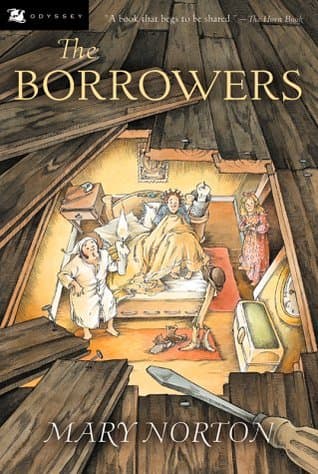
The story begins with Mrs. May, an elderly woman, telling a story her brother, a boy named Kate, told her. Kate arrives at Firbank Hall for the summer to get better after being sick. He is interested in the old house's secrets. Nanny tells him stories about 'little people' in the house. Under the drawing-room floorboards, the Clock family – Pod, Homily, and their daughter Arrietty – live by 'borrowing' what they need from the 'human beans' above. Thimbles become cooking pots and stamps decorate walls in their miniature world. Arrietty, a curious girl, wants adventure beyond their small home. This desire sets up her world to meet Kate's.
Arrietty's First Borrowing Trip
Arrietty is growing restless, and Homily worries about her future, as there are no other Borrowers for her to marry. Pod, her father, a skilled and careful Borrower, decides to take Arrietty on her first borrowing trip into the 'human' house. They need to find a needle for Homily. Pod shows Arrietty how to borrow, moving through the large and dangerous human house. While Pod is busy, Arrietty, alone in the study, accidentally meets Kate, the human boy. This meeting, where Arrietty talks to Kate, breaks Borrower law. Pod fears it, as Borrowers who are seen are believed to disappear.
The Forbidden Friendship
Pod warns Arrietty about the dangers of being seen, but Arrietty is drawn to Kate's kindness and the chance of a friend. Kate is also interested. He leaves tiny gifts for Arrietty, like a doll's teacup and a thimble, and starts leaving messages. Arrietty writes back on small pieces of paper, telling him about her family and the Borrower world. This secret communication becomes a friendship. Kate learns about the Borrowers' problems and their need for supplies. He becomes a link to the human world, bringing them things they need. Homily is happy at first, before she learns where the gifts come from.
Homily's Fears and Kate's Generosity
Homily is happy about the useful human items appearing in their home. She asks Pod where they came from. When she learns Arrietty has been seen and is talking to Kate, she is scared, fearing the worst for their family. She thinks they must move right away. However, Kate wants to help his new friends. He starts bringing them many gifts, including a doll's house, which he places under the floorboards near their home. This unexpected generosity gives the Borrowers comfort and luxury. This eases some of Homily's immediate worries, but her fear of being found remains.
The Doll's House and Borrower Dreams
Kate wants to provide for Arrietty and her family. He brings them a doll's house with furniture. He puts it under the floorboards near their home. This creates a luxurious and spacious home, much better than anything the Borrowers could have imagined. Homily is surprised but soon enjoys the comforts, planning how to decorate and live in such a grand space. Pod appreciates the gifts but worries about depending on a human. Arrietty continues talking with Kate, sharing stories and learning about the human world. This strengthens their bond and her understanding of their connected lives.
Discovery and the Housekeeper's Suspicion
Mrs. Driver, the stern housekeeper at Firbank Hall, notices odd things. She sees Kate often going under the floorboards. Items from the doll's house disappear or are in strange places. A silver thimble and other small objects go missing, making her more suspicious. She confronts Kate, who tries to avoid her questions. Mrs. Driver thinks Kate is stealing or causing trouble. She decides to investigate, setting a trap for the 'little people' she believes are responsible, or to catch Kate in the act.
The Trap and the Move
Mrs. Driver's suspicions lead her to ask the gardener, Crampfurl, to fumigate the house. She targets the areas where she thinks Kate has been hiding things. She pours carbolic acid down the grating near the Borrowers' home, creating a toxic environment. The fumes fill their small home, making it unlivable. The Clock family sees the danger and knows they cannot stay. They pack a few important items and, under cover of darkness, start a journey through the walls and foundations of Firbank Hall, looking for an escape.
A Perilous Journey
The Borrowers are now refugees. They need to find a new, safe home. Pod, Homily, and Arrietty move through the pipes, drains, and vents within the house. Their journey is dangerous. The human world is vast. There is a constant threat of being found, and physical challenges of climbing and crossing unknown areas. They face darkness, dampness, and the echoing sounds of the human world. Homily worries, but Arrietty's adventurous spirit and Pod's calm nature lead them on. They are determined to find a new sanctuary.
Escape to the Outdoors
After a difficult journey through the house's hidden passages, the Clock family finds an exit. They emerge into the overgrown garden outside Firbank Hall. The outdoor world offers freedom from Mrs. Driver, but it brings new challenges. They are exposed to the weather, the vastness of nature, and predators like birds and cats. They have no shelter, and their future is unclear. The story ends with the Borrowers having escaped the house, but their fate is open, leaving the reader to wonder about their next adventure in the wide world.
The Borrowers Characters
Arrietty Clock
Protagonist
Curious and adventurous young Borrower, longing for connection.
Arrietty is the spirited and inquisitive daughter of Pod and Homily Clock. Unlike her cautious parents, she yearns for exploration and friendship beyond the confines of their tiny home under the floorboards. She is intelligent, brave, and articulate, often questioning the traditional Borrower rules and the isolation of their existence. Her defining characteristic is her longing for connection, which drives her to befriend Kate, the 'human bean' boy. Her actions, though forbidden, ultimately bring both danger and unexpected bounty to her family. She represents the yearning for a larger world and the courage to defy convention.
Relationships: Pod Clock (Father, mentor in borrowing); Homily Clock (Mother, protective and anxious); Kate (Tom) (Human friend, confidant)
Pod Clock
Supporting
Resourceful and stoic Borrower father, skilled in 'borrowing'.
Pod is Arrietty's father and the primary 'borrower' for the family. He is a master of his craft, meticulous, brave, and highly skilled at navigating the human house unseen to acquire necessities. Pod is stoic, cautious, and deeply committed to his family's safety and survival. He adheres strictly to Borrower traditions and the dangers of being seen by 'human beans'. While initially distressed by Arrietty's interactions with Kate, he is pragmatic and eventually accepts the benefits, though always remaining vigilant. He is the provider and protector, embodying the quiet resilience of the Borrower race.
Relationships: Homily Clock (Wife, partner in survival); Arrietty Clock (Daughter, student in borrowing)
Homily Clock
Supporting
Anxious and house-proud Borrower mother, concerned with comfort and safety.
Homily is Arrietty's mother, characterized by her anxiety, her domesticity, and her strong desire for comfort and security. She is deeply devoted to her family but is often overwhelmed by fear, particularly the fear of discovery by humans. She is house-proud, finding joy in making their small home cozy and well-appointed with borrowed items. Her initial horror at Arrietty's friendship with Kate slowly gives way to an appreciation for the luxurious gifts Kate provides, though her underlying fear of exposure never truly diminishes. She represents the home-making aspect of Borrower life and the constant tension between survival and comfort.
Relationships: Pod Clock (Husband, source of security); Arrietty Clock (Daughter, source of both joy and worry)
Kate (Tom)
Supporting
Curious human boy who befriends Arrietty.
Kate, referred to as 'Tom' in the framing story, is the human boy who comes to stay at Firbank Hall. He is a lonely and imaginative child, recovering from an illness, which makes him particularly open to the wonders of the old house. His curiosity and kindness lead him to discover and befriend Arrietty. He becomes a vital conduit between the human and Borrower worlds, providing gifts and assistance to the Clock family. He is understanding and sympathetic to the Borrowers' plight, acting as their protector and benefactor until his actions are discovered. His perspective frames the entire narrative.
Relationships: Arrietty Clock (Secret friend); Nanny (Caregiver, storyteller); Mrs. Driver (Antagonist, suspicious housekeeper)
Mrs. Driver
Antagonist
Suspicious and authoritarian housekeeper at Firbank Hall.
Mrs. Driver is the stern, observant, and ultimately antagonistic housekeeper at Firbank Hall. She is a stickler for order and cleanliness, and her suspicious nature makes her an immediate threat to the Borrowers' hidden existence. She notices inconsistencies and missing items, attributing them to Kate's mischief or, vaguely, to something more sinister. Her actions, driven by a desire to maintain control and order, directly lead to the Borrowers' discovery and forced eviction. She embodies the unwitting danger that humans pose to the miniature world of the Borrowers.
Relationships: Kate (Tom) (Object of suspicion); Crampfurl (Subordinate, accomplice in her plans)
Crampfurl
Supporting
The gardener at Firbank Hall, assisting Mrs. Driver.
Crampfurl is the gardener at Firbank Hall and a subordinate to Mrs. Driver. He is a somewhat bumbling character, but he follows Mrs. Driver's instructions, particularly when it comes to the fumigation that ultimately dislodges the Borrowers. He is less perceptive than Mrs. Driver and acts primarily as her tool in the hunt for the house's 'pests'. He represents the broader, unthinking human force that impacts the Borrowers' lives.
Relationships: Mrs. Driver (Superior, employer)
Nanny
Supporting
Kate's nursemaid and storyteller, hinting at the Borrowers' existence.
Nanny is Kate's nursemaid, a kind woman who has worked at Firbank Hall for many years. She is the first to introduce the idea of 'little people' to Kate, sharing old family stories and observations that fuel his curiosity. Her accounts, though dismissed by adults as folklore, are based on glimpses and experiences that lend credence to the Borrowers' existence. She acts as a gentle, subtle link between the human and Borrower worlds, indirectly guiding Kate towards his discovery.
Relationships: Kate (Tom) (Charge, recipient of stories)
Mrs. May
Mentioned
The elder sister who frames the main narrative.
Mrs. May is the elderly woman who recounts the story of the Borrowers to a young girl. She acts as the narrator of the frame story, explaining that the events were told to her by her brother, Kate. She adds a layer of meta-narrative, suggesting the enduring nature of the Borrower legend and its impact on her family. Her role is to introduce the story and provide a sense of wonder and possibility.
Relationships: Kate (Tom) (Brother, source of the story)
The Borrowers Themes
Identity and Belonging
The Borrowers deal with their identity as a race living in the shadow of humans. They constantly look for a place where they belong. Arrietty wants to connect with Kate because she wants to understand her place in the world beyond her family. The family struggles with what 'home' means—whether it's under the floorboards, in a doll's house, or outside. They want to belong somewhere without fear of being found or dying out. Their moving life shows how fragile their identity is and their constant search for a secure place.
“Borrowers don't steal,' said Arrietty. 'They just — borrow. It's their way of life.”
The Dangers of Discovery and Secrecy
A main theme is the danger Borrowers face if 'seen' by humans. This rule controls their entire lives, forcing them to hide and be watchful. Arrietty breaks this rule, making a friendship, but it leads to her family being forced from their home. The theme explores the conflict between wanting connection and needing secrecy to survive. Mrs. Driver's discovery and the fumigation show the bad results when their hidden world is exposed to human attention and fear.
“It's the worst thing that can happen to a Borrower,' said Pod. 'Being seen.”
Resourcefulness and Adaptation
The Borrowers show great cleverness and resourcefulness. They use everyday human objects for their miniature lives—thimbles for cooking, postage stamps for paintings, matchboxes for dressers. This theme shows their ability to adapt and do well in a world not made for them, using what they 'borrow.' Their survival depends on their cleverness in the human world and their ability to create a working society from discarded items. Their final journey, adapting to the outdoor world, shows this trait more.
“Everything we have,' said Homily, 'we owe to human beans. But we don't like to be reminded of it.”
The Nature of Friendship Across Divides
The friendship between Arrietty and Kate bridges the large physical and cultural difference between their species. Despite the dangers, their bond comes from mutual curiosity, kindness, and a shared feeling of loneliness. Kate's generosity and Arrietty's trust show that real connection can cross even unlikely gaps. This theme explores the power of empathy and understanding. It suggests that true friendship can grow even when one person is seen as a 'pest' by others of their friend's kind. Their connection offers hope and warmth in a dangerous existence.
“You're not a human bean,' said Arrietty. 'You're just—you.”
Plot Devices & Literary Techniques
Miniature World/Scale Contrast
Creates wonder and highlights the Borrowers' vulnerability and ingenuity.
The concept of a miniature world existing beneath and within the human one is the foundational plot device. By presenting the Borrowers' perspective, the story transforms mundane human objects (thimbles, stamps, matchboxes) into grand, functional, or decorative items for the Borrowers. This contrast in scale emphasizes the Borrowers' vulnerability, making a human house a vast and dangerous landscape, while simultaneously highlighting their incredible resourcefulness and ingenuity in adapting to their oversized environment. It also allows for moments of wonder and unique challenges, such as crossing a carpet or climbing a table leg.
Framing Narrative
Introduces the story as a cherished, potentially true, family legend.
The story is framed by Mrs. May recounting her brother Kate's (Tom's) experiences to a young girl. This device serves several purposes: it lends a sense of authenticity and wonder to the fantastical tale, suggesting it's a real memory passed down through generations rather than pure fiction. It also creates a distance, allowing the reader to accept the magical realism of the Borrowers' existence. By having an adult reflect on a childhood encounter, it adds a nostalgic tone and reinforces the idea that such hidden worlds might exist, just beyond our perception.
Forbidden Rule (Being Seen)
Drives the central conflict and creates suspense.
The strict Borrower rule against being seen by 'human beans' is a crucial plot device. It immediately establishes the core conflict and danger of their existence. Arrietty's violation of this rule by speaking to Kate sets the entire plot in motion, leading to both the benefits of human generosity and the ultimate catastrophe of discovery. This rule creates constant tension and suspense, as every interaction with Kate carries the risk of exposure and the dire consequences that follow, ultimately forcing the Borrowers to abandon their home.
The Doll's House
Symbolizes both comfort and the double-edged sword of human intervention.
The doll's house, provided by Kate, acts as a significant plot device and symbol. Initially, it represents an unprecedented level of luxury and comfort for the Borrowers, allowing Homily to dream of a grander life. It highlights Kate's generosity and the potential benefits of human interaction. However, it also becomes a focal point for Mrs. Driver's suspicions due to missing items and Kate's frequent visits to it. Thus, the doll's house symbolizes the double-edged nature of human intervention: while it offers temporary security and ease, it ultimately contributes to the Borrowers' downfall and forced displacement.
The Borrowers Quotes
“It's no good going on pretending. We're not wanted. We Borrowers are finished.”
“Human beans are for Borrowers—like bread's for butter!”
“We're not mice, you know. We're people.”
“Borrowing is a very delicate art.”
“The great thing is to have a plan.”
“We live in the secret places of quiet old houses.”
“It's not stealing. It's borrowing.”
“You have to be very, very quiet.”
“We're the last of the Borrowers.”
“The world is a very big place.”
“We must never be seen.”
“It's a dangerous world for little people.”
“We take only what we need.”
“Home is where you make it.”
Quiz
10 questions on the plot and the characters. Each answer comes with a short explanation.
Question 1
What is the primary reason Pod Clock is the only one allowed to venture into the house above?
- He is the strongest and fastest Borrower
- He has special permission from the human family
- The danger of being seen by humans is too great, and Borrowers who are seen disappear
- He is the only one who knows how to navigate the house safely
Show answer
C. The danger of being seen by humans is too great, and Borrowers who are seen disappear In the book, Borrowers live in fear of being seen by humans, as it's believed that those who are seen never return, likely captured or forced to flee. This rule restricts borrowing missions to Pod alone to minimize risk.
Question 2
What do the Clocks use matchboxes for in their tiny home?
- As beds for sleeping
- As roomy dressers for storage
- As tables for eating
- As doors to their home
Show answer
B. As roomy dressers for storage The book describes how Borrowers repurpose human objects; matchboxes serve as dressers, highlighting their resourcefulness in creating a functional home from borrowed items.
Question 3
Why is Arrietty desperate to make friends with the human boy?
- She wants to learn human secrets to improve borrowing
- She is bored with her sheltered life and longs for companionship
- She hopes he will help her family escape danger
- She believes he can teach her to read human books
Show answer
B. She is bored with her sheltered life and longs for companionship Arrietty's life is confined and monotonous, as she's not allowed outside like Pod. Her curiosity and loneliness drive her to seek friendship with the boy, defying Borrower rules.
Question 4
What do Borrowers call the humans who live above them?
- Giants
- Human beans
- Over-dwellers
- Big ones
Show answer
B. Human beans The term 'human beans' is a playful mispronunciation used by the Borrowers, reflecting their perspective and the book's whimsical language.
Question 5
How do postage stamps function in the Clock family's home?
- As currency for trading with other Borrowers
- As decorations hung on walls like paintings
- As maps to navigate the house
- As insulation to keep the home warm
Show answer
B. As decorations hung on walls like paintings Stamps are described as wall art in the Borrowers' home, showcasing how they creatively use borrowed human items to beautify their living space.
Question 6
What major risk does Arrietty take that sets the main plot in motion?
- She borrows a valuable item without permission
- She ventures outside to explore the garden
- She allows herself to be seen by the human boy
- She disobeys Pod by going borrowing alone
Show answer
C. She allows herself to be seen by the human boy Arrietty's decision to interact with the boy, despite the rule against being seen, triggers key events, including their friendship and the resulting dangers for her family.
Question 7
Which theme is most central to 'The Borrowers' as illustrated by Arrietty's actions?
- The importance of family loyalty above all else
- The conflict between curiosity and safety in a sheltered life
- The evils of stealing from others
- The superiority of human technology over Borrower ways
Show answer
B. The conflict between curiosity and safety in a sheltered life Arrietty's boredom and desire for adventure clash with her family's cautious, hidden existence, driving the narrative and exploring themes of growth versus security.
Question 8
What is the likely fate of Borrowers who are seen by humans, according to the book's lore?
- They are adopted by the humans and live comfortably
- They are never seen again, presumed captured or forced to flee
- They become servants to the human family
- They are punished by other Borrowers and exiled
Show answer
B. They are never seen again, presumed captured or forced to flee The book establishes this as a key belief among Borrowers, creating tension and explaining why they remain hidden; it's a central element of their survival strategy.
Question 9
How does the setting under the kitchen floor influence the Borrowers' way of life?
- It provides direct access to human food, making survival easy
- It forces them to rely entirely on borrowing from humans, shaping their culture and risks
- It isolates them completely from other Borrower families
- It makes them vulnerable to flooding and other natural disasters
Show answer
B. It forces them to rely entirely on borrowing from humans, shaping their culture and risks Their hidden location necessitates borrowing for all needs, defining their identity and the constant danger of discovery, which drives the plot and character decisions.
Question 10
In what way does Arrietty's relationship with the boy challenge Borrower traditions?
- It proves that humans can be trusted allies, contradicting fears
- It leads to her learning human skills that improve borrowing efficiency
- It blurs the strict boundary between Borrowers and humans, risking exposure and change
- It causes her to reject borrowing altogether in favor of self-sufficiency
Show answer
C. It blurs the strict boundary between Borrowers and humans, risking exposure and change Her friendship introduces communication and mutual aid, challenging the isolationist Borrower norms and setting up conflicts about identity and survival in a changing world.
The Borrowers FAQ
What is 'The Borrowers' about?
The book follows the Clock family—Pod, Homily, and their daughter Arrietty—who are tiny people living secretly beneath the floorboards of a country house. They survive by 'borrowing' small items from the 'human beans' above, but their quiet existence is disrupted when Arrietty befriends a lonely human boy, leading to discovery and danger.
Why should I read 'The Borrowers'?
It's a charming and imaginative classic that explores themes of curiosity, friendship across differences, and the courage to defy conventions. Through Arrietty's perspective, readers experience a whimsical yet perilous world where everyday objects become treasures, making it both relatable and fantastical for children and adults alike.
What is the background/setting of 'The Borrowers'?
The story is set in an old English country house, primarily in the hidden spaces beneath the kitchen floorboards where the Clocks live. Their miniature home is furnished with repurposed human items like matchbox drawers and stamp paintings, creating a cozy yet isolated microcosm contrasted with the vast, dangerous human world above.
What are the most memorable quotes?
Key quotes include Arrietty's defiant 'I want to see the sky!' reflecting her longing for freedom, and Pod's warning 'Borrowers who are seen by humans are never seen again,' highlighting the central tension. The boy's line 'I've always believed in you' underscores the theme of belief and connection across species.
What writing style does the author use?
Mary Norton employs a detailed, descriptive style that vividly brings the Borrowers' miniature world to life, with a gentle, nostalgic tone. The narrative blends adventure with domestic realism, using simple yet evocative language to explore complex themes of survival and identity, making it accessible to young readers while offering depth.
What minor details add significant meaning?
Small details like the Clocks using a postage stamp as a painting or a thimble as a vase emphasize their resourcefulness and the scale of their world. Arrietty's diary, written on blotting paper, symbolizes her intellectual curiosity and desire to document a life beyond borrowing, foreshadowing her rebellion against her family's traditions.
What are some subtle foreshadowing moments?
Early mentions of 'Borrowers who are never seen again' foreshadow the family's eventual forced migration. Arrietty's fascination with the outdoors and her conversations with the boy hint at the impending discovery that disrupts their safety, while Pod's cautious borrowing trips subtly build tension about the risks of human interaction.
What unexpected character connections exist?
The connection between Arrietty and the human boy is central, as their friendship bridges the divide between species. Less obvious is how the boy's loneliness mirrors Arrietty's isolation, creating a bond based on mutual need. The housekeeper, Mrs. Driver, serves as an antagonist whose suspicion indirectly links the human and Borrower worlds through conflict.
What are unspoken character motivations?
Pod is motivated by a deep-seated fear of extinction, driving his strict rules to protect his family. Homily's obsession with domesticity and status stems from a desire for security in a precarious world. Arrietty's rebellion is fueled not just by boredom but by a yearning for knowledge and connection beyond her confined existence.
What psychological complexities do characters exhibit?
Arrietty displays a mix of childish impulsiveness and mature curiosity, grappling with her identity as a Borrower. Pod embodies the tension between caution and love, as his protective instincts clash with Arrietty's growth. The boy shows empathy and loneliness, using his belief in Borrowers to cope with his own isolation, adding emotional depth to their interactions.
What are the major emotional turning points?
Key moments include Arrietty's first unauthorized venture above floor, which sparks her independence; her initial conversation with the boy, creating a bond that defies norms; and the family's discovery by Mrs. Driver, forcing them to flee their home. These events shift the story from cozy routine to urgent survival, heightening emotional stakes.
How do relationship dynamics evolve?
Arrietty's relationship with Pod and Homily evolves from obedient child to assertive individual, straining family bonds but ultimately strengthening them through shared crisis. Her friendship with the boy grows from curiosity to mutual trust, challenging Borrower prejudices. The family's unity is tested but reaffirmed as they face exile together.
Which parts remain ambiguous or open-ended?
The fate of other Borrowers mentioned, like those 'never seen again,' is left vague, hinting at a larger, unseen world. The ending, where the Clocks escape into the outdoors, is open-ended, leaving their future survival uncertain and inviting readers to imagine their continued adventures or possible integration into nature.
What are controversial scenes or decisions?
Arrietty's decision to reveal herself to the human boy is controversial, as it breaks Borrower taboos and directly leads to their discovery. Some readers debate whether Pod's strictness is overly oppressive or necessary for survival, and the boy's involvement, while well-intentioned, raises questions about interference in another species' way of life.
'The Borrowers' ending explained: how it ends & what it means
The book ends with the Clock family forced to abandon their home after being discovered, escaping into the unknown outdoors. This symbolizes a loss of security but also a new beginning, reflecting themes of adaptation and courage. It suggests that growth often requires leaving comfort behind, with Arrietty's curiosity paving the way for change.
About the author

Mary Norton was a British author known for her children's fiction. She is best recognized for her series featuring tiny people called Borrowers, which includes "The Borrowers," "The Borrowers Afield," and "The Borrowers Afloat." Her works have been influential in children's literature, exploring themes of adventure and resourcefulness.
Similar books
- Stuart Little
E.B. White
3.9 (110k) average on GoodreadsFantasyFeatures a small, anthropomorphic character navigating a human world.
- Mrs. Frisby and the Rats of NIMH
Robert C. O'Brien
4.1 (164k) average on GoodreadsFantasyFocuses on intelligent animal societies and their struggles for survival.
- Harry Potter and the Sorcerer's Stone
J.K. Rowling
4.5 (7M) average on GoodreadsFantasyRescued from a miserable life under the stairs, an orphaned boy discovers he's a wizard destined for a magical school, where he uncovers a dangerous secret tied to the dark wizard who murdered his parents.
- The Hunger Games
Suzanne Collins
4.3 (6.4M) average on GoodreadsFantasyIn a future where children fight to the death on live television, Katniss Everdeen volunteers for the arena, turning a death sentence into a fight for survival and a spark of rebellion.
- 1984
George Orwell
4.2 (3.1M) average on GoodreadsPoliticsIn a future where surveillance and thought control are absolute, a man's search for truth clashes with the Party, showing that hope can be a form of rebellion.
- Divergent
Veronica Roth
4.2 (2.9M) average on GoodreadsFantasyIn a society divided by virtues, a sixteen-year-old's difference from the norm starts a rebellion that threatens her world.





Enjoyed the summary?
A summary gives you the shape of the book. The book itself has the detail, the examples and the voice.
Find The Borrowers on AmazonAs an Amazon Associate, BookBrief earns from qualifying purchases. How we're funded