
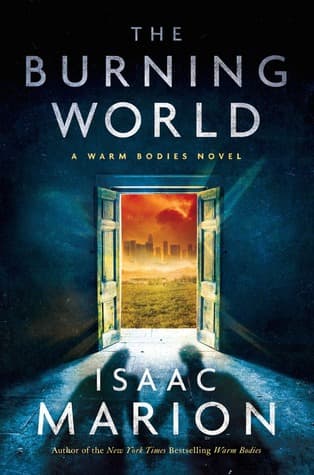
Synopsis
Covers the whole plot, including the ending.
- Difficulty
- Medium
- Pacing
- Variable
- Mood
- Atmospheric, Introspective, Romantic, Melancholy, Hopeful
- Read it if
- You enjoy post-apocalyptic settings with a unique blend of zombie lore, romance, and philosophical introspection, following characters grappling with identity and the cost of humanity.
- Skip it if
- You prefer fast-paced action over character development and world-building, or are not interested in a story that delves deeply into the psychological aspects of survival and transformation.
The Burning World Plot Summary
Covers the whole plot, including the ending.
A Fragile New Beginning
After the events of 'Warm Bodies,' R slowly transforms into a human. He and Julie live in the human settlement of the stadium, where R struggles with basic human functions like breathing, eating, and speaking. His memories of his zombie life fade, and he remembers nothing of his life before the plague. Julie supports him, helping him adapt and protecting him from other humans who still distrust the former zombie. Their bond is strong, but R feels a growing unease. Something from his past stirs, threatening their fragile peace. He occasionally experiences strange, vivid visions that hint at a deeper, forgotten history.
The Arrival of Alex
A new arrival at the stadium disrupts R and Julie's quiet life: Alex. Charismatic and unsettling, Alex claims to be R's brother and knows R's life before he became a zombie, calling him 'Evan.' Alex's presence creates immediate tension. He subtly undermines R's confidence and tries to separate R and Julie, suggesting Julie holds R back from embracing his true identity. Alex's stories about R's past are vague and disturbing, hinting at a powerful family and a connection to the plague's origins. R is conflicted, drawn by the possibility of regaining his identity but repulsed by Alex's manipulative nature.
The Whispering Sickness
As Alex's influence grows, a new, terrifying plague emerges. This 'whispering sickness' does not turn people into flesh-eating zombies. Instead, it infects their minds, making them susceptible to suggestion, paranoia, and a collective, controlling will. The infected become cold, calculating, and lose their individuality, serving a mysterious, unseen master. This plague, unlike the previous one, appears sentient and deliberate, targeting the living and slowly stripping them of their humanity while leaving their bodies intact. The stadium residents, already on edge, grow increasingly suspicious and fearful, turning on each other under the sickness's subtle sway.
The Journey Begins
Driven by a desperate need to understand and stop the whispering sickness, R, Julie, and Nora (a former stadium guard and friend) decide to leave the stadium's relative safety. Alex, with his cryptic knowledge, insists on accompanying them, making the journey even more tense. Their destination is vague, guided by R's increasingly vivid and disturbing visions and Alex's elusive hints about a 'source' or 'origin' of the plague. They travel through a desolate, ruined America, encountering remnants of human civilization and the terrifying effects of the new sickness, which seems more widespread than they initially feared.
Encounters in the Wasteland
Their journey through the American wasteland is dangerous. They navigate ruined cities, desolate highways, and strange, mutated landscapes. The whispering sickness appears in various terrifying ways: groups of living humans acting with unnerving synchronicity, their eyes dead and their movements precise; unsettling 'hives' of infected individuals; and the constant, insidious mental whispers that try to infiltrate R's mind. Alex often seems to know more than he lets on, guiding them through dangerous areas with an unsettling familiarity. R's visions intensify, showing him fragmented images of a past he cannot quite grasp, often involving a towering, ominous structure.
Betrayal and Revelation
As they draw closer to their destination, Alex's true nature is revealed. He is not merely R's brother but a manifestation of the plague itself, a 'mind' or 'consciousness' that seeks to control and homogenize humanity. He is the human form of the whispering sickness, designed to tempt and corrupt. Alex reveals that R, or Evan, was a key figure in the creation or spread of the plague, a scientist or architect of the system that created the Dead. This revelation shatters R's fragile sense of self and forces him to confront the horrifying possibility that he was not just a victim, but an unwitting participant in humanity's downfall.
The Tower and the Core
Following Alex's lead (or manipulation), the group arrives at a colossal, monolithic tower, a structure of impossible scale that hums with an insidious energy. This is the 'Core,' the physical manifestation and control center of the whispering sickness. Within the tower, they find a vast, complex network, a technological and biological hive mind that governs the infected. The Core is not a person but a pulsating, living machine, an ultimate expression of control and order, designed to eliminate chaos and individuality. Here, R's memories begin to flood back in overwhelming torrents, revealing his deep, disturbing connection to this very place.
R's True Identity
Inside the Core, R's fragmented memories coalesce into a horrifying whole. He remembers being Evan, a brilliant but troubled scientist driven by a desire to eliminate suffering, chaos, and humanity's inherent imperfections. He was part of a project, perhaps even the architect, that sought to create a perfectly ordered, controlled society through biological or technological means—the very plague they now fight. He recalls his family, his motivations, and the arrogance that led him to believe he could 'fix' humanity. This past is a heavy burden, making him question his right to exist, let alone lead the fight against his own creation.
The Confrontation with the Core
Understanding that the Core is the brain of the whispering sickness, R, with Julie's unwavering support, realizes they must destroy it to free humanity. The Core is a formidable opponent, capable of projecting illusions, manipulating emotions, and defending itself with its infected drones. R's intimate knowledge of its systems, now fully restored, becomes their greatest weapon. They plan to penetrate its defenses and target its central processing unit. The confrontation is not just physical; it is a battle of wills and ideologies, pitting R's newfound humanity and desire for individuality against the Core's relentless pursuit of absolute order.
The Sacrifice and the Aftermath
To truly dismantle the Core and break its hold, R realizes he must make a sacrifice, leveraging his intimate connection to its systems as Evan. The details are complex, involving a merging or confrontation of his consciousness with the Core's, designed to overload and destroy it from within. Julie and Nora fight fiercely to protect him during this critical moment. The Core's destruction is cataclysmic, sending shockwaves through the infected world. The immediate aftermath is chaotic and uncertain; the infected are disoriented and begin to break free, but R's fate is unclear, leaving Julie to wonder if his sacrifice was complete and what kind of world they will now inhabit.
Echoes of a New World
With the Core destroyed, the whispering sickness begins to recede. The infected slowly regain their individuality, though many are left traumatized and scarred by their experience. The world is not instantly 'fixed,' but a chance for recovery and rebuilding emerges. Julie, alongside Nora and other survivors, begins the arduous task of creating a truly free society. R's physical state after the confrontation is ambiguous; he is changed, perhaps even more human, but also bears the indelible marks of his past as Evan and his battle with the Core. His journey of self-discovery continues, now tasked with living with the knowledge of his complex history.
Principal Figures
R (Evan)
Protagonist
A former zombie grappling with his newfound humanity and a dark, forgotten past.
R is a former zombie who is painstakingly transforming into a human. He struggles with basic human functions but possesses a deep capacity for empathy and love, particularly for Julie. He has no memory of his life before becoming a zombie, living in a constant state of rediscovery. As the story progresses, he is forced to confront his identity as Evan, a brilliant but misguided scientist responsible for the very plague he now fights. He is driven by a desire to protect Julie and to understand his place in a world he inadvertently helped destroy.
Relationships: Julie Grigio (Romantic partner, unwavering support, emotional anchor.); Alex (Antagonist, manipulative 'brother' and manifestation of the plague.)
Julie Grigio
Protagonist/Supporting
A fierce and compassionate survivor, R's emotional anchor and moral compass.
Julie is a strong-willed and resilient survivor who has fallen deeply in love with R. She is his unwavering support system, patiently guiding him through his transformation into a human and protecting him from the suspicions of others. She is pragmatic and courageous, often taking the lead in dangerous situations. Her love for R is unconditional, providing him with the stability and hope he needs to confront his past. She represents humanity's capacity for acceptance and healing, even in the face of immense trauma.
Relationships: R (Evan) (Romantic partner, emotional anchor, co-protagonist.); Nora (Friend and fellow survivor.)
Alex
Antagonist
A charismatic and manipulative entity, the human embodiment of the whispering sickness.
Alex initially presents himself as R's long-lost brother, Evan, but is in fact a sophisticated manifestation of the new, insidious plague, the 'whispering sickness.' He is intelligent, charming, and deeply manipulative, using psychological tactics to sow discord and control. His goal is to bring humanity under the complete, ordered control of the Core, eliminating individuality and chaos. He represents the seductive appeal of absolute order and the dangers of surrendering personal freedom for perceived safety. His connection to R's past as Evan is a key to unlocking R's memories.
Relationships: R (Evan) (Manipulator, claims to be his brother, but is a manifestation of the Core.)
Nora
Supporting
A pragmatic and loyal stadium guard, a steadfast ally to R and Julie.
Nora is a former stadium guard who becomes a trusted friend and ally to R and Julie. She is practical, resourceful, and possesses a strong sense of loyalty. Initially wary of R, she comes to accept him and recognize his humanity, becoming an integral part of their journey into the wasteland. She provides a grounded perspective and often acts as a voice of reason amidst the escalating chaos. Her combat skills and survival instincts are crucial to the group's success in navigating the dangerous landscape.
Relationships: Julie Grigio (Friend and fellow survivor.); R (Evan) (Ally and friend.)
The Core
Antagonist
The sentient, monolithic brain of the whispering sickness, seeking to unify and control all life.
The Core is not a character in the traditional sense, but the central antagonist force of the novel. It is a vast, complex, and sentient biological/technological entity that serves as the brain and control center for the whispering sickness. Its ultimate goal is to eliminate chaos, suffering, and individuality by bringing all life under its complete, unified control. It communicates through the 'whispers' and manifests its will through Alex. It represents the ultimate extreme of order, achieved by stripping away all aspects of free will and personal identity, a terrifying vision of a 'perfect' world.
Relationships: Alex (Manifestation/avatar.); R (Evan) (Its creator/architect.)
Themes & Insights
The Nature of Humanity and Identity
The novel explores what it means to be human, particularly through R's transformation. Is humanity defined by memory, biology, or the capacity for love and choice? R struggles with his fading zombie memories, his new human body, and the horrifying revelation of his past as Evan. The whispering sickness further challenges this theme by stripping individuals of their unique identities, forcing a re-evaluation of individuality versus collective consciousness. The book suggests that true humanity lies in the freedom to choose, feel, and evolve, rather than in a fixed state or a controlled existence.
“Maybe the truest thing about us isn't what we are, but what we choose to be.”
The Allure and Danger of Control
A central theme is the seductive nature of control and the devastating consequences of seeking absolute order. The whispering sickness and the Core represent the desire to eliminate chaos, suffering, and imperfection by imposing a singular, unified consciousness. Alex, as its avatar, preys on the fear of uncertainty and the desire for peace, promising a world free from pain if individuality is surrendered. The novel critiques this authoritarian impulse, showing how it leads to a loss of self, love, and the very essence of life. R's past as Evan, driven by a desire to 'fix' humanity, highlights how even noble intentions can pave the way for oppressive systems.
“Order without freedom is just a cage, no matter how shiny the bars.”
Redemption and Forgiveness
R's journey is an exploration of redemption. He must come to terms with his past as Evan, the scientist who played a role in creating the plague that devastated the world. His struggle to accept this dark history while fighting to save humanity is central to his character arc. The novel asks if one can be forgiven for past transgressions, especially when those transgressions were committed by a former self. Julie's unwavering love and belief in R's current goodness offer a path to self-forgiveness and show the power of external acceptance in the face of internal guilt. Redemption is shown not as erasing the past, but as choosing a different future.
“Your past doesn't define you, Evan. Who you are now, what you choose to do, that's what matters.”
Love as a Force for Life and Resistance
Love, particularly the bond between R and Julie, counters the nihilism and control embodied by the whispering sickness. Their love is not just romantic; it represents the enduring human capacity for connection, empathy, and hope. It fuels R's transformation, gives him a reason to fight, and provides Julie with the strength to endure immense hardship. The Core seeks to eliminate such emotional bonds, viewing them as chaotic and inefficient. By contrasting the cold, calculating nature of the plague with the warmth and complexity of R and Julie's relationship, the novel emphasizes love as a fundamental aspect of human freedom and a potent form of resistance against oppressive forces.
“Love isn't neat. It's messy and terrifying and beautiful, and that's why it's real.”
Plot Devices & Literary Techniques
R's Fading Memories and Visions
A narrative technique used to slowly reveal R's past and build suspense.
R's lack of memory about his life before becoming a zombie, coupled with fragmented, increasingly vivid visions and dreams, serves as a primary driver of suspense and plot progression. These flashes of his past as Evan are initially confusing and disturbing, gradually piecing together a horrifying truth. This device allows the author to control the pacing of revelations, keeping the reader invested in R's internal struggle and the unfolding mystery of the plague's origins. It also highlights R's journey of self-discovery, as his identity is built not just on his present experiences but also on the re-integration of his forgotten past.
The Whispering Sickness
A new, sentient form of plague that manipulates minds and embodies the theme of control.
This insidious new plague is a significant plot device, escalating the stakes beyond mere survival against flesh-eating zombies. Unlike the previous plague, the whispering sickness doesn't destroy the body but corrupts the mind, stripping individuality and free will. It serves as a direct manifestation of the novel's central theme of control versus freedom. Its subtle, psychological nature makes it a more insidious and terrifying threat, forcing characters to question their own thoughts and loyalties. Its ability to create a collective consciousness is key to the Core's power and the ultimate confrontation.
Alex as a Manifestation/Avatar
A human-like antagonist who embodies the plague's will and provides exposition.
Alex is more than just a character; he is a living embodiment of the whispering sickness and a direct extension of the Core's will. His ability to appear human and interact with the protagonists makes him a highly effective and manipulative antagonist. He serves as a narrative device to deliver cryptic exposition about R's past and the plague's true nature, while simultaneously sowing discord and testing the characters' resolve. His presence allows the abstract threat of the Core to become personal and immediate, driving much of the conflict and forcing R to confront his deepest fears.
The Core and the Tower
A physical manifestation of the antagonist's mind and the ultimate destination.
The Core, housed within a colossal, enigmatic tower, acts as both the literal and metaphorical brain of the whispering sickness. As a plot device, it provides a tangible destination for the protagonists' journey, giving their quest a clear objective. Its physical presence allows for a climactic confrontation, while its function as a central intelligence provides a focal point for understanding the plague's mechanisms. The tower also symbolizes the scale and ambition of the plague's desire for absolute control, making its eventual destruction a significant victory for individuality and freedom.
The Burning World Quotes
“There are some things that, once you've seen them, you can't unsee.”
“The past is a phantom, a whisper in the dark, but it always finds a way to haunt the present.”
“Love isn't a choice, it's a force. It's the only thing that can break a curse or create one.”
“Sometimes the only way to find yourself is to get lost in someone else.”
“The world is a graveyard of dreams, but that doesn't mean we should stop dreaming.”
“Every secret has a weight, and eventually, that weight will crush you.”
“There's a difference between living and just existing.”
“Monsters are made, not born. And sometimes, they're made by us.”
“The quiet moments are often the loudest, if you just listen.”
“Fear is a compass. It points you to what you need to face.”
“Even in the darkest places, there's always a flicker of light. You just have to find it.”
“The only way to truly understand someone is to walk a mile in their skin.”
“Sometimes, the hardest battles are the ones we fight within ourselves.”
“We are all just stories in the end. Make yours a good one.”
Quiz
10 questions on the plot and the characters. Each answer comes with a short explanation.
Question 1
What is R primarily learning to do at the beginning of 'The Burning World' after his recovery?
- How to fight off newly evolved zombies
- How to remember his past life as a human
- How to breathe, speak, and be human
- How to navigate the surreal wastelands of America
Show answer
C. How to breathe, speak, and be human At the start of the book, R is focusing on basic human functions like breathing and speaking, essentially learning how to be human again after his transformation.
Question 2
Who is R building a new life with at the beginning of the story?
- Nora
- M
- Perry
- Julie
Show answer
D. Julie The synopsis explicitly states that R is building a new life with Julie.
Question 3
What is the primary danger introduced in 'The Burning World' that is 'far more dangerous than the Dead'?
- A new strain of the zombie virus that creates 'Super Dead'
- A human faction seeking to exploit R's unique condition
- Another host of the plague that seeks to restore 'stability and control'
- Environmental collapse due to the burning world itself
Show answer
C. Another host of the plague that seeks to restore 'stability and control' The synopsis mentions 'The plague has another host far more dangerous than the Dead. It’s coming to return the world to the good old days of stability and control and the strong eating the weak.'
Question 4
What does R NOT want to do regarding his past life?
- Revisit the places he lived before he turned
- Remember his old life
- Meet his old family members
- Understand the cause of the plague
Show answer
B. Remember his old life The synopsis states, 'He doesn’t remember his old life and he doesn’t want to.'
Question 5
What kind of journey is required to stop the new threat, as described in the synopsis?
- A perilous sea voyage to find a cure
- A frightening journey into the surreal wastelands of America and the shadowy basement of R’s mind
- An undercover infiltration of a highly secured human settlement
- A diplomatic mission to unite fragmented human factions
Show answer
B. A frightening journey into the surreal wastelands of America and the shadowy basement of R’s mind The synopsis details, 'stopping it will require a frightening journey into the surreal wastelands of America—and the shadowy basement of R’s mind.'
Question 6
The new plague host aims to return the world to what state?
- An era of peace and cooperation between humans and the Dead
- The good old days of stability and control and the strong eating the weak
- A primitive, pre-industrial society
- A world where the Dead are fully sentient and integrated
Show answer
B. The good old days of stability and control and the strong eating the weak The description states the plague host is 'coming to return the world to the good old days of stability and control and the strong eating the weak.'
Question 7
What does the phrase 'shadowy basement of R’s mind' imply about the nature of the journey R must undertake?
- He must literally find a basement where he stored old memories.
- He must confront repressed memories, trauma, or the darker aspects of his past identity.
- He needs to develop new psychic abilities to fight the plague.
- He will find the origin of the zombie plague hidden in a mental construct.
Show answer
B. He must confront repressed memories, trauma, or the darker aspects of his past identity. The 'shadowy basement of R’s mind' is a metaphorical phrase, indicating an internal, psychological struggle involving his past, memories, and identity, which he initially wants to avoid.
Question 8
Given the description, what genre elements are most prominent in 'The Burning World'?
- Primarily historical fiction with elements of mystery.
- A blend of fantasy, science fiction, young adult, and romance, with a focus on post-apocalyptic survival and self-discovery.
- A classic horror story with minimal character development.
- A political thriller set in a dystopian future.
Show answer
B. A blend of fantasy, science fiction, young adult, and romance, with a focus on post-apocalyptic survival and self-discovery. The provided genre tags are 'Fantasy, Science Fiction, Young Adult, Romance', and the synopsis reinforces these with themes of recovery, new life, and a journey through surreal landscapes, fitting post-apocalyptic survival and self-discovery.
Question 9
What specific characteristic of the new plague host distinguishes it as 'far more dangerous than the Dead'?
- It infects only animals, leading to widespread famine.
- It can possess human bodies without killing them, creating an undetectable threat.
- It actively seeks to re-establish a society based on hierarchy and oppression ('the strong eating the weak'), implying intelligent, malicious intent beyond simple hunger.
- It causes rapid environmental degradation, making the world uninhabitable.
Show answer
C. It actively seeks to re-establish a society based on hierarchy and oppression ('the strong eating the weak'), implying intelligent, malicious intent beyond simple hunger. The text states the new host is 'coming to return the world to the good old days of stability and control and the strong eating the weak.' This suggests a calculated, ideological threat, unlike the mindless hunger of typical zombies, making it more dangerous in terms of societal impact.
Question 10
R's initial state of recovery and learning to be human suggests a central theme of the novel. What is it?
- The inevitable decline of civilization.
- The struggle for identity and the meaning of humanity in a post-apocalyptic world.
- The superiority of artificial intelligence over biological life.
- The importance of forgetting the past to move forward completely.
Show answer
B. The struggle for identity and the meaning of humanity in a post-apocalyptic world. R learning 'how to breathe, how to speak, how to be human' and building a new life, coupled with the journey into his own mind, strongly points to themes of what it means to be human and the quest for self-identity.
The Burning World FAQ
What is the central conflict R faces in 'The Burning World'?
R's primary struggle is against the plague, which has evolved beyond the Dead to infect living humans, creating a new, more insidious threat. This plague seeks to re-establish a world of control and hierarchy, directly opposing the fragile new life R is building with Julie.
How has R changed from his previous state as a zombie at the beginning of the book?
At the start of 'The Burning World', R is actively recovering from his death, learning fundamental human functions like breathing, speaking, and walking. He has no memory of his past as a zombie and is focused on constructing a new identity with Julie, a stark contrast to his previous unthinking existence.
Who is Julie and what is her role in R's journey?
Julie is R's romantic partner and a crucial anchor in his new human life. She represents hope and a future beyond the plague, accompanying him on his perilous journey and providing emotional support and a reason to fight against the forces threatening to revert the world.
What is the nature of the 'new' plague, and how does it differ from the zombie virus?
The new plague infects living humans, making them hyper-efficient, ruthless, and devoid of empathy, effectively turning them into a more dangerous form of predator. Unlike the mindless hunger of the Dead, this plague brings a terrifying level of strategic control and a desire to enforce a rigid social order.
What does the phrase 'shadowy basement of R’s mind' refer to in the context of the story?
This phrase refers to the repressed memories and psychological trauma R carries from his time as a zombie, and potentially even before his death. Unlocking and confronting these hidden aspects of his past is essential for him to fully understand himself and overcome the evolving plague.
Are there any subtle hints about R's pre-zombie life before he fully recovers his memories?
Yes, there are often fleeting images, sensations, or unexplained instincts that surface, suggesting fragments of his past. These might manifest as an inexplicable familiarity with certain places, people, or objects, hinting at a life he once lived before his transformation into a zombie.
How does the author use the surreal wastelands of America to reflect R's internal state?
The desolate and bizarre landscapes R and Julie traverse often mirror R's fragmented and uncertain psychological state. The physical decay and strangeness of the world outside parallel the internal chaos and the struggle to piece together his identity and memories.
Are there any characters from previous books who return in unexpected ways or with new allegiances?
The narrative might feature the return of certain characters from R's past, some of whom may have undergone significant transformations or aligned themselves with unexpected factions. These reappearances often challenge R's perception of his new world and force him to confront his history.
What is the significance of the 'stable and controlled' world the new plague aims to create?
The new plague's vision of 'stability and control' is a dystopian one, where individuality and empathy are eradicated in favor of rigid hierarchy and efficiency, with the strong preying on the weak. This concept is a direct philosophical opposition to R's journey towards rediscovering his humanity and connection.
How does R's experience as a former zombie influence his understanding of humanity and the new plague?
R's unique past as a zombie provides him with an unparalleled perspective on both the fragility and resilience of humanity. His intimate knowledge of the plague's destructive nature, coupled with his own journey back to life, grants him insights into the new threat that others might miss, making him uniquely equipped to fight it.
What psychological challenges does R face in learning to be human again, beyond just the physical aspects?
Beyond physical challenges, R struggles with understanding and expressing complex emotions, grappling with moral dilemmas, and processing trauma from his past. He must learn empathy, navigate social intricacies, and reconcile his monstrous past with his burgeoning human identity, often leading to internal conflict and doubt.
How does the theme of memory loss and recovery impact R's psychological development?
R's memory loss initially allows him a fresh start, but the gradual return of memories forces him to confront his past self and actions. This process is crucial for his psychological development, as he must integrate his zombie experience into his new identity, leading to profound self-discovery and potential existential crises.
In what ways does Julie's unwavering support affect R's mental state and his fight against the plague?
Julie's consistent love and belief in R are vital for his psychological well-being. Her presence provides him with a sense of purpose, hope, and an emotional anchor, helping him to overcome feelings of self-doubt and isolation. Her support is a powerful motivator in his struggle to embrace his humanity and defeat the plague.
Does R grapple with the morality of his past actions as a zombie, even without explicit memory?
Even without explicit memories, R might experience unconscious guilt or unease, manifested as nightmares, anxieties, or a deep-seated fear of reverting to his old nature. His journey to humanity often involves an implicit reckoning with the monstrous acts committed by his former self.
Is 'The Burning World' ultimately a story of redemption, or something more complex?
While redemption is a strong element, the story is arguably more complex, exploring themes of identity, the nature of humanity, and the cyclical struggle between order and chaos. R's journey isn't just about atoning for his past, but about defining what it means to be alive and human in a broken world.
How does the book challenge traditional definitions of 'humanity' and 'monstrosity'?
The book blurs the lines by presenting a former zombie becoming human, while the 'living' infected become monstrous in their pursuit of control. It suggests that humanity is not just a biological state, but a choice, defined by empathy, connection, and the capacity for love, rather than just flesh and blood.
What philosophical statement does the evolving nature of the plague make about societal control?
The evolving plague, which seeks stability through stripping away individuality and empathy, can be interpreted as a critique of authoritarianism and the dangers of absolute control. It suggests that such 'order' comes at the cost of true human connection and freedom, creating a more insidious form of suffering.
Could the 'shadowy basement of R’s mind' be interpreted as a metaphor for collective human trauma?
Yes, beyond R's personal trauma, the 'shadowy basement' could represent the collective unconscious of humanity, holding the scars of past conflicts, societal failures, and the inherent capacity for both creation and destruction. R's personal journey then mirrors a larger societal need for healing and self-awareness.
What is the ultimate message about hope in a post-apocalyptic world presented in the book?
The book conveys that even in the most desolate circumstances, hope persists through connection, love, and the individual's choice to fight for a better future. R and Julie's relationship embodies this, showing that rebuilding and finding meaning are possible even when the world itself is burning.
About the author

Isaac Marion is an American author known for his work in contemporary fiction. He is best recognized for his novels "Warm Bodies," which explores a unique take on the zombie genre, and its sequel, "The Burning World," which continues the story in a post-apocalyptic setting.
Similar books
- Warm Bodies
Isaac Marion
3.9 (99k) average on GoodreadsFantasyIt's the direct sequel, continuing the unique zombie romance and post-apocalyptic themes.
- The Girl With All the Gifts
M.R. Carey
3.9 (190k) average on GoodreadsThrillerFeatures a unique take on zombie-like creatures and explores themes of humanity and evolution in a post-apocalyptic world.
- Station Eleven
Emily St. John Mandel
4.0 (322k) average on GoodreadsLiterary FictionOffers a literary take on post-apocalyptic survival, focusing on human connection and rebuilding in a changed world.
- Zone One
Colson Whitehead
3.2 (28k) average on GoodreadsFictionWhitehead's 'literary zombie novel' offers a much more cynical and critically acclaimed examination of post-apocalyptic reconstruction, focusing on the psychological toll and the futility of rebuilding. While both books deal with similar themes of a fragile new beginning, Whitehead's prose and narrative precision provide a starker, more incisive commentary on human nature in crisis, making "The Burning World" feel less incisive in its social critique and more focused on its romantic and fantastical elements.
- Harry Potter and the Sorcerer's Stone
J.K. Rowling
4.5 (7M) average on GoodreadsFantasyRescued from a miserable life under the stairs, an orphaned boy discovers he's a wizard destined for a magical school, where he uncovers a dangerous secret tied to the dark wizard who murdered his parents.
- The Hunger Games
Suzanne Collins
4.3 (6.4M) average on GoodreadsFantasyIn a future where children fight to the death on live television, Katniss Everdeen volunteers for the arena, turning a death sentence into a fight for survival and a spark of rebellion.





Enjoyed the summary?
A summary gives you the shape of the book. The book itself has the detail, the examples and the voice.
Find The Burning World on AmazonAs an Amazon Associate, BookBrief earns from qualifying purchases. How we're funded