

Synopsis
Covers the whole plot, including the ending.
- Difficulty
- Easy
- Pacing
- Moderate
- Mood
- Quirky, Romantic, Hopeful, Melancholy
- Read it if
- You enjoy unconventional romance, dystopian settings, or stories about finding humanity in unexpected places.
- Skip it if
- You dislike zombie narratives or prefer purely action-driven plots without significant character introspection.
Warm Bodies Plot Summary
Covers the whole plot, including the ending.
The Airport and the Encounter
R, a zombie, tells his story from an abandoned airport, a base for other Dead. He struggles with the boredom and faint memories of his past, differing from other zombies with his inner thoughts and a collection of human items. His life is a dull cycle of shuffles and grunts until a human group, led by Julie Grigio, enters the airport. R and other zombies attack them. During the attack, R kills Julie's boyfriend, Perry Kelvin, and eats his brain, which gives R fragmented memories and emotions from Perry's life. This experience creates a new connection to Julie.
A Hostage and a Guest
After eating Perry's brain, R feels a strange urge to protect Julie instead of eating her. He smears zombie blood on her to hide her scent from other Dead and guides her through the ruined airport. He takes her to his home, an old Boeing 747 on the runway, filled with his collected items. Julie is at first terrified, thinking R will eventually eat her, and tries to escape. R, with his limited communication and Perry's lingering feelings, tries to show his good intentions. He offers her shelter, scavenged food (though he can't eat it), and even a dress. Their interactions, though awkward and full of fear, begin to change Julie's ideas about the Dead.
First Glimmers of Connection
Days turn into a hesitant peace inside R's plane. Julie, realizing R is not an immediate threat, begins to relax. She still fears him, but curiosity and a desperate need for human interaction overcome some of her terror. R, driven by Perry's memories and his own growing emotions, feels drawn to Julie's energy and life. He plays his old records for her, and they share quiet moments. He struggles to form words, often grunting, but Julie starts to understand his meaning. Their talks, though brief, show R's internal struggle and Julie's growing understanding that R is different from other zombies. This time marks the start of their unusual connection.
The Journey to the City
Julie, despite her growing comfort with R, wants to return to the human city, a fortified stadium protected by a wall and her father, General Grigio. She convinces R to take her, a dangerous decision since the journey goes through the Dead Zone. R, wanting to protect her and feeling a faint, almost human longing, agrees. They disguise Julie as a zombie with R's blood and begin their dangerous journey. Along the way, they meet other zombies, including R's friend M, who senses R's change but doesn't fully grasp it. The journey tests their bond, forcing them to rely on each other to survive the zombie hordes and the more advanced, skeletal 'Boneys'.
The Stadium and the Wall
R and Julie eventually reach the tall wall protecting the human city. Their arrival is not easy; human patrols spot them. R, in a moment of panic and sacrifice, lets Julie climb over the wall, drawing the guards' attention away from her. He then has to flee back into the Dead Zone. Julie is reunited with her father, General Grigio, but her stories of a 'good' zombie are met with doubt and fear. Humans believe all zombies are evil monsters, and Julie's story is seen as a delusion or trauma. This strengthens the deep division and misunderstanding between the living and the Dead.
R's Transformation and the Boneys
Back in the Dead Zone, R continues to change. His skin loses its paleness, his heart beats faintly, and his speech improves. He notices other zombies around him also showing subtle signs of change, a ripple effect of his own evolution. However, the real threat appears as the Boneys—skeletal, predatory zombies who have lost all humanity and hunt both the living and the changing Dead. The Boneys represent the last stage of decay and oppose any sign of life or healing. R realizes that his change, and that of others, directly challenges the Boneys' power, setting the stage for a fight.
Julie's Return and the Plan
Inside the human city, Julie struggles with her father's firm stance against all zombies. General Grigio, hardened by years of war, sees R as just another monster and dismisses Julie's claims. Frustrated by the humans' inability to see past their fear, and driven by her connection with R, Julie decides to return to the Dead Zone to find him. She gets help from Nora, her friend, and they plan to meet R and bring him back to the stadium, hoping to show that change is possible. This act of defiance highlights Julie's courage and her belief in R's humanity, challenging the established order.
The Confrontation at the Stadium
Julie and Nora manage to find R and a growing number of 'recovering' zombies, including M. R's change is now clear; his humanity is almost fully restored. They approach the stadium, hoping to show the possibility of healing to the humans. However, General Grigio and his soldiers are ready for an attack, not a peaceful meeting. A tense standoff happens at the wall, with soldiers aiming their weapons at the approaching, seemingly unarmed Dead. The situation is unstable, with both sides on edge, ready for conflict. The presence of the Boneys, who see the changing Dead as an abomination, further complicates the scene, threatening to start a three-way battle.
The Battle and the Truth
As the standoff peaks, the Boneys launch a surprise attack, targeting both humans and the changing Dead. This forces an unexpected alliance: humans and the 'recovering' zombies must fight together against the common enemy. In the chaos, R proves his humanity through his actions, protecting Julie and fighting with clear purpose. General Grigio sees R's courage and the zombies' real change, forcing him to face his deep prejudices. The battle is fierce, but the combined forces manage to push back the Boneys, though with losses. This shared experience begins to break down the barriers of fear and mistrust.
The Bridge and the Future
After the battle, with the Boneys defeated and R's transformation clear, General Grigio makes a big decision. He orders a section of the city wall torn down, symbolizing the breaking of physical and ideological barriers between the living and the Dead. R, now almost fully human, and Julie stand together, a sign of hope for a new world. The remaining 'recovering' zombies are brought into the city, where scientists begin to study their condition, looking for a cure. The novel ends with the promise of a future where humanity and the once-dead can live together and rebuild, acknowledging the long road ahead but embracing the chance for healing and redemption.
Principal Figures
R
Protagonist
A zombie who slowly regains his humanity after an encounter with a human girl.
R is a zombie, but unlike most of his brethren, he possesses an inner monologue, a collection of salvaged human artifacts, and a yearning for something more than mindless consumption. He struggles with his limited communication skills and the inherent urges of his condition, often feeling a profound sense of loneliness and ennui. After consuming Perry Kelvin's brain, he gains fragmented memories and emotions that ignite his transformation. He is kind, protective, and inherently good, despite his decaying exterior, and embodies the potential for change and redemption.
Relationships: Julie Grigio (Love interest; his catalyst for change and hope.); Perry Kelvin (Victim whose brain R consumes, transferring memories and emotions that jumpstart R's transformation.); M (Zombie friend who also begins to show signs of change alongside R.)
Julie Grigio
Protagonist/Love Interest
A strong-willed human survivor who sees beyond R's zombie exterior.
Julie is the daughter of General Grigio, a fierce and pragmatic leader in the human city. She is brave, compassionate, and stubbornly hopeful, refusing to succumb to the prevailing despair and prejudice. Initially terrified of R, she gradually comes to see his unique humanity, challenging her own ingrained beliefs about the Dead. Her willingness to trust and fight for R makes her a crucial catalyst for change, not just for R, but for the entire human society. She is a symbol of empathy and the power of connection.
Relationships: R (Love interest; her connection with him drives the narrative and challenges societal norms.); General Grigio (Father; their relationship is strained by his rigid views and her rebellious empathy.); Perry Kelvin (Deceased boyfriend; her initial grief and memories of him influence her interactions with R.); Nora (Best friend and confidante.)
General Grigio
Antagonist/Supporting
Julie's father and the rigid leader of the human city, wary of all zombies.
General Grigio is the stern, pragmatic, and unyielding leader of the human survivors. Hardened by years of fighting the Dead, he views all zombies as irredeemable monsters and prioritizes the safety of his city above all else. His fear and prejudice are deeply ingrained, making him resistant to any idea of peaceful coexistence or the possibility of zombie transformation. While his intentions are to protect his people, his rigid worldview makes him an antagonist to R and Julie's burgeoning hope, until he is ultimately forced to confront his biases.
Relationships: Julie Grigio (Daughter; their relationship is tense due to their differing views on the Dead.)
Perry Kelvin
Supporting/Mentioned
Julie's deceased boyfriend whose memories become part of R.
Perry Kelvin is Julie's boyfriend, killed by R at the beginning of the story. His brain is consumed by R, transferring his memories, emotions, and aspects of his personality to the zombie. Perry's memories serve as a crucial catalyst for R's transformation, providing R with a connection to humanity and an understanding of love and loss. Though deceased, Perry's presence is felt throughout the narrative through R's internal experiences, influencing R's actions and his developing feelings for Julie. He represents the lost past and the bridge between the living and the Dead.
Relationships: Julie Grigio (Girlfriend; their shared past influences Julie and R's interactions.); R (His memories and emotions are absorbed by R, initiating R's transformation.)
M
Supporting
R's zombie friend who also begins to show signs of humanity.
M is R's closest zombie 'friend' in the airport, communicating through grunts and gestures. He is initially like the other zombies, driven by instinct, but possesses a subtle awareness that makes him slightly different. As R undergoes his transformation, M is one of the first to subtly follow suit, exhibiting faint signs of returning humanity, such as more thoughtful gazes and less aggressive behavior. He serves as a loyal companion to R and demonstrates that R's change is not an isolated incident, but a potential widespread phenomenon among the Dead.
Relationships: R (Friend; they share a unique bond and M is one of the first to follow R's path to humanity.)
Nora
Supporting
Julie's best friend and a nurse in the human city.
Nora is Julie's best friend and a nurse within the human city. She is pragmatic and loyal, initially sharing the common fear of zombies but also possessing an open mind and a deep care for Julie. When Julie tells her about R, Nora is skeptical but eventually comes to believe her, providing crucial support and assistance in Julie's efforts to help R. She represents the potential for humans to overcome their ingrained fears and prejudices when presented with undeniable evidence of change. Her medical background also hints at the scientific possibilities of understanding the zombie condition.
Relationships: Julie Grigio (Best friend; provides support and counsel to Julie.)
The Boneys
Antagonist
Skeletal, fully devolved zombies who hunt both the living and the changing Dead.
The Boneys are the primary antagonists of the story, representing the ultimate stage of zombie decay. They are skeletal, devoid of flesh and any remaining humanity, and driven by a primal hunger. Unlike regular zombies, they are intelligent, organized, and actively hunt down both living humans and any zombies showing signs of returning life. They are a pure force of destruction and nihilism, fiercely opposing any form of healing or hope. Their existence highlights the fragility of life and the constant threat of complete annihilation, forcing an alliance between humans and the changing Dead.
Relationships: R (Mortal enemies; they see R and the changing Dead as an abomination.); Humans (Predators of humans, viewing them as food.)
Dr. Arnie
Mentioned
A scientist in the human city attempting to understand the plague.
Dr. Arnie is a scientist mentioned by Nora, who is working on understanding the plague and the zombie condition. While not a direct character in the narrative, his existence highlights the human efforts to combat the apocalypse through scientific means. He represents the hope for a cure and the intellectual pursuit of understanding the disease, contrasting with General Grigio's purely military approach. His work becomes even more relevant as R and other zombies begin to transform, suggesting a potential breakthrough.
Themes & Insights
The Power of Connection and Empathy
The main theme is the power of true connection and empathy. R, a zombie, starts to regain his humanity not through a cure, but through his emotional bond with Julie. Her willingness to see past his decaying body and her kindness awaken something in him. Similarly, R's protective instincts and attempts to communicate lessen Julie's fear and prejudice. This theme is clearest in R's inner thoughts where he longs for connection, and in scenes like R playing music for Julie in his plane, creating a shared peaceful moment in the apocalypse.
“What is it about her? Her skin, the smell of her hair, the way she looks at me, no judgment, just a quiet, curious fear... I want to touch her, to tell her things. Impossible, but the urge is there, a flicker of something human.”
Redemption and the Possibility of Change
Warm Bodies explores the idea that even the most lost can find redemption and that change is always possible, even in the worst situations. R, a zombie, shows this theme as he slowly changes from an instinctive creature into a sentient, feeling being. His journey challenges the belief that zombies are evil monsters. This theme also applies to other 'recovering' zombies like M, and even General Grigio, who eventually rethinks his simple view of the Dead. The climax, where humans and changing zombies fight together against the Boneys, clearly shows this redemption, proving that past identities don't have to define future possibilities.
“I am a new thing. I am a new me. And I am afraid. But also… excited. Hope. That’s the word.”
Dehumanization and Prejudice
The novel criticizes the dangers of dehumanization and prejudice, especially through the humans' treatment of the Dead. General Grigio and human society view all zombies as 'monsters,' unable to think or feel, which justifies killing them. This prejudice blinds them to the possibility of R's transformation and creates an unnecessary barrier to understanding. The Boneys represent the ultimate form of dehumanization, having lost all human traits. The story asks readers to question how they define 'humanity' and the results of reducing others to a single, negative label, showing that fear often drives prejudice.
“We're all just trying to survive, aren't we? Even the Dead. Maybe they're not all 'them.' Maybe some of them are just… lost.”
The Search for Identity and Meaning
R's journey is a search for identity and meaning in a world without either. As a zombie, he has no memory of his past and struggles with the monotony of his un-life. His inner thoughts reveal a desire for purpose beyond eating. The memories he gets from Perry, while not his own, give him a way to understand human emotions and experiences, helping him build a new identity. This theme connects to the broader human condition, exploring how we define ourselves and find purpose when faced with existential emptiness, and how important memory is in shaping who we are.
“I don't know who I was. But I'm starting to know who I am. And who I want to be.”
Life, Death, and the In-Between
The novel explores the space between life and death, blurring the lines between them. R and the 'recovering' zombies exist in this in-between, neither fully alive nor fully dead. Their transformation suggests that death is not always a complete end, and that life, or a part of it, can reappear. This theme challenges common ideas of mortality and existence, suggesting a continuous spectrum rather than a binary. The contrast between the vibrant, emotional changing Dead and the purely destructive Boneys further highlights the different stages and meanings of being 'undead.'
“I am dead, but I am also alive. A paradox. A new kind of life. And I want to live it.”
Plot Devices & Literary Techniques
First-Person Zombie Narration
The story is told from the unique perspective of R, a zombie.
This device is crucial for humanizing R and allowing the reader to access his internal thoughts, feelings, and struggles, which would otherwise be impossible. It subverts traditional zombie tropes by giving the 'monster' a voice, fostering empathy and challenging assumptions. It allows for a deeper exploration of themes like identity, loneliness, and the yearning for connection, making R a sympathetic protagonist despite his condition. Without it, R would remain a mindless threat, and the core message of transformation would be lost.
Consumption of Brains and Memory Transfer
R gains memories and emotions from the brains he consumes, particularly Perry's.
This is the primary catalyst for R's transformation. By consuming Perry's brain, R absorbs not just sustenance, but fragments of Perry's life, love, and personality. This allows R to experience human emotions and memories, jumpstarting his own dormant humanity. It provides a unique, visceral explanation for his connection to Julie and his evolving consciousness, moving beyond a purely biological or magical transformation. It also serves as a poignant reminder of the lives lost and the echoes they leave behind.
The Wall
A physical barrier separating the human city from the Dead Zone.
The wall serves as a powerful symbol of division, fear, and prejudice. It physically separates the living from the Dead, mirroring the ideological wall that General Grigio and many humans erect in their minds. Its eventual demolition at the story's climax symbolizes the breaking down of these barriers – both physical and emotional – and the beginning of a new era of potential understanding and coexistence. It represents the hope that even deeply ingrained divisions can be overcome.
The Boneys
A more advanced, purely destructive form of zombie.
The Boneys function as the ultimate antagonist and a stark contrast to R and the changing Dead. They represent the complete loss of humanity and the irreversible decay, serving as a foil that highlights R's unique transformation. Their existence creates a common enemy that forces humans and the 'recovering' zombies to unite, thus facilitating the breaking down of prejudice and the acceptance of R's change. They embody the worst-case scenario, making the hope offered by R's transformation even more potent.
Music and Artifacts
R's collection of human objects and his love for music.
These elements are external manifestations of R's internal humanity and his yearning for connection. His collection of records, snow globes, and other trinkets in his plane-home shows his desire to hold onto remnants of the past and to find beauty and meaning. Music, in particular, transcends language barriers and allows R and Julie to connect on an emotional level, symbolizing the universal power of art and shared experience in fostering empathy and understanding. They demonstrate that R is more than just a zombie; he is a curator of lost humanity.
Warm Bodies Quotes
“I am dead, but it's not so bad. I've learned to live with it.”
“Being a zombie is a lot like being a teenager. You're misunderstood, you're hungry, and you have a lot of feelings you don't know what to do with.”
“I used to think the human brain was the most important organ. Now I know it's the heart.”
“When we stop feeling, we die. Even if we're still walking.”
“The greatest weapon against the zombie apocalypse is not a gun. It's a smile.”
“Maybe love is a process of learning to love yourself, through someone else.”
“We're not just a collection of cells. We're a collection of stories.”
“The world isn't ending. It's just beginning to change.”
“I want to be human. I want to feel everything.”
“Fear is a choice. You can choose to be afraid, or you can choose to live.”
“Sometimes the greatest acts of love are the smallest ones.”
“We don't need to be perfect to be loved. We just need to be real.”
“Even in death, there is life. And in life, there is always hope.”
“The only way to truly live is to risk being completely open.”
Quiz
10 questions on the plot and the characters. Each answer comes with a short explanation.
Question 1
What is the name of the female protagonist R meets?
- Nora
- Julie
- Sarah
- Emily
Show answer
B. Julie R meets a living girl named Julie, who becomes a significant part of his transformation.
Question 2
Where does R live at the beginning of the story?
- An abandoned shopping mall
- A deserted hospital
- A cozy 747 airplane at an abandoned airport
- Underground in a subway system
Show answer
C. A cozy 747 airplane at an abandoned airport R makes his home in a 747 airplane at a disused airport, where he listens to music and collects souvenirs.
Question 3
What does R do with the brains he consumes from humans?
- He gains their memories and experiences.
- He gains physical strength from them.
- He uses them to communicate with other zombies.
- They have no discernible effect on him.
Show answer
A. He gains their memories and experiences. A key plot device in the book is that when R consumes brains, he experiences the memories and feelings of the person they belonged to.
Question 4
What is the primary difference between R and other 'Dead' zombies?
- He is immune to sunlight.
- He can speak in full sentences.
- He retains some consciousness, internal thoughts, and a desire for connection.
- He is much faster than the other zombies.
Show answer
C. He retains some consciousness, internal thoughts, and a desire for connection. Unlike most zombies, R has internal thoughts, a sense of self, and a longing for something more than just existing, which sets him apart.
Question 5
What is the name of the more advanced, skeletal zombies who have lost all humanity?
- Walkers
- Bonies
- Shamblers
- Stalkers
Show answer
B. Bonies The 'Bonies' are the zombies who have completely degenerated, losing all flesh and any semblance of their former selves, becoming purely predatory.
Question 6
What is the main theme explored through R's relationship with Julie?
- The importance of military strength in survival.
- The power of human connection and love to bring life and change.
- The inevitable decay of all life.
- The futility of hope in a post-apocalyptic world.
Show answer
B. The power of human connection and love to bring life and change. The central theme of 'Warm Bodies' is how love and human connection, even in the most unlikely circumstances, can spark change and bring 'life' back to the dead.
Question 7
Why does Julie initially stay with R, despite being terrified?
- She is injured and cannot escape.
- R convinces her that he can protect her from other, more dangerous zombies.
- She believes R can lead her to a cure.
- She is fascinated by his unique behavior.
Show answer
B. R convinces her that he can protect her from other, more dangerous zombies. R, after eating her boyfriend's brains and experiencing his memories, feels a strong urge to protect Julie and manages to convince her that staying with him is safer than facing the other zombies alone.
Question 8
What is the broader societal implication of R's transformation?
- That the human race is doomed to extinction.
- That evolution can lead to new, superior species.
- That humanity can be restored through empathy and breaking down barriers between groups.
- That military intervention is the only way to solve global crises.
Show answer
C. That humanity can be restored through empathy and breaking down barriers between groups. R's transformation, spurred by his connection with Julie, symbolizes the potential for humanity to heal and rebuild by embracing empathy and transcending divisions, even between the living and the dead.
Question 9
What happens to the zombies who start to 'dream' and show signs of returning humanity?
- They are immediately killed by the living humans.
- They are hunted and consumed by the Bonies.
- They become leaders of the zombie community.
- They are exiled to a remote island.
Show answer
B. They are hunted and consumed by the Bonies. The Bonies, representing pure predatory instinct, actively hunt and consume the 'recovering' zombies, as these signs of life are anathema to their existence.
Question 10
What is the ultimate fate of the wall separating the living from the Dead?
- It is strengthened and made impenetrable.
- It remains a permanent barrier, symbolizing ongoing division.
- It is eventually torn down as the living and 'recovering' dead begin to integrate.
- It is destroyed by a natural disaster.
Show answer
C. It is eventually torn down as the living and 'recovering' dead begin to integrate. The wall, a symbol of division and fear, eventually comes down as the living begin to accept and integrate with the 'recovering' zombies, marking a new era of cooperation and hope.
Warm Bodies FAQ
What is the core premise of 'Warm Bodies'?
The core premise of 'Warm Bodies' revolves around R, a zombie who, despite his condition, begins to experience human emotions and thoughts after consuming the brain of a young man named Perry. This leads him to protect Perry's girlfriend, Julie, sparking an improbable romance and initiating a profound change in the zombie population.
Who are the main characters and what are their initial roles?
The main characters are R, a zombie with an evolving consciousness, and Julie, a human survivor. Initially, R is a typical zombie, albeit one with a burgeoning inner life, while Julie is a human scavenger who becomes R's captive after he kills her boyfriend, Perry.
How does R's transformation begin and what triggers it?
R's transformation begins subtly with his internal monologues and collection of human artifacts, but it significantly accelerates after he consumes Perry's brain. This act grants him Perry's memories and emotions, allowing him to perceive Julie not as prey, but as a person, triggering his desire to protect her.
What are the 'Bonies' and how do they differ from regular zombies?
The 'Bonies' are the skeletal, fully decayed form of zombies who have lost all remnants of humanity, including their skin and any potential for thought or feeling. They are the ultimate stage of undeath, serving as a stark contrast to R and the other 'fleshies' who still retain some biological matter and, in R's case, consciousness.
What is the significance of the airport setting for R?
The abandoned airport serves as R's home and sanctuary, reflecting his internal state. His collection of human artifacts in the 747 and his preference for lonely introspection over mindless wandering highlight his unique detachment from other zombies and his subconscious yearning for a lost humanity.
How do Perry's memories influence R's actions towards Julie?
Perry's memories, absorbed by R, provide him with intimate insights into Julie's personality, her past, and her relationship with Perry. This emotional connection allows R to understand Julie on a deeper level, fueling his protective instincts and accelerating his re-humanization process.
What is the subtle hint about R's past identity before he became a zombie?
While R's full past identity is never explicitly revealed, the fact that he consistently thinks of himself as 'R' and has some vague, pre-zombie memories of a life before the apocalypse, suggests he was likely a young man, possibly with interests similar to his current collections.
Is there any symbolic meaning behind R's name being just 'R'?
R's abbreviated name symbolizes his lost identity and the dehumanization of the zombie state, yet also suggests a potential for 're-birth' or 'recovery.' It highlights his journey from an anonymous monster to an individual rediscovering his humanity, starting from a single letter.
How does Nora, Julie's friend, play a crucial role in the unfolding events?
Nora, as Julie's closest friend and a nurse, becomes an unexpected ally. She is the first human besides Julie to witness R's transformation and believe in his potential for change, providing medical aid and a safe haven for R within the human settlement, thus bridging the gap between the two worlds.
How does R's internal monologue evolve throughout the book?
R's internal monologue evolves from fragmented observations and basic desires to complex thoughts, self-awareness, and philosophical ponderings. Initially marked by simple sentences and a focus on survival, it gradually incorporates deeper emotions, moral dilemmas, and a yearning for connection, mirroring his physical transformation.
What psychological impact does R's 'eating' of Perry's brain have on him?
Psychologically, eating Perry's brain is a profound experience for R, acting as a catalyst for empathy and self-awareness. It floods him with Perry's memories and emotions, forcing him to confront the humanity he extinguished and paradoxically making him more human in the process, blurring the lines of identity.
How does Julie's initial fear of R transform into trust and affection?
Julie's initial fear of R gradually transforms as she witnesses his protective actions, his attempts at communication, and the genuine sadness in his eyes. Her trust is built on his consistent kindness and his visible struggle against his zombie nature, leading her to see past the monster to the developing person within.
What does R's desire to protect Julie reveal about his burgeoning humanity?
R's desire to protect Julie is a pivotal indicator of his burgeoning humanity, as it signifies a shift from purely instinctual zombie behavior to altruistic care. It demonstrates his capacity for empathy, self-sacrifice, and a connection that transcends the primal urge for consumption, marking him as fundamentally different from other Dead.
Is 'Warm Bodies' primarily a love story, or does it explore deeper themes?
'Warm Bodies' is undeniably a love story, but it also delves into profound themes of identity, redemption, the nature of humanity, and the power of connection to overcome prejudice and decay. The romance serves as a vehicle to explore these broader philosophical questions about life and death.
What is the ultimate message about hope and change in the novel?
The ultimate message about hope and change in the novel is that even in the most desolate circumstances, transformation is possible through connection and empathy. It suggests that humanity is not just about being alive, but about the capacity for love, growth, and the courage to fight for a better future, even against overwhelming odds.
How does the ending of the book challenge traditional zombie apocalypse narratives?
The ending of 'Warm Bodies' dramatically challenges traditional zombie apocalypse narratives by offering a hopeful resolution where zombies can be cured and reintegrated into society. Instead of focusing on pure survival or eradication, it proposes that humanity itself can be infectious in a positive way, leading to a new beginning.
What role does music, particularly Sinatra, play for R?
Music, especially Frank Sinatra, serves as a crucial link to R's lost humanity and a source of comfort and introspection. Sinatra's melancholic yet hopeful tunes resonate with R's internal struggle and his yearning for connection, acting as a soundtrack to his reawakening and a symbol of the beauty of the living world.
How does the concept of 'being alive' evolve throughout the story?
The concept of 'being alive' evolves from a simple biological state to a deeper understanding of consciousness, emotion, and connection. Initially, 'alive' means having a pulse, but as R transforms, it comes to signify empathy, love, self-awareness, and the capacity for growth, redefining what it truly means to be human.
About the author

Isaac Marion is an American author known for his work in contemporary fiction. He is best recognized for his novels "Warm Bodies," which explores a unique take on the zombie genre, and its sequel, "The Burning World," which continues the story in a post-apocalyptic setting.
Similar books
- The Girl With All the Gifts
M.R. Carey
3.9 (190k) average on GoodreadsThrillerFeatures a unique perspective on zombies and explores themes of humanity and survival.
- Pride and Prejudice and Zombies
Seth Grahame-Smith
3.3 (129k) average on GoodreadsFantasyBlends classic romance with zombie apocalypse elements, albeit in a more comedic tone.
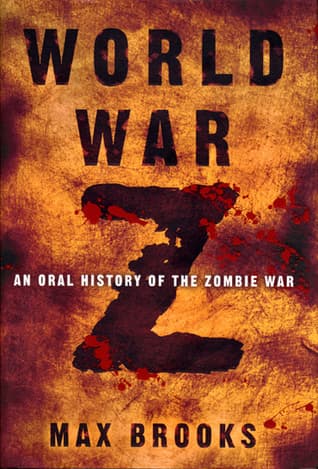
- World War Z: An Oral History of the Zombie War
Max Brooks
4.0 (440k) average on GoodreadsFantasy'World War Z' employs an oral history format, presenting a global, geopolitical perspective on a zombie apocalypse, emphasizing strategy, societal collapse, and diverse human responses. In contrast, 'Warm Bodies' is an intimate, first-person narrative, deeply focused on the internal transformation of one zombie and a small group's struggle for connection. Brooks' work is a broad sociological study of a pandemic, while Marion's is a character study exploring individual identity and empathy. 'Warm Bodies' offers a micro-level, hopeful narrative of transformation, whereas 'World War Z' provides a macro-level, often grim, recounting of humanity's near-extinction and arduous recovery.
- Harry Potter and the Sorcerer's Stone
J.K. Rowling
4.5 (7M) average on GoodreadsFantasyRescued from a miserable life under the stairs, an orphaned boy discovers he's a wizard destined for a magical school, where he uncovers a dangerous secret tied to the dark wizard who murdered his parents.
- The Hunger Games
Suzanne Collins
4.3 (6.4M) average on GoodreadsFantasyIn a future where children fight to the death on live television, Katniss Everdeen volunteers for the arena, turning a death sentence into a fight for survival and a spark of rebellion.
- 1984
George Orwell
4.2 (3.1M) average on GoodreadsPoliticsIn a future where surveillance and thought control are absolute, a man's search for truth clashes with the Party, showing that hope can be a form of rebellion.





Enjoyed the summary?
A summary gives you the shape of the book. The book itself has the detail, the examples and the voice.
Find Warm Bodies on AmazonAs an Amazon Associate, BookBrief earns from qualifying purchases. How we're funded