
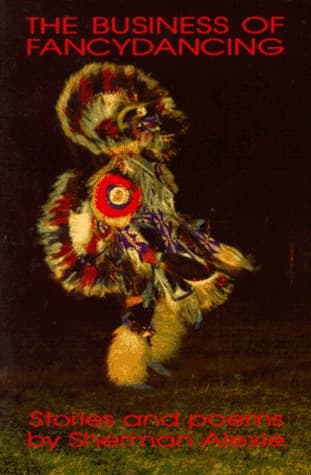
Synopsis
Covers the whole plot, including the ending.
- Difficulty
- Medium
- Pacing
- Variable
- Mood
- Introspective, Melancholy, Poignant, Candid
- Read it if
- You appreciate raw, introspective poetry and short stories exploring Native American identity, cultural representation, and the struggles of artists.
- Skip it if
- You prefer traditional narrative structures or are looking for a light, uncomplicated read.
The Business of Fancydancing Plot Summary
Covers the whole plot, including the ending.
Introduction to Seymour Polatkin
The collection introduces Seymour Polatkin, a Spokane Indian poet and writer who has left the reservation for a literary career. He often feels like an outsider in both worlds. On the reservation, he is seen as having 'made it' but also criticized for potentially exploiting his heritage. In the white literary world, he is often tokenized, expected to perform a certain 'Indianness' that feels inauthentic. This initial tension sets the stage for Seymour's internal conflict, as he tries to reconcile his past with his present and future, constantly questioning where he truly belongs and what it means to be an 'authentic' Indian writer.
Memories of Childhood and the Reservation
Seymour often revisits his childhood memories on the Spokane Indian Reservation. These recollections paint a vivid picture of life there: the poverty, the struggles with alcoholism among adults, and the strong, often complicated, bonds within families and the community. He remembers specific incidents, like his grandmother's stories, communal gatherings, and the sense of both belonging and entrapment he felt. These memories are raw and honest, highlighting both the beauty and the brutality of his early life, and deeply influencing his current perspective and writing.
The Pressure of Representation
As a published Spokane Indian writer, Seymour carries the burden of speaking for all Native Americans. This pressure comes from his family, his community, and especially his white readership and critics. He grapples with the responsibility of portraying 'authentic' Indian experiences, fearing misrepresentation or betrayal. This often leads to creative paralysis, as he struggles to find his own voice amidst external expectations. He questions whether his personal stories are 'Indian enough' or if he is merely performing a role for an audience that wants a specific narrative.
Relationships and Isolation
Seymour's relationships, both romantic and platonic, are often difficult. His internal struggles with identity and purpose create a barrier between him and others. He feels misunderstood by those outside his culture and, at times, alienated from those within it who do not share his experiences as a writer. This isolation is a recurring theme, as he navigates his personal life feeling like an observer rather than a full participant, constantly analyzing his interactions through the lens of his cultural background and his writer's sensibility.
The 'Business' of Fancydancing
The titular 'business of fancydancing' is a central metaphor. Seymour sees his writing and public appearances as a form of 'fancydancing' – a performance of his Indian identity for an audience that expects a certain spectacle. He resents this need to perform, feeling it compromises his authenticity and reduces his complex heritage to a marketable commodity. He struggles with the ethics of this 'business,' questioning whether he is truly sharing his stories or merely playing into stereotypes for personal gain and artistic recognition, creating an internal moral dilemma.
Alcoholism and its Legacy
Alcoholism is a dark shadow throughout Seymour's life, echoing his childhood experiences on the reservation. He recounts the destructive impact it had on family members and the community, leading to violence, despair, and lost potential. While Seymour himself may not be an active alcoholic, its legacy profoundly affects his worldview and his relationships. He carries the trauma and understanding of its grip, often reflecting on how it has shaped the lives of those he loves and his own journey away from that environment.
The Power and Burden of Storytelling
Seymour understands that storytelling is central to his Spokane heritage, a means of preserving history, culture, and identity. He feels a deep responsibility to tell the stories of his people, even the painful ones. However, this responsibility is also a burden. He grapples with how to translate complex oral traditions into written form, how to convey the nuances of his culture to an external audience, and how to avoid perpetuating harmful stereotypes. He seeks to use his voice to honor his ancestors and community, but often feels the weight of this task.
Encounters with White Academia/Literary World
Seymour frequently encounters academics, editors, and fellow writers in the predominantly white literary world. These interactions are often fraught with cultural misunderstandings. He is sometimes praised for his 'exotic' background or expected to provide simplistic explanations of complex Native American issues. He experiences tokenism, where his identity is valued more than his artistic merit. These encounters reinforce his feelings of otherness and fuel his cynicism about the mainstream's ability to truly understand or appreciate his work on its own terms, beyond its 'Indianness'.
Search for Authenticity
Throughout the collection, Seymour searches for authenticity. He longs to be true to himself, his heritage, and his art, without having to perform a version of 'Indianness' for others. He questions what it truly means to be an authentic Spokane Indian in the modern world, especially when living between two cultures. This search involves sifting through his memories, confronting his fears, and trying to reconcile his past with his present, hoping to find a space where his identity is self-defined rather than externally imposed or commercially exploited.
Moments of Connection and Hope
While much of Seymour's journey is marked by struggle and isolation, there are moments where he experiences genuine connection – with a kindred spirit, a supportive family member, or through a shared laugh. These moments, though sometimes brief, offer glimmers of hope and remind him of the strength and resilience within his community and himself. They suggest that despite the challenges of his identity and career, there is still potential for understanding, belonging, and the creation of meaningful art that transcends the 'business' of performance.
The Business of Fancydancing Characters
Seymour Polatkin
Protagonist
A Spokane Indian poet and writer navigating cultural identity and the literary world.
Seymour is a complex, introspective young man who has left the Spokane Indian Reservation to pursue a career as a writer. He is highly intelligent, observant, and deeply sensitive, often feeling torn between his tribal heritage and the demands of the white literary world. He struggles with the burden of representation, the legacy of alcoholism, and a pervasive sense of alienation. His writing is his primary means of processing his experiences and attempting to forge an authentic identity.
Relationships: His Grandmother (Source of traditional stories and wisdom, a strong maternal figure.); His Family (unnamed) (Source of love, conflict, and the complexities of reservation life.); White Literary Figures (unnamed) (Often dismissive, tokenizing, and culturally misunderstanding.)
Seymour's Grandmother
Supporting
A keeper of traditional stories and a symbol of cultural resilience.
Seymour's grandmother appears primarily in his memories. She is a figure of immense wisdom, strength, and cultural continuity. She embodies the traditional Spokane way of life and is a source of comfort and guidance for young Seymour. Her stories are not just entertainment but a means of transmitting history, values, and identity, deeply influencing Seymour's understanding of his heritage and his own role as a storyteller. She represents the enduring spirit of the Spokane people.
Relationships: Seymour Polatkin (Grandson, recipient of her stories and wisdom.)
Unnamed Reservation Residents
Supporting/Mentioned
The collective community that shapes Seymour's identity and provides context for his struggles.
Various unnamed individuals from the Spokane Indian Reservation populate Seymour's memories and present-day reflections. They represent the spectrum of experiences on the reservation: the struggles with poverty and alcoholism, the communal bonds, the gossip, and the expectations placed upon those who leave. They serve as a constant reminder of where Seymour comes from and the community he feels both connected to and alienated from. Their collective presence highlights the socio-economic realities and cultural richness of his origins.
Relationships: Seymour Polatkin (Community members who knew him, some supportive, some critical.)
White Literary Critics/Academics
Antagonist/Mentioned
Abstract figures representing the mainstream literary establishment that misinterprets and tokenizes Seymour.
These are not specific named characters but rather a collective force that Seymour encounters in the literary world. They represent the predominantly white, mainstream literary establishment that often approaches Native American literature with a mix of curiosity, exoticism, and cultural ignorance. They are prone to tokenism, expecting Seymour to fulfill specific stereotypes or provide easy answers. They embody the external pressures and misunderstandings that contribute to Seymour's feelings of alienation and his 'fancydancing' dilemma.
Relationships: Seymour Polatkin (Professional relationship, often characterized by misunderstanding and exploitation.)
The Business of Fancydancing Themes
Identity and Belonging
The central theme explores Seymour's struggle to define his identity as a Spokane Indian in a world that pulls him between his reservation roots and the expectations of mainstream society. He feels like an outsider in both worlds, constantly questioning where he truly belongs. This manifests in his internal monologues about 'authenticity' and the pressure to perform a certain 'Indianness' for his audience, as seen in his reflections on the 'business of fancydancing' where he feels compelled to act out stereotypes for commercial success, rather than simply being himself.
“What is an Indian, anyway? A story told again and again until it becomes the truth.”
The Burden of Representation
As a published Native American writer, Seymour grapples with the pressure to represent his entire community and culture accurately. He fears misrepresentation, betrayal, and the perpetuation of stereotypes, which often leads to creative paralysis. This burden is heightened by the expectations of white audiences and critics who seek a specific, often simplified, narrative of 'Indian experience.' His poetry and prose frequently return to this ethical dilemma, questioning whether his personal stories are 'Indian enough' or if he is merely fulfilling a role.
“I am trying to save my people, not by leading them to water, but by teaching them how to swim.”
Storytelling as Survival and Resistance
Storytelling is a vital act of cultural preservation and a tool for individual and collective survival against historical trauma and erasure. Seymour recognizes the power of his grandmother's oral traditions and his own written words to keep his heritage alive. However, he also struggles with the commercialization of these stories in the literary marketplace. His act of writing is both a tribute to his ancestors and a form of resistance against the dominant narratives that seek to define or diminish Native American experiences, as he tries to tell the 'truth' rather than what is expected.
“We are all born with a story. It's our job to tell it.”
Colonialism and its Lingering Effects
The theme of colonialism is subtly woven throughout the collection. It appears in the socio-economic disparities on the reservation, the issue of alcoholism, and the cultural misunderstandings Seymour faces in the white world. The legacy of historical oppression impacts the present-day lives of the Spokane people, affecting their opportunities, health, and sense of self. Seymour's internal conflict is a direct result of living in the aftermath of colonization, where his identity is constantly being scrutinized and commodified by the dominant culture, highlighting the ongoing struggle for self-determination.
“They want us to be noble savages, and we are just savages.”
Plot Devices & Literary Techniques
First-Person Narrative
Provides direct access to Seymour's internal thoughts and struggles.
The entire collection is presented through Seymour Polatkin's first-person perspective. This device allows readers direct access to his complex internal monologues, his anxieties about identity, his memories of the reservation, and his cynical observations of the white literary world. It creates an intimate and immediate connection with his emotional and intellectual journey, making his struggles with authenticity and representation deeply personal and resonant. The reader experiences his alienation and his search for meaning directly through his own voice.
Metaphor of Fancydancing
Symbolizes the performance of identity for external consumption.
The 'business of fancydancing' is a central, extended metaphor throughout the book. Fancydancing, a traditional Native American dance, is recontextualized by Seymour to represent the act of performing his 'Indianness' for a predominantly white audience. It encapsulates his feelings of inauthenticity, commercial exploitation, and the pressure to conform to stereotypes for artistic and financial gain. This metaphor highlights his internal conflict between genuine self-expression and the demands of the literary marketplace, emphasizing the painful compromises he feels he must make.
Flashbacks and Memory
Reveals Seymour's past and the lasting impact of his upbringing.
The narrative frequently shifts between Seymour's present experiences and vivid flashbacks to his childhood on the Spokane Indian Reservation. These memories are not linear but appear as fragments, dreams, and recurring motifs, revealing the lasting impact of poverty, alcoholism, and strong communal bonds on his psyche. This device provides crucial context for his current struggles with identity and belonging, showing how his past continuously informs his present perspective and his art, creating a layered understanding of his character.
Irony and Satire
Used to critique cultural misunderstandings and literary tokenism.
Alexie employs irony and satire, particularly through Seymour's voice, to critique the often-superficial understanding of Native American culture by the mainstream. Seymour's observations about white literary figures, their expectations, and their 'appreciation' of his work are often laced with a biting, sardonic wit. This device serves to expose the absurdity of cultural stereotypes and the tokenism experienced by Native American artists, providing a sharp commentary on the power dynamics within the literary world and society at large.
The Business of Fancydancing Quotes
“We are all the children of our own stories.”
“Survival is a beautiful and brutal thing.”
“Every time I write a poem, I am trying to save somebody's life, maybe my own.”
“There are things you can't outrun, no matter how fast you are.”
“We dance because we are still alive.”
“Memory is a kind of ghost, you know? It follows you everywhere.”
“Sometimes the best way to get over someone is to write them into a poem and then burn it.”
“The reservation is a place where everybody knows your business and still doesn't understand it.”
“Every Indian story begins and ends with the land.”
“What do you do when your history is a wound?”
“We are all trying to be heroes in our own small, messed-up ways.”
“Words are just words, until you give them power.”
“The world is full of ghosts if you know how to look for them.”
“Sometimes, the only way to hold on is to let go.”
Quiz
10 questions on the plot and the characters. Each answer comes with a short explanation.
Question 1
Which recurring character, often depicted as a storyteller or a trickster figure, appears in various poems and stories within 'The Business of Fancydancing'?
- Victor Joseph
- Thomas Builds-the-Fire
- Junior Polatkin
- Seymour Polatkin
Show answer
B. Thomas Builds-the-Fire Thomas Builds-the-Fire is a prominent and recurring character in Alexie's early works, including 'The Business of Fancydancing,' often serving as a central figure in the storytelling tradition.
Question 2
In the poem 'The Business of Fancydancing,' what is the primary struggle or conflict the speaker describes regarding his identity as a Spokane Indian artist?
- Balancing urban life with reservation traditions.
- Reconciling traditional tribal identity with mainstream success and expectations.
- Overcoming poverty on the reservation.
- Finding love and companionship.
Show answer
B. Reconciling traditional tribal identity with mainstream success and expectations. The title poem, and indeed much of the collection, explores the tension and 'business' of performing or representing Native American identity for a broader audience while staying true to one's roots.
Question 3
Which of the following themes is NOT a central focus in 'The Business of Fancydancing'?
- Alcoholism and its effects on the reservation.
- The legacy of historical trauma and colonialism.
- The joy and simplicity of childhood innocence.
- The complexities of contemporary Native American identity.
Show answer
C. The joy and simplicity of childhood innocence. While there might be fleeting moments, the collection largely focuses on the harsh realities, struggles, and complex identities rather than prolonged periods of simple childhood joy.
Question 4
What kind of literary forms does 'The Business of Fancydancing' primarily utilize?
- Only short stories
- Only poetry
- A mix of poetry and short stories
- Novellas and essays
Show answer
C. A mix of poetry and short stories As stated in the description, the book is a collection of both 'elegaic poems and stories,' showcasing Alexie's versatility in early work.
Question 5
The book description mentions that the film adaptation of 'The Business of Fancydancing' won an award at which film festival?
- Sundance Film Festival
- Tribeca Film Festival
- San Francisco Film Festival
- Cannes Film Festival
Show answer
C. San Francisco Film Festival The provided text explicitly states the film 'recently won the Audience Award at the San Francisco Film Festival.'
Question 6
In the poem 'The Reservation Cab Driver,' what is the primary role or function of the cab driver for the reservation residents?
- Providing luxury transport for tourists.
- Serving as a conduit for stories, gossip, and a witness to daily life.
- Running an illegal gambling operation.
- Delivering mail and packages.
Show answer
B. Serving as a conduit for stories, gossip, and a witness to daily life. The cab driver in Alexie's work often serves as a central observer and participant in the daily lives and narratives of the reservation community, hearing and sharing stories.
Question 7
Many poems in the collection feature characters grappling with the concept of leaving the reservation for urban areas. What is a common emotional struggle associated with this move?
- Excitement for new career opportunities.
- A sense of betrayal and guilt towards their community.
- Anticipation of anonymity and freedom.
- Fear of adapting to modern technology.
Show answer
B. A sense of betrayal and guilt towards their community. A recurring theme is the internal conflict and guilt experienced by those who leave the reservation, feeling they are abandoning their roots or responsibilities.
Question 8
Sherman Alexie made his directorial debut with the film adaptation of 'The Business of Fancydancing.' What other film, mentioned in the book description, did he previously gain recognition for as a screenwriter?
- Dances with Wolves
- Smoke Signals
- Powwow Highway
- The Indian in the Cupboard
Show answer
B. Smoke Signals The introductory text clearly states Alexie became well-known as the screenwriter for the film 'SMOKE SIGNALS.'
Question 9
The quote from Adrian C. Louis praises Alexie for painting 'painfully honest visions of our beautiful and brutal lives.' What aspect of Alexie's writing does 'painfully honest' primarily refer to in the context of the book?
- His use of complex literary metaphors.
- His unflinching portrayal of difficult realities on the reservation, including poverty, addiction, and despair.
- His detailed historical accounts of Spokane tribal history.
- His personal confessions of romantic failures.
Show answer
B. His unflinching portrayal of difficult realities on the reservation, including poverty, addiction, and despair. Adrian C. Louis's quote highlights Alexie's direct and often harsh portrayal of the realities faced by Native Americans, contrasting with writers who might present a less authentic view.
Question 10
In the story 'The Approximate Size of My Favorite Tumor,' what is the protagonist's unusual coping mechanism for his terminal illness?
- He becomes a stand-up comedian.
- He writes a series of letters to famous historical figures.
- He tries to convince his wife to leave him for a healthier man.
- He attempts to learn traditional tribal healing rituals.
Show answer
C. He tries to convince his wife to leave him for a healthier man. The protagonist, James, in 'The Approximate Size of My Favorite Tumor' (which also appears in 'The Lone Ranger and Tonto Fistfight in Heaven,' a collection with overlapping content and themes with 'Fancydancing'), tries to push his wife away, believing it's for her own good.
The Business of Fancydancing FAQ
What is the central premise of 'The Business of Fancydancing'?
'The Business of Fancydancing' explores the complexities of contemporary Native American identity, particularly the tension between traditional Spokane tribal life on the reservation and the challenges of assimilation or success in the outside world. It often focuses on characters grappling with alcoholism, poverty, cultural loss, and the search for meaning amidst these struggles, using a blend of poetry and short stories.
Who is Seymour Polatkin and what role does he play in the collection?
Seymour Polatkin is a recurring character, often presented as a Spokane Indian poet who has left the reservation and achieved some success in the mainstream literary world. He embodies the central conflict of the book, wrestling with feelings of guilt, alienation from his roots, and the commercialization of his 'Indianness' for a non-Native audience, while still longing for connection to his community.
How does the collection balance poetry and short stories?
The book masterfully interweaves poems and short stories, often with shared themes, characters, or emotional landscapes. The poems frequently offer raw, concise emotional insights and vivid imagery, while the stories provide more narrative depth and character development, creating a cohesive yet varied exploration of Native American life.
What is the significance of 'fancydancing' in the title?
The 'fancydancing' in the title refers to a competitive, often highly performative, style of Native American dance. Metaphorically, it represents the act of performing one's identity, particularly for an external audience, and the potential for this performance to become a 'business,' raising questions about authenticity, exploitation, and the commodification of culture, especially for characters like Seymour Polatkin.
What common settings are depicted in the book?
The book primarily depicts settings on the Spokane Indian Reservation, including homes, powwows, and natural landscapes, often contrasted with urban environments like Seattle or university campuses where characters like Seymour Polatkin navigate the non-Native world. These contrasting settings highlight the dichotomy of the characters' experiences and identities.
Are there specific recurring motifs or symbols beyond fancydancing?
Yes, common motifs include basketball, often symbolizing escape, competition, or a connection to youth; alcohol, representing both a coping mechanism and a destructive force; and the act of storytelling itself, which serves as a means of cultural preservation and personal expression. These elements are woven throughout the poems and stories, creating a rich symbolic tapestry.
How does the film adaptation relate to the book, and what changes might be notable?
The film adaptation, also directed by Sherman Alexie, is 'loosely adapted' from the book, suggesting it captures the tone and themes rather than being a direct narrative translation. It likely focuses on the character of Seymour Polatkin and his journey, expanding on elements that were more poetic or fragmented in the original text to create a cohesive cinematic narrative, potentially altering specific plot points while retaining emotional core.
What is the significance of the character Junior in some of the stories?
Junior often appears as a younger, perhaps more innocent or less jaded, character, sometimes a friend or relative of Seymour. He can represent the next generation or a different perspective on reservation life, sometimes acting as a foil to Seymour's more cynical or world-weary outlook, embodying a different facet of the Spokane experience.
How does Alexie use humor in the midst of tragedy and struggle?
Alexie frequently employs dark humor, irony, and self-deprecation to navigate the painful realities of reservation life, such as poverty and alcoholism. This humor often serves as a coping mechanism for the characters and a way for the author to inject levity and resilience into stories that might otherwise be overwhelmingly bleak, reflecting a common aspect of Native American oral tradition.
What psychological impact does the tension between tradition and modernity have on characters like Seymour?
Characters like Seymour Polatkin often experience profound psychological distress, including feelings of alienation, guilt, and an identity crisis. They struggle with the burden of representing their culture to the outside world while feeling disconnected from it, leading to a sense of being 'caught between worlds' and constant internal conflict over authenticity and belonging.
How do characters cope with historical trauma and ongoing systemic issues?
Characters cope with historical trauma and ongoing systemic issues like poverty and racism through various means, including storytelling, humor, alcohol abuse, and sometimes activism or artistic expression. There's a persistent undercurrent of resilience, but also clear depictions of the psychological toll these struggles take, manifesting in depression, anger, and a sense of hopelessness for some.
What role does memory play in the psychological landscape of the characters?
Memory is a crucial element, often shaping the characters' present identities and struggles. Both personal and collective memories—of family, reservation life, and historical injustices—haunt and inform their experiences. Characters frequently reflect on their past, sometimes idealizing it, sometimes lamenting its loss, which contributes to their complex psychological states and their search for identity.
How does Alexie challenge stereotypes of Native Americans in this collection?
Alexie challenges stereotypes by presenting complex, flawed, and multifaceted Native American characters who defy simplistic noble savage or tragic victim portrayals. He shows them engaging with modern life, struggling with universal human emotions, and navigating contemporary issues, rather than being confined to historical or romanticized images, offering a 'painfully honest vision' of real Indian lives.
Is 'The Business of Fancydancing' ultimately a hopeful or a pessimistic work?
The collection presents a nuanced perspective, often leaning towards a melancholic realism that acknowledges profound struggles and losses, which can feel pessimistic. However, embedded within the raw honesty and the act of storytelling itself, there are glimmers of resilience, humor, and the enduring spirit of the Spokane people, suggesting a cautious and hard-won hope for survival and cultural continuity.
What is the author's stance on cultural authenticity and commercial success for Native artists?
Through characters like Seymour Polatkin, Alexie critically examines the tension between cultural authenticity and commercial success. He suggests that while success can provide a platform, it also risks commodifying one's identity and alienating artists from their roots, leading to questions about who benefits from the 'business' of Native art and whether true authenticity can be maintained.
How does Alexie use language to convey the unique voice of his characters and community?
Alexie uses a distinctive blend of raw, colloquial language reflective of reservation speech, interspersed with poetic lyricism and intellectual wit. This linguistic fusion creates an authentic voice that captures the nuances of contemporary Native American experience, allowing characters to express both their profound struggles and their resilient spirit with vivid clarity and emotional depth.
What larger message does the book convey about American identity?
The book suggests that American identity is incomplete and often contradictory without fully acknowledging the ongoing presence and struggles of Native Americans. It challenges the dominant narrative, highlighting the persistent impact of colonialism, the resilience of indigenous cultures, and the complex, often marginalized, place of Native peoples within the broader American tapestry, urging a more inclusive and honest understanding.
About the author
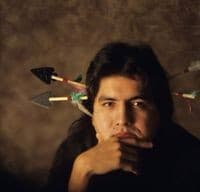
Sherman Alexie is a Native American author known for his contributions to contemporary literature. His notable works include "The Absolutely True Diary of a Part-Time Indian," which explores the life of a young Indian boy navigating between two worlds, and "Reservation Blues," a novel that intertwines music and Native American culture. Alexie's writing often addresses themes of identity, race, and the complexities of modern life on reservations.
Similar books
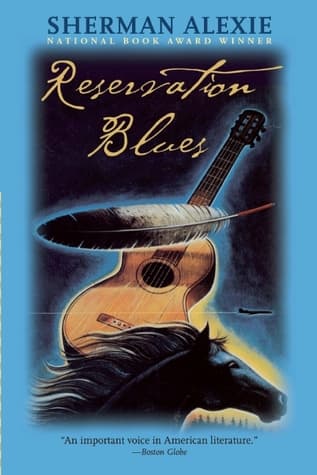
- Reservation Blues
Sherman Alexie
4.0 (13k) average on GoodreadsLiterary FictionExplores themes of Native American identity, music, and the reservation experience with Alexie's signature voice.
- The Round House
Louise Erdrich
3.9 (96k) average on GoodreadsLiterary FictionDeals with complex issues on a Native American reservation, including trauma and justice, with deep character insight.
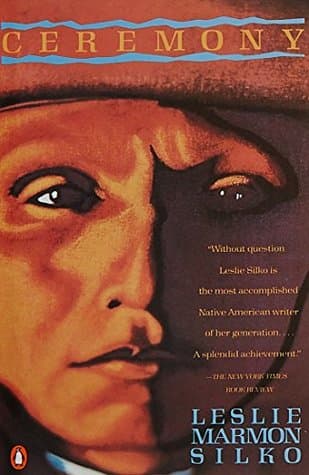
- Ceremony
Leslie Marmon Silko
3.8 (18k) average on GoodreadsLiterary FictionWhile both The Business of Fancydancing and Silko's Ceremony explore the impact of trauma (war, colonization) on Indigenous men and the search for healing and identity, Silko's novel offers a more traditional narrative structure rooted deeply in Laguna Pueblo cosmology and ritual as a path to recovery. Alexie's work is more postmodern, fragmented, and cynical, often questioning the efficacy of traditional paths in a contemporary, urbanized context, and focusing on the individual artist's struggle rather than a communal healing process. Silko emphasizes spiritual restoration through ceremony; Alexie foregrounds the messy, often commercialized, struggle of artistic expression.
- The Lone Ranger and Tonto Fistfight in Heaven
Sherman Alexie
4.1 (24k) average on GoodreadsLiterary FictionAlexie's own collection of short stories, The Lone Ranger and Tonto Fistfight in Heaven, shares thematic commonalities with Fancydancing, particularly in its portrayal of Spokane Reservation life, alcoholism, and the search for meaning. However, Lone Ranger is more accessible due to its focus on distinct short stories, each with its own narrative arc, even if characters reappear. Fancydancing is more experimental and introspective, less concerned with external plot and more with the internal monologue and artistic struggle of a single, central persona (Polatkin). Fancydancing delves deeper into the metafictional aspects of being an Indigenous writer, while Lone Ranger offers a broader, albeit still poignant, sociological snapshot.
- Nineteen Eighty-Four
George Orwell
4.2 (5.5M) average on GoodreadsFictionWinston Smith dreams of truth and rebellion in a world where Big Brother watches all, but he confronts the terrifying power of a regime that controls not just actions, but thoughts.
- The Frozen River
Ariel Lawhon
4.4 (600k) average on GoodreadsFictionIn 1789 Maine, a heroic midwife's diary helps her expose a murder and get justice in a town that wants to silence her.




Enjoyed the summary?
A summary gives you the shape of the book. The book itself has the detail, the examples and the voice.
Find The Business of Fancydancing on AmazonAs an Amazon Associate, BookBrief earns from qualifying purchases. How we're funded