
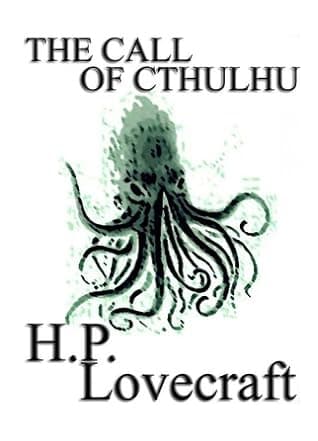
Synopsis
Covers the whole plot, including the ending.
- Difficulty
- Medium
- Pacing
- Moderate
- Mood
- Eerie, Existential Dread, Dark, Mysterious, Unsettling
- Read it if
- You enjoy classic cosmic horror, stories where humanity is insignificant, and narratives that evoke a sense of dread and existential terror.
- Skip it if
- You prefer clear-cut resolutions, optimistic themes, or stories where human protagonists can effectively combat monstrous threats.
The Call of Cthulhu Plot Summary
Covers the whole plot, including the ending.
The Legacy of Francis Wayland Thurston
The story begins with the narrator, Francis Wayland Thurston of Boston, describing the unsettling events around his great-uncle's death. George Gammell Angell, a professor at Brown University, died suddenly from a heart attack, seemingly caused by a discovery. Thurston inherits Angell's papers. Among these documents, Thurston finds a strange bas-relief sculpture of a monstrous entity. He also finds notes detailing a global outbreak of mass hysteria, bizarre dreams, and an ancient cult's activities. These papers are in two sections: 'The Horror on Clay' and 'The Madness from the Sea.' They start to reveal a cosmic conspiracy.
The Horror on Clay: Wilcox's Delirium
The first section, 'The Horror on Clay,' describes Professor Angell's meeting with Henry Anthony Wilcox, a young art student and sculptor from the Rhode Island School of Design. In March 1925, Wilcox began having vivid, disturbing dreams of cyclopean cities and colossal, tentacled creatures. He sculpted a grotesque bas-relief like the one Angell later had. Wilcox's dreams happened during global unrest, with artists and poets becoming more sensitive, and an increase in mental instability and suicides. Angell carefully wrote down Wilcox's accounts, noting when the dreams stopped, which matched the general end of the psychic disturbance.
The Madness from the Sea: Inspector Legrasse's Investigation
The second section, 'The Madness from the Sea,' moves to a police investigation by Inspector John R. Legrasse of New Orleans. In April 1925, Legrasse went to a meeting of the American Archaeological Society. He showed a horrifying find: a grotesque, non-human idol found during a raid on a cult in the Louisiana swamps. The cultists, described as degenerate half-breeds, performed unspeakable rites involving human sacrifice. They chanted the phrase 'Ph'nglui mglw'nafh Cthulhu R'lyeh wgah'nagl fhtagn' – meaning 'In his house at R'lyeh dead Cthulhu waits dreaming.' The idol looked like Wilcox's sculpture, connecting the student's dreams to the ancient, monstrous entity worshipped by the cult.
The Cult of Cthulhu and the Ancient Ones
Inspector Legrasse's investigation showed the cult was widespread, with followers from the Arctic to the Pacific islands. Their beliefs centered on ancient beings, the 'Great Old Ones,' who came from the stars and once ruled Earth before falling into a death-like slumber in the sunken city of R'lyeh. The cult believed these entities would awaken and reclaim their rule, bringing an era of cosmic madness. The cultists' chants and symbols, including the idol, were meant to hasten this awakening. Legrasse's account further connects Wilcox's dream-sculpture and the worship of Cthulhu, hinting at a deeper, hidden reality.
The Norwegian Sailor's Tale: Gustaf Johansen's Ordeal
Thurston then finds a newspaper clipping about a derelict ship, the 'Vigilant,' with one survivor: a Norwegian sailor named Gustaf Johansen. Johansen's incredible testimony is the third and most terrifying part of Thurston's investigation. Johansen's schooner, the 'Emma,' met pirates led by the 'Vigilant' in the Pacific. A violent fight left both ships damaged. Johansen's crew then found the newly risen, cyclopean city of R'lyeh, a place of non-Euclidean geometry and maddening architecture. There, they saw Cthulhu himself awaken, a colossal, tentacled horror from beyond space and time.
The Awakening in R'lyeh
Johansen tells the horrifying details of his crew's exploration of R'lyeh. The city's impossible angles and monstrous size drove some mad instantly. As they moved through the oppressive, slimy architecture, they opened a colossal, slime-covered door, releasing Cthulhu from his long slumber. The creature, a mountain of gelatinous green horror with vast bat-like wings and a head of squirming feelers, emerged. Most of Johansen's crew died from terror or were crushed by the entity. Johansen, to survive, rammed Cthulhu with the 'Emma,' temporarily stopping the creature and allowing him to escape.
Johansen's Escape and Silence
Johansen, the only survivor of the 'Emma,' steered the damaged ship away from R'lyeh and the re-submerging city. He was rescued but kept his experience secret, fearing ridicule. His official report was vague, but he wrote the true account in a private manuscript, which Thurston later finds. Johansen's story, with its impossible descriptions and sense of human insignificance, affects Thurston deeply. Johansen himself dies in mysterious circumstances, hit by a car in Oslo, leaving Thurston as the only one with the full truth.
Thurston's Growing Dread and Cosmic Revelation
As Thurston combines the accounts of Wilcox, Legrasse, and Johansen, a terrifying picture forms. He realizes Professor Angell's death was likely due to his accidental closeness to the cosmic truth. The dreams, the cult, the idol, and R'lyeh's rising were all connected parts of a single, horrifying reality: an ancient, alien entity, Cthulhu, lies dreaming under the Pacific, influencing humanity through psychic emanations. Cthulhu's brief partial awakening caused the global psychic disturbances and the cult's intensified activities. This suggests a future where humanity is a fleeting anomaly in a universe dominated by indifferent cosmic horrors.
The Unbearable Knowledge
Thurston ends his narrative with dread and despair. He understands that Cthulhu and the Great Old Ones make all human efforts and beliefs meaningless. The universe is not a benevolent or comprehensible place. It is a chaotic void with entities whose nature destroys human sanity. He fears that with this knowledge, his own life is in danger, either from cultists who want to silence him or from the psychological strain of the truth itself. The story ends with Thurston considering his own death and the certainty that Cthulhu will rise again, ending humanity's fragile existence.
The Call of Cthulhu Characters
Francis Wayland Thurston
Protagonist
The narrator who uncovers the horrifying truth of Cthulhu's existence.
Thurston is an educated, rational Bostonian, the grand-nephew of Professor George Gammell Angell. Initially skeptical, he methodically investigates his great-uncle's papers, slowly piecing together the disparate clues. His journey transforms him from an academic observer into a terrified witness of cosmic horror. He represents the human mind's struggle to comprehend the incomprehensible, ultimately succumbing to the dread of the truth. His sanity is progressively eroded by the horrifying revelations.
Relationships: George Gammell Angell (Great-uncle, whose papers instigate Thurston's investigation); Gustaf Johansen (Source of the most direct and terrifying account of Cthulhu)
Professor George Gammell Angell
Supporting
Thurston's great-uncle, whose research sets the narrative in motion.
Professor Angell was a respected scholar of Semitic languages at Brown University. His academic curiosity led him to collect and analyze the strange occurrences surrounding the Cthulhu cult and the psychic disturbance of 1925. He unknowingly compiled the fragmented evidence that Thurston later synthesizes. His sudden, mysterious death, attributed to a heart attack, is implied to be a result of his proximity to the cosmic truth, highlighting the danger of such knowledge.
Relationships: Francis Wayland Thurston (Great-nephew and inheritor of his research); Henry Anthony Wilcox (Student whose dreams and sculpture he documented); John R. Legrasse (Inspector whose findings he correlated)
Henry Anthony Wilcox
Supporting
An art student whose disturbing dreams and sculpture provide the first clue.
Wilcox is a young, impressionable art student from the Rhode Island School of Design, known for his eccentric and sensitive nature. He becomes a conduit for Cthulhu's psychic emanations during the global disturbance of 1925, experiencing vivid, horrifying dreams of R'lyeh and Cthulhu. His sculpture, a physical manifestation of these dreams, is the first concrete piece of evidence that links the abstract horror to a tangible form, initiating Professor Angell's investigation.
Relationships: George Gammell Angell (Professor who documented his dreams and sculpture)
Inspector John R. Legrasse
Supporting
A New Orleans police inspector who uncovers a gruesome Cthulhu cult.
Legrasse is a pragmatic and observant police inspector from New Orleans. His investigation into a series of disappearances and bizarre rituals in the Louisiana swamps leads him to a degenerate Cthulhu cult. He discovers the grotesque idol and uncovers the cult's chilling chants and beliefs, providing the link between the psychic disturbance and the ancient worship of Cthulhu. Despite his rational background, he is deeply disturbed by the horror he encounters.
Relationships: George Gammell Angell (Presented his findings to Angell's society)
Gustaf Johansen
Supporting
The Norwegian sailor and sole survivor who directly encountered Cthulhu and R'lyeh.
Johansen is the honest, steadfast first mate of the schooner 'Emma' and the only survivor of a harrowing encounter with Cthulhu and the risen city of R'lyeh. His detailed, though initially disbelieved, account forms the most direct and terrifying evidence of Cthulhu's physical existence. He represents the ordinary human confronted by the utterly alien and horrific. His subsequent mysterious death suggests that knowledge of Cthulhu is inherently fatal.
Relationships: Francis Wayland Thurston (His manuscript is a key source for Thurston's investigation)
Cthulhu
Antagonist
An ancient, cosmic entity worshipped by a global cult, whose awakening spells doom for humanity.
Cthulhu is a colossal, monstrous entity of alien origin, described as a 'mountain walked or shambled' with a head like an octopus, a body like a dragon, and vast bat-like wings. He is one of the Great Old Ones, currently slumbering in the sunken city of R'lyeh beneath the Pacific Ocean. His presence subtly influences sensitive minds, causing dreams and madness, and his brief, partial awakening in 1925 causes global psychic disturbances. He is not malevolent in a human sense, but rather utterly indifferent and incomprehensible, representing the ultimate cosmic horror.
Relationships: The Cult of Cthulhu (Worshippers who seek his awakening)
The Cult of Cthulhu
Antagonist
A global network of degenerate followers who worship Cthulhu and seek his return.
The cult is a widespread, ancient organization with members across the globe, including degenerate half-breeds in the Louisiana swamps and esoteric groups in the Arctic. They worship the Great Old Ones, particularly Cthulhu, and believe humanity's reign is temporary. Their rituals involve human sacrifice and the chanting of arcane phrases to hasten Cthulhu's return. They represent humanity's perverse attraction to forbidden knowledge and power, and their existence underscores the pervasive, insidious nature of the cosmic threat.
Relationships: Cthulhu (Their object of worship and desired master)
The Great Old Ones
Mentioned
Ancient, alien beings from the stars, of whom Cthulhu is one.
The Great Old Ones are a race of powerful, ancient entities from beyond Earth, who once ruled the planet before falling into a death-like slumber. They are described as beings whose forms and minds are utterly alien to human comprehension, existing outside normal dimensions and sanity. The cult of Cthulhu worships them, believing they will eventually return to reclaim Earth and usher in an age of cosmic madness. Their existence highlights humanity's utter insignificance in the vast, indifferent cosmos.
Relationships: Cthulhu (One of their number)
The Call of Cthulhu Themes
The Insignificance of Humanity
A main theme of 'The Call of Cthulhu' is humanity's insignificance when facing cosmic forces. The story shows that human civilization, knowledge, and morality are fragile. They shatter when ancient, powerful alien entities are revealed. Cthulhu's existence and eventual return are presented as an inevitable cosmic event, indifferent to human suffering. The story suggests that humanity's belief in its own importance is a delusion, and that the universe is a vast, uncaring void.
“The most merciful thing in the world, I think, is the inability of the human mind to correlate all its contents.”
The Fragility of Sanity
Lovecraft shows how meeting true cosmic horror can destroy the human mind. Characters like Wilcox have terrifying dreams that border on madness. Johansen's direct meeting with R'lyeh and Cthulhu leaves him traumatized and leads to his death. Thurston feels his sanity fraying as he puts the truth together. He recognizes that fully understanding Cthulhu's reality is unbearable. The story suggests that some truths are too terrible for the human mind to handle, leading to madness or death.
“We live on a placid island of ignorance in the midst of black seas of infinity, and it was not meant that we should voyage far.”
Forbidden Knowledge and Its Perils
The story is about seeking forbidden knowledge. Professor Angell's academic interest, Wilcox's artistic sensitivity, Legrasse's police investigation, and Johansen's accidental discovery all help piece together a truth that should stay hidden. Thurston's compilation of these clues leads him to a realization he wishes he could unlearn. The story warns against looking into mysteries that are beyond human understanding, as such knowledge brings only dread, despair, and doom.
“That cult would never die till the stars came right again, and the secret priests would take new novices and pass the old rites down from generation to generation by word of mouth alone.”
The Persistence of Ancient Evil
The cult of Cthulhu, with its ancient origins and global reach, shows persistent, underlying evil. Even when driven underground, the cult has kept its rituals and beliefs for thousands of years, waiting for the Great Old Ones to return. This suggests that cosmic threats are not isolated. They are eternal forces that just lie dormant, ready to return. The cult's presence shows that humanity is not alone and is always threatened by ancient, alien powers.
“Ph'nglui mglw'nafh Cthulhu R'lyeh wgah'nagl fhtagn. In his house at R'lyeh dead Cthulhu waits dreaming.”
Plot Devices & Literary Techniques
Epistolary Structure / Found Documents
A narrative composed of various fragmented documents and accounts.
The story is primarily told through a series of found documents: Professor Angell's inherited papers, including Wilcox's case notes, Legrasse's archaeological society report, and Johansen's private manuscript. This fragmented, piecemeal approach enhances the sense of mystery and realism, making the cosmic horror feel more like a terrible discovery than a fictional tale. It also allows Lovecraft to present different perspectives on the same overarching horror, gradually building the complete, terrifying picture for both Thurston and the reader.
Non-Euclidean Geometry
Architectural descriptions that defy conventional spatial understanding.
When describing the city of R'lyeh, Lovecraft uses the concept of 'non-Euclidean geometry.' This device is crucial for conveying the alienness and utter incomprehensibility of Cthulhu's domain. The city's angles and perspectives are described as 'wrong' and 'blasphemous,' disorienting the human mind and suggesting that the Great Old Ones exist outside the normal laws of physics known to humanity. It's a powerful tool for evoking madness and emphasizing the otherworldliness of the cosmic entities.
Psychic Contagion / Shared Dreams
The global spread of disturbing dreams and mental instability.
During the period of Cthulhu's partial awakening in 1925, sensitive individuals worldwide, like Wilcox, experience shared, disturbing dreams of cyclopean cities and monstrous entities. This 'psychic contagion' demonstrates Cthulhu's subtle but pervasive influence on human minds, even while he slumbers. It suggests a direct, non-physical connection between the ancient entity and humanity, making the horror more personal and immediate, and hinting at the vulnerability of the human psyche to cosmic forces.
The Unreliable Narrator (Implicit)
Thurston's growing mental instability casts doubt on his ultimate conclusions.
While Thurston presents his account as factual, his increasing dread and the explicit theme of sanity's fragility suggest he may be an implicitly unreliable narrator. His fear of going mad, and the possibility that the cosmic horror itself is driving him to paranoia, adds another layer of terror. The reader is left to wonder if the cosmic truth is truly as dire as Thurston believes, or if his mind has simply been broken by the unspeakable knowledge he has uncovered. This device deepens the psychological horror.
The Call of Cthulhu Quotes
“The most merciful thing in the world, I think, is the inability of the human mind to correlate all its contents.”
“We live on a placid island of ignorance in the midst of black seas of infinity, and it was not meant that we should voyage far.”
“That is not dead which can eternal lie, And with strange aeons even death may die.”
“I have looked upon all that the universe has to hold of horror, and even the skies of spring and the flowers of summer must ever afterward be poison to me.”
“The Thing cannot be described—there is no language for such abysms of shrieking and immemorial lunacy, such eldritch contradictions of all matter, force, and cosmic order.”
“Great Cthulhu is their cousin, yet can he spy them only dimly.”
“The geometry of the dream-place he saw was abnormal, non-Euclidean, and loathsomely redolent of spheres and dimensions apart from ours.”
“They worshipped, so they said, the Great Old Ones who lived ages before there were any men, and who came to the young world out of the sky.”
“The nightmare corpse-city of R'lyeh...was built in measureless eons behind history by the vast, loathsome shapes that seeped down from the dark stars.”
“In his house at R'lyeh dead Cthulhu waits dreaming.”
“The very sun of heaven seemed distorted when viewed through the polarising miasma welling out from this sea-soaked perversion.”
“What has risen may sink, and what has sunk may rise.”
“Loathsomeness waited and writhed in the earth and in the air.”
“The stars were right again, and what an age-old cult had failed to do by design, a band of innocent sailors had done by accident.”
Quiz
10 questions on the plot and the characters. Each answer comes with a short explanation.
Question 1
What is the name of the narrator's grand-uncle who first uncovers the Cthulhu cult?
- Henry Armitage
- Francis Wayland Thurston
- George Gammell Angell
- Johansen
Show answer
C. George Gammell Angell George Gammell Angell is the narrator's grand-uncle, a professor at Brown University, whose death prompts the narrator to investigate his papers, revealing the Cthulhu cult.
Question 2
What artifact does Inspector Legrasse show at the American Archaeological Society meeting?
- A stone tablet with hieroglyphs
- A bas-relief sculpture of Cthulhu
- A diary of a sailor
- A photograph of R'lyeh
Show answer
B. A bas-relief sculpture of Cthulhu Inspector Legrasse presents a bas-relief sculpture depicting Cthulhu, which he seized from a cult in Louisiana, matching one found by Angell, linking the global cult.
Question 3
Where is the sunken city of R'lyeh located according to the story?
- In the Arctic Ocean
- In the Pacific Ocean, south of 47° 9' S, 126° 43' W
- In the Atlantic Ocean near Bermuda
- In the Indian Ocean
Show answer
B. In the Pacific Ocean, south of 47° 9' S, 126° 43' W R'lyeh is described as being in the South Pacific at coordinates 47° 9' S, 126° 43' W, where the sailor Johansen's ship encounters it.
Question 4
What event causes Cthulhu to briefly awaken in the story?
- A volcanic eruption
- A solar eclipse
- An earthquake that raises R'lyeh from the ocean
- A ritual performed by the cult
Show answer
C. An earthquake that raises R'lyeh from the ocean An earthquake temporarily raises R'lyeh from the sea, allowing Cthulhu to emerge and attack the sailors before the city sinks again, trapping him.
Question 5
How does the sailor Johansen ultimately escape Cthulhu?
- By shooting Cthulhu with a harpoon
- By ramming his ship into Cthulhu
- By reciting an ancient incantation
- By hiding until Cthulhu returns to sleep
Show answer
B. By ramming his ship into Cthulhu Johansen steers his ship, the Alert, directly into Cthulhu, which temporarily disperses the entity, allowing escape as R'lyeh sinks back underwater.
Question 6
What is the primary theme illustrated by the narrator's increasing dread and the cultists' insanity?
- The triumph of human curiosity
- The fragility of the human mind against cosmic horrors
- The importance of scientific discovery
- The power of religious faith
Show answer
B. The fragility of the human mind against cosmic horrors The story emphasizes how human minds are vulnerable and can break when exposed to ancient, incomprehensible beings like Cthulhu, a core Lovecraftian theme.
Question 7
What happens to Johansen after his encounter with Cthulhu?
- He becomes a cult leader
- He writes a bestselling account
- He dies under mysterious circumstances in Oslo
- He joins the narrator's investigation
Show answer
C. He dies under mysterious circumstances in Oslo Johansen dies in Oslo under suspicious conditions, possibly killed by cultists, after writing a secret account of his experience that the narrator discovers.
Question 8
Which of these is NOT a characteristic of the Cthulhu cultists as described in the story?
- They are found globally among diverse peoples
- They practice human sacrifice
- They are all highly educated scholars
- They chant 'Ph'nglui mglw'nafh Cthulhu R'lyeh wgah'nagl fhtagn'
Show answer
C. They are all highly educated scholars Cultists include a mix of people, such as degenerates in Louisiana and various global groups, not exclusively scholars; the chant is a key ritual phrase.
Question 9
What does the narrator fear will happen as a result of his investigations?
- He will be arrested for murder
- Cthulhu will awaken permanently and destroy humanity
- He will lose his inheritance
- The cult will recruit him
Show answer
B. Cthulhu will awaken permanently and destroy humanity The narrator concludes that Cthulhu is merely dreaming and fears that if stars align correctly, he will awaken to wreak havoc, reflecting the story's apocalyptic tone.
Question 10
In what narrative structure is 'The Call of Cthulhu' primarily written?
- A linear first-person account
- A series of interconnected documents and testimonies
- A third-person omniscient narrative
- A collection of letters between characters
Show answer
B. A series of interconnected documents and testimonies The story uses a frame narrative where the narrator pieces together the plot from Angell's notes, newspaper clippings, Legrasse's report, and Johansen's diary, creating a documentary style.
The Call of Cthulhu FAQ
What is 'The Call of Cthulhu' about?
The story follows Francis Wayland Thurston as he investigates the mysterious death of his grand-uncle, Professor Angell, uncovering a global conspiracy involving a cult worshipping the ancient cosmic entity Cthulhu. Through documents and testimonies, Thurston learns of Cthulhu's slumber in the sunken city of R'lyeh and the terrifying effects its dreams have on sensitive human minds, culminating in a sailor's encounter with the awakened monster.
Why should I read 'The Call of Cthulhu'?
It's a foundational work of cosmic horror that established key elements of Lovecraft's Mythos, introducing the iconic monster Cthulhu and exploring themes of human insignificance against unknowable cosmic forces. The story's innovative structure—piecing together clues through documents—creates a mounting sense of dread and paranoia that has influenced countless horror writers.
What is the background/setting of 'The Call of Cthulhu'?
The story spans from 1907 to 1928, moving between Providence, New Orleans, the Arctic, and the Pacific Ocean. Key settings include Professor Angell's study in New England, the Louisiana swamps where Inspector Legrasse discovers a Cthulhu cult, and the coordinates 47°9′S 126°43′W where R'lyeh temporarily rises from the sea.
What are the most memorable quotes?
The opening line 'The most merciful thing in the world, I think, is the inability of the human mind to correlate all its contents' sets the story's philosophical tone. Cthulhu's famous description 'A monster of vaguely anthropoid outline, but with an octopus-like head' creates its iconic image, while 'Ph'nglui mglw'nafh Cthulhu R'lyeh wgah'nagl fhtagn' (In his house at R'lyeh, dead Cthulhu waits dreaming) embodies the cult's central chant.
What writing style does the author use?
Lovecraft employs a formal, academic prose style with elaborate descriptions and a detached narrative voice that contrasts with the horrific subject matter. The story uses an epistolary structure—presenting diaries, newspaper clippings, and police reports—to build credibility and create a sense of fragmented discovery that mirrors the protagonist's unraveling sanity.
What minor details add significant meaning?
The recurring date March 1st—when Professor Angell dies, when the newspaper reports mass hysteria, and when Thurston completes his investigation—suggests Cthulhu's cyclical influence. The bas-relief's inscription 'Cthulhu fhtagn' appears in multiple unrelated cultures worldwide, hinting at the entity's ancient, pervasive reach beyond human history.
What are some subtle foreshadowing moments?
Early references to 'cyclopean architecture' and 'non-Euclidean geometry' in Professor Angell's notes subtly prepare readers for R'lyeh's alien geometry. The sailor Gustaf Johansen's initial dismissal of his crew's madness as 'tropical fever' foreshadows the psychological toll of encountering Cthulhu, while newspaper reports of 'mass madness' globally hint at the entity's dreaming influence.
What unexpected character connections exist?
The story reveals that Professor Angell's student Henry Anthony Wilcox—who experienced Cthulhu-inspired dreams—is the grandson of the sculptor who created the bas-relief. Inspector Legrasse's cult raid in Louisiana connects to Angell's research through the identical statuette, showing how disparate individuals across continents and decades are linked by Cthulhu's influence.
What are unspoken character motivations?
Thurston's obsessive investigation stems not just from familial duty but from a subconscious desire to prove his grand-uncle wasn't insane, reflecting his own fear of madness. Inspector Legrasse pursues the cult not merely as police work but from a personal revulsion toward their blasphemous rituals, while the cultists' devotion masks a terrified attempt to appease a power they cannot comprehend.
What psychological complexities do characters exhibit?
Professor Angell develops a paranoid fixation on documenting Cthulhu's influence, sacrificing his health to catalog nightmares—a scholarly obsession that becomes self-destructive. Henry Wilcox oscillates between artistic inspiration and feverish delirium when dreaming of R'lyeh, showing how creativity and madness intertwine when touched by cosmic forces. Thurston's clinical detachment while compiling horrific evidence gradually cracks, revealing his suppressed terror.
What are the major emotional turning points?
Thurston's realization that his grand-uncle's 'neurotic condition' was actually cosmic horror marks his shift from skeptic to believer. Inspector Legrasse's disgust during the cult interrogation reveals the human revulsion toward Cthulhu's alien nature. The climax occurs when Johansen's narrative describes seeing Cthulhu awaken—transitioning from theoretical horror to immediate, visceral terror that shatters the sailor's sanity.
How do relationship dynamics evolve?
Thurston's relationship with his deceased grand-uncle transforms from distant respect to horrified empathy as he understands Angell's research. The cultists' relationship with Cthulhu evolves from worshipful secrecy to frenzied activity when R'lyeh surfaces. Johansen's bond with his crew disintegrates into mutual paranoia and violence after encountering the entity, showing how cosmic horror destroys human connections.
Which parts remain ambiguous or open-ended?
Whether Cthulhu truly returned to sleep or remains active is unclear—Johansen's account ends abruptly, and Thurston fears the monster may rise again. The exact nature of Cthulhu's 'dreams' and how they influence human minds is never fully explained, maintaining the entity's mystery. The story's conclusion leaves Thurston's fate uncertain as he awaits 'the end,' suggesting the horror continues beyond the narrative.
What are controversial scenes or decisions?
Lovecraft's depiction of the 'degenerate' swamp cult—with racist descriptions of mixed-race participants—reflects his problematic views and remains controversial. Johansen's decision to ram the Alert into Cthulhu is debated: was it brave defiance or suicidal folly? Some readers question Thurston's choice to publish his findings despite fearing it might attract the cult's attention or spread madness.
'The Call of Cthulhu' ending explained: how it ends & what it means
Thurston completes his investigation, realizing Cthulhu briefly awakened before R'lyeh sank again, but fears the next rising. He concludes humanity lives in 'a placid island of ignorance' soon to be overwhelmed by 'black seas of infinity.' The ending suggests cosmic horror is inevitable—Cthulhu's temporary defeat offers no permanent safety, only a postponement of humanity's confrontation with meaningless cosmic forces.
What is the significance of the story's fragmented structure?
The pieced-together narrative—combining Angell's notes, Legrasse's report, and Johansen's diary—mirrors how human minds struggle to comprehend cosmic horror through incomplete evidence. This structure creates verisimilitude while emphasizing how truth about Cthulhu is always mediated through unreliable or traumatized sources, reflecting Lovecraft's theme that full understanding would destroy sanity.
About the author
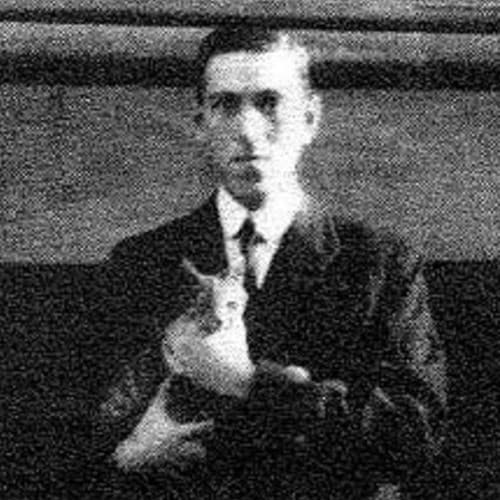
H.P. Lovecraft was an American writer known for his contributions to the genre of weird fiction and horror. His notable works include "The Call of Cthulhu," "The Case of Charles Dexter Ward," "The Shadow Over Innsmouth," "The Shunned House," "The Nameless City," and "Beyond The Wall Of Sleep," which explore themes of cosmic horror and the unknown. Lovecraft's influence on modern horror literature is significant, with many of his concepts and creatures becoming iconic in the genre.
Similar books
- The Shadow Over Innsmouth
H.P. Lovecraft
4.1 (12k) average on GoodreadsFantasyExplores themes of ancient, non-human entities and the degradation of humanity through contact with them.
- Bird Box
Josh Malerman
4.0 (143k) average on GoodreadsThrillerDeals with an unseen, sanity-shattering entity that drives those who behold it to madness.
- The Haunting of Hill House
Shirley Jackson
3.8 (162k) average on GoodreadsThrillerWhile both are foundational horror texts, Jackson's The Haunting of Hill House focuses on psychological horror and the internal disintegration of its characters, using the supernatural elements to amplify existing mental vulnerabilities. Lovecraft's horror is external and cosmic, stemming from the universe's indifference, whereas Jackson's is deeply personal and rooted in the characters' psyches. Hill House excels in character depth and subtlety, a contrast to Lovecraft's often two-dimensional protagonists.
- Harry Potter and the Sorcerer's Stone
J.K. Rowling
4.5 (7M) average on GoodreadsFantasyRescued from a miserable life under the stairs, an orphaned boy discovers he's a wizard destined for a magical school, where he uncovers a dangerous secret tied to the dark wizard who murdered his parents.
- The Hunger Games
Suzanne Collins
4.3 (6.4M) average on GoodreadsFantasyIn a future where children fight to the death on live television, Katniss Everdeen volunteers for the arena, turning a death sentence into a fight for survival and a spark of rebellion.
- 1984
George Orwell
4.2 (3.1M) average on GoodreadsPoliticsIn a future where surveillance and thought control are absolute, a man's search for truth clashes with the Party, showing that hope can be a form of rebellion.




Enjoyed the summary?
A summary gives you the shape of the book. The book itself has the detail, the examples and the voice.
Find The Call of Cthulhu on AmazonAs an Amazon Associate, BookBrief earns from qualifying purchases. How we're funded