
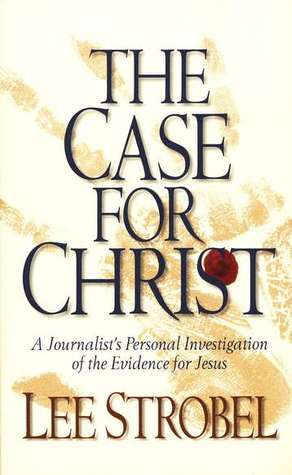
Core Idea
- Difficulty
- Medium
- Read it if
- You are a skeptic or seeker curious about the historical and evidential basis for Christianity, or a Christian looking to deepen your understanding and ability to articulate your faith.
- Skip it if
- You are firmly convinced against the existence or divinity of Christ and are not open to considering counter-arguments, or you prefer purely theological or devotional works without an apologetic focus.
Key Takeaways from The Case for Christ
Eyewitness Reliability: More Than Meets the Eye
Ancient historical accounts, especially those corroborated by multiple, independent sources, hold significant weight.
Strobel, through interviews with scholars like Dr. Craig Blomberg, examines the New Testament documents as historical evidence. He looks at the criteria historians use to assess ancient texts, including the number of manuscripts, their age compared to the original events, and the internal consistency of the accounts. The book argues that the volume of early New Testament manuscripts surpasses that of other ancient texts whose historicity is rarely questioned, such as those by Plato or Caesar. Also, the short time between the events and the earliest writings suggests that the original eyewitnesses were still alive, able to correct or verify the narratives. This approach presents the Gospels as potentially reliable historical documents, subject to the same scrutiny as any other ancient historical record.
“The New Testament documents are not just random stories; they bear the marks of genuine eyewitness testimony, much like what you'd find in a court of law.”
In the book: Dr. Craig Blomberg's discussion on the criteria for historical reliability, comparing the New Testament manuscript evidence (over 5,800 Greek manuscripts) to other ancient texts like Homer's Iliad (643 manuscripts) or Caesar's Gallic Wars (10 manuscripts).
Try this: When evaluating historical claims, especially those from ancient times, consider the quantity and quality of source documents, the time gap between events and their recording, and the potential for corroborating evidence from independent sources. Don't dismiss ancient texts simply because of their age; apply consistent historical methodology.
Related ideas: historical-reliability, eyewitness-testimony, textual-criticism
The Corroborating Evidence of Non-Biblical Sources
External historical records, though sparse, confirm key aspects of Jesus' existence and early Christian beliefs.
Strobel investigates non-Christian sources to see if they support the New Testament's claims about Jesus. These sources do not offer detailed biographies, but they are important because they come from outside the Christian tradition, often from those hostile to it. Historians like Tacitus, Pliny the Younger, and Josephus, despite their different perspectives, refer to Christ, Christians, their founder, and their beliefs. Tacitus, for instance, mentions 'Christus' as the founder of the Christians, executed by Pontius Pilate during Tiberius's reign. Pliny describes early Christian worship practices. Josephus, a Jewish historian, makes at least two references to Jesus, though one is debated. These references, however brief, show that Jesus was not a mythical figure invented by Christians, but a historical person whose followers quickly became a noticeable presence in the Roman Empire.
“Even hostile sources from antiquity inadvertently confirm the existence of Jesus and the early Christian movement, providing a valuable external check.”
In the book: References from Roman historians Tacitus (Annals 15.44) and Pliny the Younger (Letters 10.96), and the Jewish historian Josephus (Antiquities of the Jews 18.3.3 and 20.9.1).
Try this: When evaluating historical figures or movements, always seek out external, independent verification. Even brief mentions from non-aligned or even hostile sources can significantly strengthen the case for historicity, as they are less likely to be biased in favor of the subject.
Related ideas: external-corroboration, josephus, tacitus
Archaeology's Silent Affirmation
Archaeological discoveries, while not proving theological claims, consistently align with and illuminate biblical narratives.
Strobel examines archaeology's role in validating the New Testament's historical context, consulting with Dr. John McRay. Archaeology cannot 'prove' miracles or theological doctrines, but it often confirms the existence of cities, customs, rulers, and geographical details mentioned in the biblical texts. This consistency adds credibility to the overall historical framework. For instance, the discovery of the Pilate Inscription confirmed the existence of Pontius Pilate, a figure central to the crucifixion narrative, who was once doubted by some. The Pool of Bethesda, described in John's Gospel, was also uncovered, matching the description of having five porticoes. Such findings show that the biblical authors were familiar with the places and times they described, suggesting a basis in reality rather than pure fiction. This consistent alignment builds a case for the accuracy of the biblical world.
“Archaeology doesn't prove the Bible is the Word of God, but time and again, it has provided evidence that supports the historical reliability of its accounts.”
In the book: The Pilate Inscription, confirming Pontius Pilate's governorship; the discovery of the Pool of Bethesda with its five porticoes, aligning with John 5:2; and the consistent identification of cities and geographical features.
Try this: When encountering ancient texts, consider how archaeological findings can provide context and support for the historical accuracy of descriptions, even if they don't directly prove every claim. Look for corroborating evidence from the ground that aligns with textual details.
Related ideas: archaeology, historical-context, pilate-inscription
Scientific Scrutiny of Miracles: Beyond Naturalism
The possibility of miracles requires an openness to something beyond purely naturalistic explanations.
Strobel addresses miracles, especially the resurrection, by interviewing Dr. William Lane Craig, a philosopher and theologian. The argument is that a purely naturalistic worldview, which assumes no supernatural intervention, will always rule out miracles by definition. However, if one considers the possibility of a God who created the universe and can intervene in it, then miracles are logically plausible. The discussion then shifts from the possibility of miracles to the evidence for specific miracles, especially Jesus' resurrection. Craig argues that the historical data about the resurrection — the empty tomb, the post-mortem appearances, and the origin of the disciples' belief — is best explained by a supernatural event rather than naturalistic theories like hallucination or conspiracy. This asks the reader to consider their assumptions about reality before dismissing miraculous claims.
“If God exists, then miracles are not only possible but entirely consistent with His nature. The real question is not 'Can miracles happen?' but 'Did they happen?'”
In the book: Dr. William Lane Craig's philosophical argument for the possibility of miracles given a theistic worldview, and his subsequent historical defense of the resurrection based on the empty tomb, appearances, and the transformation of the disciples.
Try this: Before dismissing phenomena as 'impossible,' examine the underlying philosophical assumptions. Consider whether a purely naturalistic framework is the only valid lens, or if other worldviews allow for different possibilities. Apply this critical self-reflection to all extraordinary claims.
Related ideas: miracles, naturalism, theism, resurrection
The Psychological Case for the Resurrection
The radical transformation of the disciples, from fearful to fearless martyrs, is a powerful indicator of a profound, life-altering event.
Strobel consults with Dr. Gary Habermas, an expert on the resurrection, to explore the psychological impact on the disciples. The argument focuses on the dramatic transformation of Jesus' followers. After Jesus' crucifixion, the disciples were scattered, fearful, and disappointed. Yet, shortly after, they became bold preachers, willing to endure persecution and even martyrdom for their belief in a resurrected Christ. This change, from despair to conviction, is hard to explain by naturalistic means such as mass hallucination or a deliberate conspiracy. If they had stolen the body, as some theories suggest, why would they willingly suffer and die for a known deception? The psychological evidence points to an event so impactful that it completely reoriented their lives and beliefs, making the resurrection the most plausible explanation for their change.
“It's one thing for people to die for what they believe is true; it's another thing entirely to die for what they know is a lie.”
In the book: The consistent historical record of the apostles' willingness to suffer and die for their belief in the resurrected Christ, contrasting sharply with their fear and scattering after the crucifixion. This is seen as strong evidence against 'stolen body' or 'hallucination' theories.
Try this: When evaluating the credibility of a historical event, consider the motivations and subsequent actions of the key players. A radical and persistent change in behavior, especially in the face of extreme adversity, can be a powerful indicator of a genuinely transformative experience.
Related ideas: resurrection-evidence, apostles, martyrdom, psychological-impact
The Medical Perspective on the Crucifixion and Resurrection
The brutal reality of crucifixion and the physiological impossibility of surviving it bolster the resurrection claim.
Strobel interviews Dr. Alexander Metherell, a medical doctor, to understand the physiological aspects of crucifixion and death. Dr. Metherell details the torture Jesus endured, from the scourging that stripped away flesh to the crucifixion itself, which caused pain, suffocation, and eventual cardiac arrest. The Roman soldiers, experts in execution, would have ensured Jesus was dead, especially by piercing his side with a spear, from which 'blood and water' flowed — a detail Metherell explains as consistent with fluid separation in the pericardial sac and pleural cavity after death. This medical analysis refutes the 'swoon theory,' which suggests Jesus merely fainted on the cross and later revived. The severity of the injuries, combined with the professional assessment of his death by Roman soldiers, makes survival medically impossible. This medical certainty of death strengthens the case for a genuine resurrection, as a resuscitation would be medically unprecedented.
“From a purely medical standpoint, it is virtually impossible to argue that Jesus merely 'swooned' or survived the crucifixion. The evidence points to death.”
In the book: Dr. Alexander Metherell's detailed medical explanation of the scourging, crucifixion, and spear wound (John 19:34), confirming the physiological impossibility of survival and the medical consistency of the 'blood and water' observation with actual death.
Try this: When evaluating historical accounts of death or injury, consider consulting medical expertise to understand the physiological realities. This can help rule out or support various theories by grounding them in scientific fact, especially when extraordinary claims are made.
Related ideas: crucifixion, swoon-theory, medical-evidence, resurrection
The Problem of Explaining Away the Empty Tomb
No naturalistic theory adequately accounts for the empty tomb, a historical fact widely accepted even by early opponents of Christianity.
Strobel, through his interviews, highlights the empty tomb as evidence for the resurrection. Christians claimed it was empty, and the earliest Jewish and Roman opponents of Christianity also implicitly acknowledged it by offering alternative explanations, such as the disciples stealing the body. This suggests the empty tomb was a recognized fact in Jerusalem shortly after the crucifixion. If the tomb still contained Jesus' body, the authorities could have easily produced it to stop the Christian movement. Their failure to do so, and their need to create a counter-narrative, implies the tomb was empty. Strobel disproves alternative theories (stolen body, wrong tomb, hallucination, etc.) by showing their inconsistencies and lack of historical support, leaving the resurrection as the most coherent explanation for this historical fact.
“The empty tomb is not just a Christian legend; it's a historical problem that even Jesus' enemies had to acknowledge and try to explain away.”
In the book: The early Jewish polemic (Matthew 28:11-15) that the disciples stole the body, which implicitly acknowledges the empty tomb. The inability of authorities to produce a body to stop the spread of Christianity.
Try this: When investigating historical events, pay close attention to the explanations offered by both proponents and opponents. The very existence of counter-arguments, especially those that acknowledge a shared factual premise (like an empty tomb), can be powerful indirect evidence for that premise.
Related ideas: empty-tomb, resurrection-theories, historical-fact
The Cumulative Case: A Web of Evidence
The strength of the resurrection claim lies not in a single piece of evidence, but in the interconnectedness of multiple, mutually reinforcing lines of inquiry.
Strobel's journalistic approach leads to the idea of a 'cumulative case' for Christ's resurrection. He argues that while individual pieces of evidence might be debated, their combined weight creates a compelling argument. This includes the historical reliability of the New Testament, external support from non-Christian sources, archaeological consistency, the medical impossibility of survival, the empty tomb, and the transformation of the disciples. Each line of evidence, strong on its own, becomes more powerful when viewed as part of a larger, coherent narrative. The book does not claim to offer absolute scientific proof, but aims to show that, from a journalistic and historical perspective, the evidence for the resurrection is strong and warrants belief, asking skeptics to find a more plausible alternative explanation for all the observed data points.
“No single piece of evidence proves the resurrection beyond all doubt, but when you weave together the eyewitness testimony, the circumstantial evidence, the historical corroboration, and the psychological impact, it creates an incredibly strong case.”
In the book: The entire structure of the book, which systematically builds upon the evidence from eyewitness testimony, external sources, archaeology, medical science, philosophy, and psychology, demonstrating how each category reinforces the others to form a comprehensive argument.
Try this: When evaluating complex claims, especially historical ones, avoid seeking a single 'smoking gun.' Instead, look for a convergence of evidence from diverse fields. Consider how different data points interlock and mutually support a central hypothesis, building a stronger, more resilient argument.
Related ideas: cumulative-case, evidence-synthesis, historical-argument
The Nature of Belief: Beyond 'Blind Faith'
Christian faith, as presented, is not a leap into the dark but a step taken on the basis of reasoned evidence and historical inquiry.
Strobel's personal journey, from atheist to Christian, shows that belief in Christ does not require intellectual compromise. He presents it as a rational conclusion drawn from an honest assessment of historical and scientific evidence. His initial skepticism as an investigative journalist led him to test the claims of Christianity, expecting to disprove them. However, the evidence he uncovered, across multiple disciplines, led him to a different conclusion. This challenges the idea that faith is irrational or requires ignoring facts. Instead, Strobel argues that for him, faith became the most reasonable response to the historical case for Jesus' life, death, and resurrection. It is a call to intellectual honesty, encouraging readers to engage with the evidence rather than dismiss it.
“I came to faith not by abandoning reason, but by following the evidence where it led, no matter how unsettling the implications.”
In the book: Strobel's own conversion story, detailed throughout the book, as he moves from an atheistic Chicago Tribune journalist to a believer based on the evidence he meticulously gathered and analyzed.
Try this: Approach deeply held beliefs, both your own and others', with intellectual curiosity and a willingness to follow evidence, even if it challenges your preconceptions. Recognize that 'faith' can sometimes be a reasoned response to compelling evidence, not merely an unthinking acceptance.
Related ideas: faith-and-reason, skepticism, intellectual-honesty, conversion
The Case for Christ Quotes
“I was determined to find out if there was any credible evidence that Jesus of Nazareth really is the Son of God.”
“The resurrection is the supreme vindication of Jesus' divine identity.”
“If Jesus was not raised from the dead, Christianity is a fraud.”
“The New Testament documents are the most reliable ancient texts we have.”
“Eyewitness testimony is the gold standard in any court of law, and the Gospels pass that test.”
“Jesus' crucifixion is one of the most well-attested facts of ancient history.”
“The transformation of the disciples from cowards to courageous martyrs is powerful evidence.”
“Science and faith are not enemies; they answer different questions.”
“The universe had a beginning, and that implies a Beginner.”
“Miracles are not violations of natural law but acts of God within creation.”
“The Old Testament contains hundreds of prophecies that point to Jesus.”
“Doubt is not the opposite of faith; unbelief is.”
“The evidence is compelling enough to require a verdict.”
Quiz
10 questions on the main ideas. Each answer comes with a short explanation.
Question 1
What was Lee Strobel's professional background before writing 'The Case for Christ'?
- A theology professor
- A pastor
- A reporter for the Chicago Tribune
- A historian specializing in ancient Rome
Show answer
C. A reporter for the Chicago Tribune Strobel uses his experience as an investigative journalist for the Chicago Tribune to frame the book as a journalistic investigation into the evidence for Christ.
Question 2
According to Strobel's investigation, which field does NOT provide evidence discussed in the book?
- Science
- Philosophy
- History
- Economics
Show answer
D. Economics Strobel interviews experts from science, philosophy, and history to build his case, but economics is not a primary field of evidence discussed.
Question 3
What is the central narrative device Strobel uses to structure 'The Case for Christ'?
- A fictional story about a modern-day disciple
- A personal memoir of his conversion
- An investigative journalist pursuing leads and interviewing experts
- A collection of ancient texts and commentaries
Show answer
C. An investigative journalist pursuing leads and interviewing experts The book is framed as Strobel's journalistic investigation, where he interviews experts to examine evidence for Christ, mirroring his real-life background.
Question 4
Which of the following best describes Strobel's initial stance toward Christianity before his investigation?
- A devout believer seeking deeper understanding
- A skeptical atheist or agnostic
- A neutral observer with no prior opinion
- A critic of organized religion but open to spirituality
Show answer
B. A skeptical atheist or agnostic Strobel presents himself as a skeptical journalist, initially an atheist or agnostic, who investigates the evidence with a critical eye.
Question 5
In the book, what role do expert interviews play in Strobel's argument?
- They provide emotional anecdotes to persuade readers
- They offer scholarly evidence from various fields to build a cumulative case
- They serve as fictional characters in a dramatized story
- They critique alternative religious views without evidence
Show answer
B. They offer scholarly evidence from various fields to build a cumulative case Strobel interviews experts in science, philosophy, and history to present evidence-based arguments, aiming to build a logical and cumulative case for Christ.
Question 6
What is a key practical application suggested by Strobel's investigation for readers?
- To ignore historical evidence and rely solely on faith
- To critically examine evidence for Christianity rather than accepting it blindly
- To convert to Christianity without question
- To reject scientific findings that conflict with religious beliefs
Show answer
B. To critically examine evidence for Christianity rather than accepting it blindly Strobel encourages readers to engage in their own investigation, using evidence and reason to evaluate claims about Christ, reflecting his journalistic approach.
Question 7
How does Strobel address potential objections to the evidence for Christ in the book?
- By dismissing them as irrelevant without discussion
- By presenting counterarguments from experts and analyzing them critically
- By avoiding controversial topics entirely
- By relying on personal anecdotes to overcome doubts
Show answer
B. By presenting counterarguments from experts and analyzing them critically As part of his investigative approach, Strobel includes discussions of counterarguments and expert responses to strengthen his case and address skepticism.
Question 8
Which of these is a core theme explored in 'The Case for Christ'?
- The conflict between science and religion as irreconcilable
- The importance of evidence and reason in supporting faith claims
- The superiority of Christianity over all other religions without evidence
- The need to abandon historical methods in religious studies
Show answer
B. The importance of evidence and reason in supporting faith claims The book emphasizes using evidence from fields like history and science to rationally support Christian beliefs, rather than relying on blind faith.
Question 9
In Strobel's framework, what is the intended outcome of presenting evidence from multiple disciplines?
- To prove Christianity definitively beyond any doubt
- To create a cumulative case that makes belief in Christ reasonable
- To convert readers without allowing for personal reflection
- To replace faith with purely scientific understanding
Show answer
B. To create a cumulative case that makes belief in Christ reasonable Strobel aims to build a persuasive, evidence-based argument that collectively supports the rationality of believing in Christ, not to provide absolute proof.
Question 10
What distinguishes Strobel's approach in 'The Case for Christ' from traditional apologetics?
- It avoids using historical evidence entirely
- It frames the investigation through a journalistic lens with expert interviews
- It relies solely on philosophical arguments without real-world applications
- It presents evidence only from a single academic field
Show answer
B. It frames the investigation through a journalistic lens with expert interviews Strobel's unique contribution is using his background as an investigative journalist to structure the book as a series of interviews and leads, making it accessible and engaging.
The Case for Christ FAQ
What is 'The Case for Christ' about?
'The Case for Christ' is a non-fiction book by Lee Strobel that investigates the historical and scientific evidence for Jesus Christ. Using his background as an investigative journalist, Strobel interviews experts in fields like history, philosophy, and science to examine the claims of Christianity.
Does 'The Case for Christ' provide scientific evidence for Jesus?
Yes, the book explores scientific and historical evidence, including discussions on medical aspects of crucifixion, archaeological findings, and manuscript reliability. Strobel interviews experts to assess whether scientific inquiry supports the biblical accounts of Jesus.
How is 'The Case for Christ' different from other apologetics books?
Unlike many theological works, it uses a journalistic, investigative approach, framing the inquiry as a reporter's pursuit of truth. This makes it accessible to skeptics and general readers, blending personal narrative with expert interviews for a compelling case.
What is the 'investigative journalist' angle in the book?
Strobel leverages his experience as a Chicago Tribune reporter to structure the book like a news investigation, interviewing 'witnesses' (experts) and examining 'evidence' from various disciplines. This approach aims to build a logical, fact-based case for readers.
Does 'The Case for Christ' work for skeptics?
Yes, it's designed to appeal to skeptics by using a secular, evidence-based methodology. Strobel, a former atheist, approaches the topic with journalistic skepticism, making it a resource for those questioning the historical validity of Christianity.
What historical evidence does the book cover?
It covers evidence such as the reliability of the New Testament manuscripts, extra-biblical references to Jesus, and the historical context of crucifixion and resurrection accounts. Strobel interviews historians to evaluate these points critically.
How different is 'The Case for Christ' from atheist critiques?
Unlike atheist critiques that often dismiss religious claims, this book proactively builds a case using expert testimony and logical arguments. It focuses on affirmative evidence rather than debunking opposing views, offering a structured defense of Christianity.
What is the main conclusion of 'The Case for Christ'?
The book concludes that the evidence from history, science, and philosophy strongly supports the existence and divinity of Jesus Christ. Strobel argues that a fair examination leads to the validity of Christian beliefs, based on his investigative findings.
Does the book address philosophical arguments for God?
Yes, it includes philosophical discussions, such as arguments for God's existence and the problem of evil, through interviews with philosophers. These sections aim to show that faith in Christ is intellectually reasonable.
Is 'The Case for Christ' suitable for academic study?
While written for a general audience, it references academic sources and expert interviews, making it a useful introductory resource for students or groups exploring Christian apologetics. It simplifies complex topics without oversimplifying evidence.
About the author
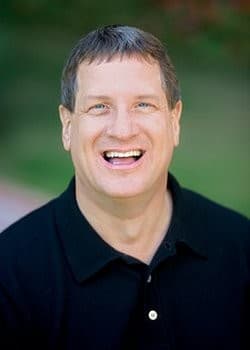
Lee Strobel is an American author and journalist known for his work in Christian apologetics. He is best known for "The Case for Christ," which explores the evidence for Jesus' life and resurrection. Strobel has written several other non-fiction books that address various aspects of faith and belief.
Similar books
- The Diary of a Young Girl
Anne Frank
4.2 (2.7M) average on GoodreadsBiographyDuring the Nazi occupation, a teenage girl's diary, written from a secret annex, shares observations on humanity, hope, and the wait for freedom.
- Night
Elie Wiesel
4.3 (970k) average on GoodreadsBiographyIn the darkness of Auschwitz and Buchenwald, a teenage Elie Wiesel faces the extermination of his family, the loss of his faith, and the lasting scars of humanity's deepest cruelty.
- Steve Jobs
Walter Isaacson
4.1 (957k) average on GoodreadsBusinessSteve Jobs was a visionary who fused creativity and technology to revolutionize six industries and shape our digital world.
- Unbroken: A World War II Story of Survival, Resilience and Redemption
Laura Hillenbrand
4.4 (767k) average on GoodreadsBiographyLouis Zamperini's incredible World War II odyssey transforms him from a rebellious youth and Olympic runner into a survivor of a plane crash, shark-infested waters, and brutal Japanese POW camps, only to find redemption through forgiveness.
- The Immortal Life of Henrietta Lacks
Rebecca Skloot
4.1 (587k) average on GoodreadsBiographyA poor Southern tobacco farmer's unwitting contribution of 'immortal' cells starts a journey through scientific breakthroughs, medical ethics, and her family's decades-long fight for recognition and understanding.
- Angela's Ashes
Frank McCourt
4.1 (540k) average on GoodreadsBiographyIn Depression-era Limerick, young Frank McCourt navigates an impoverished Irish Catholic childhood, sustained by his father's captivating stories and his own spirit, turning hardship into a tale of resilience, humor, and ultimate forgiveness.






Enjoyed the summary?
A summary gives you the shape of the book. The book itself has the detail, the examples and the voice.
Find The Case for Christ on AmazonAs an Amazon Associate, BookBrief earns from qualifying purchases. How we're funded