
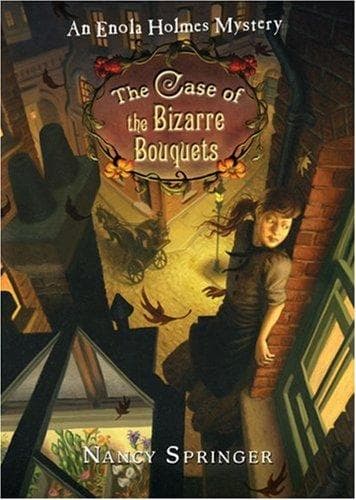
Synopsis
Covers the whole plot, including the ending.
- Difficulty
- Medium
- Read it if
- you enjoy clever mysteries, historical fiction with a strong female protagonist, and stories that involve codes and ciphers. Fans of Sherlock Holmes who want a fresh perspective through his younger sister's eyes will also find this engaging.
- Skip it if
- you dislike young adult mysteries or prefer more intense, adult-oriented detective stories. If you're not keen on Victorian-era settings or sibling rivalry as a plot element, this might not be for you.
The Case of the Bizarre Bouquets Plot Summary
Covers the whole plot, including the ending.
A Floral Cryptogram
Enola Holmes, now established in her own discreet lodgings under an assumed identity, finds her independent life interrupted by a peculiar delivery: a bouquet of flowers, each bloom seemingly chosen for a specific, unsettling reason. The arrangement is not merely decorative but a coded message, hinting at distress and a hidden plea. Recognizing the unique language of flowers, a skill cultivated from her mother's eccentric teachings, Enola immediately suspects foul play and a connection to a missing person, setting her on a new investigation that will test her burgeoning detective skills.
The Disappearance of Lady Cecily Alistair
The coded bouquet leads Enola to the disappearance of Lady Cecily Alistair, a young woman from a prominent but financially strained family, who was on the verge of an arranged marriage. Lady Cecily, known for her artistic inclinations and independent spirit, was last seen leaving her family estate under mysterious circumstances. Her family, particularly her stern father, Lord Alistair, is reluctant to involve the police, fearing scandal, which immediately raises Enola's suspicions about hidden motives and suppressed information regarding the young lady's vanishing act.
Mycroft's Interference and Sherlock's Shadow
Enola's investigation is complicated by the presence of her brothers. Mycroft Holmes, ever concerned with her societal propriety and determined to send her to finishing school, monitors her activities, while Sherlock Holmes, though less directly involved, casts a long shadow with his reputation. Enola must constantly evade their watchful eyes and the societal constraints they represent, using her wit and disguises to pursue her leads without attracting their direct intervention, all while proving her capabilities as a detective in her own right.
The Language of Flowers Deciphered
As Enola delves deeper, she meticulously deciphers the various bouquets and floral arrangements she encounters, each one a piece of a larger puzzle. She discovers that Lady Cecily herself was adept at the Victorian language of flowers, using it to communicate her true feelings and circumstances in a world where women's voices were often silenced. These floral clues lead Enola to various locations and individuals connected to Lady Cecily's life, revealing a secret romance and a desperate plan for escape.
A Secret Rendezvous and a Hidden Lover
Following the floral breadcrumbs, Enola uncovers that Lady Cecily was secretly involved with a young gentleman named Mr. Tarleton, an artist of modest means, making him an unsuitable match in the eyes of her family. Their clandestine meetings and shared passion for art were their only solace. Enola realizes that the disappearance is not an abduction but a planned elopement, orchestrated through floral messages, though something has clearly gone awry, leaving Lady Cecily's fate uncertain and Mr. Tarleton in distress.
The Obstacle of Lord Alistair's Debt
Enola discovers that Lord Alistair, Lady Cecily's father, is deeply in debt, making Lady Cecily's arranged marriage to the wealthy Lord Tewksbury of the Basilwether estate not just a matter of social standing but a desperate financial necessity for the family. This revelation explains the family's fervent desire to avoid scandal and their reluctance to involve the police, as any public disgrace would jeopardize the marriage and their financial salvation, adding another layer of complexity to Lady Cecily's motivations.
The Basilwether Connection
Enola's investigation eventually leads her to the Basilwether estate, the very place where she had previously crossed paths with Lord Tewksbury. It becomes clear that while Tewksbury was Lady Cecily's intended, he was not her secret lover. Instead, he becomes an unexpected ally. Tewksbury, having grown fond of Enola and possessing his own independent spirit, offers assistance, providing crucial insights into the Alistair family's affairs and helping Enola navigate the intricate social circles of the aristocracy.
The Hidden Sanctuary
The final floral clue directs Enola to a secluded, overgrown conservatory on the Alistair estate, a place Lady Cecily used as her personal sanctuary. Inside, Enola finds Lady Cecily, not abducted, but hiding in a state of advanced pregnancy, having fled her arranged marriage and the societal shame that would accompany her condition. She had been sending coded floral messages to Mr. Tarleton, but a misunderstanding or delay had prevented their reunion, leaving her vulnerable and alone.
A Race Against Time
Realizing the gravity of Lady Cecily's situation, Enola devises a plan to reunite her with Mr. Tarleton and protect her from societal ruin. She enlists the help of Lord Tewksbury, who, despite being the jilted fiancé, shows genuine concern. Together, they work to discreetly inform Mr. Tarleton, arrange for their safe passage, and manage the delicate situation with the Alistair family, aiming to orchestrate a quiet departure that would preserve Lady Cecily's dignity and the family's fragile reputation.
Resolution and a New Beginning
Enola successfully reunites Lady Cecily and Mr. Tarleton, facilitating their escape to a new life where they can raise their child away from the rigid strictures of Victorian society. While the Alistairs face a different kind of scandal, Enola ensures Lady Cecily's safety and happiness. The case solidifies Enola's reputation as a capable and compassionate detective, further cementing her independence from her brothers and proving her unique approach to solving mysteries, often prioritizing empathy and individual freedom over rigid rules.
The Case of the Bizarre Bouquets Characters
Enola Holmes
Protagonist, Independent Detective
The Clever Investigator with a Floral Flair
Enola, the youngest of the Holmes siblings, is a fiercely independent and intelligent young woman who chafes against Victorian societal expectations for women. She possesses a keen deductive mind, sharp observational skills, and a unique talent for disguises. Unlike her brothers, Enola prioritizes empathy and the well-being of her clients, often those overlooked by conventional society. Her unconventional upbringing, particularly her mother's teachings, has equipped her with skills like the language of flowers, which proves invaluable in this case. She constantly strives to carve out her own identity and career as a 'scientific perditorian,' distinct from her famous brother Sherlock.
Relationships: Sherlock Holmes (Older brother, professional rival (though often a silent admirer), a looming figure of comparison and expectation.); Mycroft Holmes (Oldest brother, guardian figure, societal enforcer, constantly trying to control Enola and mold her into a proper lady.); Lady Cecily Alistair (Client, a young woman whose disappearance Enola investigates; a kindred spirit in her desire for independence.); Lord Tewksbury (Acquaintance, former client, jilted fiancé, becomes an unexpected ally and supporter of Enola's methods.)
Lady Cecily Alistair
The Disappearing Noblewoman
The Artistic Soul Trapped by Convention
Lady Cecily is a young woman of noble birth, described as artistic and sensitive, with a strong desire for personal freedom. She is highly intelligent and adept at the Victorian language of flowers, using it as a secret means of communication. Trapped by her family's financial woes and the expectation of an arranged marriage, she seeks to escape a life dictated by others. Her vulnerability and quiet defiance make her a sympathetic figure, representing the struggles of women in a restrictive era. Her secret romance and pregnancy are the catalysts for her desperate actions.
Relationships: Enola Holmes (Savior and confidante, the only one who truly understands and helps her.); Mr. Tarleton (Secret lover and father of her child, the object of her affection and her hope for a future.); Lord Alistair (Stern father, financially desperate, the primary enforcer of her arranged marriage.); Lord Tewksbury (Intended fiancé, a kind but ultimately unsuitable match for her true desires.)
Mr. Tarleton
Lady Cecily's Secret Lover
The Passionate Artist of Modest Means
Mr. Tarleton is a young artist, described as passionate and devoted to Lady Cecily. He represents a life of artistic pursuit and genuine affection, in stark contrast to the pragmatic, financially driven world of the aristocracy. His modest social standing makes him an 'unsuitable' match for Lady Cecily, forcing their romance into secrecy. He is initially distressed and confused by Lady Cecily's disappearance, fearing the worst, but remains hopeful and committed to her. His character highlights the class divides and romantic ideals of the period.
Relationships: Lady Cecily Alistair (Secret lover and mother of his child, the sole focus of his affection and future.); Enola Holmes (The detective who helps reunite him with Lady Cecily and secure their future.)
Lord Tewksbury, Marquess of Basilwether
Jilted Fiancé, Unexpected Ally
The Progressive Nobleman with a Soft Spot for Enola
Lord Tewksbury is a young, progressive nobleman, initially introduced as Lady Cecily's intended fiancé. He is intelligent, possesses a strong moral compass, and has a burgeoning interest in politics and social reform. Despite being the jilted party, he shows genuine concern for Lady Cecily's well-being and quickly aligns himself with Enola, recognizing her unique talents and independent spirit. His character provides crucial access to aristocratic circles and offers a contrast to the more rigid figures of authority.
Relationships: Enola Holmes (Friend, admirer, and trusted ally. He respects her intellect and independence.); Lady Cecily Alistair (Intended fiancé, though their relationship was one of duty rather than passion. He shows compassion for her plight.)
Lord Alistair
Lady Cecily's Father
The Desperate Patriarch
Lord Alistair is Lady Cecily's stern and financially desperate father. He represents the rigid patriarchal structure of Victorian society, where family honor and financial stability often superseded individual happiness. His primary concern is securing his family's future through his daughter's advantageous marriage, making him initially resistant to any investigation that might reveal scandal. He is a figure of authority and traditionalism, contrasting sharply with Enola's modern sensibilities.
Relationships: Lady Cecily Alistair (Daughter, a pawn in his financial and social maneuvering.); Enola Holmes (An unwelcome intruder into his family affairs, initially viewed with suspicion and disdain.)
The Case of the Bizarre Bouquets Themes
The Quest for Female Independence
This theme explores Enola's ongoing struggle to forge her own path as a detective and an independent woman in a society that seeks to confine her to traditional roles. It also extends to Lady Cecily's desperate attempt to escape an arranged marriage and live a life of her own choosing. Both characters, in their own ways, defy societal expectations and challenge the patriarchal norms of Victorian England, highlighting the universal desire for self-determination and freedom.
“I am not a maid to be married, nor a sister to be supervised. I am a scientific perditorian, and I shall solve this mystery myself.”
The Power of Hidden Communication
The novel prominently features the Victorian language of flowers (floriography) as a crucial plot device and a metaphor for suppressed voices. It emphasizes how marginalized individuals, particularly women, found ingenious ways to communicate their true feelings, desires, and plights in a society where direct expression was often forbidden. Enola's skill in deciphering these floral codes underscores the importance of understanding nuanced, non-verbal forms of communication and the hidden truths they can reveal.
“Every bloom tells a story, if only one knows how to read its silent whispers.”
Societal Expectations vs. Individual Desire
This theme is central to both Enola's and Lady Cecily's narratives. It examines the pervasive pressure of societal norms, particularly concerning marriage, class, and gender roles, against the powerful human desire for love, personal freedom, and self-expression. The conflict between these forces drives much of the plot, illustrating the often painful choices individuals were forced to make in order to conform or rebel, and the consequences of both paths.
“To be born a woman in this age is to be born into a cage, unless one has the wit to fashion her own key.”
The Illusion of Appearance and Reputation
The story delves into how appearances and reputation often mask deeper truths and financial desperation within Victorian society. The Alistair family's concern for public image over their daughter's happiness, and the lengths they go to avoid scandal, highlight the superficiality and hypocrisy that could exist beneath a polished facade. Enola's ability to see beyond these illusions and uncover the reality beneath is a testament to her investigative prowess and critical thinking.
“Polished veneers often conceal the most alarming cracks beneath.”
Plot Devices & Literary Techniques
Floriography (Language of Flowers)
The Coded Messages of Blooms
Floriography is the central plot device, serving as the primary means of communication for Lady Cecily and the key to unraveling her disappearance. Each bouquet and individual flower carries a specific symbolic meaning, allowing Lady Cecily to convey her distress, her love, and her plans without uttering a word. Enola's unique skill in interpreting these floral codes, taught to her by her mother, is essential to the investigation. It's a clever way to integrate historical detail with a cryptic puzzle, highlighting the ingenuity of communication in a restrictive era.
Disguises and Pseudonyms
Enola's Tools for Evasion and Investigation
Enola's use of various disguises and pseudonyms (such as 'Dr. Ragostin' or 'Miss Ivy Meshle') is a recurring plot device that allows her to navigate Victorian society undetected, especially from her brothers. These disguises enable her to access different social strata, gather information, and move freely in a world that would otherwise restrict a young woman. They also symbolize her defiance of conventional identity and her embrace of self-reinvention as a means to achieve her goals.
The Missing Person Mystery
The Classic Whodunit Framework
The disappearance of Lady Cecily Alistair provides the foundational mystery structure for the novel. While initially presented as a typical missing person case, the gradual reveal that she is not abducted but has fled, and for complex personal reasons, subverts the conventional 'whodunit' trope. This framework allows for a multifaceted investigation that delves into family secrets, societal pressures, and the inner life of the 'victim,' ultimately leading to a resolution that is more about liberation than capture.
The Case of the Bizarre Bouquets Quotes
“It is a truth universally acknowledged that a single woman in possession of a good fortune must be in want of a husband.”
“One cannot be a proper lady and a detective simultaneously. The two roles are diametrically opposed.”
“Bouquets are rarely just bouquets. They are messages, coded and fragrant, for those with the wit to decipher them.”
“The greatest disguises are not those that change one's appearance entirely, but those that make one invisible within plain sight.”
“Sometimes, the most peculiar things are simply the truth, inconveniently presented.”
“My brothers believe me to be a child, a fool, or both. They underestimate the power of a woman who refuses to be confined.”
“London holds a thousand secrets, whispered on the wind and hidden in its grimy corners.”
“A lady's reputation is her most fragile possession, easily shattered by a single misplaced word or deed.”
“Logic is a fine tool, but instinct often guides one to the truth when logic is stalled.”
“Even the most beautiful blooms can conceal the darkest intentions.”
“To be truly free, one must first free oneself from the expectations of others.”
“The language of flowers is potent, a silent conversation for those who understand its grammar.”
“Every lock has a key, and every secret, a way to be unearthed.”
Quiz
10 questions on the plot and the characters. Each answer comes with a short explanation.
Question 1
What is the primary mystery Enola is trying to solve at the beginning of 'The Case of the Bizarre Bouquets'?
- The disappearance of Sherlock Holmes.
- The disappearance of her mother.
- The disappearance of Lady Blanchefleur.
- The theft of a valuable jewel.
Show answer
C. The disappearance of Lady Blanchefleur. The central mystery Enola tackles in this book is the disappearance of Lady Blanchefleur, which leads her to investigate the meaning of the bizarre bouquets.
Question 2
What unique form of communication do the 'bizarre bouquets' represent?
- A secret code used by spies.
- The Victorian language of flowers (floriography).
- A series of cryptic puzzles for Enola to solve.
- A new fashion trend in London.
Show answer
B. The Victorian language of flowers (floriography). The 'bizarre bouquets' are a key element, representing messages sent through the Victorian language of flowers, also known as floriography.
Question 3
Who is the 'Lady of the Lake' that Enola initially believes is connected to the mystery?
- Lady Blanchefleur, the missing woman.
- Her landlady, Mrs. Tupper.
- Lady Theodora, a prominent figure in society.
- Mycroft Holmes's wife.
Show answer
C. Lady Theodora, a prominent figure in society. Enola initially suspects Lady Theodora, a wealthy socialite, of being the 'Lady of the Lake' mentioned in the clues.
Question 4
What disguise does Enola often use to navigate London undetected?
- A wealthy dowager.
- A young gentleman.
- A plain governess or a widow.
- A street urchin.
Show answer
C. A plain governess or a widow. Enola frequently employs disguises like a plain governess or a widow to avoid recognition, especially by her brothers.
Question 5
What is the relationship between Lady Blanchefleur and Lady Theodora?
- They are sisters.
- They are rivals in society.
- They are distant cousins.
- They are mistress and maid.
Show answer
A. They are sisters. It is revealed that Lady Blanchefleur and Lady Theodora are sisters, which adds a personal dimension to the mystery.
Question 6
Which historical figure's work is a significant source of inspiration for the language of flowers used in the book?
- Charles Darwin.
- Queen Victoria.
- Lady Mary Wortley Montagu.
- Oscar Wilde.
Show answer
C. Lady Mary Wortley Montagu. Lady Mary Wortley Montagu, an 18th-century English aristocrat, is often credited with introducing the Turkish selam (flower language) to Europe.
Question 7
What is Enola's main goal throughout the series, beyond solving individual mysteries?
- To become a famous detective like Sherlock.
- To find her missing mother and maintain her independence.
- To escape the arranged marriage her brothers plan.
- To expose the corruption in the British government.
Show answer
B. To find her missing mother and maintain her independence. Enola's overarching quest is to find her mother and, crucially, to preserve her independence from her brothers' attempts to control her life.
Question 8
How does Enola typically avoid being caught by her brothers, Sherlock and Mycroft?
- By moving to a different country.
- By leaving false clues for them to follow.
- By using various disguises and secret identities.
- By having a network of allies who hide her.
Show answer
C. By using various disguises and secret identities. Enola's clever use of disguises and different personas is her primary method for eluding her brothers.
Question 9
What significant personal item belonging to Lady Blanchefleur is found by Enola, helping her in her investigation?
- A diary filled with secrets.
- A peculiar bonnet and gloves.
- A coded letter.
- A rare piece of jewelry.
Show answer
B. A peculiar bonnet and gloves. Enola finds Lady Blanchefleur's peculiar bonnet and gloves, which provide crucial clues about her whereabouts and state of mind.
Question 10
What challenge does Enola face regarding women's rights and expectations in Victorian society?
- She is expected to marry and settle down, rather than pursue a career.
- She is forbidden from reading books or attending lectures.
- She is not allowed to travel outside of London.
- She is forced to wear only dark, restrictive clothing.
Show answer
A. She is expected to marry and settle down, rather than pursue a career. A major theme in the series is Enola's struggle against the societal pressure for women to marry and conform, rather than forge their own paths.
The Case of the Bizarre Bouquets FAQ
What is the main plot of 'The Case of the Bizarre Bouquets'?
In this third Enola Holmes mystery, Enola finds herself embroiled in a new case when she discovers a strange bouquet of flowers left for her by a mysterious sender. This leads her to investigate the disappearance of Lady Cecily, a young debutante, and uncover a web of secrets within London's high society.
Who is the author of 'The Case of the Bizarre Bouquets'?
The book 'The Case of the Bizarre Bouquets' is the third installment in the Enola Holmes Mysteries series, written by Nancy Springer. She is known for her historical fiction and fantasy novels.
What makes Enola Holmes different from her brother, Sherlock?
Enola is more empathetic and intuitive than Sherlock, often relying on disguises and social maneuvering in addition to deduction. While Sherlock focuses on logic and evidence, Enola also considers the human element and emotional motivations in her investigations.
Is 'The Case of the Bizarre Bouquets' suitable for young readers?
Yes, the Enola Holmes series, including this book, is generally aimed at middle-grade and young adult readers. It features a resourceful young female protagonist, engaging mysteries, and themes of independence and social justice that are appropriate for this age group.
What role do flowers play in the mystery?
Flowers are central to the mystery, serving as clues and messages throughout Enola's investigation. She must decode the language of flowers, also known as floriography, to understand the hidden meanings behind the bizarre bouquets and unravel the truth.
Does Sherlock Holmes appear in this book?
Yes, Sherlock Holmes and Mycroft Holmes both make appearances in 'The Case of the Bizarre Bouquets'. They often serve as foils to Enola, attempting to control her or solve cases in their own way, leading to interesting dynamics and conflicts.
What themes are explored in 'The Case of the Bizarre Bouquets'?
The book explores themes of female independence, the constraints placed upon women in Victorian society, class differences, and the importance of finding one's own identity. Enola constantly challenges societal expectations and forges her own path.
Is this book part of a larger series?
Yes, 'The Case of the Bizarre Bouquets' is the third book in 'The Enola Holmes Mysteries' series. It's recommended to read the books in order to follow Enola's character development and ongoing journey.
How does Enola's relationship with her family evolve in this installment?
Enola continues to navigate her complex relationships with her brothers, Sherlock and Mycroft, who still wish to control her future. She strives for independence, often evading their attempts to send her to finishing school, while also occasionally seeking their help or outsmarting them.
Are there any film or TV adaptations of 'The Case of the Bizarre Bouquets'?
The Enola Holmes book series has been adapted into a film series starring Millie Bobby Brown. While specific plot points from 'The Case of the Bizarre Bouquets' may be incorporated, the films often blend elements from multiple books.
What kind of historical context is present in the book?
The book is set in Victorian London and provides a rich historical backdrop, detailing aspects of social etiquette, fashion, class distinctions, and the limited roles available to women during that era. Enola's adventures often highlight the societal constraints of the time.
Where can I purchase 'The Case of the Bizarre Bouquets'?
The book is widely available at most major bookstores, both online and physical, including Amazon, Barnes & Noble, and independent booksellers. You can also find it in libraries or as an e-book or audiobook.
What makes Enola a compelling protagonist?
Enola is a compelling protagonist due to her intelligence, wit, resilience, and strong sense of justice. She is a relatable character who defies expectations and embarks on thrilling adventures, all while navigating the challenges of growing up in a restrictive era.
Similar books
- A Study in Scarlet
Arthur Conan Doyle
4.2 (324k) average on GoodreadsHistorical FictionFeatures the iconic Sherlock Holmes and introduces his deductive reasoning, similar to Enola's investigative style, though from a different perspective.
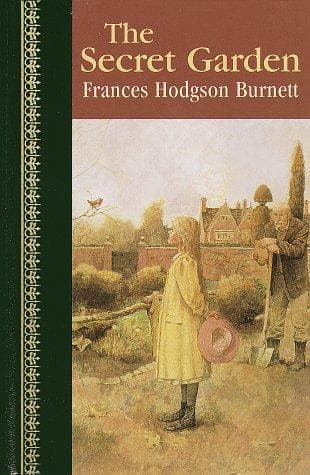
- The Secret Garden
Frances Hodgson Burnett
4.1 (891k) average on GoodreadsFantasyWhile not a mystery, it prominently features the language and symbolism of flowers and gardens, a key element in Enola's investigation.
- Harry Potter and the Sorcerer's Stone
J.K. Rowling
4.5 (7M) average on GoodreadsFantasyRescued from a miserable life under the stairs, an orphaned boy discovers he's a wizard destined for a magical school, where he uncovers a dangerous secret tied to the dark wizard who murdered his parents.
- The Hunger Games
Suzanne Collins
4.3 (6.4M) average on GoodreadsFantasyIn a future where children fight to the death on live television, Katniss Everdeen volunteers for the arena, turning a death sentence into a fight for survival and a spark of rebellion.
- Nineteen Eighty-Four
George Orwell
4.2 (5.5M) average on GoodreadsFictionWinston Smith dreams of truth and rebellion in a world where Big Brother watches all, but he confronts the terrifying power of a regime that controls not just actions, but thoughts.
- Pride & Prejudice
Jane Austen
4.3 (4.9M) average on GoodreadsElizabeth Bennet and Mr. Darcy navigate love and misunderstanding, learning that first impressions can be wrong.




Enjoyed the summary?
A summary gives you the shape of the book. The book itself has the detail, the examples and the voice.
Find The Case of the Bizarre Bouquets on AmazonAs an Amazon Associate, BookBrief earns from qualifying purchases. How we're funded