

Synopsis
Covers the whole plot, including the ending.
- Difficulty
- Easy
- Pacing
- Fast
- Mood
- Whimsical, Humorous, Energetic
- Read it if
- You enjoy whimsical, rhyming stories with a touch of delightful chaos and imaginative problem-solving.
- Skip it if
- You prefer realistic narratives or stories without fantastical elements.
The Cat in the Hat Comes Back Plot Summary
Covers the whole plot, including the ending.
A Snowy Day and a Pink Stain
On a very snowy day, Dick and Sally shovel a lot of snow outside their house. While they work, the Cat in the Hat shows up, casually eating cake in their mother's clean tub. The Cat says he will help, but instead of shoveling snow, he leaves a big, pink ring in the tub. Sally is upset about the mess, afraid of her mother's reaction. The Cat, however, is not worried and says it is an easy fix.
The Cat's Solution: The Dress and the Wall
To get the pink stain out of the tub, the Cat in the Hat uses Sally's mother's new white dress. He rubs the dress on the stain, moving the pink color from the tub onto the dress. Sally is horrified. With the dress now pink, the Cat tries to remove the stain by rubbing it against the house wall. This only makes the pink stain spread, now marking the clean white wall. Dick and Sally get more worried as the Cat's 'solutions' only make the problem worse, creating a bigger mess each time.
From Wall to Rug to Dad's Bed
The Cat in the Hat, not bothered by the growing pink mess, then tries to remove the stain from the wall by rubbing it onto the living room rug. The rug turns pink. With the rug ruined, the Cat takes it upstairs and tries to clean it by rubbing it on Dad's best bed. This stains Dad's bed pink too, causing an even bigger disaster. Dick and Sally are very worried, realizing the Cat's efforts only make things worse, and their mother will soon come home to see the mess.
The Teacup and Little Cat A
With the pink stain now on Dad's bed, the Cat in the Hat decides a new way is needed. He takes the pink stain from the bed and puts it into a small teacup. He then takes off his hat and, from under it, pulls out a tiny cat named Little Cat A. Little Cat A is introduced as a cleaning expert who will solve the problem. Dick and Sally watch with disbelief and a little hope as this new, tiny helper is presented as the answer to their growing pink problem.
Little Cat B and the Pink Spot
Little Cat A does not clean the teacup. Instead, he lifts his own hat and releases Little Cat B, an even smaller cat. Little Cat B's job is to remove the pink spot from the teacup. However, like the cat before him, Little Cat B does not clean it. He also fails to clean the stain and calls on the next tiny cat. The children's hope fades as the line of tiny, ineffective cleaners starts, each one seeming to pass the problem on rather than solve it.
Cats C Through V and the Spreading Stain
The tiny cats keep coming: Little Cat B brings out Little Cat C, C brings out D, and so on, all the way through the alphabet to Little Cat V. Each cat is smaller than the last. Each tries to clean the pink stain by simply moving it to the next tiny cat's hat, or a different small item. The pink stain does not get smaller. It becomes a moving spot, constantly going from one tiny cat to another, never really disappearing. The children are now surrounded by many tiny cats, all failing to clean the original pink mark.
Little Cat V and the Voom
Finally, the smallest cat, Little Cat V, appears. Unlike the others, Little Cat V does not bring out another cat. Instead, he shows a powerful, secret substance from under his hat, which he calls 'Voom.' This Voom is described as a secret weapon that can clean anything. The children, having lost all trust in the Cat's methods, watch with worry and curiosity to see if this last, tiny cat can actually fix the widespread pink disaster.
Voom Cleans Everything
Little Cat V unleashes the Voom, and its effect is instant and surprising. With a powerful whoosh, the Voom immediately cleans every pink stain in the house – the tub, the dress, the wall, the rug, and Dad's bed. It removes the pink and magically gathers all the tiny Little Cats, from A to V, sending them back into the Cat in the Hat's hat. The house is clean again as if the chaos never happened.
The Cat Departs and Mother Returns
With the house clean and the little cats gone, the Cat in the Hat says his work is done. He quickly tidies his hat and, just as their mother is heard coming, he disappears out the door. Dick and Sally are left alone in their perfectly clean house. Their mother comes in, not knowing about the extraordinary events. She comments on how well they shoveled the snow and how clean the house is, never knowing the near disaster they avoided.
The Secret Kept
As their mother praises them, Dick and Sally look at each other. They decide that the incredible, chaotic, and fixed events of the day – the pink stain, the many tiny cats, and the powerful Voom – are too unbelievable to tell. They agree to keep their secret. The book ends with the children thinking about their adventure, their secret safe with them.
Principal Figures
The Cat in the Hat
Antagonist/Catalyst
A mischievous, uninvited guest who creates and then (eventually) solves a chaotic problem.
The Cat in the Hat is a tall, anthropomorphic cat known for his red and white striped top hat and red bow tie. He is a mischievous and somewhat irresponsible character who arrives uninvited, creating a massive pink stain in the children's house. Despite his initial blunders that exacerbate the problem, he remains confident and unconcerned. He acts as a catalyst for the escalating chaos, relying on increasingly complex (and initially ineffective) solutions, ultimately bringing a resolution through the powerful 'Voom' and his army of Little Cats. He embodies playful disruption and the eventual, if unconventional, restoration of order.
Relationships: Dick (Mischievous friend/source of chaos); Sally (Mischievous friend/source of chaos); Little Cat A-V (Their leader and master)
Dick
Protagonist
One of the two children, more pragmatic and initially hopeful.
Dick is one of the two main children, a boy who, along with his sister Sally, is tasked with shoveling snow. He is generally more pragmatic than Sally, often expressing concern and disbelief at the Cat's escalating messes. While he shares Sally's anxiety about their mother's return, he tends to observe the Cat's antics with a mix of apprehension and grudging acceptance. He represents the voice of reason, though ultimately powerless against the Cat's fantastical solutions, and plays a role in deciding to keep the day's events a secret.
Relationships: Sally (Sibling); The Cat in the Hat (Uninvited guest/source of chaos); Mother (Parent)
Sally
Protagonist
One of the two children, more overtly distressed and anxious about the Cat's actions.
Sally is the other main child, a girl who is clearly more emotional and distressed by the Cat in the Hat's actions. She voices her fears and anxieties about their mother's imminent return and the growing pink mess more frequently than Dick. Her reactions highlight the escalating absurdity and danger of the situation, making her a relatable character for young readers who might share her concern over breaking rules and making messes. She is a key participant in witnessing the Cat's chaos and the eventual decision to keep it a secret.
Relationships: Dick (Sibling); The Cat in the Hat (Uninvited guest/source of chaos); Mother (Parent)
Mother
Mentioned
The unseen authority figure whose return drives the children's anxiety.
The children's Mother is an unseen character, but her impending return is a crucial plot device. She represents the adult authority figure and the consequences of their actions. The children's primary motivation for wanting the house cleaned is to avoid her discovery of the mess. Her absence allows the chaos to unfold, and her eventual return, completely unaware of the day's events, provides a resolution to the children's immediate fear and reinforces their decision to keep the secret.
Little Cat A
Supporting
The first of the miniature cats, introduced to clean the pink stain.
Little Cat A is the first of the miniature cats that the Cat in the Hat pulls from under his hat. He is presented as a solution to the pink stain but, instead of cleaning it himself, he simply passes the task on by releasing Little Cat B. He represents the beginning of the absurd chain of increasingly smaller cats, highlighting the Cat in the Hat's unconventional and often indirect methods of problem-solving.
Relationships: The Cat in the Hat (Subordinate/helper); Little Cat B (Introducer of)
Little Cat B
Supporting
The second miniature cat, continuing the chain of ineffective cleaners.
Little Cat B is the second, even smaller, miniature cat released by Little Cat A. Like his predecessor, he doesn't directly clean the stain but instead releases Little Cat C. He further establishes the pattern of the escalating, yet ineffective, solutions employed by the Cat in the Hat. His role is to progress the narrative by continuing the chain of tiny cats, building the anticipation for the eventual resolution.
Relationships: The Cat in the Hat (Subordinate/helper); Little Cat A (Introduced by); Little Cat C (Introducer of)
Little Cat V
Supporting
The smallest and final miniature cat, wielding the powerful 'Voom' that cleans everything.
Little Cat V is the last and smallest of the miniature cats, appearing after all the other alphabetical cats (A through U) have failed to clean the pink stain. Unlike the others, Little Cat V doesn't bring out another cat. Instead, he holds the key to the ultimate solution: 'Voom.' He is the turning point in the cleaning process, representing the eventual, decisive action that resolves the entire mess. His appearance signifies the climax of the Cat's convoluted problem-solving method.
Relationships: The Cat in the Hat (Subordinate/ultimate helper); Little Cat A-U (Preceded by)
Themes & Insights
Consequences of Irresponsibility
The main idea is about the chain reaction of bad things that happen because of the Cat in the Hat's careless act of eating cake in the tub and leaving a pink stain. Every time the Cat tries to 'fix' the problem, it gets worse, spreading the stain from the tub to the dress, the wall, the rug, and finally Dad's bed. This growing mess shows how small acts of carelessness can lead to big problems, causing much worry for Dick and Sally.
“Oh, dear!" said the Cat. "You have made a bad spot!" "I know," said the boy. "It is pink and it's hot!”
The Escalation of Chaos
This idea is clear in how the pink stain keeps spreading and how more Little Cats appear. What starts as one stain in the tub quickly spreads through the house, becoming a huge problem. Introducing Little Cat A, who then brings out B, and so on, through the whole alphabet, creates an army of small, unhelpful helpers. This growing chaos builds excitement and humor, showing how a simple problem can get out of control in silly, fantasy ways, until an equally fantasy solution is needed.
“And the spot, oh, the spot! It got bigger and bigger!”
Problem-Solving (and its Absurdity)
The book humorously looks at how to solve problems, though in very unusual and often unhelpful ways. The Cat in the Hat's 'solutions' for the pink stain are a series of increasingly silly and ineffective methods, like moving the stain to different household items. The tiny cats, each passing the problem on, further makes fun of the idea of finding an easy fix. In the end, the problem is solved by an equally silly, yet effective, magical item – the 'Voom' – suggesting that sometimes, big problems need big (and illogical) solutions.
“But I have no fear! I will clean it up here!" Said the Cat. "And I have a good way, my dear.”
The Power of Secrecy and Imagination
At the story's end, Dick and Sally decide not to tell their mother about the day's fantasy events. This idea highlights the special world of childhood imagination and shared experiences that adults often do not know about. The secret creates a connection between the children and the reader, emphasizing the wonder and unreality of their adventure. It suggests that some experiences are too extraordinary or unbelievable for the everyday adult world, keeping the magic and mystery of the Cat's visit alive.
“Should we tell her about it?" "No," said my brother. "Not us. Not a word. We won't tell our mother.”
Plot Devices & Literary Techniques
Cumulative Structure
A repetitive and building narrative pattern, escalating the problem.
The story employs a cumulative structure, where each event builds upon the previous one, escalating the problem. The pink stain grows larger and spreads to more objects with each of the Cat's attempts to clean it. Similarly, the introduction of the Little Cats (A, then B, then C, and so on) forms a cumulative list, each adding to the number of characters and the complexity of the situation. This device effectively builds tension and humor, demonstrating the snowball effect of the Cat's antics until the ultimate solution is introduced.
Deus Ex Machina (Voom)
An unexpected, magical solution to an impossible problem.
The 'Voom' introduced by Little Cat V functions as a Deus Ex Machina. After the Cat in the Hat and his army of miniature cats have only made the problem worse, an entirely new, magical element is introduced that instantly and effortlessly resolves all the accumulated chaos. The Voom is not foreshadowed or explained; it simply appears as a convenient, all-powerful cleaning agent to tidy up the entire mess in an instant, allowing for a swift and happy ending without logical explanation.
Anthropomorphism
Giving human characteristics to animal characters.
The central character, the Cat in the Hat, is a prime example of anthropomorphism. He walks upright, wears clothes (a hat and bow tie), talks, eats cake, and performs complex actions like cleaning (or attempting to clean) and organizing an army of smaller cats. This device allows for a fantastical and whimsical narrative, making an animal character relatable and central to a human-like domestic situation, thereby driving the plot and its humorous elements.
Repetition
Recurring phrases and actions for emphasis and rhythm.
Repetition is frequently used, particularly in the sequence of the Little Cats. Each time a new Little Cat is introduced, the pattern of 'Little Cat A brought out Little Cat B,' and so on, reinforces the cumulative nature of the problem. This device creates a rhythmic, memorable quality in the narrative, characteristic of Dr. Seuss's style. It also emphasizes the futility of the initial cleaning attempts, building anticipation for the eventual, decisive action of Little Cat V and the Voom.
The Cat in the Hat Comes Back Quotes
“I know how to make it go away!” said the Cat. “I will clean up this snow with my . . . hat!”
“Have no fear of this spot,” said the Cat. “I will make it all go with a fan from my hat!”
“But I have in my hat . . . a SMALLER Cat!”
“And this Cat has a hat. And under HIS hat . . . is a TINY TINY Cat!”
“From the Cat in the Hat to the A, B, C, D, E, F, G . . .”
“And the Z said, “I know just the thing we must do! To take care of your spot, I will call Little Voo!””
“And the Voom took the spot! And he licked it all up!”
“And then . . . he was gone! With a VOOM! And a WHOOSH! And a WHIZ!”
“And the house was all clean. And the grass was all green. And the snow was all white on the places it had been.”
““And that’s that!” said the Cat. And he picked up his hat. And he sailed off away on the top of his hat.”
“But you never can tell. When the Cat in the Hat . . . May come back . . . again.”
“The Cat in the Hat and the A and the B And the C and the D and the E, F, G And the H and the I and the J and the K And the L and the M and the N, O, P And the Q and the R and the S, T, U And the V and the W and the X, Y, Z.”
“I will take it away with my little red fan!”
Quiz
10 questions on the plot and the characters. Each answer comes with a short explanation.
Question 1
What chore are Dick and Sally stuck doing at the beginning of 'The Cat in the Hat Comes Back'?
- Washing dishes
- Shovelling snow
- Raking leaves
- Cleaning their room
Show answer
B. Shovelling snow At the start of the book, Dick and Sally are lamenting their task of shovelling the deep snow, which sets the scene for the Cat's arrival.
Question 2
What color stain does the Cat in the Hat leave in the bathtub?
- Blue
- Red
- Green
- Purple
Show answer
B. Red The Cat eats a pink cake in the bathtub, creating a large red ring. This red ring is the initial mess that the Cat's helpers are brought in to clean.
Question 3
How many 'Little Cats' does the Cat in the Hat bring out to help clean the mess?
- Twelve
- Twenty-six
- Ten
- Seven
Show answer
B. Twenty-six The Cat in the Hat brings out Little Cat A, Little Cat B, and so on, all the way through the alphabet to Little Cat Z. This totals twenty-six little cats.
Question 4
Where does the red stain first appear after the Cat attempts to clean it from the tub?
- On the wall
- On Mother's white dress
- On the floor
- On the rug
Show answer
B. On Mother's white dress The Cat tries to clean the red ring with Mother's white dress, transferring the stain onto it. This is the first instance of the spreading mess.
Question 5
What is the name of the final, smallest Little Cat who uses the 'Voom'?
- Little Cat X
- Little Cat Y
- Little Cat Z
- Little Cat V
Show answer
C. Little Cat Z Little Cat Z is the smallest of all the Little Cats and is the one who ultimately unleashes the powerful 'Voom' to clean up the entire mess.
Question 6
What is the primary theme explored in 'The Cat in the Hat Comes Back'?
- The importance of friendship
- The consequences of unchecked chaos and the eventual restoration of order
- The joy of imaginative play
- The value of teamwork in solving problems
Show answer
B. The consequences of unchecked chaos and the eventual restoration of order The book vividly depicts how one small mess escalates into a huge, spreading catastrophe due to the Cat's unhelpful 'help,' before finally being resolved by the powerful 'Voom,' highlighting the theme of chaos and its eventual, if sudden, restoration of order.
Question 7
How do the Little Cats transfer the red stain from one object to another?
- They use special cleaning sprays
- They rub it with their hats, then release a smaller cat to carry it off
- They absorb it into their fur and shake it off elsewhere
- They lick it clean and then spit it out
Show answer
B. They rub it with their hats, then release a smaller cat to carry it off Each Little Cat, from A to Z, has a specific role in moving the stain. They rub it with their hat, and then a smaller Little Cat (who was hiding under their hat) takes the stain away to another location, making the mess spread rather than disappear.
Question 8
What is the 'Voom' and what does it do?
- A special song that makes messes disappear
- A powerful, mysterious cleaning agent that instantly erases all messes and snow
- A type of broom used by the Little Cats
- A magical word spoken to summon more cats
Show answer
B. A powerful, mysterious cleaning agent that instantly erases all messes and snow The 'Voom' is the ultimate solution to the ever-growing mess. It's a powerful, unexplained force released by Little Cat Z that cleans up not only the red stain but also all the snow outside, leaving everything sparkling clean.
Question 9
Why do Dick and Sally become increasingly worried throughout the story?
- They are afraid their mother will punish them for letting the Cat in
- The mess keeps growing larger and spreading to new places, and their mother is due home soon
- They are worried the Cat in the Hat will never leave their house
- They are concerned the Little Cats will eat all their food
Show answer
B. The mess keeps growing larger and spreading to new places, and their mother is due home soon The children's anxiety mounts as the red stain moves from the tub, to the dress, to the wall, to the rug, to their father's shoes, and finally outside, all while their mother's imminent return looms over them, increasing the stakes of the escalating mess.
Question 10
What is the final state of the house and yard after the 'Voom' is used?
- The house is clean, but the yard is still covered in snow
- Everything is perfectly clean, and all the snow has disappeared from the yard
- The house is clean, but the red stain is still visible on one small item
- The house is still a mess, but the Cat and Little Cats are gone
Show answer
B. Everything is perfectly clean, and all the snow has disappeared from the yard The 'Voom' doesn't just clean the house; it's so powerful that it completely removes all the snow from the yard as well, leaving everything pristine and ready for spring, much to the children's relief.
The Cat in the Hat Comes Back FAQ
What is 'The Cat in the Hat Comes Back' about?
The book follows Dick and Sally on a snowy day when they are tasked with shoveling. The mischievous Cat in the Hat unexpectedly arrives, bringing chaos by eating cake in the bathtub and leaving a pink ring. To clean it, he introduces Little Cat A, who then brings Little Cat B, and so on through the alphabet, each creating more trouble.
Why should I read 'The Cat in the Hat Comes Back'?
Readers should pick up this book for its whimsical rhyming, imaginative escalation of silliness, and its clever introduction to the alphabet through the progressively smaller Little Cats. It's a delightful tale about responsibility, problem-solving (albeit unconventional), and the joy of controlled chaos, perfect for young children.
What is the background/setting of 'The Cat in the Hat Comes Back'?
The story is set primarily inside Dick and Sally's house on a snowy day, which prevents them from playing outside and instead puts them to work shoveling. The domestic setting quickly transforms into a fantastical mess as the Cat in the Hat and his numerous miniature helpers take over, spreading pink stains from the bathtub to various household items.
What are the most memorable quotes?
Some memorable lines include the Cat's nonchalant 'I always pick up all my play... and so do Little Cat A and all the rest!' despite the mounting mess. Another is the children's exasperated 'Oh, what a mess! Oh, what a mess!' as the pink stain spreads, highlighting the escalating chaos.
What writing style does Dr. Seuss use?
Dr. Seuss employs his signature anapestic tetrameter, a rhythmic and rhyming style that makes the story engaging and easy to read aloud. He uses simple, repetitive language mixed with inventive words and concepts, creating a fast-paced, humorous narrative that appeals to young readers while subtly teaching them about the alphabet.
What minor details add significant meaning?
The progression of the Little Cats, from A to Z, is a subtle yet significant detail, serving as a clever alphabet lesson disguised within the chaotic plot. Each Little Cat's unique tool or method for 'cleaning' (like Little Cat C with his net or Little Cat D with his broom) adds to the escalating absurdity and highlights the futility of their initial efforts.
What are some subtle foreshadowing moments?
The initial appearance of the pink ring in the bathtub, which seems like a simple mess, subtly foreshadows the massive, house-wide pink stain that will soon cover everything. The Cat's casual introduction of Little Cat A, without any real explanation of his purpose, hints at the endless parade of helpers to come.
What unexpected character connections exist?
The most unexpected connection is the hierarchical, yet seemingly endless, lineage of the Little Cats. Little Cat A, B, C, all the way to Z, are not just random characters but an organized, albeit comically ineffective, team working under the Cat in the Hat, each with a specific (though ultimately futile) role in 'cleaning' the pink stain.
What are unspoken character motivations?
The Cat in the Hat's unspoken motivation seems to be pure, unadulterated mischief and a desire to entertain himself, regardless of the consequences for Dick and Sally. The children's unspoken motivation is to simply get rid of the Cat and his mess so they can finish their chores and perhaps escape the house, even if they don't explicitly say it.
What psychological complexities do characters exhibit?
Dick and Sally exhibit a complex mix of frustration, helplessness, and a childlike hope that the Cat's increasingly absurd solutions might actually work. The Cat in the Hat, on the other hand, shows a complete disregard for others' peace and order, driven by an almost childlike impulse for play and a surprising, yet ultimately effective, ability to resolve his self-created problems.
What are the major emotional turning points?
A major emotional turning point occurs when the pink stain has spread to every corner of the house, causing Dick and Sally to reach peak exasperation and fear that their mother will be furious. Another is the dramatic reveal of Little Cat Z and his Voom, shifting the children's emotions from despair to awe and relief as the problem is finally, magically, resolved.
How do relationship dynamics evolve?
The relationship between the children and the Cat in the Hat evolves from initial surprise and mild annoyance to extreme frustration and near panic as the mess escalates. By the end, there's a sense of grudging relief and perhaps a touch of wonder, as the Cat, despite his antics, ultimately solves the problem he created, leaving the children bewildered but clean.
Which parts remain ambiguous or open-ended?
The origin of the Cat in the Hat's powers and the precise nature of the 'Voom' remain ambiguous. It's never explained how the Cat and his helpers appear, how the Voom works, or where the Cat goes after he cleans up, leaving the magical elements of his existence unexplained and open to the reader's imagination.
What are controversial scenes or decisions?
One could argue that the Cat's decision to bring an entire alphabet of smaller cats, each making the mess worse before it gets better, is a controversial approach to problem-solving. His complete lack of remorse or accountability for the chaos he causes, relying on a magical 'Voom' as a last resort, might be seen as teaching an irresponsible lesson.
'The Cat in the Hat Comes Back' ending explained: how it ends & what it means
The book ends with Little Cat Z, the smallest of all, unleashing a powerful 'Voom' from under his hat, which instantly cleans up every speck of pink stain from the entire house and yard. The Cat in the Hat then departs, leaving Dick and Sally's home spotless. This ending signifies that even the biggest messes can be resolved, often through unexpected means, and reinforces the magical, unpredictable nature of the Cat in the Hat.
About the author

Dr. Seuss, born Theodor Seuss Geisel, was a beloved American children's author and illustrator. He is renowned for his imaginative tales and whimsical rhymes, including iconic works like 'The Cat in the Hat,' 'Green Eggs and Ham,' and 'Oh, the Places You'll Go!'. His unique style and memorable characters have made him a staple in children's literature for generations.
Similar books
- The Cat in the Hat
Dr. Seuss
4.2 (428k) average on GoodreadsFantasyDirect prequel with the same characters and chaotic, rhyming style.
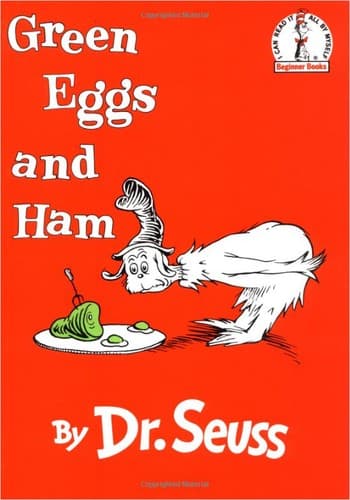
- Green Eggs and Ham
Dr. Seuss
4.3 (617k) average on GoodreadsFantasyAnother classic Dr. Seuss book known for its simple rhymes and persistent characters.
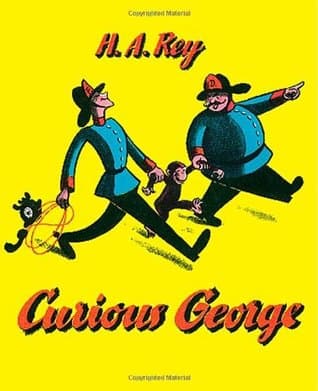
- Curious George
H.A. Rey
4.2 (125k) average on GoodreadsFantasyWhile both feature mischievous protagonists creating chaos, Curious George's antics are more grounded in reality and often lead to practical lessons about responsibility and consequences. The Cat in the Hat operates in a realm of pure fantasy, offering a different kind of learning experience.
- Harry Potter and the Sorcerer's Stone
J.K. Rowling
4.5 (7M) average on GoodreadsFantasyRescued from a miserable life under the stairs, an orphaned boy discovers he's a wizard destined for a magical school, where he uncovers a dangerous secret tied to the dark wizard who murdered his parents.
- The Hunger Games
Suzanne Collins
4.3 (6.4M) average on GoodreadsFantasyIn a future where children fight to the death on live television, Katniss Everdeen volunteers for the arena, turning a death sentence into a fight for survival and a spark of rebellion.
- 1984
George Orwell
4.2 (3.1M) average on GoodreadsPoliticsIn a future where surveillance and thought control are absolute, a man's search for truth clashes with the Party, showing that hope can be a form of rebellion.




Enjoyed the summary?
A summary gives you the shape of the book. The book itself has the detail, the examples and the voice.
Find The Cat in the Hat Comes Back on AmazonAs an Amazon Associate, BookBrief earns from qualifying purchases. How we're funded