
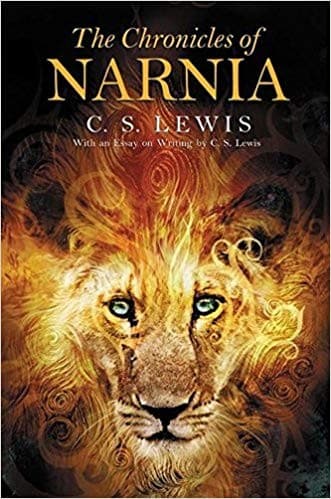
Synopsis
Covers the whole plot, including the ending.
- Difficulty
- Easy
- Pacing
- Moderate
- Mood
- Enchanting, Adventurous, Whimsical, Spiritual, Hopeful
- Read it if
- You enjoy classic fantasy adventures with allegorical depth, talking animals, and themes of good versus evil, suitable for both children and adults.
- Skip it if
- You prefer gritty, morally ambiguous fantasy, or are put off by overt Christian allegories.
The Chronicles of Narnia Plot Summary
Covers the whole plot, including the ending.
The Lion, the Witch and the Wardrobe: The Discovery of Narnia
During World War II, the four Pevensie children—Peter, Susan, Edmund, and Lucy—go from London to the countryside estate of Professor Digory Kirke. Exploring the large house, young Lucy finds a wardrobe that leads to a snow-covered forest in Narnia. There, she meets a Faun named Mr. Tumnus, who first plans to kidnap her for the White Witch but then becomes her friend. When Lucy returns, her siblings do not believe her story. Edmund later follows Lucy into Narnia and meets the White Witch, Jadis, who tempts him with Turkish Delight and promises to make him a prince if he brings his siblings to her.
The Lion, the Witch and the Wardrobe: The Reign of the White Witch
Eventually, all four Pevensie children enter Narnia through the wardrobe. They find it under the eternal winter spell of the White Witch, with no Christmas. Mr. and Mrs. Beaver rescue them and explain a prophecy: two Sons of Adam and two Daughters of Eve will sit on the four thrones at Cair Paravel, ending the Witch's rule. They also say that Aslan, the true King of Narnia, is returning. Edmund, influenced by the Witch's promises, leaves to betray his siblings. The Beavers lead Peter, Susan, and Lucy towards the Stone Table to meet Aslan.
The Lion, the Witch and the Wardrobe: Aslan's Sacrifice and Triumph
Edmund reaches the White Witch's castle and tells her of Aslan's return, but he is horrified by her cruelty and the petrified Narnians. Aslan appears at the Stone Table, and a truce is made to save Edmund from the Witch's claim. Old Narnian law states the traitor belongs to the Witch. To spare Edmund, Aslan secretly offers himself as a sacrifice, allowing the Witch to kill him on the Stone Table. However, because Aslan is innocent, ancient magic decrees that Death itself works backward. Aslan is resurrected, more powerful than before, and defeats the Witch's army, turning her and her followers to stone.
The Lion, the Witch and the Wardrobe: The Golden Age of Narnia
After the White Witch's defeat, Aslan crowns Peter, Susan, Edmund, and Lucy as Kings and Queens of Narnia at Cair Paravel. They rule Narnia fairly for many years, becoming wise adults and enjoying the Golden Age of Narnia. They have various adventures and keep peace in the land. One day, while hunting the White Stag, they find the lamppost and, by walking through it, return to Professor Kirke's wardrobe, back to their original ages and time, as if no time had passed in the human world. They tell the Professor their experience, and he believes them, hinting at future returns.
Prince Caspian: Return to a Ravaged Narnia
The Pevensie children are pulled back into Narnia by a magical horn call, finding themselves at the ruins of Cair Paravel. They discover that centuries have passed in Narnian time, and their kingdom is overgrown and forgotten. Telmarines, a human race, now rule Narnia. They conquered the land and suppressed the native Narnians—talking animals, fauns, dwarves, and centaurs. They meet Trumpkin, a Red Dwarf, who tells them about Prince Caspian X, the rightful heir to the Telmarine throne, who has fled his uncle King Miraz and is trying to gather the Old Narnians to reclaim their land. The children decide to help Caspian.
Prince Caspian: The Battle for Narnia's Freedom
The Pevensies join Prince Caspian and the remaining Old Narnians, who are hiding in the Great Woods. They learn that Caspian blew Queen Susan's magical horn, summoning them. The Narnians, though outnumbered, prepare for battle against King Miraz's army. Peter challenges Miraz to single combat. Miraz accepts but is killed by his own lords. A full battle follows. Aslan reappears, waking the Trees and leading the charge against the Telmarines, who are defeated. The Telmarines can choose to stay and live peacefully in Narnia or return to their ancestral land, an island beyond the sea, which Aslan opens a portal to for them.
The Voyage of the Dawn Treader: Edmund and Lucy's Quest
Edmund and Lucy Pevensie, along with their cousin Eustace Scrubb, are magically pulled into a painting of a ship and find themselves aboard the Dawn Treader, commanded by King Caspian X. Caspian is looking for the seven lost Lords of Narnia whom his uncle Miraz had sent away years ago, and sailing to the end of the world. Eustace, initially a selfish boy, changes after turning into a dragon on Dragon Island due to his greed. Aslan later restores him, and he becomes a better person. The crew encounters various magical islands and strange creatures.
The Voyage of the Dawn Treader: To the End of the World
The voyage continues, facing dangers like the Dufflepuds, the Star-people on Ramandu's Island, and the Dark Island where nightmares come true. They rescue the lost Lords and gradually near the world's edge. Reepicheep, the mouse, wants to reach Aslan's Country. At the Silver Sea, they meet Aslan as a Lamb and later as a Lion. Aslan tells Lucy and Edmund they are too old for Narnia and will not return, instructing them to find him in their own world. Reepicheep sails alone into Aslan's Country, while Caspian, Eustace, Lucy, and Edmund return to Narnia.
The Silver Chair: Eustace and Jill's Search for Rilian
Eustace Scrubb, now a brave boy, and his schoolmate Jill Pole, escape bullies at their boarding school and are summoned to Narnia by Aslan. Aslan tasks them with finding Prince Rilian, King Caspian X's lost son, who disappeared years ago while looking for the green serpent that killed his mother. Aslan gives Jill four signs to guide their quest. They are joined by Puddleglum, a pessimistic but loyal Marsh-wiggle, who guides them. They travel through dangerous lands, including the Giant-lands and the Underland, facing many dangers and relying on Puddleglum's loyalty and Jill's memory of Aslan's signs.
The Silver Chair: The Underland and the Green Lady
The trio goes into the Underland and finds a kingdom ruled by the Queen of the Deep Realm, also known as the Green Lady. They find Prince Rilian, enchanted to be loyal to her, bound to a silver chair for one hour each day, during which he is temporarily sane and begs to be released. The Green Lady tries to re-enchant them all with magical incense and music, making them doubt Narnia and the Overworld. Puddleglum bravely breaks the enchantment by stamping out the fire, burning his foot. They free Rilian, who then kills the Green Lady, who turns into a serpent. They escape the collapsing Underland.
The Last Battle: The End of Narnia
King Tirian, the last King of Narnia, sees his kingdom decline. A cunning ape, Shift, uses a donkey named Puzzle to impersonate Aslan, using a lion's skin, to control the Narnians. This deception leads to an alliance with the Calormenes, who exploit Narnia and impose their false god Tash. Eustace and Jill are called back to Narnia to help Tirian. They uncover Shift's plot and fight against the Calormene invasion, but Narnia is near collapse, with its true nature and values corrupted. The Narnian creatures are confused by the false Aslan and the forced worship of Tashlan (Tash and Aslan combined).
The Last Battle: The True Narnia and Aslan's Country
The final battle happens at the Stable Hill. All Narnians, faithful and unfaithful, must pass through the Stable door. Inside, they face Aslan's judgment. Those who truly believed and loved Narnia, including King Tirian, Eustace, Jill, and the Pevensies (except Susan, who has lost faith), find themselves in a glorious, more real Narnia – Aslan's Country. Aslan destroys and 'folds up' the old Narnia. In Aslan's Country, they reunite with old friends and discover this new Narnia is larger and more beautiful than the old, a spiritual reality. Aslan reveals that the children, along with Peter, Susan, Edmund, and Lucy's parents, died in a train accident in their own world and are now in the true Narnia forever.
The Chronicles of Narnia Characters
Aslan
Protagonist
The great Lion, King of Narnia and son of the Emperor-Beyond-the-Sea
Aslan is the majestic and benevolent lion, the true king and creator of Narnia. He embodies divine authority, wisdom, and sacrifice. He appears at critical moments to guide, empower, and save the Narnians and the children. His roar can bring life, and his breath can restore. He is both fearsome and gentle, representing a Christ-like figure, dying for Edmund's treachery in 'The Lion, the Witch and the Wardrobe' and rising again. He is the ultimate source of good and justice in Narnia, and his presence often brings joy and hope, as seen when he frees the petrified Narnians from the White Witch's castle.
Relationships: Pevensie Children (Mentor and King); Narnians (King and Savior); White Witch (Antagonist)
Lucy Pevensie
Protagonist
The youngest Pevensie, first to discover Narnia and the most faithful
Lucy is the youngest and most open-hearted of the Pevensie siblings, often the first to believe in magic and the most devoted to Aslan. Her initial discovery of Narnia sets the entire series in motion. She possesses a deep sense of compassion and intuition, seeing Narnia and its creatures with an innocent wonder that her older siblings sometimes lack. As Queen Lucy the Valiant, she rules Narnia justly and is gifted with a magical cordial that can heal wounds, which she uses during battles in 'The Lion, the Witch and the Wardrobe' and 'Prince Caspian'. She struggles with moments of doubt, but her faith in Aslan always prevails.
Relationships: Edmund Pevensie (Brother, initially betrayed by him but later reconciled); Peter Pevensie (Brother); Susan Pevensie (Sister); Aslan (Deeply devoted follower)
Edmund Pevensie
Protagonist
The second youngest Pevensie, initially prone to selfishness and betrayal
Edmund is initially portrayed as spiteful, selfish, and prone to jealousy, especially towards Lucy. He is easily tempted by the White Witch's offer of Turkish Delight and power, leading to his betrayal of his siblings. His journey is one of profound redemption, as he realizes the error of his ways and suffers the consequences. After being rescued by Aslan and repenting, he transforms into King Edmund the Just, becoming a wise and brave ruler known for his sound judgment and strategic thinking in battle. His arc is central to the theme of forgiveness and overcoming one's flaws, particularly evident in 'The Lion, the Witch and the Wardrobe' and 'Prince Caspian'.
Relationships: Lucy Pevensie (Sister, initially antagonistic but later very close); Peter Pevensie (Brother, initially antagonistic but later respectful); White Witch (Initially manipulated by her, later her enemy); Aslan (Redeemed by Aslan's sacrifice)
Peter Pevensie
Protagonist
The eldest Pevensie, who becomes High King of Narnia
Peter is the eldest of the Pevensie children and naturally takes on a leadership role, often feeling the weight of responsibility for his younger siblings. He is brave, honorable, and loyal, though he can be a bit hot-headed and proud at times. Aslan crowns him High King Peter the Magnificent, and he leads the Narnian armies in battles against the White Witch and later King Miraz. He wields the sword Rhindon and a shield bearing the Narnian lion emblem. Peter is a symbol of righteous authority and courage, always striving to do what is right for Narnia and his family, even when it is difficult.
Relationships: Susan Pevensie (Sister); Edmund Pevensie (Brother, often responsible for him); Lucy Pevensie (Sister); Aslan (Loyal subject and general)
Susan Pevensie
Protagonist/Supporting
The second eldest Pevensie, Queen of Narnia, who eventually loses her faith
Susan is the second eldest Pevensie, known for her grace, beauty, and practicality. She is often the most cautious and sensible of the siblings, sometimes skeptical of Narnia's magic initially. As Queen Susan the Gentle, she rules Narnia with kindness and is gifted with a bow and arrows that never miss and a magical horn that summons aid. Her journey is unique among the Pevensies, as she eventually chooses to distance herself from Narnia in 'The Last Battle', becoming preoccupied with 'grown-up' things like nylons and lipstick, and ultimately losing her faith in the magical world. This makes her the only Pevensie not to enter Aslan's Country at the end.
Relationships: Peter Pevensie (Brother); Lucy Pevensie (Sister); Edmund Pevensie (Brother); Aslan (Subject, later estranged)
Eustace Scrubb
Protagonist
A Pevensie cousin, initially selfish and unpleasant, who undergoes a profound transformation
Eustace Clarence Scrubb is a Pevensie cousin, introduced in 'The Voyage of the Dawn Treader' as a thoroughly unlikable, selfish, and whiny boy who disdains Narnia and its inhabitants. His greed and unpleasantness lead him to be temporarily transformed into a dragon on Dragon Island, a symbolic manifestation of his inner character. This traumatic experience, and Aslan's intervention in peeling away his dragon skin, leads to a profound change in him. He becomes brave, kind, and helpful, and is later a key figure in 'The Silver Chair' and 'The Last Battle', demonstrating remarkable growth and loyalty to Narnia and Aslan.
Relationships: Lucy Pevensie (Cousin); Edmund Pevensie (Cousin); Jill Pole (Schoolmate and quest companion); Aslan (Redeemed by Aslan)
Prince Caspian X
Protagonist
The rightful King of Narnia, a Telmarine who embraces the Old Narnians
Caspian is a Telmarine prince who grew up hearing tales of Old Narnia from his nurse, despite his people's suppression of Narnian history. He is the rightful heir to the throne, usurped by his uncle Miraz. He is brave, just, and deeply committed to restoring the true Narnia and its magical creatures. He blows Queen Susan's horn to summon the Pevensies in 'Prince Caspian' and becomes King Caspian X. He later embarks on a quest to the Eastern Seas in 'The Voyage of the Dawn Treader', and is an old man by the time Eustace and Jill search for his son, Rilian, in 'The Silver Chair'. He is a symbol of hope and restoration for Narnia.
Relationships: Peter Pevensie (Ally and friend); Aslan (Loyal subject); Miraz (Usurping uncle and enemy); Reepicheep (Loyal companion)
White Witch (Jadis)
Antagonist
The tyrannical queen who plunged Narnia into eternal winter
Jadis, the White Witch, is a powerful and cruel sorceress, a descendant of Lilith, who brought an eternal winter to Narnia without Christmas. She is manipulative, cold-hearted, and driven by a desire for absolute power, turning her enemies to stone with her wand. She tempts Edmund with Turkish Delight and promises of power. She is the embodiment of evil and coldness, and her magical abilities are formidable. Her reign is characterized by oppression and fear, and she is ultimately defeated by Aslan's sacrifice and resurrection. Her influence extends into 'The Magician's Nephew' where her origins in Charn are revealed.
Relationships: Aslan (Mortal enemy); Edmund Pevensie (Manipulated victim); Narnians (Oppressor)
Reepicheep
Supporting
A valiant and honorable talking mouse, devoted to honor and Aslan
Reepicheep is a chivalrous and courageous talking mouse, renowned for his bravery, honor, and unwavering loyalty to Aslan and King Caspian. Despite his small size, he is a formidable warrior, skilled with a rapier, and possesses an indomitable spirit. He is a key companion on the voyage of the Dawn Treader, driven by a deep desire to reach the very end of the world and, ultimately, Aslan's Country. His unwavering code of honor and his self-sacrificing quest for the true East make him one of the most beloved and memorable characters, embodying courage and spiritual aspiration.
Relationships: Caspian X (Loyal subject and friend); Eustace Scrubb (Mentor and companion); Aslan (Devoted follower)
Puddleglum
Supporting
A pessimistic but steadfast Marsh-wiggle, guide to Eustace and Jill
Puddleglum is a Marsh-wiggle, a race of tall, thin, frog-like beings who live in the fens. He is characterized by his extreme pessimism and gloom, always expecting the worst. However, beneath his perpetually dismal outlook lies a profound loyalty, courage, and common sense. He serves as the guide for Eustace and Jill in 'The Silver Chair', and despite his constant warnings of impending doom, he remains steadfast and determined. His most heroic moment comes when he bravely breaks the enchantment of the Green Lady, demonstrating that even a pessimistic spirit can hold firm against overwhelming illusion and evil.
Relationships: Eustace Scrubb (Companion and charge); Jill Pole (Companion and charge); Prince Rilian (Rescuer)
The Chronicles of Narnia Themes
Good vs. Evil and Redemption
The central conflict in Narnia is the struggle between good, shown by Aslan and his followers, and evil, mainly the White Witch and later the Calormenes. This theme is clearest in 'The Lion, the Witch and the Wardrobe' where Aslan sacrifices himself to save Edmund from the White Witch, showing the power of self-sacrificial love over evil. Edmund's change from a selfish betrayer to a just king is a strong example of individual redemption. Aslan's victory in 'The Last Battle' over darkness, even as Narnia is destroyed, reinforces the idea that good wins in a spiritual sense.
“Wrong will be right, when Aslan comes in sight, / At the sound of his roar, sorrows will be no more, / When he bares his teeth, winter meets its death, / And when he shakes his mane, we shall have spring again.”
Faith and Belief
Belief in Aslan and Narnia's magic is a key theme. Characters like Lucy and later Eustace are rewarded for their strong belief, while Susan's loss of faith leads to her exclusion from the final Narnia. Aslan often asks his followers to trust him, even when his plans are unclear. The children's struggles to believe in Narnia when they return home, and the Professor's encouragement, show the importance of an open mind and heart to spiritual truths. This theme ends in 'The Last Battle' where true faith is the way to enter Aslan's Country.
“Logically it was all a waste of time. But then, as Puddleglum would have said, 'Logically it was all a waste of time to have come to Narnia at all.'”
Growth and Transformation
Many characters grow throughout the series. Edmund's journey from betrayal to redemption is perhaps the most notable, but Eustace's change from a spoiled boy to a brave companion in 'The Voyage of the Dawn Treader' is also significant. The Pevensie children grow from ordinary schoolchildren into wise kings and queens. This theme suggests that challenges and sacrifices are needed for character development, and that external events (like becoming a dragon) can reflect and cause internal change. Even Narnia changes, from its creation to its end and rebirth.
“Once a King or Queen in Narnia, always a King or Queen in Narnia.”
Loss and the End of Innocence
The Chronicles explore the nature of growing up and losing things. The children cannot stay in Narnia forever; Aslan tells Lucy and Edmund in 'The Voyage of the Dawn Treader' that they are too old to return, marking the end of their childhood connection. Susan's loss of faith and her inability to return to Narnia in 'The Last Battle' is a more tragic example of this theme. The destruction of the old Narnia, though followed by the promise of Aslan's Country, shows an ending, emphasizing that all earthly things, even magical ones, have a finite life, making way for a more eternal reality.
“This is the very end of the old Narnia. Everything has gone wrong since the Humans came in.”
The Nature of Kingship and Authority
The series often examines what it means to be a true king or queen. Aslan, the ultimate King, gives authority to the Pevensies and Caspian, but remains the supreme ruler. True leadership is about service, justice, courage, and protecting the innocent, not just power. Peter, as High King, learns to lead battles and make hard decisions. Caspian works to rule fairly and restore the old Narnian ways. Even against tyranny, such as the White Witch or Miraz, the rightful monarchs must uphold a higher moral standard, drawing their authority from Aslan.
“You are Narnians. You must remember who you are.”
Plot Devices & Literary Techniques
The Wardrobe
A magical portal connecting the mundane world to Narnia
The wardrobe in Professor Kirke's house serves as the primary magical portal that allows the Pevensie children to enter Narnia in 'The Lion, the Witch and the Wardrobe'. It is a key symbol of the hidden wonders within ordinary life and the boundary between the mundane and the magical. Its unexpected nature emphasizes that adventure and magic can be found in the most unlikely places, initially dismissed as a mere piece of furniture. Its reappearance at the end of the first book, bringing the children back to their own world, highlights the fluid nature of time and reality between the two worlds.
Talking Animals
Animals endowed with human speech and reason, symbolizing the magic and wisdom of Narnia
Talking animals are a fundamental element of Narnian society, distinguishing it from the human world. Characters like Mr. Tumnus (Faun), Mr. and Mrs. Beaver, Reepicheep the mouse, and various other creatures contribute significantly to the plot, provide guidance, and embody different virtues and vices. They represent the vibrant, magical, and often morally upright nature of Narnia when it is in harmony with Aslan's will. Their ability to speak and reason underscores the enchantment of Narnia and sets a moral standard often lacking in human characters, as seen when the Narnian creatures are oppressed by the Telmarines.
Prophecy
Foreknowledge of future events, guiding characters and validating Aslan's plan
Prophecy plays a crucial role in shaping the narrative, particularly in 'The Lion, the Witch and the Wardrobe' and 'Prince Caspian'. The ancient prophecy of the 'two Sons of Adam and two Daughters of Eve' sitting on the four thrones of Cair Paravel provides the motivation for the Narnians to seek out the Pevensies and validates their role in overthrowing the White Witch. Similarly, Aslan's four signs to Eustace and Jill in 'The Silver Chair' guide their quest to find Prince Rilian. Prophecies instill hope, provide direction, and assure the characters (and the reader) that there is a divine plan at work, even amidst chaos and despair.
Symbolism of Aslan
Aslan as a Christ-figure, embodying sacrifice, resurrection, and divine authority
Aslan is arguably the most significant symbolic element in the Chronicles, representing Jesus Christ. His sacrifice for Edmund's sins on the Stone Table and his subsequent resurrection ('The Lion, the Witch and the Wardrobe') directly mirrors the Christian narrative of atonement and resurrection. He is depicted as the creator of Narnia ('The Magician's Nephew'), its true king, and the ultimate judge ('The Last Battle'). His nature as both a powerful lion and a gentle lamb (as seen in 'The Voyage of the Dawn Treader') reflects the dual nature of Christ. His constant presence and guidance underscore the spiritual allegories woven throughout the series.
Dual World Narrative
The interplay between the human world and the magical world of Narnia
The narrative frequently shifts between the mundane reality of the children's world (England during WWII) and the fantastical realm of Narnia. This device highlights the contrast between the two worlds, emphasizing Narnia as a place of adventure, magic, and profound spiritual significance that is largely absent from their ordinary lives. The children's struggles to reconcile their Narnian experiences with their normal existence, and the differing passage of time between the worlds, underscore the idea that there are realities beyond human comprehension. This dualism reinforces the escapist and allegorical nature of the stories, allowing for reflections on faith and wonder in the 'real' world.
The Chronicles of Narnia Quotes
“Once a king or queen in Narnia, always a king or queen.”
“Courage, dear heart.”
“All shall be done, but it may be harder than you think.”
“I am. But there I have another name. You must learn to know me by that name.”
“It isn't Narnia, you know. It's you. We shan't meet you there.”
“Things never happen the same way twice.”
“You come of the Lord Adam and the Lady Eve. And that is both honour enough to erect the head of the poorest beggar, and shame enough to bow the shoulders of the greatest emperor on earth.”
“I have come home at last! This is my real country! I belong here. This is the land I have been looking for all my life, though I never knew it till now.”
“Child, I am telling you your story, not hers. No one is told any story but their own.”
“Do not dare not to dare.”
“The reason why we loved the old Narnia is that it sometimes looked a little like this.”
“It's all in Plato, all in Plato: bless me, what do they teach them at these schools!”
“But I will not tell you how long or short the way will be; only that it lies across a river. But do not fear that, for I am the great Bridge Builder.”
“You have listened to fears, Child. Come, let me breathe on you. Forget them. Are you brave again?”
Quiz
10 questions on the plot and the characters. Each answer comes with a short explanation.
Question 1
In 'The Lion, the Witch and the Wardrobe,' what object do the Pevensie children first use to enter Narnia?
- A magic ring
- A painting of a ship
- A wardrobe
- A secret door in the wall
Show answer
C. A wardrobe Lucy Pevensie first discovers Narnia by entering a wardrobe in Professor Kirke's house, which serves as a portal to the magical land.
Question 2
Who is the creator and true ruler of Narnia throughout the series?
- Aslan the Lion
- The White Witch
- King Peter
- The Emperor-Beyond-the-Sea
Show answer
A. Aslan the Lion Aslan is the divine lion who sings Narnia into existence and serves as its protector and moral guide, representing Christ-like figures in the series.
Question 3
In 'The Magician's Nephew,' what event causes the creation of Narnia?
- A battle between two witches
- Aslan singing it into existence
- Digory planting a magic apple seed
- The ringing of a bell
Show answer
B. Aslan singing it into existence Aslan creates Narnia through a song, bringing stars, plants, and animals to life in a beautiful display of creation, as witnessed by Digory and Polly.
Question 4
Which character betrays his siblings to the White Witch in 'The Lion, the Witch and the Wardrobe' due to a temptation?
- Peter Pevensie
- Edmund Pevensie
- Lucy Pevensie
- Susan Pevensie
Show answer
B. Edmund Pevensie Edmund is lured by the White Witch's promise of Turkish Delight and power, leading him to betray his brother and sisters before later redeeming himself.
Question 5
What is the 'Deep Magic from the Dawn of Time' that the White Witch uses to justify her claim on Edmund's life?
- A spell that turns traitors to stone
- A law that every traitor belongs to her
- A curse that makes Narnia always winter
- A prophecy about four human rulers
Show answer
B. A law that every traitor belongs to her The Deep Magic establishes that any traitor's life is forfeit to the Witch, which Aslan acknowledges but ultimately overcomes through his sacrificial death.
Question 6
In 'The Voyage of the Dawn Treader,' what is the main goal of King Caspian's journey?
- To find the Seven Lost Lords of Narnia
- To defeat a sea serpent
- To explore the unknown eastern seas
- To retrieve a magical book
Show answer
A. To find the Seven Lost Lords of Narnia Caspian sails eastward to find the seven lords exiled by his usurping uncle Miraz, encountering various islands and adventures along the way.
Question 7
Which book features Eustace Scrubb's transformation into a dragon as a key plot point?
- The Horse and His Boy
- Prince Caspian
- The Silver Chair
- The Voyage of the Dawn Treader
Show answer
D. The Voyage of the Dawn Treader In 'The Voyage of the Dawn Treader,' Eustace's greed leads him to become a dragon, and he is only restored by Aslan, symbolizing spiritual redemption.
Question 8
What recurring theme in The Chronicles of Narnia is exemplified by Aslan's sacrifice and resurrection in 'The Lion, the Witch and the Wardrobe'?
- The importance of family loyalty
- The battle between technology and nature
- Redemption through sacrifice
- The inevitability of growing up
Show answer
C. Redemption through sacrifice Aslan's voluntary death to save Edmund and subsequent resurrection mirrors Christian themes of atonement and redemption, central to the series' moral framework.
Question 9
In 'The Last Battle,' what event leads to the end of Narnia and the characters' transition to Aslan's Country?
- A great flood caused by melting ice
- The stars falling from the sky
- Aslan summoning all creatures to judgment
- A war that destroys the land
Show answer
C. Aslan summoning all creatures to judgment Aslan appears to judge the inhabitants of Narnia, ending its existence and ushering the faithful into a new, eternal realm known as Aslan's Country.
Question 10
Which character from 'The Magician's Nephew' becomes the White Witch in later Narnian history?
- Polly Plummer
- Queen Helen
- Jadis
- Lady of the Green Kirtle
Show answer
C. Jadis Jadis, the last queen of Charn, is brought to Narnia by Digory and Polly, and she later becomes the White Witch who plunges Narnia into eternal winter.
The Chronicles of Narnia FAQ
What is 'The Chronicles of Narnia' about?
The series follows children from our world who discover the magical land of Narnia, where they become involved in epic battles between good and evil, help overthrow tyrants like the White Witch, and witness the reign of kings and queens. Central to the narrative is the lion Aslan, a Christ-like figure who creates, guides, and sacrifices himself for Narnia, with the seven books spanning from Narnia's creation in 'The Magician's Nephew' to its apocalyptic end in 'The Last Battle'.
Why should I read 'The Chronicles of Narnia'?
The series combines thrilling fantasy adventures with profound moral and spiritual themes, appealing to both children and adults. Its rich world-building, memorable characters like Aslan and the Pevensie siblings, and exploration of timeless truths about courage, sacrifice, and redemption have made it a classic that continues to captivate readers across generations.
What is the background/setting of 'The Chronicles of Narnia'?
The primary setting is Narnia, a magical world accessed through portals like wardrobes or rings, which exists parallel to early 20th-century England. Narnia features talking animals, mythical creatures, and a medieval-like society, with its history spanning thousands of years, from creation by Aslan's song to destruction in a final battle, while the human world serves as a framing device for the children's adventures.
What are the most memorable quotes from 'The Chronicles of Narnia'?
Iconic quotes include Aslan's 'Once a king or queen in Narnia, always a king or queen' from 'The Lion, the Witch and the Wardrobe', emphasizing the children's lasting legacy, and 'Courage, dear heart' from 'The Voyage of the Dawn Treader', offering comfort in fear. In 'The Last Battle', 'Further up and further in!' captures the series' theme of spiritual journey and transcendence.
What writing style does C.S. Lewis use in 'The Chronicles of Narnia'?
Lewis employs a direct, conversational narrative style that engages young readers while weaving in complex allegorical and philosophical layers. His prose is descriptive yet accessible, blending adventure with moral lessons, and he often breaks the fourth wall to address readers directly, creating an intimate storytelling experience that enhances the fairy-tale quality of the series.
What minor details add significant meaning in 'The Chronicles of Narnia'?
Small elements like the lamppost in 'The Lion, the Witch and the Wardrobe', which grows from a piece of a London street lamp planted by Digory in 'The Magician's Nephew', symbolize the connection between worlds. The apple from the Garden in 'The Magician's Nephew' grants healing but also leads to temptation, echoing biblical themes of sin and redemption throughout the series.
What are some subtle foreshadowing moments in 'The Chronicles of Narnia'?
In 'The Lion, the Witch and the Wardrobe', Mr. Beaver's cryptic mention of Aslan's return 'not like a tame lion' hints at his unpredictable, divine nature. In 'The Magician's Nephew', the Deplorable Word's introduction foreshadows the world's destruction in 'The Last Battle', while the stable in 'The Last Battle' prefigures the transition to Aslan's Country, linking early and late books thematically.
What unexpected character connections exist in 'The Chronicles of Narnia'?
Professor Digory Kirke from 'The Lion, the Witch and the Wardrobe' is revealed as the boy Digory from 'The Magician's Nephew', who witnessed Narnia's creation. The White Witch Jadis appears in both 'The Magician's Nephew' (as the queen of Charn) and 'The Lion, the Witch and the Wardrobe', showing her long-standing evil influence. Polly Plummer, Digory's friend, reappears as an elderly woman in 'The Last Battle', tying the series' timeline together.
What are unspoken character motivations in 'The Chronicles of Narnia'?
Edmund's initial betrayal in 'The Lion, the Witch and the Wardrobe' stems from deep-seated resentment toward his older brother Peter and a craving for power and Turkish Delight, masking his insecurity. In 'The Silver Chair', Prince Rilian's enslavement by the Lady of the Green Kettle (the Witch) reveals a subconscious desire to escape grief over his mother's death, driving his hidden vulnerability and manipulation.
What psychological complexities do characters exhibit in 'The Chronicles of Narnia'?
Eustace Scrubb in 'The Voyage of the Dawn Treader' undergoes a transformation from a selfish, cynical boy to a compassionate hero after being turned into a dragon, symbolizing inner redemption. In 'The Horse and His Boy', Aravis's pride and shame from her Calormene upbringing clash with her growing empathy, illustrating a struggle between cultural identity and moral growth, adding depth to her journey.
What are the major emotional turning points in 'The Chronicles of Narnia'?
Aslan's sacrifice on the Stone Table in 'The Lion, the Witch and the Wardrobe' is a pivotal moment of grief and hope, leading to his resurrection and the defeat of the White Witch. In 'The Last Battle', the Pevensies' realization that they have died in a train crash and entered Aslan's Country marks a bittersweet transition from earthly life to eternal joy, evoking profound sorrow and transcendence.
How do relationship dynamics evolve in 'The Chronicles of Narnia'?
The Pevensie siblings' relationships shift from childish rivalry in 'The Lion, the Witch and the Wardrobe' to mature leadership as kings and queens, with Edmund's redemption strengthening their bond. In 'The Horse and His Boy', the initially antagonistic dynamic between Shasta and Aravis evolves into mutual respect and eventual marriage, reflecting themes of forgiveness and unity across cultural divides.
Which parts of 'The Chronicles of Narnia' remain ambiguous or open-ended?
The exact nature of Aslan's Country and whether it represents Heaven or a metaphorical afterlife is left open to interpretation, allowing readers to ponder its spiritual significance. The fate of Susan Pevensie, who is excluded from Aslan's Country in 'The Last Battle' for being 'no longer a friend of Narnia', sparks debate about her redemption, with Lewis offering no definitive resolution.
What are controversial scenes or decisions in 'The Chronicles of Narnia'?
The portrayal of the Calormenes as dark-skinned, stereotypically 'Eastern' villains in books like 'The Horse and His Boy' has been criticized for racial insensitivity. Aslan's violent punishment of the White Witch and other enemies, such as turning the Telmarines back to their world in 'Prince Caspian', raises ethical questions about justice and mercy in the series' moral framework.
'The Chronicles of Narnia' ending explained: how it ends & what it means
In 'The Last Battle', Narnia is destroyed in an apocalyptic conflict, and the characters enter Aslan's Country, a timeless, perfect realm. The ending symbolizes the transition from earthly life to eternal salvation, with the phrase 'Further up and further in!' representing spiritual ascent. It reflects Lewis's Christian themes of resurrection and the ultimate victory of good, suggesting that the true Narnia was always a shadow of this higher reality.
How does the chronological order of the books affect the reading experience?
Reading in chronological order (starting with 'The Magician's Nephew') provides a linear understanding of Narnia's creation and history, but it can diminish the mystery and revelation of earlier books like 'The Lion, the Witch and the Wardrobe'. Publication order preserves the original narrative suspense, such as the gradual unveiling of Aslan's nature, making the choice impact thematic depth and reader discovery.
About the author
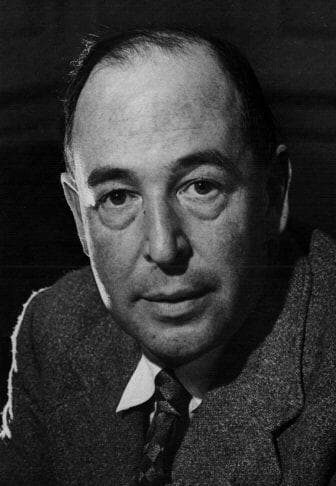
Clive Staples Lewis was a British writer, literary scholar, and Anglican lay theologian. He held academic positions in English literature at both Oxford University and Cambridge University. He is best known as the author of The Chronicles of Narnia, but he is also noted for his other works of fiction, such as The Screwtape Letters and The Space Trilogy, and for his non-fiction Christian apologetics, including Mere Christianity, Miracles, and The Problem of Pain.
Similar books
- The Hobbit, or There and Back Again
J.R.R. Tolkien
4.3 (2.9M) average on GoodreadsFantasyClassic children's fantasy adventure with a quest structure and magical world-building.
- A Wizard of Earthsea
Ursula K. Le Guin
4.0 (241k) average on GoodreadsFantasyExplores themes of magic, morality, and self-discovery in a richly imagined fantasy world.
- Peter Pan
J.M. Barrie
4.0 (277k) average on GoodreadsFantasyFeatures children entering a magical world and engaging in adventures against an evil antagonist.
- His Dark Materials
Philip Pullman
4.3 (144k) average on GoodreadsFantasyPullman's trilogy is often seen as an ideological counterpoint to Narnia. While both feature children traversing magical worlds, Pullman actively subverts and critiques religious dogma, particularly Christianity, in his narrative. His world is built on scientific and philosophical principles, exploring themes of free will, authority, and the nature of the soul (daemons). This stands in direct opposition to Narnia's celebration of Christian allegory and traditional faith, offering a profoundly different worldview and moral framework.
- Harry Potter and the Sorcerer's Stone
J.K. Rowling
4.5 (7M) average on GoodreadsFantasyRescued from a miserable life under the stairs, an orphaned boy discovers he's a wizard destined for a magical school, where he uncovers a dangerous secret tied to the dark wizard who murdered his parents.
- The Hunger Games
Suzanne Collins
4.3 (6.4M) average on GoodreadsFantasyIn a future where children fight to the death on live television, Katniss Everdeen volunteers for the arena, turning a death sentence into a fight for survival and a spark of rebellion.






Enjoyed the summary?
A summary gives you the shape of the book. The book itself has the detail, the examples and the voice.
Find The Chronicles of Narnia on AmazonAs an Amazon Associate, BookBrief earns from qualifying purchases. How we're funded