
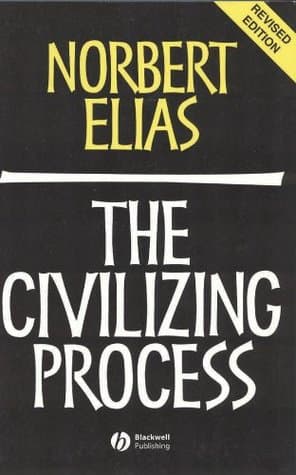
Core Idea
- Difficulty
- Hard
- Read it if
- You are interested in the long-term historical development of manners, psychological structures, and the relationship between state formation and individual behavior, or how social structures shape human emotions and conduct.
- Skip it if
- You prefer a quick read, are looking for a prescriptive self-help book, or dislike dense, academic historical sociology that spans centuries and integrates multiple disciplines.
Key Takeaways from The Civilizing Process
The State's Monopolization of Violence
How centralized power pacified society from within.
Elias argues that the main cause of the civilizing process is the state's slow control over physical violence. In earlier, less organized societies, individuals and small groups often used violence to solve problems or show power. As states gained power, they gradually disarmed private individuals and took sole control of legal force (police, army, courts). This removed the constant threat of personal violence, forcing people to develop self-restraint and find peaceful ways to resolve conflicts. The state's external control became an internal control, creating a more predictable and less dangerous society. This, in turn, allowed for more complex social interactions and emotional controls.
“The monopolization of physical violence by the state is the basis for the pacification of society and the development of more complex and refined social behaviors.”
In the book: Elias traces the historical development of state formation in Europe, particularly focusing on France, showing how feudal lords gradually lost their right to private warfare and how central authorities increasingly asserted control over the instruments of violence.
Try this: Reflect on how modern legal systems and police forces, despite their imperfections, are a foundational element for daily social peace, enabling everything from commerce to complex social gatherings without constant fear of physical assault. Appreciate the often-unseen infrastructure of state-backed peace.
Related ideas: state-formation, monopoly-of-violence, pacification
Internalizing External Constraints
From societal pressure to self-control: the birth of conscience.
The civilizing process is about people internalizing social rules. At first, society's rules (like table manners or not spitting in public) were enforced by immediate outside pressure, shame, or punishment. Over generations, these behaviors became part of one's personality and self-image, not just rules to follow. People began to feel 'shame' or 'disgust' internally, even without someone watching, when they broke these rules. This change from outside control to internal self-control (what Freud called the superego) is important. It creates a more stable social order, as individuals manage their own impulses and behaviors, needing less obvious enforcement and making social interactions more predictable.
“What had previously been an external constraint, exerted by others, became increasingly an internal constraint, exerted by the individual upon himself.”
In the book: Elias meticulously analyzes etiquette books from different historical periods, showing how explicit rules for behavior (e.g., 'do not pick your nose at the table') gradually disappear from later editions, not because the behavior stopped, but because it became so deeply ingrained and 'unthinkable' that it no longer needed explicit instruction.
Try this: Observe your own automatic reactions of disgust or embarrassment to certain behaviors (e.g., belching loudly in public). These are not innate but are deeply internalized social norms. Consider how this 'automatic' self-regulation frees up cognitive resources for more complex thought and interaction.
Related ideas: internalization, self-control, social-norms, superego
The 'Civilized' Body and Affects
How emotions and bodily functions became privatized and refined.
Elias shows how the civilizing process changed the human body and how emotions are shown. Behaviors once considered normal and public—like urinating, defecating, spitting, or strong emotional outbursts—slowly became private, hidden, or highly controlled. This was not just about 'good manners' but showed a deeper shift in what caused shame and disgust. The body, once more public, became increasingly private, requiring careful control over its functions and emotions. This increased control over impulses and emotions is a key part of the 'civilized' personality, allowing for more subtle and less volatile social interactions, which was important for the complex connections of court society and later, modern society.
“The entire process is one of a continuous transformation of spontaneous drives into controlled dispositions.”
In the book: Elias provides numerous examples from medieval and Renaissance etiquette manuals, showing how advice on bodily functions (e.g., 'do not blow your nose on the tablecloth') and emotional restraint (e.g., warnings against excessive laughter or crying) became increasingly stringent and detailed over centuries.
Try this: Pay attention to the subtle social cues and unspoken rules regarding bodily functions and emotional expression in different social settings (e.g., a formal dinner vs. a sporting event). Notice how you instinctively regulate your own body and emotions to fit the context, demonstrating centuries of internalized civilizing pressure.
Related ideas: affect-control, bodily-functions, shame-threshold, privatization
The Interdependence of Individuals
Complex social webs necessitate greater foresight and self-restraint.
As societies grew more complex and connected, individuals became more involved in complicated social networks. Unlike simpler, more isolated communities, where direct revenge or immediate satisfaction might be possible, the highly connected nature of court society (and later, industrial society) meant that one's actions had far-reaching effects on others and, ultimately, on oneself. This required more foresight, planning, and self-restraint. Impulsive behavior became harmful to one's social standing and survival within these complex 'figurations.' The need to navigate these connections led to more elaborate social codes and internal self-control, as individuals learned to anticipate others' reactions and adjust their behavior.
“The more people are bound to each other in a complex web of actions, the more they are forced to adjust their conduct to each other.”
In the book: Elias highlights the development of court society in France, where nobles, stripped of their military power, became dependent on the king and each other for status and resources. This forced them into a complex game of social maneuvering, requiring immense self-control and strategic behavior.
Try this: Consider how your daily life involves constant calibration of your behavior based on anticipation of others' reactions (e.g., driving in traffic, collaborating on a project, navigating social media). This constant 'reading' and 'adjusting' is a direct legacy of increased social interdependence.
Related ideas: figuration, interdependence, social-networks, foresight
The Pressure from Above and Below
Civilizing influences spread through social emulation and differentiation.
The civilizing process is not a linear, top-down imposition but a dynamic social movement driven by both imitation and distinction. Initially, the norms of the upper classes (e.g., court nobles) served as a model for lower classes who wanted to advance. As the 'new' upper-middle classes adopted these manners, the original upper classes felt they needed to further refine their own behavior to keep their social difference. This continuous cycle of imitation from 'below' and distinction from 'above' creates constant pressure for refinement across society. It's an ongoing 'competition' of manners, where what was once refined becomes common, pushing the elite to create new ways of distinguishing themselves, raising the overall 'civilized' standard.
“The standards of 'good society' filter down, while the lower strata, in turn, exert pressure on the upper strata to continually refine their own behavior.”
In the book: Elias charts the adoption of courtly manners by the rising bourgeoisie and the subsequent development of new, more subtle forms of distinction by the aristocracy, such as a greater emphasis on 'naturalness' and 'effortless' refinement.
Try this: Observe how trends in fashion, language, or social etiquette originate in certain groups and then spread, often leading the original group to adopt new styles to re-establish their distinctiveness. Think of 'slang' that becomes mainstream, prompting new slang to emerge.
Related ideas: social-emulation, differentiation, status-competition, manners
Beyond Rationality: The Unintended Process
Civilization as an emergent, not consciously planned, phenomenon.
A key insight from Elias is that the civilizing process is largely an unplanned, emerging phenomenon, not the result of conscious rational planning by individuals or groups. No one 'decided' to become more civilized; instead, the changing dynamics of state formation, social connection, and status competition created pressures that, over centuries, gradually reshaped human behavior and personality. It's a 'process without a subject,' meaning there is no single designer. This challenges views of history that assume a conscious drive toward progress. Instead, Elias offers a sociological explanation rooted in the evolving 'figuration' of human relationships, where many, often unconscious, individual actions lead to large-scale societal changes.
“The 'civilizing process' is not, as it were, the result of a rational plan; it is a long-term structural change in human societies, a figuration of intertwined individual processes.”
In the book: Elias repeatedly emphasizes that the changes in manners and emotional control were not decreed by monarchs or philosophers but arose organically from the changing structure of society, particularly the interdependencies within court society.
Try this: When observing large-scale social trends (e.g., shifts in public discourse, changing work habits), consider how many of these are not the result of deliberate policy but rather the aggregate effect of countless individual decisions and interactions, often driven by underlying structural changes.
Related ideas: unintended-consequences, emergent-properties, figuration-theory, process-sociology
The Retreat of 'Spontaneity'
The cost of civilization: a loss of immediate, uninhibited expression.
While Elias describes the civilizing process as a neutral, factual observation, he acknowledges its potential downsides. A significant 'cost' of increased civilization is the gradual suppression and retreat of immediate, unrestrained spontaneity and emotional expression. As individuals internalize more self-control, they become less able to act purely on impulse or show raw emotions without restraint. This can lead to a feeling of emotional restriction, a sense of constantly being 'on guard' or performing. The 'civilized' person often feels tension between their internal controls and their basic urges, leading to a more complex, often conflicted, inner life compared to their less constrained ancestors. This is not a judgment, but an acknowledgment of the psychological burden of modern self-regulation.
“The greater the degree of civilization, the more rigidly are spontaneity and the direct discharge of affects constrained.”
In the book: Elias contrasts the more direct and public expressions of joy, grief, or anger in medieval society (as depicted in chronicles and art) with the increasingly muted and private emotional displays of later periods, particularly within courtly and bourgeois societies.
Try this: Reflect on moments when you feel the tension between your true feelings and what is socially acceptable to express. Consider how much emotional labor is involved in maintaining a 'civilized' demeanor in various professional or formal social settings.
Related ideas: emotional-repression, spontaneity, affect-regulation, psychological-cost
The Shifting Threshold of Shame and Disgust
What was once acceptable becomes abhorrent over time.
A main mechanism of the civilizing process is the continuous shift in what causes shame and disgust. Behaviors once openly performed and considered normal—such as eating with hands, spitting indoors, or public displays of strong emotion—gradually become sources of intense embarrassment and revulsion. This shift is not random; it is closely tied to the increasing demands for self-control and the privatization of bodily functions driven by societal complexity and interdependence. As the 'civilized' standard rises, more aspects of human behavior fall into the category of 'unacceptable' or 'disgusting,' leading to a deep change in collective feelings and individual emotional responses. This redefines what it means to be a 'person' in society.
“The boundary of what is shameful moves further and further back, until it finally encloses a very large part of what was once perfectly normal.”
In the book: Elias presents numerous examples from historical etiquette manuals, showing how explicit warnings against behaviors like blowing one's nose into one's hand or urinating in public spaces gradually disappear, indicating that these acts had become so deeply shameful as to be unthinkable, even for children.
Try this: Consider how your own 'disgust reflex' operates. What behaviors immediately trigger a strong negative emotional response in you? Recognize that many of these are learned and culturally specific, representing the culmination of centuries of civilizing pressure.
Related ideas: shame-threshold, disgust-response, privatization-of-body, social-sensibilities
Civilization is Not a Value Judgment
A neutral, sociological description of social change, not moral progress.
Crucially, Elias insists that 'The Civilizing Process' is not a moral judgment or an endorsement of progress in a normative sense. He uses 'civilization' as a descriptive, sociological term to describe a specific, long-term structural change in societies and personality structures. It describes how Western societies changed, not whether those changes were inherently 'good' or 'bad.' This neutrality is important to his analysis, allowing him to examine the process without bias, including its psychological costs (like suppressed spontaneity) alongside its benefits (like increased social peace). He aims to understand the mechanisms of change, rather than to celebrate or condemn the outcome, avoiding the ethnocentric biases common in many earlier historical accounts.
“The term 'civilization' is used here in a value-free, sociological sense, to describe a specific type of social development, not to imply moral superiority.”
In the book: Throughout the book, Elias meticulously avoids using 'civilized' as an adjective of praise, instead focusing on outlining the empirical shifts in behavior, affect control, and social organization across different eras without imposing a teleological or moral framework.
Try this: When analyzing social change, strive to separate descriptive observation from normative judgment. Recognize that many historical developments, while having profound impacts, are complex and contain both positive and negative aspects, rather than being purely 'progress' or 'decline.'
Related ideas: value-neutrality, sociological-description, historical-process, anti-teleological
The 'Civilizing Process' is Ongoing
Societal and psychological transformations continue to unfold.
Elias emphasizes that the civilizing process is not a historical endpoint but an ongoing dynamic. While the initial phase of state formation and the establishment of basic emotional controls mostly happened in earlier centuries, the pressures and mechanisms of civilization continue to operate in modern society. New technologies, global connections, and changing social structures constantly bring new demands for self-regulation and new forms of social control. The specific ways 'civilized' behavior appears evolve, but the underlying dynamic of internalizing external rules and refining social conduct continues. This view helps us see current social changes not as isolated events, but as continuations of deep-seated historical processes, where new forms of 'civilization' are constantly being made.
“The process is not concluded. It continues, though its manifestations change with the changing structure of society.”
In the book: Although Elias's primary focus is on early modern Europe, his theoretical framework implicitly suggests how modern phenomena like digital etiquette, globalized social norms, or new forms of emotional intelligence (e.g., managing online personas) can be understood as continuations of the civilizing process.
Try this: Consider how new technologies (e.g., social media, remote work) create new demands for self-control, etiquette, and emotional regulation. How have your own behaviors and expectations shifted in response to these modern 'civilizing' pressures?
Related ideas: ongoing-process, modern-civilization, digital-etiquette, social-evolution
The Civilizing Process Quotes
“The 'civilizing process' is a specific transformation of human behaviour and personality structure, which occurs in the context of the transformation of human societies.”
“The advance of civilization is not a planned, rational act of humanity, but a blind, unplanned process of societal transformation.”
“The threshold of shame and embarrassment shifts in the course of history.”
“The more stable, extensive, and effective the central political authority, the more stable, extensive, and effective the monopoly of physical force and taxation.”
“The court society, as a particular social figuration, played a crucial role in shaping the specific forms of civilized behavior.”
“The increasing differentiation of functions within society leads to an increasing interdependence of individuals.”
“The control of affects, the curbing of spontaneous impulses, the refinement of manners—these are hallmarks of the civilizing process.”
“The individual's 'second nature' of self-restraint and foresight becomes increasingly indispensable for social survival.”
“The development of a more extensive and stable state apparatus goes hand in hand with a corresponding transformation of the individual personality structure.”
“The changing social standards of what is considered 'private' and 'public' reflect the ongoing civilizing dynamic.”
“The shift from external compulsion to self-compulsion is a central feature of the civilizing process.”
“The increasing pacification of social life is a long-term trend, though punctuated by reversals and violence.”
“The process of civilization is not a linear march of progress, but a complex, often contradictory, movement of human societies.”
“The growing network of interdependencies binds people together in a more complex and inescapable web, forcing greater self-control.”
Quiz
10 questions on the main ideas. Each answer comes with a short explanation.
Question 1
According to Elias, what is one of the primary mechanisms through which the 'civilizing process' unfolds in Western Europe?
- The widespread adoption of religious doctrines emphasizing self-restraint.
- The increasing monopolization of physical force and taxation by central states.
- The invention of printing, which disseminated etiquette manuals to the masses.
- Frequent inter-state warfare, which necessitated greater social cohesion.
Show answer
B. The increasing monopolization of physical force and taxation by central states. Elias argues that the formation of states and their increasing monopolization of power, particularly physical force and taxation, led to the pacification of internal territories and a shift towards greater self-restraint and foresight in individual behavior.
Question 2
Which of the following best describes Elias's concept of 'figuration'?
- A static social structure that determines individual behavior.
- A dynamic, interdependent network of individuals whose actions mutually influence each other.
- The psychological process by which individuals internalize social norms.
- The historical period characterized by the decline of feudalism.
Show answer
B. A dynamic, interdependent network of individuals whose actions mutually influence each other. Elias uses 'figuration' to describe the interconnectedness and interdependence of individuals, emphasizing that societies are not static structures but dynamic networks of people whose actions are constantly shaping and being shaped by others.
Question 3
Elias traces the evolution of manners regarding bodily functions (e.g., eating, spitting) from the Middle Ages to modernity. What is the general trend he observes?
- A gradual relaxation of social rules as society became more liberal.
- An increasing emphasis on naturalness and spontaneity.
- A progressive move towards greater concealment, shame, and self-restraint.
- A cyclical pattern of strictness and permissiveness.
Show answer
C. A progressive move towards greater concealment, shame, and self-restraint. Elias meticulously documents how previously public and unproblematic bodily functions became increasingly privatized, associated with shame, and subject to stricter controls as part of the civilizing process.
Question 4
How does Elias connect the rise of the absolutist court society to the civilizing process?
- Court society fostered a return to more primitive, warlike behaviors.
- The competitive pressures and refined etiquette of court life demanded greater self-control and emotional discipline from nobles.
- It led to the complete eradication of violence from public life.
- The court served as a model for democratic governance.
Show answer
B. The competitive pressures and refined etiquette of court life demanded greater self-control and emotional discipline from nobles. Elias argues that the absolutist court, with its intricate hierarchies and intense social competition, compelled nobles to internalize stricter codes of conduct, manage their emotions, and exercise foresight, thereby accelerating the civilizing process.
Question 5
Elias differentiates between 'sociogenesis' and 'psychogenesis.' What does 'psychogenesis' primarily refer to in his work?
- The study of mental illness in historical contexts.
- The development of individual personality structures and emotional economies over time, mirroring societal changes.
- The origins of psychological theories.
- The influence of genetics on human behavior.
Show answer
B. The development of individual personality structures and emotional economies over time, mirroring societal changes. 'Psychogenesis' refers to the long-term changes in the structure of the human psyche, particularly the increasing internalization of external social constraints into self-restraint, paralleling the 'sociogenesis' of state formation.
Question 6
What role does the 'threshold of shame and embarrassment' play in Elias's theory?
- It represents a fixed, universal human characteristic.
- It describes the point at which individuals rebel against social norms.
- It refers to the dynamic and shifting boundaries of what is considered socially acceptable, leading to increased self-control.
- It is a psychological defense mechanism against societal pressures.
Show answer
C. It refers to the dynamic and shifting boundaries of what is considered socially acceptable, leading to increased self-control. Elias argues that the 'threshold of shame and embarrassment' gradually shifts over time, encompassing more aspects of behavior and driving individuals to internalize stricter controls over their impulses and bodily functions.
Question 7
Elias challenges traditional views of history by emphasizing:
- The role of heroic individuals as the primary drivers of change.
- The discontinuous and revolutionary nature of social transformation.
- Long-term, unplanned, and interdependent processes of social and psychological change.
- The sole importance of economic factors in shaping society.
Show answer
C. Long-term, unplanned, and interdependent processes of social and psychological change. Elias's work highlights the long-term, often unintended, and complex interplay of social processes ('figurations') and psychological transformations, moving away from explanations based on individual genius or sudden revolutions.
Question 8
In the context of the 'civilizing process,' what happens to external social constraints as societies become more 'civilized'?
- They diminish entirely, leading to greater individual freedom.
- They are increasingly internalized by individuals, becoming self-constraints.
- They become more overtly punitive and visible.
- They are replaced by religious dogma.
Show answer
B. They are increasingly internalized by individuals, becoming self-constraints. A core argument of Elias is that as states monopolize violence, the external pressures that once enforced behavior become internalized as self-control, shame, and conscience, leading to a more 'civilized' personality structure.
Question 9
Elias criticizes traditional sociological and historical approaches for their tendency to:
- Overemphasize the role of economic forces.
- Focus too much on non-Western societies.
- Separate the study of individuals (psychology) from the study of society (sociology/history).
- Ignore the importance of cultural artifacts.
Show answer
C. Separate the study of individuals (psychology) from the study of society (sociology/history). A central methodological point for Elias is the need to overcome the artificial separation between the study of 'individuals' and 'society,' proposing 'figurations' as a way to understand their interdependent development.
Question 10
According to Elias, how did the decline of the knightly class and the rise of a centralized court contribute to the civilizing process?
- It led to a resurgence of local autonomy and diverse social norms.
- Knights were replaced by a new warrior class with even more aggressive behaviors.
- The shift from a warrior ethos to a courtly one emphasized verbal and psychological competition over physical violence, demanding greater emotional control.
- It resulted in a period of social stagnation and resistance to change.
Show answer
C. The shift from a warrior ethos to a courtly one emphasized verbal and psychological competition over physical violence, demanding greater emotional control. Elias details how the waning power of the feudal warrior class, with its emphasis on physical prowess and direct violence, gave way to a courtly society where status depended more on refined manners, diplomacy, and the suppression of aggressive impulses, fostering a higher level of self-restraint.
The Civilizing Process FAQ
What is the core argument of Norbert Elias's 'The Civilizing Process'?
'The Civilizing Process' argues that changes in manners, behavior, and personality in Western Europe since the late Middle Ages are intrinsically linked to the formation of states and the monopolization of power. As societies became more complex and interdependent, individuals were increasingly compelled to exercise self-restraint and regulate their affects.
Does 'The Civilizing Process' suggest that modern society is inherently 'better' or more 'advanced'?
Elias's work is descriptive rather than prescriptive. It traces a historical process of change in social norms and individual psychology without implying a moral judgment of 'better' or 'worse.' He emphasizes the functional necessity of these changes within specific societal structures.
What is the 'civilizing process' according to Elias?
The 'civilizing process' refers to the long-term historical development in Western societies where external constraints (like state power and social pressure) were increasingly internalized by individuals as self-restraint and shame. This led to a gradual refinement of manners, an increase in emotional control, and a heightened sensitivity to the behavior of others.
How does 'The Civilizing Process' differ from Freudian psychoanalysis?
While both Elias and Freud explore the internalization of societal norms, Elias focuses on the macro-historical and sociological development of these norms, linking them to state formation and social interdependence. Freud, conversely, emphasizes individual psychological development and the universal conflict between instinctual drives and societal demands within the individual psyche.
What role do manners and etiquette play in Elias's theory?
Manners and etiquette are central to Elias's analysis, serving as observable indicators of deeper shifts in personality structure and social relations. The historical evolution of rules concerning eating, bodily functions, and social interaction demonstrates the increasing demands for self-control and the growing distance between individuals in social life.
Does the civilizing process apply to non-Western societies?
Elias's primary focus is on Western Europe, and he developed his concepts based on this specific historical trajectory. While the framework offers tools for analyzing similar processes elsewhere, applying it to non-Western societies requires careful consideration of different historical contexts, power dynamics, and cultural developments.
How does the monopolization of power by the state relate to individual self-restraint?
Elias argues that as states gained a monopoly on physical violence and taxation, societal life became more pacified and interconnected. This reduced the need for individuals to constantly be ready for combat and instead fostered a greater need for predictable, controlled behavior, leading to increased self-restraint and emotional regulation to navigate complex social networks.
Is 'The Civilizing Process' still relevant for understanding contemporary society?
Yes, Elias's work remains highly relevant for understanding ongoing social changes. His insights into interdependence, the long-term development of social norms, and the interplay between individual psychology and societal structures offer valuable frameworks for analyzing phenomena like globalization, the internet's impact on social interaction, and evolving standards of public and private behavior.
What is the 'sociogenetic' and 'psychogenetic' connection in Elias's work?
Elias sees a deep connection between the 'sociogenesis' (the development of society, particularly state formation) and the 'psychogenesis' (the development of individual personality structures). He argues that changes in social organization directly lead to transformations in individual psychology, particularly the internalization of external controls as self-controls.
About the author
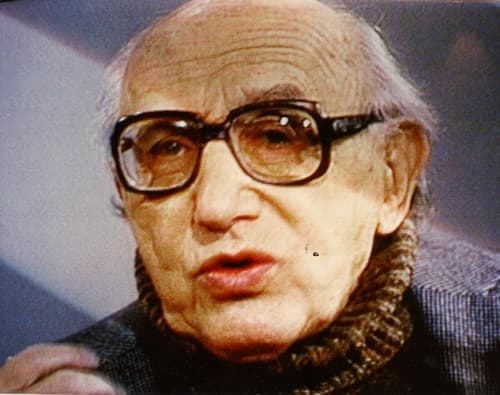
Norbert Elias was a German sociologist known for his work on the development of modern society and social behavior. His notable work, "The Civilizing Process," explores the historical changes in manners and social norms in Western Europe. Elias's contributions have significantly influenced the fields of sociology and social theory.
Similar books
- The Diary of a Young Girl
Anne Frank
4.2 (2.7M) average on GoodreadsBiographyDuring the Nazi occupation, a teenage girl's diary, written from a secret annex, shares observations on humanity, hope, and the wait for freedom.
- Night
Elie Wiesel
4.3 (970k) average on GoodreadsBiographyIn the darkness of Auschwitz and Buchenwald, a teenage Elie Wiesel faces the extermination of his family, the loss of his faith, and the lasting scars of humanity's deepest cruelty.
- Steve Jobs
Walter Isaacson
4.1 (957k) average on GoodreadsBusinessSteve Jobs was a visionary who fused creativity and technology to revolutionize six industries and shape our digital world.
- Unbroken: A World War II Story of Survival, Resilience and Redemption
Laura Hillenbrand
4.4 (767k) average on GoodreadsBiographyLouis Zamperini's incredible World War II odyssey transforms him from a rebellious youth and Olympic runner into a survivor of a plane crash, shark-infested waters, and brutal Japanese POW camps, only to find redemption through forgiveness.
- The Immortal Life of Henrietta Lacks
Rebecca Skloot
4.1 (587k) average on GoodreadsBiographyA poor Southern tobacco farmer's unwitting contribution of 'immortal' cells starts a journey through scientific breakthroughs, medical ethics, and her family's decades-long fight for recognition and understanding.
- Angela's Ashes
Frank McCourt
4.1 (540k) average on GoodreadsBiographyIn Depression-era Limerick, young Frank McCourt navigates an impoverished Irish Catholic childhood, sustained by his father's captivating stories and his own spirit, turning hardship into a tale of resilience, humor, and ultimate forgiveness.






Enjoyed the summary?
A summary gives you the shape of the book. The book itself has the detail, the examples and the voice.
Find The Civilizing Process on AmazonAs an Amazon Associate, BookBrief earns from qualifying purchases. How we're funded