
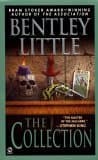
Synopsis
Covers the whole plot, including the ending.
- Difficulty
- Easy
- Pacing
- Variable
- Mood
- Unsettling, Absurd, Dark, Satirical, Disturbing
- Read it if
- You enjoy short, unsettling horror stories that find the bizarre and terrifying in the mundane, and appreciate social commentary wrapped in a macabre package.
- Skip it if
- You prefer traditional monster horror, happy endings, or clearly defined explanations for the supernatural.
The Collection Plot Summary
Covers the whole plot, including the ending.
The Sanctuary
Robert moves into a new house in a seemingly perfect, quiet community called The Sanctuary. He likes the perfect lawns and friendly neighbors at first, but soon notices strange things: everyone dresses the same, drives the same car, and follows unwritten rules. Small mistakes, like a slightly overgrown bush, lead to quick, anonymous 'corrections.' Robert tries to make his home unique or break from the norm, but he faces subtle but strong pressure from the community, making him feel more and more watched and controlled. The story creates a feeling of unease as Robert realizes the 'sanctuary' is actually a prison of conformity.
The Mailman
The people in a quiet town are bothered by their new mailman, a thin, silent man who seems to know too much about their private lives. He delivers unusual, very personal letters and packages that reveal secrets, predict bad luck, or contain strange, symbolic items. Mrs. Henderson gets a letter about her husband's cheating before she even suspects it, while Mr. Peterson receives a package with a single, dead bird, hinting at a sad event. The mailman never speaks, only stares with an unsettling gaze. His deliveries seem to control events, pushing the town into paranoia and despair as their deepest fears come to light.
The Academy
A young boy, David, starts at the exclusive and very secret Blackwood Academy. The school has great academic results, but David quickly notices its odd rules and the quiet, almost scared behavior of the older students. The teachers are very strict, and a constant feeling of dread hangs over the school. Students who do not meet the school's impossible standards or try to leave simply disappear. David uncovers a terrible ritual where students deemed 'unworthy' are used in occult practices. Their failures are literally consumed by the school to power its success, showing the school's true, predatory nature.
The Collection
Mr. Abernathy is an eager, almost obsessive, collector of rare antiques, focusing on items with strange or dark pasts. He buys a series of seemingly harmless objects – an old music box, a tarnished mirror, a faded painting – each with a subtle, unsettling presence. As his collection grows, strange things happen in his home: whispers in empty rooms, objects moving on their own, and a constant chill. Abernathy dismisses these as oddities, but the objects begin to have a bad influence, subtly changing his thoughts and desires, drawing him deeper into their sinister network. He realizes too late that he is not collecting the items, but they are collecting him for an unknown, terrifying purpose.
The Consultant
A failing company hires a mysterious, very efficient consultant named Mr. Smith. Smith quickly makes big, often harsh, changes that greatly improve profits but at a terrible human cost. Employees seen as 'inefficient' or 'unnecessary' are not just fired; they vanish, sometimes replaced by strangely obedient, emotionless new hires. The remaining staff live in constant fear, seeing colleagues suffer strange accidents or mental breakdowns. Smith's methods are never explained, but his presence seems to twist reality, making the office a place of silent terror where human value is systematically removed for the sake of abstract corporate 'success,' showing a demonic efficiency.
The House on Maple Street
The Miller family moves into a beautiful, old house on Maple Street, hoping for a new beginning. However, the house quickly shows itself to be more than just wood and stone. Doors lock on their own, strange noises echo at night, and objects rearrange themselves. The family members have unsettling visions and dreams, and the house seems to feed on their worries and fears. It separates them from the outside world, subtly changing their relationships and creating divisions. As the house's evil grows, it begins to physically control them, trapping the family within its walls and slowly consuming their minds and will, aiming to make them permanent residents.
The Neighborhood Watch
Mr. Thompson, a new resident, joins his neighborhood's active Neighborhood Watch. At first, he is impressed by their focus on safety and community. However, he soon notices their methods are increasingly nosy and harsh. Small rule breaks, like leaving out trash cans too long, are met with severe, overly strong 'punishments' set up by the group. The Watch, led by the charming but threatening Mr. Davies, enforces a silent code of complete conformity and obedience. Thompson realizes the Watch is not protecting the neighborhood from outside threats; it is a totalitarian system controlling its residents through fear, using 'justice' as a word for public shame and terror.
The Committee
John Smith receives a series of strange, official-looking letters from 'The Committee,' telling him about random changes to his life: his street will be renumbered, his job title changed, his personal records updated. Despite his attempts to object or find out who 'The Committee' is, he meets a wall of bureaucracy and indifference. The changes grow, affecting his money, his relationships, and eventually his identity. He finds others in his town are experiencing similar, equally absurd and damaging interventions. The Committee works with cold, impersonal efficiency, systematically removing individual freedom and proving that the most terrifying horror can come from a faceless, unstoppable system.
The Store
A large, generic chain store, simply called 'The Store,' opens in a small town, offering very low prices and endless products. At first, the townspeople flock to it, happy with the convenience. However, 'The Store' quickly puts all local businesses out of operation, leaving empty shops and unemployment. Its presence is quiet but harmful; it subtly changes the town's culture, replacing unique traditions with its bland, corporate sameness. People who try to resist find themselves excluded or quietly sabotaged. The Store becomes a powerful, almost living entity, taking over the town's spirit and individuality until nothing remains but its sterile, all-consuming presence.
The Black Book
Mark finds an old, leather-bound book with no title or author. To his horror, he discovers it contains a detailed, accurate record of his own life, including events yet to happen. As he reads, he realizes that reading itself seems to make the described events happen or become fixed. He tries to defy its predictions, but his attempts only lead him back to the book's story. The book does not just record; it dictates. Mark gets caught in a terrifying loop, realizing his free will is an illusion, and his life is merely a story being written, or perhaps rewritten, by the malevolent force within the Black Book's pages, leading to his unavoidable, sad end.
The People of the Book
Sarah, a young aspiring writer, joins a seemingly harmless local book club, 'The People of the Book,' hoping to meet others and discuss literature. The members are very passionate about obscure, ancient texts and have an unsettling respect for the power of words. Sarah soon notices their strange rituals, their secret language, and their uncanny ability to influence events through what they read and write. She discovers the club is not just a literary group but an ancient cult that believes certain texts can shape reality and even call forth beings. Sarah's initial interest turns to terror as she realizes she has become involved in their dark practices, and they plan to make her a permanent part of their living library.
The Bank
Mr. Henderson opens an account at a new, high-tech bank, drawn by its promises of great security and convenience. However, he soon finds the bank's services are disturbingly intrusive. It knows his every financial move, his personal habits, and even his desires. Withdrawals are sometimes denied for unknown reasons, and strange, personalized fees appear. The bank's presence grows, influencing his credit, his job, and his relationships. He discovers that the bank is a living, parasitic entity that feeds on its customers' financial and personal information, slowly taking control of their lives until they are completely dependent on it, their very existence dictated by its rules and whims, with no escape.
The Drive-In
A group of friends decides to spend an evening at an old, rundown drive-in theater rumored to show obscure, unsettling films. The projector flickers, and the movies shown are not just horror films but seem to bring their content into reality. Characters from the screen appear in the parking lot, the weather matches what is on screen, and the audience members find themselves experiencing the same fears and dangers shown. As the night goes on, the line between film and reality completely blurs, trapping the friends in a terrifying, ever-changing story where the drive-in itself is a malevolent storyteller, creating a personalized horror for its captive audience, from which there is no escape.
The School Bus
Parents in a small town become increasingly worried as children start disappearing from their usual school bus route. The new bus driver, a thin, silent man with unsettling eyes, is the only common factor. When concerned parents investigate, they find the bus route goes off schedule, taking strange detours into empty areas. One parent, Mrs. Jenkins, desperate to find her missing daughter, secretly follows the bus. She sees the bus pull into an abandoned lot, its doors open, and the children, in a trance-like state, walk into a shimmering portal that appears at the back of the bus, revealing the driver to be an interdimensional kidnapper.
The Town
Michael returns to his childhood hometown after many years, expecting familiar comfort. Instead, he finds it quietly but deeply changed. The streets are slightly different, familiar places are gone or altered, and the residents, though outwardly friendly, seem to have an unsettling sameness and a shared forgetting of the past. His old friends do not remember specific shared memories, and his family dismisses his worries as 'imagination.' Michael discovers that a quiet, unseen force has systematically rewritten the town's history and identity, replacing real memories with a made-up reality, leaving him as the only one who remembers what truly was, trapped in a town that is both familiar and completely alien.
Principal Figures
Robert (The Sanctuary)
Protagonist
A new resident who questions his community's forced conformity.
Robert is an ordinary man seeking a peaceful life in a new home. He values individuality and personal expression. Initially hopeful about The Sanctuary, he becomes increasingly uneasy and then terrified by the community's rigid social rules and the subtle but pervasive pressure to conform. He is an observer who gradually realizes the oppressive nature of his surroundings, leading to a desperate, though likely futile, internal struggle against the system.
The Mailman
Antagonist
A silent, supernatural mailman who delivers personalized dread.
The Mailman is a gaunt, unsettling figure who never speaks but communicates through his deliveries. He appears to possess supernatural knowledge of the townspeople's secrets, fears, and futures. His role is not merely to deliver mail but to manifest and accelerate the town's hidden anxieties, acting as a catalyst for misfortune and despair. He is an embodiment of fate or a malevolent entity that thrives on human suffering, his actions always precise and deeply personal, targeting each individual's most vulnerable points.
David (The Academy)
Protagonist
A young student who uncovers the dark secrets of his elite school.
David is a bright, observant, and initially naive young boy sent to Blackwood Academy. He possesses a strong sense of curiosity and an unwillingness to blindly accept the strange rules of his new environment. As he witnesses the oppressive atmosphere and the disappearances of other students, his innocence gives way to fear and a desperate drive to uncover the truth. He represents the innocent individual confronted by a powerful, corrupt institution.
Mr. Abernathy (The Collection)
Protagonist/Victim
An obsessive antique collector consumed by his malevolent acquisitions.
Mr. Abernathy is a wealthy, solitary man whose life revolves around his passion for collecting rare and historically significant antiques. He is driven by a desire to possess unique items, particularly those with a mysterious past. His obsession blinds him to the inherent dangers of his acquisitions, leading him to rationalize the strange occurrences in his home. He is a tragic figure, a connoisseur who ultimately becomes an item in his own collection, demonstrating the perils of unchecked desire.
Mr. Smith (The Consultant)
Antagonist
A mysterious consultant who brings demonic efficiency to a company.
Mr. Smith is a gaunt, impeccably dressed consultant whose presence at the company immediately instills a sense of dread. He is unnervingly calm, speaks in measured tones, and implements changes with ruthless, almost supernatural, efficiency. He appears to be less a human consultant and more an embodiment of corporate greed and inhuman logic, or perhaps a demonic entity. His methods prioritize abstract 'profit' over human lives, and he operates without empathy or explanation, leaving a trail of vanished and traumatized employees.
The House (The House on Maple Street)
Antagonist
A sentient, malevolent house that traps and consumes its inhabitants.
The House on Maple Street is not merely a setting but a living, breathing entity with a sinister will. It exhibits sentience through its ability to manipulate its physical environment – locking doors, moving objects, creating sounds and visions. It feeds on the fear, despair, and sanity of its occupants, actively working to isolate them and drive them to madness. The house represents a primal, inescapable horror, a domestic space turned into a psychological and physical prison, intent on absorbing its victims into its very fabric.
Relationships: Miller Family (antagonistic, parasitic)
Mr. Davies (The Neighborhood Watch)
Antagonist
The charismatic but menacing leader of a tyrannical neighborhood watch.
Mr. Davies is the leader of the Neighborhood Watch, presenting himself as a pillar of the community and a champion of safety. He is charismatic and persuasive, initially drawing people in with his vision of a perfect neighborhood. However, beneath this facade lies a ruthless dictator who uses the Watch to enforce extreme conformity and exact disproportionate 'punishments' for minor infractions. He embodies the danger of unchecked authority and how good intentions can spiral into totalitarian control, wielding fear as his primary weapon.
Relationships: Mr. Thompson (antagonistic, oppressive)
John Smith (The Committee)
Protagonist/Victim
A man whose life is systematically dismantled by a faceless bureaucracy.
John Smith is an ordinary man living an ordinary life, until he becomes the target of 'The Committee.' He is initially a bewildered and frustrated individual, trying to navigate an absurd and unresponsive bureaucratic system. His journey is one of increasing helplessness and despair as his identity, livelihood, and relationships are systematically eroded by forces he cannot comprehend or combat. He represents the common person's vulnerability to impersonal, overwhelming systems that operate without logic or accountability.
The Store
Antagonist
A monolithic chain store that consumes a town's identity.
The Store is a vast, generic retail entity that initially appears as a boon to the town but quickly reveals its parasitic nature. It is depicted as almost sentient, with an insidious ability to absorb local businesses, traditions, and individuality. It doesn't just sell products; it sells a new, bland way of life, enforcing conformity through economic pressure and social ostracization. The Store represents the terrifying power of corporate globalization and consumerism to erase local culture and human connection, leaving behind only its sterile, all-encompassing presence.
Mark (The Black Book)
Protagonist/Victim
A man trapped by a book that dictates his past and future.
Mark is an unassuming individual who stumbles upon a mysterious book that profoundly alters his perception of reality. He is intelligent and initially attempts to exercise his free will against the book's narrative, demonstrating a desire for control over his own destiny. However, his efforts are futile, leading him to a horrifying realization of his lack of agency. He becomes a tragic figure, a puppet to an unseen author, embodying the existential dread of predestination and the loss of self-determination.
Sarah (The People of the Book)
Protagonist/Victim
An aspiring writer drawn into a sinister literary cult.
Sarah is a bright, ambitious young writer with a passion for literature. She is initially eager to connect with like-minded individuals, making her susceptible to the allure of 'The People of the Book.' Her intellectual curiosity slowly transforms into terror as she uncovers the cult's true nature. She represents the innocent outsider drawn into a world of hidden power and ancient evils, becoming a pawn in their schemes due to her talents and unwitting participation.
Relationships: The People of the Book (initially collaborative, then adversarial/victim-cult relationship)
The Town (The Town)
Antagonist
A man's hometown subtly altered by a malevolent, memory-erasing force.
The Town itself acts as an antagonist, having been subtly and disturbingly altered by an unseen force. It embodies a collective, manufactured reality where genuine history and personal memories have been systematically replaced with a false, uniform narrative. The residents, though appearing normal, are complicit in this new reality, having lost their true pasts. The town functions as a living, breathing illusion designed to trap and assimilate anyone who remembers the truth, creating a chilling sense of gaslighting on a communal scale.
Relationships: Michael (antagonistic, reality-warping)
Themes & Insights
The Horrors of Conformity and Loss of Individuality
Many stories in 'The Collection' look at what happens when people are forced to give up their unique selves to a larger, controlling group. This idea appears in communities like 'The Sanctuary,' where small differences are met with harsh, anonymous 'corrections,' causing residents like Robert to live in constant fear. In 'The Neighborhood Watch,' Mr. Davies's group enforces extreme social control, punishing any perceived non-conformity. 'The Store' similarly destroys local businesses and traditions, replacing them with bland corporate sameness, suggesting that losing who you are can be a slow, harmful death. The main fear is losing your sense of self.
“It wasn't just about fitting in; it was about ceasing to be yourself.”
The Insidious Nature of Bureaucracy and Systems
Little often shows official systems and groups as evil forces that work with cold, impersonal efficiency, often leading to strange and terrible results for individuals. 'The Committee' is a clear example, systematically ruining John Smith's life through random letters and rules, with no clear reason or way to appeal. 'The Bank' shows a similar horror, quietly taking control of its customers' lives through intrusive services and strange fees, becoming a parasitic entity. These stories highlight the terror of being helpless against a faceless, unstoppable machine that values data and process over human well-being, suggesting that the ordinary can be as scary as the supernatural.
“The worst part wasn't the malice, but the utter, dispassionate indifference.”
The Corruption of Familiar Institutions and Spaces
A repeated idea is how seemingly harmless or trusted places and groups turn into sources of dread. 'The Academy' changes a respected school into a place of occult rituals and disappearances, consuming its students. 'The House on Maple Street' twists the idea of home, making it a living, evil entity that traps and feeds on its inhabitants. Even the simple act of getting mail becomes a source of terror in 'The Mailman,' as the mailman uses his deliveries to reveal secrets and predict misfortunes, turning a daily convenience into a sign of doom. These reversals create a deep sense of unease, as safe places become sites of great danger.
“The very walls seemed to breathe, a slow, malevolent exhalation.”
The Power of Hidden Knowledge and Predetermination
Several stories explore the horror of finding out about existing knowledge or a predetermined future that takes away free will. In 'The Mailman,' the mailman delivers letters that reveal future misfortunes or expose secrets, suggesting a set path for the townspeople. 'The Black Book' takes this further, as Mark finds a book that not only records his life but seems to dictate it, making him a prisoner of its story. 'The People of the Book' describes a cult that believes certain texts can shape reality, hinting at a hidden, ancient power that controls events through written words. This theme brings up an existential dread, questioning the idea of choice and the terrifying possibility that our lives are already written.
“Every word I read sealed my fate, not revealed it.”
The Consumption and Erasure of Identity
This theme looks at how outside forces, whether supernatural or systemic, can systematically remove a person's or a community's core identity. In 'The Town,' Michael finds his hometown subtly changed, with shared memories erased and replaced by a false reality, leaving him as the only one who remembers the truth. 'The Consultant' shows employees not just fired, but vanishing, their very existence erased from corporate memory. This erasure goes beyond physical disappearance to the psychological, where people are forced to give up their beliefs, memories, and personal histories, becoming interchangeable parts in a larger, sinister machine. The horror lies in losing not just life, but the very essence of who one is.
“They didn't just forget; they remembered something else entirely.”
Plot Devices & Literary Techniques
The Unseen/Unknowable Threat
Horror derived from a malevolent force whose origins and mechanisms remain mysterious.
This device is prevalent throughout the collection, creating a pervasive sense of dread. The antagonists in many stories, such as 'The Committee,' 'The Bank,' or the entity behind 'The Town's' alterations, are often faceless, bureaucratic, or amorphous. Their motives are obscure, their power seems limitless, and their methods defy logic. This lack of concrete explanation amplifies the terror, as characters like John Smith or Michael find themselves battling forces they cannot comprehend or even fully perceive, making resistance futile and escape impossible. The unknown nature of the threat forces the reader to confront the limits of human understanding and control.
Subtle, Gradual Escalation of the Abnormal
Horror that begins with minor oddities and slowly builds to outright supernatural terror.
Bentley Little often employs a slow burn approach, where the horror isn't immediately overt but begins with minor, unsettling discrepancies that accumulate over time. In 'The Sanctuary,' Robert first notices slightly overgrown bushes and similar cars before the true nature of the community is revealed. In 'The House on Maple Street,' the Millers experience strange noises and moving objects before the house's sentience becomes undeniable. This gradual escalation desensitizes characters (and readers) to the initial oddities, only to plunge them into full-blown terror when the true, horrifying scope of the situation becomes apparent, making the transition from mundane to monstrous all the more effective and disturbing.
The Corrupted Mundane
Everyday objects, places, or institutions that become sources of supernatural dread.
This device transforms the familiar and safe into something terrifying. A mailman, a school, a neighborhood watch, a bank, or even a book – all typically innocuous elements of daily life – are imbued with malevolent power. 'The Mailman' uses personalized deliveries to inflict terror, while 'The Academy' turns a place of learning into a site of occult sacrifice. This corruption of the mundane is deeply unsettling because it erodes the sense of safety and predictability in the reader's own world, suggesting that horror can lurk in the most ordinary corners of existence, making escape impossible as the horror is everywhere.
Loss of Agency and Free Will
Characters discovering they are powerless against a predetermined fate or external control.
Many of Little's stories strip characters of their autonomy, placing them in situations where their choices are an illusion or their lives are dictated by external forces. Mark in 'The Black Book' finds his life literally written, his attempts to defy the narrative only fulfilling it. Characters in 'The Committee' or 'The Bank' are subjected to arbitrary changes and controls by faceless systems, rendering their protests useless. This device taps into a fundamental human fear: the loss of control over one's own destiny. It creates a profound sense of helplessness and existential dread, as protagonists realize they are mere puppets in a larger, sinister play, their struggles futile.
The Collection Quotes
“The worst part of it was that there was no way to tell if you were crazy or not.”
“It was a town built on secrets, and the secrets were built on something else entirely.”
“Fear was a contagious thing, and in this town, it was an epidemic.”
“Sometimes the things you didn't see were far more terrifying than the things you did.”
“The past wasn't dead here; it was just waiting.”
“Every town had its quirks, but this town had its nightmares.”
“The silence wasn't empty; it was filled with unspoken threats.”
“You could run, but you couldn't escape what was inside you.”
“The ordinary became extraordinary, and then it became horrific.”
“There was a logic to the madness, but it was a logic no human could comprehend.”
“Some doors were meant to stay closed, no matter how curious you were.”
“The town wasn't just a place; it was a living, breathing entity.”
“What you didn't know could kill you, but what you did know could drive you insane.”
“They collected more than just objects; they collected lives.”
Quiz
10 questions on the plot and the characters. Each answer comes with a short explanation.
Question 1
Which of the following describes the general tone and subject matter of the stories in Bentley Little's 'The Collection'?
- Whimsical fantasy tales with moral lessons.
- Psychological thrillers focused on detective work.
- Dark, macabre horror stories often with supernatural or bizarre elements.
- Romantic comedies set in unusual locations.
Show answer
C. Dark, macabre horror stories often with supernatural or bizarre elements. Bentley Little is known as the 'Master of the Macabre' and his collection features horror stories, often delving into the supernatural and bizarre.
Question 2
How many stories are featured in Bentley Little's 'The Collection'?
- 20
- 32
- 28
- 40
Show answer
B. 32 The book description explicitly states that 'The Collection' features 32 of his best horror stories.
Question 3
Which acclaimed author referred to Bentley Little as the 'Master of the Macabre'?
- Clive Barker
- H.P. Lovecraft
- Stephen King
- Dean Koontz
Show answer
C. Stephen King The book description credits Stephen King with calling Bentley Little the 'Master of the Macabre'.
Question 4
What distinguishes some of the stories in 'The Collection' from others, as mentioned in the book's description?
- Some are collaborations with other authors.
- Some are non-fiction essays about horror.
- Four of the stories are brand-new and previously unpublished.
- They are categorized by sub-genre of horror.
Show answer
C. Four of the stories are brand-new and previously unpublished. The book description highlights that the collection includes 'four brand-new stories' in addition to his best previously published works.
Question 5
Given Bentley Little's reputation and the genre of the book, what kind of common narrative elements would you expect to find in his short stories?
- Feel-good resolutions and heartwarming character arcs.
- Intricate world-building for high fantasy settings.
- Ordinary situations escalating into bizarre, disturbing, or nightmarish scenarios.
- Detailed historical accounts woven into the plot.
Show answer
C. Ordinary situations escalating into bizarre, disturbing, or nightmarish scenarios. As a master of the macabre and a horror author, Little often takes everyday life and twists it into something unsettling and terrifying, which is a hallmark of his style.
Question 6
What major award has Bentley Little won, as mentioned in the description?
- Nebula Award
- Hugo Award
- Bram Stoker Award
- World Fantasy Award
Show answer
C. Bram Stoker Award The description states that Bentley Little is a 'Bram Stoker Award winner'.
Question 7
Considering the genre and the author's style, what is a likely common characteristic of the protagonists or central figures in these short stories?
- They are often powerful, heroic figures actively fighting supernatural evil.
- They are typically ordinary individuals who find themselves caught in extraordinary, horrifying circumstances.
- They are usually eccentric villains driving the plot with their malevolent schemes.
- They are often complex, morally ambiguous anti-heroes navigating a dystopian future.
Show answer
B. They are typically ordinary individuals who find themselves caught in extraordinary, horrifying circumstances. In horror, especially the macabre and unsettling style of Little, protagonists are frequently ordinary people whose lives are disrupted by the bizarre and terrifying, making their plight more relatable and frightening.
Question 8
Given the 'macabre' nature and horror genre, what is a less likely outcome for the resolution of a story in 'The Collection'?
- The protagonist barely escapes, but is forever scarred by the experience.
- The horror is definitively defeated, and life returns completely to normal for all involved.
- The protagonist succumbs to the supernatural threat.
- The 'normal' world is revealed to be inherently horrifying or corrupted.
Show answer
B. The horror is definitively defeated, and life returns completely to normal for all involved. In macabre horror, a complete and total return to normalcy with no lingering effects or consequences is rare. The endings are often bleak, ambiguous, or leave the characters irrevocably changed or defeated.
Question 9
What does the inclusion of 'four brand-new stories' suggest about the collection's appeal to existing fans of Bentley Little?
- It means the entire collection is composed of new, never-before-seen works.
- It offers a reason for long-time fans to purchase the collection, as it contains exclusive new material.
- It implies that the older stories have been significantly revised and updated.
- It indicates a shift in genre for the new stories, moving away from horror.
Show answer
B. It offers a reason for long-time fans to purchase the collection, as it contains exclusive new material. For existing fans, the promise of new, previously unreleased content is a strong incentive to buy a collection that also includes 'best of' previously published works.
Question 10
Given the book's June release, and its nature as a horror short story collection, what common reading behavior might 'The Collection' cater to?
- Long, immersive reading sessions requiring deep concentration over a single narrative.
- Light, escapist reading for beach vacations or casual summer evenings.
- Academic study of complex literary themes and structures.
- Step-by-step instructional guides for practical skills.
Show answer
B. Light, escapist reading for beach vacations or casual summer evenings. Short story collections, especially in genres like horror, are often well-suited for 'dip in and out' reading, making them ideal for casual settings like summer vacations where readers might not want to commit to a single long novel.
The Collection FAQ
What is the overarching theme or focus of Bentley Little's 'The Collection'?
'The Collection' compiles 32 short horror stories by Bentley Little, known for his unique brand of everyday surrealism and escalating dread. The collection showcases his talent for transforming mundane situations into nightmarish scenarios, often featuring ordinary people confronting inexplicable, insidious evil that slowly unravels their reality.
How does 'The Collection' differ from a typical horror anthology by various authors?
Unlike an anthology by multiple authors, 'The Collection' offers a cohesive voice and style, allowing readers to deeply explore Bentley Little's specific thematic obsessions and narrative techniques. This provides a more unified and immersive experience into his distinct brand of horror, highlighting the consistent psychological impact he aims for.
Are there any specific subgenres of horror that Bentley Little frequently explores in these stories?
Bentley Little frequently delves into corporate horror, domestic horror, and cosmic horror, often blending them with elements of social satire. His stories often feature insidious organizations, seemingly benign objects with sinister agendas, or the slow corruption of everyday life, creating a pervasive sense of dread rather than jump scares.
Does 'The Collection' feature any recurring characters or interconnected narratives across its stories?
Generally, 'The Collection' features standalone stories with unique characters and plots, though some might share thematic echoes or stylistic similarities. While there are no explicitly recurring characters, readers might notice a consistent 'Bentley Little protagonist' archetype: an ordinary, often bewildered individual trying to make sense of an increasingly illogical and terrifying world.
What kind of new material can readers expect in 'The Collection'?
'The Collection' includes four brand-new stories that have never been published before, offering fresh explorations of Bentley Little's signature horror style. These new additions provide an exciting draw for long-time fans and a testament to his continued creative output in the genre.
In stories like 'The Consultant,' how does Little use seemingly innocuous details to build dread?
In 'The Consultant,' Little meticulously details the subtly unsettling changes introduced by a new corporate 'consultant' – the odd memos, the bizarre new office policies, the forced team-building exercises. These minor, bureaucratic absurdities accumulate, slowly eroding the protagonist's sense of normalcy until the true, sinister nature of the consultant becomes undeniable, creating a chilling effect through mundane escalation.
Many stories feature a protagonist's growing isolation. Is there a consistent pattern in how this isolation is achieved?
Yes, Little often isolates his protagonists by having their friends, family, or colleagues either dismiss their concerns, become complicit in the horror, or simply disappear. This gradual erosion of social support leaves the protagonist alone to confront the inexplicable evil, intensifying their psychological torment and making their eventual downfall feel more inevitable and terrifying.
Are there subtle nods or Easter eggs to other horror literature or films within 'The Collection'?
While Bentley Little's style is distinct, readers might find subtle homages to classic horror tropes, such as the haunted house, the demonic possession, or the sinister cult, reinterpreted through his unique lens. He often subverts these expectations, however, to deliver something more insidious and less overtly supernatural, making the 'nods' more thematic than direct references.
How does Bentley Little typically depict the antagonist in his stories? Is it usually a clear entity or something more abstract?
Bentley Little often prefers a more abstract or bureaucratic antagonist, rather than a traditional monster. The horror frequently stems from insidious organizations, pervasive systems, or even mundane objects imbued with malevolent intent. When a physical entity appears, it's often a manifestation of a larger, incomprehensible force, making the threat feel more inescapable and less vulnerable to conventional resistance.
What psychological impact does the gradual escalation of horror have on Little's protagonists?
The gradual escalation of horror profoundly impacts protagonists by slowly eroding their sanity and sense of reality. They often experience increasing paranoia, self-doubt, and a breakdown in cognitive function as they struggle to rationalize the irrational. This descent into psychological distress is a core element, making the horror deeply personal and often more terrifying than overt violence.
How do characters' initial disbelief or rationalization of strange events contribute to their eventual psychological breakdown?
Characters' initial attempts to rationalize strange events through logical explanations or dismiss them as coincidence often delay their recognition of the true horror. This denial creates a psychological trap, as they become more deeply enmeshed in the bizarre situation before they accept its supernatural or malevolent nature, making their eventual breakdown more profound and their escape less likely.
Is there a common psychological theme related to consumerism or corporate culture in Bentley Little's stories?
Absolutely. Many of Little's stories explore the psychological impact of oppressive consumerism and corporate culture, often depicting them as insidious, soul-crushing entities that slowly strip individuals of their autonomy and humanity. The relentless pursuit of profit or adherence to bureaucratic dogma becomes a source of existential dread, turning the workplace or marketplace into a psychological prison.
How does the author use the mundane to amplify psychological horror?
Bentley Little masterfully uses the mundane – everyday objects, routines, and social interactions – as a canvas for psychological horror. By subtly twisting these familiar elements into something sinister, he creates a pervasive sense of unease that infiltrates the reader's own perception of reality. This makes the horror feel more immediate and inescapable, as it originates from the very fabric of normal life.
Many stories lack clear resolutions. What is the intended effect of these ambiguous endings?
The ambiguous endings in many of Little's stories are designed to maximize psychological impact, leaving the reader with a lingering sense of dread and unease. By denying a clear resolution or defeat of the evil, the author suggests that the horror is pervasive, ongoing, and often insurmountable, reflecting a bleaker worldview where malevolent forces may simply exist and persist.
Is there a consistent moral or philosophical message that Bentley Little conveys across 'The Collection'?
While not overtly moralistic, a consistent philosophical undercurrent in 'The Collection' often suggests the fragility of reality and the thin veneer of order that covers chaos. Little frequently implies that evil is an inherent, often bureaucratic or systemic force in the world, difficult to fight and often ignored until it's too late, reflecting a pessimistic view of human agency against pervasive darkness.
How does Bentley Little's portrayal of 'evil' challenge traditional horror archetypes?
Bentley Little often challenges traditional horror archetypes by making 'evil' less about monstrous entities and more about insidious systems, bizarre cults disguised as normal organizations, or the slow, pervasive corruption of everyday life. His evil is often mundane, bureaucratic, and deeply embedded in society, making it far more unsettling and difficult to confront than a conventional villain.
Given Stephen King's praise, what unique aspect of Little's storytelling stands out in 'The Collection'?
Stephen King's praise likely stems from Little's unique ability to infuse everyday life with a creeping, inescapable dread. His 'macabre' isn't just about gore or jump scares, but about the profound unsettling of reality, where the ordinary becomes the source of profound horror. This distinct blend of the mundane and the terrifying is a hallmark of his storytelling in 'The Collection'.
How does 'The Collection' encourage readers to question their own reality or societal norms?
'The Collection' constantly prods readers to question their own reality by depicting familiar societal norms, institutions, and everyday situations as subtly corrupted or inherently sinister. By showing how easily the mundane can transform into the monstrous, Little forces readers to re-evaluate the safety and sanity of their own world, fostering a deep, pervasive unease.
Similar books
- The Lottery and Other Stories
Shirley Jackson
4.1 (64k) average on GoodreadsFictionExplores the horror of social conformity and everyday evil in short story format.
- Skeleton Crew
Stephen King
4.0 (109k) average on GoodreadsThrillerA collection of diverse horror short stories from a master of the genre.
- Harry Potter and the Sorcerer's Stone
J.K. Rowling
4.5 (7M) average on GoodreadsFantasyRescued from a miserable life under the stairs, an orphaned boy discovers he's a wizard destined for a magical school, where he uncovers a dangerous secret tied to the dark wizard who murdered his parents.
- The Hunger Games
Suzanne Collins
4.3 (6.4M) average on GoodreadsFantasyIn a future where children fight to the death on live television, Katniss Everdeen volunteers for the arena, turning a death sentence into a fight for survival and a spark of rebellion.
- 1984
George Orwell
4.2 (3.1M) average on GoodreadsPoliticsIn a future where surveillance and thought control are absolute, a man's search for truth clashes with the Party, showing that hope can be a form of rebellion.
- Divergent
Veronica Roth
4.2 (2.9M) average on GoodreadsFantasyIn a society divided by virtues, a sixteen-year-old's difference from the norm starts a rebellion that threatens her world.




Enjoyed the summary?
A summary gives you the shape of the book. The book itself has the detail, the examples and the voice.
Find The Collection on AmazonAs an Amazon Associate, BookBrief earns from qualifying purchases. How we're funded