
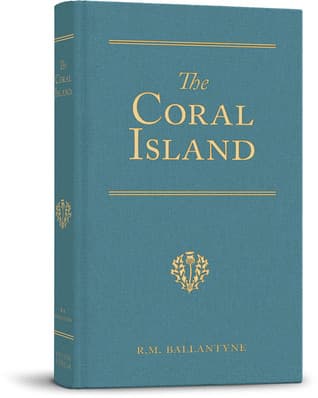
Synopsis
Covers the whole plot, including the ending.
- Difficulty
- Easy
- Pacing
- Moderate
- Mood
- Adventurous, Instructive, Optimistic, Challenging
- Read it if
- You enjoy classic adventure stories about survival on a deserted island, tales of exploration, and moralistic narratives from a historical perspective.
- Skip it if
- You are sensitive to outdated cultural depictions and colonialist viewpoints, or prefer modern, fast-paced plots with complex character development.
The Coral Island Plot Summary
Covers the whole plot, including the ending.
Shipwreck and Discovery of the Island
The story begins with fifteen-year-old Ralph, the narrator, and his companions Jack (eighteen) and Peterkin (thirteen), on the schooner 'Arrow'. A fierce storm strikes, wrecking the ship on a coral reef. The boys escape on a raft, carrying only a telescope and a broken pocketknife. After a dangerous journey, they land on a beautiful, uninhabited coral island. Initially, they are overjoyed by their survival and the island's abundance. They explore their immediate surroundings, finding fresh water, coconuts, and various fruits. They set up their first camp and admire the coral reefs around their new home. Their immediate concern is survival and making their new environment comfortable.
Establishing Paradise and Early Adventures
The three boys quickly adapt to their new environment. Jack, the eldest and most practical, takes charge of building a secure shelter and finding suitable food. Ralph, with his observational skills, helps identify edible plants and animals. Peterkin, the youngest and most mischievous, provides humor and often finds useful things. They build a comfortable hut, learn to hunt wild pigs and birds, fish in the lagoons, and gather fruits like breadfruit and bananas. They spend their days exploring the island's interior, discovering waterfalls, caves, and diverse wildlife. They believe they have found a tropical paradise free from the worries of civilization. Their resourcefulness and cooperation strengthen their bond.
First Encounter with Native Islanders
Their peaceful existence ends when they see two large canoes approaching the island. Hiding, they watch in horror as a battle occurs between two groups of native islanders. One group, the 'black' islanders (implied to be from a different island), attacks the 'red' islanders (implied to be the island's inhabitants). The boys see brutal fighting with spears and clubs, ending in the defeat of the red islanders. The victors engage in cannibalistic practices, preparing and eating the bodies of their enemies. This terrifying sight deeply affects the boys, showing them the harsh realities of the world beyond their innocent view of paradise and making them fear encountering these groups.
Rescue and Capture by Pirates
Months later, a ship appears. Believing it is a rescue, the boys eagerly signal it. However, the ship is a pirate vessel. The pirates, led by the ruthless Bloody Bill, take the boys aboard. Instead of rescuing them, the pirates force the boys to serve them, making them witness their brutal acts of plunder, murder, and cruelty against other native islanders. Ralph, Jack, and Peterkin are horrified by the pirates' depravity and their complete disregard for human life. They are trapped, unable to escape and forced to comply with the pirates' demands while secretly wanting freedom and a return to their innocent island life.
Escape from the Pirates and a New Island
During a violent storm, the boys see a chance to escape the pirate ship. They manage to lower a small boat and slip away undetected in the chaos. The storm carries them to a different, smaller island, which they believe is uninhabited. Exhausted but relieved to be free from the pirates, they again find themselves in a survival situation. This new island presents different challenges, but they are determined to make the best of it, grateful for their freedom. They quickly find food and shelter, using the skills they learned on their first island. Their experience with the pirates has made them much more mature.
Encounter with the Missionary and the Cannibals
On this new island, the boys find a lone hut and discover a kind, elderly Christian missionary named Mr. Henderson. He has been living there, trying to convert the native population to Christianity. While with Mr. Henderson, they encounter a tribe of fierce, cannibalistic natives hostile to the missionary's teachings. The boys, along with Mr. Henderson, must defend themselves against repeated attacks. They see the devastating effects of tribal warfare and the clash of cultures. Mr. Henderson tries to reason with the natives, but his efforts are largely met with aggression, showing the dangers of his mission.
Peterkin's Capture and Jack's Rescue Attempt
During one of the fights with the hostile natives, Peterkin is captured. The boys and Mr. Henderson are very upset. Jack, driven by loyalty and courage, immediately plans a rescue mission. Ralph and Mr. Henderson hesitate because of the overwhelming odds, but Jack's determination is strong. He disguises himself and enters the native village, showing immense bravery and resourcefulness. His plan is dangerous, but he will not abandon Peterkin to a grim fate. This event tests the bonds of friendship and highlights Jack's leadership and protective nature.
The Rescue and a Narrow Escape
Jack's daring rescue attempt is successful. He frees Peterkin from the native village, using clever tactics and quick thinking. The two boys then make a desperate escape, pursued by the angry cannibals. They narrowly avoid capture multiple times, using their knowledge of the jungle and their agility. Ralph and Mr. Henderson anxiously await their return. The reunion is joyful but brief, as the threat from the natives remains. This thrilling escape further strengthens the boys' bond and their shared resilience in danger.
The Arrival of the Pirate Ship (Again) and Confrontation
To their dismay, the pirate ship, 'The Shark,' reappears at the island. The pirates, recognizing the boys, try to recapture them. However, the pirates also clash with the hostile native tribe already on the island. A chaotic battle happens between the pirates and the cannibals, allowing the boys and Mr. Henderson to remain hidden but witness the brutal conflict. The pirates, under Bloody Bill, are ruthless, but the natives are fierce defenders of their territory. This unexpected turn of events creates a desperate chance for the boys to escape both dangerous groups.
Providential Rescue and Return Home
Just as the situation seems most dire, a British warship, 'The Dolphin,' arrives, drawn by the sounds of the battle. The British sailors quickly engage the pirates, leading to their defeat and the capture of Bloody Bill. The native tribe is subdued. Ralph, Jack, and Peterkin, along with Mr. Henderson, are finally rescued. They share their harrowing tales with the British captain. After a long and eventful journey, the boys are safely returned to England, forever changed by their experiences on the Coral Island and the subsequent adventures. They are reunited with their families, carrying with them the memories of their paradise lost and found, and the harsh realities of the world.
The Coral Island Characters
Ralph
Protagonist
The observant and reflective narrator of the story.
Ralph is fifteen years old and serves as the narrator, providing a detailed and often reflective account of their adventures. He is intelligent and observant, often reflecting on the moral implications of their encounters. While not as physically dominant as Jack or as mischievous as Peterkin, Ralph's calm demeanor and keen eye for detail make him an invaluable member of the trio. He learns to adapt quickly to the challenges of island life and provides the moral compass for the group, often questioning the ethics of actions they witness or consider. His journey is one of innocence lost and wisdom gained through hardship.
Relationships: Jack (Close friend and companion, looks up to him); Peterkin (Close friend and companion, protective of him); Mr. Henderson (Learner and protégé, respects his wisdom)
Jack
Protagonist
The eldest, brave, and resourceful leader of the boys.
Eighteen-year-old Jack is the natural leader of the trio. He is strong, practical, and possesses excellent survival skills, quickly taking charge of building shelter, hunting, and strategizing for their survival. Jack is brave and decisive, often acting as the protector for Ralph and Peterkin. His courage is particularly evident during Peterkin's rescue from the cannibals. While initially enjoying the freedom of the island, he is also the most proactive in seeking solutions and dealing with threats. He embodies the ideal of a strong, capable English youth, representing responsibility and physical prowess.
Relationships: Ralph (Close friend and companion, takes responsibility for him); Peterkin (Close friend and companion, fiercely protective of him)
Peterkin
Protagonist
The youngest, mischievous, and humorous member of the group.
Thirteen-year-old Peterkin is the youngest of the three boys, known for his mischievous nature, cheerful disposition, and quick wit. He often provides comic relief and maintains a sense of optimism even in dire situations. Despite his youth, Peterkin is surprisingly resourceful and adaptable, contributing to their survival in his own way. His capture by the cannibals is a pivotal moment that drives much of the later plot. He represents youthful innocence and resilience, and his playful spirit balances the more serious natures of Jack and Ralph. He is a source of joy and occasional frustration for his older companions.
Relationships: Ralph (Close friend and companion, looked after by him); Jack (Close friend and companion, protected by him)
Mr. Henderson
Supporting
A kind and devout Christian missionary on a neighboring island.
Mr. Henderson is an elderly Scottish missionary whom the boys encounter after escaping the pirates. He lives alone on a nearby island, dedicated to converting the native population to Christianity. He is a kind, wise, and courageous man, deeply committed to his faith and his mission, even in the face of extreme danger from hostile cannibals. He provides moral guidance and a sense of adult authority to the boys, offering comfort and spiritual lessons. His presence introduces a strong element of Christian evangelism and contrasts the boys' practical survival skills with spiritual fortitude.
Relationships: Ralph (Mentor and spiritual guide); Jack (Mentor and spiritual guide); Peterkin (Mentor and spiritual guide)
Bloody Bill
Antagonist
The ruthless and cruel captain of the pirate ship 'The Shark'.
Bloody Bill is the hardened and merciless captain of the pirate schooner 'The Shark'. He is depicted as a brutal and amoral character, engaging in plunder, murder, and enslavement of native islanders without remorse. He takes the boys captive, forcing them to witness and participate in his atrocities. Bill embodies pure evil and lawlessness, serving as a stark contrast to the boys' innocence and the missionary's piety. His actions highlight the dangers of the uncivilized world and the corrupting influence of greed and power. He is ultimately defeated by the British Navy.
Relationships: Ralph (Captor and tormentor); Jack (Captor and tormentor); Peterkin (Captor and tormentor)
Tararo
Mentioned
A benevolent native chief who aids the missionary and the boys.
Tararo is a native chief from a different island who has converted to Christianity under Mr. Henderson's influence. He is depicted as a noble and friendly figure, representing the positive impact of missionary work. He occasionally visits Mr. Henderson and provides assistance and warnings to the missionary and the boys regarding the hostile cannibalistic tribes. His character serves to show that not all native islanders are savage, and that some are open to Western influence and Christianity. He is a minor but significant character, symbolizing hope and cross-cultural understanding.
Relationships: Mr. Henderson (Convert and loyal friend); Ralph, Jack, Peterkin (Ally and protector)
The Cannibal Chief
Antagonist
The fierce leader of the hostile native tribe on the second island.
This unnamed chief leads the aggressive, cannibalistic tribe that frequently attacks Mr. Henderson and the boys on the second island. He represents the 'savage' aspect of the native population, resistant to Christianity and fiercely protective of his tribe's traditional, brutal practices. His tribe is responsible for Peterkin's capture and poses a constant threat. He embodies the danger and barbarism that the boys and Mr. Henderson must contend with, serving as a primary antagonist alongside the pirates. His actions are driven by tribal customs and hostility towards outsiders.
Relationships: Mr. Henderson (Religious and cultural adversary); Ralph, Jack, Peterkin (Threat and captor (of Peterkin))
The British Captain
Supporting
The captain of the British warship 'The Dolphin' who ultimately rescues the boys.
The captain of 'The Dolphin' is the embodiment of British naval power and justice. He arrives providentially to defeat the pirates and subdue the hostile natives, bringing order and rescue to the chaotic situation. He is a fair and authoritative figure who listens to the boys' story and ensures their safe return home. His appearance signifies the triumph of civilization and order over savagery and lawlessness, providing the ultimate resolution to the boys' ordeal. He represents the protective arm of the British Empire.
Relationships: Ralph, Jack, Peterkin (Rescuer and authority figure); Bloody Bill (Adversary and captor)
The Coral Island Themes
Loss of Innocence and Maturation
The boys begin their adventure in youthful innocence, seeing the island as a pure paradise. However, witnessing cannibalism, experiencing the depravity of pirates, and confronting tribal warfare forces them to face the darker aspects of humanity and the world. Their experiences remove their naivety, making them mature quickly, develop survival skills, and make difficult moral choices. The idyllic vision of 'The Coral Island' becomes a place of moral lessons and harsh realities, marking their transition from boys to young men.
“We had indeed found a terrestrial paradise; but experience had taught us that even in paradise the trail of the serpent may sometimes be found.”
The Nature of Civilization vs. Savagery
The novel constantly contrasts the 'civilized' values of the British boys and Mr. Henderson with the 'savage' practices of the native islanders and the lawlessness of the pirates. Ballantyne presents a clear hierarchy, with Christian European values shown as superior and bringing order, while native customs (especially cannibalism and tribal warfare) are portrayed as barbaric. The pirates represent a different form of savagery—that of corrupted 'civilized' men. This theme explores how fragile civilization is and the constant threat of barbarism, both from outside and within.
“Alas! it was but too true that human beings were savages, and that these savages ate each other.”
Friendship and Loyalty
The bond between Ralph, Jack, and Peterkin is central to the story. Their survival depends entirely on their cooperation, mutual support, and deep loyalty to one another. Jack's daring rescue of Peterkin from the cannibals shows the strength of their friendship, demonstrating that they are willing to risk everything for each other. This theme highlights the importance of companionship, trust, and shared experience in overcoming adversity, forming the emotional core of the boys' journey.
“We were bound together by a tie that could not be broken, a tie of mutual danger and deliverance.”
Christianity and Morality
The arrival of Mr. Henderson, the missionary, introduces a strong Christian moral framework into the story. His efforts to convert the natives, his unwavering faith, and his peaceful demeanor contrast sharply with the violence and barbarism around them. The boys, already having a Christian upbringing, find their values reinforced by Mr. Henderson. The novel suggests that Christianity is the path to true civilization and salvation, offering a moral guide in a world full of cruelty and sin, and providing hope for redemption.
“He told us that there was but one God, and that He was a God of love, and that He sent his Son into the world to die for all men.”
Plot Devices & Literary Techniques
The Deserted Island
A classic setting for testing human nature and survival skills.
The deserted coral island serves as both a literal paradise and a crucible for the boys' characters. Initially, it symbolizes freedom, abundance, and innocence, allowing them to live out an idealized childhood fantasy. However, it quickly transforms into a testing ground for their survival skills, resilience, and moral fiber when outside threats emerge. The isolation of the island amplifies the sense of danger and emphasizes their self-reliance, forcing them to confront the harsh realities of nature and human evil without adult supervision.
The Telescope and Broken Pocketknife
Symbols of limited human ingenuity and the boys' resourcefulness.
These two items are the only tools the boys manage to salvage from the shipwreck. The telescope, though useful for observation, represents their limited ability to influence distant events or signal for help. The broken pocketknife, despite its damaged state, becomes a crucial tool, symbolizing their resourcefulness and ability to make do with very little. Together, they highlight the boys' reliance on their own ingenuity and the scarcity of technology in their primitive environment, emphasizing the contrast between their 'civilized' origins and their 'savage' surroundings.
The Missionary (Mr. Henderson)
A moral and spiritual guide, representing the influence of Christianity.
Mr. Henderson functions as a moral compass and a symbol of Christian evangelism in the narrative. His presence introduces a didactic element, emphasizing the book's themes of civilization, savagery, and the redemptive power of faith. He provides adult guidance and spiritual instruction to the boys, contrasting the brutal acts of the pirates and the cannibals with his message of love and peace. His character is a direct embodiment of the Victorian missionary zeal and the belief in the superiority of Western Christian values.
The Pirate Ship ('The Shark')
A symbol of human depravity and the corrupting influence of greed.
The pirate ship, 'The Shark,' represents the dark side of 'civilized' humanity—greed, cruelty, and lawlessness. Its appearance shatters the boys' remaining innocence and exposes them to a form of evil that is perhaps more disturbing than the 'savagery' of the cannibals, as it comes from men who should know better. The ship is a mobile symbol of danger and moral corruption, forcing the boys into terrifying situations and highlighting the pervasive nature of evil even in remote corners of the world.
The Coral Island Quotes
“We are monarchs of all we survey, our right there is none to dispute.”
“It is a capital thing to have a good conscience.”
“The sea was like a sheet of glass, so calm and bright.”
“We'll make a garden of Eden of this yet.”
“Civilization is a good thing, but savagery has its charms.”
“A man's a man for a' that.”
“There is no place like home, after all.”
“We were like three Robinson Crusoes.”
“The coral reef was a breakwater against the ocean's fury.”
“It's wonderful what a little knowledge of natural history will do.”
“We resolved to stand by each other to the last.”
“The stars shone like diamonds in the velvet sky.”
“Every day brought its own duties and its own pleasures.”
“We were boys no longer, but men in responsibility.”
Quiz
10 questions on the plot and the characters. Each answer comes with a short explanation.
Question 1
What are the names of the three main characters shipwrecked on the coral island?
- Ralph, Peterkin, and Jack
- Ralph, Peter, and John
- Robert, Peterkin, and James
- Ralph, Jack, and Simon
Show answer
A. Ralph, Peterkin, and Jack The three main characters are fifteen-year-old Ralph, mischievous young Peterkin, and clever, brave Jack, as stated in the book's description.
Question 2
What two items do the boys have with them when they are shipwrecked?
- A compass and a map
- A telescope and a broken pocketknife
- A fishing rod and a canteen
- A pistol and a diary
Show answer
B. A telescope and a broken pocketknife According to the book's description, the boys are shipwrecked with only a telescope and a broken pocketknife between them.
Question 3
What initially makes the island seem like a paradise to the boys?
- The presence of friendly natives
- Plentiful foods and natural wonders
- Abandoned shelters and tools
- Treasure hidden on the island
Show answer
B. Plentiful foods and natural wonders The book's description notes that at first the island seems a paradise due to its plentiful foods and wealth of natural wonders.
Question 4
Which group arrives on the island after the boys have settled in, introducing a major threat?
- A group of missionaries
- A party of cannibals
- A naval rescue team
- A scientific expedition
Show answer
B. A party of cannibals The book's description states that a party of cannibals arrives, marking a turning point from paradise to danger on the island.
Question 5
What event follows the arrival of the cannibals, further escalating the danger on the island?
- A volcanic eruption
- A pirate ship arrives
- A severe storm
- A rival group of castaways
Show answer
B. A pirate ship arrives After the cannibals, a pirate ship arrives, as mentioned in the book's description, adding to the peril faced by the boys.
Question 6
How does the book's description characterize Peterkin?
- As clever and brave
- As mischievous and young
- As serious and thoughtful
- As strong and silent
Show answer
B. As mischievous and young Peterkin is described as 'mischievous young' in the book's summary, distinguishing him from Ralph and Jack's traits.
Question 7
What is a central theme suggested by the shift from the island as paradise to a place of danger?
- The importance of technology in survival
- The loss of innocence and confrontation with evil
- The benefits of colonial exploration
- The superiority of urban over rural life
Show answer
B. The loss of innocence and confrontation with evil The book explores themes of innocence lost as the boys' idyllic survival is threatened by cannibals and pirates, reflecting common Victorian-era adventure novel themes.
Question 8
Based on the description, what genre best fits 'The Coral Island'?
- Science Fiction
- Romance
- Adventure and Survival
- Mystery
Show answer
C. Adventure and Survival The book involves shipwreck, survival on an island, and encounters with cannibals and pirates, placing it firmly in the adventure and survival genre, as indicated by its historical fiction and young adult labels.
Question 9
What might the limited possessions (telescope and broken knife) symbolize in the boys' situation?
- Their wealth and privilege
- Their reliance on ingenuity over tools
- Their preparedness for disaster
- Their connection to modern society
Show answer
B. Their reliance on ingenuity over tools With only basic items, the boys must use their wits and resourcefulness to survive, highlighting themes of self-reliance and adaptability common in survival stories.
Question 10
Why is the arrival of the pirate ship particularly significant in the plot?
- It provides the boys with a means of escape
- It introduces a new layer of conflict and moral complexity
- It leads to the discovery of treasure on the island
- It results in the boys being captured immediately
Show answer
B. It introduces a new layer of conflict and moral complexity The pirate ship adds to the escalating dangers, forcing the boys to navigate threats from both indigenous cannibals and European pirates, enriching the adventure with varied conflicts.
The Coral Island FAQ
What is 'The Coral Island' about?
The novel follows three teenage boys—Ralph (the narrator), Peterkin (the mischievous one), and Jack (the clever leader)—who are shipwrecked on a deserted coral island in the South Pacific. They must use their wits and limited resources (a telescope and broken pocketknife) to survive, facing challenges from nature, cannibals, and pirates while trying to maintain their British values.
Why should I read 'The Coral Island'?
It's a classic Victorian adventure that influenced later works like 'Lord of the Flies,' showcasing themes of colonialism, morality, and survival. The story balances idyllic island life with thrilling dangers, offering both entertainment and insight into 19th-century British perspectives on civilization and 'savagery.'
What is the background/setting of 'The Coral Island'?
Set in the mid-19th century, the story begins with the boys sailing from England before their ship wrecks on an uninhabited coral island in the South Pacific. The island initially appears as a paradise with lush vegetation and abundant food, but later becomes a site of conflict with indigenous cannibals and European pirates.
What are the most memorable quotes?
Key quotes include Jack's pragmatic 'We must make the best of it' when stranded, and Ralph's reflection on their moral duty: 'It is our business to do what we can for the poor savages.' These lines highlight the boys' resilience and the novel's colonial ethos.
What writing style does the author use?
Ballantyne employs a straightforward, descriptive first-person narrative from Ralph's perspective, blending adventure with moral lessons. The prose is vivid in depicting the island's beauty and perils, often incorporating didactic elements to emphasize Christian virtues and British superiority.
What minor details add significant meaning?
The broken pocketknife symbolizes their initial vulnerability, while the telescope represents their ability to observe and plan—key to survival. The boys' naming of locations (e.g., 'Coral Island') reflects their desire to claim and order the wilderness, mirroring colonial attitudes.
What are some subtle foreshadowing moments?
Early descriptions of the island as 'paradise' foreshadow its later dangers, such as when Ralph notes the 'perpetual summer' before cannibals arrive. Jack's leadership skills are hinted at when he immediately takes charge after the shipwreck, preparing readers for his role in crises.
What unexpected character connections exist?
The pirate Bill, who initially seems a villain, later aids the boys against the cannibals, showing complexity in 'savage' vs. 'civilized' roles. The cannibals and pirates, though antagonists, are linked as threats that test the boys' morality and unity.
What are unspoken character motivations?
Jack is driven by a deep-seated need to prove his competence and uphold British honor, while Peterkin's mischief masks a fear of helplessness. Ralph's narration often downplays his own fears, motivated by a desire to appear brave and reliable to his friends.
What psychological complexities do characters exhibit?
The boys grapple with loneliness and the stress of constant danger, yet suppress emotions to maintain camaraderie. Jack's pragmatism sometimes clashes with Ralph's idealism, revealing tensions between survival instincts and moral principles in extreme situations.
What are the major emotional turning points?
Key moments include their initial despair after the shipwreck, the horror of witnessing cannibalism, and the relief when pirates are defeated. The arrival of a missionary brings an emotional climax, reinforcing their faith and hope for rescue.
How do relationship dynamics evolve?
The boys start as equals but gradually defer to Jack's leadership in crises, strengthening their bond through shared trials. Their relationship with the pirate Bill shifts from hostility to uneasy alliance, illustrating how survival can forge unexpected connections.
Which parts remain ambiguous or open-ended?
The fate of the cannibals after the boys intervene is left unclear, as is the long-term impact of the missionary's work. The novel doesn't fully resolve whether the island's 'savages' can be 'civilized,' leaving room for debate on colonial outcomes.
What are controversial scenes or decisions?
The boys' violent intervention to stop cannibal rituals is controversial, as it imposes British morals on indigenous practices. Their alliance with pirates against cannibals blurs lines between 'good' and 'evil,' challenging simple moral judgments.
'The Coral Island' ending explained: how it ends & what it means
The boys are rescued by a British ship after helping defeat the pirates, returning home as heroes. The ending reinforces Victorian ideals: their adventures prove the triumph of 'civilization' over 'savagery,' but modern readers may critique it as a colonialist narrative that justifies intervention.
About the author

R.M. Ballantyne was a Scottish author known for his adventure fiction, particularly aimed at young readers. His notable work, "The Coral Island," tells the story of shipwrecked boys on a deserted island and explores themes of survival and camaraderie. Ballantyne's writing often reflects his interest in exploration and the natural world.
Similar books
- Robinson Crusoe
Daniel Defoe
3.7 (248k) average on GoodreadsHistorical FictionFeatures a lone survivor on a deserted island, focusing on resourcefulness and spiritual reflection.
- Lord of the Flies
William Golding
3.7 (2.3M) average on GoodreadsYoung AdultExplores a group of British boys shipwrecked on an island, but delves into the darker side of human nature and societal breakdown.
- Harry Potter and the Sorcerer's Stone
J.K. Rowling
4.5 (7M) average on GoodreadsFantasyRescued from a miserable life under the stairs, an orphaned boy discovers he's a wizard destined for a magical school, where he uncovers a dangerous secret tied to the dark wizard who murdered his parents.
- The Hobbit, or There and Back Again
J.R.R. Tolkien
4.3 (2.9M) average on GoodreadsFantasyA comfort-loving hobbit named Bilbo Baggins is whisked away by a mischievous wizard and a band of dwarves on an unexpected journey to reclaim stolen treasure from a fearsome dragon, discovering courage and a magical ring along the way.
- Harry Potter and the Goblet of Fire
J.K. Rowling
4.6 (2.6M) average on GoodreadsFantasyA bewildered Harry Potter, underage and thrust into a deadly Triwizard Tournament, must brave dragons, mermaids, and a resurgent dark magic to survive a year that will forever alter the wizarding world.
- Harry Potter and the Order of the Phoenix
J.K. Rowling
4.5 (2.5M) average on GoodreadsFantasyIn a year of oppressive secrets and the threat of Voldemort, Harry Potter and Dumbledore's Army secretly train for war, shown through Jim Kay and Neil Packer's dark illustrations.





Enjoyed the summary?
A summary gives you the shape of the book. The book itself has the detail, the examples and the voice.
Find The Coral Island on AmazonAs an Amazon Associate, BookBrief earns from qualifying purchases. How we're funded