
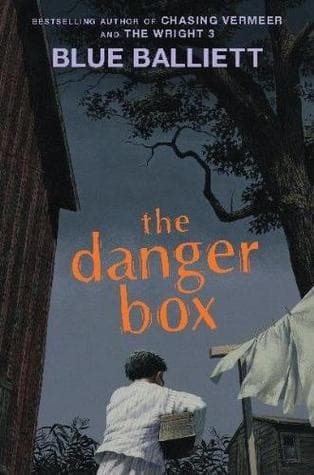
Synopsis
Covers the whole plot, including the ending.
- Difficulty
- Medium
- Pacing
- Moderate
- Mood
- Mysterious, Puzzling, Introspective, Suspenseful
- Read it if
- You enjoy intricate mysteries with unique characters and a touch of the unusual, perfect for young readers who like to solve puzzles alongside the protagonists.
- Skip it if
- You prefer fast-paced action over methodical puzzle-solving and character-driven mystery.
The Danger Box Plot Summary
Covers the whole plot, including the ending.
The Arrival of Zoomy and the Notebook
Zoomy, a boy who sees letters and numbers as colors, moves to Rolling Glen, Illinois, to live with his Aunt Lily. He brings a special box, his 'danger box,' filled with small, important objects. Soon after arriving, he finds a small, red leather-bound notebook in a discarded box of books. The notebook has intricate, coded drawings and strange, handwritten messages, hinting at a secret known only to its first owner. Zoomy is immediately drawn to its contents and the mystery it presents, despite his aunt's warnings about the town's isolated nature and the importance of fitting in.
Introduction to Raven and the Town's Peculiarities
Zoomy quickly meets Raven, a spirited and independent girl who seems to be an outcast in Rolling Glen. Unlike the other children, who are all perfectly dressed and behaved, Raven is often messy and openly questions the town's strict rules. Zoomy notices the unusual sameness among the residents: everyone dresses similarly, follows the same routines, and acts unnaturally calm. He also sees many cameras and constant surveillance, making him suspect something is wrong beneath Rolling Glen's perfect surface.
The Mystery of the Missing Artist
Through talks with Raven and his own observations, Zoomy learns about the mysterious disappearance of a local artist named Mrs. Sharpe. Mrs. Sharpe was known for her unique personality and her unsettling artwork, which showed Rolling Glen's hidden truths. Zoomy starts to connect Mrs. Sharpe's disappearance to the red notebook, believing she might have owned it. The intricate drawings and coded messages in the notebook seem to match Mrs. Sharpe's art style and her focus on the town's secrets, making Zoomy more determined to find the truth.
The Discovery of the Fire and the Stranger
A fire breaks out at Mrs. Sharpe's abandoned studio, increasing Zoomy and Raven's suspicions. While investigating, they meet a strange, secretive man who seems to be watching the town closely. This man, Mr. Gold, is initially hard to pin down, but Zoomy's synesthesia helps him see Mr. Gold as someone who understands deeper perceptions. Mr. Gold's presence adds another layer of intrigue to the mystery, suggesting Rolling Glen's secrets go beyond the town.
Cracking the Notebook's Code
Zoomy and Raven work together to decipher the codes and symbols in the red notebook. Zoomy's ability to see numbers and letters as colors is crucial in solving the notebook's secrets, while Raven's sharp observation skills and local knowledge provide important context. They discover the notebook contains not just drawings, but also coded messages and warnings about the town's hidden systems and the people controlling them. The messages hint at a deeper conspiracy, involving the manipulation of residents and the suppression of individuality.
The Town's Surveillance System
As they investigate further, Zoomy and Raven uncover the full extent of Rolling Glen's sophisticated surveillance system. They realize the town is closely watched, with cameras hidden in ordinary places and a network of informants reporting any rule-breaking. The townspeople's 'perfect' behavior is not natural but enforced through constant observation and subtle psychological manipulation. This confirms their suspicions that Rolling Glen is not just an ideal community, but a controlled environment designed to maintain order and conformity.
The Role of the 'Watchers'
Using the notebook's clues and their own investigations, Zoomy and Raven identify the powerful individuals, called 'The Watchers,' who control Rolling Glen. These Watchers are prominent community figures, appearing benevolent, but they manage every aspect of the townspeople's lives. They use the surveillance system and psychological tactics to ensure conformity and stop any individuality or disagreement. The children realize Mrs. Sharpe disappeared because she defied this oppressive system.
The Death of a Watcher
A prominent member of 'The Watchers' is found dead under mysterious circumstances, raising the stakes of Zoomy and Raven's investigation. While it first looks like an accident, the children suspect foul play, believing it is connected to the town's secrets and the growing resistance. This event creates fear among the remaining Watchers, causing their control to weaken. The death serves as a turning point, making Zoomy and Raven's quest to expose the truth more urgent before more harm comes to those who seek individuality.
The Danger Box and the Truth
Zoomy realizes his 'danger box,' filled with seemingly random objects, holds the key to exposing the Watchers. Each item, through his synesthetic perception, connects to a piece of the puzzle. He understands the Watchers are trying to create a perfect, controlled environment, like a curated museum exhibit, where individuality is stifled. With Raven's help, Zoomy plans to use the items from his danger box and Mrs. Sharpe's decoded messages to disrupt the Watchers' control and awaken the townspeople to their manipulated reality.
Exposing the Watchers and the Town's Awakening
Zoomy and Raven carry out their plan, spreading information from Mrs. Sharpe's notebook and using Zoomy's unique way of seeing to highlight the inconsistencies and manipulations in Rolling Glen. They expose the Watchers' control methods and the true nature of their 'perfect' town. The townspeople, initially resistant, start to question their reality as evidence grows. Rolling Glen's carefully built facade crumbles, and residents slowly begin to reclaim their individuality, showing the power of truth and independent thought over forced conformity. The Watchers' hold on the town loosens, and the community begins to heal.
The Danger Box Characters
Zoomy
Protagonist
A boy with synesthesia who sees the hidden truths of Rolling Glen.
Zoomy is a sensitive and observant boy with synesthesia, a neurological condition that causes him to see letters and numbers as colors. This unique perception allows him to notice details and patterns that others miss, making him an ideal detective. He is initially quiet and struggles to fit in, but his innate curiosity and strong sense of justice drive him to uncover the truth behind Rolling Glen's perfect facade. He carries a 'danger box' filled with objects that hold personal significance and often provide unexpected clues.
Relationships: Raven (Close friend and investigative partner); Aunt Lily (Caretaker, well-meaning but initially unaware of the town's true nature); Mrs. Sharpe (Spiritual mentor, though they never meet, her notebook guides him)
Raven
Supporting
A rebellious and independent girl who helps Zoomy uncover the town's secrets.
Raven is a spirited and independent girl who stands out in the conformist town of Rolling Glen. She is often seen as an outcast due to her disheveled appearance and her open defiance of the town's unspoken rules. Raven is fiercely intelligent, resourceful, and possesses a strong sense of skepticism, making her the perfect foil and partner for Zoomy. She has a deep understanding of the town's undercurrents and is not afraid to challenge authority, driven by a desire for genuine freedom and individuality.
Relationships: Zoomy (Close friend and investigative partner)
Aunt Lily
Supporting
Zoomy's well-meaning aunt who is initially oblivious to the town's true nature.
Aunt Lily is Zoomy's caretaker in Rolling Glen. She is a kind and loving woman who genuinely wants Zoomy to be happy and fit into the community. However, she is initially oblivious to the sinister undercurrents of the town, having fully assimilated into its controlled environment. She values conformity and pleasantness above all else, often cautioning Zoomy against drawing attention to himself. Her love for Zoomy is genuine, but her adherence to the town's norms makes her unwittingly complicit in its oppressive atmosphere until the truth is revealed.
Relationships: Zoomy (Nephew and ward)
Mrs. Sharpe
Mentioned
A disappeared artist whose notebook holds the key to Rolling Glen's secrets.
Mrs. Sharpe is a mysterious and eccentric artist who disappeared from Rolling Glen before Zoomy's arrival. She was known for her unique and often unsettling artwork, which seemed to capture the hidden truths and psychological manipulations within the town. Her red leather-bound notebook, filled with coded drawings and messages, becomes the central artifact of the mystery. Though never physically present, her spirit of defiance and artistic vision guides Zoomy and Raven's investigation, making her a posthumous mentor figure.
Relationships: Zoomy (Her notebook acts as a guide and mentor for him); Raven (A fellow outcast who admired Mrs. Sharpe's spirit)
Mr. Gold
Supporting
A mysterious stranger who offers subtle guidance to Zoomy and Raven.
Mr. Gold is a secretive and enigmatic man who appears in Rolling Glen shortly after Zoomy's arrival. He seems to be observing the town with an unusual intensity and offers subtle, cryptic guidance to Zoomy and Raven. He possesses a deeper understanding of the town's hidden mechanisms and the nature of perception, which Zoomy's synesthesia helps him recognize. Mr. Gold acts as a quiet ally, providing timely insights and nudges without directly interfering, suggesting he has his own reasons for wanting the truth to emerge.
Relationships: Zoomy (Subtle mentor and ally); Raven (Mysterious acquaintance)
The Watchers
Antagonist
The powerful, controlling figures who manipulate Rolling Glen.
The Watchers are the shadowy, powerful figures who secretly control every aspect of life in Rolling Glen. They are prominent members of the community, appearing benevolent and respected, but in reality, they meticulously manage the town's residents through sophisticated surveillance and psychological manipulation. Their goal is to maintain a 'perfect' and orderly society, suppressing individuality and dissent. They represent the oppressive forces of conformity and the dangers of unchecked power, serving as the primary antagonists of the story.
Relationships: Zoomy (Antagonistic, as he seeks to expose them); Raven (Antagonistic, as she rebels against their control); Aunt Lily (They are the unseen authority she unwittingly adheres to)
The Townspeople of Rolling Glen
Supporting
Residents living under the Watchers' surveillance, slowly awakening to the truth.
The general townspeople of Rolling Glen are, for the most part, unwitting participants in the Watchers' grand scheme. They live seemingly perfect, orderly lives, adhering to unspoken rules and routines. They exhibit a uniform pleasantness and a lack of overt individuality, a direct result of the pervasive surveillance and psychological conditioning. Initially resistant to questioning their reality, they slowly begin to awaken as Zoomy and Raven expose the truth, representing the potential for collective consciousness and resistance against oppression.
Relationships: Zoomy (Initially strangers, later the recipients of his truth-telling); Raven (Initially view her as an outcast, later inspired by her spirit)
The Danger Box Themes
Individuality vs. Conformity
This is the main theme, shown by the contrast between Zoomy and Raven's unique personalities and Rolling Glen's uniform, controlled environment. The town suppresses individual expression through surveillance and social conditioning, forcing residents into a 'perfect' mold. Zoomy's synesthesia, which lets him see the world differently, symbolizes the power of individual perception. Raven's rebellious nature shows the importance of resisting societal pressure to conform. The story suggests that true strength and beauty come from embracing one's unique self, even when it challenges the norm, as seen when the townspeople regain their identities after the Watchers are exposed.
“The perfect town was a perfectly still lake, reflecting only what it was told to see.”
The Power of Perception and Observation
The story highlights how different ways of seeing and paying attention can reveal hidden truths. Zoomy's synesthesia literally shows this, allowing him to notice patterns and oddities others miss, like the 'colors' of people's true intentions or coded messages. Raven's sharp observation skills and skepticism also help piece together the mystery. The Watchers rely on the townspeople's lack of critical observation to maintain control. The story suggests that questioning what is presented and looking beyond the surface are key to uncovering deception and understanding reality.
“Sometimes, the most important things are hidden in plain sight, if you just know how to look.”
The Dangers of Control and Surveillance
Rolling Glen is an example of a society under constant surveillance and manipulation. The Watchers' careful control over every part of the townspeople's lives, from routines to expressions, shows how easily freedom can be lost in the name of 'order' or 'perfection.' Hidden cameras and subtle psychological tactics create an atmosphere of fear and conformity, stifling creativity and real human connection. The fire at Mrs. Sharpe's studio, a deliberate act to erase defiance, shows the extreme measures taken to keep this control. The story is a warning about the ethics of widespread monitoring and the importance of privacy.
“The town was a beautiful cage, and everyone inside was a perfectly trained bird.”
The Role of Art and Creativity in Resistance
Art, especially Mrs. Sharpe's work and the cryptic notebook, is a powerful tool for resistance and truth-telling. Mrs. Sharpe's art, even after she disappears, protests the Watchers' control, capturing the town's hidden darkness. The coded drawings in her notebook are not just clues but artistic expressions of disagreement, preserving truth when direct communication is impossible. Zoomy's ability to 'see' the world in colors, a form of creative perception, helps him decode these artistic messages. The story suggests that creative expression can challenge oppressive systems and inspire change, even when seemingly silenced.
“Art isn't just pretty pictures, Zoomy. It's a way to tell the truth when no one wants to hear it.”
Plot Devices & Literary Techniques
Synesthesia
Zoomy's unique sensory perception that aids in solving the mystery.
Zoomy's synesthesia, where he sees letters and numbers as colors, is a crucial plot device. It not only defines his character but also serves as a unique tool for decoding information and perceiving hidden truths. For example, he can 'see' the patterns in coded messages or sense the 'colors' of people's emotions and intentions, providing him with insights unavailable to others. This ability allows him to interpret Mrs. Sharpe's notebook, identify inconsistencies in the town, and ultimately expose the Watchers, making him an indispensable detective.
The Red Leather Notebook
A mysterious notebook containing coded messages and drawings, central to the mystery.
The red leather notebook, discovered by Zoomy, is the primary driving force of the plot. It belonged to the disappeared artist Mrs. Sharpe and contains intricate coded messages, drawings, and warnings about Rolling Glen. The process of deciphering its contents provides Zoomy and Raven with crucial clues about the Watchers' control, the town's surveillance system, and Mrs. Sharpe's fate. It acts as a posthumous voice for Mrs. Sharpe, guiding the protagonists and slowly revealing the layers of the town's deception, making it an essential MacGuffin and a symbol of suppressed truth.
The Danger Box
Zoomy's personal box of significant objects, which provides unexpected clues.
Zoomy's 'danger box' is a personal collection of seemingly random objects that hold deep meaning for him, often linked to past experiences or anxieties. This box functions as a symbolic representation of Zoomy's inner world and his unique way of processing information. As the mystery unfolds, certain objects within the box unexpectedly provide crucial insights or connect to elements of the Rolling Glen conspiracy. It acts as a physical manifestation of Zoomy's intuition and unique perception, offering a non-linear path to understanding and ultimately helping him piece together the larger puzzle.
Pervasive Surveillance
The constant monitoring of Rolling Glen's residents, creating an atmosphere of conformity.
The pervasive surveillance system in Rolling Glen is a key plot device that establishes the town's oppressive atmosphere and the Watchers' control. Hidden cameras, watchful neighbors, and an unspoken code of conduct ensure that every deviation from the 'norm' is noted. This constant monitoring is not just a background detail; it actively shapes the plot by forcing Zoomy and Raven to be cautious in their investigation and by explaining the townspeople's manufactured conformity. It underscores the theme of control and highlights the dangers to individuality when privacy is completely eroded.
The Danger Box Quotes
“Each of us is a danger box. We all have secrets. We all have things we keep hidden, even from ourselves.”
“The past isn't just behind us. It's inside us, too. Shaping who we are, whether we know it or not.”
“Sometimes the biggest mysteries aren't about what happened, but why.”
“A photograph can lie. Not just by what it shows, but by what it leaves out.”
“Being brave isn't about not being scared. It's about doing what you have to do even when you are.”
“Every object has a story, if you know how to listen.”
“The truth is rarely simple. It's usually tangled up with other truths, and a few lies, too.”
“You can't really understand someone until you've tried to see the world from their side.”
“Sometimes the things that seem like coincidences are actually connections waiting to be found.”
“A secret shared isn't a secret anymore. It's a weight lifted, or a burden passed on.”
“The world is full of puzzles, and the best ones are often hidden in plain sight.”
“Knowing a person's weakness can be a powerful thing. But so can knowing their strength.”
“History isn't just dates and names. It's the stories of people, and how those stories echo through time.”
“The quietest people often have the loudest thoughts.”
Quiz
10 questions on the plot and the characters. Each answer comes with a short explanation.
Question 1
What is the name of the protagonist in 'The Danger Box'?
- Calder
- Zoomy
- Petra
- Frankie
Show answer
B. Zoomy The protagonist of 'The Danger Box' is a boy named Zoomy, who has a unique way of seeing the world.
Question 2
What significant event occurs early in the story that sets the mystery in motion?
- A new family moves into town.
- A valuable painting is stolen from the local museum.
- A fire breaks out at the general store.
- A famous author visits the town library.
Show answer
C. A fire breaks out at the general store. The narrative description explicitly mentions 'A fire' as one of the key elements found within the book, which initiates the mystery.
Question 3
What object is described as 'mysterious' and plays a central role in the plot?
- A locked wooden chest
- An antique pocket watch
- A strange map
- A mysterious notebook
Show answer
D. A mysterious notebook The book's description directly states, 'A mysterious notebook' is one of the things found within 'The Danger Box,' indicating its importance.
Question 4
How does the protagonist, Zoomy, primarily perceive the world differently from others?
- He sees sounds as colors.
- He has an unusual visual perception, noticing details others miss.
- He can communicate with animals.
- He experiences premonitions of future events.
Show answer
B. He has an unusual visual perception, noticing details others miss. The description states, 'A boy in a small town who has a different way of seeing,' which implies a unique visual perception, crucial for solving the mystery.
Question 5
Who is the 'mischievous girl' mentioned in the book's description, and what is her role?
- She is a new student who challenges Zoomy's beliefs.
- She is Zoomy's younger sister who complicates his investigations.
- She is a local bully who tries to hinder Zoomy.
- She is a ghost who guides Zoomy to clues.
Show answer
A. She is a new student who challenges Zoomy's beliefs. The description states, 'A mischievous girl who doesn't belong.' In Balliett's style, such a character often serves as a new arrival or an outsider who brings a fresh perspective and challenges the protagonist.
Question 6
What is the primary theme explored through the 'danger box' itself, implied by the title?
- The dangers of technology.
- The idea that truth can be hidden and dangerous to uncover.
- The risks involved in outdoor adventures.
- The importance of physical safety.
Show answer
B. The idea that truth can be hidden and dangerous to uncover. Given it's a mystery book with elements like 'A fire' and 'A death,' 'The Danger Box' likely symbolizes the hidden truths or secrets that, when opened or revealed, carry risks and consequences.
Question 7
How does the 'stranger' mentioned in the description likely contribute to the central mystery?
- The stranger is a red herring, distracting from the real culprit.
- The stranger brings new information or a new perspective that helps Zoomy.
- The stranger is revealed to be a long-lost relative of Zoomy.
- The stranger is the victim of the 'death' mentioned.
Show answer
B. The stranger brings new information or a new perspective that helps Zoomy. In mystery novels, a 'stranger' often introduces an unknown element, a new set of clues, or a different viewpoint that can either complicate or help solve the mystery by providing missing pieces of information.
Question 8
What is the implied relationship between the 'fire' and the 'death' mentioned in the book's description?
- They are unrelated incidents that occur in the same timeline.
- The fire is a diversion, and the death is a separate, accidental event.
- The fire and the death are directly connected, possibly cause and effect or part of the same crime.
- The death precedes the fire, which destroys evidence.
Show answer
C. The fire and the death are directly connected, possibly cause and effect or part of the same crime. In a mystery novel, when 'A fire' and 'A death' are listed as key elements, it strongly implies a connection between them, suggesting the fire might be related to the death, either as a cause, a cover-up, or a related event within the central crime.
Question 9
Considering the author's previous works, 'Chasing Vermeer' and 'The Calder Game', what artistic or intellectual concept is 'The Danger Box' most likely to explore through its mystery?
- The history of ancient civilizations.
- The nature of perception, art, and hidden patterns.
- Advanced scientific theories.
- The complexities of political systems.
Show answer
B. The nature of perception, art, and hidden patterns. Blue Balliett's previous mysteries, 'Chasing Vermeer' and 'The Calder Game,' are known for integrating art history, geometry, and the unique ways characters perceive patterns and clues, aligning with 'a boy who has a different way of seeing' and 'a mysterious notebook'.
Question 10
What overarching theme does the combination of 'a boy with a different way of seeing' and 'a mischievous girl who doesn't belong' suggest about the story's approach to problem-solving?
- That only those who fit in can solve complex problems.
- That conventional methods are always superior to unconventional ones.
- That unique perspectives and unconventional thinking are essential for uncovering hidden truths.
- That problems are best solved by individuals working in isolation.
Show answer
C. That unique perspectives and unconventional thinking are essential for uncovering hidden truths. The pairing of a protagonist with 'a different way of seeing' and an outsider 'who doesn't belong' strongly suggests that the story will champion the value of unconventional perspectives and collaboration between unique individuals to solve the mystery.
The Danger Box FAQ
What is the central mystery that sparks the plot in 'The Danger Box'?
The central mystery revolves around the discovery of a peculiar notebook belonging to a reclusive, recently deceased artist named Mrs. Fresh. The notebook contains strange drawings and coded messages, hinting at a secret connected to the town's history and potentially Mrs. Fresh's death, which is initially ruled an accident but soon becomes suspicious.
Who are the main protagonists, and what are their unique qualities?
The main protagonists are Zoomy, a boy with synesthesia who sees sounds as colors and has an exceptional memory for visual details, and his new friend, Florence, a spirited and independent girl who recently moved to the small town. Zoomy's unique perception allows him to notice subtle clues others miss, while Florence's adventurous spirit and lack of local ties make her an ideal partner for investigating the town's secrets.
What is the significance of the 'danger box' mentioned in the title?
The 'danger box' refers to a mysterious, elaborately crafted wooden box that Mrs. Fresh owned, which is believed to contain something valuable or dangerous. It becomes a key object in the investigation, as its contents are rumored to be connected to the town's hidden history and the secrets Mrs. Fresh kept, prompting Zoomy and Florence to seek it out.
How does the fire at Mrs. Fresh's house impact the investigation?
The fire at Mrs. Fresh's house complicates the investigation by destroying potential evidence and making it difficult to determine the exact circumstances of her death. It also suggests that someone might be trying to cover up a crime or remove crucial clues related to the notebook and the danger box, intensifying the mystery for Zoomy and Florence.
What role does the 'stranger' play in the story, and what are their motivations?
The 'stranger' is an enigmatic figure who arrives in town shortly after Mrs. Fresh's death, showing an unusual interest in her belongings and the local history. Their motivations are initially unclear, but they appear to be searching for something specific, possibly connected to the danger box or the secrets Mrs. Fresh uncovered, making them a suspicious presence for Zoomy and Florence.
Are there any subtle connections to Blue Balliett's previous works, like 'Chasing Vermeer'?
While 'The Danger Box' is a standalone story, Balliett often weaves in themes of art, unique perspectives, and the power of observation, similar to 'Chasing Vermeer.' The use of coded messages and the emphasis on a child's distinct way of seeing the world (Zoomy's synesthesia) subtly echo the investigative spirit and artistic appreciation found in her earlier mysteries.
What historical elements or local legends are incorporated into the mystery?
The mystery is deeply intertwined with the town's suppressed history, particularly a forgotten incident involving a group of marginalized artists or thinkers from generations past. Mrs. Fresh's notebook contains clues hinting at a hidden legacy or injustice that the town leadership has tried to erase, making the investigation a quest to uncover buried truths.
How does the author use the concept of perception to drive the plot and reveal clues?
The author uses Zoomy's synesthesia as a primary tool for revealing clues; his ability to 'see' sounds and remember visual details with extraordinary clarity allows him to notice discrepancies or patterns that others overlook. This unique perception is crucial for deciphering Mrs. Fresh's coded messages and understanding the true nature of the events unfolding in the town.
How does Zoomy's synesthesia affect his emotional development throughout the story?
Initially, Zoomy's synesthesia can feel isolating, as he perceives the world differently from others, but through his friendship with Florence, he begins to see it as a strength. As he uses his unique perception to solve the mystery, his confidence grows, and he learns to embrace his difference as a powerful tool for understanding and connection, fostering his emotional maturity.
What psychological impact does living in a small town with hidden secrets have on the characters?
Living in a small town with hidden secrets creates an atmosphere of unease and distrust, particularly for Zoomy and Florence. It forces them to question authority and rely on their own judgments, fostering a sense of responsibility and courage, but also leading to moments of isolation and fear as they uncover uncomfortable truths about their community.
How do Zoomy and Florence's differing personalities complement each other in their investigation?
Zoomy's contemplative nature, meticulous observation skills, and unique perception are balanced by Florence's impulsive energy, resourcefulness, and ability to navigate social situations. Florence often pushes Zoomy out of his comfort zone, while Zoomy helps Florence focus on details, creating a dynamic partnership essential for solving the complex mystery.
What themes of truth versus secrecy are explored through the characters' actions?
The book deeply explores themes of truth versus secrecy as Zoomy and Florence uncover layers of hidden information and past injustices that the town has actively suppressed. Their pursuit of the truth challenges the comfort of secrecy, forcing characters to confront uncomfortable realities and highlighting the moral implications of revealing or concealing vital knowledge.
Is Mrs. Fresh's death truly an accident, or is there a more sinister explanation?
While initially deemed an accident, the ongoing investigation by Zoomy and Florence strongly suggests a more sinister explanation for Mrs. Fresh's death. The clues in her notebook, the fire, and the actions of the stranger all point towards foul play, implying someone wanted to silence her or prevent her from revealing a significant secret.
What is the ultimate message about art and its power conveyed through Mrs. Fresh's work?
Mrs. Fresh's art, particularly her coded notebook, conveys the powerful message that art can be a vessel for truth, memory, and resistance. It shows how creative expression can preserve stories, challenge injustice, and communicate vital information across time, even when conventional means are suppressed, highlighting art's enduring and transformative power.
Does the ending provide a definitive resolution to all mysteries, or does it leave room for interpretation?
The ending provides a satisfying resolution to the central mystery of Mrs. Fresh's death and the danger box, revealing the truth behind the town's hidden history. However, like many of Balliett's works, it may leave some lingering thoughts about the long-term impact of uncovering such secrets, inviting readers to consider the broader implications of truth and justice.
How does the book challenge traditional notions of 'normalcy' through Zoomy's character?
The book challenges traditional notions of 'normalcy' by portraying Zoomy's synesthesia not as a disability, but as a unique strength that allows him to perceive the world more deeply and solve complex problems. It emphasizes that different ways of experiencing reality can offer valuable insights, promoting acceptance and celebration of neurodiversity.
What role do adults play in either helping or hindering Zoomy and Florence's investigation?
Adults in the story play a dual role: some inadvertently hinder the investigation through their skepticism or attempts to maintain the town's facade, while others, like certain teachers or community members, offer subtle guidance or resources. Ultimately, it's the children's unique perspectives and determination that drive the progress, often despite adult interference or disbelief.
Is the 'danger box' a literal physical object, or does it also hold symbolic meaning?
The 'danger box' is a literal physical object central to the plot, containing valuable clues and secrets. However, it also holds symbolic meaning, representing the dangerous truths and suppressed histories that the town has tried to keep hidden, and the potential peril involved in uncovering them. It symbolizes the risks associated with confronting uncomfortable realities.
About the author

Blue Balliett is a critically acclaimed author of children's mystery novels. She is best known for the "Pentacle" series, which includes the award-winning "Chasing Vermeer." Her works are celebrated for their intricate puzzles and integration of art and history.
Similar books
- Chasing Vermeer
Blue Balliett
3.7 (28k) average on GoodreadsChildren'sShares the same author's signature style of art-infused mysteries with young, clever protagonists.
- The Westing Game
Ellen Raskin
4.0 (165k) average on GoodreadsChildren'sFeatures a complex mystery with an ensemble cast of quirky characters and hidden clues.
- Harry Potter and the Sorcerer's Stone
J.K. Rowling
4.5 (7M) average on GoodreadsFantasyRescued from a miserable life under the stairs, an orphaned boy discovers he's a wizard destined for a magical school, where he uncovers a dangerous secret tied to the dark wizard who murdered his parents.
- The Hobbit, or There and Back Again
J.R.R. Tolkien
4.3 (2.9M) average on GoodreadsFantasyA comfort-loving hobbit named Bilbo Baggins is whisked away by a mischievous wizard and a band of dwarves on an unexpected journey to reclaim stolen treasure from a fearsome dragon, discovering courage and a magical ring along the way.
- Harry Potter and the Goblet of Fire
J.K. Rowling
4.6 (2.6M) average on GoodreadsFantasyA bewildered Harry Potter, underage and thrust into a deadly Triwizard Tournament, must brave dragons, mermaids, and a resurgent dark magic to survive a year that will forever alter the wizarding world.
- Harry Potter and the Order of the Phoenix
J.K. Rowling
4.5 (2.5M) average on GoodreadsFantasyIn a year of oppressive secrets and the threat of Voldemort, Harry Potter and Dumbledore's Army secretly train for war, shown through Jim Kay and Neil Packer's dark illustrations.




Enjoyed the summary?
A summary gives you the shape of the book. The book itself has the detail, the examples and the voice.
Find The Danger Box on AmazonAs an Amazon Associate, BookBrief earns from qualifying purchases. How we're funded