
Synopsis
Covers the whole plot, including the ending.
- Difficulty
- Medium
- Pacing
- Variable
- Mood
- Epic, Melancholy, Desperate, Climactic, Profound
- Read it if
- You've read the previous books in The Dark Tower series and want to see how Roland's epic journey concludes.
- Skip it if
- You haven't read any of The Dark Tower books; this is the final installment and will make no sense without prior context.
The Dark Tower Plot Summary
Covers the whole plot, including the ending.
The Road to the Dixie Pig
The story opens with Roland Deschain, Eddie Dean, and Jake Chambers in a dystopian New York City, having followed Susannah Dean through a door from the Dixie Pig. Susannah, now possessed by the demon Mia and pregnant with Mordred, is held in the restaurant, which acts as a center for various dark forces. Roland and his ka-tet must navigate the city's dangers, including 'low men' and other creatures, to reach the Dixie Pig and save Susannah. Their journey is dangerous, forcing them to use their gunslinger skills and wits to survive the urban wasteland, all while trying to understand Mia's plan and the Crimson King's involvement. They learn that Mia intends to give birth to Mordred in a sacred place, further complicating their mission.
The Birth of Mordred
Inside the Dixie Pig, Susannah, under Mia's influence, is taken to a birthing chamber. Roland, Eddie, and Jake, having fought their way through the creatures of the Dixie Pig, arrive just as Susannah gives birth to Mordred Deschain, a spider-human hybrid with great power. Mordred immediately kills Mia, fulfilling his parasitic nature. The gunslingers engage in a desperate battle against the remaining creatures and try to understand the newborn Mordred's true loyalty. Amidst the chaos, they escape the Dixie Pig, but Mordred, now free, becomes a formidable and unpredictable threat, destined to be either Roland's son or his ultimate downfall. The ka-tet must regroup and plan their next move, knowing Mordred is now a living weapon.
Separation and Sacrifice
Following their escape from the Dixie Pig, the ka-tet finds itself in a new location, a desolate Maine landscape. They encounter Calvin Tower, a bookseller from one of Roland's previous trips, who is being targeted by the Crimson King's forces because of a plot of land he owns. In an attempt to protect Tower and secure the land — which holds a key to the Breakers' prison — Eddie Dean sacrifices himself, taking a bullet intended for Tower. His death is a devastating blow to Roland and Jake. Susannah, still recovering from Mordred's birth and struggling with her identity, is affected, and the ka-tet's unity is again fractured.
Jake's Last Stand
After Eddie's death, Roland and Jake continue their journey. They discover that Stephen King, the author of their own story, is in danger. King, living in the 'real world' of Maine, is about to be hit by a van, an event that would erase the Dark Tower series from existence. Roland and Jake intervene, saving King's life. However, Jake pushes King out of the way and is himself hit by the van, dying in Roland's arms. Jake's death is a heartbreaking moment, fulfilling a prophecy and further isolating Roland. His sacrifice ensures the story continues, but leaves Roland with an even heavier burden of loss as he presses on towards the Tower.
Susannah's Departure
Grief-stricken and feeling increasingly alienated from Roland's single-minded quest, Susannah makes a difficult decision. Guided by a vision and a desire for a different life, she uses a magical door to cross into an alternate reality. In this new world, she finds parallel versions of Eddie Dean and Jake Chambers, who, though not the same as her fallen ka-tet members, offer her a chance at a new beginning and a life free from the relentless pursuit of the Dark Tower. Her departure leaves Roland alone, further emphasizing the sacrifices made and the loneliness of his journey. It represents a break from the ka-tet's original mission, allowing her a measure of peace.
Roland and Patrick Danville
Now truly alone, Roland continues his journey towards the Dark Tower. He encounters Patrick Danville, a young man held captive by the villainous Dandelo. Patrick has an extraordinary ability: whatever he draws becomes real, and whatever he erases ceases to exist. Roland rescues Patrick, recognizing the immense power he holds. Patrick's abilities are crucial as they continue their journey, as he can draw solutions to obstacles and erase threats. Their bond forms quickly, with Patrick offering Roland a new kind of companionship, though with a different dynamic than his previous ka-tet. Patrick's existence highlights the meta-fictional elements of the narrative.
The Battle of Algul Siento
Roland and Patrick finally reach Algul Siento, the prison where the Breakers, psychics forced to destroy the beams that hold the multiverse together, are held captive. They discover that the Crimson King's forces are actively breaking the final beam. A fierce battle ensues, with Roland using all his gunslinger skills against the enemies. Patrick uses his drawing abilities to aid in the fight, creating weapons and erasing obstacles. Roland frees the remaining Breakers, who, now free, begin to restore the damaged beams. This confrontation is a key moment, as it directly impacts the stability of all realities and brings Roland closer to the Crimson King's ultimate plan.
The Crimson King's Siege
Having secured the Breakers' freedom, Roland and Patrick continue their ascent towards the Dark Tower itself. They find the Tower under siege by the Crimson King, who, now completely insane, is attempting to breach its defenses. The King is trapped on a balcony, throwing 'sneetches' (explosive grenades) at the Tower, causing damage to its structure. Roland understands that he must confront the King to gain entry to the Tower. The scene is surreal and dangerous, emphasizing the King's derangement and the ultimate stakes of Roland's quest. Patrick's unique abilities are essential in dealing with the King's erratic and destructive attacks.
The Erasing of the King
Roland realizes that the Crimson King, while formidable, is a broken and mad figure. He understands that a direct gunslinger confrontation might not be the most effective way to deal with him. Instead, Roland instructs Patrick Danville to use his unique artistic power. Patrick draws the Crimson King exactly as he is, then erases him from the page, effectively erasing him from existence. This act is a powerful and unconventional resolution to the conflict with the primary antagonist. It highlights the meta-fictional nature of the story and the power of creation and destruction through art, clearing the path for Roland's final ascent.
The Ascent of the Tower
With the Crimson King defeated, the path to the Dark Tower is clear. Roland, weary but resolute, prepares for his final ascent. He instructs Patrick Danville to remain outside, as the Tower's secrets are meant for him alone. Patrick, understanding the moment, reluctantly agrees. Roland enters the Tower, a place of immense power and mystery, the nexus of all realities. His journey has reached its culmination, and the reader anticipates the ultimate revelation. The Tower itself is described as a grand, ancient structure, both inviting and forbidding, holding the answers to Roland's lifelong quest.
The Room at the Top
Roland climbs the seemingly endless stairs of the Dark Tower. Each floor holds echoes of his past, visions of people he has loved and lost, and significant moments from his long journey. He passes through various chambers, each containing symbols and memories relevant to his quest. Finally, he reaches the very top room. Inside, he finds a single door. As he approaches it, a powerful, unseen force compels him forward. The room is not a place of ultimate rest or resolution in the way he might have imagined. Instead, it is a point of beginning, a cyclical trap he has been in countless times before.
The Cycle Continues
As Roland opens the door at the top of the Dark Tower, he is immediately transported back to the beginning of his journey, finding himself in the desert, pursuing the Man in Black. This is a shocking and cyclical ending, revealing that Roland has been on this quest countless times before. However, there is one crucial difference: this time, he possesses the Horn of Eld, which he had neglected to retrieve in previous iterations. This detail suggests a slight alteration to the cycle, perhaps offering a glimmer of hope for a different outcome in this new, yet familiar, journey. The ending emphasizes themes of fate, redemption, and eternal recurrence.
The Dark Tower Characters
Roland Deschain
Protagonist
The last gunslinger, driven by his quest for the Dark Tower.
Roland is a stoic, determined, and often ruthless gunslinger from a dying world. His entire existence is defined by his singular quest to reach the Dark Tower, the nexus of all realities. He is a man of few words, haunted by the past and the sacrifices he has made. Despite his cold exterior, he deeply cares for his ka-tet, though his devotion to the Tower often overrides personal attachments. He possesses incredible marksmanship, resilience, and a profound sense of destiny.
Relationships: Eddie Dean (Adopted son, trusted ka-tet member); Jake Chambers (Adopted son, deeply loved ka-tet member); Susannah Dean (Adopted daughter, ka-tet member); The Dark Tower (Obsessive, spiritual quest)
Eddie Dean
Supporting
A former drug addict turned gunslinger, Roland's most loyal companion.
Eddie is a quick-witted, sarcastic, and deeply loyal member of Roland's ka-tet. He began as a heroin addict from New York but transformed into a skilled gunslinger under Roland's tutelage. He often provides comic relief but also acts as a moral compass for Roland, challenging his single-mindedness. His love for Susannah is a constant source of strength and motivation. He struggles with his past but embraces his new life and role in the ka-tet.
Relationships: Roland Deschain (Trusted companion, adopted son figure); Susannah Dean (Husband, profound love and partnership); Jake Chambers (Brotherly bond)
Susannah Dean / Odetta Holmes / Detta Walker
Supporting
A woman with multiple personalities, transformed into a gunslinger.
Susannah is a complex character initially composed of two distinct personalities: the kind and gentle Odetta Holmes, and the cruel and manipulative Detta Walker. She is a double amputee, a physically disabled but incredibly resilient woman from 1960s New York. After being integrated into one personality, she becomes a formidable gunslinger, sharp-minded and fiercely independent. She battles with internal demons and external threats, including possession by Mia and the birth of Mordred, before seeking a new path.
Relationships: Roland Deschain (Adopted daughter, ka-tet member); Eddie Dean (Husband, profound love and partnership); Mia (Possessor, co-mother of Mordred); Mordred Deschain (Biological mother)
Jake Chambers
Supporting
The boy who died twice, a crucial member of Roland's ka-tet.
Jake is a sensitive, intelligent, and brave young boy from New York. He is deeply connected to Roland, having died and been 'drawn' into Mid-World multiple times. He possesses a strong sense of empathy and a natural affinity for magic and the supernatural. He is fiercely loyal to Roland and often acts as his conscience, reminding him of the human cost of his quest. His bond with Roland is paternal, and he brings a youthful innocence and hope to the ka-tet.
Relationships: Roland Deschain (Adopted son, deep paternal bond); Eddie Dean (Brotherly bond); Susannah Dean (Sisterly bond)
Mordred Deschain
Antagonist
The demonic spider-human son of Roland and the Crimson King, destined to kill Roland.
Mordred is a monstrous, rapidly aging spider-human hybrid, born of Roland (through his seed) and the Crimson King (through his essence), and carried by Susannah/Mia. He is a primary antagonist, driven by a primal urge to kill Roland, his 'true' father, and consume him. He possesses formidable supernatural abilities, including shape-shifting and telepathy. He is a creature of pure instinct and malevolence, representing a dark mirror to Roland's quest and a living embodiment of the Crimson King's influence.
Relationships: Roland Deschain (Fated enemy, 'father' figure); The Crimson King (Spiritual father, manipulator); Susannah Dean (Biological mother (carrier)); Mia (Biological mother (carrier))
The Crimson King
Antagonist
The insane, ultimate evil force behind the destruction of the Beams and the Dark Tower.
The Crimson King is the overarching antagonist of the Dark Tower saga, a being of immense power and pure evil, consumed by madness. He seeks to destroy the Dark Tower and all realities, believing it will free him from existence. He commands legions of monsters, 'low men,' and Breakers, manipulating events across dimensions to achieve his goal. By the final book, he is depicted as a pathetic, senile figure, trapped on a balcony of the Tower, throwing 'sneetches' and raving, his power diminished but his malice undimmed.
Relationships: Roland Deschain (Arch-nemesis); Mordred Deschain (Spiritual father, manipulator); The Dark Tower (Object of hatred and obsession)
Stephen King
Mentioned
The author of the Dark Tower story, a character within his own narrative.
Stephen King appears as a character within his own fictional universe, the 'god' or 'scribe' responsible for writing the story of Roland and the Dark Tower. He lives in rural Maine and is revealed to be a crucial 'keystone' for the existence of the Tower itself. His life and well-being are directly linked to the stability of the multiverse. He is portrayed as a somewhat bewildered figure, grappling with the meta-fictional reality of his creation.
Relationships: Roland Deschain (Creator/created, symbiotic relationship); Jake Chambers (Savior, sacrificial figure)
Patrick Danville
Supporting
An artist with the power to make drawings real and erase them from existence.
Patrick is a mute young man with extraordinary artistic abilities. Whatever he draws becomes real, and whatever he erases ceases to exist. He is rescued by Roland from the clutches of Dandelo and becomes Roland's final companion on the approach to the Dark Tower. His powers prove invaluable in overcoming obstacles and ultimately defeating the Crimson King. He is gentle and observant, communicating primarily through his art, and provides a quiet, steadfast presence for Roland.
Relationships: Roland Deschain (Companion, artistic collaborator); Dandelo (Captor)
Mia
Supporting
A demon who possesses Susannah to carry Mordred, seeking motherhood.
Mia is a succubus-like demon who makes a pact with the Crimson King to carry Mordred, believing it will grant her the motherhood she craves. She possesses Susannah Dean, using her body as a vessel for Mordred's gestation. She is fiercely protective of her unborn child but is ultimately a pawn in the Crimson King's larger scheme. Her desire for motherhood is twisted and selfish, driven by a deep-seated loneliness and a desperate longing for purpose.
Relationships: Susannah Dean (Host, shared body); Mordred Deschain (Biological mother (carrier)); The Crimson King (Pact-maker, manipulator)
The Dark Tower Themes
The Cycle of Ka and Destiny
The central theme revolves around 'ka,' a form of destiny or fate that binds individuals together and dictates their path. Roland's journey is a perpetual cycle, a punishment and a chance for redemption. The ending, where Roland returns to the beginning of his quest, reinforces this cyclical nature, suggesting he is forever bound to the Tower until he learns a lesson or makes a different choice. The presence of the Horn of Eld in his possession in the final iteration offers a glimmer of hope for breaking the cycle, or at least progressing further. The ka-tet's bonds, though broken by death and separation, are also part of this grand design.
“'Go then, there are other worlds than these.'”
Loss and Sacrifice
The journey to the Dark Tower is paved with loss and sacrifice. Roland loses his entire ka-tet — Eddie, Jake, and Susannah (who departs) — each death or departure deeply affecting him, yet he is compelled to continue. Eddie's heroic death protecting Calvin Tower and Jake's sacrifice to save Stephen King are examples of this theme. These losses highlight the brutal cost of Roland's quest and the harsh realities of their world. Despite the pain, the characters repeatedly choose to sacrifice for the greater good of the Tower or their companions, underscoring their courage and loyalty.
“'Long days and pleasant nights.'”
The Power of Storytelling and Metafiction
Stephen King blurs the line between author and character, making himself a figure within the narrative. The existence of the Dark Tower and all realities depends on King's ability to write the story. Patrick Danville's power to create and erase reality through drawing further emphasizes the power of creative acts. This meta-fictional approach highlights how stories shape our understanding of reality and how creation can influence destiny. The narrative acknowledges its own fictionality, inviting readers to consider the nature of storytelling itself and its role in shaping existence.
“'For King, it was no longer a question of whether or not the story was 'real.' The story was real. It was his life.'”
Redemption and Forgiveness
While Roland's cycle continues, the subtle change (the Horn of Eld) offers a hint of redemption. Throughout his journey, Roland grapples with his past actions, particularly his abandonment of the Horn of Eld and the sacrifices he has made. The cyclical nature of his quest can be seen as an ongoing opportunity for redemption, to make different choices and perhaps achieve a more complete or peaceful ending. The forgiveness he extends to others, and the forgiveness he seeks for himself, are integral to his character development, even if the ultimate resolution remains elusive.
“'He had come to the Tower, and it was beautiful, but the beauty was a lie.'”
The Nature of Good vs. Evil
The conflict between Roland's ka-tet and the Crimson King's forces is a clear manifestation of good versus evil. The Crimson King represents pure chaos and destruction, seeking to dismantle all realities. Roland, though flawed, embodies order and preservation, striving to protect the Tower and the beams. The introduction of Mordred, a creature of both Roland's and the Crimson King's essence, complicates this, exploring the potential for darkness within even heroic lineage. The fight is not just physical, but a cosmic struggle for the balance of the multiverse.
“'The world had moved on.'”
Plot Devices & Literary Techniques
The Dark Tower
The nexus of all realities, Roland's ultimate goal.
The Dark Tower is the physical and metaphysical center of all universes. It is the destination of Roland's quest and the anchor of existence. Its stability is maintained by the Beams, which are being destroyed by the Crimson King's forces. Reaching the Tower is Roland's singular obsession, and it represents both salvation and a terrifying, cyclical truth. The Tower itself is a character, a silent observer and orchestrator of Roland's destiny, holding the ultimate answers to his questions.
Ka and Ka-tet
Destiny and the group bound by it.
'Ka' refers to destiny or fate, the unseen force that binds events and individuals together. 'Ka-tet' is a group of people bound by ka, destined to travel together and share a common fate. This concept explains the seemingly random coming together of Roland, Eddie, Susannah, and Jake, and their unwavering loyalty despite immense hardships. It serves as a powerful narrative device to justify their interconnectedness and the sacrifices they make for each other and the quest.
The Horn of Eld
A family heirloom whose absence represents Roland's past failures.
The Horn of Eld is a significant relic, a battle horn belonging to Roland's ancestor, Arthur Eld. Roland famously left it behind after the Battle of Jericho Hill, a decision that has haunted him throughout his quest. Its absence symbolizes his past failures, his ruthlessness, and his single-minded obsession with the Tower at the expense of his companions. Its presence in Roland's hand at the very end of the final book, as he re-enters the cycle, suggests a crucial change and a potential for a different outcome in his perpetual journey.
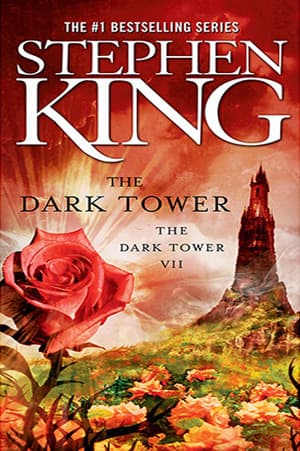
The Rose
A single rose in a vacant lot, representing the Dark Tower itself.
The Rose is a physical manifestation of the Dark Tower in other realities, specifically in New York City. It appears as a single, delicate rose growing in a vacant lot, protected by a magical barrier. It is a symbol of the Tower's vulnerability and its connection to all worlds. Its protection is crucial to the stability of the multiverse, and its destruction would mean the collapse of all realities. The Rose serves as a tangible link between Roland's world and ours, emphasizing the interconnectedness of all things.
The Breakers
Psychics forced to destroy the Beams that support the Tower.
The Breakers are powerful psychics, kidnapped and imprisoned by the Crimson King's forces at Algul Siento. They are forced to use their mental abilities to attack and destroy the Beams, the twelve cosmic forces that hold the Dark Tower and all realities together. Their work threatens to unravel the entire multiverse. Roland's mission to free them is critical to saving all existence. They represent the exploitation of power for destructive ends and the vulnerability of the fundamental structure of reality.
The Dark Tower Quotes
“The man in black fled across the desert, and the gunslinger followed.”
“Go then, there are other worlds than these.”
“Long days and pleasant nights.”
“Thankee sai.”
“The world has moved on.”
“And the world gave way to the sound of his voice.”
“It was the first time Roland had ever seen a train.”
“There's a reason for everything.”
“The wheel of ka turns.”
“He kills with his heart, not his hand.”
“The greatest mystery of all is the human heart.”
“Ka is a wheel. Its one purpose is to turn. And in the turning it brings us back to where we started.”
“But the Tower... the Tower is the nexus of all possible worlds.”
“He who loves the Dark Tower, let him not look back.”
Quiz
10 questions on the plot and the characters. Each answer comes with a short explanation.
Question 1
What is the name of the final, overarching antagonist that Roland and his ka-tet must confront to save the Dark Tower?
- The Crimson King
- Randall Flagg
- Mordred Deschain
- Walter O'Dim
Show answer
A. The Crimson King The Crimson King is the primary antagonist of the entire series, whose goal is to destroy the Dark Tower and bring chaos to all realities.
Question 2
What is the name of the magical, protective sphere that the ka-tet finds in the Dixie Pig and later uses in their final assault?
- The Bends of the Rainbow
- Maerlyn's Rainbow
- The Black Stone
- The Black Thirteen
Show answer
D. The Black Thirteen The Black Thirteen is a powerful, dangerous sphere from Maerlyn's Rainbow, which Susannah uses to travel to the Tower and later plays a role in the final confrontation.
Question 3
Which member of Roland's ka-tet is responsible for killing Randall Flagg (Walter O'Dim) in the final book?
- Roland Deschain
- Eddie Dean
- Mordred Deschain
- Susannah Dean
Show answer
C. Mordred Deschain Mordred Deschain, driven by hunger and rage, consumes Randall Flagg, ending the villain's long existence.
Question 4
What is the ultimate fate of Roland Deschain after he reaches the top of the Dark Tower?
- He is reunited with his ka-tet and lives happily ever after.
- He enters a new dimension and becomes a guardian of the Tower.
- He is sent back to the beginning of his quest, with a slight change.
- He dies peacefully, having completed his journey.
Show answer
C. He is sent back to the beginning of his quest, with a slight change. Roland is forced through a door at the top of the Tower and finds himself at the beginning of his quest, in the Mohaine Desert, but this time possessing the Horn of Eld.
Question 5
What crucial item does Roland possess at the very end of his journey that he did not have at the beginning of the first book, signaling a subtle change in his endless cycle?
- A new set of guns
- The Horn of Eld
- A map of the Tower
- A key to the Tower's door
Show answer
B. The Horn of Eld At the very end, Roland finds himself back in the desert but now possesses the Horn of Eld, which he had previously let fall at the Battle of Jericho Hill, suggesting a potential for a different outcome in this iteration of his quest.
Question 6
What is the primary theme explored by Roland's cyclical journey to the Dark Tower?
- The triumph of good over evil
- The importance of friendship and loyalty
- The nature of obsession, sacrifice, and redemption
- The futility of fighting against destiny
Show answer
C. The nature of obsession, sacrifice, and redemption Roland's relentless pursuit of the Tower, his willingness to sacrifice everything and everyone, and the hope for redemption in breaking his cycle are central themes.
Question 7
Where does Susannah Dean ultimately choose to end her journey, leaving Roland and Jake?
- At the base of the Dark Tower
- In a different version of New York City with alternate Eddie and Jake
- In the land of Calla Bryn Sturgis
- She dies defending the Tower
Show answer
B. In a different version of New York City with alternate Eddie and Jake Susannah is transported to a New York City where she meets alternate versions of Eddie and Jake, choosing to stay with them and build a new life.
Question 8
What is the name of the place where the Crimson King is imprisoned, just below the Dark Tower?
- The Devar-Toi
- The Shardik's Lair
- The Balcony of the Tower
- The Balcony of the Crimson King
Show answer
D. The Balcony of the Crimson King The Crimson King is found on a specific balcony of the Tower, throwing sneetches and attempting to destroy it.
Question 9
Who is tasked with drawing the Crimson King's true form, which is essential to defeating him?
- Roland Deschain
- Patrick Danville
- Jake Chambers
- Stephen King (as a character)
Show answer
B. Patrick Danville Patrick Danville, with his magical drawing abilities, is crucial in depicting the Crimson King's true form, which allows Roland to erase him from existence.
Question 10
What literary device is heavily used throughout 'The Dark Tower' series, particularly in the final book, to connect its narrative to many other works by Stephen King?
- Foreshadowing
- Allegory
- Metafiction and intertextuality
- Stream of consciousness
Show answer
C. Metafiction and intertextuality Stephen King himself appears as a character, and the narrative frequently references his other works, making the series highly metafictional and intertextual.
The Dark Tower FAQ
What is Roland Deschain's ultimate goal in 'The Dark Tower' (Book VII)?
Roland's ultimate goal is to reach the Dark Tower, the nexus of all realities, to ascend its stairs and discover the truth of his existence and the universe. He believes that by reaching the Tower, he can reset the cycle of his quest and perhaps save the multiverse from its ongoing decay. This quest has consumed his life, leading him to sacrifice nearly everything and everyone dear to him.
Who are the key members of Roland's ka-tet in this final book?
Roland's ka-tet consists of Eddie Dean, a former heroin addict turned gunslinger; Susannah Dean, Eddie's wife, who is a double amputee and host to a demon; and Jake Chambers, a young boy from New York who is Roland's adopted son. Oy, a billy-bumbler, also remains a loyal and integral member of their group, often displaying remarkable intelligence and courage. Together, they face the ultimate challenges to reach the Tower.
What major threats do Roland and his ka-tet face in their journey to the Tower?
The ka-tet faces numerous threats, including the Crimson King's forces, such as the Can-toi (Taheen) and the deadly Breakers who are destroying the beams holding the Tower. They also contend with the machinations of Mia, a demon who possesses Susannah and seeks to birth a demon-child, and the treacherous landscapes of End-World. Ultimately, the greatest threat is the very nature of Roland's relentless, cyclical quest.
How does Stephen King himself become a character in 'The Dark Tower' (Book VII)?
Stephen King is revealed to be a pivotal character, the 'author' and 'god' of Roland's story, whose life and continued writing are essential for the existence of the Tower and the multiverse. The ka-tet must protect him from the Crimson King's agents, particularly the assassin Pimli Prentiss, to ensure he finishes writing Roland's tale. This meta-narrative twist blurs the lines between creator and creation.
What is the significance of the 'beams' and their destruction in the story?
The beams are the twelve mystical energy lines that crisscross at the Dark Tower, holding all of reality together. Their destruction by the Crimson King's Breakers threatens to collapse the entire multiverse into chaos and 'Todash darkness.' The ka-tet's mission becomes not only reaching the Tower but also stopping the Breakers to prevent the ultimate destruction of existence.
What is the true nature of the Crimson King and his ultimate goal?
The Crimson King is a mad, ancient entity, Roland's ancestor, who seeks to destroy the Dark Tower and plunge the multiverse into primordial chaos. He is trapped on the balcony of the Tower, but his influence extends through his servants, the Can-toi and Breakers, to unravel reality. His madness and nihilistic desires are the primary antagonist force driving the decay of the worlds.
How do events from other Stephen King novels tie into 'The Dark Tower' (Book VII)?
Numerous connections are revealed, solidifying the idea that the Dark Tower is the nexus of King's entire fictional universe. Characters and events from 'Salem's Lot,' 'Insomnia,' 'Hearts in Atlantis,' and 'The Stand' are shown to be directly influenced by or connected to the struggle for the Tower. This interweaving demonstrates the vast scope of King's overarching narrative.
What is the ultimate fate of Roland's ka-tet members, Eddie, Susannah, and Jake?
Eddie Dean dies heroically defending Stephen King from an attack by Pimli Prentiss and his men. Jake Chambers sacrifices himself to save Stephen King from a car accident orchestrated by the Crimson King's forces. Susannah, after a harrowing ordeal with Mia and the demon-child, eventually finds a peaceful existence in a parallel New York, reunited with alternate versions of Eddie and Jake, free from Roland's quest.
What is the significance of the Horn of Eld and Roland's regret regarding it?
The Horn of Eld is an ancestral relic of Roland's lineage, which he left behind at the battle of Jericho Hill, a moment of profound failure for him. He deeply regrets this oversight, believing that carrying the Horn might have changed the outcome of his quest. Its absence symbolizes his initial arrogance and the burdens of his past, and its retrieval by a future Roland is a key cyclical element.
How does Roland's past trauma and the loss of his loved ones influence his relentless pursuit of the Tower?
Roland's past traumas, particularly the deaths of Susan Delgado, Cuthbert Allgood, and Alain Johns, and the constant loss of his ka-tet members, fuel his obsession with the Tower. He believes reaching it will either redeem these losses, reverse them, or provide an ultimate understanding that justifies his sacrifices. This relentless drive, however, often blinds him to the present and the value of his companions.
Analyze the psychological impact of Roland's cyclical journey on his character.
The cyclical nature of Roland's journey implies a perpetual state of striving and suffering, leading to a profound sense of fatalism and a hardened, often emotionally detached demeanor. Each cycle reinforces his single-mindedness, making him less capable of genuine connection and more prone to sacrificing others for his ultimate goal. This endless repetition is both his burden and his driving force.
How does Susannah Dean's struggle with Mia and Detta Walker represent her internal conflicts?
Susannah's struggle with Mia, the demon who possesses her, and her alternate personality, Detta Walker, embodies her profound internal conflicts regarding identity, agency, and her place within the ka-tet. Mia represents a primal desire for motherhood and revenge, while Detta symbolizes rage and independence from her physical limitations. Her eventual separation from both signifies her journey towards self-actualization and freedom from external and internal forces.
Discuss the psychological concept of 'ka' and its role in shaping the characters' destinies.
'Ka' represents fate or destiny, a powerful force that binds individuals together and guides their paths, often against their conscious will. It dictates the formation of the ka-tet and their seemingly unavoidable journey to the Tower. Psychologically, it can be seen as an externalization of subconscious drives and collective destiny, providing both comfort in purpose and frustration in its unyielding nature, shaping the characters' choices and ultimate fates.
What is the meaning behind the ending of 'The Dark Tower' and Roland's ultimate fate?
The ending reveals Roland reaching the Dark Tower, only to find a door marked with his name, leading him back to the beginning of his quest, specifically the desert chase after Walter. This cyclical ending suggests that Roland is trapped in an eternal loop, constantly seeking the Tower but never truly completing the journey in a permanent sense. It implies that the journey itself, and the lessons learned (or not learned), are the true 'purpose.'
Is Roland's journey a punishment, a test, or an opportunity for redemption?
This is highly debatable. It can be interpreted as a punishment for his past sins and sacrifices, a test of his resolve and moral compass, or an ongoing opportunity for redemption. Each cycle presents Roland with the chance to act differently, particularly regarding the Horn of Eld, suggesting that the loop continues until he learns a crucial lesson or makes a different choice. The lack of true 'completion' keeps this question open.
How does the meta-narrative, with Stephen King as a character, impact the reader's understanding of free will versus destiny?
The meta-narrative complicates the concepts of free will and destiny by presenting Roland as a character in a story written by Stephen King, who is himself influenced by 'the Tower.' This suggests that while characters may believe they have free will, their destinies are ultimately guided by a higher authorial hand, or by the inherent 'ka' of the narrative itself. It blurs the lines, making readers question their own agency within their 'stories.'
What is the significance of Roland finally carrying the Horn of Eld in the very last moments of the book?
In the final moments of the book, as Roland is sent back to the beginning of his quest, it is revealed that he now carries the Horn of Eld, a significant change from his previous cycles. This suggests a potential breaking of the cycle, or at least a different iteration of it, implying that Roland has learned a crucial lesson about remembering his past and valuing his comrades. It offers a glimmer of hope for a different outcome in his next journey.
Does the ending suggest that Roland will eventually 'break' the cycle and find a true conclusion?
The ending, with Roland carrying the Horn of Eld, strongly hints at the possibility of breaking the cycle, or at least altering its trajectory. While he is sent back to the beginning, the presence of the Horn indicates a change in his character and perhaps his approach. It suggests that if he can learn from his past mistakes and value his ka-tet more, he might eventually achieve a different, true conclusion to his quest, rather than perpetual repetition.
About the author

Stephen Edwin King is an American author of horror, supernatural fiction, suspense, crime, science-fiction, and fantasy novels. Described as the "King of Horror", his books have sold more than 350 million copies as of 2006, and many have been adapted into films, television series, miniseries, and comic books. King has published over 65 novels/novellas, including seven under the pen name Richard Bachman, and five non-fiction books. He has also written approximately 200 short stories, most of which have been published in book collections.
Similar books
- American Gods
Neil Gaiman
4.1 (758k) average on GoodreadsFantasyRoad trip narrative across America, blending fantasy with contemporary reality.
- It
Stephen King
3.5 (237) average on GoodreadsFictionExpansive narrative, focus on a core group of characters, and a confrontation with ultimate evil.
- Harry Potter and the Sorcerer's Stone
J.K. Rowling
4.5 (7M) average on GoodreadsFantasyRescued from a miserable life under the stairs, an orphaned boy discovers he's a wizard destined for a magical school, where he uncovers a dangerous secret tied to the dark wizard who murdered his parents.
- The Hunger Games
Suzanne Collins
4.3 (6.4M) average on GoodreadsFantasyIn a future where children fight to the death on live television, Katniss Everdeen volunteers for the arena, turning a death sentence into a fight for survival and a spark of rebellion.
- 1984
George Orwell
4.2 (3.1M) average on GoodreadsPoliticsIn a future where surveillance and thought control are absolute, a man's search for truth clashes with the Party, showing that hope can be a form of rebellion.
- Divergent
Veronica Roth
4.2 (2.9M) average on GoodreadsFantasyIn a society divided by virtues, a sixteen-year-old's difference from the norm starts a rebellion that threatens her world.






Enjoyed the summary?
A summary gives you the shape of the book. The book itself has the detail, the examples and the voice.
Find The Dark Tower on AmazonAs an Amazon Associate, BookBrief earns from qualifying purchases. How we're funded