
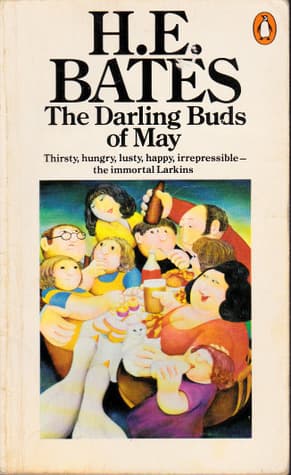
Synopsis
Covers the whole plot, including the ending.
- Difficulty
- Easy
- Pacing
- Moderate
- Mood
- Heartwarming, Jovial, Idyllic, Humorous
- Read it if
- You enjoy lighthearted, charming stories about eccentric families, rural life, and finding joy outside of societal norms. Perfect for a cozy, feel-good read.
- Skip it if
- You prefer fast-paced plots, deep psychological drama, or stories with high stakes and intricate mysteries. This book is more about atmosphere and character.
The Darling Buds of May Plot Summary
Covers the whole plot, including the ending.
A Tax Man's Arrival in Rural Bliss
Mr. Cedric Charlton, a meticulous but timid tax inspector, is sent to investigate the Larkins, a family living an unconventional, tax-evading life in rural Kent. He arrives at their picturesque farm on a May day, immediately clashing with their carefree life. Pop Larkin, the patriarch, and his wife, Ma, greet him with hospitality, offering endless food, drink, and warmth. Cedric, initially determined to do his duty, finds himself disarmed by their kindness and the sensory overload of their indulgent life. His professional resolve begins to weaken upon encountering their unhurried world.
The Irresistible Pull of Larkin Hospitality
Despite his intentions to conduct an audit, Cedric is quickly drawn into the Larkins' chaotic life. He is given large meals, much alcohol, and the constant company of the Larkin children. Pop and Ma skillfully avoid his tax questions with charm and distraction, never refusing to cooperate but always finding a reason to postpone serious business. Cedric, increasingly uncomfortable with his official role, finds himself enjoying the food and the family's company. His strict adherence to rules begins to melt under the influence of their lifestyle, especially the appeal of their eldest daughter, Mariette.
Mariette's Charms and a Change of Heart
Cedric is captivated by Mariette Larkin, the beautiful, free-spirited eldest daughter. Her natural charm, looks, and uninhibited nature contrast with the women he usually meets. Their interactions become flirtatious, and Cedric's professional boundaries blur. He starts to see the Larkins' 'tax evasion' not as a crime, but as part of their unburdened way of life. His internal conflict grows as his desire for Mariette increases, making it impossible for him to pursue his official duties with conviction. He is torn between his professional obligation and his growing personal feelings.
A Day at the Fair and a Proposal
Pop Larkin takes the entire family, including Cedric, to the local fair. The outing is fun, with Pop winning prizes and everyone enjoying fairground treats and games. Amidst the lively atmosphere, Cedric, smitten and overwhelmed by the Larkins' joy, proposes to Mariette. She accepts. This decision solidifies his break from his former life and fully brings him into the Larkin family. The engagement is met with approval from Pop and Ma, who see Cedric as a suitable addition to their family.
The Arrival of Other Suitors
Cedric's new happiness is briefly overshadowed by Mariette's other suitors. These include the handsome local farmer, Monty, and a dashing, older gentleman known as the Brigadier. Their presence highlights Mariette's popularity and free spirit, causing Cedric a moment of insecurity. Pop and Ma, however, treat these rival suitors with their usual good-natured indifference, confident in Mariette's choice. Cedric realizes that being part of the Larkin family means accepting a less conventional approach to relationships and life.
Cedric's Transformation and New Identity
As days pass, Cedric changes. He sheds his stiff suits for comfortable clothes, abandons his schedules, and embraces the Larkins' philosophy of living for the moment. He starts to enjoy farm work, learns to appreciate good food and drink without restraint, and adopts a more relaxed attitude toward money and conventions. The family renames him 'Charlie', showing his complete assimilation. His former life as a tax clerk seems a distant memory, replaced by a joyful existence filled with laughter and love. He feels more alive and content than before.
Dealing with the Tax Office
Despite his transformation, the Larkins' tax affairs remain. Pop and Charlie, now a united front, decide to handle it in their own way. They write a creative and somewhat evasive letter to the tax office, admitting to a relaxed approach to financial record-keeping but assuring them that everything is, in their own fashion, in order. The letter, drafted with Pop's charm and Charlie's new relaxed attitude, relies on goodwill and artful dodging rather than strict adherence to the law.
The Grand Engagement Party
To celebrate Mariette and Charlie's engagement, the Larkins host a party, inviting friends and acquaintances from the village. The event is a Larkin affair: overflowing with food, drink, music, and revelry. Villagers like Miss Pilchester and the Brigadier attend, marveling at the Larkins' generosity and spirit. The party is a public declaration of Mariette and Charlie's upcoming marriage and solidifies Charlie's place in the community. It is a joyous celebration of love, family, and the Larkin way of life, with everyone contributing to the festive atmosphere.
A New Beginning for Charlie and Mariette
As the story ends, Charlie and Mariette are in love and looking forward to their wedding. Charlie has fully embraced his new identity and the Larkin lifestyle, shedding all traces of his former existence. He looks forward to a future filled with abundance, joy, and the charm of his new family. The book ends with optimistic expectation, promising a wedding and a lifetime of happiness for the couple, rooted in the idyllic world of the Darling Buds of May. The tax situation, while not conventionally resolved, has faded, a minor detail compared to the richness of life.
The Darling Buds of May Characters
Pop Larkin
Protagonist
The jovial, generous, and unconventional patriarch of the Larkin family.
Pop Larkin is the heart and soul of the Larkin family, a larger-than-life character who embodies generosity, a love for life, and a charming disregard for conventional rules and regulations, particularly concerning taxes. He runs a successful, albeit informal, scrap metal business and various other ventures, always ensuring his family has everything they desire. His philosophy is to enjoy life to the fullest, indulging in good food, drink, and company. He is shrewd yet warm-hearted, able to disarm anyone with his hospitality and wit. He genuinely loves his family and sees no harm in flouting conventions for their happiness.
Relationships: Ma Larkin (Devoted and loving husband); Mariette Larkin (Affectionate and proud father); Cedric Charlton (Charlie) (Welcoming, paternal figure and future father-in-law)
Ma Larkin
Protagonist
The voluptuous, warm, and equally unconventional matriarch of the Larkin family.
Ma Larkin is Pop's equally substantial and warm-hearted wife, a devoted mother to her many children. She shares Pop's love for abundance, good food, and a relaxed approach to life. Her days are filled with cooking enormous meals, tending to her family, and ensuring everyone feels loved and well-fed. She is an excellent cook and a nurturing presence, always ready with a comforting word or a hearty laugh. She fully supports Pop's unconventional ways and embraces 'Charlie' into the family with open arms, seeing him as a perfect match for Mariette.
Relationships: Pop Larkin (Loving and supportive wife); Mariette Larkin (Affectionate and understanding mother); Cedric Charlton (Charlie) (Warm and welcoming future mother-in-law)
Mariette Larkin
Protagonist
The beautiful, free-spirited eldest daughter of the Larkin family.
Mariette is the eldest Larkin daughter, striking in her beauty and natural charm. She is uninhibited, confident, and enjoys life with the same gusto as her parents. She is popular with local young men but is ultimately drawn to Cedric Charlton's quiet sincerity and the genuine connection they form. She embodies the Larkin spirit of enjoying freedom and simple pleasures. Her decision to marry Cedric is pivotal, signifying her choice of a partner who can integrate into, and appreciate, her family's unique world.
Relationships: Pop Larkin (Beloved daughter); Ma Larkin (Beloved daughter); Cedric Charlton (Charlie) (Fiancée and love interest)
Cedric Charlton (Charlie)
Protagonist
A timid tax clerk who transforms into an uninhibited member of the Larkin family.
Initially, Cedric Charlton is a prim, proper, and somewhat undernourished tax inspector, rigid in his adherence to rules and schedules. Sent to investigate the Larkins, he is completely overwhelmed by their vibrant, unconventional lifestyle. Over the course of the book, he undergoes a profound transformation, shedding his inhibitions, embracing good food and drink, and falling deeply in love with Mariette. He is eventually renamed 'Charlie' by the Larkins, symbolizing his complete assimilation and newfound joy in their world. He represents the audience's initial perspective, gradually converting to the Larkin way of life.
Relationships: Mariette Larkin (Love interest and fiancée); Pop Larkin (Future son-in-law and mentee); Ma Larkin (Future son-in-law)
The Brigadier
Supporting
A local, genteel gentleman, a friend of the Larkins and an admirer of Mariette.
The Brigadier is a charming, somewhat elderly local gentleman who is a regular, though often exasperated, visitor to the Larkin household. He is fond of the family, particularly Mariette, whom he admires. Despite his more conventional background, he is drawn to the Larkins' vitality and often finds himself involved in their escapades, albeit sometimes reluctantly. He represents a bridge between the Larkins' unconventional world and more traditional society, often providing humorous commentary on their antics. He is a good-natured character who enjoys the Larkins' company.
Relationships: Mariette Larkin (Admirer); Pop Larkin (Friend and acquaintance)
Miss Pilchester
Supporting
A local, somewhat prim lady who is a neighbor and acquaintance of the Larkins.
Miss Pilchester is a local resident, a single lady who, despite her more prim and proper demeanor, is often drawn into the Larkins' sphere. She is a neighbor and acquaintance who, like the Brigadier, finds herself both amused and sometimes bewildered by the Larkins' unrestrained lifestyle. She attends their parties and events, providing another perspective on their unconventional charm. She is a minor character who helps to flesh out the local community surrounding the Larkins.
Relationships: Pop Larkin (Acquaintance and neighbor); Ma Larkin (Acquaintance and neighbor)
Angela Snow
Mentioned
A local socialite, often discussed but not directly involved in the main plot.
Angela Snow is a local socialite or figure of local gossip, often mentioned in conversations among the characters. She represents a different social circle, perhaps one that the Larkins occasionally interact with or are aware of, but she does not play an active role in the central narrative of Cedric's transformation. Her mentions add to the sense of a wider community in rural Kent.
Monty
Supporting
One of Mariette's local suitors, a farmer.
Monty is a local farmer and one of Mariette's admirers before Cedric's arrival and proposal. He is depicted as handsome but perhaps a little dull compared to Cedric's eventual charm and the Larkins' vivacity. His presence serves to highlight Mariette's popularity and provides a brief moment of jealousy for Cedric, emphasizing the competition for Mariette's affections. He represents a more conventional choice for Mariette, which she ultimately rejects.
Relationships: Mariette Larkin (Suitor)
The Larkin Children (other than Mariette)
Supporting
The numerous, lively, and often boisterous younger siblings of Mariette.
The other Larkin children, though not individually named or deeply characterized, form an integral part of the family's boisterous and joyful atmosphere. They are always present, contributing to the chaotic charm of the household, enjoying the endless food and freedom. Their presence emphasizes the Larkins' fertility and their belief in a large, happy family. They symbolize the natural, uninhibited joy that Cedric gradually comes to appreciate and embrace.
Relationships: Pop Larkin (Children); Ma Larkin (Children); Mariette Larkin (Siblings)
The Darling Buds of May Themes
Freedom vs. Convention
The main theme is the Larkins' uninhibited, free-spirited life contrasting with society's conventions, especially as seen in Cedric Charlton. The Larkins disregard tax laws, embrace pleasure, and prioritize happiness over societal expectations. Cedric's change from a rule-bound tax clerk to 'Charlie' shows the appeal and freedom of living outside conventional norms. The book suggests that true happiness can be found by embracing spontaneity and joy, rather than strictly following societal rules.
“They live as many of us would like to live if only we had the guts and nerve to flout the conventions.”
Abundance and Hedonism
The Larkins' life is full of abundance — food, drink, children, and joy. They enjoy sensory pleasures, constantly eating, drinking, and celebrating. This theme is clear in descriptions of Ma's meals, Pop's generous spirit, and the atmosphere of plenty on their farm. It contrasts with Cedric's initial sparse existence, eventually drawing him into a world where indulgence is celebrated. The book champions a joyous embrace of life's material pleasures.
“Perfick!”
Transformation and Identity
Cedric Charlton's journey from a tax man to the jovial 'Charlie' is the core of this theme. His initial identity is defined by his profession and rules, but through the Larkins, he discovers a new, more authentic self. He sheds his old persona, embracing a life of spontaneity, love, and connection to nature. This change suggests that identity can evolve when exposed to different ways of living, leading to greater personal fulfillment. His renaming shows his complete adoption of a new way of being.
“He was no longer Mr. Charlton. He was Charlie.”
Love and Family
At its heart, the novel celebrates love and family. The Larkins, despite their unconventional habits, are devoted to one another. Pop and Ma have a strong bond, and their love extends to their children. The growing romance between Cedric and Mariette is the central plot, ending in their engagement. The family provides a strong, supportive, and joyful environment that transforms Cedric, highlighting the power of familial love and acceptance.
“He had never known such happiness. It was like living in a perpetual party.”
Rural Idyll vs. Urban Bureaucracy
The Kent countryside provides a contrast to Cedric's urban world. The Larkins' farm, with its natural beauty, produce, and unhurried pace, represents an escape from the pressures of city life and government. The conflict between Cedric's tax duties and the Larkins' rural existence highlights the theme. The book romanticizes rural life, presenting it as a place where happiness and freedom can flourish, untouched by modern administration.
“The air was full of the scent of hawthorn and wild roses.”
Plot Devices & Literary Techniques
Fish Out of Water
A character from one environment is placed into a completely alien one.
This device is central to the narrative, with Cedric Charlton, the fastidious tax inspector from the structured world of bureaucracy, being dropped into the chaotic, free-spirited, and abundant world of the Larkin family. His discomfort, initial attempts to maintain his professional demeanor, and eventual transformation provide much of the story's humor and character development. The contrast between his original environment and the Larkins' home highlights their unique qualities and drives the plot forward.
Foil Characters
Characters who highlight each other's contrasting qualities.
The novel uses foil characters to emphasize the distinct qualities of the main protagonists. Cedric Charlton, with his rigidity, timidity, and adherence to rules, serves as a perfect foil for Pop Larkin, who is jovial, confident, and utterly disregardful of conventions. This contrast not only provides humor but also underscores the core thematic conflict between freedom and convention, making Cedric's eventual transformation more impactful. Mariette also acts as a foil to Cedric's initial reserved nature, drawing him out of his shell.
Sensory Imagery
Vivid descriptions appealing to the five senses.
H.E. Bates employs rich sensory imagery, particularly focusing on food, drink, and the natural beauty of the Kent countryside. Descriptions of Ma's enormous, delicious meals, the scent of the orchards, the taste of Pop's potent cocktails, and the sounds of laughter immerse the reader in the Larkins' world of abundance and pleasure. This device is crucial in conveying the overwhelming and intoxicating nature of their lifestyle, which ultimately seduces Cedric and the reader alike. It highlights the hedonistic theme.
Humor of Situation and Character
Comedy derived from absurd circumstances and eccentric personalities.
The novel is steeped in humor, largely stemming from the clash between Cedric's serious mission and the Larkins' carefree approach to life, as well as the eccentricities of the Larkin family themselves. Pop's ingenious evasions, Ma's boundless hospitality, and Cedric's increasingly bewildered reactions create numerous comedic situations. The humor is gentle and warm, inviting the reader to laugh with the characters rather than at them, reinforcing the book's lighthearted and optimistic tone.
The Darling Buds of May Quotes
“Perfick!”
“The Larkins lived in a world of their own making, a world where money was of no importance, where the only things that mattered were food, drink, and the love of family.”
“When the going gets tough, the tough get going.”
“There's nothing like a good meal to put things right.”
“We don't need money to be happy. We've got each other.”
“The world is full of beautiful things if you just take the time to look.”
“A little bit of what you fancy does you good.”
“Family is the most important thing in the world.”
“Why worry about tomorrow when today is so perfect?”
“Life is for living, not for counting pennies.”
“The best things in life are free: love, laughter, and sunshine.”
“We may not have much, but we have everything we need.”
“Happiness is a choice, and we choose it every day.”
“A full belly and a happy heart—that's all anyone really needs.”
Quiz
10 questions on the plot and the characters. Each answer comes with a short explanation.
Question 1
What is the profession of Mr. Charlton at the beginning of the novel?
- A farmer
- A tax clerk
- A shopkeeper
- A teacher
Show answer
B. A tax clerk At the start of the book, Mr. Charlton is described as an 'undernourished and timid tax clerk' who visits the Larkin family on official business, setting the stage for his transformation.
Question 2
What event marks the conclusion of 'The Darling Buds of May'?
- A funeral for a family pet
- A grand celebration and wedding announcement
- A dramatic storm that destroys the Larkin home
- Mr. Charlton returning to his old job
Show answer
B. A grand celebration and wedding announcement The book ends with a grand celebration and the announcement of the wedding between Charlie (formerly Mr. Charlton) and Mariette Larkin, reflecting the joyful, life-affirming tone of the series.
Question 3
Which character is described as hating 'pomp, pretension and humbug' in the book?
- Miss Pilchester
- Pop Larkin
- Angela Snow
- The Brigadier
Show answer
B. Pop Larkin Pop Larkin is characterized as a figure who despises formalities and hypocrisy, embracing a free-spirited, unconventional lifestyle that defines the Larkin family ethos.
Question 4
What real-life inspiration did H.E. Bates cite for creating the Larkin family?
- A wealthy aristocratic family he met on vacation
- A family he saw in a ramshackle lorry painted electric blue
- Characters from another author's novel
- His own childhood family experiences
Show answer
B. A family he saw in a ramshackle lorry painted electric blue Bates recalled passing a junkyard in Kent and seeing a family in a 'ramshackle lorry' painted 'violent electric blue,' eating ice-creams and crisps, which sparked the idea for the Larkins' vibrant, unconventional lifestyle.
Question 5
What is the 'Larkin way of life' primarily centered around?
- Strict adherence to social conventions
- An easygoing celebration of nature, food, drink, and family
- Religious devotion and piety
- Political activism and reform
Show answer
B. An easygoing celebration of nature, food, drink, and family The Larkin family embodies a hedonistic, joyful approach to life that celebrates simple pleasures like nature, food, drink, and close family bonds, contrasting with the rigid norms of society.
Question 6
Which of these characters is NOT introduced in 'The Darling Buds of May'?
- The Brigadier
- Miss Pilchester
- Angela Snow
- French relatives from later books
Show answer
D. French relatives from later books The Brigadier, Miss Pilchester, and Angela Snow are all characters introduced in this first book, while French relatives appear in later sequels like 'A Breath of French Air'.
Question 7
What was the original title of the film adaptation of 'The Darling Buds of May'?
- The Larkin Legacy
- The Mating Game
- Pop's Paradise
- Kentish Joy
Show answer
B. The Mating Game The novel was filmed under the title 'The Mating Game', which captures the romantic and comedic elements of the story, particularly Charlie and Mariette's relationship.
Question 8
According to the book's description, what is the secret to the Larkins' lifestyle that many people envy?
- They have inherited great wealth
- They live as many would like to if they had the guts to flout conventions
- They possess magical abilities
- They are secretly royalty in hiding
Show answer
B. They live as many would like to if they had the guts to flout conventions The Larkins' appeal lies in their bold rejection of societal norms, living a carefree, indulgent life that others might desire but lack the courage to pursue, as highlighted in the book's themes.
Question 9
In what order did 'The Darling Buds of May' initially appear in publication?
- First in Britain, then in the United States
- First in the United States, then in Britain
- Simultaneously in both countries
- Only in Britain, never in the United States
Show answer
B. First in the United States, then in Britain The book first appeared in the United States before being published in Britain, where it quickly sold 40,000 copies in two months, indicating its cross-Atlantic popularity.
Question 10
What initial literary form did H.E. Bates attempt for the Larkin family before deciding on a novel?
- A play
- A short story
- A poem
- A series of essays
Show answer
B. A short story Bates initially wrote a brief tale based on the real-life family he observed, but he soon realized the characters were too rich for a short story, leading him to expand it into the first of five Larkin novels.
The Darling Buds of May FAQ
What is 'The Darling Buds of May' about?
The novel follows Mr. Charlton, a timid tax clerk, who visits the Larkin family to investigate their tax affairs but becomes transformed into 'Charlie' as he embraces their hedonistic lifestyle focused on nature, food, drink, and family. The story culminates in his engagement to Mariette Larkin and a grand celebration, marking his full conversion to the Larkin way of life.
Why should I read 'The Darling Buds of May'?
It offers a charming escape into a world celebrating simple pleasures and family bonds, contrasting post-war austerity with the Larkins' joyful disregard for conventions. The transformation of Mr. Charlton provides a heartwarming narrative about finding happiness in unexpected places, making it a feel-good read with vivid characters and humor.
What is the background/setting of 'The Darling Buds of May'?
Set in rural Kent in the 1950s, the story unfolds in the Larkin family's home, a junkyard-inspired environment that reflects their unconventional lifestyle. This pastoral setting emphasizes nature and community, contrasting with the bureaucratic world Mr. Charlton comes from, highlighting themes of freedom versus conformity.
What are the most memorable quotes from 'The Darling Buds of May'?
While specific quotes vary, Pop Larkin's philosophy encapsulates the book's spirit: he and the Larkins live 'as many of us would like to live if only we had the guts and nerve to flout the conventions.' This line underscores the novel's celebration of nonconformity and joy in everyday pleasures.
What writing style does H.E. Bates use in 'The Darling Buds of May'?
Bates employs a lighthearted, descriptive prose rich with sensory details about food, nature, and family interactions, creating a warm, comic tone. His style blends humor with social commentary, making the Larkins' world feel vibrant and inviting, as seen in the vivid portrayal of their celebrations and rural life.
What minor details add significant meaning in 'The Darling Buds of May'?
The 'ramshackle lorry painted a violent electric blue,' inspired by a real family Bates observed, symbolizes the Larkins' bold, unapologetic joy and rejection of societal norms. This detail roots the story in authenticity and highlights the family's vibrant, carefree spirit that charms Mr. Charlton.
What are some subtle foreshadowing moments in 'The Darling Buds of May'?
Early interactions between Mr. Charlton and Mariette, filled with playful banter and shared moments, hint at their romantic future. Pop's immediate acceptance of Charlie into the family foreshadows his eventual transformation and integration, suggesting the Larkins' influence will override his initial tax investigation purpose.
What unexpected character connections exist in 'The Darling Buds of May'?
Mr. Charlton's role as a tax clerk initially positions him as an outsider, but he quickly forms bonds with the entire Larkin clan, including Pop, Mariette, and secondary characters like the Brigadier and Angela Snow. These connections blur lines between authority and family, emphasizing the novel's theme of community over bureaucracy.
What are unspoken character motivations in 'The Darling Buds of May'?
Mr. Charlton is motivated by a deep-seated desire for belonging and freedom from his constrained life, which he finds in the Larkins' warmth. Pop Larkin, while appearing carefree, subtly aims to protect his family's happiness and lifestyle, using charm to deflect societal pressures like taxes.
What psychological complexities do characters exhibit in 'The Darling Buds of May'?
Mr. Charlton undergoes a psychological shift from anxiety and rigidity to relaxation and joy, mirroring a journey of self-discovery. Pop Larkin balances a seemingly simple hedonism with shrewdness, as his love for family drives him to cleverly navigate rules without losing his ethical core.
What are the major emotional turning points in 'The Darling Buds of May'?
Key moments include Mr. Charlton's first meal with the Larkins, where he begins to shed his inhibitions; his growing affection for Mariette, which deepens his attachment; and the grand celebration ending, where he fully embraces the Larkin way and announces his wedding, marking his emotional rebirth.
How do relationship dynamics evolve in 'The Darling Buds of May'?
Mr. Charlton's relationship with the Larkins transforms from formal suspicion to familial intimacy, especially with Mariette, moving from professional interaction to romance. Pop's paternal guidance helps Charlie integrate, while secondary characters like the Brigadier add layers of community support, enriching the network of bonds.
Which parts of 'The Darling Buds of May' remain ambiguous or open-ended?
The exact details of the Larkins' financial dealings and how they sustain their lifestyle are left vague, inviting readers to focus on their philosophy rather than practicality. The future beyond Charlie and Mariette's wedding is not detailed, leaving their married life and Charlie's full assimilation to the imagination.
What are controversial scenes or decisions in 'The Darling Buds of May'?
Some readers might view the Larkins' flouting of tax laws and social conventions as irresponsible or glorifying rule-breaking. Additionally, Mr. Charlton's rapid abandonment of his professional duties for hedonism could be seen as a critique of post-war morality, sparking debate on values like duty versus happiness.
'The Darling Buds of May' ending explained: how it ends & what it means
The book ends with a grand celebration and the announcement of Charlie and Mariette's wedding, symbolizing Charlie's complete transformation and acceptance into the Larkin family. This conclusion reinforces themes of joy, community, and rejecting societal constraints, suggesting that true happiness lies in embracing life's simple pleasures.
How does 'The Darling Buds of May' reflect its historical context?
Set in 1950s Britain, the novel contrasts post-war austerity and bureaucracy with the Larkins' abundance and freedom, offering a nostalgic escape from rationing and conformity. It critiques rigid social norms of the era, celebrating a return to pastoral ideals and family-centric joy amidst economic recovery.
What role do secondary characters like the Brigadier and Angela Snow play?
The Brigadier and Angela Snow represent broader societal acceptance and admiration for the Larkins' lifestyle, adding depth to the community around them. They highlight how the Larkins' charm wins over even traditional figures, reinforcing the novel's message that happiness can be infectious and transformative.
How does Pop Larkin's character embody the novel's themes?
Pop Larkin embodies the rejection of pomp and convention, loving his family fiercely while cleverly navigating rules. His secret—living as others wish they could—drives the plot, making him a symbol of hedonistic joy and resilience, and his influence directly catalyzes Mr. Charlton's transformation.
About the author

H.E. Bates was a British author known for his contributions to fiction during the 20th century. His notable works include "The Darling Buds of May," a pastoral novel that captures rural life in England, and "Fair Stood the Wind For France," which explores themes of love and sacrifice during wartime.
Similar books
- All Creatures Great and Small
James Herriot
4.3 (115k) average on GoodreadsBiographyShares a gentle, episodic charm and celebrates rural life with a focus on character and setting.
- I Capture the Castle
Dodie Smith
4.0 (85k) average on GoodreadsHistorical FictionOffers a delightful, character-driven narrative about an eccentric family in a picturesque, slightly crumbling setting.
- Lark Rise to Candleford
Flora Thompson
4.0 (3k) average on GoodreadsHistorical FictionThompson's work offers a much more detailed, socio-economically grounded, and often stark portrayal of rural life and poverty in late 19th-century England. Unlike Bates's idealized Larkins, Thompson meticulously documents the struggles, customs, and community dynamics, providing a robust historical and anthropological account. 'The Darling Buds of May' lacks this depth, prioritizing charm over realism.
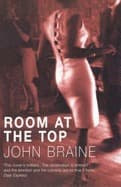
- Room at the Top
John Braine
3.7 (2k) average on GoodreadsLiterary FictionBraine's novel, set in a similar post-war period, explores the ambitions, class struggles, and social mobility of a working-class protagonist in a rapidly changing industrial town. It offers a critical and often gritty perspective on the era's social dynamics, a stark contrast to the Larkins' uncritical contentment and seemingly effortless existence. 'The Darling Buds of May' largely avoids the social commentary present in Braine's work.
- To Kill a Mockingbird
Harper Lee
4.3 (4.5M) average on GoodreadsHistorical FictionIn the 1930s Jim Crow South, Harper Lee writes about racial injustice, moral growth, and the quiet courage of a lawyer father, Atticus Finch, as seen through his young daughter's eyes.
- The Great Gatsby
F. Scott Fitzgerald
3.9 (3.8M) average on GoodreadsHistorical FictionIn the opulent Roaring Twenties, a mysterious millionaire's lavish parties hide his desperate, tragic pursuit of a lost love, exposing the emptiness within the American Dream.


Enjoyed the summary?
A summary gives you the shape of the book. The book itself has the detail, the examples and the voice.
Find The Darling Buds of May on AmazonAs an Amazon Associate, BookBrief earns from qualifying purchases. How we're funded