
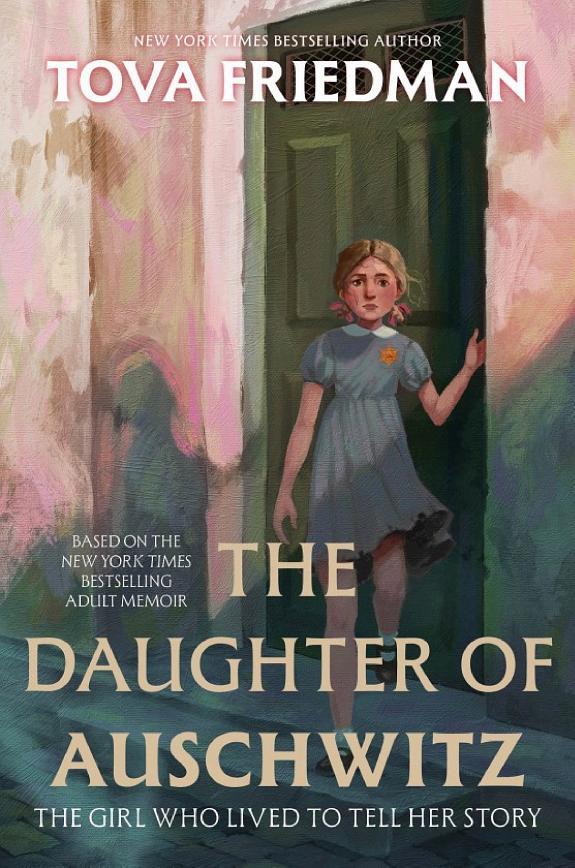
Core Idea
- Difficulty
- Medium
- Read it if
- You are interested in deeply personal and survivor-led accounts of the Holocaust, particularly from the perspective of a child. You want to understand the long-term impact of such trauma and the importance of memory and witness. You are looking for a powerful and moving narrative that educates and inspires action against hatred.
- Skip it if
- You prefer fictionalized accounts over memoirs, or find highly graphic and disturbing descriptions of historical atrocities too difficult to read. You are not prepared for a book that delves into profound suffering and the psychological aftermath of genocide.
Key Takeaways from The Daughter of Auschwitz
The Unbreakable Bond of Mother-Daughter Survival
A mother's ingenuity and love were the ultimate tools for enduring unimaginable horror.
The book shows how Tola's mother, strong and resourceful, was key to her survival. She taught Tola to pretend to be sick to avoid selection, shared small amounts of food, and found ways to hide her during round-ups. Her mother's actions were a constant defiance against the Nazi regime. This is not just a story of 'being saved'; it's about an active partnership formed in Auschwitz, showing the impact of a mother's instinct and smart thinking in the face of evil. This insight is one of the book's strongest, demonstrating the power of love and cleverness under pressure.
“My mother's lessons were not just about staying alive; they were about finding humanity where there was none.”
In the book: Tola's mother teaching her to pretend to be sick to avoid being sent to the gas chambers, and her ability to hide Tola from Nazi patrols.
Try this: Recognize the immense power of human connection and strategic thinking in overcoming seemingly insurmountable obstacles, even outside of extreme circumstances.
Related ideas: maternal-bond, survival-strategy, resistance
Childhood Resilience in Extremis
Even in the face of genocide, a child's spirit finds ways to adapt and persist.
Tova Friedman's story, especially as a five-year-old, gives a unique view of the Holocaust. It's not just about the terrible events, but also a child's ability to adapt and find small moments of 'normalcy' or understanding within the abnormal. This does not lessen the horror, but it highlights the remarkable, almost unconscious, resilience of people, especially children. Tola's perspective offers a less analytical, more direct understanding of survival, driven by instinct and a child's immediate needs, which often allowed her to go unnoticed or find comfort in brief moments. This perspective helps younger readers connect with the story.
“I was a child, and even in Auschwitz, a child's mind finds a way to compartmentalize, to adapt, to simply be.”
In the book: Tola's ability to follow her mother's complex instructions, her observations of other children, and her continued will to live despite starvation and fear.
Try this: Understand the profound adaptability of the human mind, especially in children, and the importance of fostering resilience in all individuals.
Related ideas: childhood-trauma, psychological-resilience, adaptation
Miraculous Close Calls as a Pattern of Survival
Survival was often a series of improbable escapes and sheer luck amid systematic extermination.
The book details several 'close calls' that highlight the random nature of life and death in the camps. From being saved from a gas chamber at the last moment to successfully hiding from Nazi patrols, Tola's story has many such moments. This does not suggest divine help but rather the sheer unpredictability and often lucky circumstances that allowed some to survive while millions died. It emphasizes that while courage and strategy were important, chance played a significant role, challenging any simple idea of 'deserving' survival.
“Each day was a gamble, a roll of the dice where the stakes were life and death. I won more often than I lost.”
In the book: The specific instance of being pulled from a group destined for the gas chamber, and hiding in a corpse's bed to evade capture.
Try this: Acknowledge the role of both agency and circumstance in life's major events, and appreciate the fragility of existence.
Related ideas: luck, contingency, fate
The Dehumanization and Its Subtle Resistance
Despite systematic attempts to strip away identity, small acts preserved humanity.
The Nazi regime's goal was not just to kill, but to dehumanize, to turn people into numbers. Tova's memoir shows how small acts of resistance—remembering names, sharing stories, keeping a sense of self—were important in fighting this psychological war. Her mother's insistence that Tola remember her name and hold onto her identity was a powerful act of defiance against a system designed to erase it. This shows that resistance was not always open rebellion but often an internal, quiet fight to keep one's humanity, an important lesson for understanding the human experience under oppression.
“They tried to make us numbers, but my mother always reminded me of my name, of who I was.”
In the book: The mother's consistent efforts to remind Tola of her real name and identity, despite the tattoos and numbers.
Try this: Value and protect individual identity and human dignity, recognizing that even small acts can hold immense power against dehumanizing forces.
Related ideas: dehumanization, identity, psychological-resistance
Auschwitz Through a Child's Eyes
The horror is filtered through a child's limited understanding, making it uniquely chilling.
The book's middle-grade adaptation effectively conveys the atrocities of Auschwitz without being overly graphic, by presenting events through Tola's child-like perception. This perspective is powerful; the reader experiences fear, hunger, and loss not through adult analysis, but through the direct, often confused, reactions of a five-year-old. This approach makes the incomprehensible slightly more understandable for younger readers, yet no less impactful. It shows how evil could affect even a child's world, forcing them to grow up too fast. This approach is essential for its target audience.
“I didn't understand everything, but I understood enough. And what I didn't understand, I felt.”
In the book: Tola's descriptions of her mother's warnings and her own sensory experiences of hunger, cold, and the smell of the crematoria, without fully grasping the adult implications.
Try this: Appreciate the different ways trauma is processed and understood across age groups, and the importance of age-appropriate education on difficult topics.
Related ideas: holocaust-education, child-perspective, trauma-narrative
The Weight of Witnessing and the Imperative of Memory
Survivors carry the burden of bearing witness, making their accounts vital for future generations.
Tova Friedman's willingness to share her difficult story, especially for a younger audience, shows the responsibility survivors feel to educate and prevent future atrocities. The book is an important historical document, a firsthand account that brings the statistics and facts of the Holocaust to vivid, human life. This need to remember is not just about historical accuracy, but about moral education—teaching empathy, vigilance, and the dangers of hatred. The book's very existence fulfills this need, ensuring that the lessons of the Holocaust reach a new generation. This is the book's main purpose.
“I survived so I could tell. And I tell so that no one ever forgets.”
In the book: The author's stated motivation for writing the book and adapting it for middle-grade readers, as a 'necessary read for a new generation'.
Try this: Understand the importance of historical memory and personal testimony in shaping collective understanding and preventing future injustices.
Related ideas: historical-memory, holocaust-testimony, never-again
Sources of Hope and Courage
Amidst despair, small acts of kindness and the will to live fueled resilience.
Despite the great darkness, the book touches upon the 'sources of hope and courage' that allowed Tola and her family to continue. These were not grand gestures, but often subtle moments: a shared look of understanding, strength from her mother's steady resolve, or the pure instinct to survive. These small glimmers of light kept them from giving in to despair. This shows that even in the worst circumstances, people can find reasons to continue, demonstrating the lasting power of hope and the innate will to live. This point provides an important balance to the story of suffering.
“Even in the darkest place, a tiny spark of hope, a shared glance, could keep the flame of life flickering.”
In the book: The bond between Tola and her mother, and the internal drive that kept them pushing forward day after day.
Try this: Seek out and appreciate small sources of hope and strength during difficult times, and recognize their cumulative power.
Related ideas: hope, courage, human-spirit
The Brutality of Selection and Arbitrary Death
The constant threat of selection underscored the arbitrary and systematic nature of extermination.
The selections, where individuals were chosen for immediate death based on arbitrary criteria, are a recurring and terrifying part of the memoir. Tola's experiences with these selections, and her mother's desperate attempts to save her, clearly illustrate the constant fear and the dehumanizing power of the Nazi system. It was a process designed to break spirits, to instill absolute terror, and to reduce human beings to disposable units. This insight is important for understanding the systematic nature of the Holocaust and the psychological toll it took on its victims, beyond physical suffering.
“The selections were a lottery of death, where the only prize was another day of life.”
In the book: Tola's repeated recounts of 'selections' and her mother's frantic efforts to ensure she appeared healthy enough to avoid them.
Try this: Recognize the dangers of systems that devalue human life and the importance of challenging arbitrary power structures.
Related ideas: selection, genocide, systematic-violence
The Enduring Scars of Survival
Survival did not erase the trauma; it merely shifted its form, leaving lasting impacts.
While the book focuses on survival, it implies that the end of the war was not the end of suffering. The 'scars' of Auschwitz, though not explicitly detailed for middle-grade readers, are understood to be deep and lasting. The book's existence, decades later, speaks to the lasting impact of such trauma on survivors. This reminds readers that liberation is a beginning, not an end, to the journey of healing and coming to terms with unimaginable experiences. It's a nuanced point that adds depth to the story beyond just the immediate events of the camp.
“The war ended, but the memories, the lessons, they stayed with me, etched into my very being.”
In the book: The author's decision to write her memoir years later, indicating the long-term processing and impact of her experiences.
Try this: Cultivate empathy for those who have experienced trauma and understand that healing is a complex, ongoing process.
Related ideas: post-traumatic-stress, trauma-recovery, memory-and-healing
The Daughter of Auschwitz Quotes
“I was a child, but I already knew how to die.”
“We were not numbers; we were children.”
“The smoke from the crematoria was the perfume of Auschwitz.”
“I learned to be invisible, to disappear.”
“Hope was a dangerous thing to have in Auschwitz.”
“My childhood was stolen, but my spirit was not broken.”
“The silence of the world was deafening.”
“To remember is to honor the dead.”
“The scars are invisible, but they are always there.”
“I survived so that others would not forget.”
“The SS guards were not monsters; they were ordinary people who chose to be cruel.”
“We were so hungry, we ate the wallpaper.”
“The greatest victory is to live a life of purpose after such darkness.”
“My mother's love was a light in the darkest of times.”
Quiz
10 questions on the main ideas. Each answer comes with a short explanation.
Question 1
What is the name of the main character as a child in "The Daughter of Auschwitz"?
- Tova Grossman
- Tola Grossman
- Tova Friedman
- Tola Friedman
Show answer
A. Tova Grossman The book states that the main character's name as a child was Tola Grossman.
Question 2
At what age was Tola Grossman sent to a Nazi labor camp?
- Three years old
- Four years old
- Five years old
- Six years old
Show answer
C. Five years old The text explicitly mentions, "At the tender age of five years old, Tola Grossman was sent to a Nazi labor camp."
Question 3
What significant event was happening around Tola and her parents when they were sent to the labor camp?
- The end of World War II
- The outbreak of World War II
- The Russian Revolution
- The Cold War
Show answer
B. The outbreak of World War II The book states, "As World War II was breaking out around them, the only thing Tola and her parents were left with was the instinct to survive at all costs."
Question 4
Which of the following is NOT mentioned as a close call or survival tactic Tola experienced?
- Being saved from a gas chamber
- Hiding in a corpse's bed
- Successfully hiding from Nazi roundups
- Escaping through a secret tunnel
Show answer
D. Escaping through a secret tunnel While the book mentions being saved from a gas chamber, hiding in a corpse's bed, and hiding from roundups, escaping through a secret tunnel is not listed as one of her experiences in the provided text.
Question 5
What is the primary theme highlighted regarding Tola and her mother's relationship?
- A strained relationship due to the war
- Mother's focus on education
- An unbreakable bond and mother teaching survival
- Mother's regret over their situation
Show answer
C. An unbreakable bond and mother teaching survival The text specifically states, "Witness the unbreakable bond between a mother and daughter as Tola’s mother teaches her the rules of survival that ultimately save her life."
Question 6
The book is described as a "necessary read for a new generation" because it provides:
- A fictionalized account of wartime heroism
- A historical overview of the Holocaust
- An age-appropriate resource for understanding WWII atrocities
- A guide to overcoming trauma
Show answer
C. An age-appropriate resource for understanding WWII atrocities The description calls it an "Essential Holocaust Education: A vital, age-appropriate resource for understanding the atrocities of World War II, perfect for young readers, parents, and educators."
Question 7
What kind of book is "The Daughter of Auschwitz" presented as, in addition to being a memoir?
- A historical fiction novel
- A children's picture book
- A middle grade adaptation
- A young adult fantasy novel
Show answer
C. A middle grade adaptation The introduction states, "In this powerful middle grade adaptation of the bestselling adult memoir of the same name..."
Question 8
The memoir chronicles the atrocities witnessed by Tova Friedman. What does it also highlight as sources of persistence?
- Revenge and anger
- Hope and courage
- Luck and chance
- External rescue efforts
Show answer
B. Hope and courage The text says, "Tova Friedman chronicles the atrocities she witnessed while at Auschwitz and, ultimately, the sources of hope and courage she and her family found to persist against all odds."
Question 9
Which award or recognition is mentioned for "The Daughter of Auschwitz"?
- Pulitzer Prize
- Newbery Medal
- A Sydney Taylor Notable Book
- National Book Award
Show answer
C. A Sydney Taylor Notable Book The description states, "A Sydney Taylor Notable Book!"
Question 10
The adult version of this memoir is described as a bestseller by which publication?
- The Wall Street Journal
- The New York Times
- USA Today
- The Washington Post
Show answer
B. The New York Times The text mentions, "New York Times bestselling author Tova Friedman recounts her experiences..."
The Daughter of Auschwitz FAQ
What is "The Daughter of Auschwitz" about?
"The Daughter of Auschwitz" is a middle grade adaptation of Tova Friedman's memoir. It tells the story of her experiences as one of the youngest survivors of the Holocaust, detailing her time in Nazi labor camps and her miraculous survival against all odds.
Who is Tova Friedman?
Tova Friedman is a Holocaust survivor and the author of "The Daughter of Auschwitz." She was one of the youngest children to survive the Holocaust and was a prisoner at Auschwitz.
What age is this book appropriate for?
This book is a middle grade adaptation, making it an age-appropriate resource for young readers, parents, and educators to understand the events of World War II and the Holocaust.
What kind of events does the book describe?
The book describes harrowing events including being hidden in a corpse's bed, escaping a gas chamber, and hiding from Nazis during roundups. It also touches upon the atrocities witnessed during the Holocaust.
Is this book a true story?
Yes, "The Daughter of Auschwitz" is a firsthand account based on the real-life experiences of Tova Friedman as a Holocaust survivor.
What is the main theme of the book?
The main themes include survival, resilience, the unbreakable bond between a mother and daughter, and finding hope and courage in the face of unimaginable atrocities.
How does the book portray the mother-daughter relationship?
The book highlights the strong bond between Tola (Tova) and her mother. Her mother plays a crucial role in teaching her the rules of survival that ultimately help Tola endure and escape the horrors of the Holocaust.
Why is this book considered important for Holocaust education?
It serves as a vital and age-appropriate resource for young readers to learn about the atrocities of World War II and the Holocaust from the perspective of a child survivor, fostering understanding and remembrance.
Similar books
- Man's Search for Meaning
Viktor E. Frankl
4.4 (401k) average on GoodreadsBiographyA classic account of survival in concentration camps, exploring the psychological aspects of endurance and finding purpose.
- The Diary of a Young Girl
Anne Frank
4.2 (2.7M) average on GoodreadsBiographyOffers a child's perspective on the Holocaust, though from hiding rather than within the camps.
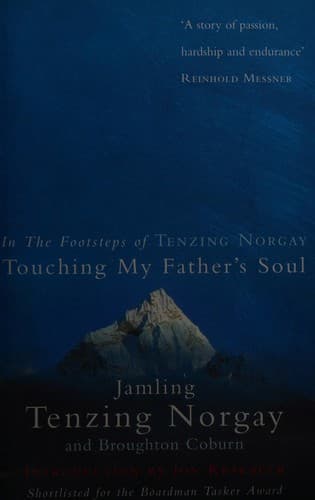
- Touching my father's soul
Jamling Tenzing Norgay
4.0 (3k) average on GoodreadsJamling Tenzing Norgay climbs Everest, following his father's path, seeking spiritual connection and facing his own fears on the world's highest peak.
- Wir Kinder vom Bahnhof Zoo
Kai Hermann
In the gritty world of 1970s West Berlin, Christiane F. descends into addiction and despair, seeking connection and escape on the dangerous streets around the Zoo station.



Enjoyed the summary?
A summary gives you the shape of the book. The book itself has the detail, the examples and the voice.
Find The Daughter of Auschwitz on AmazonAs an Amazon Associate, BookBrief earns from qualifying purchases. How we're funded