
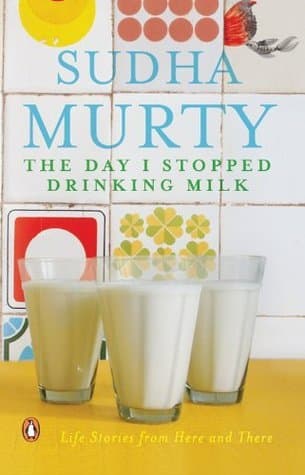
Core Idea
- Difficulty
- Easy
- Read it if
- You enjoy heartwarming, real-life stories that offer simple yet profound philosophical insights into human nature and the meaning of a fulfilling life. Ideal for those seeking perspective beyond material success.
- Skip it if
- You are looking for a deeply academic or theoretical philosophical text, or a fast-paced narrative with a single overarching plot. This book is a collection of reflective anecdotes.
Key Takeaways from The Day I Stopped Drinking Milk
The Richness of Simple Lives
Profound wisdom often resides in the most unassuming individuals and circumstances.
Murty skillfully shows that real insight and deep life lessons are not only for the privileged or highly educated. Her meetings with everyday people—a village woman, a train passenger, a poor student—consistently reveal wisdom beyond common understanding. These individuals, often facing big problems, show remarkable resilience, generosity, and an unshakeable spirit. The book asks readers to look past surface signs of success and to value the deep character and humanity found in ordinary life. It is a strong reminder that every life, no matter how modest, holds a unique story and a valuable lesson, if one is open to listening and observing.
“Sometimes, the greatest lessons come from the least expected teachers, in the most ordinary moments.”
In the book: The story of the woman in the flooded village in Odisha who, despite her own destitution, offers the author the last of her buffalo milk, teaching a lesson in unconditional generosity and the value of what one has, leading to the book's title.
Try this: Actively seek out conversations with people from diverse backgrounds, especially those outside your immediate social circle. Listen more than you speak, and look for the inherent wisdom in their experiences, rather than judging by external appearances or societal status. Practice empathy and curiosity in daily interactions.
Related ideas: humility, empathy, everyday-heroes
Material Success vs. Inner Contentment
Accumulating wealth does not guarantee happiness; true fulfillment stems from inner peace and purpose.
Murty often contrasts characters who achieve great material success with those who find deep contentment without wealth. The story of Vishnu, who gets rich but stays unhappy, is a clear reminder that outer achievements are often poor signs of inner fulfillment. His story shows that always chasing wealth can lead to an emotional emptiness if not balanced with purpose, relationships, and a sense of contributing. The book calls for rethinking what 'success' means, suggesting that true happiness comes from compassion, self-awareness, and meaningful connections, rather than getting possessions or status.
“Vishnu had everything money could buy, but he never knew true happiness because his heart remained empty.”
In the book: The character of Vishnu, who despite achieving significant material success, finds himself devoid of happiness, illustrating the emptiness of wealth without inner peace.
Try this: Reflect on your personal definition of success. Prioritize experiences, relationships, and personal growth over material accumulation. Engage in acts of service or find a passion that brings intrinsic joy, rather than focusing solely on financial gain.
Related ideas: happiness, fulfillment, materialism
The Power of Listening
True understanding and connection are forged through attentive listening, not constant talking.
The story of Venkat, who talks constantly and fails to truly listen, is a strong criticism of our communication habits. Murty points out how not listening not only prevents understanding but also isolates people, stopping them from forming deeper connections and learning from others. Listening is presented not just as a passive act but as an active, empathetic engagement that opens doors to new ideas, builds stronger relationships, and enriches one's own life. It highlights the truth that wisdom often comes from taking in, rather than always speaking out, and that silence can be more powerful than words.
“Venkat talked so much that he had no time to listen, and thus, he missed much of what life had to offer.”
In the book: The anecdote of Venkat, whose excessive talking prevents him from truly hearing or understanding others, leading to misunderstandings and missed opportunities.
Try this: Consciously practice active listening in conversations. When someone is speaking, focus on understanding their perspective rather than formulating your response. Ask clarifying questions and resist the urge to interrupt or dominate the conversation. Embrace moments of silence.
Related ideas: communication, active-listening, empathy
Unexpected Mentors
Life's most impactful teachers often appear in the most surprising forms and situations.
Murty's collection is full of examples where people meet unexpected mentors—from a poor woman in a village to a 'do-gooder ghost' teaching Sanskrit. These stories challenge the usual idea of mentorship, showing that wisdom can come from anyone, no matter their background, age, or even their physical presence. It encourages an open mind to learning, suggesting that every meeting has the potential for growth and insight if one is receptive. The book celebrates the idea that life itself is a big classroom, and its teachers are everywhere, ready to share valuable lessons.
“Sometimes, the most profound lessons are taught not by gurus, but by ordinary people, or even by a benevolent spirit.”
In the book: The story of the do-gooder ghost who teaches a disconsolate young man Sanskrit, illustrating an unconventional source of mentorship and knowledge.
Try this: Cultivate an attitude of lifelong learning. Be open to receiving advice and wisdom from unexpected sources, including younger individuals, people from different cultures, or those with vastly different life experiences. View every interaction as a potential learning opportunity.
Related ideas: mentorship, learning, open-mindedness
The Transformative Power of Travel
Journeys, even short ones, can profoundly alter perspectives and life trajectories.
Several stories in the collection show how travel, even simple train trips, significantly impacts a person's outlook and future. Murty demonstrates how leaving one's familiar setting, even for a short time, can expose people to new realities, challenges, and chances that fundamentally change how they see the world and themselves. These journeys are not just physical movements but experiences that build self-discovery, resilience, and a wider perspective. It emphasizes that exposure to different lives and places is a strong force for personal growth and change.
“That train journey, though brief, changed the young girl's life forever, opening her eyes to a world she never knew existed.”
In the book: The young girl's life-changing train journey, where she encounters different people and situations that broaden her horizons and alter her future path.
Try this: Embrace opportunities for travel, whether it's a short trip to a neighboring town or an international adventure. During your travels, make an effort to engage with locals, observe their way of life, and be open to new experiences that challenge your preconceived notions.
Related ideas: travel, personal-growth, perspective
Resilience in Adversity
Human spirit's capacity to endure and thrive amidst hardship is a testament to inner strength.
Murty consistently shows characters who face great hardship—poverty, natural disasters, personal tragedies—yet display amazing strength. These individuals, instead of giving in to despair, find new ways to cope, help others, and keep their dignity. The stories strongly affirm the human spirit's ability to not only survive but also to find meaning and purpose when facing big challenges. It teaches that true strength is not in avoiding problems, but in the firm resolve to overcome them and often, to help others in the process.
“Despite the drought, the village woman found a way to provide water, demonstrating a spirit that refused to be broken.”
In the book: The impoverished village woman who, despite a severe drought, manages to provide bathing water to hundreds of people, showcasing incredible resourcefulness and resilience.
Try this: When faced with personal challenges, draw inspiration from stories of resilience. Focus on problem-solving, seek support when needed, and remember that setbacks are opportunities for growth. Cultivate a mindset of perseverance and adaptability.
Related ideas: resilience, perseverance, adversity
The Intricacy of Human Nature
People are complex beings, often driven by a mix of motivations, both noble and flawed.
Murty's biographical sketches reveal the complex and often contradictory nature of people. Her characters are rarely simple; they show a range of emotions, make questionable choices, and still have good qualities. This complexity makes them relatable and real. The book invites readers to look beyond simple judgments and appreciate the depth and many sides of every person. It suggests that true understanding requires empathy and an acknowledgment that people are shaped by their circumstances, beliefs, and human imperfections.
“Each person is a universe, with their own joys, sorrows, and contradictions, waiting to be understood.”
In the book: The various characters, like Vishnu and Venkat, who despite their flaws or misguided pursuits, are presented with a degree of empathy and an exploration of their underlying motivations.
Try this: Practice non-judgment towards others. When encountering someone whose actions or beliefs you don't understand, try to consider their potential motivations, background, and challenges. Seek to understand their 'universe' before forming an opinion.
Related ideas: human-nature, empathy, complexity
The Enduring Value of Compassion
Acts of kindness, however small, have a ripple effect that enriches both giver and receiver.
Throughout the book, Murty highlights many instances of compassion and selfless giving, often by those who have very little. These acts, whether offering milk, providing water, or simply listening, show the deep impact that empathy and kindness can have. The stories reinforce the idea that compassion is not a luxury but a basic human need and a powerful force for good. It suggests that even when facing personal hardship, helping others can bring great meaning and satisfaction, creating a positive cycle.
“A small act of compassion can light up the darkest corners of a life.”
In the book: The title story of the woman in the flooded village offering her buffalo milk, and the village woman providing bathing water during a drought, both exemplify profound acts of compassion despite personal hardship.
Try this: Look for daily opportunities to practice compassion, whether through small gestures of kindness, volunteering, or simply being present for someone in need. Understand that your actions, however minor, can have a significant positive impact on others.
Related ideas: compassion, kindness, generosity
Finding Beauty in the Mundane
Extraordinary stories are hidden within the fabric of ordinary existence, waiting to be discovered.
Murty's skill is in finding compelling stories in seemingly ordinary lives. She shows that the most profound insights and dramatic shifts often happen not in grand events, but in the quiet, daily struggles and successes of everyday people. This view encourages readers to appreciate the richness and complexity in their own lives and the lives of those around them. It is a call to observe more closely, listen more attentively, and recognize that every person, every family, every village holds a world of stories worth exploring, full of lessons and inspiration.
“The world is full of untold stories, if only we take the time to look and listen.”
In the book: The entire premise of the book, which is a collection of 'extraordinary stories about ordinary people's lives,' directly supports this takeaway.
Try this: Start a journal to document your own daily observations and interactions. Practice mindful awareness in your surroundings, noticing the small details and interactions. Engage in conversations with older family members or neighbors to uncover their life stories.
Related ideas: mindfulness, observation, storytelling
The Day I Stopped Drinking Milk Quotes
“Character is not something you wear on your sleeve. It is an inner quality that reflects in your actions and thoughts.”
“The greatest wealth is health. It is not something you can buy with money.”
“Education is not just about getting a degree. It is about learning to live a good life, to be a good human being.”
“Simple living and high thinking. This was the mantra my grandparents lived by, and it always resonated with me.”
“Kindness is a language which the deaf can hear and the blind can see.”
“Every person has a story to tell. Listen carefully, for you might learn something profound.”
“Success is not final, failure is not fatal: it is the courage to continue that counts.”
“The best way to find yourself is to lose yourself in the service of others.”
“Money can buy you a house, but not a home. It can buy you a bed, but not sleep.”
“Never underestimate the power of a good book. It can transport you to different worlds and teach you invaluable lessons.”
“It is not what you gather, but what you scatter that tells what kind of life you have lived.”
“Patience is a virtue, and it is often tested in the most unexpected ways.”
“The true meaning of life is to plant trees, under whose shade you do not expect to sit.”
Quiz
10 questions on the main ideas. Each answer comes with a short explanation.
Question 1
In the title story, 'The Day I Stopped Drinking Milk,' what natural disaster impacts the village in Odisha where Sudha Murty learns a life lesson?
- An earthquake
- A drought
- A flood
- A severe cyclone
Show answer
C. A flood The book description explicitly states that the title story features a woman in a 'flooded village in Odisha' who teaches the author a life lesson.
Question 2
Which character mentioned in the book description achieves material success but 'never knows happiness'?
- Venkat
- Vishnu
- The do-gooder ghost
- The woman from the flooded village
Show answer
B. Vishnu The description clearly introduces Vishnu as the character who 'achieves every material success but never knows happiness.'
Question 3
What is a recurring theme in the stories collected in 'The Day I Stopped Drinking Milk'?
- The pursuit of extreme wealth and power
- Complex political intrigues and historical events
- Extraordinary stories and astonishing lessons from ordinary people's lives
- Scientific discoveries and technological advancements
Show answer
C. Extraordinary stories and astonishing lessons from ordinary people's lives The very first line of the book description states: 'Extraordinary stories about ordinary peoples lives by the inimitable Sudha Murty,' highlighting this as the core theme.
Question 4
What unique skill or habit is attributed to the character Venkat?
- He is an exceptional listener, offering wise counsel.
- He talks so much that he has no time to listen.
- He writes eloquent letters but rarely speaks.
- He communicates primarily through sign language.
Show answer
B. He talks so much that he has no time to listen. The description states, 'or Venkat, who talks so much that he has no time to listen.'
Question 5
What is the primary characteristic of the stories Sudha Murty shares in this collection?
- They are fictional tales set in fantastical realms.
- They are biographical accounts of famous historical figures.
- They are based on real-life encounters with ordinary people.
- They are allegories designed to teach moral lessons through animals.
Show answer
C. They are based on real-life encounters with ordinary people. The book is described as a 'Biography' and speaks of Murty coming across 'fascinating people whose lives make for interesting stories,' indicating real-life encounters with ordinary individuals.
Question 6
In one of the stories, what act of benevolence does an impoverished village woman perform in a drought-stricken area?
- She teaches literacy to the children of the village.
- She organizes protests to demand more aid from the government.
- She provides bathing water to hundreds of people.
- She single-handedly digs a new well for the village.
Show answer
C. She provides bathing water to hundreds of people. The description specifically mentions 'an impoverished village woman provides bathing water to hundreds of people in a drought-stricken area.'
Question 7
What unexpected subject does a 'do-gooder ghost' decide to teach a disconsolate young man?
- Mathematics
- Sanskrit
- Classical music
- Advanced carpentry
Show answer
B. Sanskrit The description clearly states that 'a do-gooder ghost decides to teach a disconsolate young man Sanskrit.'
Question 8
The book description implies that the lessons learned by Sudha Murty and the readers come from what source?
- Ancient scriptures and religious texts.
- Formal academic studies and philosophical debates.
- The lived experiences and perspectives of ordinary individuals.
- Intricate puzzles and riddles presented by the author.
Show answer
C. The lived experiences and perspectives of ordinary individuals. The core premise is about 'Extraordinary stories about ordinary peoples lives' and how these 'have astonishing lessons to reveal,' indicating that the lessons stem from these everyday experiences.
Question 9
Considering the overall nature of the stories described, what is a likely characteristic of the 'life lesson' Sudha Murty learns in the title story from the woman in the flooded village?
- It is a complex economic theory about disaster relief.
- It is a practical skill for survival in extreme conditions.
- It is a profound insight derived from simple human resilience or generosity.
- It is a historical fact about the region's past floods.
Show answer
C. It is a profound insight derived from simple human resilience or generosity. Given the book's focus on 'astonishing lessons' from 'ordinary people' and stories like the woman providing bathing water, the lesson is likely a profound, yet simple, insight into human values rather than a technical or historical fact.
Question 10
What distinguishes the 'fascinating people' Sudha Murty encounters in this collection from typical subjects of biographies?
- They are exclusively political leaders and national heroes.
- They are primarily historical figures from ancient civilizations.
- They are ordinary individuals whose lives reveal extraordinary lessons.
- They are fictional characters created to represent societal archetypes.
Show answer
C. They are ordinary individuals whose lives reveal extraordinary lessons. The description explicitly states 'Extraordinary stories about ordinary peoples lives,' emphasizing that the subjects are not famous or historically significant, but rather everyday individuals whose experiences offer deep insights.
The Day I Stopped Drinking Milk FAQ
What kind of stories are in 'The Day I Stopped Drinking Milk'?
'The Day I Stopped Drinking Milk' features a collection of extraordinary true stories about ordinary people's lives, often highlighting profound life lessons and unique human experiences encountered by author Sudha Murty.
Does 'The Day I Stopped Drinking Milk' contain fictional stories?
No, the book primarily consists of real-life anecdotes and observations from Sudha Murty's encounters with various individuals, presenting their unique journeys and the wisdom she gained from them.
What is the main theme of 'The Day I Stopped Drinking Milk'?
The main theme revolves around the wisdom found in everyday lives, the impact of small acts, and the diverse ways people navigate challenges and find meaning, often through unexpected lessons learned by the author.
What is the significance of the title story 'The Day I Stopped Drinking Milk'?
The title story recounts a powerful experience in a flooded Odisha village where a woman teaches Sudha Murty a profound life lesson, symbolizing a moment of significant personal realization and growth for the author.
How is this book different from Sudha Murty's children's books?
While Sudha Murty's children's books often convey morals through simpler narratives, 'The Day I Stopped Drinking Milk' is geared towards an adult audience, offering more complex real-life scenarios and deeper reflections on human nature and societal issues.
Will I find practical advice in 'The Day I Stopped Drinking Milk'?
While not a self-help book, readers will find profound insights and moral compasses embedded in the narratives, offering guidance on human values, empathy, and resilience through the examples of the people featured.
Is 'The Day I Stopped Drinking Milk' suitable for all ages?
The book's themes are universally relatable, but the depth of the life lessons and some situational descriptions might resonate more fully with mature readers, making it most suitable for young adults and adults.
Does 'The Day I Stopped Drinking Milk' work as an introduction to Sudha Murty's writing?
Yes, this collection offers an excellent introduction to Sudha Murty's distinctive narrative style, her observational skills, and her ability to distill profound wisdom from everyday encounters, showcasing her unique voice.
About the author

Sudha Murty is an Indian author and philanthropist known for her contributions to literature and social causes. Her notable works include "Wise and Otherwise," a collection of insightful anecdotes, and "The Day I Stopped Drinking Milk," which reflects on her experiences and observations. Most of her writings are in the non-fiction genre, focusing on themes of compassion and social responsibility.
Similar books
- Tuesdays with Morrie
Mitch Albom
4.1 (782k) average on GoodreadsBiographyExplores life lessons and wisdom gained from an unexpected mentor, focusing on the richness of simple conversations.
- The Diary of a Young Girl
Anne Frank
4.2 (2.7M) average on GoodreadsBiographyDuring the Nazi occupation, a teenage girl's diary, written from a secret annex, shares observations on humanity, hope, and the wait for freedom.
- Eat, Pray, Love
Elizabeth Gilbert
3.6 (1.5M) average on GoodreadsLifestyleA heartbroken writer leaves her conventional life for a year-long global search for pleasure in Italy, spiritual devotion in India, and unexpected love and balance in Bali.
- Night
Elie Wiesel
4.3 (970k) average on GoodreadsBiographyIn the darkness of Auschwitz and Buchenwald, a teenage Elie Wiesel faces the extermination of his family, the loss of his faith, and the lasting scars of humanity's deepest cruelty.
- Steve Jobs
Walter Isaacson
4.1 (957k) average on GoodreadsBusinessSteve Jobs was a visionary who fused creativity and technology to revolutionize six industries and shape our digital world.
- The Glass Castle
Jeannette Walls
4.3 (903k) average on GoodreadsBiographyJeannette Walls's memoir describes her unusual childhood with brilliant, free-spirited parents whose poverty-stricken life shaped her independence and love despite family problems.





Enjoyed the summary?
A summary gives you the shape of the book. The book itself has the detail, the examples and the voice.
Find The Day I Stopped Drinking Milk on AmazonAs an Amazon Associate, BookBrief earns from qualifying purchases. How we're funded