
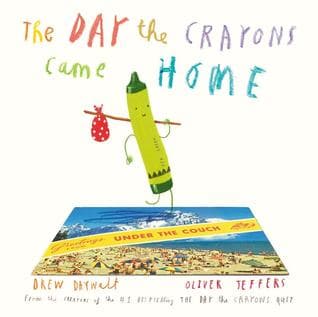
Synopsis
Covers the whole plot, including the ending.
- Difficulty
- Easy
- Pacing
- Moderate
- Mood
- Whimsical, Humorous, Heartwarming, Creative
- Read it if
- You enjoy clever, humorous stories about everyday objects with strong personalities, or if you're a fan of the first book, 'The Day the Crayons Quit'.
- Skip it if
- You prefer serious, plot-driven narratives without anthropomorphic elements or don't appreciate whimsical, slightly absurd humor.
The Day the Crayons Came Home Plot Summary
Covers the whole plot, including the ending.
A Plea from Maroon Crayon
The story begins with Duncan getting a postcard from Maroon Crayon. Maroon explains his problem: he was used for a 'bloody monster' drawing, then fell behind the sofa, was sat on by Duncan's dad, and broke in half. Maroon asks Duncan to get him, stressing his broken state and the shame of being left behind. This letter sets the book's playful tone, showing crayons as living things with their own complaints and a wish to return to Duncan's crayon box.
Turquoise Crayon's Laundry Mishap
Next, Duncan hears from Turquoise Crayon, who describes a difficult trip through the laundry. He recounts being left in a pair of Duncan's smelly socks, going through the washing machine, and then getting his head stuck to the sock in the dryer. Turquoise's letter, with a drawing of his current state, shows the daily dangers crayons face and their weakness to human carelessness. He desperately wants to be saved from his fabric prison and returned to the crayon box.
Neon Red Crayon's Far-Flung Adventure
Duncan gets a postcard from Neon Red Crayon, written from 'The Grand Canyon Hotel.' Neon Red explains he was taken on vacation, used to draw the Grand Canyon, and then accidentally left behind. He expresses his loneliness and the distance from Duncan and the other crayons. This letter introduces the idea of crayons being forgotten in different places, showing their longing for home and the safety of the crayon box, no matter how far they've gone.
Pea Green Crayon's Self-Imposed Exile
A touching letter comes from Pea Green Crayon. He admits he ran away because he felt unwanted, saying 'no kid likes peas.' He is now hiding under old newspapers, feeling neglected. Pea Green's letter touches on feelings of not being good enough and wanting a purpose, as he hopes to be used for something other than just peas. His plea for Duncan to find him shows a deep need for acceptance among the other crayons.
The Half-Eaten Peach Crayon
Duncan then hears from Peach Crayon, who has a rather unusual injury. He was left on the floor and partly eaten by Duncan's baby brother, leaving a big bite mark. Peach Crayon's letter is a funny but serious request for rescue, showing the dangers of being a crayon in a house with a curious toddler. This event further shows the various, often unexpected, dangers that happen to crayons in a child's home.
Brown Crayon's Stuck Situation
Brown Crayon writes to Duncan from an outdoor problem: he is stuck to a kite string, tangled in a tree. He expresses his frustration at not being able to color and his wish to return to the crayon box. Brown Crayon's letter adds another type of 'lost' crayon, showing those that end up outside and exposed to the weather, unable to do their job until Duncan rescues them.
The Misplaced White Crayon
White Crayon sends a letter, explaining his unique problem: he was used to draw a snowman on white paper, and now he feels invisible and lost in the snow outside. He complains that he cannot be seen and therefore cannot be found, showing the irony of his color. White Crayon's plea is a clever play on his properties, highlighting the difficulty of being found when one blends perfectly with the environment.
The Uncapped Black Crayon
Black Crayon writes a dramatic letter, explaining that he was left uncapped in the sun and has completely dried out. He describes feeling 'crispy' and 'brittle,' unable to draw anymore. Black Crayon's letter is a desperate request for moisture or some way to be fixed, showing the importance of taking care of art supplies and how neglect affects their ability to work.
The Multiple Orange Crayons
Duncan receives a letter from several Orange Crayons. They explain that they are 'extra' orange crayons, separated from their original box and now feeling lost and without a purpose. Their letter highlights the problem of duplicate or unused crayons, showing their desire for a home and a chance to be part of Duncan's creative work, even if they are not his main set.
Duncan's Creative Solution
Overwhelmed by the letters and the problems of his lost and neglected crayons, Duncan decides to act. Instead of just trying to fit them all into the old box, he builds a new, multi-tiered, and organized crayon box. This clever solution provides a special place for every crayon, including the broken ones, the extras, and those with unique needs. This act shows Duncan's empathy and creativity in solving a complex problem.
A Home for Every Crayon
Duncan's new crayon box is a marvel of organization, with separate sections and even a 'lost and found' area for the most troubled crayons like Maroon and Turquoise. Every crayon, from the previously lost to the forgotten, now has a spot. This final act brings great joy to all the crayons, fulfilling their deepest wish for a home and a sense of belonging. The story ends with the crayons happily in their new, perfect home, ready for new adventures.
Principal Figures
Duncan
Protagonist
The caring and imaginative boy who receives the crayons' letters.
Duncan is a young boy with a vivid imagination and a deep connection to his art supplies. He is portrayed as empathetic and responsible, taking the time to read and respond to the numerous letters from his lost and neglected crayons. His actions demonstrate a genuine concern for their well-being and a desire to provide them with a proper home. He is the catalyst for the story's resolution, showing both ingenuity and kindness.
Relationships: All Crayons (owner, friend, rescuer)
Maroon Crayon
Supporting
A broken crayon lost under the sofa, the first to write to Duncan.
Maroon Crayon is the initial catalyst for the story, sending the first postcard to Duncan. He is depicted as broken and feeling neglected after being sat on by Duncan's dad and left under the sofa. His letter conveys a sense of urgency and indignity, highlighting the physical damage he has sustained and his longing to be reunited with the other crayons. He represents the forgotten and damaged art supplies that still yearn for purpose.
Relationships: Duncan (owner, rescuer)
Turquoise Crayon
Supporting
A crayon who ended up in the laundry, stuck to a sock.
Turquoise Crayon is a particularly unlucky crayon who recounts a harrowing adventure through the washing machine and dryer, ending up with his head stuck to one of Duncan's stinky socks. His letter is filled with exasperation and a desperate plea for rescue from his fabric prison. He embodies the crayons who suffer accidental mishaps due to human oversight, emphasizing their vulnerability in the domestic environment.
Relationships: Duncan (owner, rescuer)
Neon Red Crayon
Supporting
A crayon left behind at a hotel during vacation.
Neon Red Crayon is an adventurous but ultimately lonely crayon who was taken on vacation to the Grand Canyon but then forgotten in a hotel room. His letter conveys a sense of being far from home and separated from his purpose. He represents the crayons that are accidentally abandoned during travel, highlighting the theme of longing for the familiar and the security of one's home.
Relationships: Duncan (owner, rescuer)
Pea Green Crayon
Supporting
A crayon who ran away due to feeling unloved and unused.
Pea Green Crayon is one of the more emotionally complex crayons, having run away because he felt unwanted, believing 'no kid likes peas.' His letter expresses feelings of inadequacy and a deep desire to be used for more than just pea drawings. He represents the crayons that feel neglected or typecast, yearning for a broader purpose and acceptance within the creative process. His story is a poignant appeal for understanding.
Relationships: Duncan (owner, rescuer, source of potential purpose)
Peach Crayon
Supporting
A crayon partially eaten by Duncan's baby brother.
Peach Crayon writes to Duncan after suffering a rather unfortunate encounter with Duncan's baby brother, resulting in a chunk being bitten out of him. His letter is a humorous yet earnest plea for rescue from the dangers posed by curious toddlers. Peach Crayon represents the crayons that fall victim to the unpredictable hazards of a busy household, emphasizing their fragility and need for protection.
Relationships: Duncan (owner, rescuer)
Brown Crayon
Supporting
A crayon stuck to a kite string in a tree.
Brown Crayon is found in an outdoor predicament, stuck to a kite string and tangled in a tree. His letter expresses frustration at being unable to fulfill his coloring duties and his desire to return to the crayon box. He represents the crayons that get lost outdoors, at the mercy of the elements, highlighting the varied ways crayons can become separated from their home and purpose.
Relationships: Duncan (owner, rescuer)
White Crayon
Supporting
A crayon lost in the snow after being used on white paper.
White Crayon presents a unique dilemma, having been used to draw a snowman on white paper and subsequently becoming lost in the snow, rendering him invisible. His letter cleverly plays on the irony of his color, emphasizing the challenge of being found when one blends perfectly with the environment. He represents the overlooked or easily lost art supplies due to their inherent characteristics.
Relationships: Duncan (owner, rescuer)
Black Crayon
Supporting
A crayon that dried out after being left uncapped in the sun.
Black Crayon writes a dramatic letter describing his state of being 'crispy' and 'brittle' after being left uncapped in the sun. He is unable to draw and desperately seeks restoration. Black Crayon represents the crayons that suffer from neglect and improper care, highlighting the importance of looking after art supplies to maintain their functionality and longevity.
Relationships: Duncan (owner, potential caretaker)
Orange Crayons (Multiple)
Supporting
A group of 'extra' orange crayons seeking a home.
These are a collective of 'extra' Orange Crayons who have been separated from their original box and feel lost and without purpose. Their letter highlights the plight of duplicate or surplus art supplies that often go unused or unnoticed. They represent the desire for inclusion and a chance to be part of the creative process, even if they are not the primary set of crayons. Their plea is for a sense of belonging.
Relationships: Duncan (owner, provider of home)
Themes & Insights
Empathy and Responsibility
The main theme is Duncan's empathy for his art supplies and his responsibility as their owner. Each crayon's letter details a unique problem, from Maroon Crayon's broken state to Pea Green's feelings of being unwanted. Duncan does not ignore their complaints; instead, he takes them seriously, showing a deep understanding of their 'feelings.' His act of building a custom crayon box shows his commitment to caring for all his crayons, proving that even objects can inspire duty and compassion. This teaches young readers the importance of caring for their belongings and understanding different viewpoints.
“You know, the one that got sat on by your dad? Half of me is still under the sofa. You HAVE to come get me!”
The Importance of Belonging and Purpose
Many crayons express a strong desire for a 'home' and a purpose. Pea Green Crayon ran away because he felt unloved and unused, while Neon Red Crayon felt lonely far from home. Even the 'extra' Orange Crayons long for a place in Duncan's collection. The crayons' stories show a universal desire for inclusion and the satisfaction that comes from having a role. Duncan's new crayon box directly addresses this need, providing a secure, organized space where every crayon, regardless of condition or perceived usefulness, feels valued and has a place, ready to help with his art.
“You never use me! I know darn well that no kid likes peas. I ran away.”
Creative Problem-Solving
Faced with many crayon problems—broken, lost, dried out, or feeling unloved—Duncan does not just try to cram them back into the old box. Instead, he finds an innovative solution: a new, multi-tiered crayon box with special compartments, including a 'lost and found.' This shows the power of creative thinking to solve complex challenges. His solution is not just useful but also thoughtful, recognizing the unique needs and 'personalities' of each crayon. It encourages readers to think creatively when facing difficulties, turning problems into an chance for clever design.
“So Duncan built them a NEW crayon box. A BIGGER one. A BETTER one.”
The Perils and Adventures of Everyday Objects
The book makes crayons seem human, giving them distinct personalities and letting them tell their 'adventures' and misfortunes. From Turquoise Crayon's accidental laundry trip to Peach Crayon being partly eaten by a baby, the stories show the various, often funny, dangers and problems everyday objects face in a child's home. This theme encourages children to look at their own belongings differently, imagining the secret lives and challenges their toys and tools might encounter, which encourages both imagination and perhaps a greater appreciation for their possessions.
“My head is stuck to one of your stinky socks after we both went through the dryer together.”
Plot Devices & Literary Techniques
Epistolary Format
The story is told through a series of postcards and letters written by the crayons.
The entire narrative unfolds through a collection of postcards and letters sent by various crayons to Duncan. This epistolary format allows each crayon to voice its unique complaint, personality, and predicament directly to the reader. It creates a sense of immediacy and intimacy, as readers 'hear' the crayons' woes in their own words. This device is crucial for character development, as the distinct voices and concerns of each crayon are vividly conveyed, making their plight more engaging and humorous.
Anthropomorphism
Inanimate crayons are given human-like qualities, emotions, and the ability to communicate.
The crayons are fully anthropomorphized, possessing thoughts, feelings, desires, and the ability to write letters. They feel neglected, lost, broken, and yearn for purpose and a home. This device is fundamental to the story's charm and humor, allowing children to connect with the crayons on an emotional level. It transforms simple art supplies into relatable characters with distinct personalities, making their problems understandable and their rescue by Duncan meaningful.
Visual Storytelling (Illustrations)
The illustrations play a critical role in conveying the crayons' predicaments and emotions.
While the text is essential, the illustrations by Oliver Jeffers are integral to the storytelling. Each letter is accompanied by a visual depiction of the crayon's state or location, often with humorous detail (e.g., Turquoise Crayon stuck to a sock, Maroon Crayon broken in half). These illustrations enhance the humor, clarify the situations described in the letters, and add emotional depth, making the crayons' plights more vivid and immediate for young readers. The visuals are not merely decorative but advance the narrative and characterization.
Circular Narrative (Problem/Solution)
A series of problems (lost crayons) are presented, leading to a single, overarching solution.
The plot follows a clear problem-solution structure. Each letter from a crayon presents a new 'problem' or predicament. These individual problems accumulate, creating an overarching challenge for Duncan. The narrative then culminates in a single, comprehensive solution—Duncan building a new, improved crayon box—that addresses all the previously presented issues. This structure provides a satisfying resolution and reinforces the theme of creative problem-solving.
The Day the Crayons Came Home Quotes
“Dear Duncan, Not cool, man. You know how important it is for crayons to stay in the box. Now I'm stuck to a kite! And it's not even a cool kite. Come get me!”
“Dear Duncan, Remember when you used to draw with me every day? Now I'm all stubby and broken. My tip is gone! I'm stuck in the couch cushions. Send help!”
“Dear Duncan, You left me in your sock! A sock! I smell like feet and old cheese. My color is fading. Please rescue me!”
“Dear Duncan, Being a crayon is hard work. Being a broken crayon is even harder. My head fell off. My body is in pieces. I'm lonely. Come find me.”
“Dear Duncan, I was trying to draw a beautiful sunset for your mom. But then I rolled under the dresser. It's dusty and dark here. And there's a giant dust bunny staring at me. Help!”
“Dear Duncan, I'm at the beach! I drew a wonderful sandcastle. But then the tide came in and I almost floated away! Now I'm stuck in the sand. I miss my box.”
“Dear Duncan, I'm pretty sure I'm in a dog's mouth. I don't know whose dog. It's slobbery. Send help. Immediately.”
“Dear Duncan, I'm the one you used to draw all the tiny details with. Now I'm just a tiny stub. And I'm stuck to a sticky note. I can't draw anything like this!”
“Dear Duncan, You left me in the garden. It rained. I'm all soggy and my paper is peeling off. I look like a sad, wet noodle. Get me out of here!”
“Dear Duncan, I got rolled up in your homework. I'm trapped in your backpack. It smells like old lunches and gym socks in here. I want to go home!”
“Dear Duncan, Remember all those times you drew monsters with me? Well, now I'm stuck to a monster drawing. A really scary one. I'm actually a little scared myself.”
“Dear Duncan, I'm so glad to be home! But just so you know, being stuck to a toy car and racing down the driveway was NOT my idea of a vacation.”
“Dear Duncan, You're the best! Thanks for finding us all. Now we can get back to doing what we do best: coloring!”
Quiz
10 questions on the plot and the characters. Each answer comes with a short explanation.
Question 1
Which crayon was lost beneath the sofa cushions and broken in two after Dad sat on him?
- Pea Green Crayon
- Maroon Crayon
- Turquoise Crayon
- Yellow Crayon
Show answer
B. Maroon Crayon Maroon Crayon was the one who suffered the unfortunate fate of being sat on by Dad after being lost under the sofa.
Question 2
What unusual item did Turquoise Crayon's head get stuck to after ending up in the dryer?
- A bedsheet
- One of Duncan's stinky socks
- A bath towel
- A pair of jeans
Show answer
B. One of Duncan's stinky socks Turquoise Crayon's head became stuck to one of Duncan's stinky socks after their unfortunate dryer adventure.
Question 3
Why did Pea Green Crayon run away?
- He was tired of drawing trees.
- He knew no kid liked peas.
- He wanted to explore the world.
- He was mistaken for a vegetable.
Show answer
B. He knew no kid liked peas. Pea Green Crayon ran away because he was convinced that no child liked peas, and thus, no child would like him.
Question 4
What is the primary motivation for the crayons sending postcards to Duncan in 'The Day the Crayons Came Home'?
- They want to go on a vacation.
- They are asking to be rescued and brought home.
- They want new drawing assignments.
- They are complaining about their colors.
Show answer
B. They are asking to be rescued and brought home. The crayons are sending postcards to Duncan with 'woeful tales' and pleas to be brought back home to the crayon box.
Question 5
How does 'The Day the Crayons Came Home' relate to its predecessor, 'The Day the Crayons Quit'?
- It features entirely new characters and no mention of Duncan.
- It is a prequel, showing how the crayons first met Duncan.
- It is a companion book, continuing Duncan's interactions with a new group of crayons.
- It is a different story with the same title, but no direct plot connection.
Show answer
C. It is a companion book, continuing Duncan's interactions with a new group of crayons. The description clearly states it is a 'companion book' to 'The Day the Crayons Quit,' featuring a 'whole new group of crayons asking to be rescued' by Duncan.
Question 6
What common theme is explored through the crayons' individual stories in 'The Day the Crayons Came Home'?
- The importance of artistic freedom.
- The challenges and mishaps faced by everyday objects.
- The joy of being used for creative projects.
- The desire for fame and recognition.
Show answer
B. The challenges and mishaps faced by everyday objects. Each crayon's story (lost, broken, stuck, run away) highlights the various 'woeful tales' and mishaps that common objects like crayons can experience in a child's home.
Question 7
Who is the illustrator of 'The Day the Crayons Came Home'?
- Drew Daywalt
- Oliver Jeffers
- BCCB
- Amazon
Show answer
B. Oliver Jeffers The description states, 'Drew Daywalt and Oliver Jeffers have combined to create a companion book,' with Oliver Jeffers being the renowned illustrator for both books.
Question 8
What does the phrase 'Duncan, but his crayons sure are a colorful bunch of characters!' imply about the crayons in the story?
- They are literally painted in many colors.
- They each possess distinct personalities and voices.
- They are used to draw many colorful pictures.
- They are only interested in drawing rainbows.
Show answer
B. They each possess distinct personalities and voices. The phrase 'colorful bunch of characters' is an idiom indicating that each crayon has a unique and memorable personality, as evidenced by their individual 'woeful tales' and complaints.
Question 9
What distinguishes the crayons' requests in 'The Day the Crayons Came Home' from those in 'The Day the Crayons Quit'?
- In the first, they complained about their usage; in the second, they are asking to be found and returned.
- Both books feature crayons demanding better working conditions.
- The first book had them running away, while the second has them complaining about being overworked.
- The first book focused on their colors, the second on their shapes.
Show answer
A. In the first, they complained about their usage; in the second, they are asking to be found and returned. The first book involved crayons 'who threatened to quit' due to their usage. This book features a 'whole new group of crayons asking to be rescued' and 'brought home,' indicating a shift from complaints about work to pleas for retrieval.
Question 10
Based on the description, what kind of emotional response is the book primarily designed to evoke in young readers?
- Sadness and empathy for the crayons' plight.
- Fear of losing their own art supplies.
- Amusement and laughter from the crayons' predicaments.
- Inspiration to become an artist.
Show answer
C. Amusement and laughter from the crayons' predicaments. The description uses words like 'funny,' 'kid-friendly,' 'hilarious,' and 'uproarious storytime,' all pointing to the book's intent to entertain and amuse children through the crayons' 'woeful tales.'
The Day the Crayons Came Home FAQ
What is the central premise of 'The Day the Crayons Came Home'?
The book follows Duncan, a young boy whose crayons, after their previous 'strike,' now send him postcards from various unfortunate locations, each pleading to be rescued and brought back home to his crayon box. Each crayon has a unique, often humorous, tale of how it became lost or damaged.
How does this book connect to its predecessor, 'The Day the Crayons Quit'?
This book acts as a direct companion, picking up after the events of the first where Duncan successfully addressed his crayons' grievances. Now, instead of quitting, the crayons are lost or in distress and seek Duncan's help to return, demonstrating his continued relationship and responsibility towards them.
What is the primary goal of the crayons in this story?
The crayons' primary goal is to be reunited with Duncan and their fellow crayons in the crayon box. Each postcard details their predicament and makes a heartfelt, often comical, plea for Duncan to come and retrieve them from their respective predicaments.
Can you give an example of a crayon's predicament?
Maroon Crayon was lost under the sofa cushions and then tragically broken in half when Duncan's dad sat on him. Turquoise Crayon, on the other hand, ended up in the dryer with a stinky sock, resulting in its head being stuck to the sock.
How does Duncan ultimately resolve the crayons' situations?
Duncan, being a thoughtful and creative child, constructs a new, multi-tiered crayon carrier, complete with individual compartments and even a 'lost and found' section. This innovative solution ensures all his crayons, including the broken and rescued ones, have a safe and organized place.
What happens to the broken crayons like Maroon Crayon?
Duncan cleverly dedicates a special 'Lost and Found' section in his new crayon carrier for crayons like Maroon Crayon, who was broken in two. This shows his care and acceptance of their imperfections, ensuring they still have a home and purpose.
Is there a significance to Pea Green Crayon's specific reason for running away?
Yes, Pea Green Crayon ran away because 'no kid likes peas,' highlighting a common childhood aversion. This detail adds a relatable, humorous touch, as even the crayons are aware of children's preferences and dislikes, influencing their 'personalities.'
What detail about Turquoise Crayon's adventure shows Duncan's typical childhood habits?
Turquoise Crayon's head getting stuck to a 'stinky sock' after they both ended up in the dryer together subtly reveals Duncan's common childhood habit of leaving socks around, leading to unexpected and humorous consequences for his art supplies.
How does Duncan's solution for the crayons demonstrate his growth from the first book?
In the first book, Duncan reacted to their complaints. Here, he proactively designs an elaborate, personalized solution for their collective and individual needs, showing increased empathy, responsibility, and problem-solving skills beyond just making amends.
What psychological concept does the crayons' desire to 'come home' represent?
The crayons' strong desire to 'come home' represents a fundamental psychological need for belonging, security, and a sense of place. Despite their adventurous or unfortunate detours, they ultimately crave the comfort and utility found in their designated 'home' with Duncan.
How do the distinct 'personalities' of the crayons contribute to the book's psychological depth?
The crayons' distinct personalities, expressed through their unique grievances and voices, mirror the diverse emotional landscape children experience. Each crayon's individual plight, from feeling lost to being broken, reflects different forms of childhood anxieties or misfortunes, making them relatable.
What does Duncan's creative solution for the crayons imply about problem-solving?
Duncan's construction of the elaborate crayon carrier implies that effective problem-solving often requires creativity, empathy, and a willingness to go beyond simple fixes. He doesn't just put them back in the old box; he invents a new system tailored to their specific, diverse needs.
Is the book suggesting that even 'broken' things still have value or purpose?
Absolutely. By creating a special section for broken crayons like Maroon Crayon, Duncan implicitly teaches that damage doesn't negate worth. It suggests that even imperfect or altered items can still be cherished and have a place, promoting acceptance and resourcefulness.
Could the crayons' journeys be interpreted as metaphors for life experiences?
Yes, the crayons' journeys can be seen as metaphors for various life experiences. Being lost, broken, or stuck in an uncomfortable situation (like Turquoise with the sock) reflects common challenges and misfortunes, while their eventual return symbolizes resilience and finding one's way back.
What is the overarching message about creativity that the book conveys?
The book strongly conveys that creativity is not just about drawing, but also about imaginative problem-solving and caring for one's tools. Duncan's ultimate creative act is designing a new home for his crayons, ensuring they can continue to be part of his artistic endeavors.
Does the book suggest that children should be more careful with their belongings?
While the crayons' predicaments stem from being lost or misused, the book's primary message isn't a strict lesson in carefulness. Instead, it subtly highlights the consequences of carelessness while emphasizing a child's capacity for empathy, responsibility, and creative solutions to rectify mistakes.
How does the use of postcards enhance the storytelling?
The postcard format is brilliant for storytelling because it allows each crayon to voice its individual narrative directly and concisely. It creates a sense of urgency and direct appeal to Duncan, while also offering visual humor through the illustrations on each card.
About the author

Drew Daywalt is the acclaimed author of the bestselling children's book "The Day the Crayons Quit" and its sequel, "The Day the Crayons Came Home." His imaginative stories, often characterized by humor and a unique voice, have resonated with young readers and parents worldwide, making him a prominent figure in contemporary children's literature.
Similar books
- The Day the Crayons Quit
Drew Daywalt
4.4 (45k) average on GoodreadsFantasyDirect companion book with the same characters and similar epistolary format.
- Harry Potter and the Sorcerer's Stone
J.K. Rowling
4.5 (7M) average on GoodreadsFantasyRescued from a miserable life under the stairs, an orphaned boy discovers he's a wizard destined for a magical school, where he uncovers a dangerous secret tied to the dark wizard who murdered his parents.
- The Hunger Games
Suzanne Collins
4.3 (6.4M) average on GoodreadsFantasyIn a future where children fight to the death on live television, Katniss Everdeen volunteers for the arena, turning a death sentence into a fight for survival and a spark of rebellion.
- 1984
George Orwell
4.2 (3.1M) average on GoodreadsPoliticsIn a future where surveillance and thought control are absolute, a man's search for truth clashes with the Party, showing that hope can be a form of rebellion.
- Divergent
Veronica Roth
4.2 (2.9M) average on GoodreadsFantasyIn a society divided by virtues, a sixteen-year-old's difference from the norm starts a rebellion that threatens her world.
- The Hobbit, or There and Back Again
J.R.R. Tolkien
4.3 (2.9M) average on GoodreadsFantasyA comfort-loving hobbit named Bilbo Baggins is whisked away by a mischievous wizard and a band of dwarves on an unexpected journey to reclaim stolen treasure from a fearsome dragon, discovering courage and a magical ring along the way.





Enjoyed the summary?
A summary gives you the shape of the book. The book itself has the detail, the examples and the voice.
Find The Day the Crayons Came Home on AmazonAs an Amazon Associate, BookBrief earns from qualifying purchases. How we're funded