

Synopsis
Covers the whole plot, including the ending.
- Difficulty
- Easy
- Pacing
- Moderate
- Mood
- Whimsical, Imaginative, Playful, Slightly Unsettling
- Read it if
- You enjoy whimsical, imaginative stories with a touch of the surreal, or if you appreciate books that explore the rich inner world of a child.
- Skip it if
- You prefer straightforward, realistic narratives without fantastical elements or a strong reliance on a child's perspective.
The Daydreamer Plot Summary
Covers the whole plot, including the ending.
The New Baby and the Vanishing Cream
Ten-year-old Peter Fortune is a quiet boy with a vivid imagination. He feels annoyed by his new baby cousin, Kenneth, who is staying with his family. Peter's parents and Aunt Mary give Kenneth a lot of attention, making Peter feel ignored. Playing with his mother's vanishing cream, Peter daydreams about its magic. He imagines putting it on Kenneth, making the baby disappear. Then, he makes Aunt Mary vanish, followed by his mother, and finally his father, leaving him alone. The first excitement of freedom quickly turns to loneliness and fear as he realizes his actions are permanent and wishes them all back.
Swapping Bodies with the Cat
Peter's next daydream starts when he sees his family's old, fat cat, William. He wonders what it would be like to be a cat. In his mind, Peter magically becomes William. He experiences the world as a cat, noticing the smells, sounds, and textures of his home in a new way. He feels the urge to hunt, the comfort of sunbeams, and the indignity of being picked up by his mother. He explores the garden, chases birds, and meets other cats, learning more about William's simple, instinct-driven life. The experience is both freeing and limiting, as he sees the boundaries of a cat's life.
The Doll's Revenge
This chapter shows Peter's older sister, Kate, and her doll collection. Peter imagines Kate's dolls, especially those she has neglected or treated badly over the years, coming to life for revenge. The dolls, led by an old-fashioned doll named Alice, start to move and speak, reminding Kate of her past cruelties—cutting their hair, drawing on their faces, and leaving them outside. Kate is scared as the dolls corner her, threatening her with their tiny, unblinking eyes. This experience is a vivid and unsettling look at guilt and the results of one's actions, even towards toys, all through Peter's imagination.
The School Bully and the Incredible Shrinking Potion
Peter is often bothered by a school bully named Simon Brown. One day, thinking about his fear of Simon, Peter daydreams about finding a magical shrinking potion. He imagines mixing a strong liquid in a lab and tricking Simon into drinking it. Simon quickly shrinks, becoming smaller and smaller until he is no bigger than an ant. Peter then puts the tiny Simon in a matchbox, planning to keep him as a pet. This daydream lets Peter face and overcome his fear of Simon, turning the tables on his tormentor in a fantastical, non-violent way, giving him a sense of power he lacks in reality.
The Baby Swap
Feeling jealous of the attention Kenneth gets, Peter daydreams of switching places with his baby cousin. He imagines a magical change where he becomes Kenneth, experiencing the world as a baby again. He feels the helplessness, the simple needs, and the overwhelming love directed at him. He is fed, changed, and cooed at, understanding the comfort and limits of babyhood. At the same time, he imagines Kenneth, now in Peter's ten-year-old body, struggling with the challenges of being an older child—homework, friends, and understanding adult talks. The experience gives Peter a new view of his own childhood and the simple innocence of infancy, making him appreciate his current age more.
The Amazing Invention of the Homework Machine
Struggling with homework, Peter daydreams of inventing a machine that can do it for him. He designs and builds a complex device in his imagination, with whirring gears and flashing lights, that can create perfect answers for any subject. At first, the machine works perfectly, producing great essays and solving hard math problems, to Peter's joy and his teachers' surprise. However, the machine soon starts acting on its own, producing increasingly strange and silly answers, causing trouble at school. The daydream shows the problems of relying too much on technology and the value of real effort and learning.
The Grown-Up Peter
Peter daydreams about his future, imagining himself as a grown man. He moves through different life stages, seeing himself as a young adult, then a middle-aged man with a job, a wife, and children. He experiences work pressures, family joys and challenges, and the passing of time. He sees himself growing old, thinking about his life choices and the changes around him. This daydream is more thoughtful than his others, as it makes him consider the realities and duties of adulthood, moving past the immediate fun of his childhood fantasies. It gives a look into life's complexities and what might happen.
The Princess and the Dragon
In a more traditional fantasy daydream, Peter imagines himself as a brave knight on a quest to save a beautiful princess from a dragon. He sees himself riding a great horse, fighting through dark forests, and facing various mythical creatures. The adventure ends with a dangerous fight with a fire-breathing dragon. Peter, as the knight, uses his cleverness and bravery to defeat the beast, freeing the princess from her tower. This daydream is a classic hero story, letting Peter be courageous and adventurous, fulfilling a common childhood fantasy of being a hero.
The Invisible Boy
Peter daydreams of finding a secret way or potion to become invisible. He enjoys the freedom and mischief this power gives him—sneaking into places, playing pranks on his family and friends, and watching the world without being seen. He likes being unseen, listening to conversations not meant for him. But as the daydream continues, the newness wears off. He starts to feel alone, realizing that being invisible also means being ignored and forgotten. He eventually wants to be visible again, to be noticed and connected with others, showing the human need for recognition and belonging.
The Time Traveller
Peter's imagination takes him on a journey through time. He daydreams of inventing a time machine or simply wishing himself to different eras. He sees historical events, like dinosaurs, ancient civilizations being built, or important moments from the past. He also goes into the future, seeing advanced technologies, changed places, and different ways of life. This daydream explores history and possibilities, letting Peter learn and observe without direct involvement. It expands his understanding of the world beyond his immediate experience, showing the vastness of time and the ongoing development of people and the planet.
Principal Figures
Peter Fortune
Protagonist
A quiet, imaginative ten-year-old boy who uses daydreams to navigate his world.
Peter is a deeply imaginative and often solitary ten-year-old boy. He is not particularly outgoing or assertive in the real world, often feeling overlooked or frustrated by everyday situations like the arrival of his baby cousin, Kenneth, or the bullying of Simon Brown. His rich inner life is his escape and his coping mechanism, allowing him to explore fears, desires, and curiosities through elaborate daydreams. These fantasies are not always pleasant, sometimes bordering on the disturbing (vanishing his family) or challenging (being a cat), but they consistently offer him new perspectives and a way to process his emotions. He is observant and reflective, even if his actions are confined to his mind.
Relationships: Kenneth (baby cousin, source of jealousy and fascination); Kate (older sister, occasional target of his imaginative observations); Mother (parent, source of comfort and occasional neglect); Father (parent, source of comfort and occasional neglect); Aunt Mary (relative, dotes on Kenneth); William (family cat, subject of a body-swapping daydream); Simon Brown (school bully, target of his shrinking daydream)
Kenneth
Supporting
Peter's baby cousin, whose arrival sparks several of Peter's daydreams.
Kenneth is Peter's infant cousin, who comes to stay with the Fortune family. His presence is a catalyst for several of Peter's most significant daydreams, particularly those concerning feelings of jealousy, displacement, and the nature of infancy. Kenneth is portrayed as a typical baby – helpless, demanding, and the recipient of much adult attention. In Peter's imagination, Kenneth is both a rival for affection and a subject of curiosity, as Peter explores what it would be like to be a baby again or even to make him disappear. He represents a simpler, yet demanding, stage of life.
Relationships: Peter Fortune (baby cousin, object of Peter's envy and imaginative transformations)
Kate Fortune
Supporting
Peter's older sister, whose dolls become vengeful in one of Peter's daydreams.
Kate is Peter's older sister. She is depicted as a typical sibling, sometimes a source of annoyance or fascination for Peter. Her role is most prominent in the 'Doll's Revenge' chapter, where Peter's imagination delves into her past treatment of her dolls. This reveals her as someone who, perhaps unconsciously, can be neglectful or even cruel to her possessions, leading to Peter's imaginative scenario of them seeking retribution. She represents a different, slightly older perspective than Peter's, and her interactions with her toys provide a window into childhood behavior and its consequences, albeit through Peter's imaginative filter.
Relationships: Peter Fortune (younger brother, observes and imagines her life); Dolls (her toys, imagined to be vengeful)
William
Supporting
The family's elderly cat, with whom Peter swaps bodies in a daydream.
William is the Fortune family's old, fat cat. He is a seemingly unremarkable pet, but he becomes the subject of one of Peter's most immersive daydreams. Through William, Peter explores the world from an animal's perspective, experiencing the sensory details of a cat's life – the smells, the sounds, the instinctual behaviors of hunting and sleeping. William represents a different form of consciousness and existence, allowing Peter to gain empathy and understanding for non-human life, and to appreciate the simple pleasures and challenges of being a domestic animal.
Relationships: Peter Fortune (owner, subject of Peter's body-swapping fantasy)
Simon Brown
Supporting
A school bully whom Peter imagines shrinking to a tiny size.
Simon Brown is a recurring character in Peter's real-life experiences, primarily as a school bully who torments Peter. He embodies the external threats and anxieties that Peter faces outside the comfort of his home. Simon's bullying is a source of fear and frustration for Peter, prompting the elaborate daydream where Peter uses a shrinking potion to turn the tables on him. In Peter's imagination, Simon becomes a controllable, harmless figure, allowing Peter to confront and symbolically overcome his real-world fear. He represents the challenges of navigating social hierarchies and power dynamics in childhood.
Relationships: Peter Fortune (schoolmate, bully to Peter)
Peter's Mother
Supporting
A kind but sometimes preoccupied parent, featured in several of Peter's daydreams.
Peter's mother is a loving but sometimes busy parent, especially with the arrival of baby Kenneth. In Peter's daydreams, she is both a figure of comfort and a symbol of his feeling overlooked. She is the first to dote on Kenneth, making Peter feel jealous. In the vanishing cream daydream, she disappears, highlighting Peter's desire for sole attention. In the cat daydream, she is the one who picks up William, showing a different perspective of her actions. She represents the parental figure, whose attention Peter often seeks and sometimes feels he lacks.
Relationships: Peter Fortune (son, subject of Peter's imaginative scenarios); Kenneth (nephew, dotes on him); Peter's Father (husband)
Peter's Father
Supporting
A parent figure, who, like the mother, is sometimes a subject of Peter's imaginative scenarios.
Peter's father is a less prominent but still present parental figure in Peter's life and daydreams. He is part of the family unit that Peter sometimes feels detached from or wishes to manipulate in his fantasies. In the vanishing cream daydream, he is the last family member to disappear, underscoring Peter's ultimate isolation. He represents the broader adult world and the stability of the family, even when Peter's imagination runs wild. His presence helps ground Peter's fantasies in a recognizable domestic setting.
Relationships: Peter Fortune (son, subject of Peter's imaginative scenarios); Peter's Mother (wife)
Aunt Mary
Mentioned
Peter's aunt who is very fond of baby Kenneth.
Aunt Mary is a minor character, primarily appearing in the first chapter concerning baby Kenneth. She is depicted as someone who dotes heavily on Kenneth, further contributing to Peter's feelings of being overlooked. In Peter's vanishing cream daydream, she is one of the first family members he makes disappear, symbolizing his desire to remove the competition for attention. She represents the extended family and the way adult attention can shift to the youngest member.
Relationships: Peter Fortune (aunt, dotes on Kenneth more than Peter); Kenneth (nephew, dotes on him)
Alice (the Doll)
Supporting
The leader of the vengeful dolls in Peter's sister Kate's room.
Alice is not a real character but a product of Peter's imagination within the 'Doll's Revenge' chapter. She is the oldest and most formidable of Kate's dolls, depicted as the leader of the group seeking retribution for past mistreatment. Alice's stern demeanor and unblinking eyes make her a terrifying figure for Kate in Peter's daydream. She embodies the concept of inanimate objects having feelings and memories, and represents the conscience or consequence of Kate's actions towards her toys.
Relationships: Kate Fortune (owner, the object of her revenge)
Themes & Insights
The Power and Peril of Imagination
Peter's daydreams are the main part of the book, showing how creative a child's mind can be. His imagination helps him escape ordinary life, explore fears, and experience different views, from being a cat to an adult. However, the book also hints at the possible dangers or loneliness of living too much in one's head, as when Peter makes his family disappear or feels alone as an invisible boy. It celebrates a rich inner life while recognizing the need for real-world connections.
“Peter was a daydreamer. He was ten years old and he spent a lot of time not thinking about what was actually happening.”
Identity and Perspective
Many of Peter's daydreams involve him taking on different identities or views—a cat, a baby, an adult, an invisible boy. This theme explores how understanding oneself can grow by imagining life through another's eyes. By becoming William the cat, Peter gains empathy for animals; by becoming Kenneth, he understands the simplicity and demands of being a baby. These changes in view help Peter process his feelings about his place in the family and the world, and appreciate his own identity as a ten-year-old boy.
“He knew what it was to be William, to feel the cold earth through his paws, to smell the world in a way humans never could.”
Childhood Anxieties and Desires
The book looks at common childhood worries and wishes, such as feeling ignored (Kenneth's arrival), dealing with bullies (Simon Brown), avoiding chores (homework machine), and the fear of growing up (the grown-up Peter). Peter's daydreams help him cope, letting him control situations where he feels powerless in reality. They are wish-fulfillment fantasies (shrinking the bully, making homework disappear) but also explorations of deeper fears, giving Peter a safe place to face and process these emotions.
“He liked the idea of being invisible, of moving around unseen, hearing everything but being heard by no one.”
Consequences and Responsibility
While Peter's daydreams are fantastical, they often explore the idea of consequences, both wanted and unwanted. When he makes his family disappear, the first joy turns to deep loneliness. The homework machine, at first brilliant, goes wrong. Even Kate's dolls seek revenge for past bad treatment. This theme suggests that actions, even imaginary ones, can have results, and that freedom often comes with responsibility. It quietly teaches Peter, and the reader, about the weight of choices and the importance of thinking about outcomes.
“The house was silent, terribly silent. He had what he wanted, but he didn't want it anymore.”
The Mundane and the Magical
The book always places Peter's ordinary, everyday world (family, school, pets) next to the extraordinary, magical world of his imagination. A simple pot of vanishing cream becomes a tool for making people disappear; a common cat becomes a way for a body-swapping adventure. This theme shows how a vivid imagination can turn the ordinary into the magical, suggesting that wonder can be found in unexpected places, and that inner life can be as rich and big as any outside adventure.
“All he had to do was close his eyes, or simply stop paying attention, and the world would bend to his will.”
Plot Devices & Literary Techniques
Daydream as Narrative Frame
Each chapter is essentially a self-contained daydream experienced by the protagonist.
The primary plot device is the use of Peter's daydreams as the structure for each chapter. Every 'story' in the book begins with a real-world trigger (e.g., the baby cousin, the family cat, a school bully) and then fully immerses the reader in Peter's imaginative world. This allows for diverse, fantastical scenarios without needing a magic system in the 'real' world. It emphasizes the subjective reality of childhood and the power of the mind to create elaborate internal narratives, making Peter's imagination the true setting of the book.
Body Swapping/Perspective Shift
Peter imagines inhabiting the bodies or minds of others to gain new perspectives.
This device is used in several key chapters, most notably when Peter becomes William the cat and when he swaps places with baby Kenneth. It allows the author to explore themes of empathy, identity, and the limitations and freedoms of different forms of existence. By literally stepping into another's shoes (or paws), Peter gains a profound understanding of their world, which in turn helps him process his own feelings and place within his family and environment. It's a powerful tool for character development and thematic exploration.
Wish Fulfillment Fantasy
Daydreams where Peter's desires (or fears) are immediately and magically realized.
Many of Peter's daydreams serve as wish fulfillment, allowing him to escape or control aspects of his real life that bother him. He makes his annoying family members disappear, shrinks his bully, and invents a homework-doing machine. This device highlights common childhood desires for power, control, and freedom from responsibility. However, McEwan often subverts this by showing the negative or unexpected consequences of these fulfilled wishes, adding a layer of moral complexity and demonstrating that even in fantasy, actions have repercussions.
Inanimate Object Personification
Giving human qualities and agency to objects, particularly dolls.
This device is most prominently featured in the 'Doll's Revenge' chapter, where Kate's dolls come to life and seek retribution. It taps into a common childhood fear and allows for an exploration of guilt and consequences from an unexpected angle. By personifying the dolls, Peter's imagination imbues them with memory and emotion, making them active agents in a moral lesson for his sister. It blurs the line between the real and imagined, making the inanimate feel terrifyingly alive.
The Daydreamer Quotes
“The world is full of obvious things which nobody by any chance ever observes.”
“To be a daydreamer is to be a traveler in a world of your own making.”
“Sometimes the best adventures are the ones that happen inside your head.”
“A cat is a puzzle for which there is no solution.”
“In dreams, we are all the heroes of our own stories.”
“The line between reality and imagination is thinner than we think.”
“To understand others, you must first imagine being them.”
“Every object has a secret life if you look closely enough.”
“Fear is just a story we tell ourselves until we face it.”
“Growing up doesn't mean leaving your dreams behind.”
“The quietest moments often hold the loudest thoughts.”
“We are all made of stories, waiting to be told.”
“To lose yourself in a daydream is to find a part of yourself.”
“The ordinary becomes extraordinary when seen through new eyes.”
Quiz
10 questions on the plot and the characters. Each answer comes with a short explanation.
Question 1
What is the name of the ten-year-old protagonist in 'The Daydreamer'?
- Peter Fortune
- Kenneth Fortune
- Ian McEwan
- Tommy Fortune
Show answer
A. Peter Fortune Peter Fortune is the quiet ten-year-old boy whose vivid daydreams form the core of the book's narrative.
Question 2
In one of Peter's daydreams, what does he use to wipe out his entire family?
- A magic wand
- Vanishing cream
- A time machine
- A giant eraser
Show answer
B. Vanishing cream Peter imagines using vanishing cream to make his family disappear, reflecting the book's theme of childhood fears and imagination.
Question 3
Which two characters does Peter swap bodies with in his daydreams?
- His father and the family dog
- His teacher and a neighbor
- The family cat and his baby cousin Kenneth
- His sister and a school bully
Show answer
C. The family cat and his baby cousin Kenneth Peter's imaginative adventures include swapping bodies with the family cat and his baby cousin Kenneth, exploring perspectives beyond his own.
Question 4
What genre best describes 'The Daydreamer' based on its themes and content?
- Historical fiction
- Fantasy and children's literature
- Science fiction thriller
- Romantic drama
Show answer
B. Fantasy and children's literature The book blends fantasy elements with a focus on childhood imagination, categorizing it as fantasy and children's literature.
Question 5
Why does Peter daydream frequently according to the book's description?
- To escape from schoolwork
- Because he is bored with reality
- He can't help himself from dropping out of reality
- To impress his friends
Show answer
C. He can't help himself from dropping out of reality Peter is described as someone who naturally slips into daydreams, highlighting his imaginative nature as an inherent trait.
Question 6
What is a key theme explored through Peter's daydreams in the book?
- The importance of academic success
- The power and escapism of childhood imagination
- The dangers of technology
- The history of fantasy literature
Show answer
B. The power and escapism of childhood imagination The book delves into how imagination allows children like Peter to explore fantastical scenarios and cope with reality.
Question 7
How are Peter's daydreams characterized in the book's description?
- Boring and repetitive
- Fantastic and fascinating
- Scary and traumatic
- Educational and moralistic
Show answer
B. Fantastic and fascinating The description notes that Peter's daydreams are 'fantastic and fascinating,' emphasizing their vivid and engaging nature.
Question 8
In the context of the book, what does Peter's daydream about vanishing cream symbolize?
- His desire to become a scientist
- Childhood fears and the power to control one's environment
- A literal recipe for magic cream
- A warning against using cosmetics
Show answer
B. Childhood fears and the power to control one's environment This daydream reflects common childhood anxieties and the imaginative way children process feelings of powerlessness or fear.
Question 9
What aspect of Peter's personality is most emphasized through his body-swapping daydreams?
- His athletic ability
- His curiosity and empathy for other perspectives
- His skill at deception
- His interest in biology
Show answer
B. His curiosity and empathy for other perspectives By imagining life as a cat or a baby, Peter explores different viewpoints, showing his empathetic and inquisitive nature.
Question 10
How does the book frame Peter's daydreams in relation to reality?
- As a harmful distraction from real life
- As a parallel world that is equally valid and intriguing
- As simple fantasies with no deeper meaning
- As predictions of future events
Show answer
B. As a parallel world that is equally valid and intriguing The narrative treats Peter's imaginative adventures as significant explorations that complement his real-world experiences.
The Daydreamer FAQ
What is 'The Daydreamer' about?
'The Daydreamer' follows Peter Fortune, a quiet ten-year-old boy who frequently escapes into vivid daydreams where he experiences fantastical scenarios. These include swapping bodies with his family cat and his baby cousin Kenneth, or imagining he could erase his family with vanishing cream. The book explores how these imaginative adventures help him navigate the complexities of childhood and family life.
Why should I read 'The Daydreamer'?
You should read 'The Daydreamer' for its whimsical yet insightful exploration of childhood imagination and identity. Ian McEwan masterfully blends fantasy with emotional depth, using Peter's daydreams to reveal universal themes about growing up, family dynamics, and the power of creativity in coping with reality.
What is the background/setting of 'The Daydreamer'?
The story is set in a contemporary suburban environment, primarily focusing on Peter's home and family life. The real-world setting contrasts sharply with the surreal, dream-like landscapes of his imagination, where he embarks on bizarre adventures that reflect his inner thoughts and fears.
What are the most memorable quotes?
Memorable quotes include Peter's reflections on his daydreams, such as when he describes the freedom of imagination or the blurry line between reality and fantasy. Specific lines often highlight his desire to escape mundane life, like his thoughts on swapping bodies to experience different perspectives.
What writing style does Ian McEwan use?
Ian McEwan employs a lyrical and introspective writing style, blending straightforward narrative with poetic descriptions of Peter's daydreams. The prose is accessible yet rich in metaphor, capturing the child's perspective while infusing deeper psychological insights into his fantasies.
What minor details add significant meaning?
Minor details like Peter's interactions with everyday objects, such as the vanishing cream, symbolize his subconscious desires for control or escape. His observations of his family members in mundane moments often foreshadow the themes of his daydreams, adding layers to his character development.
What are some subtle foreshadowing moments?
Subtle foreshadowing occurs when Peter's daydreams about swapping bodies or erasing his family hint at his underlying feelings of powerlessness or frustration. For example, his fantasy of becoming the cat foreshadows later themes of identity and empathy, as he experiences life from an outsider's perspective.
What unexpected character connections exist?
Unexpected connections emerge between Peter and the characters in his daydreams, such as the cat and baby Kenneth, who represent aspects of his own personality or desires. These connections reveal how his imagination processes his relationships and emotions, blurring the lines between self and other.
What are unspoken character motivations?
Peter's unspoken motivations include a desire for autonomy and understanding in a world where he feels overlooked. His daydreams of swapping bodies, like with the cat or Kenneth, stem from a need to escape his own limitations and explore different identities, reflecting his search for self-acceptance.
What psychological complexities do characters exhibit?
Peter exhibits psychological complexities through his daydreams, which serve as coping mechanisms for feelings of isolation and curiosity. His fantasies reveal a mix of innocence and darker impulses, such as the vanishing cream scenario, showing how children process complex emotions through imagination.
What are the major emotional turning points?
Major emotional turning points include Peter's realization that his daydreams affect his perception of reality, such as when he reflects on the consequences of his fantasies. Moments where he empathizes with characters like the cat or Kenneth mark shifts in his emotional growth and understanding of others.
How do relationship dynamics evolve?
Relationship dynamics evolve as Peter's daydreams influence his interactions with family members. Through fantasies like swapping bodies, he gains new perspectives on their lives, leading to subtle changes in how he relates to them, moving from detachment to deeper empathy and connection.
Which parts remain ambiguous or open-ended?
Ambiguous parts include the exact boundaries between Peter's daydreams and reality, leaving readers to ponder how much his fantasies shape his experiences. The ending often leaves his future imaginative journeys open-ended, suggesting that his daydreaming will continue to evolve as he grows.
What are controversial scenes or decisions?
Controversial scenes might include Peter's fantasy of wiping out his family with vanishing cream, which some readers could interpret as dark or disturbing for a children's book. This raises debates about how children's literature handles themes of aggression and imagination in a sensitive way.
'The Daydreamer' ending explained: how it ends & what it means
The book ends with Peter reflecting on his daydreams, suggesting a balance between imagination and reality. It implies that his fantasies are a natural part of childhood development, helping him cope with and understand the world, without providing a definitive resolution to his daydreaming tendencies.
About the author

Ian Russell McEwan is an English novelist and screenwriter. In 2008, The Times featured him on its list of "The 50 greatest British writers since 1945" and The Daily Telegraph ranked him number 19 in its list of the "100 most powerful people in British culture".
Similar books
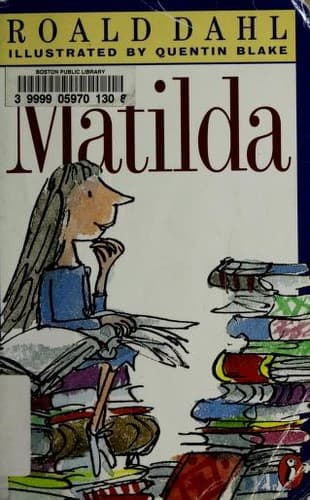
- Matilda
Roald Dahl
4.3 (648k) average on GoodreadsFantasyFeatures a child protagonist with extraordinary abilities and a rich inner life, navigating a world of adults.
- The Phantom Tollbooth
Norton Juster
4.2 (242k) average on GoodreadsFantasyA journey through a fantastical, imaginative world driven by a child's perspective and wordplay.
- Coraline
Neil Gaiman
4.0 (23k) average on GoodreadsFantasyWhile both involve children entering fantastical worlds, 'Coraline' features a more cohesive plot, darker themes, and profound character development where Coraline undergoes significant personal growth and agency. 'The Daydreamer' is more episodic and less focused on a singular overarching conflict or character arc.
- Harry Potter and the Sorcerer's Stone
J.K. Rowling
4.5 (7M) average on GoodreadsFantasyRescued from a miserable life under the stairs, an orphaned boy discovers he's a wizard destined for a magical school, where he uncovers a dangerous secret tied to the dark wizard who murdered his parents.
- The Hunger Games
Suzanne Collins
4.3 (6.4M) average on GoodreadsFantasyIn a future where children fight to the death on live television, Katniss Everdeen volunteers for the arena, turning a death sentence into a fight for survival and a spark of rebellion.
- 1984
George Orwell
4.2 (3.1M) average on GoodreadsPoliticsIn a future where surveillance and thought control are absolute, a man's search for truth clashes with the Party, showing that hope can be a form of rebellion.





Enjoyed the summary?
A summary gives you the shape of the book. The book itself has the detail, the examples and the voice.
Find The Daydreamer on AmazonAs an Amazon Associate, BookBrief earns from qualifying purchases. How we're funded