

Synopsis
Covers the whole plot, including the ending.
- Difficulty
- Easy
- Pacing
- Moderate
- Mood
- Heartwarming, Humorous, Reflective
- Read it if
- You enjoy heartwarming stories about navigating family dynamics and the challenges of growing up.
- Skip it if
- You prefer complex plots or adult themes.
The Declaration Of Independence Plot Summary
Covers the whole plot, including the ending.
The Fall Festival Dilemma
Abby, a young girl, looks forward to the annual Fall Festival, an event she plans to attend with her friends, Sarah and Emily. However, her parents, Mr. and Mrs. Miller, tell her she is too young to go without adult supervision and deny her permission. Abby feels devastated and unfairly treated, believing she is mature enough to handle herself. This rejection makes her want to show her parents her responsibility and independence, hoping to change their minds about future outings and prove she is no longer a 'little kid.' She sulks in her room, feeling misunderstood and determined to make a plan.
A Grand Plan Takes Shape
While doing homework, Abby sees her older brother, Sam's, history textbook open to a page about the American Declaration of Independence. The idea of declaring independence from rules resonates with her situation. A spark ignites, and Abby decides to create her own 'Declaration of Independence' from her parents' rules. She sees this document as a statement of her maturity and an argument for greater freedom. She plans to outline her complaints and propose her own 'laws' for her life, believing this formal approach will impress her parents and make them see her point of view.
Drafting the Declaration
Abby spends several evenings drafting her 'Declaration.' She uses colorful markers and glitter to make it look official. In it, she lists all the 'tyrannical acts' her parents have committed, such as setting bedtimes, restricting TV, and, most recently, denying her the Fall Festival. She writes about her desire for more freedom, including making her own choices about what to wear, when to play, and where to go with friends. Her brother, Sam, occasionally peeks over her shoulder, offering sarcastic comments but also some amusement. Abby feels a sense of power as she writes her feelings and desires.
The First Attempt at Maturity: House Cleaning
To further prove her maturity before presenting her declaration, Abby decides to deep clean the house while her parents are out. Her intentions are good, but her execution is messy. She attempts to vacuum, but the cord gets tangled and she knocks over a vase. Dusting leads to a cloud of particles and a broken knick-knack. When her parents return, they find a house that looks more disheveled than before, with cleaning supplies spread about. Instead of praise, Abby receives a lecture about being careful and not making more work for others. This setback frustrates Abby, making her feel her efforts are not being recognized.
Taking Care of Little Brother, Leo
Not discouraged by the cleaning mishap, Abby decides to try a different approach: taking care of her younger brother, Leo, for an afternoon. She sees this as a chance to show her parents she can be responsible. She prepares snacks, sets up games, and tries to keep Leo entertained. However, Leo, being an energetic toddler, proves difficult. He spills juice, draws on the walls, and refuses to nap. Abby, despite her efforts, struggles to maintain control, and the afternoon quickly becomes a series of minor disasters.
Leo's Mischief and Abby's Frustration
Leo’s behavior continues to test Abby’s patience. He hides her favorite doll, tries to climb the bookshelves, and throws a tantrum when she tries to get him to eat his vegetables. Abby finds herself yelling and feeling overwhelmed, realizing that taking care of a young child is much harder than she imagined. The house becomes a disaster zone again, with toys scattered everywhere and crayon marks on the walls. When her parents arrive home, they find a stressed-out Abby and a very active Leo amidst the chaos. Abby feels like a failure, her attempts to prove maturity seemingly backfiring.
A Heart-to-Heart with Mom
After the disastrous babysitting attempt, Abby is close to tears. Her mom, Mrs. Miller, sensing her daughter's distress, sits down with her for a talk. Abby, feeling defeated, explains how much she wants to go to the Fall Festival and how she feels her parents don't trust her. She expresses her frustration about being treated like a 'baby' and her desire for more independence. Mrs. Miller listens patiently, acknowledging Abby's feelings and explaining that their rules come from love and concern for her safety, not a lack of trust. This conversation opens a line of communication that Abby had not experienced before.
The Declaration is Presented
Encouraged by her talk with her mom, Abby decides to finally present her 'Declaration of Independence.' She gathers her courage and, with trembling hands, gives the decorated document to her parents. Mr. and Mrs. Miller read through it, initially surprised and then a little amused by her formal language and the 'complaints' she has listed. Abby nervously watches their expressions, unsure how they will react to her bold statement. She has poured all her feelings into this document, and its reception will determine if her efforts to be seen as mature have any impact.
Parents' Reaction and a New Understanding
Mr. and Mrs. Miller finish reading Abby's declaration. Instead of dismissing it, they praise her creativity and the effort she put into expressing her feelings. They explain that while they appreciate her desire for independence, maturity also involves understanding the responsibilities that come with freedom. They acknowledge that Abby is growing up and that some rules can be reevaluated over time. They propose a compromise: while she cannot go to the Fall Festival alone this year, they will work on a plan to give her more responsibilities and opportunities for independence in the future, with the goal of more freedom next year.
A Step Towards Independence
Abby, initially disappointed about the Fall Festival, begins to understand that her parents are not trying to hold her back but are guiding her. She realizes that maturity is not just about demanding freedom but also about earning trust and demonstrating responsibility consistently. Her parents suggest she can start by being more responsible for her chores and helping with Leo more regularly. Abby agrees, feeling a sense of hope and a clearer path forward. She understands that her 'Declaration' was a significant step in communicating her feelings, and while it did not grant her immediate independence, it opened the door for future growth.
The Family Festival Outing
Despite not going with her friends, Abby attends the Fall Festival with her parents and Leo. She still sees Sarah and Emily there, but instead of feeling left out, she feels a different kind of joy. She helps her mom push Leo in his stroller, participates in family games, and enjoys the festive atmosphere. She observes how her parents interact with her and Leo, seeing their care and love in a new light. This experience, while not what she initially envisioned, helps Abby appreciate her family and understand that there is value in shared experiences, even as she continues her journey toward greater independence.
The Declaration Of Independence Characters
Abby Miller
Protagonist
A spirited and determined young girl eager to prove her maturity and earn more independence.
Abby is a bright and imaginative girl who feels she is on the cusp of adolescence and ready for more freedom. She is frustrated by her parents' rules and perceives them as restrictive, longing to be treated like an adult. Her desire to attend the Fall Festival with her friends drives her to undertake a series of actions, some well-intentioned but poorly executed, to demonstrate her responsibility. She is creative, as shown by her 'Declaration,' and ultimately capable of reflection and understanding.
Relationships: Mr. Miller (Father, initially perceived as strict, later understanding.); Mrs. Miller (Mother, initially perceived as strict, later empathetic and understanding.); Leo Miller (Younger brother, a source of both love and challenging responsibility.); Sarah (Best friend, peer who represents the freedom Abby desires.); Emily (Best friend, peer who represents the freedom Abby desires.)
Mr. Miller
Supporting
Abby's father, who is firm but ultimately loving and supportive.
Mr. Miller is a practical and protective parent. He is initially portrayed as the stricter of the two parents, upholding rules for Abby's safety and well-being. He is surprised by Abby's 'Declaration' but takes her feelings seriously. His primary motivation is to ensure Abby's safety and guide her towards responsible adulthood, even if it means setting boundaries that Abby finds frustrating. He is willing to listen and compromise when Abby articulates her feelings effectively.
Relationships: Abby Miller (Daughter, whom he loves and seeks to protect and guide.); Mrs. Miller (Wife, parenting partner.); Leo Miller (Son, whom he cares for.)
Mrs. Miller
Supporting
Abby's mother, who is empathetic and helps Abby articulate her feelings.
Mrs. Miller is the more empathetic and understanding parent, often acting as a bridge between Abby's desires and her father's rules. She is observant of Abby's emotional state and takes the time to listen and engage in meaningful conversations. Her primary motivation is to nurture Abby's emotional growth and help her understand the complexities of responsibility and independence. She plays a crucial role in helping Abby process her frustrations and guiding her towards a more mature perspective.
Relationships: Abby Miller (Daughter, whom she loves and seeks to understand and guide.); Mr. Miller (Husband, parenting partner.); Leo Miller (Son, whom she cares for.)
Leo Miller
Supporting
Abby's mischievous younger brother, who inadvertently helps Abby understand the challenges of responsibility.
Leo is Abby's younger brother, a typical energetic and somewhat chaotic toddler. His role in the story is primarily to provide a practical challenge for Abby's attempts at demonstrating maturity. His antics, while frustrating for Abby, serve as a realistic portrayal of the demands of caring for others. He is a loving but demanding sibling, and his presence underscores the difference between theoretical responsibility and real-world application.
Relationships: Abby Miller (Older sister, whom he relies on and occasionally frustrates.); Mr. Miller (Father.); Mrs. Miller (Mother.)
Sam Miller
Mentioned/Supporting
Abby's older brother, who offers sarcastic comments and provides the initial inspiration for Abby's 'Declaration'.
Sam is Abby's older brother, who appears briefly, mainly through his history textbook, which sparks Abby's idea. He offers a typical older sibling's sarcastic commentary but doesn't actively participate in Abby's schemes. His role is to be a background figure who inadvertently provides the catalyst for Abby's main project and represents a slightly older perspective, though not a guiding one.
Relationships: Abby Miller (Younger sister, whom he occasionally teases.); Mr. Miller (Father.); Mrs. Miller (Mother.)
Sarah
Mentioned
One of Abby's best friends, representing the peer group and desired freedom.
Sarah is one of Abby's best friends, mentioned as part of the group Abby wishes to attend the Fall Festival with. She represents the social freedom and peer experiences that Abby is longing for. Her presence, even if only in Abby's thoughts, highlights Abby's desire to fit in and participate in age-appropriate activities with her friends.
Relationships: Abby Miller (Best friend.)
Emily
Mentioned
Another of Abby's best friends, representing the peer group and desired freedom.
Emily is also one of Abby's best friends, part of the group Abby wants to go to the festival with. Like Sarah, she serves to underscore Abby's yearning for independence and social connection with her peers. Her role is to reinforce the stakes of Abby's desire for the Fall Festival, as it's an opportunity to spend time with her closest friends.
Relationships: Abby Miller (Best friend.)
The Declaration Of Independence Themes
The Journey to Maturity and Independence
The main theme explores Abby's desire to grow up and gain more freedom, and the realization that maturity involves responsibility and understanding. Initially, Abby believes independence means freedom from rules, as seen in her 'Declaration.' However, her attempts to clean the house and care for Leo show that freedom comes with responsibilities and challenges. Through these experiences, and conversations with her parents, Abby learns that maturity is a gradual process of earning trust and understanding the impact of one's actions, rather than simply demanding autonomy. Her parents' compromise reflects this understanding of growth.
“I'm not a baby anymore! I should be able to make my own choices and go where I want!”
Communication and Understanding
The story highlights the importance of open communication between children and parents. Abby's initial frustration comes from feeling unheard. Her 'Declaration of Independence,' though dramatic, is her attempt to express her feelings. The key moment occurs during her talk with Mrs. Miller, where both parties listen and share their views. This open dialogue allows Abby to understand her parents' concerns for her safety, and for her parents to acknowledge her growing need for autonomy. The resolution is reached through mutual understanding, not just a parental order.
“We understand you want more freedom, Abby, but with freedom comes responsibility. We just want to make sure you're safe and ready.”
The Nature of Responsibility
Abby's cleaning and babysitting misadventures are key to developing the theme of responsibility. She initially sees responsibility as a simple task to complete to gain a reward (going to the festival). However, her messy attempts reveal that true responsibility requires careful planning, attention to detail, and patience. Her struggle with Leo teaches her the constant demands and unpredictable nature of caring for others. These experiences force Abby to see the difference between her idea of maturity and its practical application, showing her that responsibility is an ongoing commitment, not a one-time display.
“It's not just about doing things, Abby, it's about doing them well and thinking about the consequences.”
The Meaning of Family
While Abby wants independence from her family, the story ultimately reinforces the importance and value of family support. Even when Abby is frustrated, her parents are consistently present and caring, though strict. The resolution involves a family compromise, and Abby ultimately attends the Fall Festival with her family, finding joy in their shared experience. This shows that while individual growth is important, it does not mean a complete break from family; rather, it is about evolving within that supportive structure. The family unit provides the foundation for Abby's journey of growth.
“Being part of a family means we look out for each other, and we grow together.”
Plot Devices & Literary Techniques
The 'Declaration of Independence'
A literal document written by Abby to express her desire for freedom.
This is the central symbolic and literal plot device. Abby's 'Declaration' is inspired by American history and serves as a tangible manifestation of her frustration and her desire for autonomy. It functions as a catalyst for her actions, giving her a concrete goal and a framework for her grievances. When presented to her parents, it forces a direct confrontation and opens a crucial dialogue, moving the plot from internal frustration to external communication. It represents her youthful, dramatic approach to a serious desire.
Misguided Attempts at Responsibility
Abby's well-intentioned but disastrous efforts to clean the house and babysit Leo.
These two sequences function as comedic relief but also as crucial learning experiences for Abby. They are plot devices that allow Abby to practically test her understanding of 'maturity' and 'responsibility.' Instead of immediately granting her demands, these events provide a realistic demonstration of the challenges and complexities involved in adult tasks. They serve to humble Abby and provide concrete evidence for her parents' arguments about why she isn't quite ready for full independence, pushing her towards a deeper understanding of responsibility.
The Fall Festival
The highly anticipated event that Abby is denied permission to attend.
The Fall Festival acts as the primary inciting incident and the central object of desire for Abby. It represents the freedom, social connection, and 'grown-up' experiences that Abby believes she is ready for. The denial of permission to attend without supervision sets the entire plot in motion, fueling Abby's determination to prove herself. Its importance diminishes slightly by the end, as Abby finds a different kind of satisfaction, but it remains the initial catalyst for her journey of self-discovery and negotiation with her parents.
The Declaration Of Independence Quotes
“We hold these truths to be self-evident, that all men are created equal, that they are endowed by their Creator with certain unalienable Rights, that among these are Life, Liberty and the pursuit of Happiness.”
“That to secure these rights, Governments are instituted among Men, deriving their just powers from the consent of the governed.”
“That whenever any Form of Government becomes destructive of these ends, it is the Right of the People to alter or to abolish it, and to institute new Government.”
“Prudence, indeed, will dictate that Governments long established should not be changed for light and transient causes.”
“But when a long train of abuses and usurpations, pursuing invariably the same Object evinces a design to reduce them under absolute Despotism, it is their right, it is their duty, to throw off such Government.”
“The history of the present King of Great Britain is a history of repeated injuries and usurpations, all having in direct object the establishment of an absolute Tyranny over these States.”
“He has refused his Assent to Laws, the most wholesome and necessary for the public good.”
“For imposing Taxes on us without our Consent.”
“He has kept among us, in times of peace, Standing Armies without the Consent of our legislatures.”
“Nor have We been wanting in attentions to our Brittish brethren.”
“We, therefore, the Representatives of the united States of America, in General Congress, Assembled, appealing to the Supreme Judge of the world for the rectitude of our intentions, do, in the Name, and by Authority of the good People of these Colonies, solemnly publish and declare, That these United Colonies are, and of Right ought to be Free and Independent States.”
“And for the support of this Declaration, with a firm reliance on the protection of divine Providence, we mutually pledge to each other our Lives, our Fortunes and our sacred Honor.”
“He has plundered our seas, ravaged our Coasts, burnt our towns, and destroyed the lives of our people.”
“A Prince whose character is thus marked by every act which may define a Tyrant, is unfit to be the ruler of a free people.”
Quiz
10 questions on the plot and the characters. Each answer comes with a short explanation.
Question 1
Why is Abby initially told she cannot go to the Fall Festival with her friends?
- She has not finished her homework.
- Her parents believe she is not mature enough.
- She is grounded for a previous misbehavior.
- Her parents want her to spend time with family instead.
Show answer
B. Her parents believe she is not mature enough. Abby's parents tell her she can't go to the Fall Festival because they don't think she's mature enough to handle the responsibility, which prompts her to try and prove them wrong.
Question 2
What is Abby's primary goal in cleaning the house and taking care of her brother?
- To earn extra allowance money.
- To get out of doing other chores.
- To demonstrate her maturity to her parents.
- To impress her friends.
Show answer
C. To demonstrate her maturity to her parents. Abby's actions are driven by her determination to prove to her parents that she is responsible and mature enough to attend the Fall Festival.
Question 3
Which of the following tasks does Abby NOT explicitly plan to do to show her maturity?
- Cleaning the house.
- Taking care of her brother.
- Cooking dinner for her family.
- Helping with laundry.
Show answer
C. Cooking dinner for her family. The synopsis specifically mentions Abby cleaning the house and taking care of her brother as her methods to show maturity. While she might help with laundry, cooking dinner isn't mentioned as her primary plan.
Question 4
What is the central conflict in the story, based on the provided synopsis?
- Abby struggling to get along with her friends.
- Abby's desire for independence versus her parents' perception of her maturity.
- Abby's difficulty in completing household chores.
- Abby's brother causing trouble and making her tasks harder.
Show answer
B. Abby's desire for independence versus her parents' perception of her maturity. The core of the story is Abby's struggle to convince her parents that she is mature enough to be independent (go to the festival) despite their initial judgment.
Question 5
What event does Abby want to attend with her friends?
- The Spring Fling.
- The Summer Picnic.
- The Fall Festival.
- The Winter Carnival.
Show answer
C. The Fall Festival. The synopsis clearly states that Abby wants to go to the 'Fall Festival' with her friends.
Question 6
What does the title, 'The Declaration Of Independence,' most likely symbolize for Abby in the context of the story?
- Her formal statement of rebellion against her parents.
- Her personal quest to gain more freedom and autonomy.
- Her written plan for managing household chores.
- Her desire to separate from her friends and do things alone.
Show answer
B. Her personal quest to gain more freedom and autonomy. The title suggests Abby's journey to declare her own independence, meaning her ability to make her own decisions and be trusted with more freedom, which aligns with her efforts to prove her maturity.
Question 7
How does Abby's motivation differ from simply doing chores when asked?
- She is doing them secretly without her parents' knowledge.
- Her actions are a proactive effort to achieve a specific personal goal.
- She is being paid a large sum of money for her efforts.
- She is competing with her brother to see who can do more.
Show answer
B. Her actions are a proactive effort to achieve a specific personal goal. Abby's motivation is internal and goal-oriented: she's undertaking these tasks specifically to demonstrate maturity and earn the right to go to the festival, rather than just fulfilling a request.
Question 8
What is implied about Abby's parents' current view of her?
- They see her as highly responsible and independent.
- They consider her too young or irresponsible for certain freedoms.
- They are unaware of her desire to attend the Fall Festival.
- They believe she spends too much time with her friends.
Show answer
B. They consider her too young or irresponsible for certain freedoms. The parents telling Abby she 'can't go' because she needs to 'show her parents how mature she has become' implies they currently view her as not mature enough for that particular freedom.
Question 9
What potential challenge might Abby face while trying to prove her maturity, not explicitly stated but implied by her age and the nature of the tasks?
- Her parents might change their minds about the festival altogether.
- She might find the tasks of cleaning and childcare more difficult or overwhelming than anticipated.
- Her friends might decide to go to the festival without her.
- She might discover she doesn't actually want to go to the festival.
Show answer
B. She might find the tasks of cleaning and childcare more difficult or overwhelming than anticipated. For a young adult, taking on full responsibility for cleaning and caring for a sibling can be challenging, implying that Abby might struggle with the execution of her plan, which would test her maturity further.
Question 10
Given the genre is 'Children's, Young Adult,' what is a likely outcome or lesson from Abby's efforts?
- Abby will fail completely and be grounded indefinitely.
- Abby will learn the true value of hard work and responsibility, possibly earning her parents' trust.
- Abby will realize her parents were right and she is not mature enough.
- Abby will run away from home to attend the festival.
Show answer
B. Abby will learn the true value of hard work and responsibility, possibly earning her parents' trust. In children's/YA literature, stories focused on a character trying to prove maturity often result in the character learning valuable life lessons and ultimately achieving, or at least progressing towards, their goal through their efforts.
The Declaration Of Independence FAQ
What is the central conflict Abby faces at the beginning of 'The Declaration Of Independence'?
Abby's primary conflict arises when her parents deny her permission to attend the Fall Festival with her friends, citing her perceived immaturity. This rejection sparks her determination to prove her independence and responsibility, setting the stage for her ambitious plan.
Who are Abby's friends that she wants to go to the Fall Festival with?
Abby's friends, with whom she desperately wants to attend the Fall Festival, are Sarah and Ben. Their plans to go together intensify Abby's frustration and feeling of being left out, fueling her desire to demonstrate her maturity to her parents.
What specific tasks does Abby plan to undertake to show her maturity?
Abby devises a detailed plan to demonstrate her maturity, which includes thoroughly cleaning the entire house and diligently taking care of her younger brother, Sam, for the entire afternoon. She believes successfully completing these significant responsibilities will undeniably prove her capability.
Who is Sam, and what role does he play in Abby's plan?
Sam is Abby's younger brother, and he plays a crucial, albeit sometimes challenging, role in her plan to prove her maturity. Abby's ability to successfully care for him, keeping him entertained and out of trouble while she cleans, becomes a key metric for her parents to assess her responsibility.
What is the ultimate goal Abby hopes to achieve by the end of the book?
Abby's ultimate goal is to convince her parents that she is mature enough to be trusted with more freedom and responsibilities, specifically hoping to earn the privilege of attending the Fall Festival. Beyond that immediate event, she yearns for her parents to acknowledge her growing independence and capabilities.
Are there any subtle hints early on that Abby might struggle with her ambitious plan?
Yes, early hints include Abby's initial overconfidence and her underestimation of how much effort cleaning the entire house truly entails. There are also subtle moments where Sam's mischievous nature is glimpsed, foreshadowing potential difficulties in keeping him occupied and compliant.
Does Abby's 'declaration of independence' have any deeper, symbolic meaning beyond just going to the festival?
Abby's 'declaration of independence' symbolizes her burgeoning desire for autonomy and recognition as a capable individual, rather than just a child. It represents her internal shift from simply being told what to do, to actively seeking and proving her readiness for greater self-governance and trust from her parents.
Is there any subtle foreshadowing regarding the condition of the house before Abby starts cleaning?
Yes, the narrative subtly describes the house as having a 'lived-in' feel with various items slightly out of place, suggesting it's not a disaster but will require significant effort. This foreshadows Abby's eventual realization of the sheer scale of her cleaning task, which is much larger than she initially anticipated.
How does Abby's initial motivation shift as she progresses through her tasks?
Initially, Abby's motivation is external, driven by the desire to attend the Fall Festival and prove her parents wrong. As she encounters challenges, her motivation shifts internally; she begins to find a sense of accomplishment in the tasks themselves and a deeper understanding of responsibility, even when things go awry.
What psychological impact does the 'no' from her parents have on Abby?
The 'no' from her parents deeply affects Abby, triggering feelings of injustice, frustration, and a strong need for validation. This rejection ignites her determination to prove her worth, acting as a powerful catalyst for her subsequent actions and her journey toward self-discovery.
How does Abby's relationship with Sam evolve during the course of her 'declaration'?
Abby's relationship with Sam evolves from one of casual sibling interaction to a more responsible, albeit sometimes exasperated, caretaker role. She learns patience and problem-solving skills in managing his needs and antics, ultimately fostering a deeper, more empathetic bond with him through shared experience.
What internal struggles does Abby face when her plan doesn't go exactly as expected?
When her plan deviates, Abby faces internal struggles with frustration, self-doubt, and the temptation to give up. She grapples with the gap between her idealized vision and the messy reality, forcing her to confront her own limitations and develop resilience in the face of unexpected challenges.
Is Abby's success measured solely by the outcome of her chores, or by her effort and attitude?
Abby's success is ultimately measured more by her effort, perseverance, and evolving attitude rather than just the perfect completion of her chores. Her parents recognize the genuine attempt and the lessons learned, valuing her developing sense of responsibility and initiative over pristine results.
Could Abby have achieved her goal in a different, perhaps less dramatic, way?
While Abby's dramatic 'declaration' was effective for the story, she could potentially have achieved her goal through consistent, smaller acts of responsibility over time. However, the book emphasizes the transformative power of a significant, self-initiated challenge in demonstrating growth and earning trust.
What message does the book convey about parental trust and children's independence?
The book conveys that parental trust is earned through demonstrated responsibility and consistent effort, not just declared. It also suggests that children's independence is a journey of trial and error, where making mistakes and learning from them are crucial steps in proving one's maturity and capability.
How does the ending suggest a future for Abby regarding her independence?
The ending suggests that while Abby may not immediately gain complete autonomy, her parents now view her with increased trust and respect. It implies that this experience is a significant stepping stone, paving the way for more independence and responsibilities in the future, built on a foundation of mutual understanding.
What is the significance of the title, 'The Declaration Of Independence,' for a children's book?
The title cleverly connects Abby's personal quest for autonomy to the historical document, symbolizing her own 'declaration' to her parents and herself that she is ready for more freedom. It highlights the universal theme of growing up and asserting one's selfhood, even in a domestic setting.
Does Abby's experience change her perspective on her parents' rules?
Yes, Abby's experience significantly alters her perspective on her parents' rules. By undertaking their responsibilities, she gains a deeper understanding of the effort and thought involved in managing a household and caring for a sibling, leading to greater empathy and appreciation for their decisions.
About the author

Anne Mazer is a contemporary fiction author. Her notable work, 'The Declaration of Independence,' is a young adult novel exploring themes of freedom and societal structures. Mazer's writing often delves into complex ethical questions within accessible narratives.
Similar books
- Harriet the Spy
Louise Fitzhugh
4.0 (95k) average on GoodreadsChildren'sFitzhugh's Harriet delves into a child's internal world, self-discovery, and challenges with far more psychological depth and ambiguity. While Mazer's book focuses on external acts of responsibility leading to independence, Harriet explores the internal landscape of identity and social navigation, presenting a less neatly packaged and often more challenging journey towards self-understanding, offering a stark contrast to Mazer's more optimistic and resolved narrative arc.
- Harry Potter and the Sorcerer's Stone
J.K. Rowling
4.5 (7M) average on GoodreadsFantasyRescued from a miserable life under the stairs, an orphaned boy discovers he's a wizard destined for a magical school, where he uncovers a dangerous secret tied to the dark wizard who murdered his parents.
- The Hobbit, or There and Back Again
J.R.R. Tolkien
4.3 (2.9M) average on GoodreadsFantasyA comfort-loving hobbit named Bilbo Baggins is whisked away by a mischievous wizard and a band of dwarves on an unexpected journey to reclaim stolen treasure from a fearsome dragon, discovering courage and a magical ring along the way.
- Harry Potter and the Goblet of Fire
J.K. Rowling
4.6 (2.6M) average on GoodreadsFantasyA bewildered Harry Potter, underage and thrust into a deadly Triwizard Tournament, must brave dragons, mermaids, and a resurgent dark magic to survive a year that will forever alter the wizarding world.
- Harry Potter and the Order of the Phoenix
J.K. Rowling
4.5 (2.5M) average on GoodreadsFantasyIn a year of oppressive secrets and the threat of Voldemort, Harry Potter and Dumbledore's Army secretly train for war, shown through Jim Kay and Neil Packer's dark illustrations.
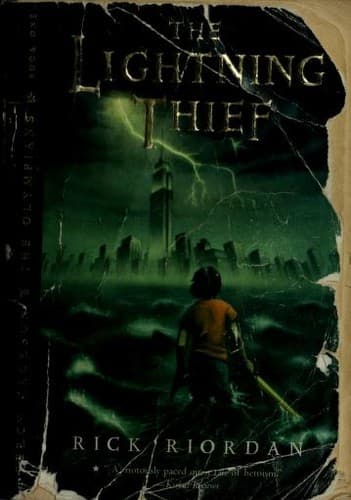
- The Lightning Thief
Rick Riordan
4.3 (2M) average on GoodreadsFantasyThrust into a world of mythological monsters and divine treachery, an ordinary boy discovers he's the son of Poseidon and must embark on a perilous quest across modern America to prevent an Olympian war.





Enjoyed the summary?
A summary gives you the shape of the book. The book itself has the detail, the examples and the voice.
Find The Declaration Of Independence on AmazonAs an Amazon Associate, BookBrief earns from qualifying purchases. How we're funded